Key takeaways
- Potatoes and tomatoes catch the same blight, and spores blow from one to the other
- It strikes in warm, humid weather, usually from late June to September
- Look for brown, water-soaked patches with white fuzz on the underside of leaves
- Grow tomatoes under cover, or as far from potatoes as your plot allows
- Earlies lifted by midsummer often miss blight altogether
- Cut off blighted potato foliage at once and wait about three weeks before lifting
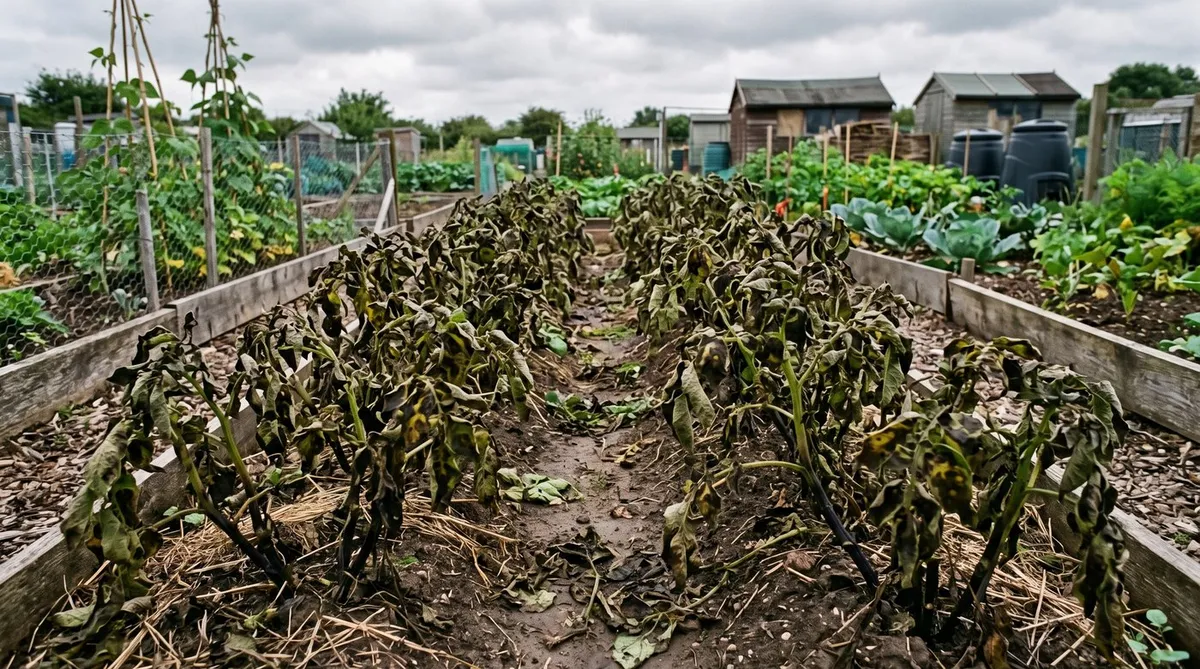
Late blight is the disease that can wipe out a whole row of potatoes and every outdoor tomato on the plot in a week. It’s the same blight on both crops, and that’s the important bit. Once it’s on your potatoes, your tomatoes are next in line, and the other way round.
This guide is about protecting both together. For crop-by-crop detail, see the guides to potato blight and tomato blight.
What is late blight?
Late blight is caused by Phytophthora infestans, a fungus-like organism that lives on potatoes, tomatoes and a few related plants. It spreads by spores that blow on the wind and splash in rain. On a wet leaf they get in fast, and new spores appear within days.
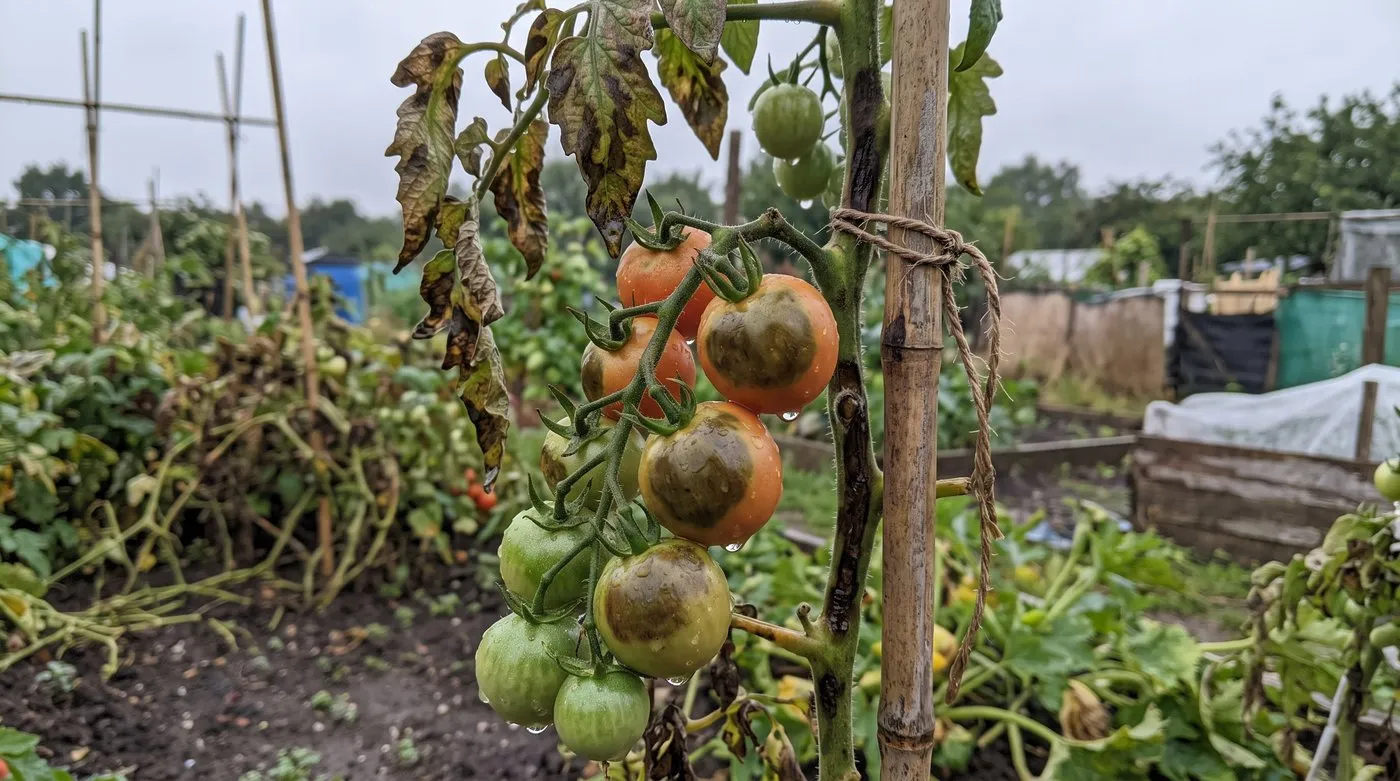
On tomatoes, late blight turns fruit dark brown and greasy-looking. It rots fast, so pick clean fruit early.
It mostly survives the winter in infected potato tubers: forgotten ones left in the soil, “volunteer” plants that pop up next spring, and tubers thrown on the compost heap. That’s why plots that grow potatoes every year often get blight early.
How late blight spreads between potatoes and tomatoes
Blight usually starts on potatoes, because there are more of them and old tubers carry it over. From there, spores drift onto any outdoor tomatoes nearby. On a shared allotment site, your neighbour’s potatoes count too.
Tomatoes under glass are much safer, because the roof keeps rain and most spores off the leaves. Keep the greenhouse well ventilated, but be aware spores can still blow in through open doors in a bad year.

Potatoes and outdoor tomatoes side by side look tidy, but if blight hits one bed, the other usually follows.
How to spot late blight on both crops
The signs are much the same on both crops. Check after every warm, wet spell from late June.
- Leaves: brown, water-soaked patches, often starting at the tips and edges. In damp weather a white, fuzzy ring forms on the underside.
- Stems: dark brown streaks. Infected stems collapse and the plant can go black in days.
- Potato tubers: reddish-brown patches under the skin, with brown, grainy rot in the flesh below.
- Tomato fruit: firm, dark brown, greasy-looking patches on green or ripe fruit, which soon rot.
Early blight is a different disease. It makes dry brown spots with rings like a target, mostly on older leaves, and spreads slowly. On tomatoes, the guide to tomato early blight shows the difference.

The white fuzz on the underside of a brown patch is the giveaway for late blight. You’ll see it best on a damp morning.
When is blight weather?
Warm, humid spells set blight off. Blight forecasts use the Hutton Criteria: two days in a row where the temperature stays above 10°C and the air is very humid for at least six hours each day. Symptoms usually appear about a week later.
You don’t need to measure it yourself. The free BlightWatch alert service emails or texts you when your postcode area has had blight weather. When an alert comes in, check both crops closely over the next week or two.
How to plan your plot to keep blight off both crops
You can’t stop spores arriving, but you can make your crops a much harder target.
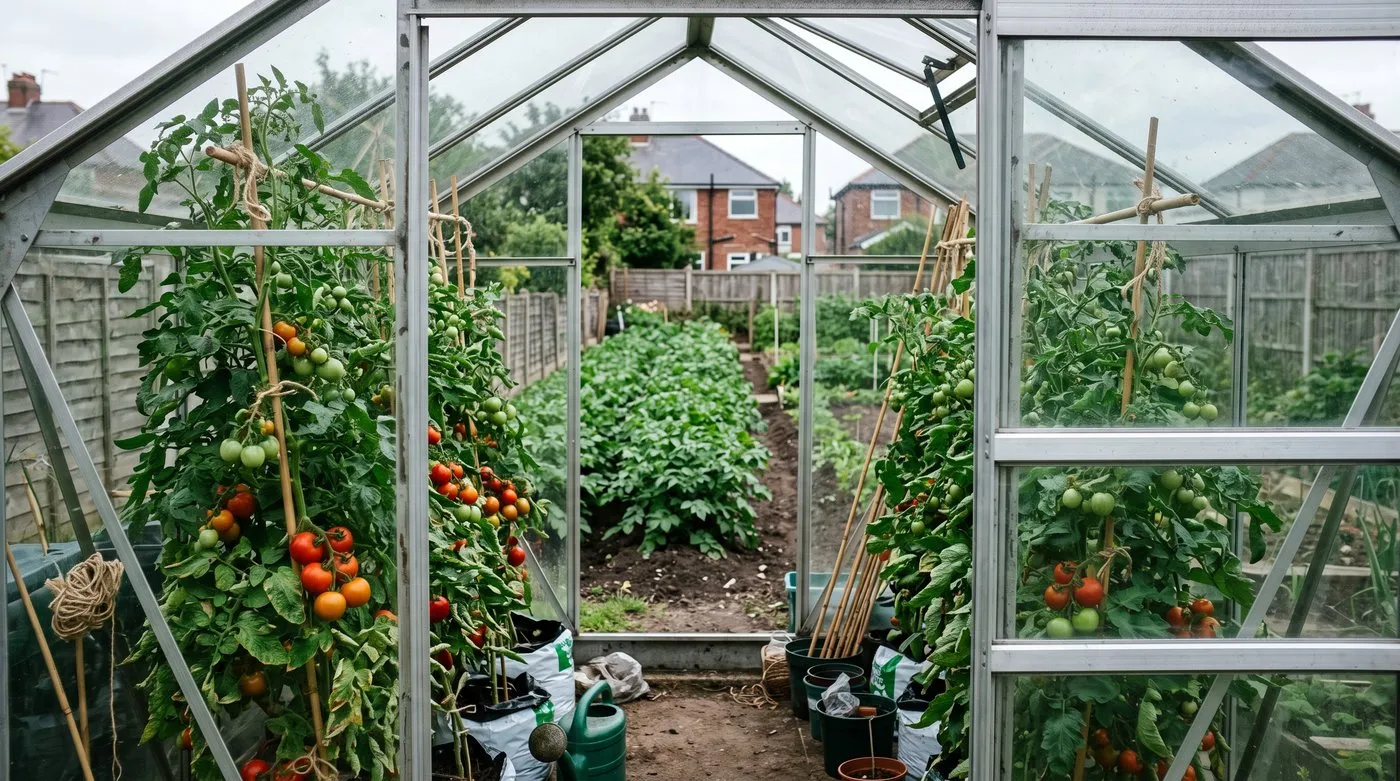
Tomatoes under glass are better sheltered from blight spores than outdoor plants. Keep potatoes as far away as you can.
- Grow tomatoes under cover. A greenhouse, polytunnel or tall cold frame keeps rain and spores off the leaves.
- Keep outdoor tomatoes away from potatoes. Put them at opposite ends of the plot, or in pots by the house.
- Grow early potatoes. First and second earlies are often lifted before blight weather arrives.
- Choose resistant varieties. Potatoes such as Sarpo Mira, Carolus and Setanta shrug off blight far better than old favourites like King Edward. For tomatoes, Crimson Crush and Mountain Magic are good outdoor choices.
- Clear out volunteers. Pull up any potato plants that sprout from last year’s leftovers.
- Keep leaves dry. Water at the base, not over the plants, and space them so air moves through.
- Rotate. Don’t grow potatoes or tomatoes in the same bed two years running. The crop rotation planner shows how to plan beds.
The guide to blight-resistant tomato varieties has more outdoor choices, including bush cherries for pots. Best potato varieties covers resistant spuds alongside the classics.
What to do when blight strikes
Act on the first crop that shows it, then protect the other.
If your potatoes get it:
- Cut all the foliage off at ground level straight away.
- Bag it and put it in the council green waste, or seal it in bags. Don’t put it on an open heap next to your tomatoes.
- Leave the tubers in the soil for about three weeks, so the skins set and spores on the surface die off.
- Lift on a dry day and sort them. Throw out any with brown patches.
- Check every outdoor tomato daily for the next couple of weeks.
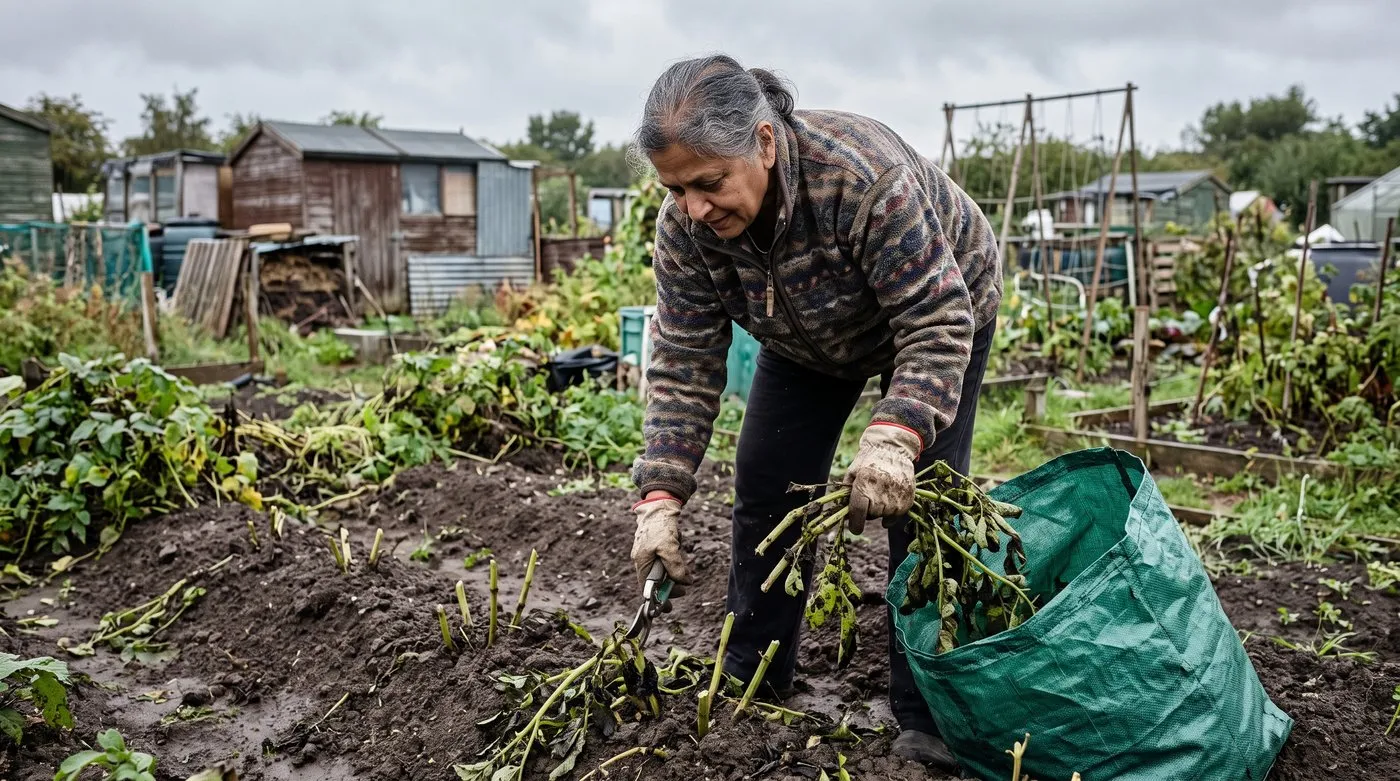
Cut blighted potato foliage off at once and bag it. Leave the tubers in for about three weeks before lifting.
If your tomatoes get it:
- Remove affected leaves and stems. If most of the plant is hit, pull it up.
- Pick any clean green fruit and ripen it indoors.
- Throw out fruit with brown patches. The rot runs deeper than it looks.
- Watch your potatoes closely, and cut the foliage at the first sign.
Never compost blighted tubers. They can sprout next spring and start the whole thing again.
Can you spray for late blight?
Bordeaux mixture and other copper sprays are no longer allowed for home gardeners, so older advice to use them is out of date. Spraying also does nothing once leaves are infected.
If you want to use a spray, check the product is currently approved for amateur use against blight on that crop. Use it before symptoms appear and follow the label exactly, including the wait before harvest. Home-made sprays, including bicarbonate of soda mixes, are not authorised. For most gardeners, resistant varieties and quick action work better.
Late blight calendar for potatoes and tomatoes
| Month | What to do |
|---|---|
| January to February | Order resistant seed potatoes and tomato seed. Plan beds well apart |
| March to April | Plant earlies. Pull up volunteer potatoes. Sign up for blight alerts |
| May | Earth up potatoes. Plant tomatoes under cover, or outdoors at the far end of the plot |
| June | Watch for alerts. Check leaves after every warm, wet spell |
| July to August | Peak risk. Check both crops twice a week. Lift earlies |
| September | Cut blighted haulm, wait three weeks, then lift maincrops. Clear tomato plants |
| October to November | Dig out every leftover tuber. Check stored potatoes for rot |
Common mistakes with late blight
Growing outdoor tomatoes right next to potatoes. One infected row hands blight straight to the other.
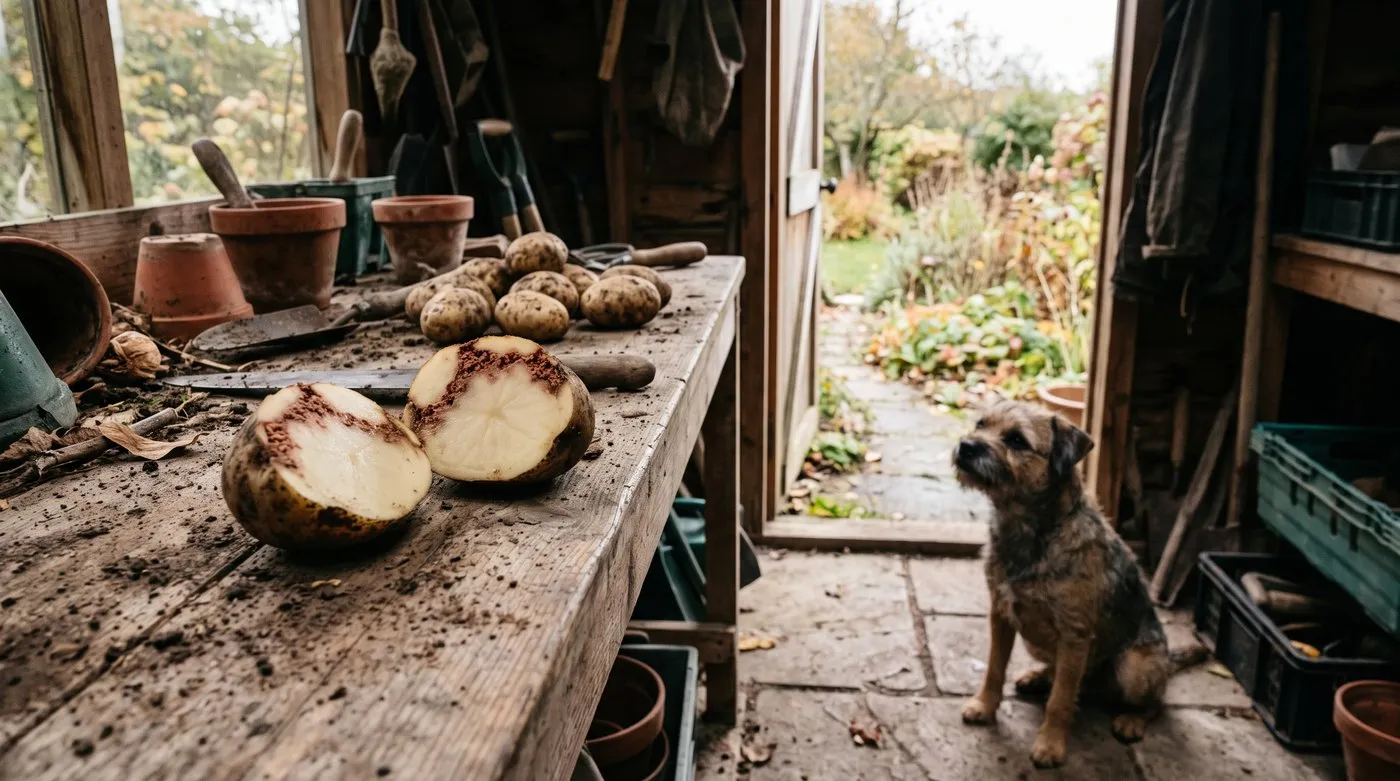
Blighted tubers show reddish-brown rot under the skin. Sort them out before storing, and never compost them.
Leaving tubers in the ground. Forgotten potatoes sprout next spring and bring blight back early.
Composting blighted tubers. They survive the heap and spread the problem round the garden.
Lifting potatoes straight after the leaves die. Spores on the soil can infect the tubers. Wait about three weeks.
Relying on companion plants. No companion plant stops blight. Spacing, cover and resistant varieties do.
Frequently asked questions
Can tomatoes get blight from nearby potatoes?
Yes, they catch the same blight. Spores blow on the wind and splash in rain from potato leaves onto outdoor tomatoes. Growing tomatoes under cover is the best protection.
What does late blight look like?
Brown, water-soaked patches that spread fast in wet weather. In damp conditions a ring of white fuzz forms on the underside of the leaf. Stems get dark streaks, and plants can collapse within days.
When does blight season start in the UK?
Usually from late June or July, after warm, humid spells. In wet summers it can arrive earlier, and in dry ones it may not appear at all. Sign up for free blight alerts to know when to watch.
Can you eat potatoes that have had blight?
Yes, if the tubers are firm and clean inside. Cut away any discoloured bits and throw out soft or rotten ones. Blighted tubers rot in store, so use them first.
Does copper fungicide work against potato blight?
Copper sprays and Bordeaux mixture are no longer allowed for home gardeners. Rely on resistant varieties, good spacing and quick removal of blighted leaves. If you want a spray, check it’s currently approved for amateur use on that crop.
Should I dig up potatoes if the leaves get blight?
Cut the foliage off at ground level first, but leave the tubers in. Wait about three weeks so the skins set and spores on the soil die off. Then lift on a dry day.
Is late blight the same as early blight?
No, they’re different diseases. Early blight makes dry brown spots with rings, like a target, and spreads slowly. Late blight spreads fast and can wipe out a crop in a week or two.
Next steps
Once your crop is safely lifted, read the guide to storing potatoes to keep them sound through winter, or browse more fixes in plant problems.
Our team produces practical UK gardening guidance from source research, contributor records and established horticultural practice. Editorial standards are overseen by Matt W.