Key takeaways
- Potato blight strikes in warm, humid weather, usually from July onwards
- Sign up for free Blight Watch alerts for your postcode in spring
- First and second earlies lifted by late July usually escape blight
- At the first sign, cut off and remove all the foliage to protect the tubers
- Wait about three weeks after cutting before you lift the crop
- Blight-resistant maincrops such as Sarpo Mira stand much longer than Maris Piper or King Edward
If your potato leaves have brown-black, greasy patches in a muggy summer and the plants are collapsing within days, that’s potato blight. It’s the disease gardeners dread, but you can still get a good crop. The two best defences are the calendar and the seed packet: lift early varieties before blight arrives and grow resistant ones for storing.
This guide is all about potatoes: spotting blight, getting early warnings, dodging it with earlies, and saving the tubers when it strikes. For tomatoes, see the tomato blight guide. For the disease on both crops side by side, read the late blight overview.
What potato blight looks like
Potato blight shows first on the leaves. Look for brown to black patches, often starting at the tip or edge, that look wet and greasy rather than dry. In humid weather, turn the leaf over: a fine white mould round the edge of the patch confirms it.
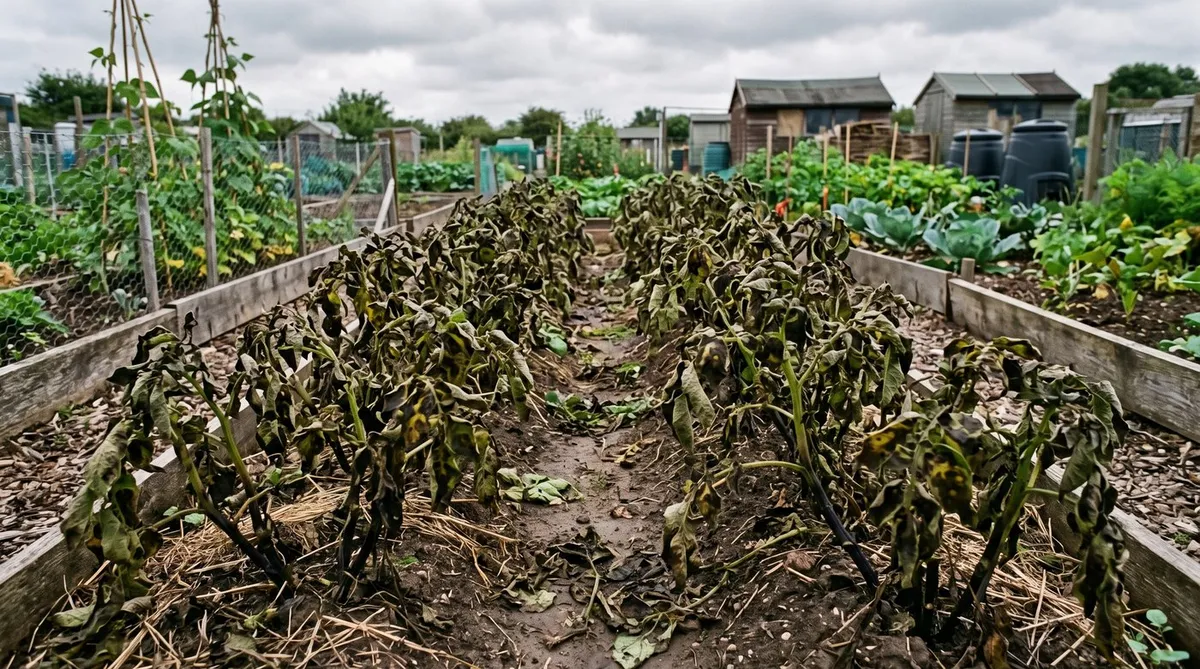
Next it moves into the stems, which get dark brown streaks. In warm, wet weather a whole row can go from green to black and collapsed in about a week. It often smells unpleasant too.
The part you can’t see matters most. Rain washes spores off the leaves and down to the tubers. Infected potatoes have sunken, reddish-brown patches under the skin, with brown rot running into the flesh. They rot in store and spoil the healthy ones nearby.
Dry brown spots with rings, like a target, are early blight, a milder disease. Black, slimy stem bases on single plants are potato blackleg, which needs a different response.
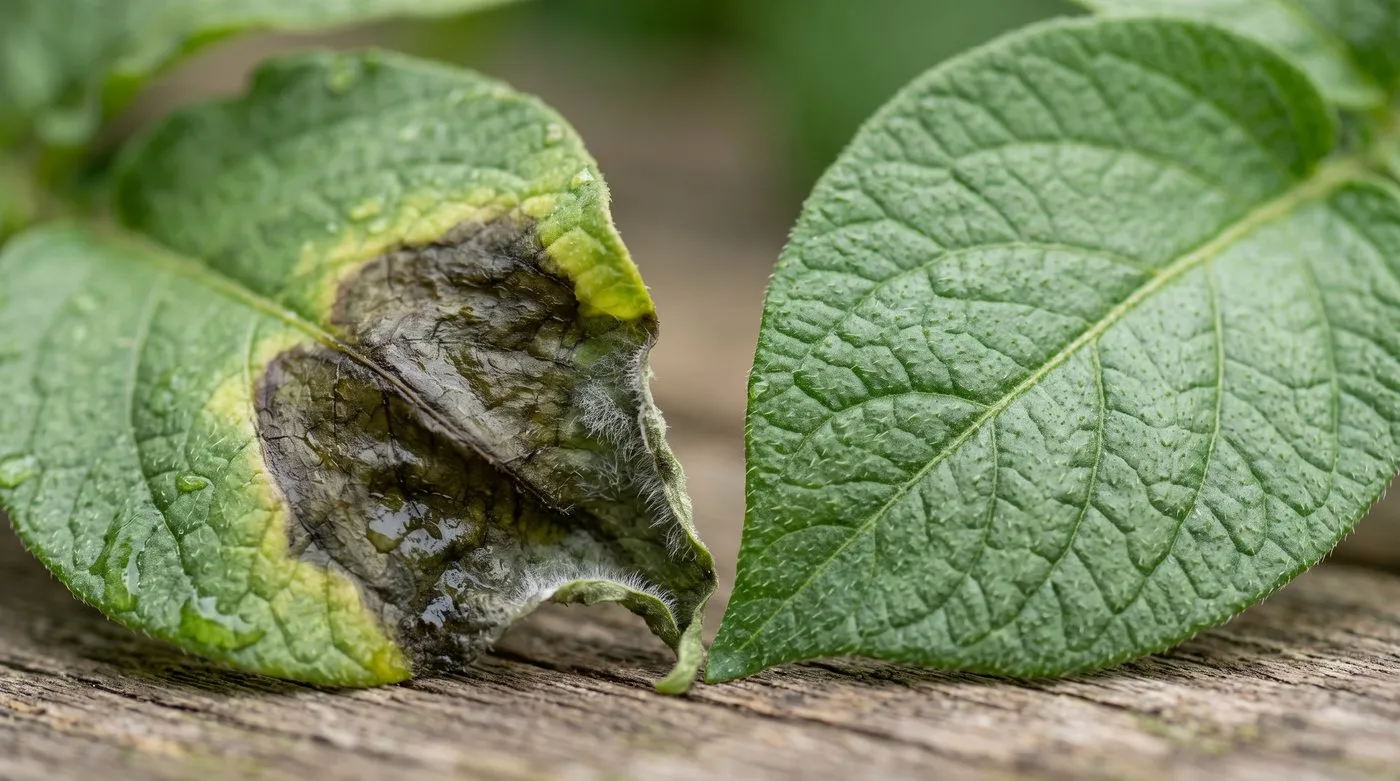
The giveaway: a greasy dark patch with a fuzzy white edge in damp weather. A healthy leaf is beside it for comparison.
Why potato blight spreads so fast
Blight spreads on the wind from infected plants nearby. Its spores need wet leaves and warm, humid weather to get started, and in those conditions a new batch of spores appears within days. That’s why a few spots on Saturday can become a flattened row by the next weekend.
Blight is caused by a water mould rather than a true fungus. Don’t count on a spray to save you, as the products gardeners once used have been withdrawn. Timing, variety choice and quick action do the work instead.
How to get free blight alerts
You don’t have to guess when blight is coming. The Hutton Criteria are the weather conditions blight needs: two days in a row where the temperature stays at 10°C or above and there are at least six hours of very high humidity each day.
Blight Watch is a free service that emails you when your area meets those conditions. Register your postcode in spring, before you need it. When an alert arrives, check your plants daily and be ready to act.
Gardener’s tip: An alert is a good nudge to lift second earlies that are nearly ready anyway. A slightly smaller clean crop beats a rotten one.
Grow earlies to dodge blight
The simplest way to beat blight is to have your potatoes out of the ground before it arrives. Blight usually turns up from July onwards and is worst in muggy August weather.
- First earlies, planted in March, are usually ready from late June to mid-July.
- Second earlies follow through July.
If blight wrecks your maincrop every year, grow more earlies and second earlies instead. You lose a big storage crop but gain a reliable one. The guide to when to plant potatoes has the timings for chitting and planting.

Earlies lifted in July are safely out of the ground before the muggy weather that brings blight.
What to do when blight hits your potatoes
Once blight is in a maincrop, stop trying to save the leaves and save the tubers.
- Cut off all the foliage at ground level as soon as you see blight. This stops more spores washing down to the tubers.
- Take it off the plot. Bag it up or put it in the council green waste bin.
- Wait about three weeks before lifting. This lets spores on the soil surface die off and the skins toughen, so the tubers store better.
- Lift and sort carefully. Use sound tubers soon. Bin any with reddish-brown patches, soft spots or a bad smell.
Never compost blighted tubers. The guides to harvesting potatoes and storing potatoes explain how to dry and store the healthy ones.
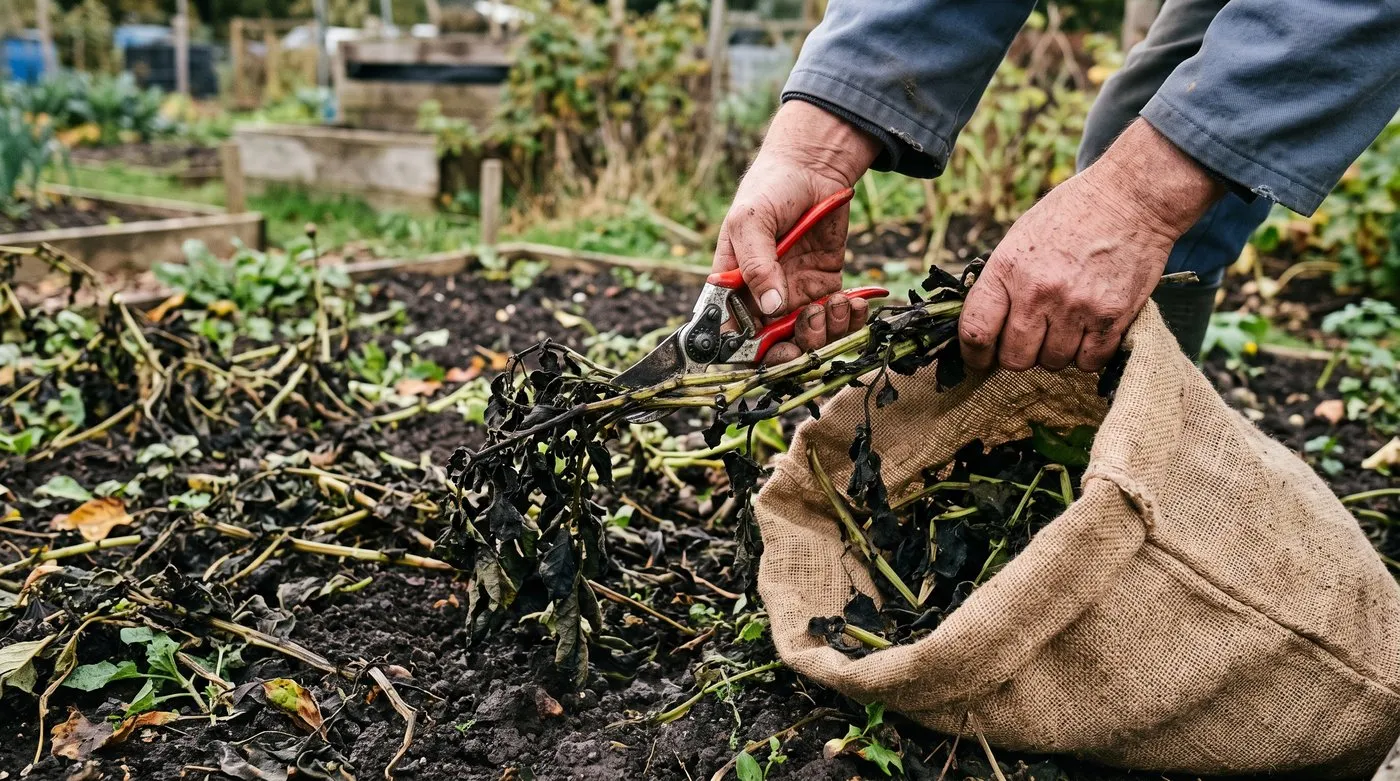
Cut the blighted tops off at ground level and bag them. Then leave the tubers in the ground for about three weeks.
Warning: Don’t leave any potatoes in the ground over winter. Missed tubers sprout as volunteer plants in spring and can carry blight into next season. Go back over the bed and dig out every one.
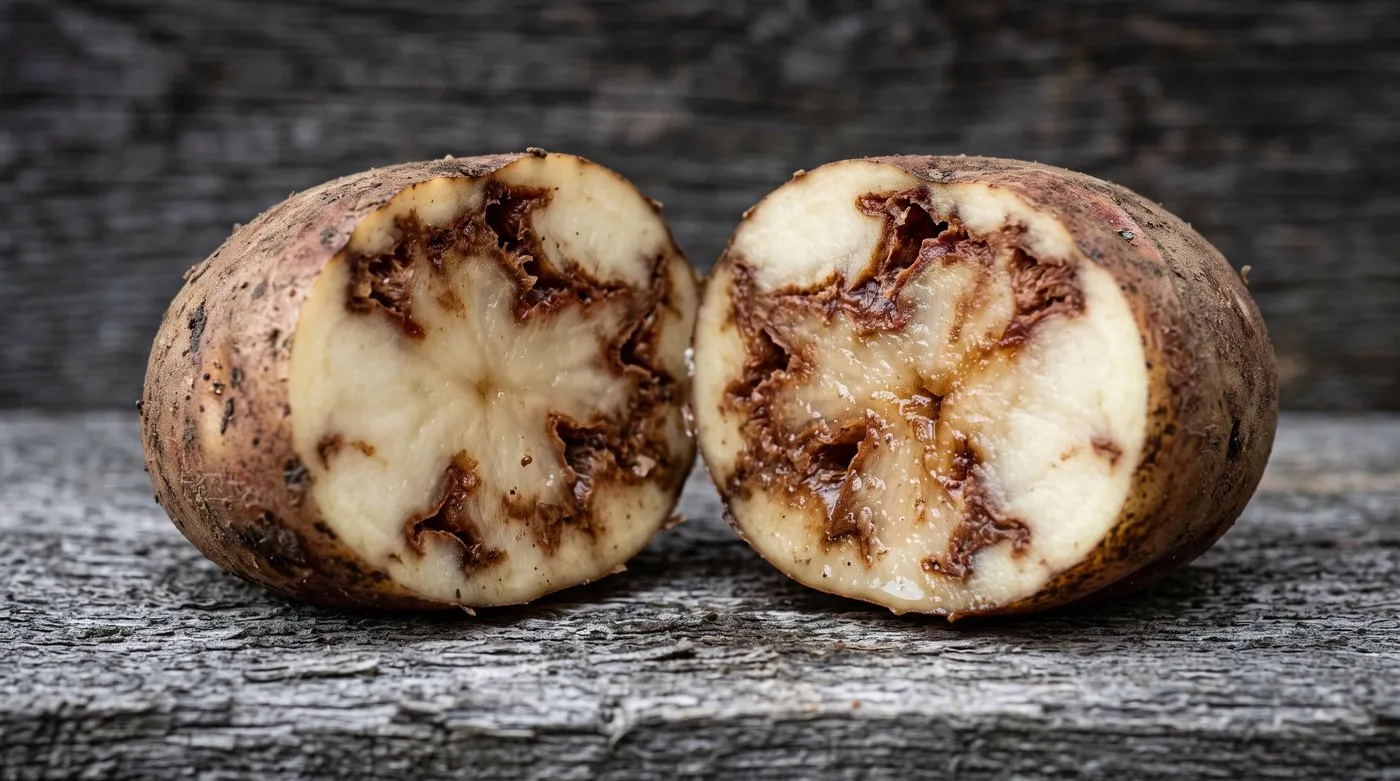
Blighted tubers rot from the skin inwards. One of these in a sack will spoil the rest, so sort carefully.
Earthing up and spacing to protect the crop
Earthing up does more than stop potatoes going green. A good, high ridge of soil over the tubers makes it harder for spores washing off the leaves to reach them. Earth up a few times as the plants grow. The guide to earthing up potatoes shows how.
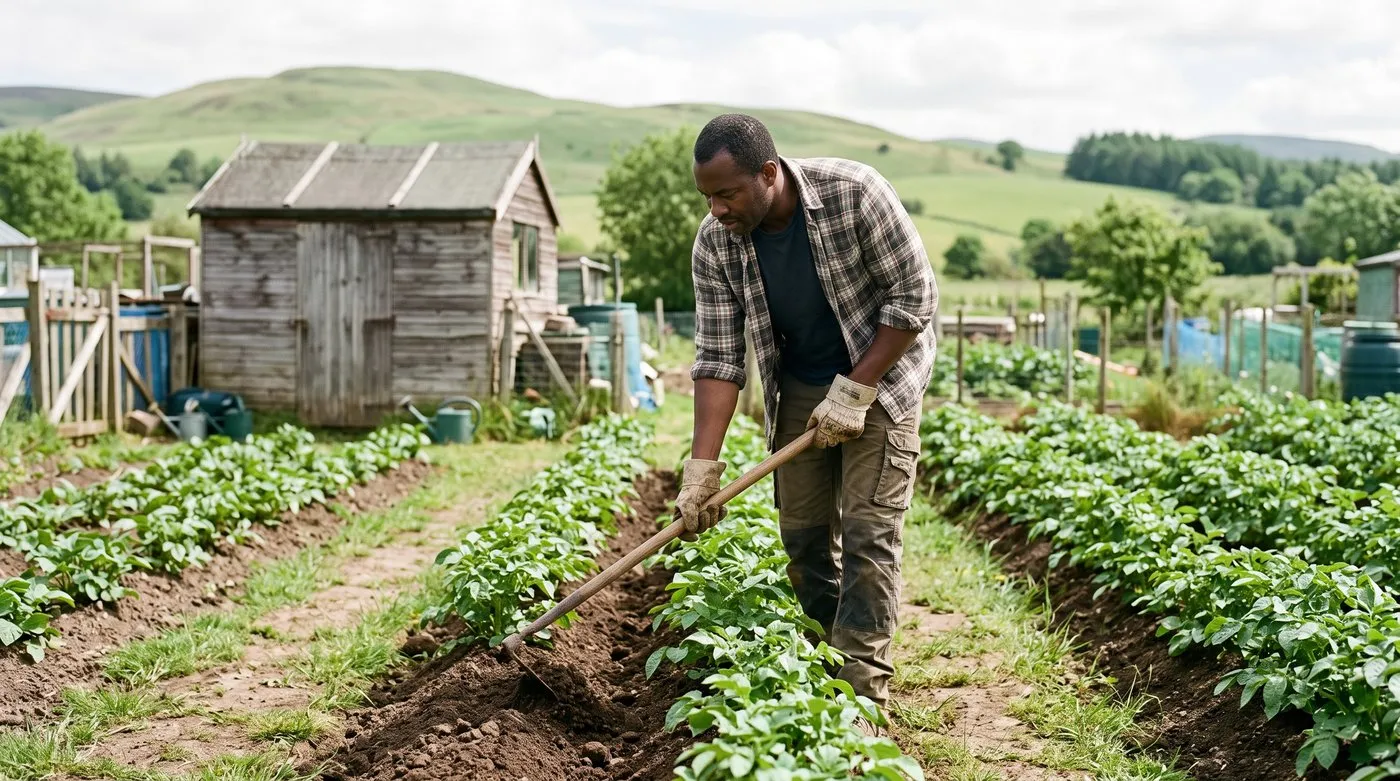
A deep ridge of soil over the tubers makes it harder for blight spores washing off the leaves to reach them.
Spacing helps the leaves dry faster after rain or dew, which gives blight less time to get going. Don’t cram rows together, and keep weeds down so air moves through.
Water the soil, not the leaves, and do it in the morning so any splashes dry quickly.
Blight-resistant potato varieties
If earlies are one half of blight control, resistant varieties are the other. They decide how long a maincrop stands once blight is around.
| Variety | Type | Blight resistance |
|---|---|---|
| Sarpo Mira | Maincrop | Very good |
| Sarpo Axona | Maincrop | Very good |
| Carolus | Maincrop | Good |
| Setanta | Maincrop | Fair to good |
| Cara | Maincrop | Fair |
| Maris Piper | Maincrop | Poor |
| King Edward | Maincrop | Poor |
The Sarpo potatoes were bred in Wales for blight resistance and stay green well after most maincrops have collapsed. No variety is completely immune, so keep an eye on them in muggy weather.
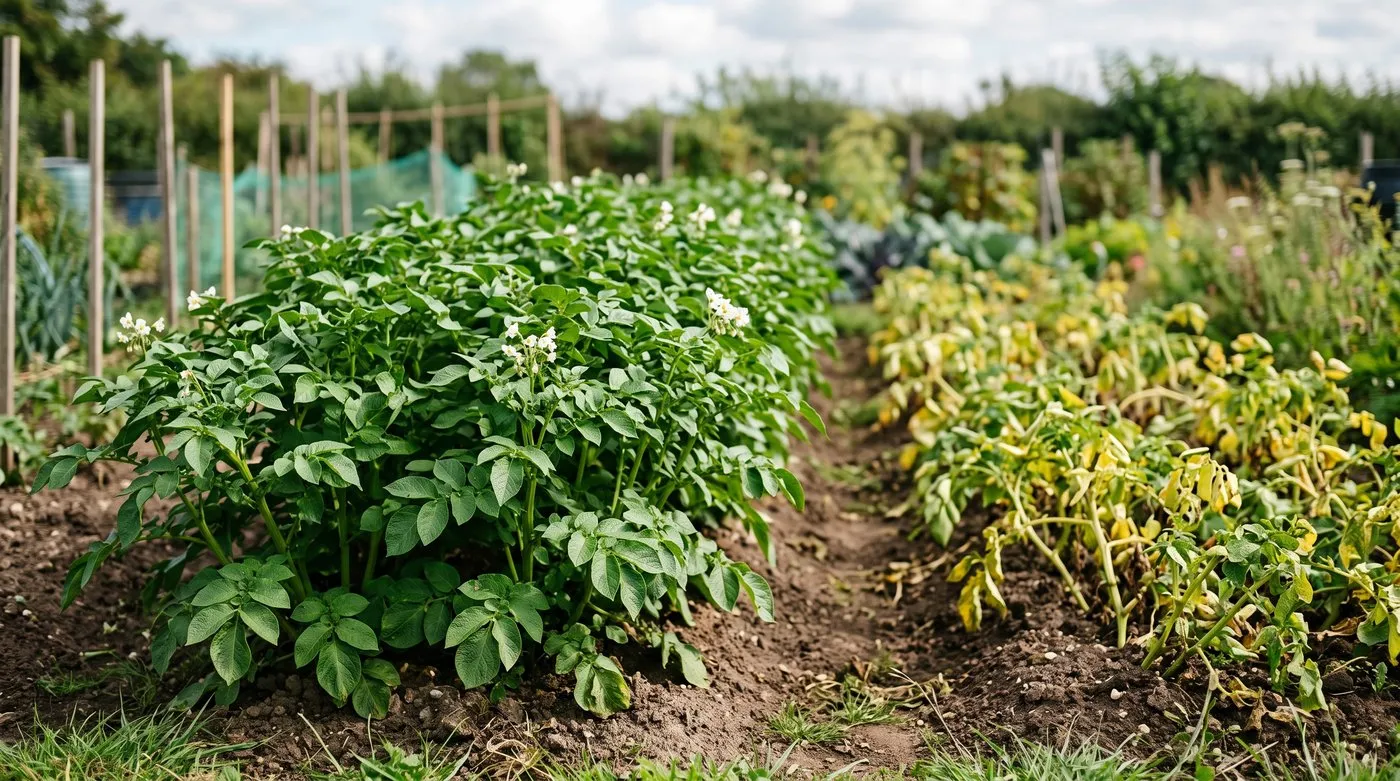
A resistant variety, left, still green and flowering while the row beside it gives up.
Potato blight calendar
| Month | What to do |
|---|---|
| February to March | Chit seed potatoes. Choose earlies, or Sarpo-type maincrops for storing |
| March to April | Plant. Register for Blight Watch alerts |
| May to June | Earth up as plants grow. Space rows for airflow |
| July | Lift first and second earlies. Check maincrops after every alert |
| August | Peak risk. Check maincrops daily in muggy spells and cut the tops at the first sign |
| September | Lift maincrops about three weeks after cutting the tops. Sort carefully |
| October | Dig out every stray tuber. Check stored potatoes for rot |
| November to January | Plan next year’s potato bed on fresh ground. Check stores every few weeks |
Common mistakes with potato blight
Waiting to see how bad it gets. Blight spreads in days. Cut the tops at the first sign.
Lifting straight after cutting the tops. Spores on the soil surface can infect the tubers as you dig. Wait about three weeks.
Leaving potatoes in the ground. Missed tubers carry blight into next year. Dig them all out.
Storing doubtful tubers. One blighted potato can rot a whole sack. Sort carefully and use doubtful ones first.
Growing only maincrops on a blight-prone plot. Grow more earlies, or switch to resistant varieties.
Frequently asked questions
What does potato blight look like?
Brown-black, greasy-looking patches on the leaves that spread fast in humid weather. In damp conditions a fine white mould forms round the edge underneath. Stems get dark streaks, and plants can collapse within a week. Infected tubers have sunken, reddish-brown patches under the skin.
How do I stop potato blight?
You can’t stop it arriving, but you can dodge it. Grow earlies and lift them by late July, choose resistant maincrops such as Sarpo, earth up well and sign up for Blight Watch alerts. Cut off the tops at the first sign.
Can you eat potatoes with blight?
Yes, sound tubers from a blighted crop are fine to eat. Lift, sort and use them soon. Bin any tuber with reddish-brown patches, soft spots or a bad smell, and never store them, or they’ll rot the rest.
What are the Hutton Criteria for blight?
They’re the weather conditions blight needs to spread. That’s two days in a row with temperatures staying at 10°C or above and at least six hours of very high humidity each day. Blight Watch uses them to send its free alerts.
Which potato varieties are resistant to blight?
Sarpo Mira and Sarpo Axona are the best known. Carolus also has good resistance, and Setanta and Cara have some. No potato is completely immune, but these stand much longer than Maris Piper or King Edward.
Should I cut the tops off potatoes with blight?
Yes, as soon as you see blight on the leaves. Cut all the foliage off at ground level and take it off the plot. Then wait about three weeks before lifting the tubers.
Does potato blight stay in the soil?
Not usually on its own. It mainly survives winter in infected tubers left in the ground, which sprout as volunteer plants in spring. Dig out every stray potato and rotate your potato bed each year.
Plan next year’s blight-proof potatoes
Earlies and resistant maincrops are your best bet against blight. Start planning with the best potato varieties for UK gardens guide, or find more fixes in the veg problems section.
Our team produces practical UK gardening guidance from source research, contributor records and established horticultural practice. Editorial standards are overseen by Matt W.