Key takeaways
- Blackleg turns the stem base black, soft and slimy, with yellow wilting leaves above
- It's caused by bacteria, so no spray cures it
- Infected seed potatoes are the usual source, so buy fresh certified seed every year
- Lift and bin affected plants and their tubers as soon as you see them
- Wet, poorly drained soil makes it worse
- Never store soft or damaged tubers, as rot spreads through a sack or box
One potato plant in the row looks wrong. Its leaves are yellow and drooping while the rest are lush and green. Look at the base of the stem and it’s black, soft and slimy. That’s potato blackleg, a bacterial disease that usually arrives in the seed potato itself. You can’t cure it, but it’s easy to keep in check. This guide shows how to spot it, tell it from blight and stop it coming back.
How to identify potato blackleg
The clue is in the name. The stem base turns black or very dark brown from soil level upwards, often for several centimetres. It’s soft and wet, not dry, and can smell unpleasant.
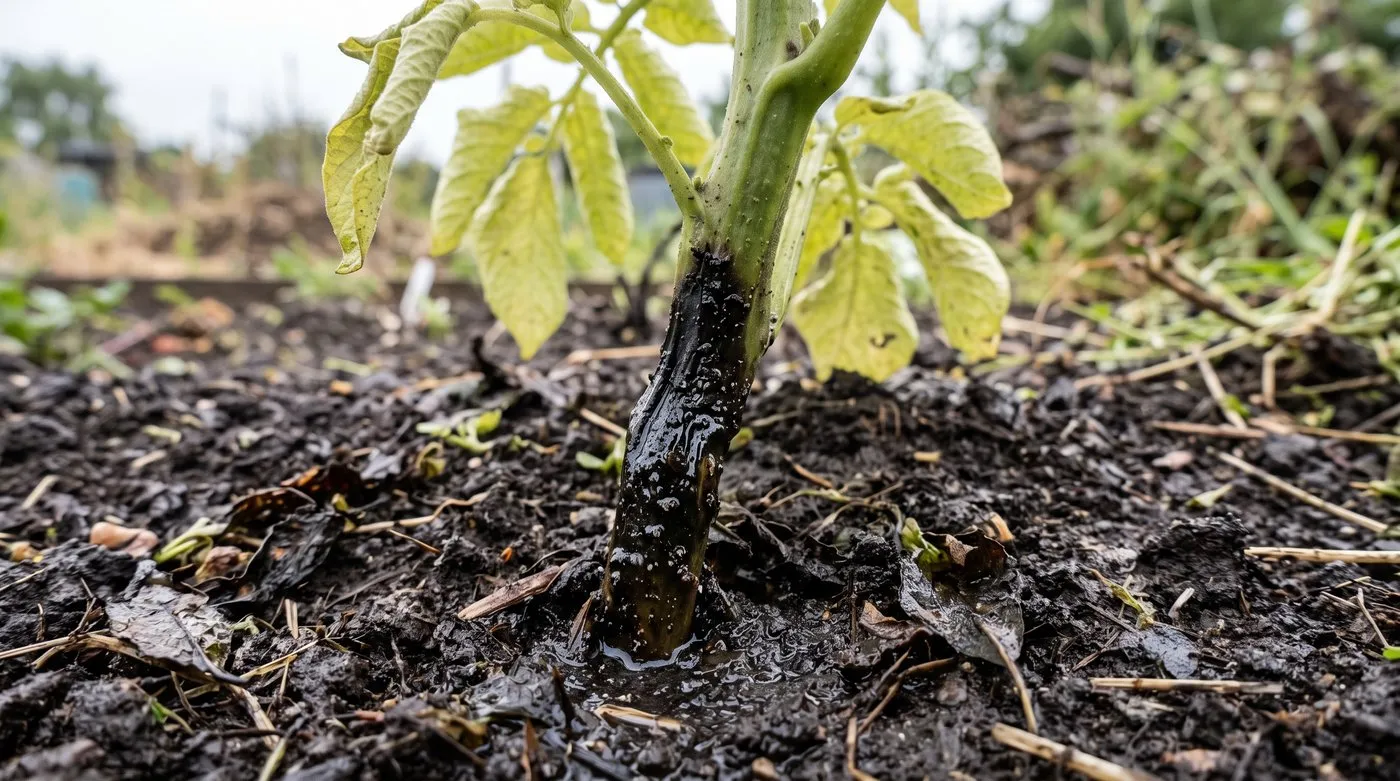
A wet, inky black rot creeping up from soil level is the sign that gives blackleg its name.
Above the rot, the leaves turn pale or yellow, may roll upwards and then wilt. Plants are often shorter than their neighbours, and badly hit ones collapse. Blackleg tends to show from May to July, picking out single plants dotted along a row, because each one usually grew from its own infected seed potato.

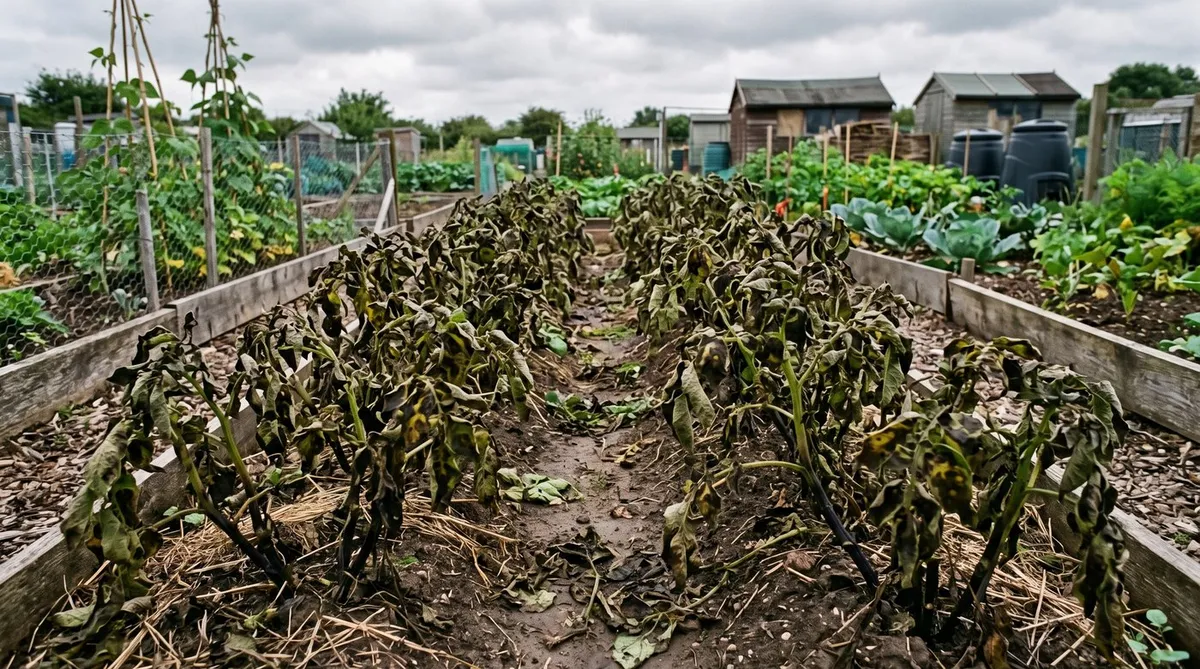
One sick plant among healthy neighbours is typical of blackleg. Blight, by contrast, sweeps across the whole crop.
What the tubers look like
Underneath, tubers from an infected plant may turn into a soft, wet, smelly rot, often starting where they joined the plant. Others look perfectly sound but can still carry the bacteria. That’s how the disease gets into stores and, if saved as seed, into next year’s crop.

Soft rot turns tubers to mush. Throw these away, and don’t store any tubers from the same plant.
Blackleg or blight? How to tell them apart
People often mix up blackleg and potato blight, but they look and behave differently.
| What you see | Blackleg | Potato blight |
|---|---|---|
| Cause | Bacteria | A fungus-like water mould |
| First sign | Black, slimy stem base | Brown patches on leaves, sometimes with a white fuzzy edge underneath |
| Texture | Wet and soft | Leaves and stems go brown and collapse |
| Pattern | Single plants dotted along a row | Spreads across the whole crop in days |
| Tubers | Soft, wet rot | Reddish-brown rot under the skin |
| Weather | Wet soil | Warm, humid spells, usually from midsummer |
The quick test: slimy black stem base is blackleg; brown patches spreading through the leaves are blight. If it’s blight, the potato blight guide explains what to do next. The two can turn up in the same wet summer, so look closely.
What to do when you find blackleg
There’s no spray or treatment that cures blackleg. The job is to stop it spreading.
- Lift the whole plant as soon as you see it, along with as many of its tubers as you can find.
- Put it in the general waste bin. Don’t compost it, as a home heap won’t kill the bacteria.
- Don’t leave rotting tubers in the soil.
- Wash your hands and tools before moving on to healthy plants.
This is called rogueing. It’s quick, and pulling one plant early beats losing more later.

Lift the whole plant, tubers and all, and bin it. The rest of the row is better off without it.
Where blackleg really comes from
Blackleg seems to come out of nowhere, but it usually starts with the seed potato. The bacteria travel inside seed tubers, often with no sign at all. The disease you see in June was usually planted in spring.

Fresh certified seed, chitted whole on a cool, bright windowsill, is the best defence against blackleg.
So the best control happens before planting:
- Buy fresh certified seed potatoes every year. Certified seed is grown and inspected to keep diseases down. Saved tubers and supermarket potatoes are the usual way blackleg gets into a plot.
- Plant whole tubers. Cut surfaces give the bacteria a way in.
- Handle gently. Bruises at planting and harvest are entry points too.
Soil matters as well. The bacteria do best in wet, poorly drained ground. Plant into free-draining soil, and on heavy ground grow on ridges or in raised beds so water drains away. The potato growing guide covers soil preparation.
How to prevent blackleg next season
- Start with clean seed. The best potato varieties guide helps you choose reliable types.
- Rotate. Grow potatoes on different ground each year, with a gap of at least three years before they return.
- Plant at the right time into soil that isn’t cold and waterlogged. See when to plant potatoes.
- Earth up carefully without stabbing stems or tubers. The guide to earthing up potatoes shows how.
- Store only sound tubers. One rotting potato can spoil a whole sack. The guide to storing potatoes explains how to sort and store them.
Blackleg through the potato year
| Month | What to do |
|---|---|
| February to March | Buy fresh certified seed. Chit whole tubers somewhere light and cool |
| March to May | Plant whole tubers into well-drained soil, avoiding waterlogged ground |
| May to July | Check stem bases when you water or earth up. Lift and bin any plant with blackleg |
| July to September | Harvest gently. Eat any doubtful tubers soon |
| September to October | Store only firm, undamaged tubers. Check stores every few weeks and remove any soft ones |
Common mistakes with potato blackleg
Saving your own seed potatoes. Saved tubers can carry the bacteria without showing it. Buy fresh certified seed each year.
Composting infected plants. A home heap won’t kill the bacteria. Bin them.
Leaving a sick plant in the row. It only spreads the bacteria further. Lift it promptly.
Storing damaged tubers. One soft potato rots its neighbours. Store only firm, sound ones.
Planting into waterlogged ground. Wet soil is where blackleg thrives. Improve drainage or grow on ridges.
Frequently asked questions
What is potato blackleg?
It’s a bacterial disease that rots the base of potato stems. The stem turns black, soft and slimy, and the leaves above go yellow and wilt. It usually arrives on infected seed potatoes and is worse in wet soil.
How do I know if my potatoes have blackleg?
Look at the base of the stem. Blackleg makes it black, soft and slimy from soil level up, with yellow, wilting leaves above. It usually hits single plants dotted along a row while their neighbours stay green.
Can you cure potato blackleg?
No, nothing cures an infected plant. Lift the whole plant and its tubers and put them in the bin. Prevention is where the real control happens: certified seed, good drainage and careful handling.
What causes blackleg in potatoes?
Bacteria carried on infected seed potatoes, even ones that look healthy. They build up in wet, poorly drained soil and get in through cuts and bruises. Saved seed and supermarket potatoes are common sources.
Can I eat potatoes from a plant with blackleg?
Firm, sound tubers are fine to eat, but use them soon. Don’t store them, as they may be carrying the bacteria and can rot in storage. Throw away any that are soft, slimy or smelly.
How do I prevent potato blackleg next year?
Buy fresh certified seed potatoes every spring. Plant them whole in well-drained soil, handle them gently, grow potatoes on different ground each year and store only sound tubers.
Grow a cleaner crop next year
Start with clean seed and well-drained soil and blackleg stays a minor nuisance. When the time comes, the guide to harvesting potatoes helps you lift your crop without bruising, or browse more veg problem guides.
Our team produces practical UK gardening guidance from source research, contributor records and established horticultural practice. Editorial standards are overseen by Matt W.