
Key takeaways
- Chit first and second earlies for about 4-6 weeks before planting
- Plant first earlies around late March and second earlies in early to mid-April
- Plant maincrops from mid-April to early May
- In cold, exposed gardens plant later, and protect new shoots from frost
- Start extra-early potatoes in pots in a frost-free greenhouse from early March
Plant first early potatoes around late March, second earlies in early to mid-April, and maincrops by early May. In a cold or exposed garden, push those dates a little later. The type of potato, your garden and the risk of frost all play a part.
This guide is all about when to plant: chitting, timings for each type, and how earlies and maincrops differ. For the whole journey from planting to harvest, see our potato growing guide. For everything else you can start in spring, our March planting guide is a good next stop.
Why timing matters for potatoes
Potato shoots can’t take frost. And cold, soggy soil can rot the seed potatoes before they even get going.
Use the usual planting times as a guide, then adjust for your garden. Mild, sheltered gardens can go early. Colder, exposed or waterlogged ones should wait a bit.
The RHS potato growing guide puts first earlies around late March, second earlies in early to mid-April, and maincrops from mid-April to early May. It also says to plant later in colder areas.
Gardener’s tip: Check the weather forecast and the soil together. If the bed is soggy, or new shoots would come up into frost, wait.
Chitting: the first step in your potato timeline
Chitting just means letting seed potatoes sprout before you plant them. You don’t have to, but it can give you an earlier crop.
When to start chitting
Start chitting first and second earlies in late January in a mild area. In colder gardens you can leave it until early March. Our January planting guide and February planting guide cover other jobs for those months. It usually takes four to six weeks.
Stand the seed potatoes in egg boxes or trays with the rose end (the end with the most eyes) pointing up. Keep them somewhere cool, bright and frost-free. A warm, dark room gives long, pale, weedy shoots.
When are they ready?
They’re ready when they have short, sturdy shoots, about 5cm long, which usually takes up to six weeks. Handle them gently when planting so the shoots don’t snap off.
Maincrops don’t gain much from chitting, as they grow for longer anyway. First and second earlies get the most benefit.
 Chitting seed potatoes in an egg box. Rose end up, in a cool, bright room.
Why classified seed potatoes matter
Plant proper seed potatoes, not old ones from the kitchen. Seed potatoes are checked for disease and sold true to variety, so you get a healthy start and know what you’re growing.
Keep the label until harvest, so you know which variety is which. Don’t plant any that are soft, damaged or rotting, even if they came from a good supplier.
When to plant first early potatoes
First earlies are the first potatoes you’ll dig up. Popular ones include Rocket, Swift, Pentland Javelin and Lady Christl.
Regional planting dates for first earlies
| Your garden | When to plant first earlies |
|---|---|
| Mild and sheltered | From late March |
| Typical lowland garden | Around late March, if the soil is workable |
| Cold, exposed or high up | A bit later than usual |
| Pots in a frost-free greenhouse | An extra-early crop from early March |
This is a rough guide, not a frost forecast. Check your local forecast and cover the shoots if a late frost is on the way.
Adjust the date for your own bed
Do three quick checks before you pick your planting day.
First, check the drainage. Dig a hole 15cm deep after rain. If water sits in it, or the soil smears into a sticky ribbon, wait.
Second, think about shelter. A raised bed by a sunny wall warms up and drains much faster than open clay on an allotment.
Third, look at the forecast for when the shoots are likely to pop up. If you’re planting at the early end, keep some fleece handy.
It’s worth jotting down the variety, where you planted and when the shoots appeared. Over a few years, that turns a national guide into one that fits your own garden.
Protecting early plantings
If you plant early, protect new shoots from frost with fleece or by pulling soil over them.
That’s called earthing up, and it also keeps the potatoes underground in the dark so they don’t turn green. Start when the shoots are about 20cm tall. Pull soil up around the stems, leaving about 10cm of leaves showing.
 Earthing up potatoes once the stems are about 20cm tall. It stops the potatoes turning green.
When to plant second early potatoes
Second earlies come after first earlies and are usually dug up in July or August. Charlotte, Kestrel and Maris Peer are popular.
Plant second earlies in early to mid-April, a little later in colder gardens. Our April planting guide has other crops to sow then.
Because they’re ready earlier, they often dodge the worst of the summer blight season, though the weather has the final say.
When to plant maincrop potatoes
Maincrops take longest to grow and are usually dug up from late August into October. Maris Piper, King Edward, Sarpo Mira and Desiree are favourites.
Plant maincrops from mid-April to early May, going for the later end in cold gardens.
They need more room than earlies: about 37cm between potatoes and 75cm between rows.
 A planting trench 15cm deep. Space rows 60cm apart for first earlies and 75cm for maincrops.
Blight and maincrop timing
The big disease risk for maincrops is potato blight. It spreads fast in warm, damp weather while the plants are still in full leaf, showing as brown patches on the leaves.
If blight is a regular visitor where you live, try a blight-resistant variety like Sarpo Mira. The RHS potato blight guide covers what to look for and what to do.
Tip: If blight strikes, remove the infected leaves and stems and don’t put them on the compost heap.
Variety comparison: planting times and characteristics
| Variety | Type | When to plant | When to dig up | Good for |
|---|---|---|---|---|
| Rocket | First early | Around late March | June-July | New potatoes, salads |
| Swift | First early | Around late March | June-July | Boiling, containers |
| Charlotte | Second early | Early to mid-April | July-August | Salads, boiling |
| Kestrel | Second early | Early to mid-April | July-August | All-rounder |
| Maris Piper | Maincrop | Mid-April to early May | Late August-October | Roasting, chips |
| King Edward | Maincrop | Mid-April to early May | Late August-October | Baking, mash |
| Sarpo Mira | Maincrop | Mid-April to early May | Late August-October | Areas where blight is common |
| Desiree | Maincrop | Mid-April to early May | Late August-October | Roasting, all-rounder |
These are general timings for each type. The bag and your local weather come first.
Container planting timeline
In a frost-free greenhouse, you can start an extra-early crop in pots from early March. Pots outside still need covering if frost is forecast.
Use a container at least 30cm wide and deep. Put in about 15cm of peat-free multipurpose compost. Plant one seed potato for every 30cm of pot width, then top up with compost as the shoots grow.
Keep the pots somewhere sunny and water regularly. For more ideas on growing in small spaces, see our guide to starting a vegetable garden.
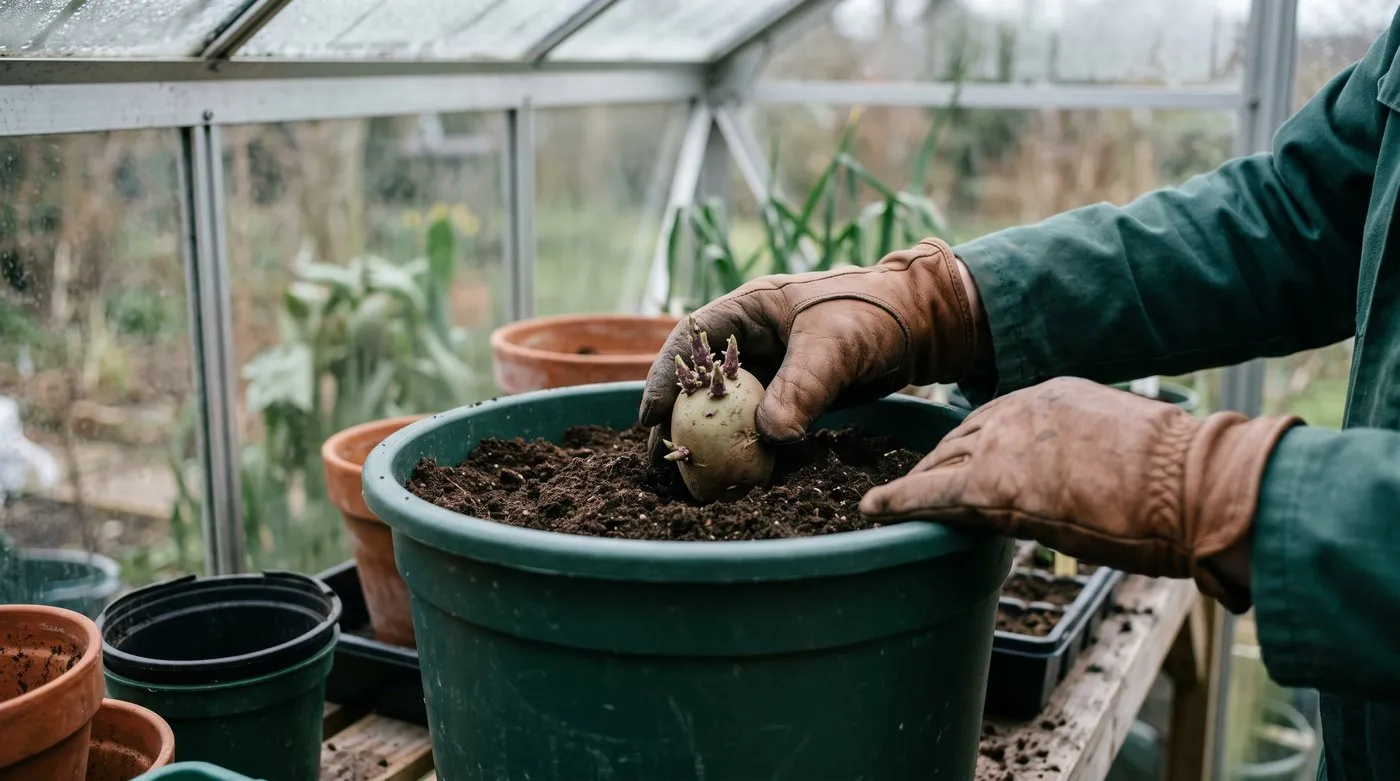 A frost-free greenhouse lets you start potatoes in pots from early March.
Christmas potatoes: the August planting window
For new potatoes at Christmas, plant special cold-stored seed potatoes in July or early August. Grow them in a big container in a greenhouse or another bright, frost-free spot.
Follow the supplier’s instructions for the variety. Growing them under cover keeps frost off the leaves and helps keep blight away.
Keep them in good light and water regularly. When they’re ready depends on the variety and conditions.
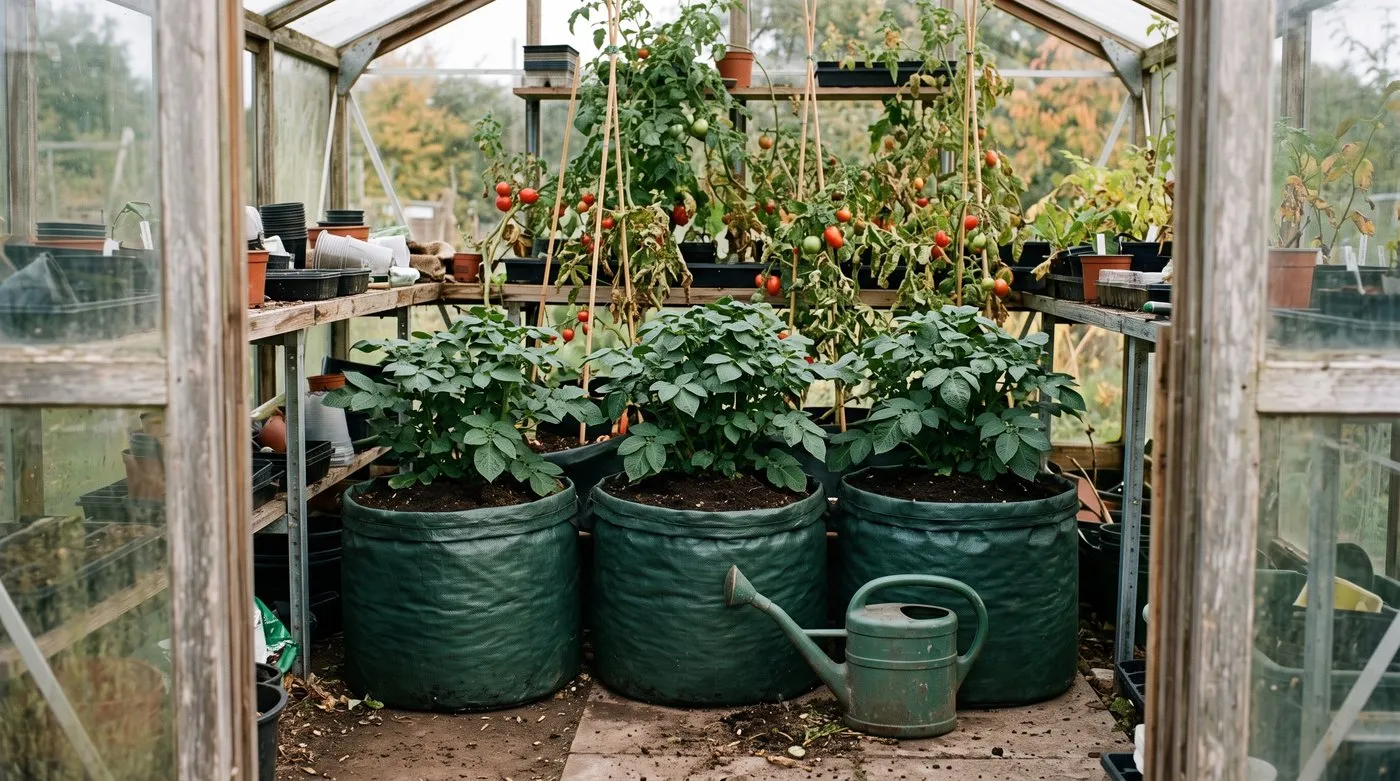
Plant cold-stored seed potatoes in big bags in July or early August. Under cover, the leaves stay safe from frost and blight is less of a worry.
Month-by-month potato timeline
| Month | What to do |
|---|---|
| January | Buy seed potatoes. Start chitting late in the month. |
| February | Keep chitting. Get beds ready by adding compost or well-rotted manure. |
| March | Plant first earlies around late March. Start greenhouse pots earlier. |
| April | Plant second earlies and maincrops. Earth up first earlies. |
| May | Earth up all your potatoes. Water in dry spells. Watch out for slugs. |
| June | Dig up first earlies when the plants flower. Start on second earlies late in the month. |
| July | Keep digging earlies. Watch maincrops for blight. |
| August | Plant Christmas potatoes. Dig second earlies. Peak blight time. |
| September | Dig maincrops. Cut off the leafy tops two weeks before digging so the skins toughen up. |
| October | Finish digging maincrops before hard frosts. Store in hessian or paper sacks. |
For more monthly crops, see our April planting guide and May planting guide. The vegetable planting calendar covers the whole year.
Common mistakes with potato planting times
Planting too early into cold soil
Don’t plant by the calendar alone. Cold, soggy ground can rot seed potatoes before they sprout. Wait until the soil is workable and the forecast looks kind.
Ignoring regional differences
National dates are just a starting point. Cold, exposed and hilly gardens should plant later than mild, sheltered ones.
Skipping frost protection for early plantings
New potato shoots can’t take frost. If you plant early, keep fleece handy or pull soil over new shoots before a frosty night.
Planting maincrops too late
Maincrops need the longest season. Get them in between mid-April and early May unless the supplier says otherwise.
Using old or damaged seed potatoes
Pick firm seed potatoes with no rot or damage. Store them as the supplier suggests and throw out any that go soft.
What to plant alongside potatoes
Potatoes are part of a crop rotation, which just means growing them in a different spot each year. That helps stop soil pests and diseases building up.
For getting your soil ready, see our guides to making compost and improving clay soil. Our seed sowing calendar covers other spring crops. Browse more in the growing section.
Browse the growing guides or read our full potato growing guide.
Frequently asked questions
When is the best month to plant potatoes in the UK?
March and April are the main months. First earlies go in around late March, second earlies in early to mid-April, and maincrops by early May.
Can I plant potatoes in February in the UK?
It’s usually too early outside. Use February to chit your early varieties somewhere cool, bright and frost-free. Plant them out once the soil warms up.
Is it too late to plant potatoes in May?
Early May is still fine for maincrops. Plant as soon as you can, as a later start means a shorter season. Check the timing on the seed potato bag.
Do I need to chit potatoes before planting?
You don’t have to, but it helps early varieties. Keep the seed potatoes cool, bright and frost-free for four to six weeks. Maincrops gain little from it.
When should I plant Christmas potatoes?
In July or early August, using special cold-stored seed potatoes. Grow them in a big container in a bright, frost-free greenhouse. Follow the timing on the bag.
Our team produces practical UK gardening guidance from source research, contributor records and established horticultural practice. Editorial standards are overseen by Matt W.


