Key takeaways
- Sow tomatoes indoors from mid to late February with gentle heat, about 18-21°C
- Broad beans and round-seeded peas can go out under cloches on well-drained soil
- Chit seed potatoes in a cool, bright room for planting in March or April
- Plant snowdrops in the green, just after they finish flowering
- February is the last good month for bare-root trees, roses and hedging
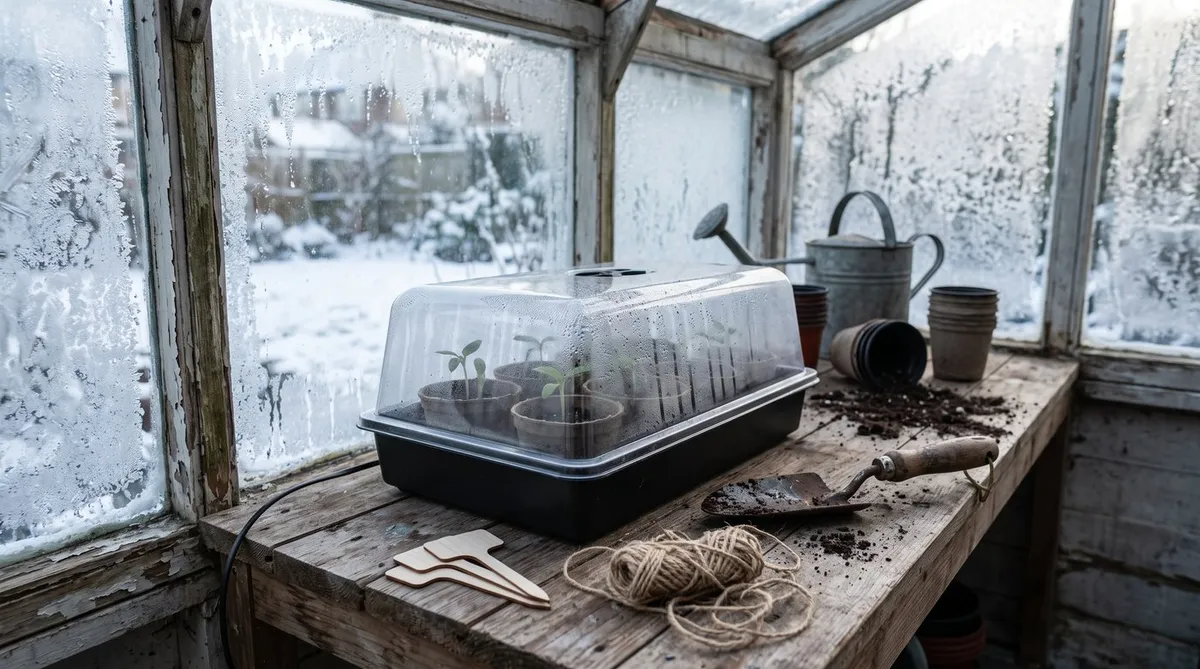
February is when the sowing season starts to wake up. Tomatoes and peppers go in indoors, and the hardiest crops can be sown outside under cloches. The light is better than in January, so seedlings grow sturdier.
This guide covers what to sow and plant this month, indoors and out. For pruning, lawn and general tidying jobs, see what to do in the garden in February. If you’re catching up, January’s planting guide covers chillies and aubergines, which really should be sown by now.
What to sow indoors in February
February sowings are for crops that need a head start before planting out in spring. A bright windowsill does for most, and a heated propagator helps the tender ones.
Tomatoes, peppers and aubergines
Tomatoes sown from mid to late February are ready to plant in a greenhouse in April or outdoors in late May. Sow two seeds per small pot, 1cm deep, at about 18-21°C. They usually come up within one to two weeks. The beginner’s guide to growing tomatoes follows them all the way to picking.
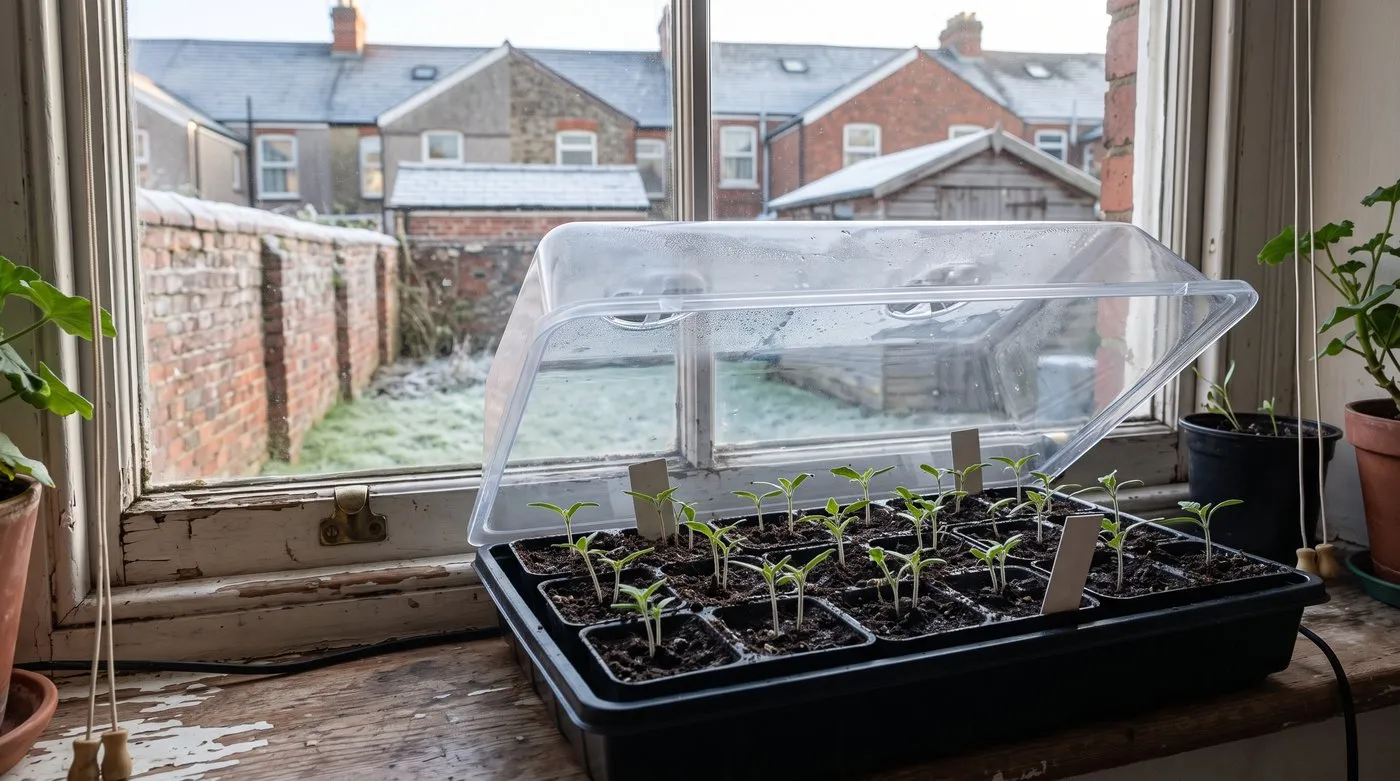
Tomatoes sown in mid to late February are sturdy little plants by spring. Give them the brightest windowsill you have.
Sweet peppers, chillies and aubergines sown now still have time to crop, especially under glass. They like it a little warmer, at 21-25°C. Thin each pot to the strongest seedling once they’re up.
Gardener’s tip: Stand seed trays as close to the glass as you can and turn them every day. February light is still weak, and seedlings lean towards it.
Early lettuce, cabbage and onions
Lettuce such as ‘All the Year Round’ can be sown in modules now. It germinates in cool conditions, around 10-15°C, so it doesn’t need a propagator.
Summer cabbages such as ‘Hispi’ and ‘Golden Acre’ can be sown under cover now for planting out in spring. Onions from seed and leeks can still be sown in modules this month too.
Flowers to sow indoors
Sweet peas sown in February flower from early summer. Sow one seed per root trainer, 2cm deep, and keep them cool and bright. Pinch out the tips when the plants are about 10cm tall to make them bushy.
Begonias, lobelia and bedding pelargoniums need an early start to flower by summer. Surface sow the dust-fine begonia and lobelia seed on damp compost and don’t cover it. Pelargonium seed goes about 5mm deep. All three want steady warmth, around 18-21°C.
What to sow outdoors under cloches
Only the hardiest crops go outside in February, and they do best under cover. Put cloches or fleece over the soil for a week or two first to dry and warm it.
Broad beans
Broad beans are the classic February sowing outdoors. ‘Aquadulce Claudia’ and ‘The Sutton’ are both hardy and reliable. Sow seeds 5cm deep and 20cm apart, in double rows about 25cm apart. On cold, wet soil, start them in deep pots under cover and plant out in March instead. The guide to growing broad beans covers support, blackfly and picking.
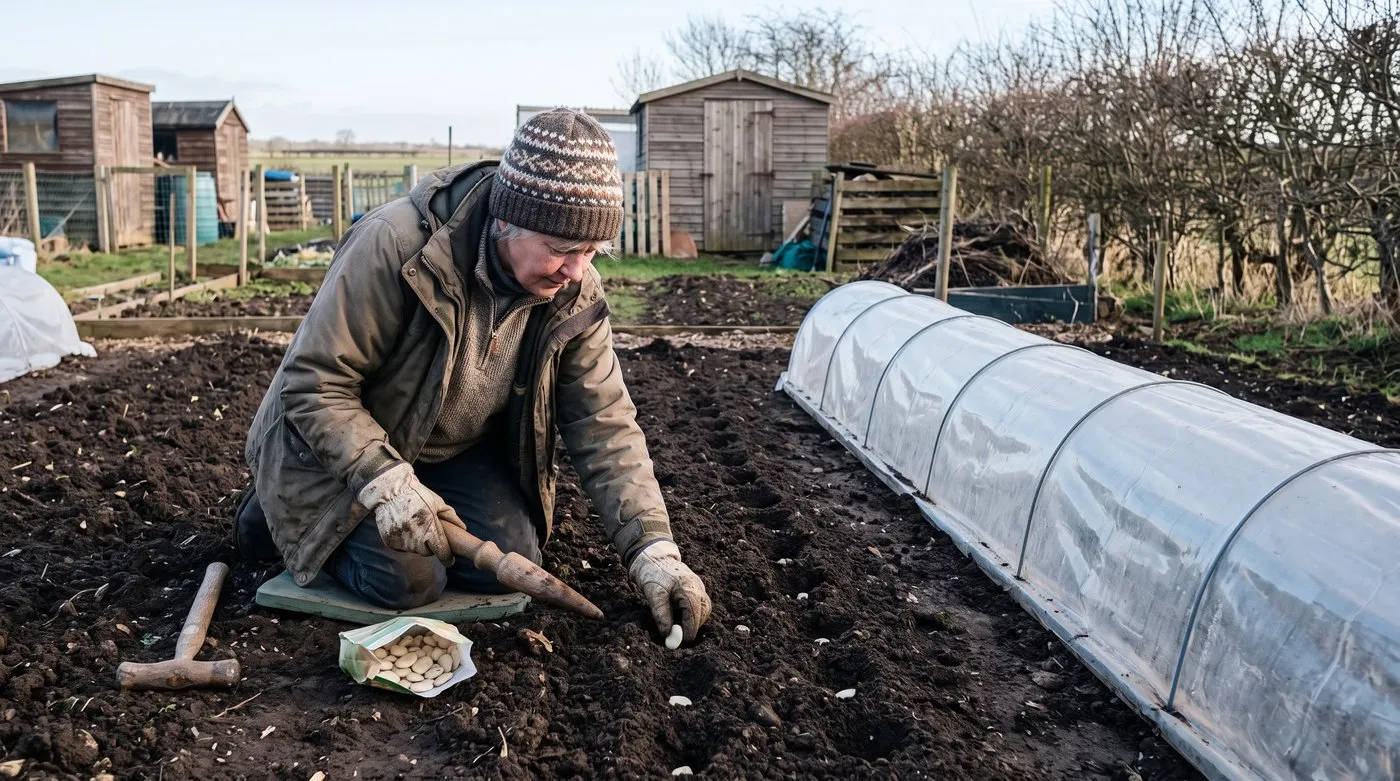
Broad beans go in 5cm deep in a double row. A cloche over the top keeps off the worst of the wet and cold.
Peas
Round-seeded peas such as ‘Meteor’ and ‘Feltham First’ cope with cold soil better than wrinkled types. Sow under cloches from mid-February in sheltered gardens. Sow 5cm deep in a wide, flat-bottomed drill, with seeds about 5cm apart. Put in pea sticks or netting straight away. The guide to growing peas explains which varieties suit later sowings.
Garlic and parsnips
You can still plant garlic in February on well-drained soil. Autumn-planted garlic usually gives bigger bulbs, but February cloves still make a worthwhile crop.
Parsnips are better left until March or April in most gardens. In a mild area you can try a late February sowing under a cloche. Always use fresh seed, as parsnip seed doesn’t keep.
How to chit seed potatoes in February
February is the month to buy seed potatoes and start chitting them. Chitting means letting them grow short shoots before planting, which gives early crops a head start.
Stand the potatoes in egg boxes or trays with the end that has the most eyes facing up. Keep them in a cool, bright, frost-free spot, such as a spare room or porch. Avoid dark cupboards, which give long, pale shoots that snap off.
After four to six weeks, each potato should have sturdy green or purple shoots about 2cm long. Plant them from mid-March in the south and from April further north.

Egg boxes and a bright, cool windowsill are all you need. Stubby shoots like these mean the potatoes are ready to go.
| Type | Example varieties | Plant | Usually ready |
|---|---|---|---|
| First earlies | Swift, Rocket, Lady Christl | Mid to late March | June to July |
| Second earlies | Charlotte, Kestrel | April | July to August |
| Maincrop | Maris Piper, Sarpo Mira | Mid to late April | August to October |
The full guide to growing potatoes covers planting depths and earthing up.
Flowers and bulbs to plant in February
February is the month for planting snowdrops in the green. That means moving or planting them while they’re still in leaf, just after flowering. It’s far more reliable than planting dry bulbs in autumn.
Lift a crowded clump with a fork, tease it into smaller groups of a few bulbs, and replant straight away at the same depth. Dappled shade under deciduous trees or shrubs suits them best. The guide to growing snowdrops has more on choosing and naturalising them.

Snowdrops move happily while still in leaf. Split big clumps into smaller groups and replant them straight away at the same depth.
Hellebores are at their best now and potted ones can be planted on mild days. Snip off old, tatty leaves so the flowers show.
Last chance for bare-root planting
February is the last good month for bare-root trees, roses and hedging. They need to be in the ground before the buds break in spring.
Plant fruit trees with the point where the trunk flares into the roots at soil level, and the graft union well above it. Don’t add compost to the planting hole. Stake on the windward side and water well. Bare-root roses go in with their graft union at soil level.
While you’re out with the secateurs, winter pruning of apples, pears and currants can be finished now. Leave plums and cherries until summer to avoid silver leaf disease.

Finish winter pruning of apples and pears before the buds burst. Leave plums and cherries alone until summer.
Getting beds ready for spring
February is a good month to get beds ready for March and April sowings. Spread a 5cm layer of well-rotted compost over the soil surface and leave the worms to work it in. There’s no need to dig.
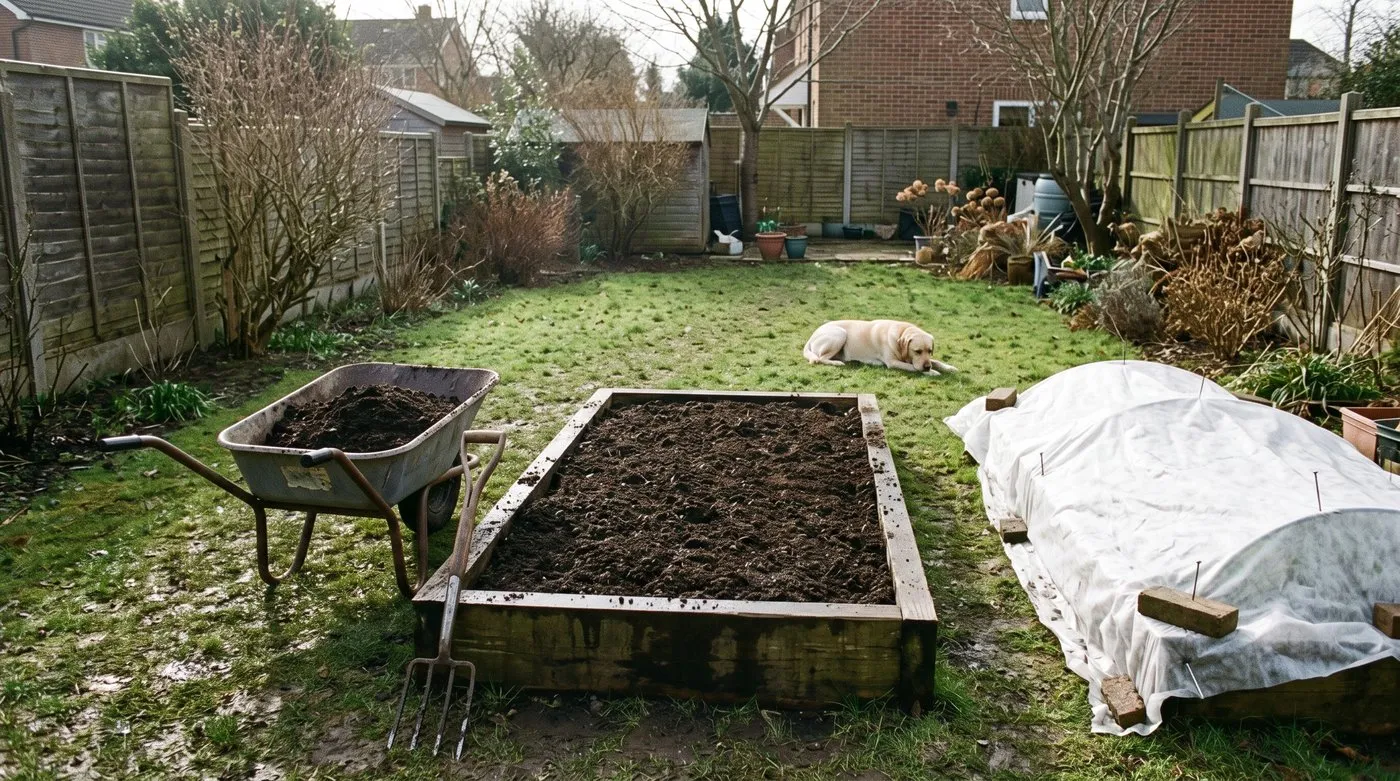
A layer of compost on top is all the bed needs. The worms pull it in while the soil warms up for spring.
Cover bare soil with cloches, fleece or sheets of cardboard to keep off the rain and start warming it. Soil that’s dry and crumbly in March is far easier to sow into. Raised beds warm up and drain faster than open ground, so they’re handy for the earliest sowings.
February sowing and planting at a glance
| When | Indoors | Outdoors |
|---|---|---|
| Early February | Sweet peas, onions, leeks, begonias | Bare-root hedging and fruit trees |
| Mid February | Lettuce, summer cabbage, lobelia | Broad beans and peas under cloches |
| Late February | Tomatoes, peppers, pelargoniums | Snowdrops in the green, garlic |
| All month | Chit seed potatoes | Warm soil under cloches |
Common February sowing mistakes
Sowing outdoors into cold, wet soil. Seeds rot before they come up. Warm the soil under cover first, or start broad beans and peas in pots.
Sowing tomatoes with nowhere bright to put them. Without good light they stretch and flop. If your windowsill is dull, wait until March.
Chitting potatoes in the dark. Shoots grow long and weak. Give them a cool, bright spot.
Leaving bare roots too late. Once buds burst, bare-root plants struggle. Get them in this month.
Using old parsnip seed. It rarely comes up. Buy a fresh packet each year.
Frequently asked questions
Can I sow seeds outside in February in the UK?
Yes, a few hardy crops, ideally under cloches. Broad beans and round-seeded peas cope with cold soil. Warm the ground with a cloche or fleece for a week or two first. Most other outdoor sowing waits until March or April.
When should I start chitting potatoes?
Start in February, about four to six weeks before planting. Stand seed potatoes in egg boxes with the end with most eyes facing up. Keep them in a cool, bright, frost-free room until the shoots are about 2cm long.
Is February too early to sow tomatoes?
No, mid to late February is fine with gentle heat. Use a heated propagator at about 18-21°C and the brightest windowsill you have. If you’re growing outdoors or have no heat, March sowings catch up quickly.
What flowers can I plant in February?
Snowdrops in the green, plus sweet peas and slow bedding indoors. Plant snowdrops while still in leaf, just after flowering. Sow sweet peas, begonias, lobelia and pelargoniums indoors with a little warmth.
Can I still plant bare-root trees in February?
Yes, as long as the buds haven’t broken. February is the last good month for bare-root fruit trees, roses and hedging. Plant on days when the soil isn’t frozen or waterlogged, and water them in well.
Can I sow parsnips in February?
Usually it’s better to wait until March or April. Parsnip seed is slow and patchy in cold soil. In a mild area, you can try late February under a cloche, using fresh seed.
When the soil starts to warm, move on to what to plant in March as the main sowing season begins, or browse more seasonal guides in our growing section.
Our team produces practical UK gardening guidance from source research, contributor records and established horticultural practice. Editorial standards are overseen by Matt W.