Key takeaways
- Chit seed potatoes in a cool, bright, frost-free spot for about four to six weeks
- Sow long-season crops like chillies, aubergines and onions under cover with heat
- Move seedlings off the heat as soon as they come up, into the brightest spot you have
- Prune group 3 clematis and autumn raspberries now, but not summer raspberries
- Cut back deciduous grasses before the new shoots get going
- Wait until March to sow tomatoes unless you have grow lights
February is the month to get the slow jobs started and resist the urge to sow everything. Chit your seed potatoes, sow long-season crops like chillies under heat, and prune clematis, dogwoods and autumn raspberries. Cut back grasses before the new shoots arrive.
The big February mistake is sowing too early. Seedlings started in weak winter light stretch and go pale, and later sowings soon overtake them. This guide covers the jobs worth doing now, the ones to hold back, and a week-by-week plan. For a list of what to sow and plant, see our guide to what to plant in February.
Why timing matters so much in February
Two things hold February back: cold soil and weak light.
Soil is slowly warming, but most seeds still rot rather than sprout in cold, wet ground. Hardy crops such as broad beans, early peas and radish start once the soil warms up a bit, usually under cloches first.
Light is the one people forget. Days are getting longer, but February light is still weak. A propagator gets seeds up, but after that seedlings need bright light to grow sturdy. That’s why February suits slow crops that need a long season, and not fast ones like tomatoes.
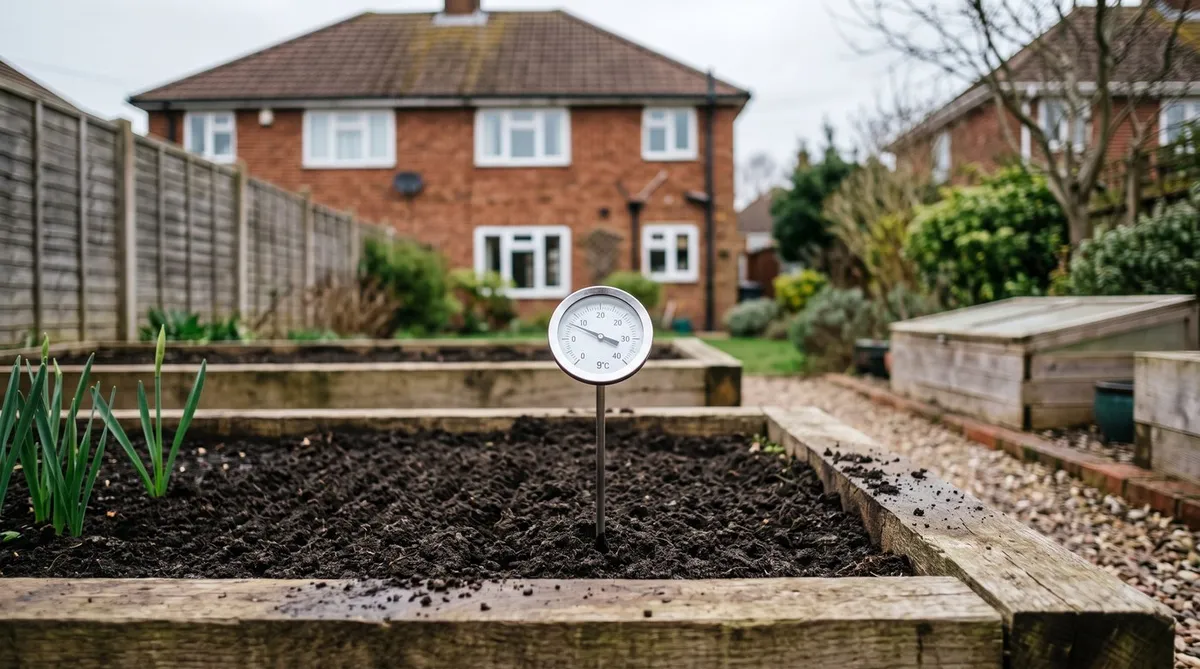
A cheap soil thermometer takes the guesswork out. Or simply wait until the soil feels less cold and sticky in your hand.
How to chit seed potatoes
Chitting means standing seed potatoes, eye end up, in a cool, bright, frost-free place so they grow short, sturdy shoots before planting. It gives early potatoes a head start.
- Where: a cool spare room, porch or frost-free shed with good light. Not a warm, dark cupboard.
- How: egg boxes or seed trays, one tuber per space, with the end with the most eyes facing up.
- How long: about four to six weeks.
In the south, start in early February. Further north, start later in the month. You’re aiming for short, stubby, dark green or purple shoots. Long, pale sprouts mean it’s too warm and dark. Our guide to when to plant potatoes has the planting dates by region.
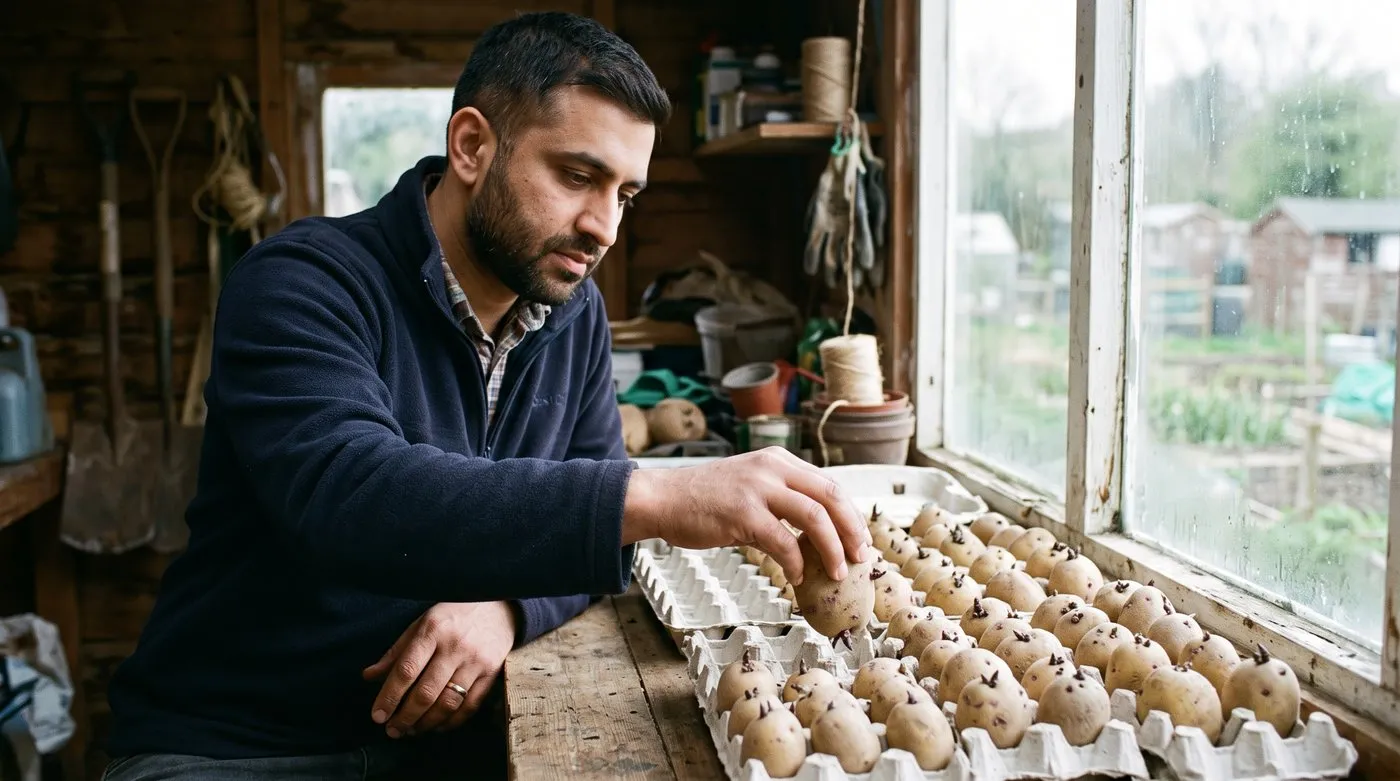
Egg boxes on a bright windowsill are perfect for chitting. Each tuber gets its own space so the shoots stay short.
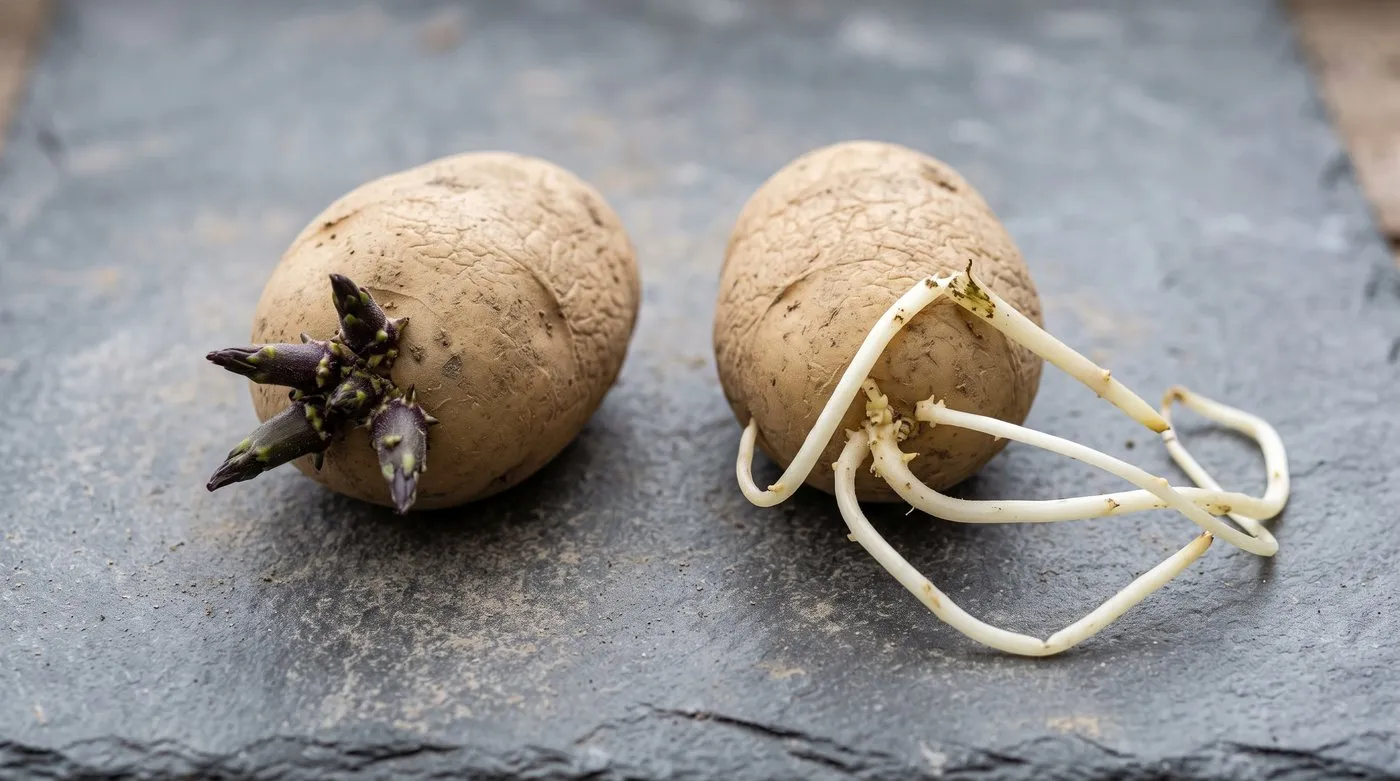
Left: short, dark shoots from a cool, bright spot. Right: long, pale sprouts from somewhere warm and dark. They snap off at planting.
What to sow under cover in February
The crops worth starting now all need a long season. Chillies, sweet peppers, aubergines and onions from seed all fit. They need warmth to germinate, then bright light.
| Crop | Warmth to germinate | When to sow | Tip |
|---|---|---|---|
| Chillies | Warm, propagator | Early to mid-Feb | Hot types can be slow, be patient |
| Sweet peppers | Warm, propagator | Mid to late Feb | A little quicker than chillies |
| Aubergines | Warm, propagator | Mid to late Feb | Struggle in a cold room |
| Onions from seed | Gentle warmth | Mid to late Feb | Don’t need high heat |
| Leeks | Gentle warmth | Late Feb | Sow in modules or trays |
| Sweet peas | Cool | Feb | Sow in deep pots or root trainers |
| Broad beans | Cool | Late Feb under cloches | Happy in cold soil |
The key move is taking seedlings off the heat as soon as they appear. Heat gets them up. After that, warmth without bright light makes them stretch. Move them to your brightest windowsill or greenhouse bench. For more detail by crop, see our seed germination temperatures guide.
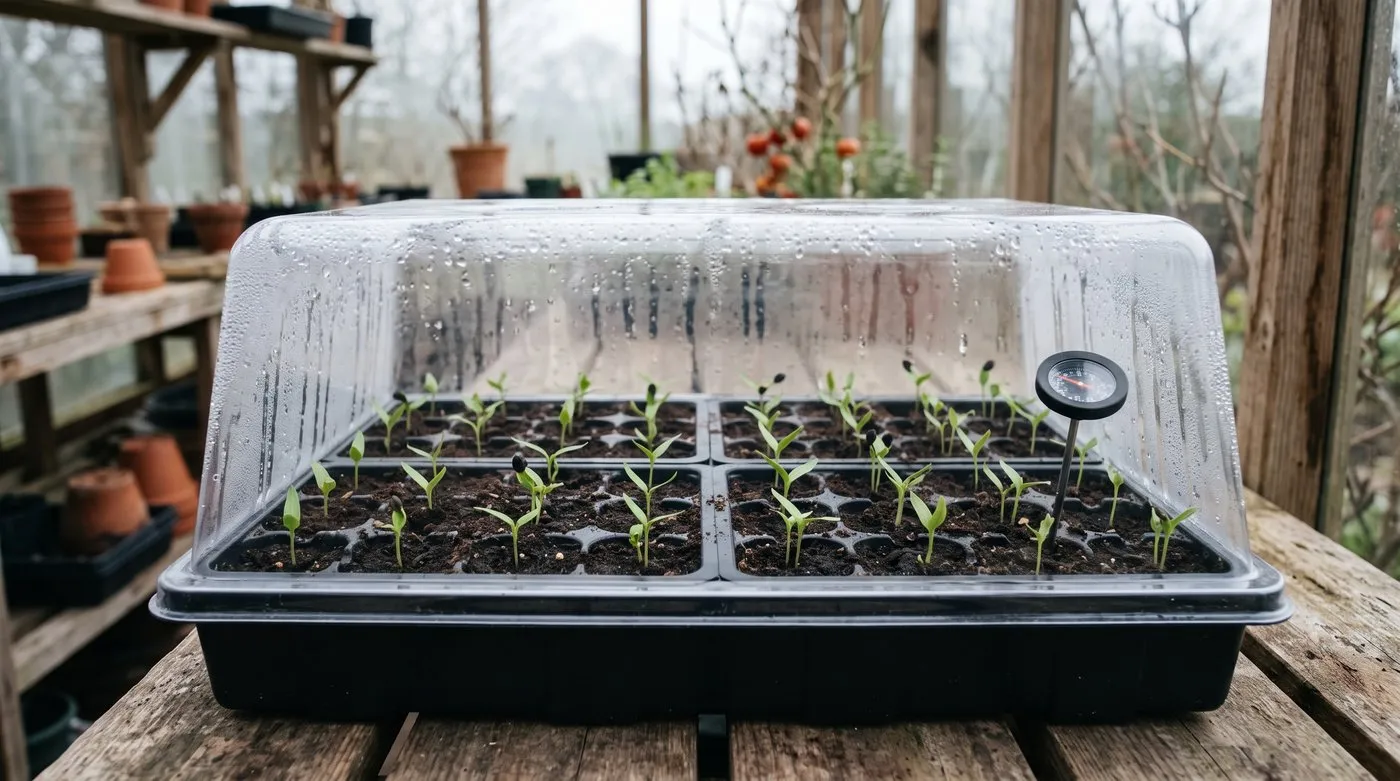
Once the seed leaves open, lift the trays off the heat and move them to the brightest spot you have.
Should you sow tomatoes in February?
Usually not. Tomato seed comes up easily in a warm propagator, but February light is too weak for the seedlings. They stretch towards the window and grow tall, thin and pale. This is called etiolation.
A mid to late March sowing still gives tomatoes from midsummer, and the plants are usually sturdier. February sowing only really works with grow lights over the seedlings.
Warning: A heated propagator is not a grow light. Heat in low light is exactly what makes leggy seedlings. If seedlings start stretching, move them somewhere brighter and cooler, not warmer.
Cutting back grasses and perennials
Late February is the last tidy window before new growth starts. Cut too early and you lose winter structure and shelter for wildlife. Cut too late and you chop off the new shoots.
Deciduous grasses such as miscanthus, calamagrostis, panicum and molinia get cut back to about 5-10cm. Tie the stems into a bundle with twine first, then cut below the tie. The whole lot lifts away in one go.
Evergreen grasses such as stipa and festuca are different. Don’t cut them hard. Comb out the dead bits with gloved fingers.
Old perennial stems of sedum, rudbeckia, echinacea and phlox can come down to the base now. Leave the cut stems in a loose pile at the back of the border for a while, so overwintering insects can move out.
Look at the base first. If new shoots are already showing, cut carefully by hand.
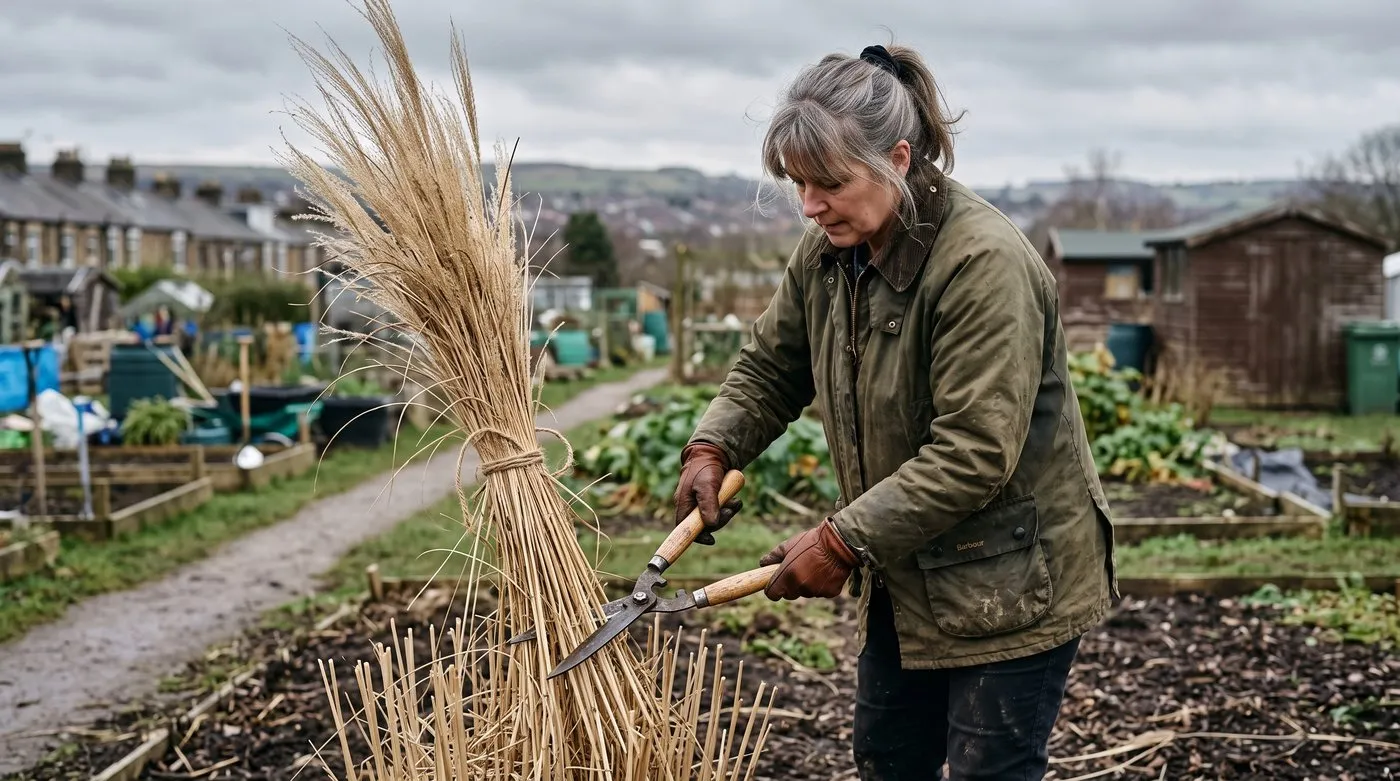
Tie the grass into a bundle before you cut. The whole clump comes away in one armful, with no mess.
Pruning clematis, dogwoods and willows
February is the time to prune plants that flower or colour on new growth.
Group 3 clematis flower from midsummer on this year’s growth. That includes viticella types, ‘Jackmanii’, ‘Ville de Lyon’ and ‘Polish Spirit’. Cut the whole plant down to a strong pair of buds about 15-30cm from the ground. It looks drastic, but it’s right. Other groups are pruned differently, so check with our guide to pruning clematis by group.
Dogwoods grown for coloured winter stems, such as Cornus alba ‘Sibirica’ and C. sanguinea ‘Midwinter Fire’, give the best colour on young stems. Cut stems back to a low framework in late February or March, once you’ve enjoyed the winter show. You can cut all of them, or a third each year for a less bare look.
Willows grown for coloured stems, such as Salix alba var. vitellina ‘Britzensis’, can be treated the same way.
Feed and mulch after a hard prune. The plant has a lot of regrowing to do.
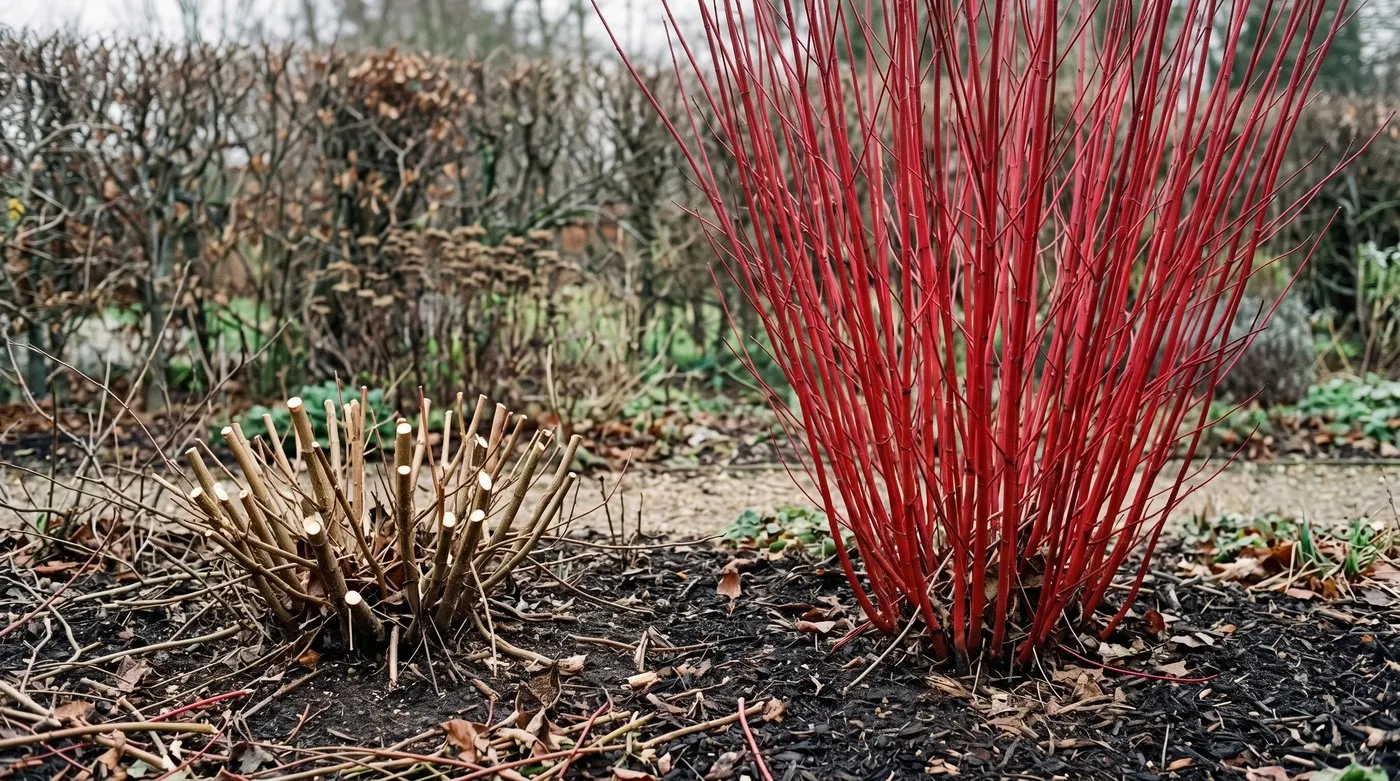
Cutting dogwoods back hard feels brave, but the fresh stems that follow give next winter’s brightest colour.
Pruning autumn and summer raspberries
Which raspberry you have decides what to do, so check before you cut.
Autumn-fruiting raspberries such as ‘Autumn Bliss’, ‘Polka’ and ‘All Gold’ fruit on canes grown this year. In February, cut every cane down to the ground. New canes come up in spring and fruit from late summer.
Summer-fruiting raspberries such as ‘Glen Ample’, ‘Malling Jewel’ and ‘Tulameen’ fruit on last year’s canes. Cut those down now and you lose this summer’s crop. Leave them alone until after picking, then cut out the old fruited canes.
If you don’t know which type you have, think back to when they fruited. Fruit in late summer and autumn means autumn type. Our raspberry growing guide has more on training and support.
Warming the soil with cloches
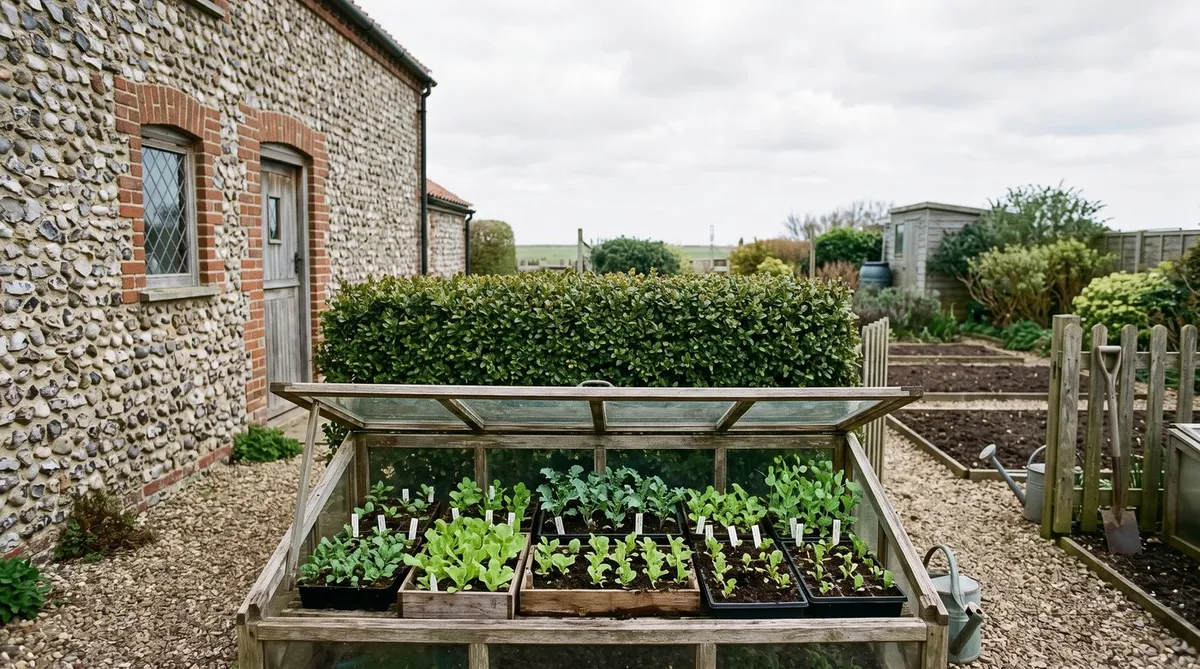
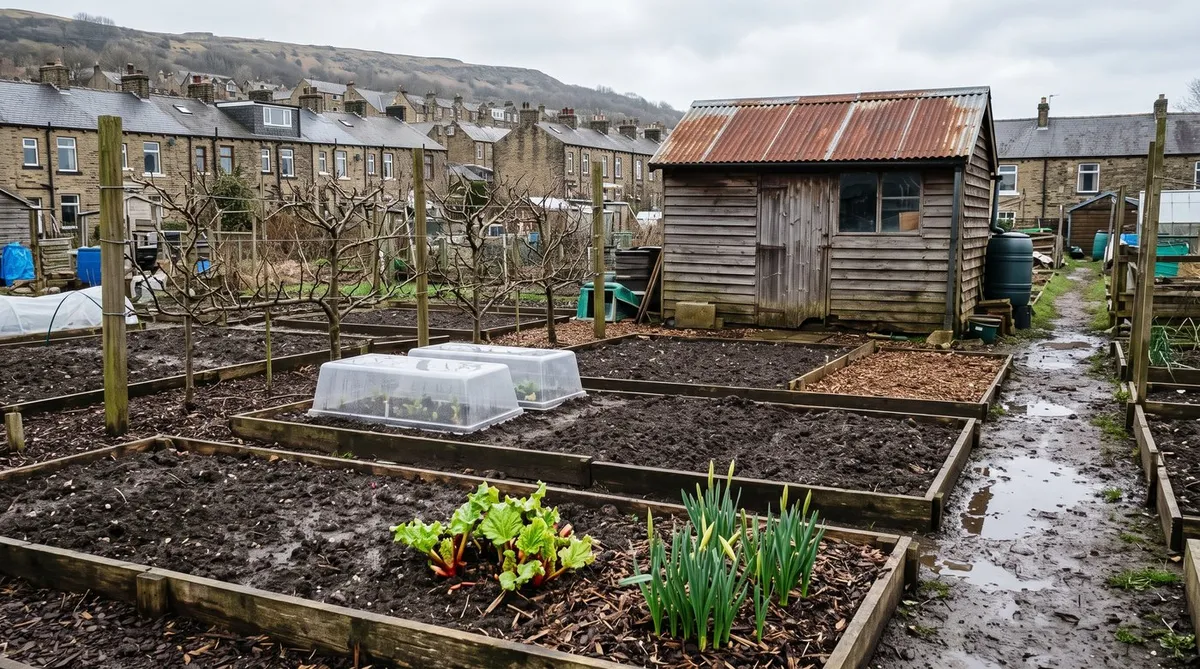
Covering beds now gives early sowings a head start. Put cloches, low polythene tunnels or sheets of black plastic over the beds you plan to sow first, two to three weeks ahead. They keep off rain and help the soil warm up.
Rigid cloches can stay on after sowing to shelter seedlings. Black plastic must come off before you sow. Fleece helps protect young plants from frost, but it doesn’t warm the soil much. Our guide to garden fleece explains the different grades.
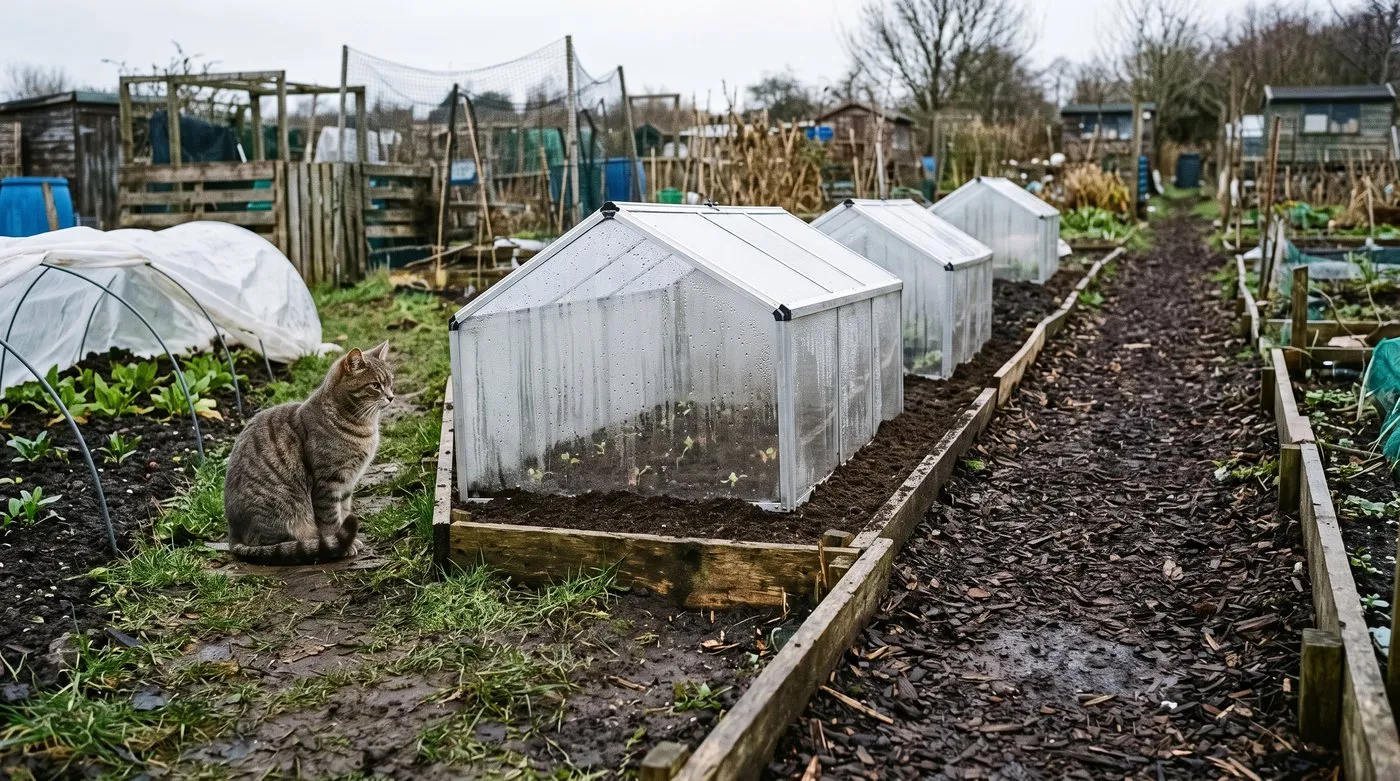
Cloches go on a few weeks before sowing to warm and dry the soil. The cat seems to approve.
Mulching and feeding the soil
February is a great month to mulch. Beds are bare, weeds are only just starting, and worms have time to pull it in before planting.
Spread about 5cm of well-rotted manure or garden compost over bare beds. There’s no need to dig it in. Worms will do that for you.
Manure must be well rotted: dark, crumbly and with no strong smell. Fresh manure can scorch roots and makes carrots and parsnips fork.
Some manure carries weedkiller residues from grass the animals ate. These can twist and stunt tomatoes, potatoes and beans. If you’re unsure about a batch, sow a few broad beans in a pot of it first. Cupped, twisted leaves are a warning sign.
Give fruit trees, fruit bushes and roses a general fertiliser at the rate on the pack, then mulch. Keep mulch a few centimetres clear of trunks and stems.
Dividing snowdrops and other bulb jobs
Snowdrops are best moved in the green, which means just after flowering while the leaves are still growing. Late February to March is the time.
Lift a crowded clump with a fork, keeping the roots intact. Split it into small groups of a few bulbs each. Replant straight away at the same depth and water them in. Dividing every few years keeps clumps flowering well.
Two more bulb jobs for February:
- Deadhead daffodils as they fade, but leave the leaves for about six weeks so the bulbs can build up for next year.
- Pot up summer bulbs such as lilies under cover, ready to move outside in spring.
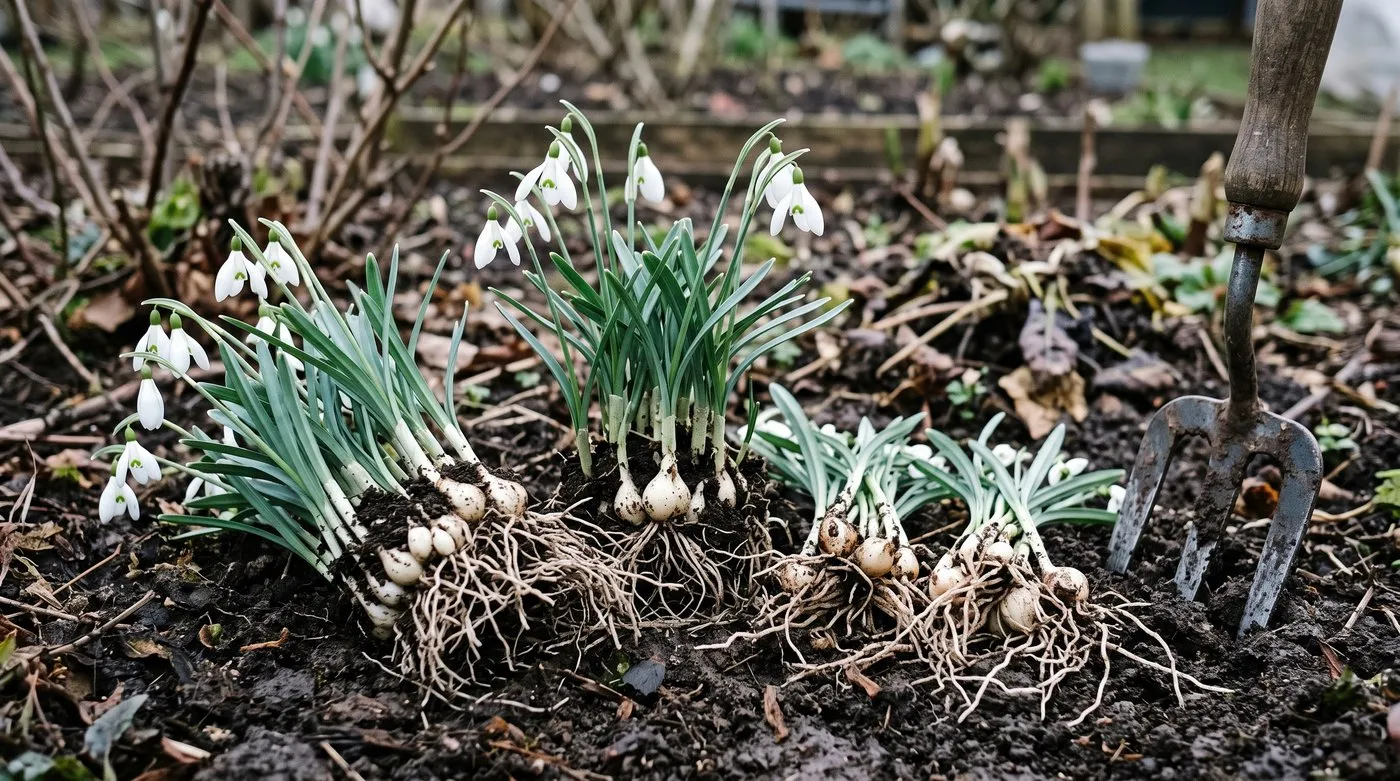
Split snowdrops into small clumps with their leaves still on. They settle in much better than dry bulbs.
Getting ahead of the weeds
Weeding in February feels early, but it pays back all year. Annual weeds such as hairy bittercress and groundsel are already growing and can set seed quickly.
- Hoe annual weeds on a dry day and leave them to shrivel.
- Dig out perennial weeds like dandelions and docks while the soil is soft, getting the whole root.
- Mulch afterwards to stop the next lot coming up.
Don’t rotavate ground full of bindweed, ground elder or couch grass. Chopping the roots into pieces spreads them, as each bit can regrow.
February week by week
| Week | Focus | Jobs |
|---|---|---|
| Week 1 | Start slow crops | Sow chillies and aubergines under heat. Chit potatoes in the south. Order seed potatoes |
| Week 2 | Prepare the ground | Cover first beds with cloches. Mulch bare beds. Dig out perennial weeds |
| Week 3 | Prune and sow | Sow onions and leeks. Prune group 3 clematis and autumn raspberries |
| Week 4 | Cut back and divide | Cut back grasses and old stems. Divide snowdrops. Chit potatoes in the north |
| All month | Greenhouse | Open vents on mild sunny days. Water sparingly. Check for aphids and grey mould |
| All month | Avoid | Sowing tomatoes without lights. Rotavating perennial weeds. Cutting evergreen grasses hard |
Common February mistakes
- Sowing everything on the first sunny day. Cold soil and weak light still hold most crops back. Sow only long-season crops under heat for now.
- Chitting in a warm, dark cupboard. You’ll get long, pale sprouts that snap off. Choose somewhere cool and bright.
- Cutting evergreen grasses to the ground. Stipa and festuca often don’t recover. Comb them instead.
- Pruning summer raspberries now. You’ll cut off this year’s crop. Check which type you have first.
- Spreading fresh manure. Use only well-rotted manure, and test a doubtful batch with broad beans.
Frequently asked questions
What should I do in the garden in February in the UK?
Chit potatoes, sow long-season crops under heat and prune. Cut back grasses and old perennial stems, prune group 3 clematis and autumn raspberries, and mulch bare beds. Put cloches over beds you want to sow early. Most outdoor sowing is still best left until March.
When should I start chitting seed potatoes?
From early to late February, depending on where you live. Gardens in the south can start early in the month. Further north, start towards the end of February. Chitting takes about four to six weeks, so work back from your planting date.
Can I sow tomatoes in February in the UK?
Only if you have grow lights, otherwise wait until March. February light is weak and the days are short. Tomato seedlings come up fine but then stretch into pale, weak plants. A March sowing usually catches up and does better.
What temperature do chilli seeds need to germinate?
Chillies need steady warmth, around 20-25C, to germinate well. In a cold room they come up slowly and unevenly, or not at all. A heated propagator or heat mat on a windowsill does the job. Some hot types can take a few weeks.
When should I cut back ornamental grasses?
Cut deciduous grasses back in late February, before new growth starts. Take them down to about 5-10cm above the base. Evergreen grasses such as Stipa tenuissima shouldn’t be cut hard. Comb them through with gloved fingers instead.
Does covering soil with a cloche in February actually help?
Yes, a cloche warms and dries the soil a little before sowing. Put cloches or sheets of black plastic in place two to three weeks ahead. It gives early sowings such as broad beans, peas and salads a better start.
Should I prune raspberries in February?
Prune autumn-fruiting raspberries now, but not summer-fruiting ones. Cut all autumn canes to the ground, because they fruit on new canes. Summer raspberries fruit on last year’s canes and are pruned straight after picking in summer.
Once February’s jobs are done, move on to our guide on what to do in the garden in March, or browse more how-to guides.
Our team produces practical UK gardening guidance from source research, contributor records and established horticultural practice. Editorial standards are overseen by Matt W.