Key takeaways
- 17g/m² fleece gives about 2°C of frost protection; 30g/m² gives 3-4°C
- A 1.5m x 10m roll costs £5-8 for 17g and £9-12 for 30g, roughly £1 per square metre
- Fix the edges every 50cm with pegs or bricks and bury the windward side 10cm deep
- Uncover flowering crops by mid-morning or pollination fails and yields drop
- Fleece stored dry lasts 2-4 seasons; fleece rolled up damp moulds in one winter
What do the fleece grades actually mean?
The grade is the weight of the fabric in grams per square metre. Heavier fleece traps a thicker layer of still air, so it insulates better, but it also blocks more light. That trade-off decides which grade suits which job.
| Grade | Frost protection | Light passed | Cost (1.5m x 10m roll) | Best use |
|---|---|---|---|---|
| 17g/m² | About 2°C | 85-90% | £5-8 | Spring sowings, pest barrier, light frosts |
| 30g/m² | 3-4°C | About 70% | £9-12 | Autumn and winter cover, hard frosts |
| 50-60g/m² | 5-6°C | 50-60% | £15-20 | Short cold snaps over tender plants only |
17g fleece is the spring workhorse. It passes enough light for crops to grow underneath it for weeks at a time, which is why it doubles as a season-long insect barrier. 30g fleece is the winter grade. Growth under it slows because of the lower light, but overwintering crops are barely growing anyway, so the loss matters little between October and February. 50-60g fleece blocks too much light for anything left covered more than a fortnight; treat it as an emergency blanket, not a growing cover.
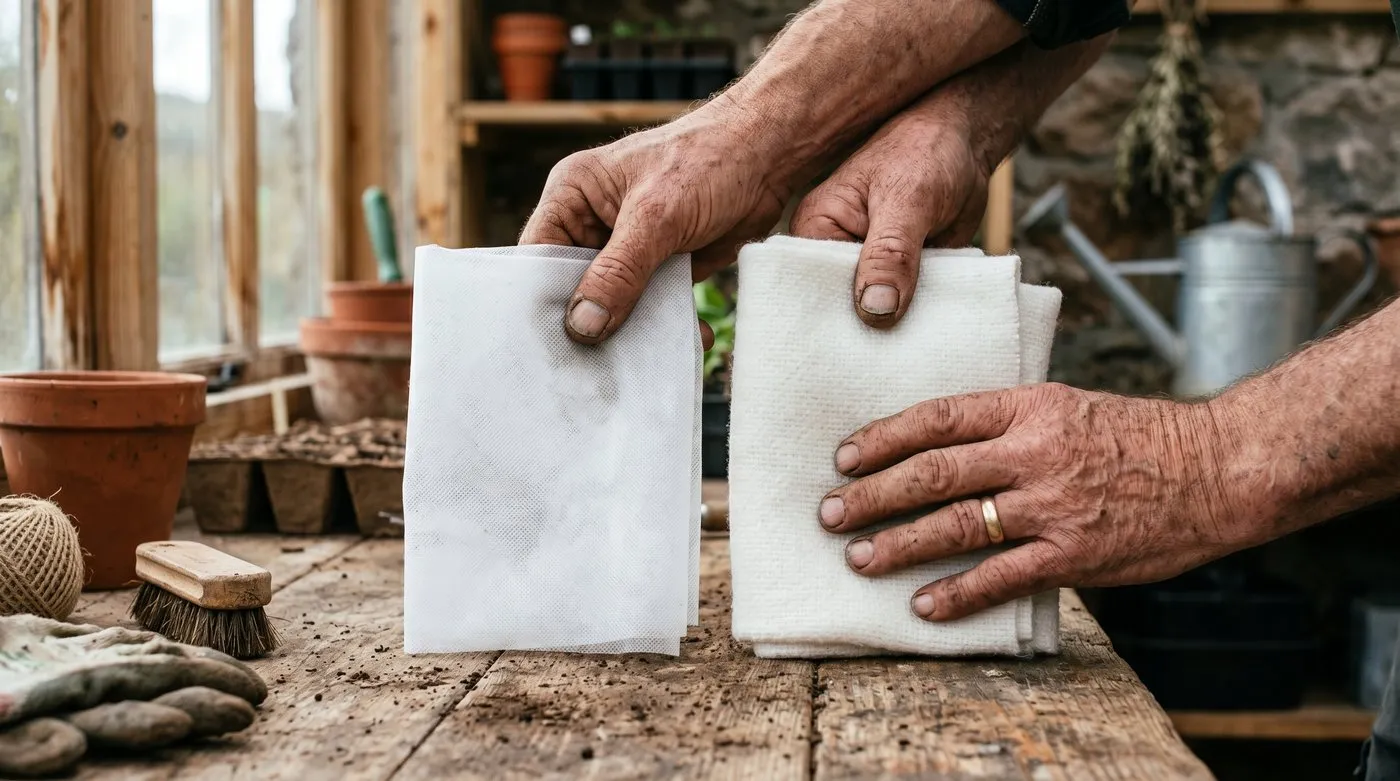 Side by side, the difference is visible: 17g fleece (left) is noticeably more translucent than the 30g winter grade.
How many degrees of frost does fleece stop?
A single layer of 17g fleece holds the air beneath it about 2°C warmer than open ground; 30g manages 3-4°C. The fabric works by trapping the heat that soil releases overnight. It is the same principle as cloud cover, which is why the sharpest frosts always come on clear, still nights.
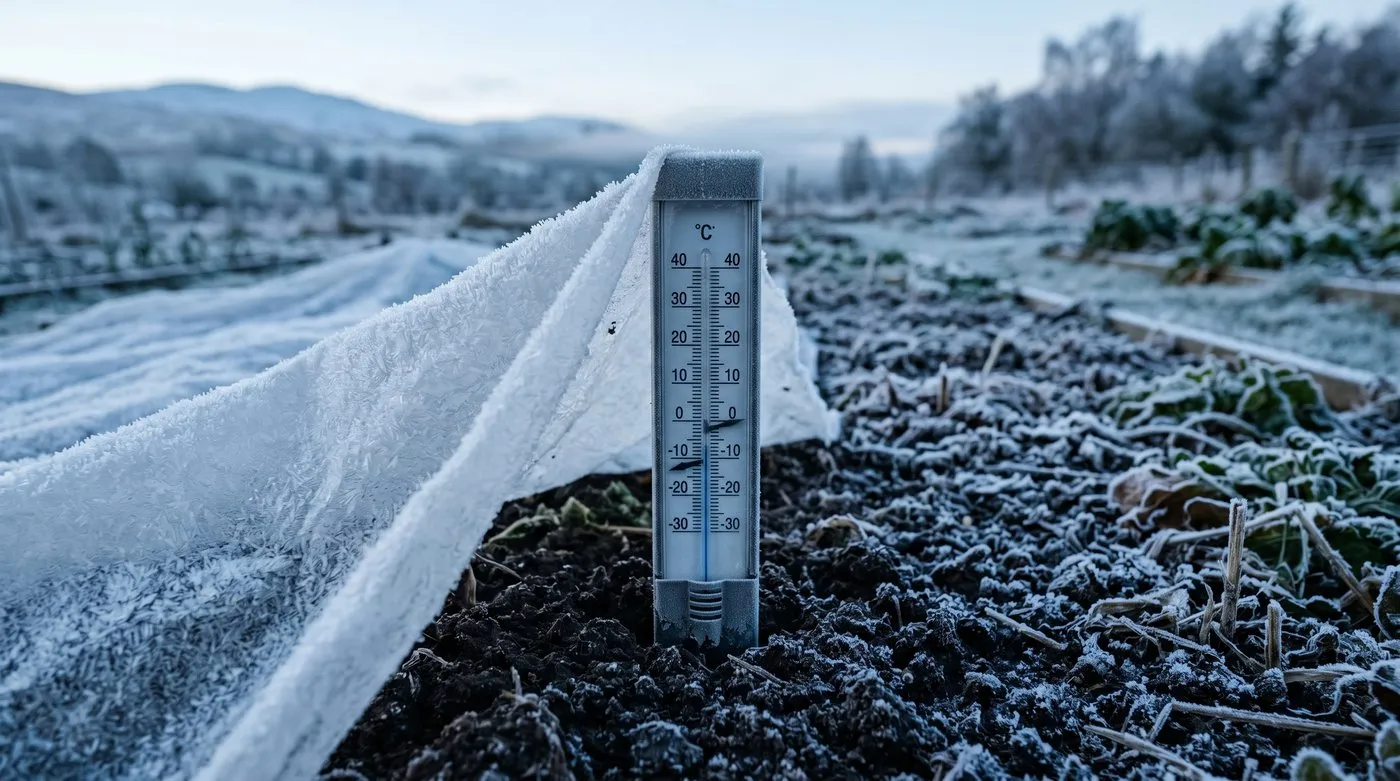 The trial’s coldest morning: -0.9°C under 30g fleece while the open bed beside it recorded -4.1°C.
When should fleece go on and come off?
On a frost-prone plot, fleece earns its keep from September to late May. The calendar below is set for a cold inland garden, the kind where the last spring frost lands in the final week of May and the first autumn frost arrives by mid-September. Milder coastal plots can shift everything two to three weeks.
| Month | Fleece job |
|---|---|
| January | Keep 30g on winter salads and spring cabbage; shake snow off before the weight tears it |
| February | Lay 30g over strawberry rows to bring fruit forward; check fixings after every gale |
| March | Pre-warm seedbeds under 17g for 2 weeks before sowing; soil under cover runs 2-3°C warmer |
| April | 17g over early sowings and emerging potato haulms every night a frost is forecast |
| May | Stay alert to the end of the month; dusk-to-mid-morning covers protect blossom and transplants |
| June | Switch 17g to pest-barrier duty over carrots and brassicas |
| July | Wash, dry and store winter-grade fleece out of the sun |
| August | Check rolls for tears and patch with fleece offcuts and clothes pegs |
| September | First frosts hit frost hollows mid-month; keep 17g by the back door from the first week |
| October | 30g on at night over salads, late roots and anything still cropping |
| November | Tuck 30g permanently over winter salads and seedling hardy peas |
| December | Inspect after storms; re-peg lifted edges the same day |
The single most useful habit is the evening forecast check from early September. Covering at dusk and lifting by mid-morning takes two minutes each way.
Securing fleece so it survives a gale
Four methods work, in rising order of effort:
- Fleece pegs. Plastic U-pegs cost £3-5 for 20. Push them through the fabric into the soil every 50cm around the whole perimeter. Quick, reusable, and fine for sheltered beds.
- Bricks or stones. Free and heavier than pegs. Sit them on a 10cm fold of fabric, never on a single taut layer, or the first gust tears the fleece around the stone.
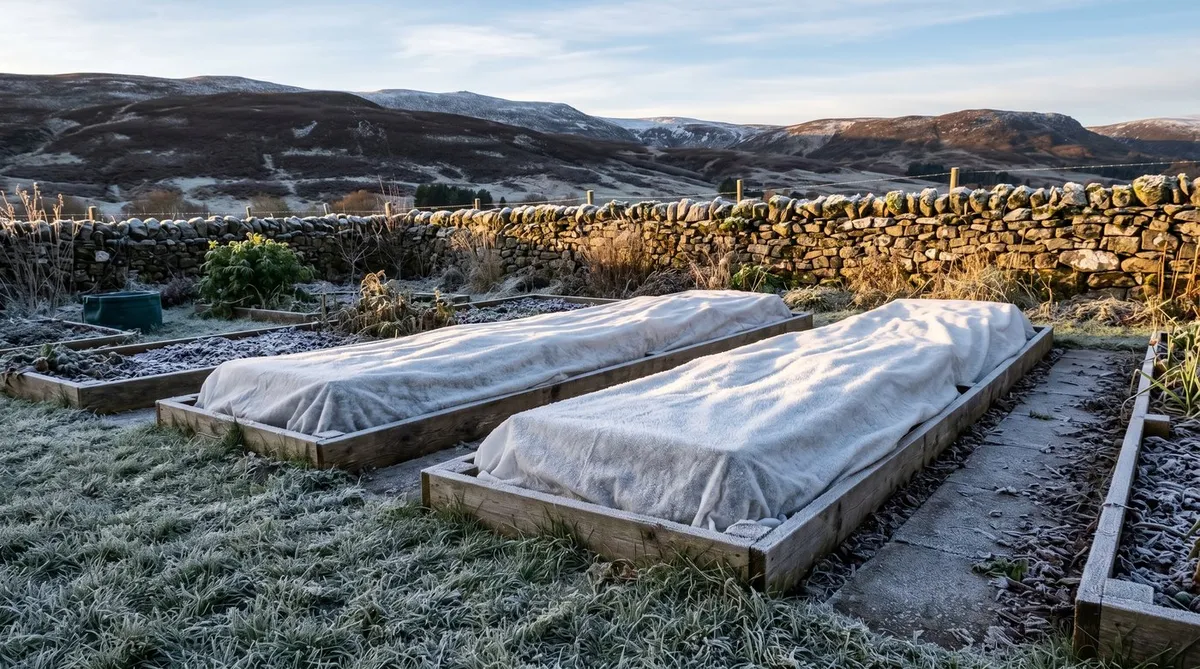
- Burying the edges. Dig a shallow trench 10cm deep along the windward side, lay the edge in, and backfill. This is the Pitlochry lesson: buried edges give wind nothing to get under.
- Hoops. Bend 2m lengths of 20mm water pipe over rebar pins to make a low tunnel frame, then peg the fleece over it. Hoops keep fabric off soft foliage, which matters because leaves pressed against frozen fleece get frost-burned through the fabric.
Whichever method you use, leave 10-15cm of slack over growing crops. Fleece pinned drum-tight checks growth as plants push against it, and taut fabric tears sooner in wind.
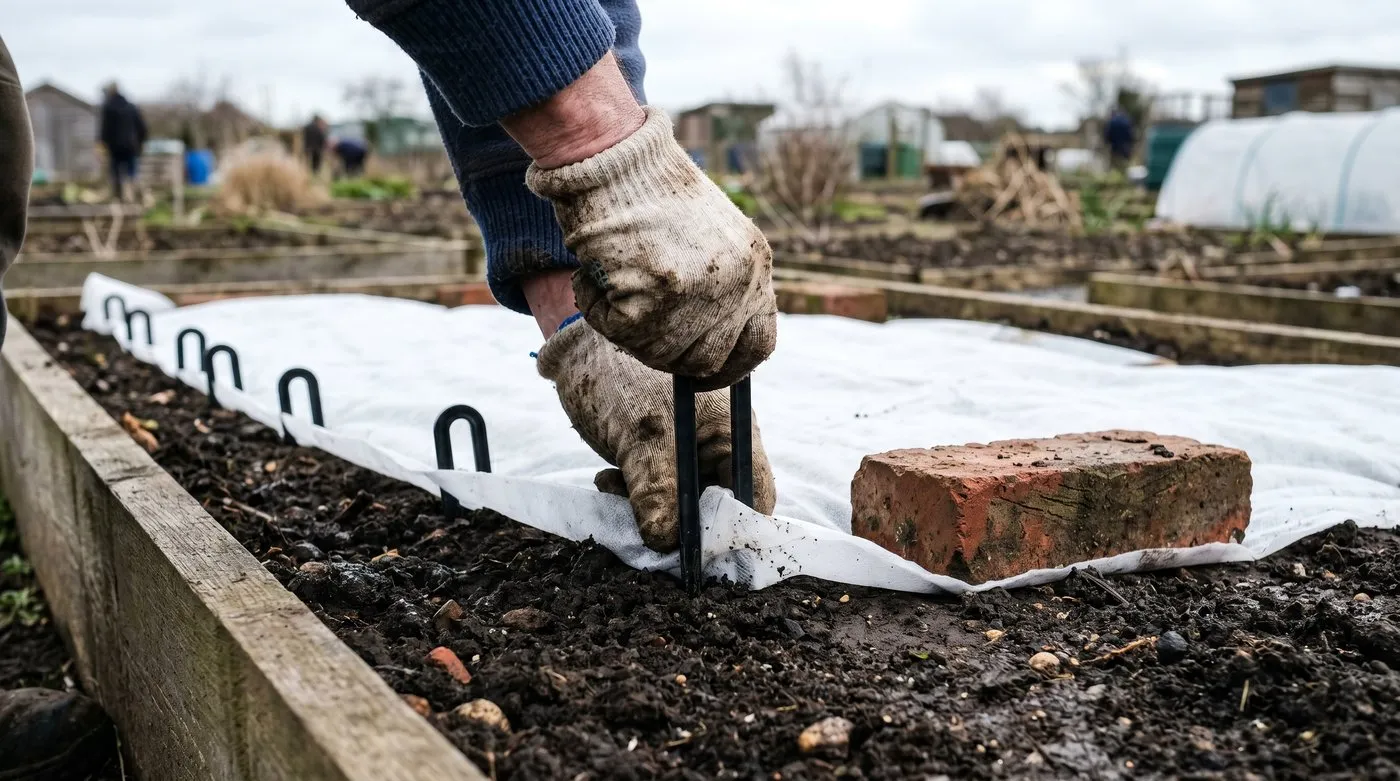 Fixings every 50cm, with the windward edge buried: the combination that survived a Perthshire gale intact.
Which crops need fleece, and which grade?
Early carrots, brassica transplants, strawberries and winter salads repay covering most. Fully hardy crops do not need fleece at all, and covering them wastes money and fabric.
| Crop | Grade | When | Why |
|---|---|---|---|
| Early carrots | 17g | Sowing to harvest | Frost cover plus a season-long pest barrier |
| Brassica transplants | 17g | First 4-6 weeks | Stops the worst early pest attacks |
| Strawberries | 30g | February to April | Brings picking forward 2-3 weeks |
| Early potatoes | 17g | April-May, frosty nights | Protects emerging haulms from blackening |
| Winter salads | 30g | October to March | Keeps leaves pickable through winter |
| Autumn-sown broad beans | 30g | Cold snaps only | Saves seedlings below about -5°C |
| Garlic, parsnips, leeks | None | Never | Fully hardy; fleece adds nothing |
The pest-barrier role is the most underrated. A carrot bed kept under 17g fleece from sowing day never meets the flies at all, and the full method is in our guide to carrot root fly prevention. The same cover protects young brassicas and salads through their most vulnerable weeks; see the approach in our piece on flea beetle damage for timings. For the early fruit trick, the routine in our guide to growing strawberries pairs February fleece with daytime uncovering once flowers open.
That last point is the big exception. Any crop in flower must be open to insects by mid-morning. Strawberries, broad beans and fruit blossom covered all day set little or no fruit. Cover at dusk, lift after the frost clears, and pollination carries on.
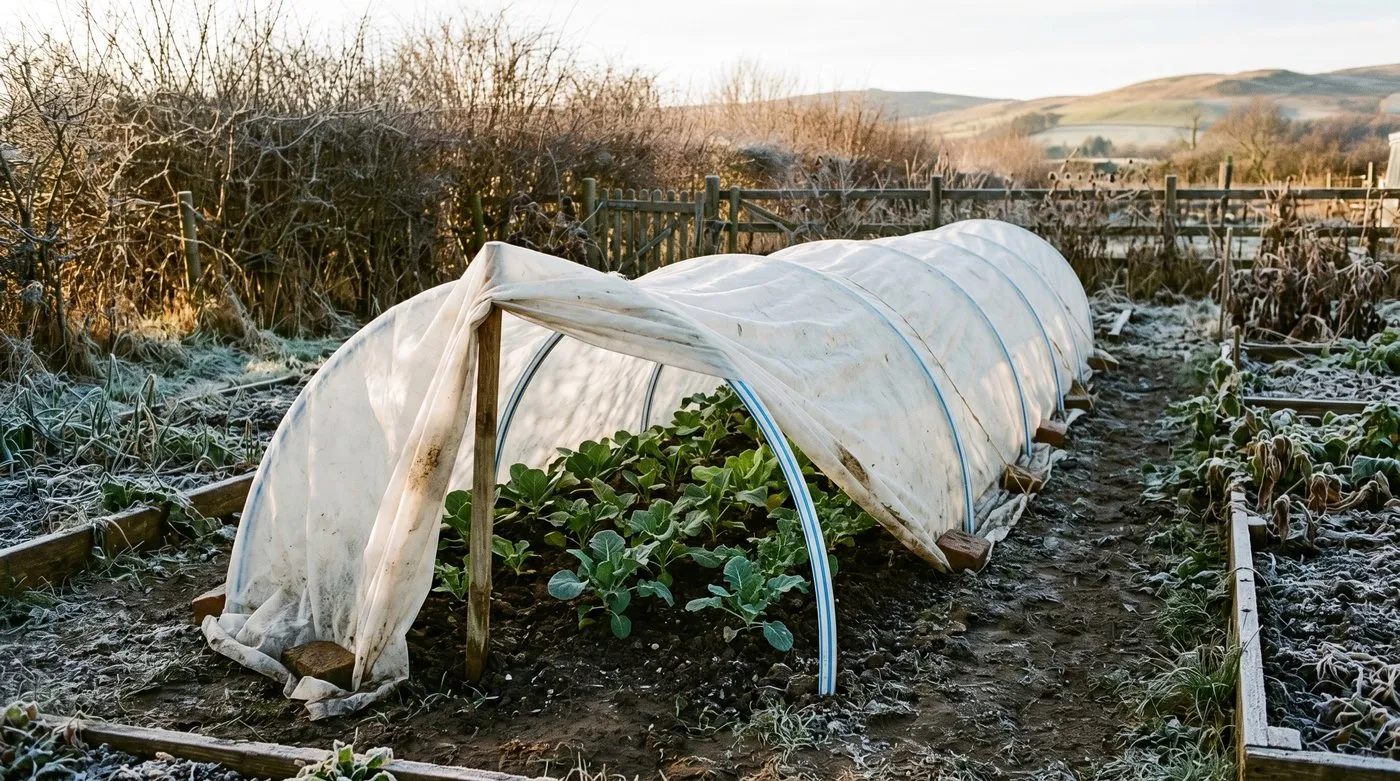 Hoops keep the fabric off soft foliage: leaves pressed against frozen fleece get frost-burned straight through it.
Fleece vs cloche vs cold frame
The rigid options still matter for specific jobs. Glass and plastic covers gain serious daytime heat, which fleece never does; our guide to cloches and low tunnels shows where that extra warmth pays. And for raising and acclimatising young plants, a frame beats fabric; see our piece on cold frame gardening for layouts and costs.
Common garden fleece mistakes
- Letting fleece touch the leaves on a frost night. Foliage pressed against frozen fabric frost-burns straight through it. Use hoops over soft growth, or at least leave generous slack.
- Weighing it down in four places and hoping. A gale gets under any unfixed run of edge. Fix every 50cm and bury the windward side 10cm deep.
- Leaving flowering crops covered all day. No insects means no pollination. Covered-all-day strawberry rows set a fraction of the fruit; lift fleece by mid-morning once frost has cleared.
- Using 50-60g fleece as a long-term cover. It blocks 40-50% of light. Crops underneath turn pale and drawn within a fortnight. Save it for short cold snaps.
- Storing fleece damp. Folded away wet in July, it comes out mouldy and tears along every crease. Dry it on the washing line first and store it in the shed, out of UV.
- Fleecing crops that never needed it. Garlic, parsnips and leeks shrug off -10°C. Spend the fabric where it changes the outcome.
Frequently asked questions
What is the difference between 17g and 30g garden fleece?
17g fleece gives about 2°C of frost protection; 30g gives 3-4°C. The number is the fabric weight per square metre. The lighter grade passes 85-90% of light, so crops can grow under it for weeks. The heavier grade passes around 70% and suits hard frost and winter cover. Two layers of 17g perform almost the same as one layer of 30g.
Can plants stay covered with fleece all the time?
Hardy crops can, but flowering crops need uncovering for pollination. Carrots under fleece as a pest barrier stay covered from sowing to harvest. Strawberries, broad beans and fruit trees in blossom must be open to insects by mid-morning. Lift the fleece once frost has cleared and replace it at dusk if another cold night is forecast.
Does garden fleece let rain through?
Yes, fleece lets rain and irrigation pass straight through. The spun fabric is permeable, so you can water through it without lifting it. Heavy rain does sit on slack fabric and press it onto seedlings, which is one reason to support fleece on hoops over soft growth. Air passes through too, so crops never cook on a mild day.
When should fleece go on in autumn?
Cover tender and half-hardy crops before the first forecast frost, often mid-September in Scotland. Frost-prone inland plots can see ground frost two to three weeks before nearby towns. Check the overnight minimum each evening from early September. Putting 17g fleece on at dusk and lifting it mid-morning costs two minutes a day and saves the crop.
How long does garden fleece last?
Is fleece better than a cloche or cold frame?
Fleece is cheaper and covers more ground; rigid covers give more warmth. A 10m roll of fleece costs £5-12 against £15-30 for a single cloche and £60-150 for a cold frame. Fleece drapes over any bed shape and stores flat. Cloches and frames hold daytime heat better, so each earns a place for different jobs.
Our team produces practical UK gardening guidance from source research, contributor records and established horticultural practice. Editorial standards are overseen by Matt W.