Key takeaways
- Cloches and low tunnels give you a few extra weeks at both ends of the year
- Put them out a couple of weeks before sowing to warm and dry the soil
- Clear polythene keeps in the most warmth, while fleece breathes and needs less fuss
- Open the ends on warm days, or plants can cook, then close up by late afternoon
- Lettuce, radish, spinach, broad beans, peas and carrots love an early start under cover
Cloches and low tunnels are the cheapest way to stretch your growing year in the UK. You can sow earlier in spring and keep picking later into autumn.
Here’s how they work. A clear cover traps the sun’s warmth, warms the soil and keeps off cold wind. Seeds come up faster, seedlings settle in sooner and crops are ready weeks ahead of uncovered ones.
Types of cloche and low tunnel
There are a few main choices, each suited to different spots and budgets.
Polythene low tunnels are the favourite for UK veg beds. Push wire hoops into the soil every 60cm and stretch clear polythene over the top. It’s cheap and covers a whole raised bed.
Fleece tunnels use the same hoops with garden fleece instead of polythene. Rain gets through and the air moves, so you don’t need to open them up as often. They give light frost protection but let in less light than polythene.
Rigid plastic cloches are barn or tent-shaped panels that clip together. They last for years, are easy to move and need no hoops. They cost more, though.
Glass bell cloches sit over single plants. They look lovely and last forever if you don’t drop them.
| Type | Cost | Warmth | Fuss | How long it lasts |
|---|---|---|---|---|
| Glass bell cloche | High | Good | Prop open daily | For ever, with care |
| Polythene tunnel | Low | Good | Open ends daily | 2-3 seasons |
| Fleece tunnel | Low | Light frost only | Very little | 1-2 seasons |
| Rigid plastic | Medium to high | Good | Slide panels | Many years |
How to build a polythene low tunnel
What you need for a 3m tunnel:
- 6 galvanised wire hoops (from a garden centre, or bend your own from 3mm wire)
- A 4m x 1.5m sheet of clear polythene, 500 gauge or heavier
- String or clips to hold the sheet
- Bricks or timber to weigh down the edges
How to put it up:
- Push hoops into the soil every 60cm along both sides of the bed
- Aim for 45-60cm of height at the top of each hoop
- Drape the polythene over, leaving 30cm spare on each side
- Weigh the sides down with timber or bricks, or bury the edges
- Gather and tie the ends, or weigh them down so you can get in easily
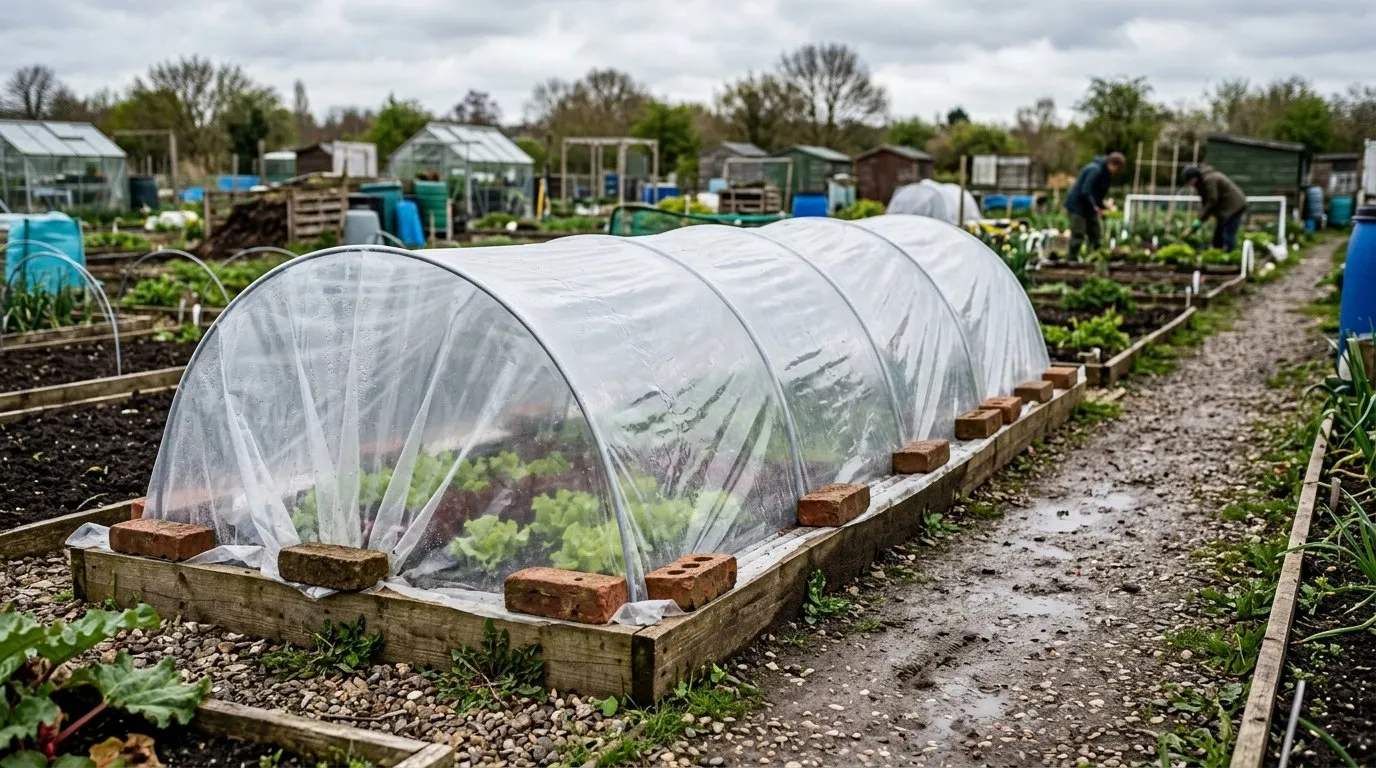
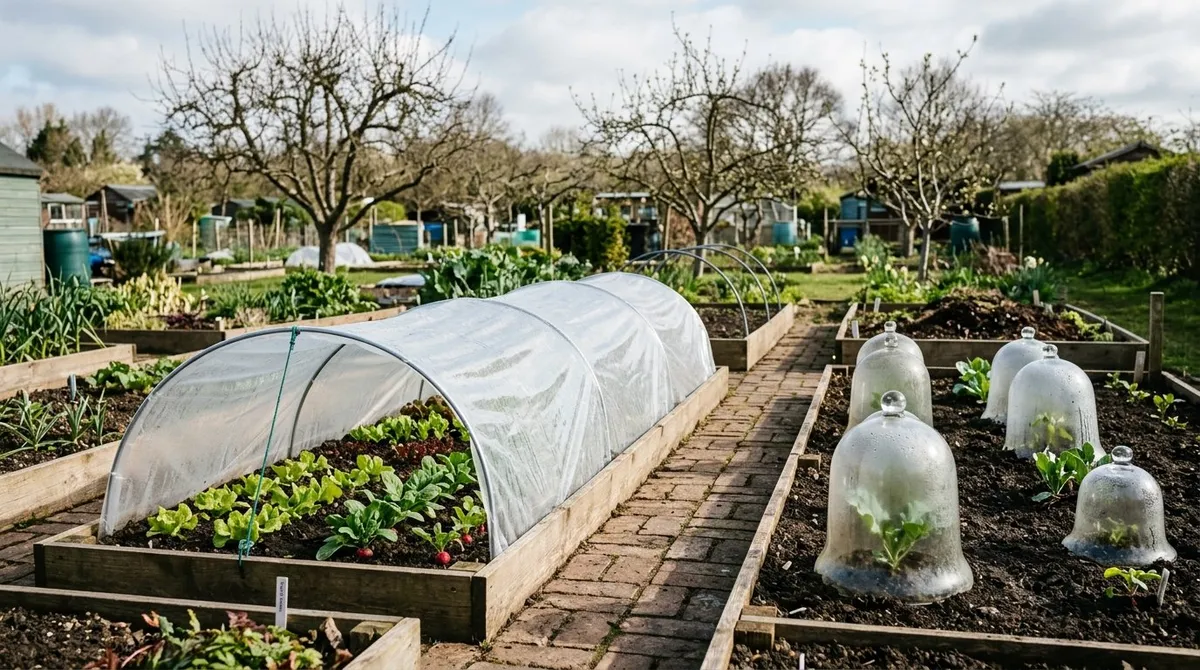
A polythene low tunnel on wire hoops over a raised bed, with bricks along the sides for quick access.
Pull the sheet snug enough to shed rain but not drum-tight. A slight sag lets condensation run to the edges instead of dripping on your plants.
Best crops for early sowing under cover
Crops that come up in cool soil but sulk in cold wind gain the most from a cover. Good choices for February and March sowings are lettuce, radish, spinach, spring onions, carrots, beetroot, broad beans and peas. Strawberries covered in early spring crop earlier too.
Ventilation: the most common mistake
Forgetting to open up is the number one mistake. On a sunny March day a closed polythene tunnel gets very hot by mid-morning. Lettuce bolts, seedlings scorch and the damp air invites mould and damping off (seedlings collapsing at the base).
The simple rule: if the day feels mild, open both ends. On warm or sunny days, push the sheet halfway up the hoops on the side away from the wind.
Close up by about 4pm. That traps the day’s warmth in the soil overnight, which keeps roots growing when the air turns cold.
This means a daily check from March onwards. If you can’t get to the plot every day, use fleece instead. It breathes and rarely overheats, though it keeps in less warmth.
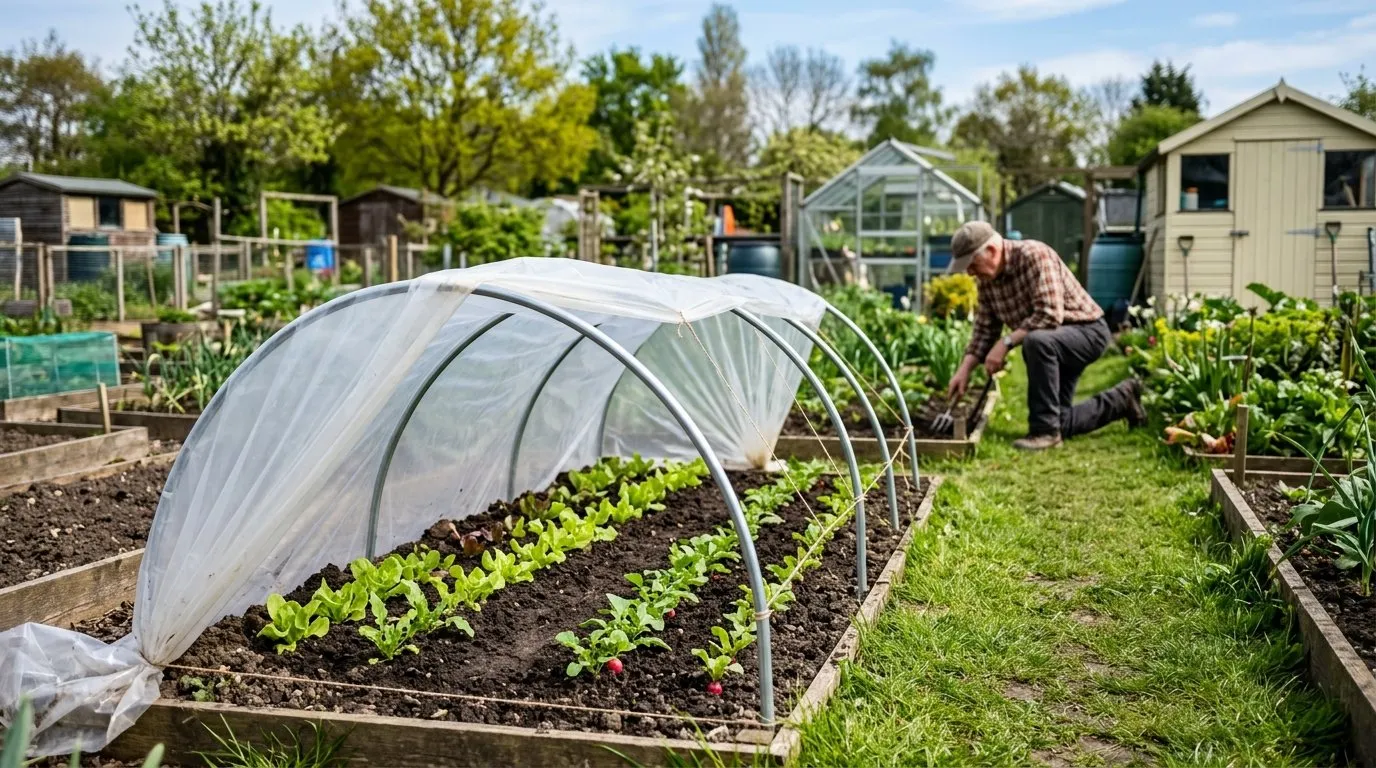
On a warm March day, push the polythene up one side and open both ends so plants don’t overheat.
Month-by-month growing calendar under cover
| Month | What to do | Crops |
|---|---|---|
| January | Put cloches on empty beds to warm the soil | None yet |
| February | Sow the first crops under cover | Lettuce, radish, broad beans, spinach |
| March | Main sowing time, open up on warm days | Carrots, peas, spring onions, beetroot |
| April | Harden off and uncover hardy crops | All of the above, plus French beans under fleece |
| May | Take covers off most crops | Runner beans, courgettes (late May, fleece only) |
| June to August | Use mesh to keep off carrot fly and cabbage whites | Summer crops |
| September | Cover again to stretch the season | Lettuce, spinach, radish, rocket |
| October | Cover crops that stay out over winter | Broad beans, garlic, winter lettuce |
| November to December | Fleece over hoops on cold nights | Winter salads, spring cabbage |
Cloches versus other growing structures
Cloches and low tunnels are the budget end of growing under cover. Here’s how they compare.
A cold frame gives similar protection in a more permanent box. It’s better for raising seedlings and hardening them off, but covers less ground for your money.
A polytunnel lets you walk inside and grow tall crops like tomatoes and cucumbers. It costs a lot more. Our polytunnel vs greenhouse guide helps you choose.
A greenhouse gives you the most control but costs the most. For growing veg on a budget, cloches and low tunnels give you the most for your money.
Most UK gardeners who grow their own veg end up using a mix. Cloches on the main beds, a cold frame for seedlings, and a greenhouse or polytunnel for heat-lovers.
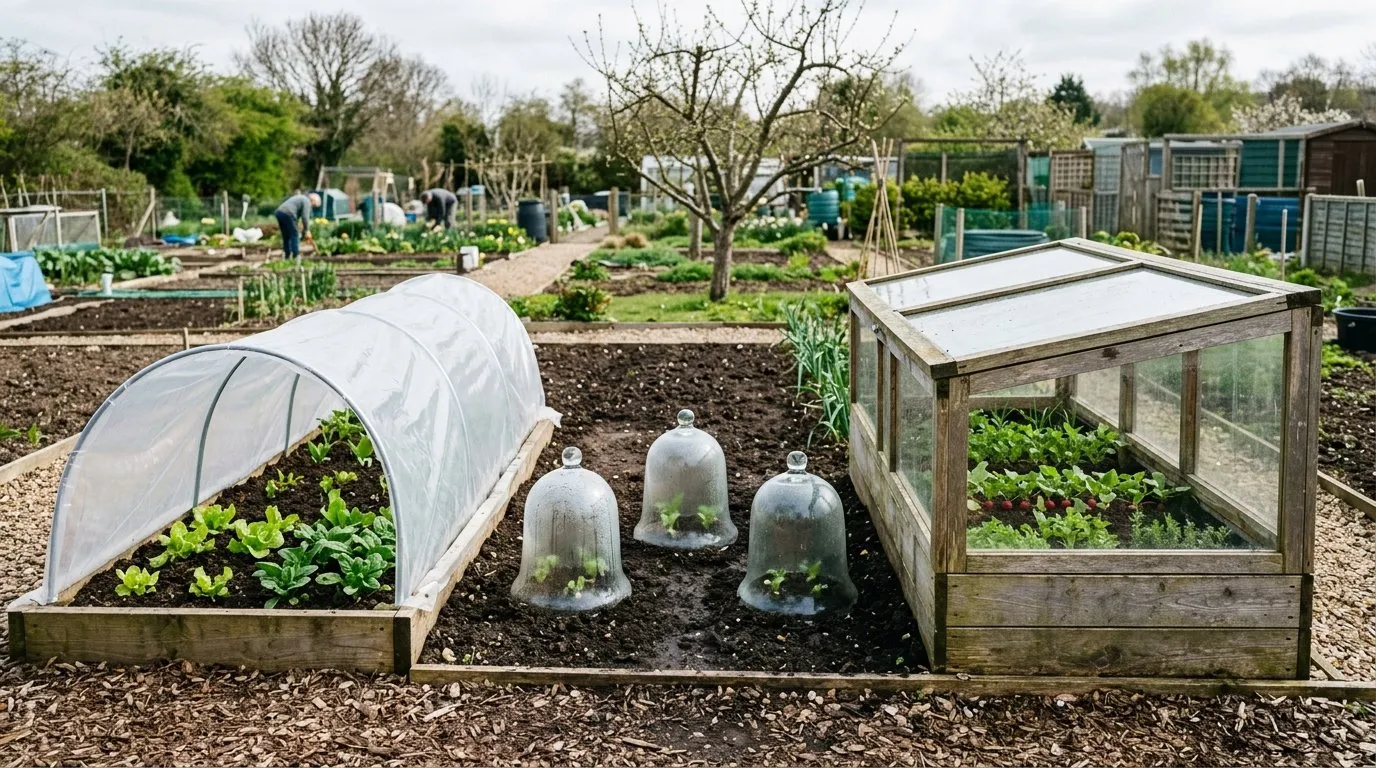
From left: a polythene low tunnel, glass cloches and a cold frame on an allotment. Each one has its own job.
Fixing common problems
Drips on your plants: Shape the hoops so condensation runs to the edges, not the middle. Anti-fog polythene also helps stop drips forming.
Wind lifting the covers: Use timber or half-filled water bottles, as bricks can tear polythene. Or bury the edges 10cm into the soil.
Slugs loving the warm, damp air: Use beer traps or ferric phosphate pellets inside. Check under the edges at dusk, where slugs gather.
Pale, leggy seedlings: They need more light. Wipe the polythene clean, and swap cloudy or yellowed sheets for new ones.
Frequently asked questions
What is the difference between a cloche and a low tunnel?
A cloche covers a single plant or short row. A low tunnel covers a whole bed, with polythene, fleece or mesh stretched over hoops. Cloches are often glass or rigid plastic and easy to move. Low tunnels cover more ground for less money, so they suit veg beds.
When should I put cloches out in the UK?
Put cloches out in late January or February. Set them in place a couple of weeks before sowing to warm and dry the soil. Seeds sown under cover from late February come up faster than in open ground. In autumn, cloches keep frost and heavy rain off late crops.
What is the best material for a low tunnel?
Clear polythene is the best all-rounder. A 500-gauge sheet is a common choice. It holds in warmth and keeps off rain, which suits early sowings. Fleece is cheaper, lets rain through and gives light frost protection. Insect mesh keeps pests off in summer but adds little warmth.
How do you ventilate a low tunnel?
Open the ends on mild days. On warm or sunny days, lift the sheeting on one side too. Plants can overheat fast under polythene, even in spring. Close up again in the late afternoon to keep warmth in overnight. Fresh air also helps stop mould.
Can I grow tomatoes in a low tunnel?
Yes, bush tomatoes work, but tall cordon types don’t fit. Compact varieties like ‘Totem’ or ‘Tumbler’ are fine if the tunnel is at least 60cm high. Open the sides in summer for air and pollination. For tall crops, use a polytunnel or greenhouse.
How long do polythene low tunnels last?
Standard polythene usually lasts two to three seasons. Sunlight slowly turns it brittle and cloudy. UV-stabilised polythene lasts longer. Store sheeting out of the sun when you’re not using it, and cover sharp hoop ends so they don’t tear it.
What crops grow best under cloches UK?
Lettuce, radish, spinach, spring onions and carrots do best. Broad beans and peas also get a great start. Strawberries covered in early spring crop earlier. In autumn, cloches keep salad leaves going and protect crops through winter.
Related reading
Our team produces practical UK gardening guidance from source research, contributor records and established horticultural practice. Editorial standards are overseen by Matt W.