Key takeaways
- Three crops fill the year: summer (sow Feb-May), winter (sow Apr-May) and spring (sow Jul-Aug)
- Sow 1.5cm deep in modules and plant out with four or five true leaves
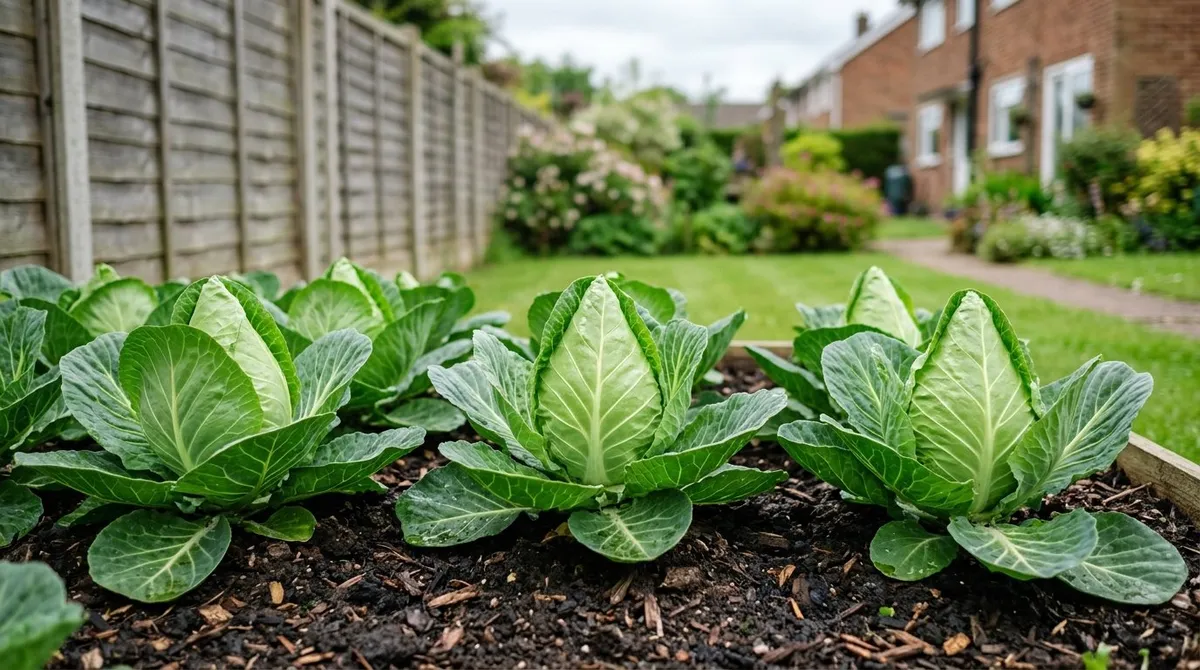
- Plant into very firm soil, as loose ground gives loose leaves instead of hearts
- Fit a collar round each stem and net the crop from planting day
- Space summer types 30-35cm apart and big winter types and savoys 45-60cm
- Cut a shallow cross in a summer cabbage stump for a few small bonus heads
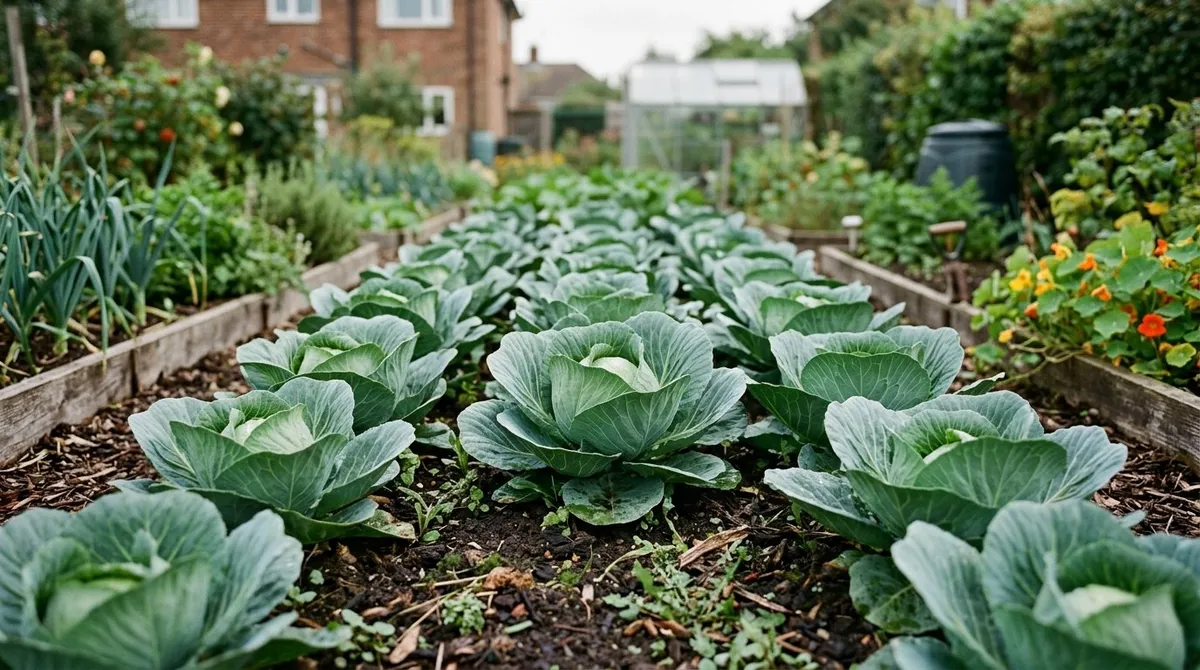
Cabbage isn’t one crop, it’s three. Spring, summer and winter cabbages are sown at different times and cut in different seasons. Grow all three and you can cut a fresh head almost every month of the year.
Cabbage isn’t hard, but it is fussy about a few basics: firm soil, steady feeding and a net. This guide covers all the types, from sowing to the bonus second crop. If you only want spring greens for the hungry gap, the guide to growing spring cabbage goes into that crop in more depth.
What are the three types of cabbage?
Cabbages fall into three groups by season: spring, summer, and autumn or winter. Each has its own sowing time and harvest window.
Spring cabbage is sown in late summer, sits small over winter and hearts up from March to May. It fills the hungry gap. ‘Durham Early’, ‘Pixie’ and ‘Spring Hero’ are reliable.
Summer cabbage is sown from February to May and cut from July to September. The pointed types ‘Hispi’ and ‘Greyhound’ are the easiest for beginners. Ballhead types such as ‘Golden Acre’ follow on.
Autumn and winter cabbage is sown in spring and cut from autumn into February. This group includes:
- Savoy cabbage, with crinkled leaves. It’s the hardiest of all. ‘Ormskirk’ and ‘January King’ stand through hard frost.
- White drumheads, which form dense pale heads that store well.
- Red cabbage, which is cut in autumn and also stores well.
| Type | Sow | Plant out | Harvest | Good varieties |
|---|---|---|---|---|
| Spring | Jul-Aug | Sep-Oct | Mar-May | ’Durham Early’, ‘Pixie’, ‘Spring Hero’ |
| Summer | Feb-May | Apr-Jun | Jul-Sep | ’Hispi’, ‘Greyhound’, ‘Golden Acre’ |
| Autumn/winter | Apr-May | Jun-Jul | Oct-Feb | ’January King’, ‘Tundra’, ‘Ormskirk’ |
| Red | Mar-May | May-Jun | Sep-Nov | ’Red Drumhead’, ‘Kalibos’, ‘Ruby Ball’ |
New to cabbage? Start with a pointed summer type and a savoy. Between them you learn the quick crop and the hardy one.
When do you sow cabbage seeds in the UK?
Sow cabbage according to which crop you want. There is no single sowing month.
- Summer cabbage: sow under cover from late February, or outdoors from March to May
- Autumn and winter cabbage: sow in April and May
- Spring cabbage: sow in July and August, so young plants go out in autumn
Sow 1.5cm deep. Early sowings need a greenhouse, cold frame or windowsill. From April it’s warm enough to sow outside.
Gardener’s tip: Sow a few summer cabbages every three weeks from March to May instead of one big batch. You’ll cut a steady supply instead of a dozen heads all splitting at once.
Should you sow cabbage in modules or direct?
Modules are the easier choice for most UK gardens. Module-raised plants move with their roots intact and dodge the slugs and flea beetles that shred seedlings in open ground.
Sow one or two seeds per cell in peat-free seed compost and keep the strongest. Grow them somewhere bright and cool until they have four or five true leaves. That usually takes four to six weeks.
A nursery seedbed still works too. Sow thinly in a shallow drill, then lift the young plants to move them at six to eight weeks. It saves compost, but the plants get more of a setback after the move.
Harden off anything raised under cover over a week or two before planting out.
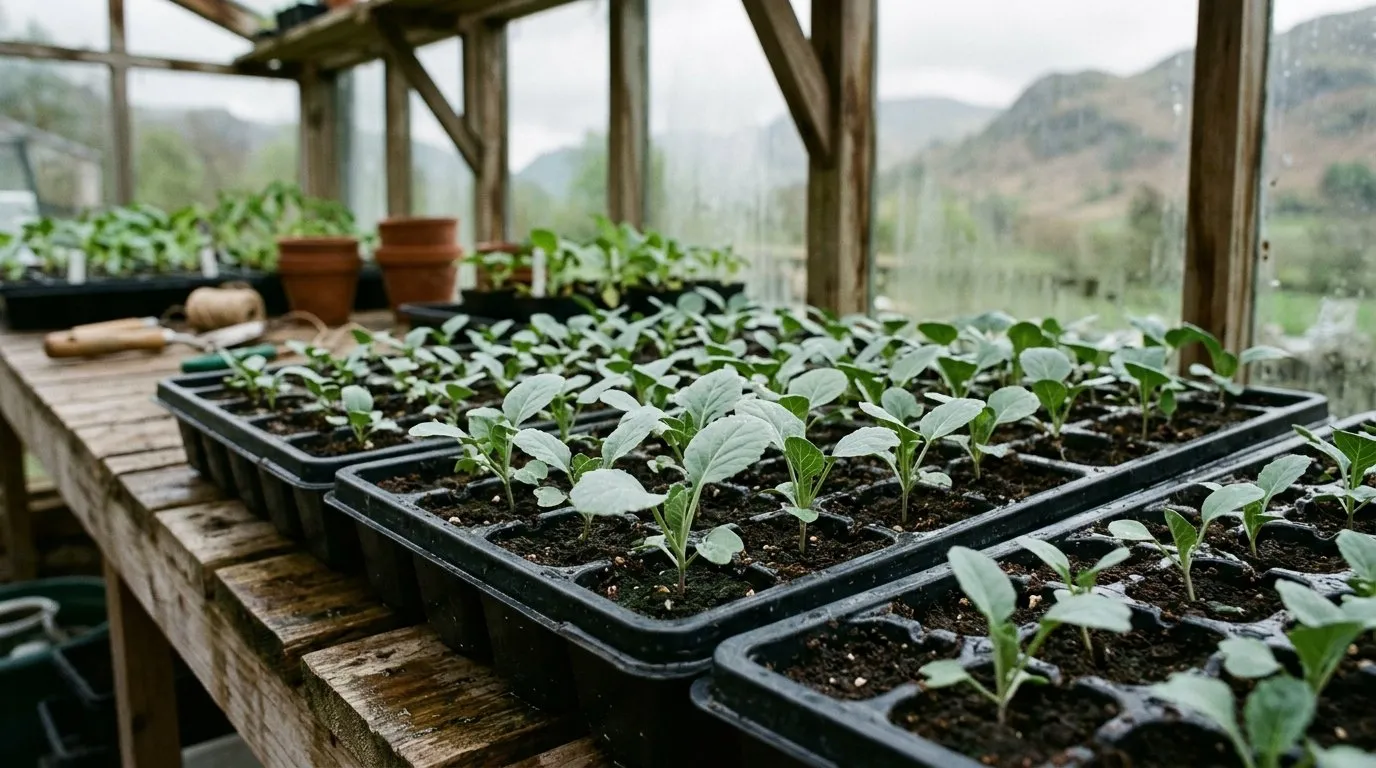
Module-raised seedlings like these move with their roots intact. Plant them out once they have four or five true leaves.
How do you plant cabbage so it hearts up?
Plant into firm soil and heel each plant in hard. Cabbages that rock in loose ground make loose leaves instead of a tight heart.
Choose a sunny, open spot with rich soil. Dig in well-rotted manure or compost the winter before, then let the ground settle. If you garden no-dig, tread the planting spots before planting.
- Make a hole with a dibber
- Set the plant deep, up to its lowest leaves
- Firm the soil round the stem with your knuckles until a gentle tug on a leaf doesn’t shift it
- Water in well
Fit a brassica collar at planting: a 10-13cm disc of card or felt snug round the stem. It stops cabbage root fly laying eggs at the base, whose maggots kill young plants. The guide to cabbage root fly has more ways to protect them.
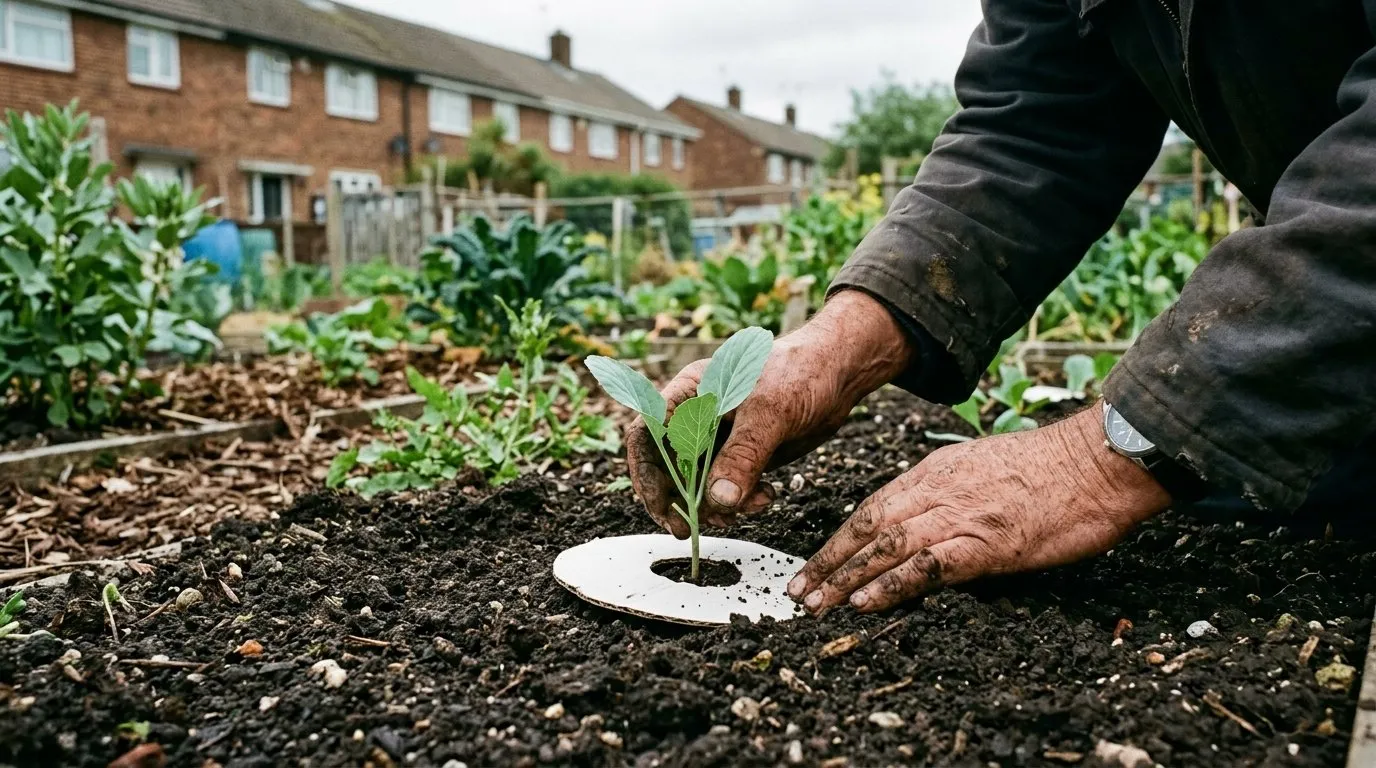
Plant deep and firm hard. The collar round the stem stops cabbage root fly laying eggs right where the maggots do damage.
How far apart should you space cabbages?
Space cabbages by type, as bigger heads need more room. Crowded plants give small heads.
| Cabbage group | Plant spacing | Row spacing |
|---|---|---|
| Spring (for greens) | 15-30cm | 30cm |
| Summer | 30-35cm | 45cm |
| Autumn/winter drumhead | 45-50cm | 50cm |
| Savoy | 45-60cm | 50cm |
You can plant summer cabbage a little closer for smaller, kitchen-sized heads. With spring cabbage, cut every other plant young as loose greens and let the rest heart up.
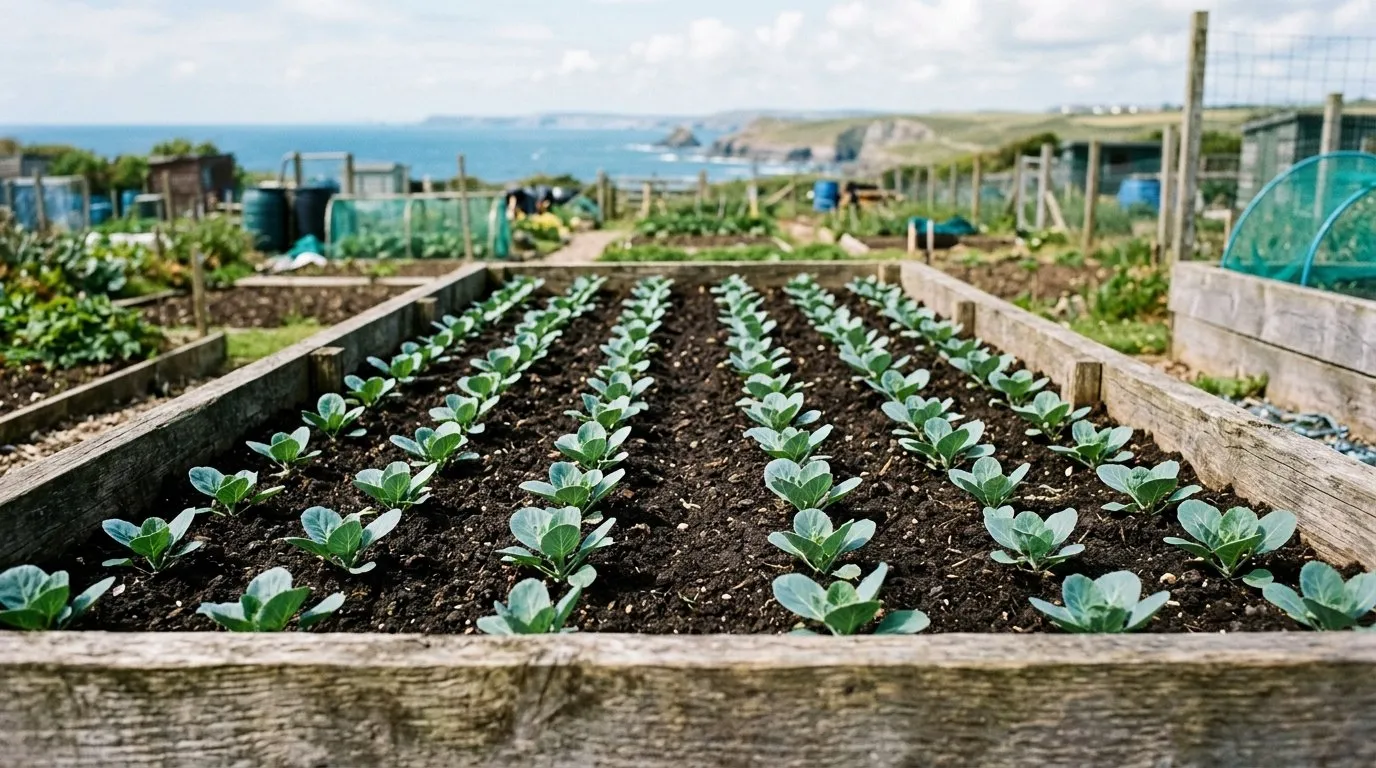
Even spacing like this lets every head swell. Leave more room for savoys and big winter types.
Move cabbages to a fresh bed each year with the other brassicas, so club root and root fly don’t build up. A four-year crop rotation makes this easy to plan.
How do you feed and water cabbages?
Cabbages are hungry and thirsty. Feed at planting and again as the heads form, and never let them dry out.
- Rake in a general fertiliser before planting
- About six weeks later, give summer and winter cabbages a nitrogen-rich feed
- Feed overwintered spring cabbage in late February to get it moving
- In dry spells, give a good soak once a week rather than a daily splash
- Mulch with garden compost to hold in moisture
In autumn, firm the soil round winter cabbages again and draw a little earth up the stems. This stops tall plants rocking in winter winds.
If your soil is acidic, lime it in autumn or winter before planting. The guide to garden lime explains how to test and how much to use.
How do you protect cabbages from pests?
Net cabbages from the day you plant them. A net saves most of the trouble.
- Cabbage white butterflies lay eggs that hatch into leaf-stripping caterpillars in summer. Fine insect mesh keeps them off. See cabbage white butterfly control.
- Cabbage whitefly and mealy aphid cluster under leaves. Mesh helps, and so do ladybirds and other predators.
- Wood pigeons strip plants in winter. Cover them with pigeon netting.
- Slugs chew young plants, especially just after planting.
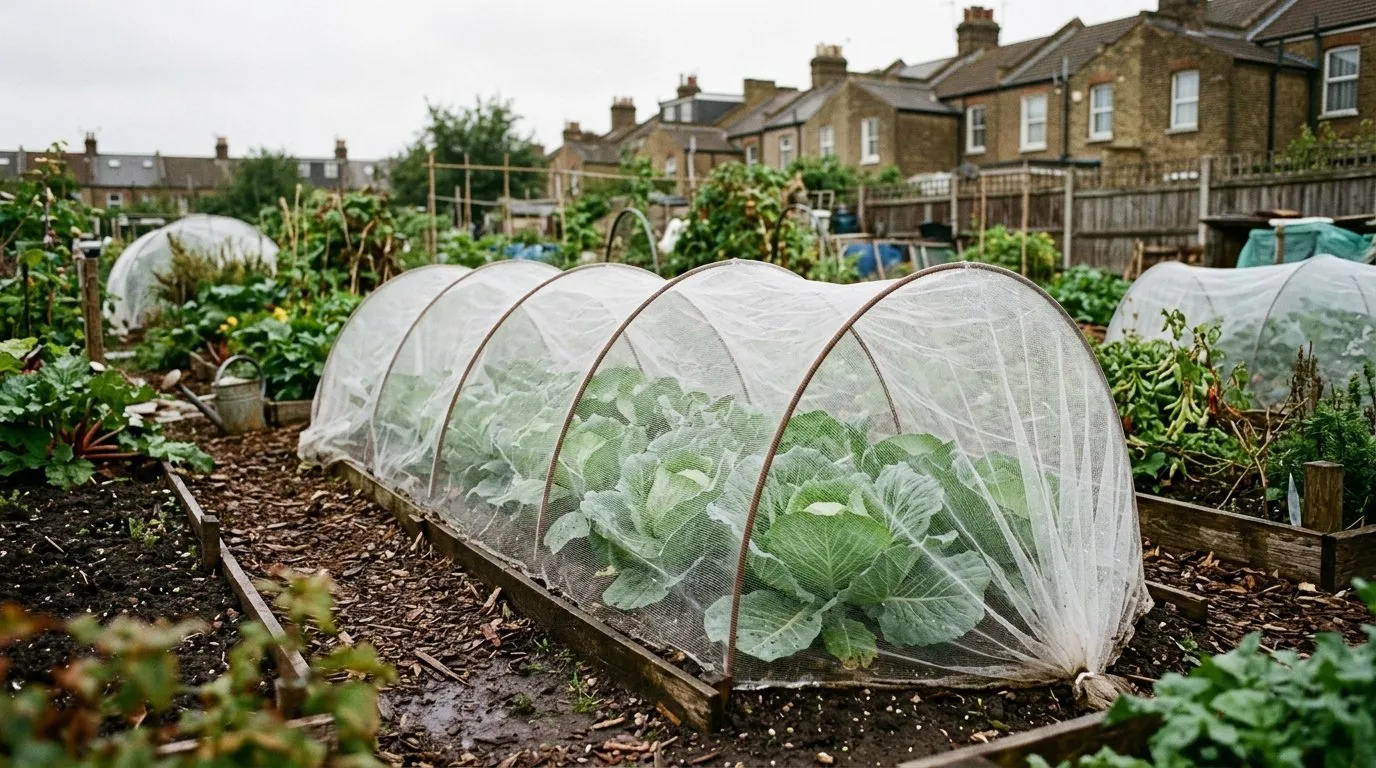
Mesh over hoops from planting day keeps out butterflies and pigeons in one go. Keep it clear of the leaves.
The disease to dread is club root. It swells and rots the roots and stunts the plant, and it stays in the soil for many years. Lime acid soil, improve drainage, rotate strictly, and grow a resistant variety such as ‘Kilaton’ on infected ground. The guide to club root covers what to do.
When and how do you harvest cabbage?
Cut cabbage as soon as the head feels firm when you squeeze it. Slice through the stem just below the head with a sharp knife. Ripe summer heads left too long can split after rain.
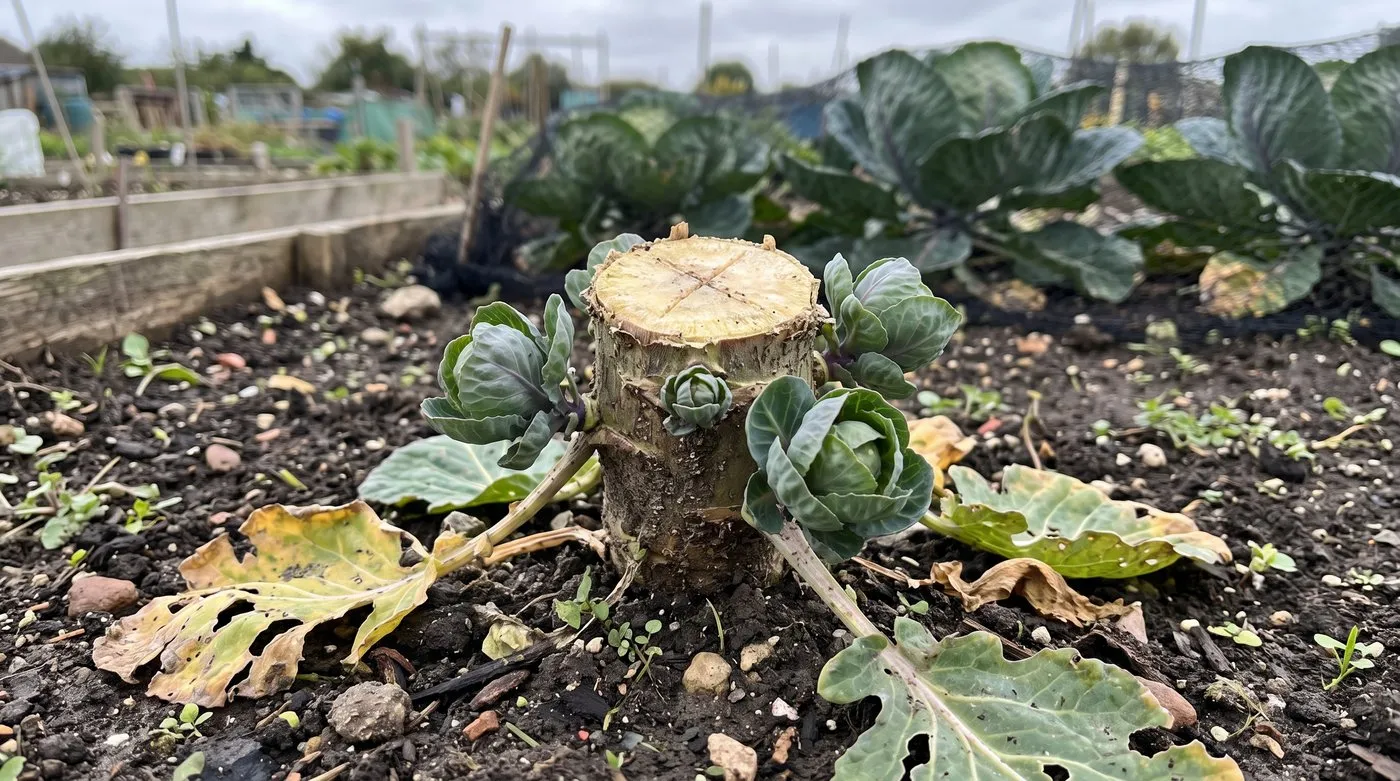
Leave the stump in, score a shallow cross on top, and a few bonus mini cabbages follow.
- Summer and autumn cabbage: cut and use fresh
- White and red drumheads: cut in late autumn and store in a cool, frost-free shed for a couple of months
- Savoys: leave them standing and cut as needed, as frost sweetens them
- Spring cabbage: cut every other plant as greens from March, then let the rest heart up
For a bonus crop, leave the stump of a spring or early summer cabbage in the ground. Cut a shallow cross about 1cm deep into the top and keep it watered. A few small heads soon sprout from it.
Month-by-month cabbage calendar
| Month | Task |
|---|---|
| January | Cut savoys and winter cabbage. Plan next year’s rotation |
| February | Sow first summer cabbage under cover. Feed spring cabbage |
| March | Sow summer cabbage. Cut first spring greens |
| April | Sow autumn, winter and red cabbage. Plant out summer types |
| May | Last summer sowings. Cut spring cabbage hearts |
| June | Plant out winter and savoy types. Net against butterflies |
| July | Sow spring cabbage. Cut first summer heads |
| August | Sow last spring cabbage. Water and keep netted |
| September | Plant out spring cabbage. Cut autumn and red types |
| October | Firm in spring cabbage. Cut and store drumheads |
| November | Store white and red cabbage. Leave savoys standing |
| December | Cut savoys and ‘January King’ as needed under a net |
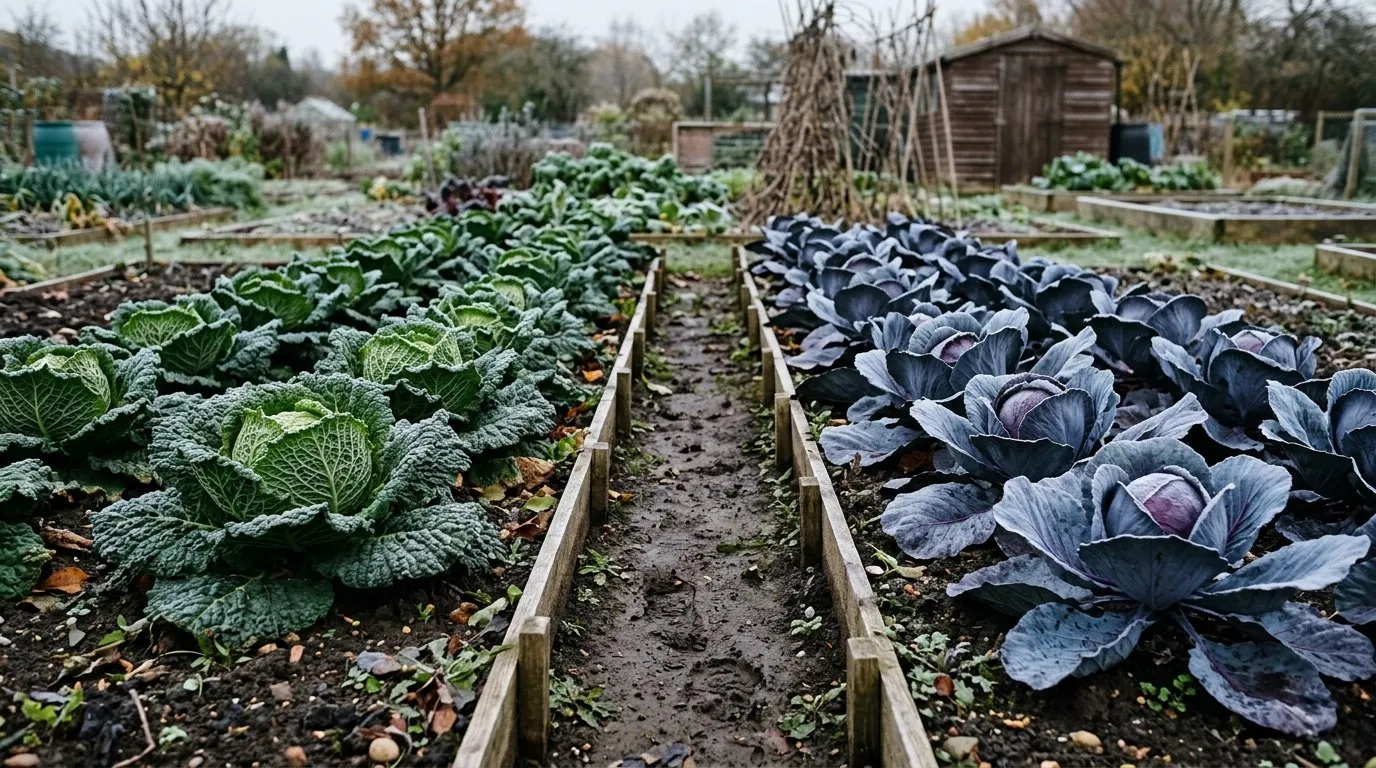
Savoy and red cabbage standing into winter. Savoys can stay in the ground and be cut as you need them.
Which cabbage varieties grow best in the UK?
Pick varieties by season. These are reliable choices for UK plots.
- ‘Hispi’ F1: a quick, sweet pointed summer cabbage that copes with closer spacing
- ‘Durham Early’: a dependable spring cabbage for the first greens in March
- ‘January King’: a hardy, red-tinged winter type that stands through frost
- ‘Ormskirk’: a classic savoy for crinkled, sweet winter leaves
- ‘Red Drumhead’ and ‘Kalibos’: red cabbages for autumn cutting and storing
- ‘Kilaton’ F1: a club-root-resistant white cabbage for infected ground
Cabbages sit happily beside their cousins. Growing kale alongside gives you even tougher winter greens.
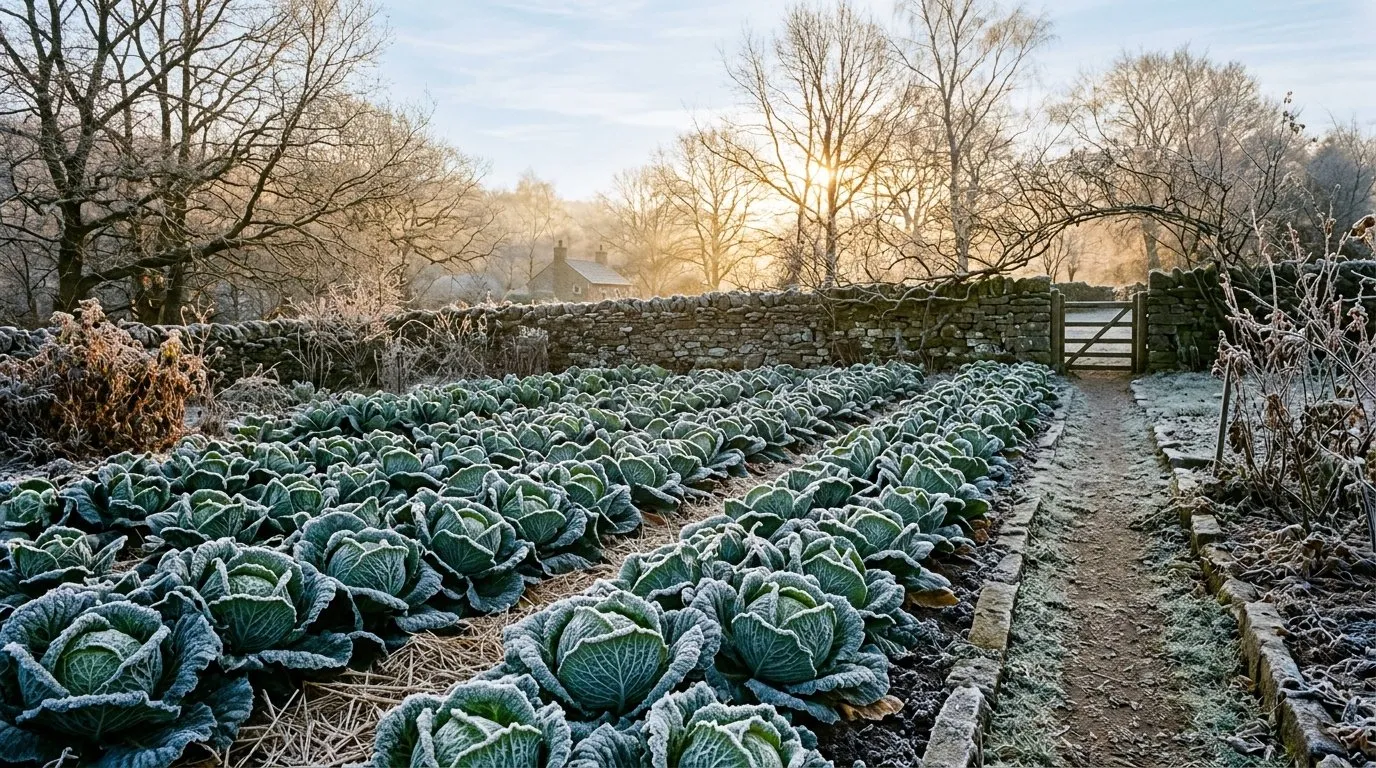
Frost on savoys is nothing to worry about. Hardy types keep cropping through the coldest weeks.
Common mistakes with cabbage
- Planting into loose soil. Plants rock and won’t heart. Let dug ground settle and firm every plant.
- Skipping the net. Butterflies and pigeons find unnetted cabbages fast.
- Sowing everything at once. You get a glut that splits. Sow little and often.
- Growing in the same bed every year. Club root and root fly build up. Rotate.
- Letting plants dry out. Thirsty cabbages make loose, bitter leaves.
Frequently asked questions
How long does cabbage take to grow?
Most cabbages take four to eight months from sowing. Pointed summer types such as ‘Hispi’ are the quickest. Big winter drumheads and savoys take the longest. Spring cabbage is sown in late summer, sits small over winter and hearts up the next spring.
What month do you plant cabbage in the UK?
It depends on the type. Sow summer cabbage February to May and plant out April to June. Sow winter types April to May and plant out June to July. Sow spring cabbage July to August and plant out September to October.
Why are my cabbages not forming a heart?
Loose soil is the usual reason. Cabbages need firm ground, steady feeding and regular water. Plants rocked by wind, short of food or checked by drought make open leaves instead of a tight head. Firm them in hard, feed and water in dry spells.
Do you need to net cabbages?
Yes, netting is almost essential in the UK. Fine insect mesh keeps out cabbage white butterflies, whitefly and aphids. Pigeon netting stops wood pigeons stripping plants in winter. Keep the net clear of the leaves so butterflies can’t lay eggs through it.
Can you grow cabbage in pots?
Yes, compact types grow well in large pots. Use a pot at least 30cm wide and deep, with one plant in firmed, loam-based compost. Pointed summer types suit pots best. Water often in summer, feed regularly and net the pot.
What is the cross-cut trick for a second cabbage crop?
Cut a shallow cross into the stump after harvesting. Leave the stump rooted in the ground, cut a cross about 1cm deep into the top and keep it watered. A few small extra heads sprout from it. It works best with spring and early summer cabbages.
Should I lime the soil before planting cabbage?
Only if your soil is acidic. Cabbages grow best in neutral to slightly alkaline soil, and liming acid soil helps slow club root. Test the soil first and lime in autumn or winter. Don’t lime and add manure at the same time.
Got the hang of cabbage? Try its trickier cousin next with the guide to growing cauliflower, or find more crops in growing veg.
Our team produces practical UK gardening guidance from source research, contributor records and established horticultural practice. Editorial standards are overseen by Matt W.