Key takeaways
- The flies come in waves, with egg-laying peaks around late April to May, July and September
- Cover brassicas with fine insect mesh on planting day, and keep it on
- Brassica collars, 15cm discs fitted round the stem, stop flies laying eggs right by the plant
- Wilting on warm days and blue-tinged leaves are the first signs of trouble
- Nematodes watered in during May and August help, but work best alongside mesh or collars
- No insecticides are approved for home gardeners against cabbage root fly
Cabbage root fly is one of the most annoying pests of brassicas in UK gardens and allotments. The small grey fly looks harmless, but its white maggots eat the roots and wreck plants from below. Often the first you know is a healthy-looking cabbage flopping over on a warm afternoon. Protection starts on planting day, and our cabbage growing guide builds it into the planting routine.
The flies come in three waves each year: late April, July and September. That means brassicas need covering for most of the season. Barriers put in place at planting are by far the best defence, and there are no sprays for home gardeners.
What is cabbage root fly?
Cabbage root fly (Delia radicum) is a small grey fly that lays its eggs in the soil at the base of brassicas. It looks like a slim little housefly, with grey-brown colouring and darker stripes on its back.
The females find brassicas by smell. Brassicas give off a strong scent, especially when they’re disturbed during planting, which is why freshly planted ones attract flies so quickly.
The fly is found all over the UK. It does best on light, sandy soil, but it’s a nuisance on clay too.
| What to look for | |
|---|---|
| Adult | Small grey-brown fly with dark stripes on its back |
| Eggs | Tiny and white, in the soil next to the stem |
| Maggots | White, legless, up to about 1cm long |
| Pupae | Brown, like grains of brown rice, in the soil |
| Waves a year | Usually 3, fewer in the far north |
| Over winter | As pupae in the soil |
How do I identify cabbage root fly maggots?
They’re white, legless, about 1cm long when fully grown and pointed at the head end. They feed on and in the roots for a few weeks, then pupate in the soil. Pull up a wilting brassica and you’ll often find a cluster of them round the root.
They look a lot like onion fly or bean seed fly maggots. The easy way to tell is the plant: cabbage root fly maggots are only found on brassicas.
Look for small, brown, barrel-shaped pupae in the soil too. They look like grains of brown rice. Each will hatch into a new fly, either later in the season or the next spring.
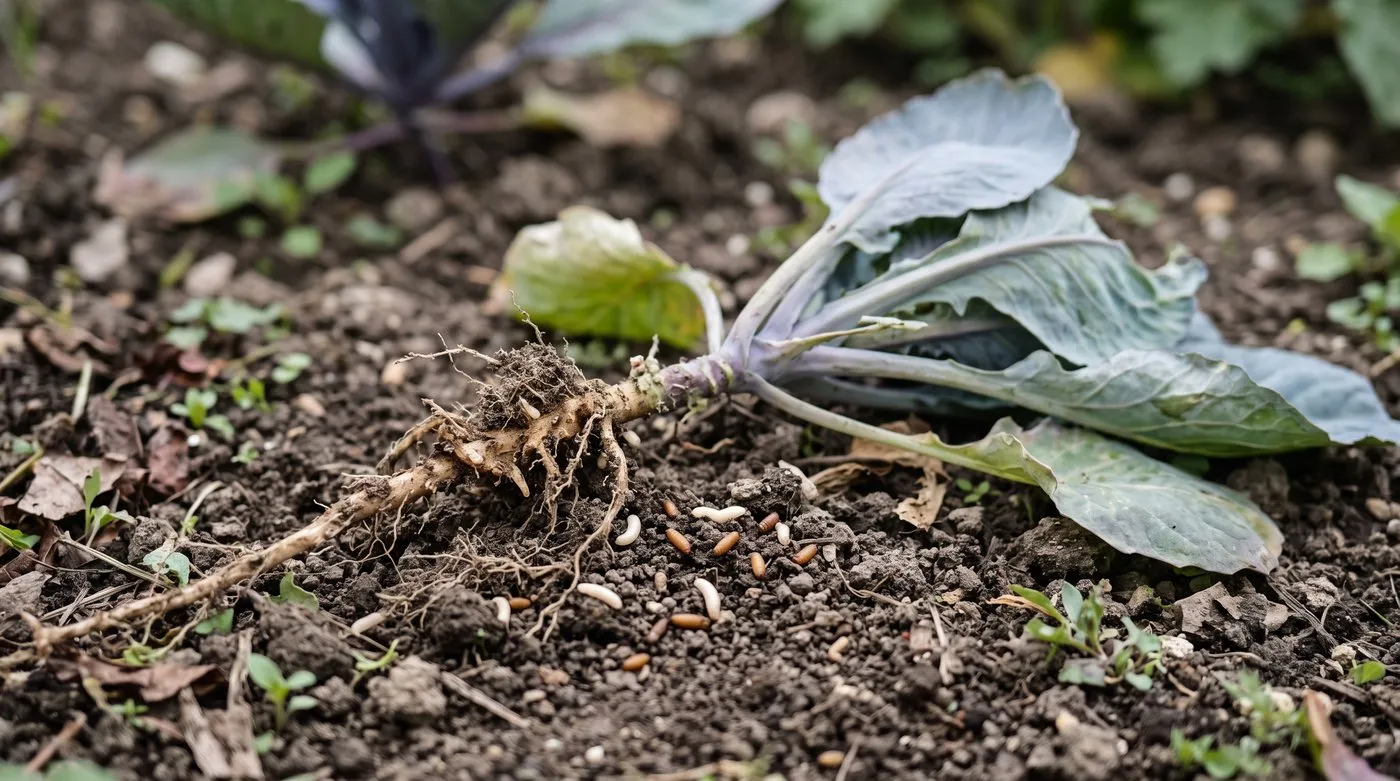
Pull up a wilting brassica and you’ll often find the maggots round the root. The brown, rice-like pupae in the soil are the next wave of flies.
What damage does cabbage root fly cause?
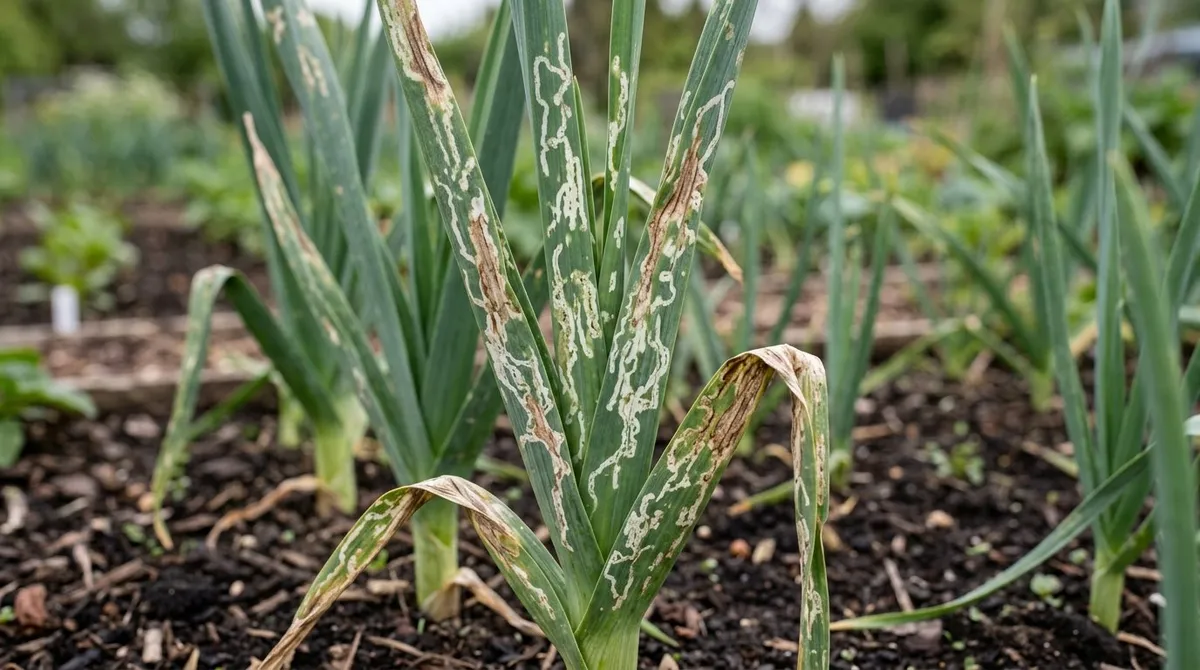
The maggots eat the roots, so plants wilt, stop growing and can die. The first sign is often a blue-purple tinge to the leaves. Plants droop on warm days and may perk up again overnight.
Rots often follow, getting in through the damaged roots. Affected roots go brown, slimy and smelly. On soil with clubroot, that can mean a double problem.
Turnips, swedes and radishes get it worse. The maggots tunnel right into the part you eat, leaving brown channels. Even a little damage spoils them for the kitchen.
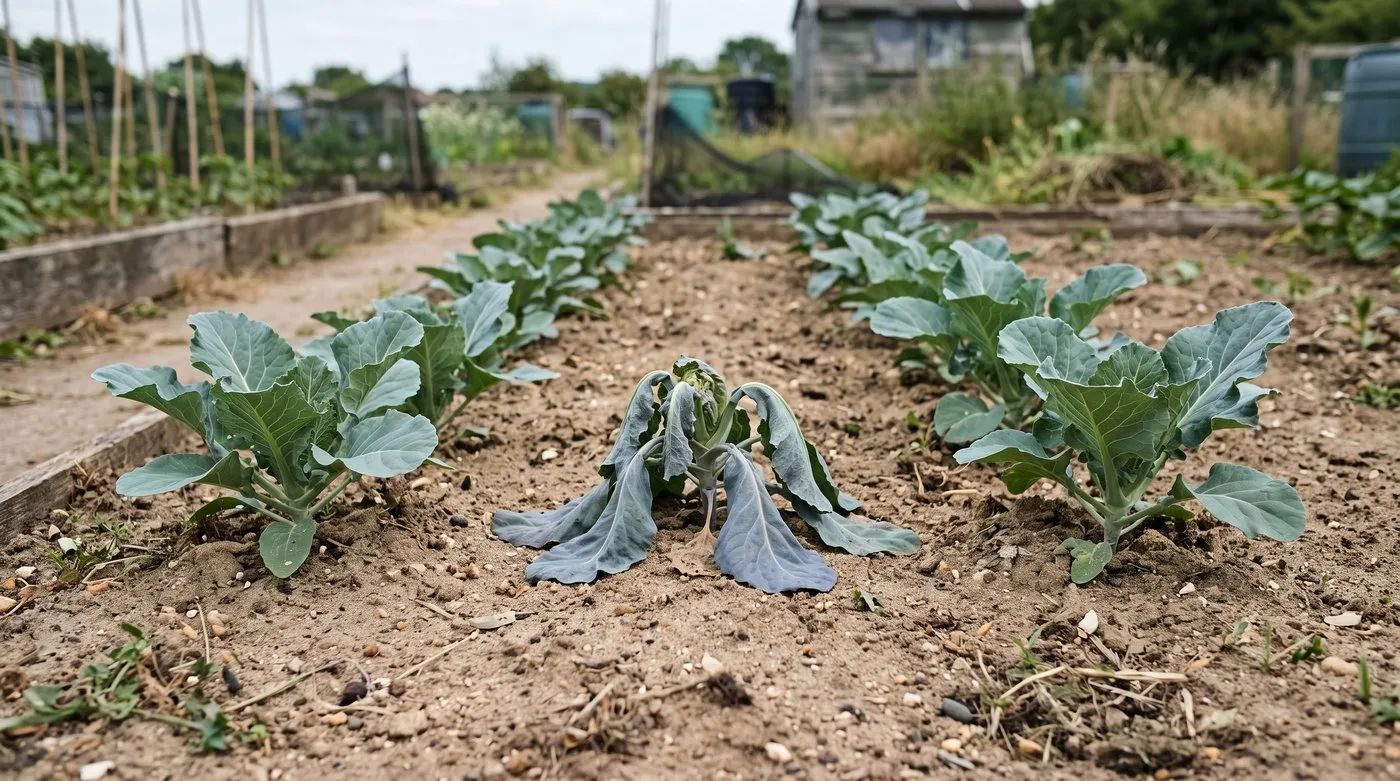
A plant that flops on warm afternoons and turns blue-purple is a classic sign. Pull it up and bin it rather than composting it.
What is the lifecycle of cabbage root fly in the UK?
There are usually three waves a year in England and Wales, and often fewer in the far north. Knowing when they come helps you time your defences.
First wave (April to May): flies that spent the winter as pupae hatch once the soil warms up in spring. That’s usually mid-April in the south and late April in the Midlands. They start laying eggs within about a week.
Eggs: the females lay small white eggs in the soil right next to brassica stems. They hatch within a week. A handy reminder: when cow parsley flowers in the hedgerows, the first flies are about.
Maggots: they feed on the roots for a few weeks, which is when the damage happens.
Pupae: the maggots then pupate in the soil. The next flies hatch in July, and another wave in September. The last lot spend the winter in the soil.
| Wave | Flies about | Most eggs laid | Worst damage | Crops most at risk |
|---|---|---|---|---|
| First | Mid-April to late May | Late April to mid-May | Late May to mid-June | Spring-planted cabbages, cauliflowers, early calabrese |
| Second | Late June to late July | July | August | Summer brassicas, autumn cabbages |
| Third | Late August to October | September | October to November | Autumn cauliflowers, sprouts, winter kale |
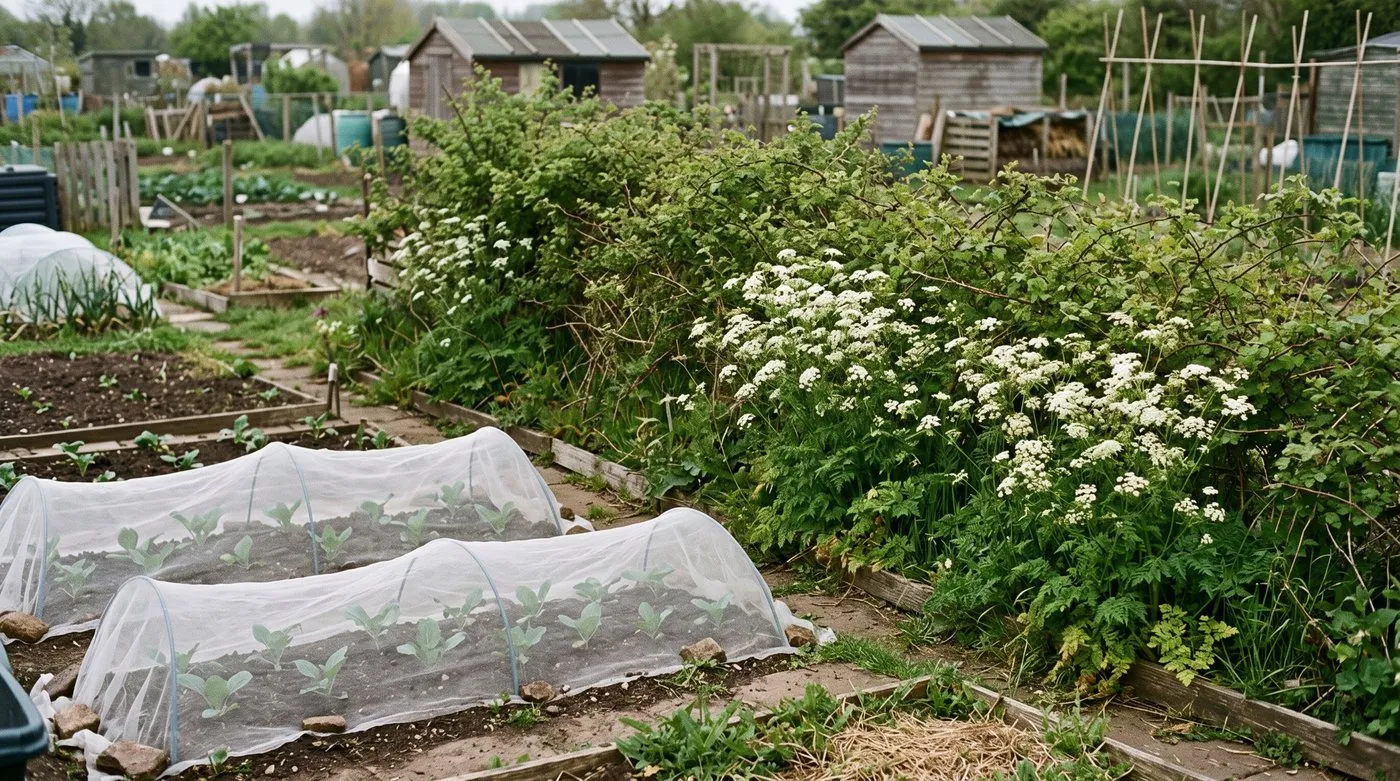
When cow parsley flowers in the hedgerows, the first wave of flies is about. Make sure every brassica is covered by then.
How does insect mesh protect against cabbage root fly?
Fine insect mesh, such as Enviromesh, keeps the flies out if you put it on straight after planting. It’s a simple barrier that stops the flies reaching the soil round your plants.
Leave the mesh on from planting until harvest for cabbages and cauliflowers. Sprouts and kale stand all winter, so you can take the mesh off once the last wave has finished in late October. Check for cabbage white caterpillars when you lift it.
Mesh lets in plenty of light, air and rain. Unlike fleece, it doesn’t overheat plants in summer, and with a bit of care it lasts for years.
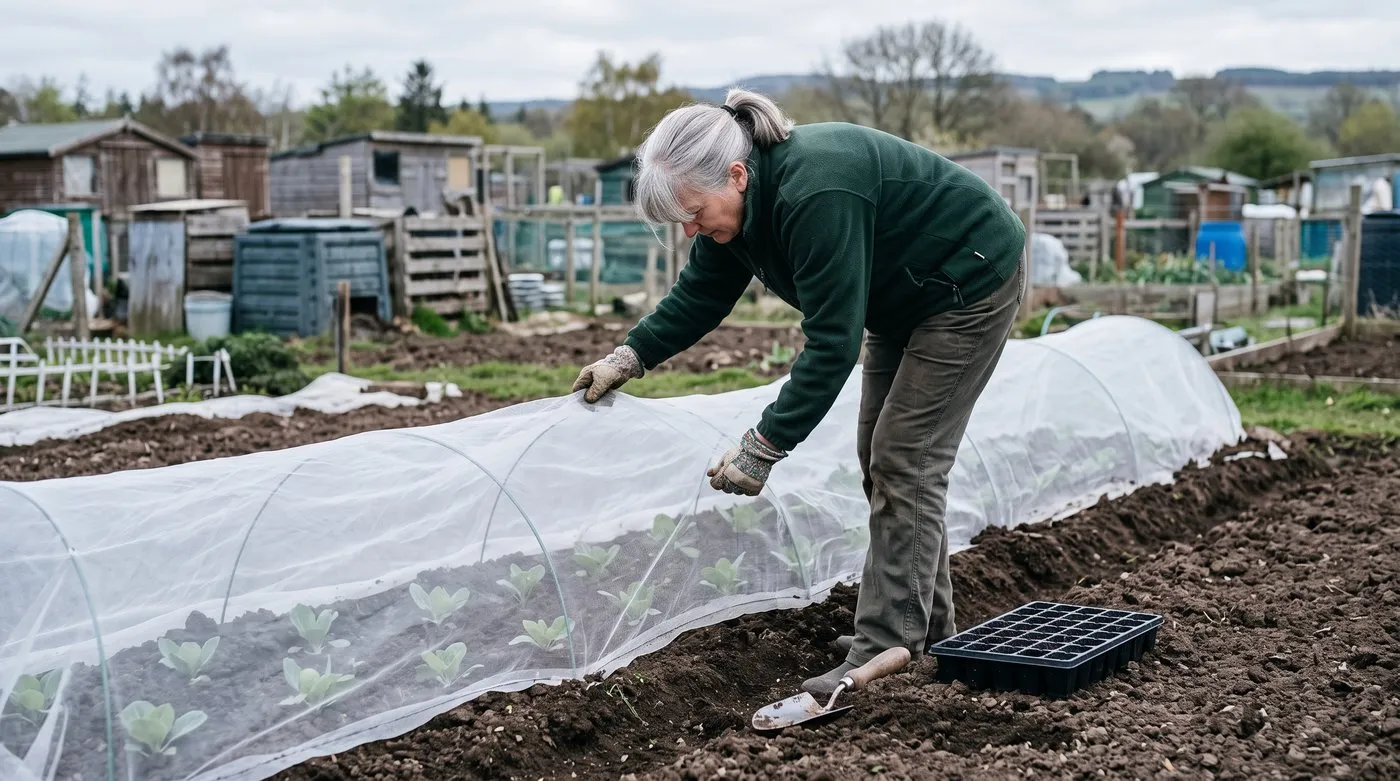
Put the mesh on the same day you plant, as freshly planted brassicas give off a scent the flies home in on.
How do brassica collars prevent cabbage root fly?
Brassica collars are flat discs that sit round the base of the stem and stop flies laying eggs there. They’re cheap, reusable and cut the damage a lot.
Cut 15cm discs from stiff cardboard, old carpet, carpet underlay or roofing felt. Make a straight cut from the edge to the centre. Slip the collar round the stem and press it flat against the soil so there’s no gap.
The flies like to lay eggs right next to the stem. A collar covers that spot, so the eggs end up further away, and many of the tiny maggots don’t make it to the roots.
You can buy ready-made collars, but home-made ones from carpet underlay work just as well and cost nothing.
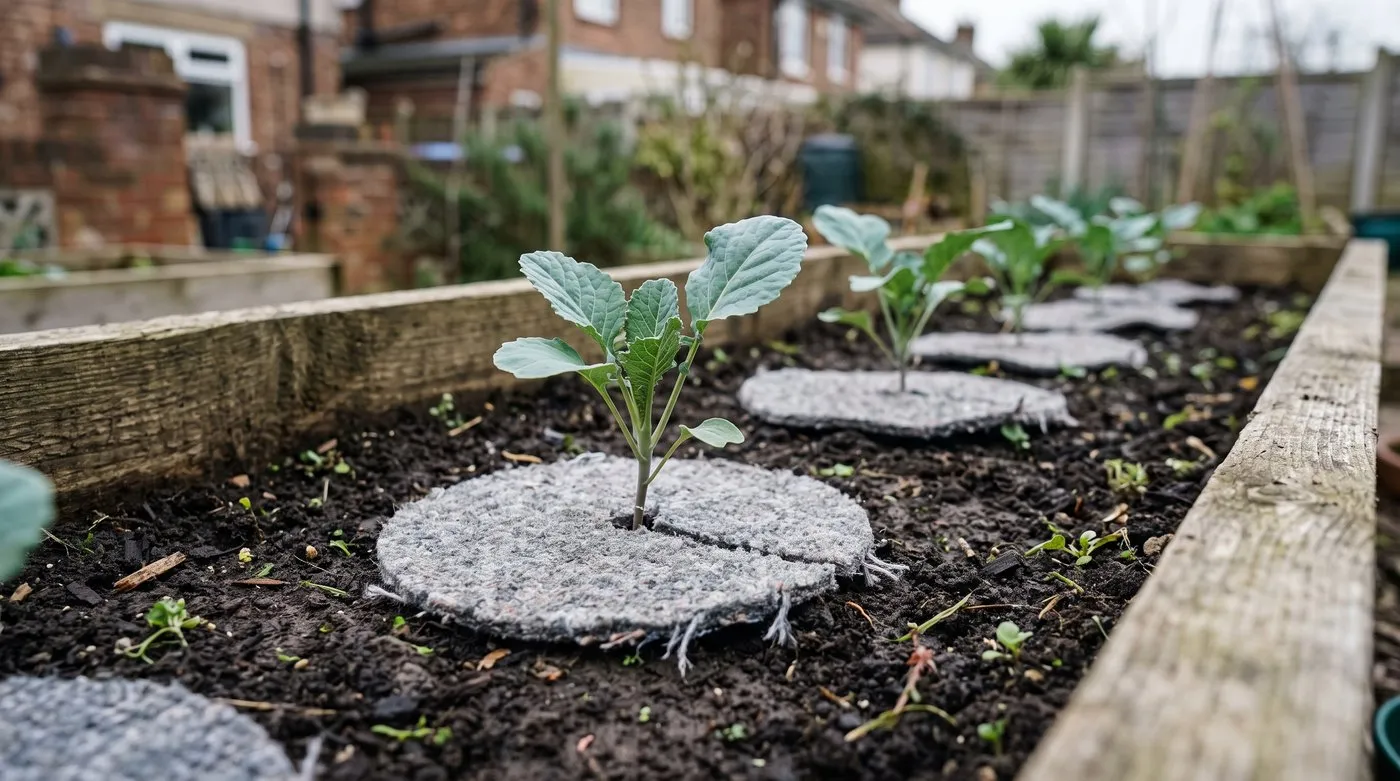
Collars cut from old carpet underlay cost nothing. Press them flat to the soil so flies can’t lay right next to the stem.
Does companion planting deter cabbage root fly?
There’s little proof that companion planting keeps cabbage root fly away, but it may help a bit. Growing brassicas through a carpet of white clover has reduced egg-laying in some trials, though not reliably.
The idea is that the flies look for bare soil next to brassica stems, and a green carpet confuses them. Some allotment growers also plant strong-smelling herbs like rosemary, thyme or sage nearby, though that’s mostly anecdotal. The same herbs feature among our plants that repel flies for doors and seating areas.
Undersowing with white clover, covered in our companion planting guide, is worth a try as an extra. Never rely on it alone.
Can nematodes control cabbage root fly?
Nematodes help, especially alongside mesh or collars. These tiny worms are sold for vegetable pests. You water them into the soil, where they hunt down the maggots.
Water them into moist soil around the stems in May, for the first wave, and again in August, for the second. The soil needs to be above 5C. Water before and after, and apply in the evening or on a dull day, as sunlight kills them.
Nematodes don’t keep long. Store them in the fridge and use them within two weeks.
Comparison of cabbage root fly protection methods
Here’s how the main options stack up.
| Method | How well it works | Cost | Good to know |
|---|---|---|---|
| Insect mesh | Very well | ££ | Keeps out lots of other pests too |
| Brassica collars | Well | Free to £ | Easy to make at home |
| Nematodes | Some help | ££ | Best alongside collars or mesh |
| Companion planting | A little, maybe | £ | An extra, never the main defence |
Mesh is the clear winner if you want reliable protection all season. On a budget, home-made collars plus a dose of nematodes in May come close.
Monthly cabbage root fly protection calendar
Here’s what to do each month. These dates suit central England. Go a week or two earlier in the south and a week or two later further north.
March: Get your mesh ready or make some collars. Order nematodes for May. Prepare beds with well-rotted compost.
April: Watch for cow parsley flowering, as the first flies are on the way. Plant brassicas and cover them with mesh the same day. If you’re not using mesh, fit collars straight away. Don’t leave new plants uncovered, even for a day.
May: Water nematodes in around the stems in mid-May. Check mesh edges for gaps. Keep an eye on any uncovered plants for wilting and blue-tinged leaves.
June: Damage from the first wave shows now. Pull up and bin any collapsed plants, rather than composting them. Check the mesh is secure before the next wave.
July: The second wave arrives, and often catches people out. If you took the mesh off after spring, put it back now. Water in more nematodes in late July or early August.
August: Check Brussels sprouts and autumn cauliflowers for root damage. Water well to help struggling plants.
September: The third and last wave is flying. Keep mesh on autumn and winter brassicas.
October to November: The last maggots are feeding. After mid-November, you can lift mesh from winter brassicas if you need to. Clear brassica debris from the plot and start planning next year’s crop rotation.
Are any brassica varieties resistant to cabbage root fly?
No, there are no brassica varieties with real resistance. Barriers are still a must.
Breeding resistance is tricky because the damage happens underground. Unlike cabbage white butterflies, there are no leaf features to select for.
Quick-growing crops spend less time in the ground, so they have less time to be attacked. Slow crops like kale and broccoli stand for months and face every wave, so protection really matters for them.
How does cabbage root fly differ from other brassica pests?
It attacks underground, so it’s harder to spot early than caterpillars or flea beetles. By the time plants wilt, the roots are often badly damaged.
Timing differs too. Cabbage root fly comes in waves from April to September. Cabbage white butterflies are busiest in summer, flea beetles are worst on spring seedlings, and mealy cabbage aphid builds up from June.
The great thing about mesh is that it keeps out most of these at once. For brassica diseases too, see our brassica diseases guide.
The RHS cabbage root fly page has more photos to help you check.
What about chemical controls for cabbage root fly?
No insecticides are approved for home gardeners against cabbage root fly in the UK. That’s why barriers and nematodes are the way to go.
Some older gardening books suggest watering transplants with an insecticide. That advice is out of date, and using unapproved pesticides is against the law. Stick to mesh, collars, nematodes and a tidy plot.
For more chemical-free ideas, see our organic pest control guide. If you grow carrots too, our carrot root fly guide covers another pest that strikes below ground.
Frequently asked questions
What does cabbage root fly damage look like?
Wilting leaves with a blue-purple tinge are the first signs. Plants droop on warm days even when the soil is moist, because the roots are being eaten. Pull one up and you’ll see small white maggots on the roots. Young plants can collapse and die, while older ones may survive but give small heads.
When does cabbage root fly lay eggs in the UK?
In three waves through the year in most of the UK. The first is from late April to mid-May, around the time cow parsley flowers. The second comes in July and the third in September. The south often sees the first flies a week or two earlier.
Do brassica collars really work against cabbage root fly?
Yes, they cut down the damage a lot. They stop female flies laying eggs right against the stem. Cut 15cm discs from cardboard, carpet underlay or roofing felt, make a slit to the centre and fit them snugly round the stem at soil level.
Do nematodes work against cabbage root fly?
They help, but not on their own. Water nematodes sold for vegetable pests into moist soil around the stems in May and again in August. The soil needs to be above 5C. They work best alongside collars or mesh.
Does crop rotation prevent cabbage root fly?
It helps a little, but won’t stop it on its own. The flies travel a long way to find brassicas, so moving your bed across the plot doesn’t fool them. Rotation is still worth doing to keep clubroot down. Use mesh or collars as well.
Which brassicas are most vulnerable to cabbage root fly?
Cabbages, cauliflowers and turnips suffer most. Sprouts and kale get attacked too but their stronger roots sometimes cope. Radishes are hit hard because they grow so fast there’s no time to recover. Swedes, kohlrabi and Chinese cabbage are also targets.
Is fleece or enviromesh better against cabbage root fly?
Mesh is the better choice for most of the year. Fleece is fine in spring but gets too hot in summer and can scorch leaves. Mesh lets rain and air through while keeping flies out, and it lasts for years. Fleece tears easily and rarely lasts more than a couple of seasons.
Our team produces practical UK gardening guidance from source research, contributor records and established horticultural practice. Editorial standards are overseen by Matt W.