
Key takeaways
- Clubroot is the worst brassica disease and can stay in your soil for many years
- Liming acid soil to around pH 7 makes life hard for clubroot
- Downy mildew loves damp, crowded seed trays, so give seedlings fresh air
- Move brassicas to a new bed each year and clear old plants after harvest
- Don't put diseased brassicas on the home compost heap
- Clubroot-resistant varieties like 'Kilaton' cabbage help on infected ground
Cabbages, sprouts, kale and broccoli can all pick up diseases, from clubroot swelling the roots underground to mildew on young seedlings. Knowing which one you’ve got is the first step to sorting it.
Why are UK brassicas so prone to disease?
Our cool, damp weather suits the diseases that attack brassicas. And brassicas spend months in the ground, so diseases have plenty of time to get going.
Most of these diseases hit the whole family: cabbage, broccoli, cauliflower, kale, sprouts, turnips and more. Grow them in the same spot year after year and trouble builds up. That’s why crop rotation matters so much. Our how to grow cabbage guide covers the spacing and tidying that keep disease down.
Soil matters too. Clubroot loves acid soil and struggles once the soil is around pH 7 or a little above. A quick soil pH test before planting is cheap and well worth doing.
Clubroot
Clubroot is the worst brassica disease in the UK, and it can stay in your soil for many years. It makes roots swell up and twist, so the plant can’t take up water and food. Plants wilt, stall and may die.
 Clubroot leaves roots swollen and club-shaped. Once it’s in the soil, it hangs around for years.
Symptoms
Pull up a plant and you’ll see lumpy swellings on the roots, from marble to fist-sized. Above ground, plants wilt on warm afternoons and perk up overnight at first. Leaves turn yellowish-purple and growth stalls. Young plants can die, and older ones give small heads.
Cause and spread
Clubroot loves acid, wet soil. It travels in soil on boots, tools and bought plants, and in water running across the ground. Weeds in the cabbage family, like shepherd’s purse, can carry it too.
Prevention and treatment
There’s no cure, but you can manage it. Lime acid soil to around pH 7 before planting brassicas. Grow resistant varieties such as ‘Kilaton’ cabbage or ‘Clapton’ cauliflower. Raise plants in clean compost in 9cm pots and plant them out with the rootball whole. Help heavy clay drain better. Keep moving brassicas round your beds, though rotation alone won’t clear it.
Downy mildew
Downy mildew is the fastest brassica disease and can wipe out seedlings in a week in damp conditions. It strikes when plants are young and most vulnerable.
 Downy mildew on brassica seedlings. Grey-purple fuzz under the leaves is the giveaway.
Symptoms
Yellow patches appear on top of the leaves, boxed in by the veins. Turn the leaf over and you’ll see grey-purple fuzz. Seedlings collapse fast. On bigger plants, older leaves go yellow-brown and drop, but it rarely kills them.
Cause and spread
It loves damp air and wet leaves. Crowded seed trays in a stuffy greenhouse or cold frame are the classic trouble spot. It spreads on air and water splash.
Prevention and treatment
Open vents to keep the air fresh. Space seed trays apart. Water in the morning so leaves dry by evening. Remove sick seedlings straight away. Sow resistant varieties where you can. For organic approaches, note that home-made sprays aren’t approved for use in the UK, and there’s no fungicide for home gardeners against brassica downy mildew.
White blister
White blister makes shiny white raised spots under brassica leaves. It’s getting more common in UK gardens and is worst from June to September.
 White blister gives glossy white bumps under the leaf, with yellow patches on top.
Symptoms
Clusters of shiny white blisters form under the leaves, with yellow patches above them. Bad attacks twist and thicken leaves. If it reaches broccoli or cauliflower heads, they can swell oddly. Calabrese and sprouts are most at risk.
Cause and spread
It likes mild, damp weather and spreads on the wind and in splashes. It lives over winter on old brassica leaves and weeds like shepherd’s purse.
Prevention and treatment
Pick off and bin affected leaves straight away. Clear all old brassica plants after harvest and pull up cabbage-family weeds nearby. Water at the base. Space plants 45-60cm apart. There’s no fungicide for home gardeners, and copper is no longer allowed. Move brassicas to a new bed each year.
Ring spot
Ring spot gives brown target-like rings on older leaves from September. It’s the most common winter brassica disease in the UK, especially on sprouts and cabbage.
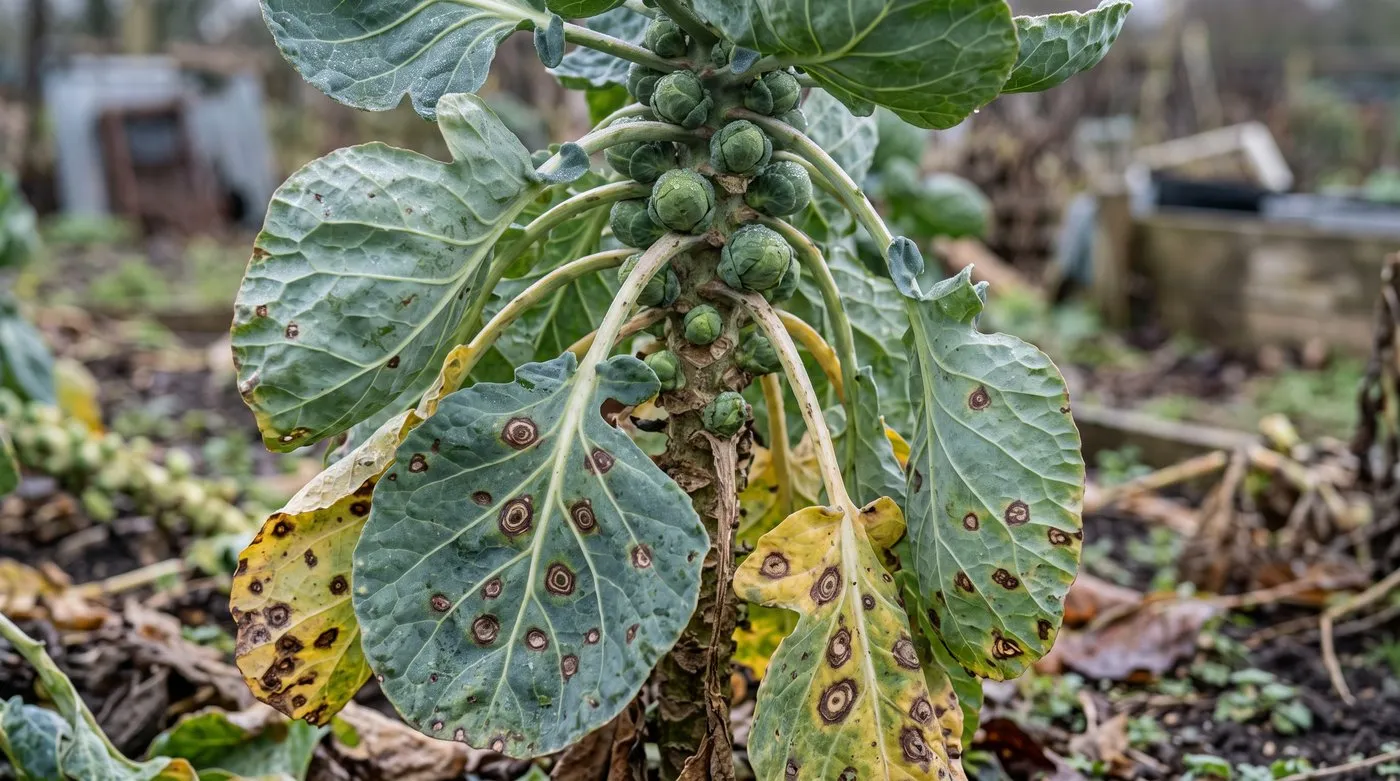
Ring spot starts on the older, lower leaves. Pull those off as soon as you see the rings, before rain splashes spores higher up.
Symptoms
Small brown spots start on older, lower leaves. They grow into rings that look like a target. Badly hit leaves yellow and drop. On sprouts it can spread to the buttons and spot them brown.
Cause and spread
Rain splashes spores from old leaves onto new ones. It needs leaves to stay wet for a long time, so autumn and winter are its peak. Crowded plants suffer most.
Prevention and treatment
Remove lower leaves as soon as spots show. Space plants 60-75cm apart. Clear all old brassica plants after harvest. Keep brassicas out of the same spot for three or four years. For more help with veg problems, see our vegetable pests and diseases guide.
Black rot
Black rot is a bacterial disease that gets inside the plant, and it can’t be cured.
Symptoms
Yellow-brown V-shaped patches appear at leaf edges, pointing in towards the middle. Hold the leaf to the light and the veins look black. Leaves or half the plant may wilt. Cut the stem and you’ll see black streaks inside. Cauliflower and cabbage are most at risk.
Cause and spread
It spreads on infected seed, bought plants and water splash, and likes warm, wet weather. It gets in through tiny pores at the leaf edges. It can hang around in old plant bits in the soil for a couple of years.
Prevention and treatment
There’s no spray for black rot. Pull up and bin sick plants, roots and all. Buy clean seed from a good supplier. Clean your tools between plants. Keep moving brassicas round your beds. Keep out from among wet plants, as you can spread it on your hands and clothes. Keep aphids and flea beetles down, as their damage gives it a way in.
Light leaf spot
Light leaf spot is turning up more in garden brassicas, especially kale and sprouts. It’s worst in mild, wet winters from October to March.
Symptoms
Small pale green or white spots appear on the leaves, sometimes with a faint pink tinge. They can join up into larger bleached patches. Stems get pale streaks. Bad attacks stunt plants. Early spots are easy to mistake for a feeding problem.
Cause and spread
Spores blow in on the wind, often from oilseed rape fields nearby. So you can get it even if your plot is spotless. It likes cool, wet weather.
Prevention and treatment
There’s no fungicide for home gardeners. Clear away old plants, space plants 60cm or more apart, and grow resistant kale varieties. Remove affected leaves quickly. Keep moving brassicas round your beds.
Dark leaf spot
Dark leaf spot gives round brown-black spots on leaves from June to October. It mostly hits cabbage, cauliflower and broccoli and gets worse in warm, wet summers.
Symptoms
Round dark spots appear on leaves, often with faint rings and sometimes a yellow edge. Badly hit leaves yellow and drop. Cauliflower curds can get small dark spots. It can also make seedlings collapse at the base.
Cause and spread
It comes in on seed and lives on old plant bits. Spores blow about in warm, humid weather.
Prevention and treatment
Buy clean seed from a good supplier. Pick off affected lower leaves. Clear all old brassica plants at the end of the season. Move brassicas to a new bed each year. Companion planting can help keep pests away that would otherwise leave wounds for it to get in.
Brassica disease comparison table
| Disease | Worst time | Lingers in soil | What to look for | Best prevention |
|---|---|---|---|---|
| Clubroot | April-October | Many years | Swollen, twisted roots | Lime acid soil, resistant varieties |
| Downy mildew | March-June | On old plants | Grey-purple fuzz under leaves | Fresh air for seedlings |
| White blister | June-September | On old plants | Shiny white bumps under leaves | Clear old plants, rotate |
| Ring spot | September-March | On old plants | Brown target rings | Clear old plants in autumn |
| Black rot | June-September | A couple of years | V-shaped yellow patches, black veins | Clean seed, clean tools |
| Light leaf spot | October-March | Blows in on the wind | Pale spots on leaves | Rotation, resistant varieties |
| Dark leaf spot | June-October | On old plants | Dark target spots | Clean seed, remove affected leaves |
How to prevent brassica diseases in five steps
Most brassica diseases can’t be cured, so prevention is the way to go. These five habits together stop most problems.
1. Move brassicas every year
Don’t grow brassicas in the same bed for at least three or four years. That covers the whole family: cabbage, broccoli, cauliflower, kale, sprouts, turnips, swede, radish and rocket. Jot down what grew where each year.
2. Check your soil pH
Test brassica beds in late winter with a simple kit. If the soil is acid, add garden lime to bring it up to around pH 7. Lime takes several weeks to work, so add it well before planting, and follow the rate on the bag.
3. Clear old plants after harvest
Pull up every stump, leaf and root once you’ve finished picking. Don’t leave stumps standing all winter. Put diseased plants in council green waste, not your compost heap. This takes away the winter home for many leaf diseases.
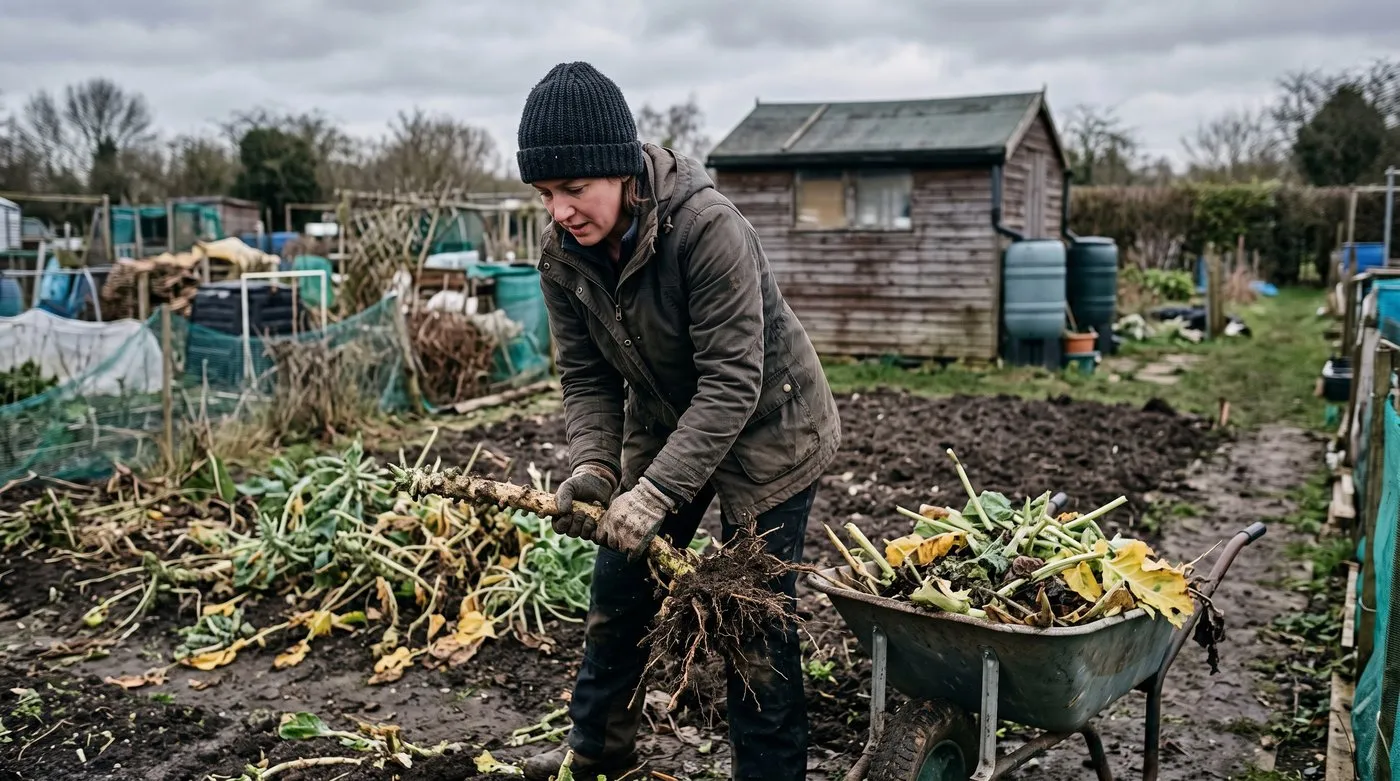
Old stumps and leaves are where many brassica diseases sit out the winter. Pull everything up once you’ve finished picking.
4. Start with clean seed and plants
Buy seed from a good supplier. Raise young plants in fresh multi-purpose compost in their own pots. Never reuse compost that grew brassicas before.
5. Choose resistant varieties
Resistant varieties are your best friend where they exist. For clubroot, try ‘Kilaton’ cabbage or ‘Clapton’ cauliflower. For downy mildew, check current seed catalogues. Resistant doesn’t mean immune, but it helps a lot. Our vegetable growing guide has more on growing healthy crops.
Buying plants: Buy brassica plants from a trusted supplier, ideally UK-grown, as bought plants can bring clubroot with them. The RHS clubroot page has more advice.
Frequently asked questions
What is the most common brassica disease in the UK?
Clubroot is the one that does the most damage. It attacks cabbage, broccoli, cauliflower, kale and sprouts. It swells and twists the roots so plants can’t drink or feed properly. It stays in the soil for many years, so once you have it, you’ll need to manage it.
Can I grow brassicas in soil that has clubroot?
Yes, with resistant varieties and some lime. Lime the soil to around pH 7 before planting. Grow clubroot-resistant types like ‘Kilaton’ cabbage or ‘Clapton’ cauliflower. Raise plants in clean compost in 9cm pots so they go out with a big, healthy root system.
Why do my brassica seedlings turn yellow and die?
Downy mildew is the usual cause. Look for grey-purple fuzz under the leaves. It spreads fast in damp, crowded seed trays. Give seedlings more air, water less often and space trays apart.
What causes white blisters on brassica leaves?
That’s a disease called white blister. Shiny white raised spots appear under the leaves, with yellow patches on top. It’s worst from June to September. Pick off affected leaves, water at the base and give plants room.
How do I prevent brassica diseases organically?
Four simple habits do most of the work. Move brassicas to a new bed each year. Lime acid soil to around pH 7. Clear and bin old plants after harvest. Raise young plants in clean compost.
Is it safe to compost brassica plants with diseases?
No, keep diseased brassicas off the home compost heap. Home heaps don’t get hot enough to kill clubroot and leaf spot spores. Put diseased material in your council green waste bin instead.
When should I spray brassicas to prevent disease?
You usually don’t need to, and most diseases have no spray for home gardeners. Copper fungicides are no longer allowed for amateur use in the UK. Rotation, spacing, fresh air and clearing up do the work. If you do spray, only use a product approved for home use on that crop and follow the label.
Our team produces practical UK gardening guidance from source research, contributor records and established horticultural practice. Editorial standards are overseen by Matt W.


