Key takeaways
- Yellowing leaves plus white fluffy mould on the bulb base means white rot
- Pale leaf patches with grey-purple fuzz in wet weather point to downy mildew
- Soft, grey, mouldy necks on stored onions are neck rot, so cure bulbs well
- Orange spots on leeks and garlic are rust, which looks bad but rarely kills
- No fungicides are available to gardeners for these, so prevention does the work
- Move alliums to a new bed each year and keep white rot soil free of them
Onion diseases can turn a promising row of bulbs into a soggy disappointment. The good news is that most are easy to tell apart once you know where to look. Check whether the trouble is on the leaves, at the bulb base or in storage, and you are most of the way to an answer.
This guide helps you name the problem on your onions, garlic, leeks or shallots, then shows what to do next. There are no fungicides you can use on these diseases at home, so good growing habits do the heavy lifting. Each section links to a more detailed guide where one exists. For general growing advice, start with the guide to growing onions.
Which onion disease is it? A quick checker
Start with where the damage is and what it looks like. This table matches the most common signs to the likely disease.
| What you see | Where | Likely disease | When |
|---|---|---|---|
| Yellow, wilting leaves, white fluffy mould on the base | Bulb base and roots | White rot | Spring to summer |
| Pale patches on leaves with grey-purple fuzz | Leaves | Downy mildew | Cool, wet spells |
| Soft, grey, mouldy neck on stored bulbs | Neck, in store | Neck rot | Autumn and winter |
| Bright orange spots | Leaves, mainly leeks and garlic | Rust | Late summer to autumn |
| Rotting base plate, few roots, pinkish-white mould | Bulb base | Fusarium basal rot | Warm summers |
Not every problem is a disease. Tunnels, maggots and twisted leaves are more likely to be pests. The guide to allium leaf miner covers the most common culprit.
How do I identify white rot on onions and garlic?
White rot is the one to worry about most. The outer leaves turn yellow and wilt, even in moist soil, and the plant pulls up easily. The roots are mostly gone. The bulb base is covered in white, fluffy mould, often with tiny black dots like poppy seeds.
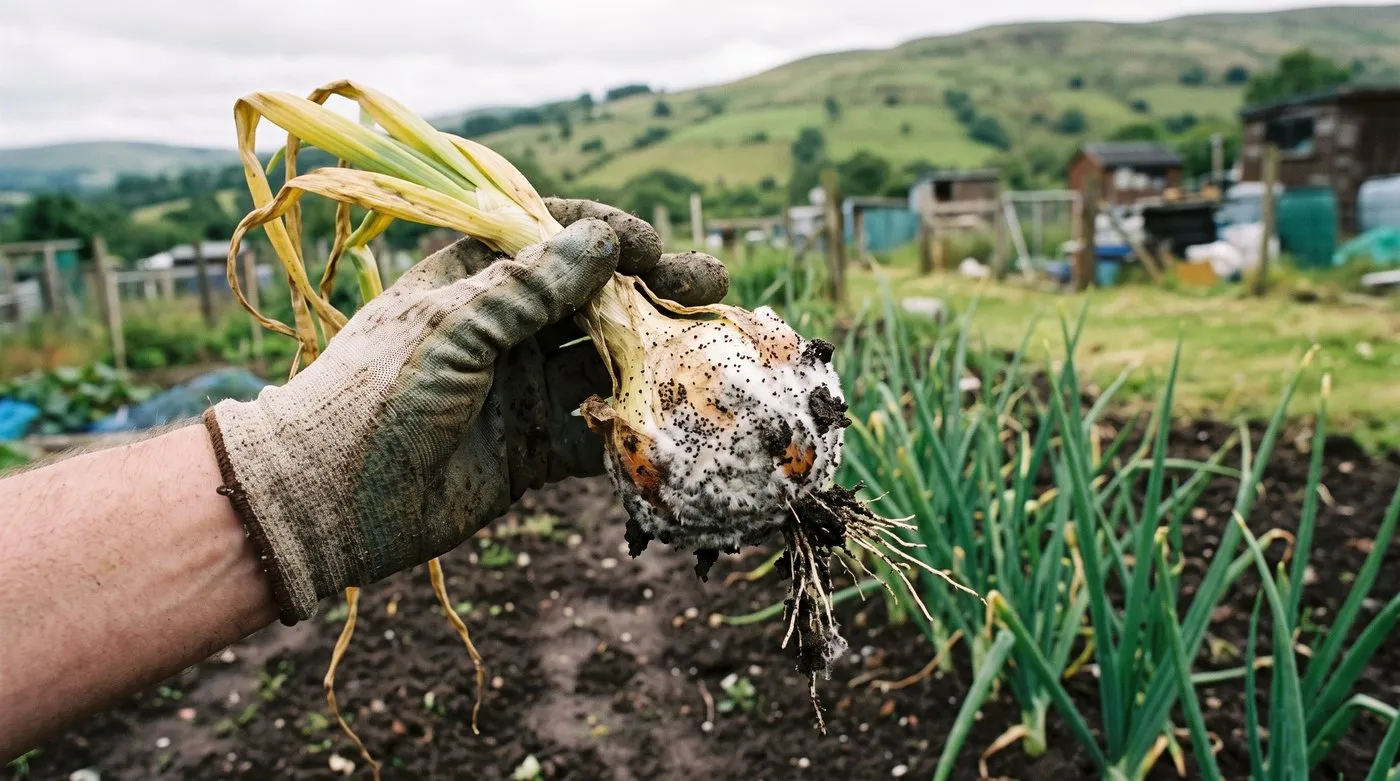
White fluffy mould with tiny black specks on the base is the giveaway for white rot. Bin the plant and the soil around it.
Those black dots are resting bodies that survive in the soil for many years. They wake up when onion, garlic or leek roots grow nearby. That’s why white rot is so hard to shift.
If you find it, lift and bin the affected plants and the soil right around them. Don’t compost them. Clean tools and boots so you don’t carry soil to other beds. Stop growing alliums in that bed, and grow them in a fresh bed or raised bed instead.
The full guide to allium white rot covers how to live with infected ground.
What causes downy mildew on onions?
Downy mildew is a fungus-like disease that loves cool, damp weather. It shows up as pale, oval patches on the leaves. In humid weather these grow a grey-purple fuzz. Leaves then yellow from the tips, flop and die early, so bulbs stay small and store badly.
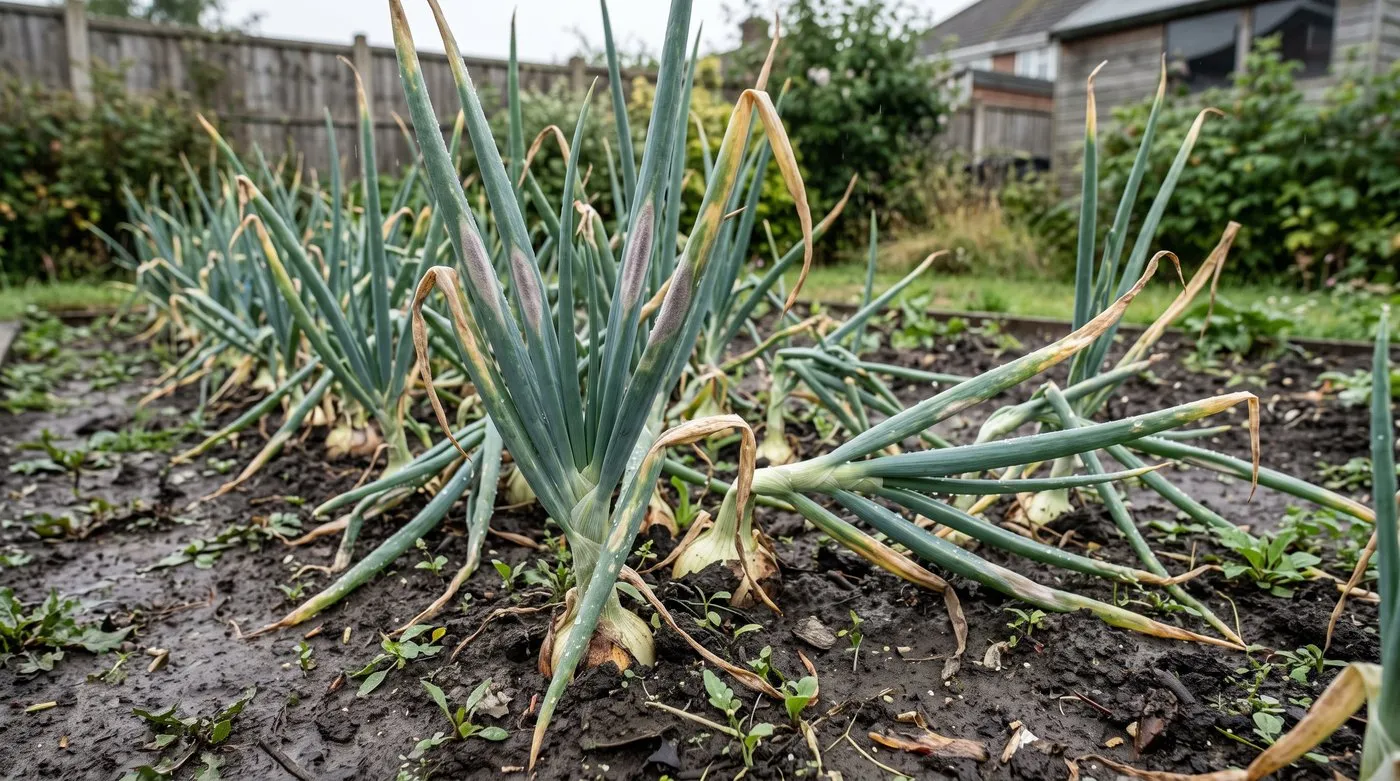
Pale patches that turn fuzzy in damp weather point to downy mildew. Good spacing helps the leaves dry faster.
It spreads on the wind and in rain splash. It also survives in old bulbs left in the soil and in self-sown onions.
To keep it at bay:
- Space onions well and keep weeds down so air moves between plants
- Water the soil, not the leaves, and water in the morning
- Pull up any stray onions sprouting from last year’s crop
- Clear and bin infected leaves at the end of the season
The guide to onion downy mildew goes into more detail.
How do I stop neck rot ruining stored onions?
Neck rot does its damage in storage. Bulbs look fine at harvest, then a few weeks or months later the neck goes soft. Grey mould spreads down into the bulb.
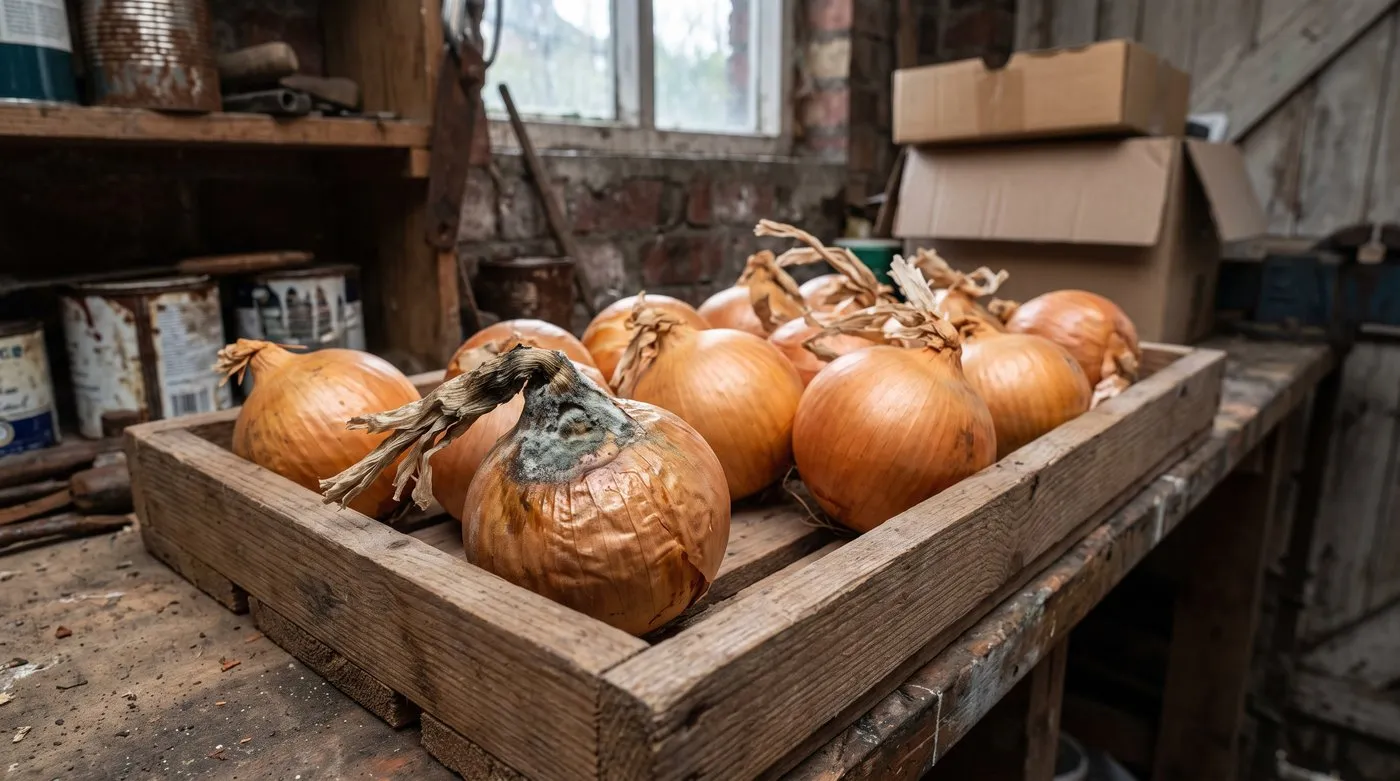
Neck rot shows up weeks after harvest as a soft, grey neck. Pull out any affected bulbs before it spreads to the rest.
The fungus gets in through soft, wet necks. So the key is drying bulbs thoroughly before you store them:
- Lift onions when most of the leaves have flopped over and started to yellow.
- Dry them in the sun for a few days if the weather is good.
- Move them somewhere warm and airy under cover for two to three weeks.
- Store only firm bulbs with tight, papery necks.
- Keep them somewhere cool, dry and airy, in nets, trays or plaits.
- Check every few weeks and use or bin any that soften.
Thick-necked bulbs don’t store well, so use those first. The guide to drying and curing onions walks through it step by step.
Why do leeks and garlic get rust?
Rust makes bright orange spots on the leaves. It is very common on leeks and garlic, especially in late summer and autumn. It looks dramatic but rarely kills the plants. Badly affected crops are smaller, and garlic bulbs may not swell fully.
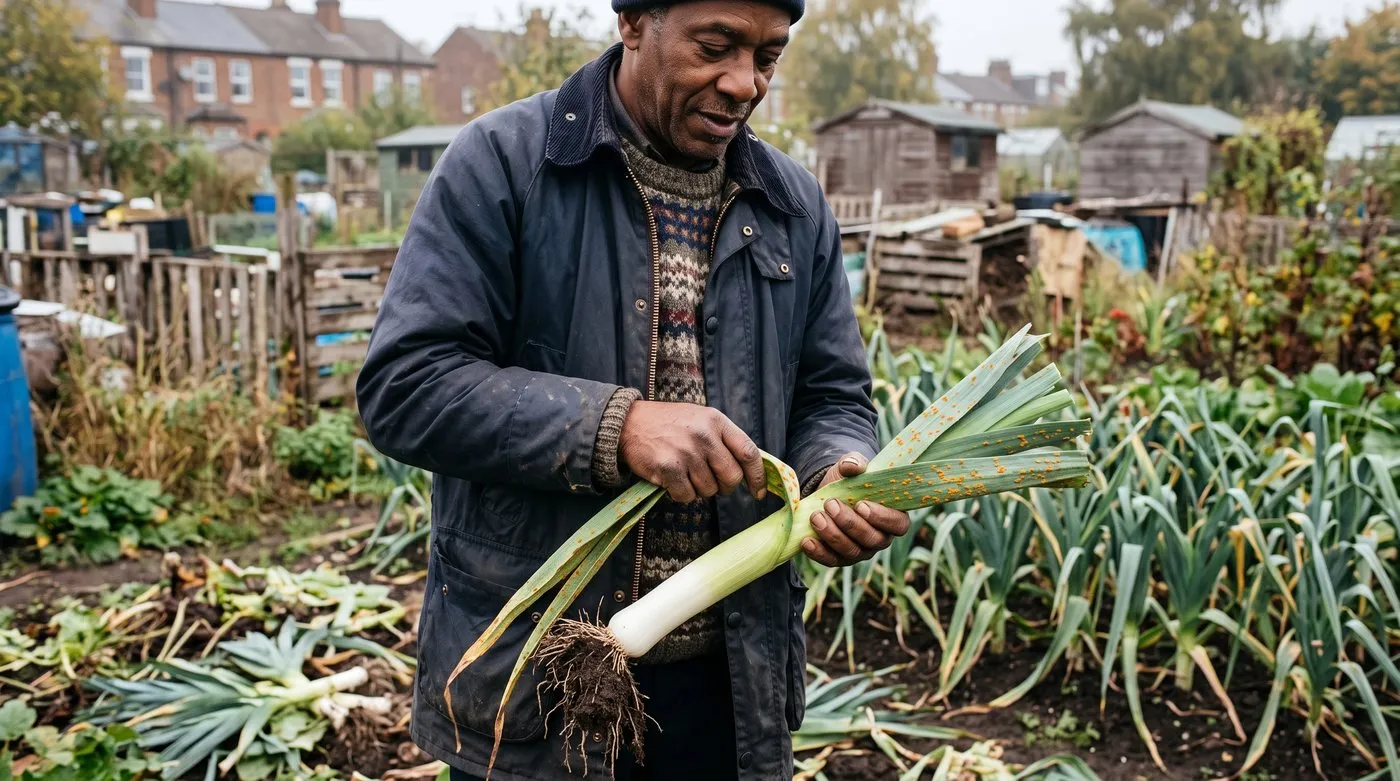
Rust looks alarming but rarely ruins the crop. Peel off the spotty outer leaves and the leek inside is fine to eat.
Rust spores blow in on the wind, so you can’t keep them out completely. You can make life harder for them:
- Space plants a little wider so the leaves dry quickly
- Avoid high-nitrogen feeds from midsummer, as soft growth suffers more
- Pick off the worst outer leaves and bin them
- Clear all old leaves at the end of the season
- Choose leek varieties with some resistance, such as ‘Apollo’ or ‘Porbella’
Rusty leeks are fine to eat once you peel off the spotty outer leaves. The guide to leek rust has more help.
How do I recognise fusarium basal rot?
Fusarium basal rot attacks the base plate, the flat bit at the bottom of the bulb where the roots grow. Leaves yellow and die back from the tips. The roots are few and rotten. Cut the bulb and the base is brown and soft, sometimes with a pinkish-white mould.
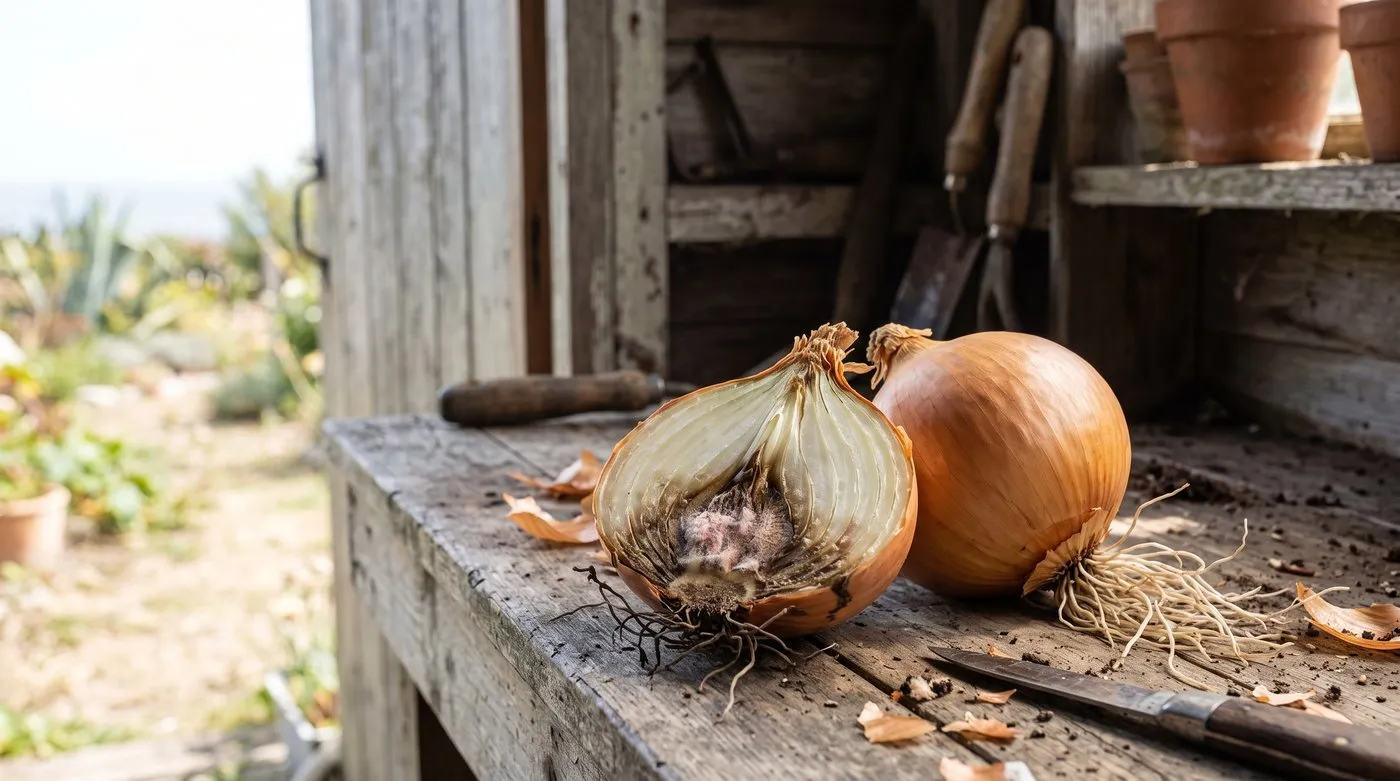
A brown, soft base plate means basal rot. It is worst in warm summers, so check bulbs before storing them.
It is mostly a problem in warm summers and on light soils that heat up fast. Some bulbs look fine at harvest, then rot from the base in storage.
Prevention is about good habits. Rotate your crops. Handle bulbs gently at harvest so you don’t bruise the base. Store only sound bulbs and bin any that soften.
How to prevent onion diseases without chemicals
There are no fungicides home gardeners can use on these onion diseases. Simple habits keep most of them in check.
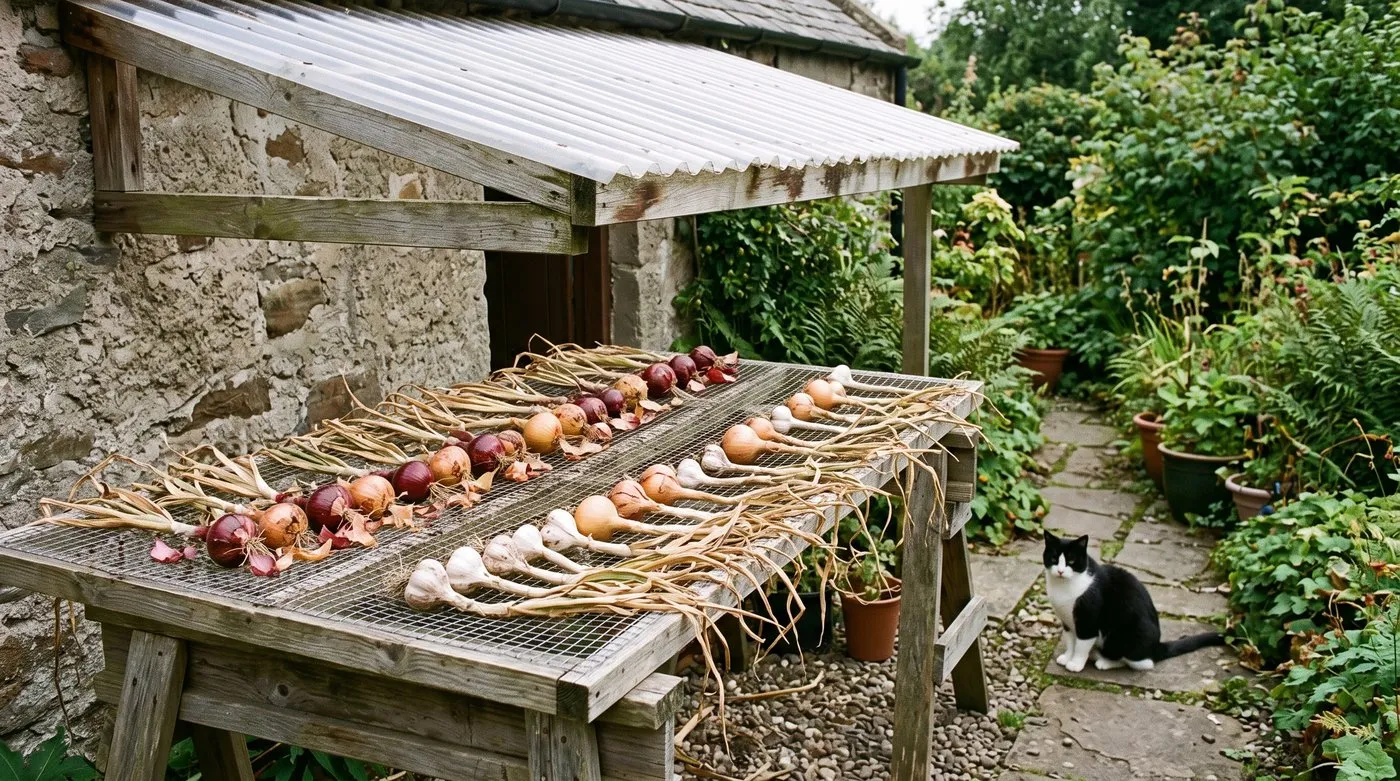
Drying bulbs in a single layer with plenty of air around them keeps neck rot and other storage rots at bay.
- Rotate your crops. Grow onions, garlic, leeks and shallots in a different bed each year. The crop rotation planner shows how to group them.
- Start clean. Buy firm sets and garlic cloves from a good supplier. Don’t plant soft or mouldy ones.
- Give them space and air. Wide spacing, weeding and watering the soil, not the leaves, all help.
- Keep white rot out. Clean tools and boots after working in an infected bed. Don’t share soil, sets or plants from it.
- Clear up. Remove old leaves and stray bulbs at the end of the season. Bin diseased material rather than composting it.
- Cure bulbs well. Dry onions and garlic thoroughly before storing them.
The RHS white rot page has good photos to help with identification.
Common mistakes with onion diseases
- Planting alliums in the same bed year after year. Diseases build up in the soil.
- Composting diseased bulbs and leaves. You may spread the problem round the garden.
- Storing onions before they are fully dry. Soft necks let neck rot in.
- Feeding leeks heavily late in summer. Soft, lush growth suffers more from rust.
- Moving soil from a white rot bed. Even a little on a spade can carry it to a clean bed.
Frequently asked questions
What is the most common onion disease in the UK?
Downy mildew is one of the most common, especially in wet summers. It starts as pale patches on the leaves, which grow a grey-purple fuzz in damp weather. Leaves collapse early and bulbs stay small and store badly.
How do I identify white rot on onions and garlic?
Look for white fluffy mould on the bulb base and roots. The leaves turn yellow and wilt, and the plant pulls up easily. Tiny black dots like poppy seeds often form in the mould. These survive in the soil for many years.
Can I eat onions with neck rot?
You can use lightly affected bulbs if you cut the rot away. Use them straight away and throw out any that are soft right through or smell bad. Never store affected bulbs next to healthy ones.
Why do my leeks get orange spots?
Orange spots on leeks are leek rust, a common fungal disease. It is worst in late summer and autumn. The leeks are still fine to eat once you peel off the spotty outer leaves. Wider spacing and avoiding high-nitrogen feeds help.
Does crop rotation prevent onion diseases?
Rotation helps, but it cannot beat white rot on its own. Moving alliums to a new bed each year cuts the build-up of several diseases. White rot lasts so long in soil that infected ground is best kept free of alliums.
How do I prevent neck rot in stored onions?
Dry onions thoroughly before storing them. Lift them when the leaves flop, then dry them in a warm, airy spot for two to three weeks. Store only firm bulbs with tight, papery necks, somewhere cool, dry and airy.
Are there onion varieties resistant to disease?
Some varieties have partial resistance, but none resist everything. Look for onions listed with downy mildew resistance in seed catalogues. Leeks such as ‘Apollo’ and ‘Porbella’ are known for some rust resistance. No variety resists white rot.
Now you can name the problem, read the guide to storing onions, garlic and shallots to keep your healthy bulbs sound all winter. For more veg troubles, browse the problems hub.
Our team produces practical UK gardening guidance from source research, contributor records and established horticultural practice. Editorial standards are overseen by Matt W.