
Key takeaways
- Lift once most tops have yellowed and flopped over, usually mid-August to mid-September
- Ease bulbs out with a fork on a dry day rather than pulling them by the tops
- Cure in a single layer, raised off the ground, in sun and a breeze for two to three weeks
- In wet weather, move them to an airy shed or greenhouse and give them longer
- They're ready when the neck is dry and tight and the skins rustle like paper
- Eat thick-necked, damaged or bolted bulbs first, as they won't keep
Drying onions properly after harvest is what makes them keep all winter. Lift them once the tops have flopped, then cure them in sun and moving air until the necks are dry and tight. In a wet British summer, move the drying indoors to an airy shed. Get this stage right and the storing takes care of itself.
This guide is about the drying, or curing, stage for onions. Once they’re cured, the guide to storing onions, garlic and shallots covers where and how to keep them through the winter.
When to lift onions for drying
Lift main-crop onions once most of the tops have yellowed and flopped over on their own. In most of England and Wales this is mid-August to mid-September. It’s often a little later in Scotland and the north.
There’s no need to bend the tops over by hand to hurry them along. Bulbs with upright tops are still growing, so give them another week or two.
Pick a dry spell with a few fine days forecast. Onions lifted wet start their curing wet, which makes rot more likely. If the weather won’t play ball, lift anyway and take them straight under cover.
Overwintered onions such as Senshyu Yellow and Radar are ready earlier, in June or July. They don’t keep long, so dry them briefly and eat them over summer.
How to lift onions without damaging them
Slide a fork into the soil a little way from the row and lever gently. The bulbs lift out cleanly with the base (the flat disc at the bottom where the roots grow) intact. Pulling onions up by their tops can tear this base and let rot in.
Handle them gently. Bruised onions don’t keep. Shake off loose soil, but don’t wash them.
As you lift, set aside any bulbs with thick necks, damage or a flower stem. These won’t store well, so they go straight to the kitchen.

Freshly lifted onions with the base intact. On a sunny, breezy day they can sit on the soil for a few hours before going onto racks.
How to cure onions outdoors
In a dry spell, outdoors is the quickest way to cure onions.
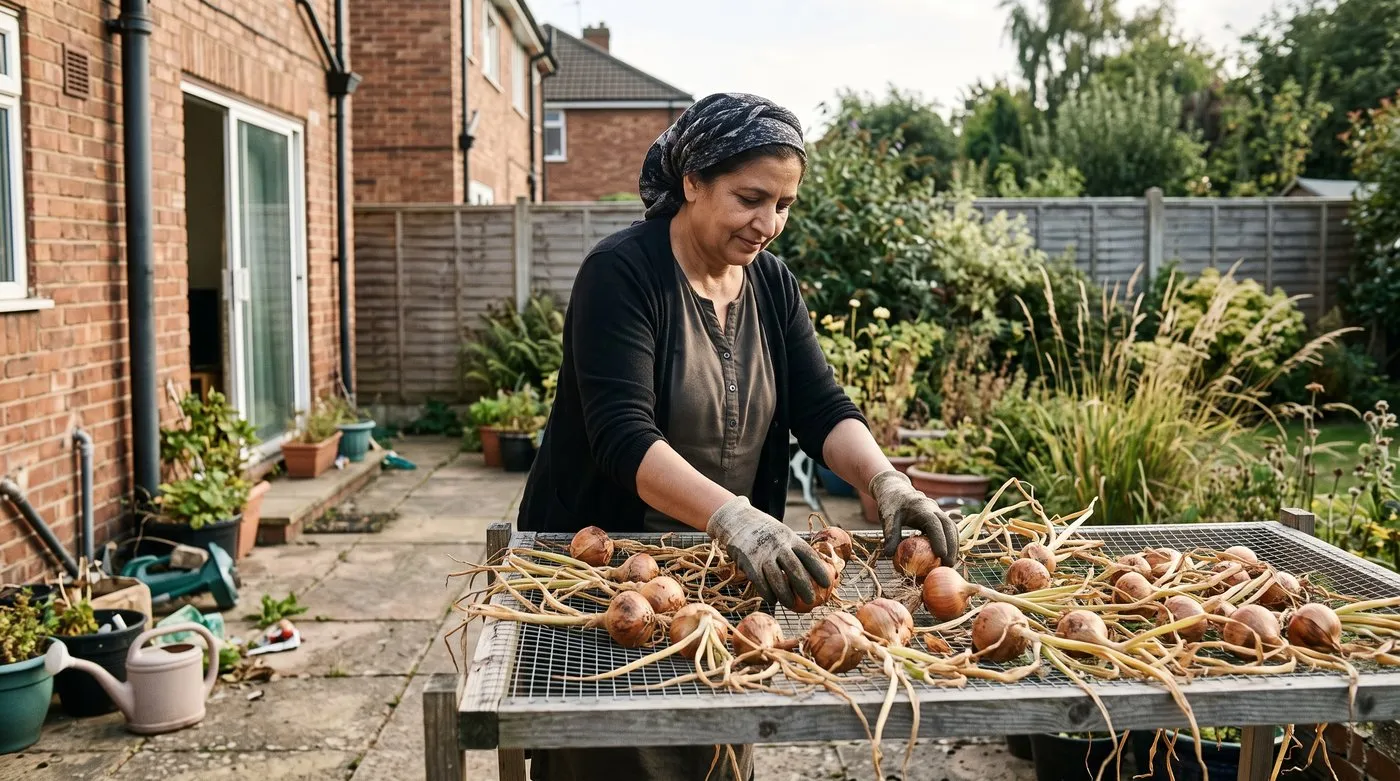
Turn the onions every few days so every side gets sun and air. Keep them in a single layer with gaps.
- Lay the onions in a single layer on a slatted bench, rack or wire mesh, raised off the ground so air can get underneath.
- Put them somewhere sunny and breezy, such as a patio, path or the sunny side of a shed.
- Space them so they don’t touch.
- Turn them every few days so all sides dry.
- Cover them or bring them in if rain is forecast.
Curing usually takes about two to three weeks in good weather. Leave the tops on while they dry.
How to cure onions in a wet summer
When the weather turns wet, cure your onions under cover. An airy shed, greenhouse, garage or carport all work. It just takes longer than outdoors.
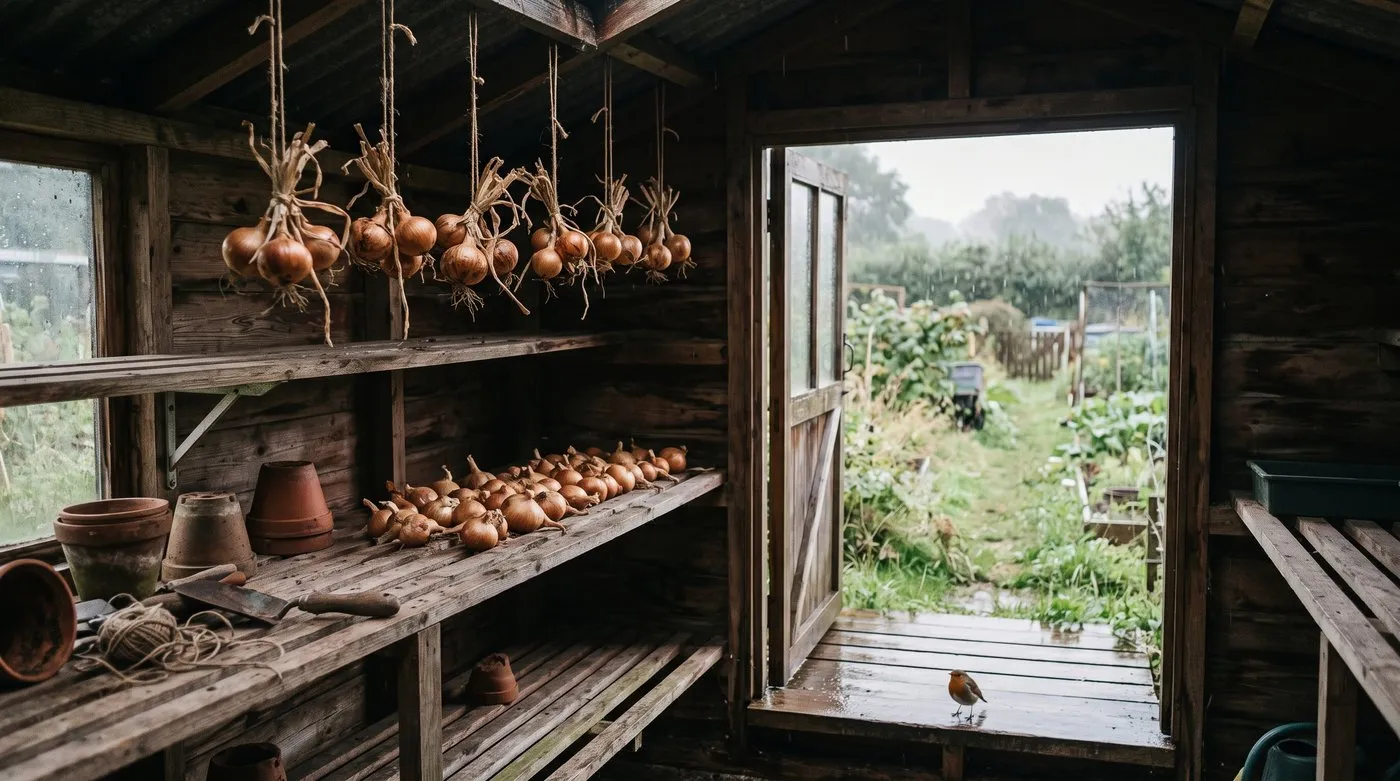
In a wet year, hang onions in bunches or spread them on slatted shelves under cover. Keep the door open for a draught.
Airflow matters more than warmth. Open a door or window at each end to make a draught. A small fan on a low setting helps in still, damp weather.
There are two easy ways to do it:
- On racks: spread the onions in a single layer on slatted shelves, crates or old pallets
- Hanging: tie them in small bunches by their tops and hang them from a beam, with gaps between the bunches
A greenhouse in sun can get very hot. Open the vents and door wide, or shade the onions so they don’t cook.
How to tell when onions are fully cured
Check a few bulbs before you store them. Each one should pass all three checks.
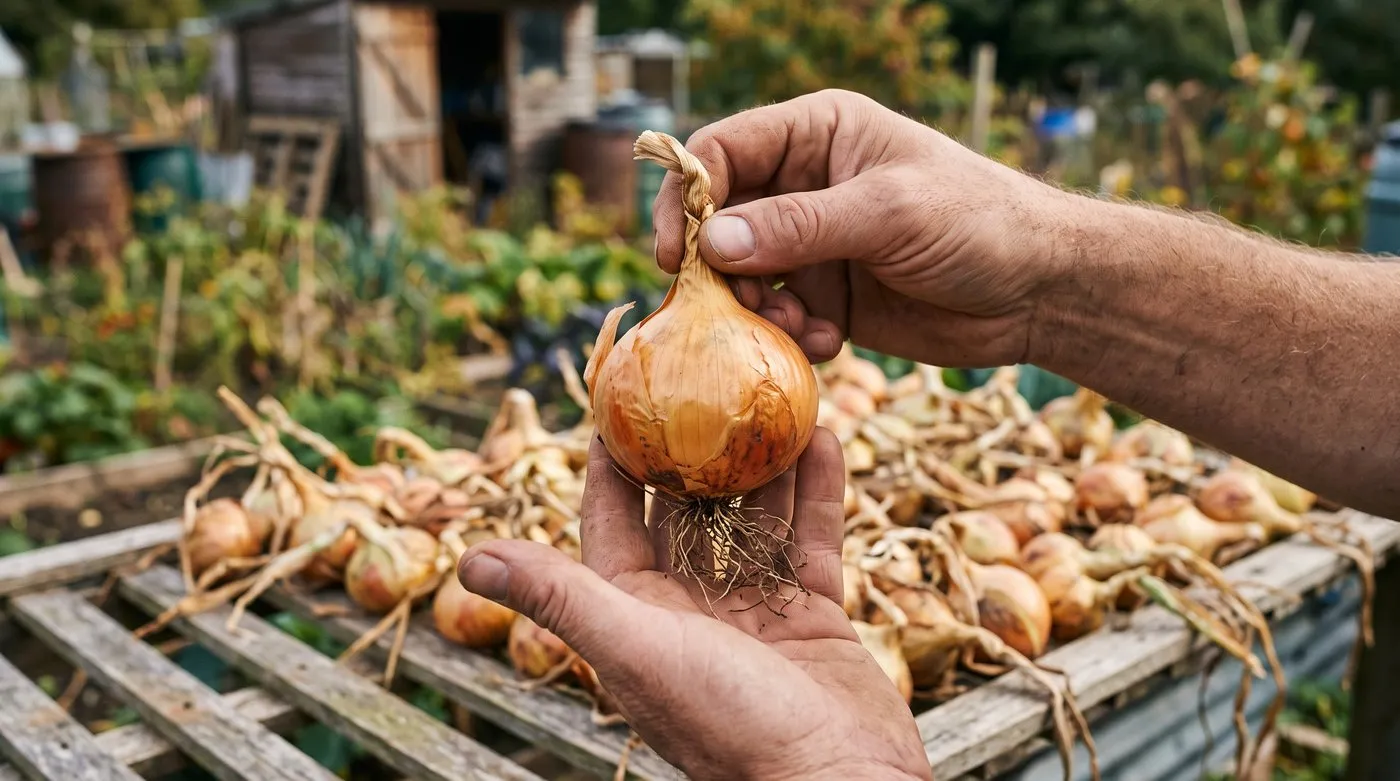
A properly cured neck is thin, dry and tight. If it still feels soft, the onion needs longer.
- The neck: pinch the dried stem just above the bulb. It should feel dry, thin and tight. If it’s soft or spongy, it needs longer.
- The skins: rub the outer skin. It should rustle like dry paper.
- The roots: the roots should be dry and wiry.
Bulbs that fail go back on the rack for another week. Any that stay soft-necked should be eaten soon.
Trimming onions after curing
Once your onions are cured, tidy them up for storing.
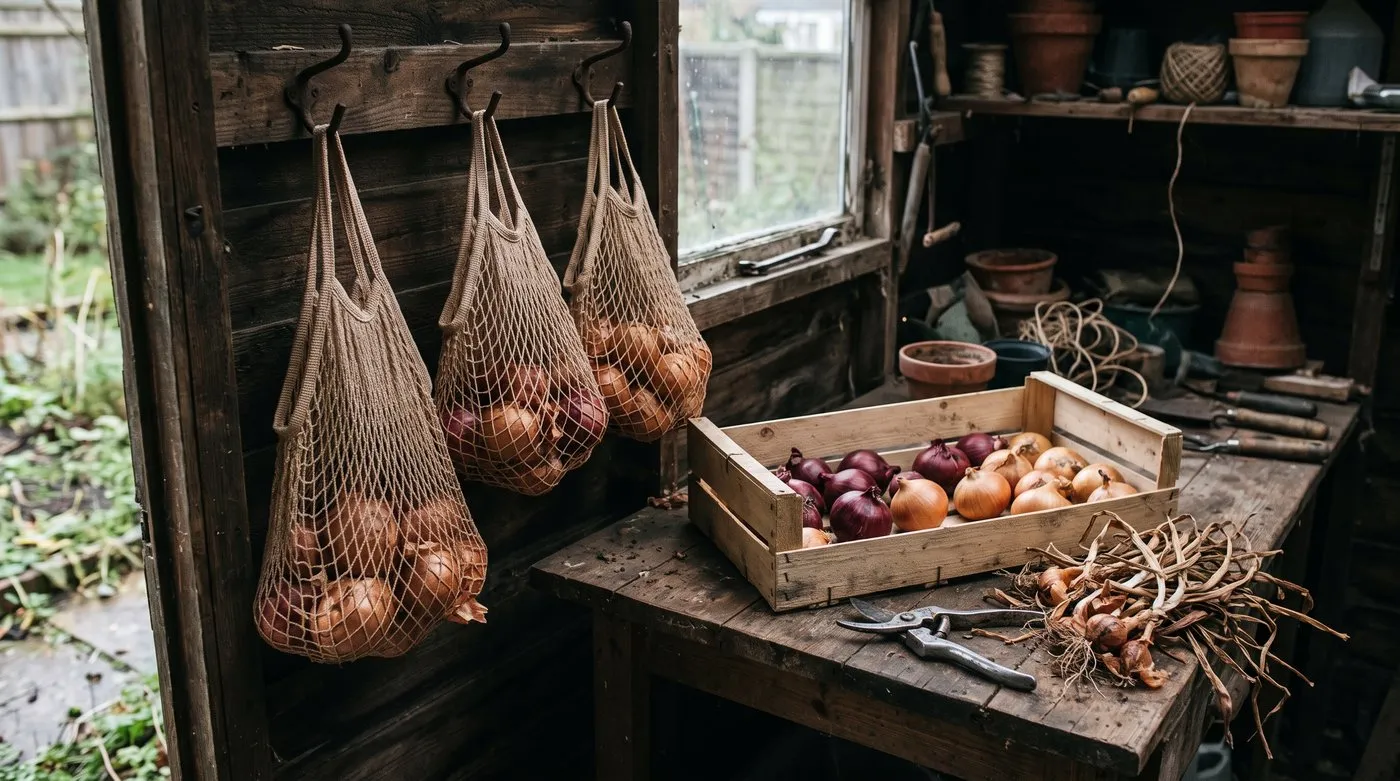
Nets and slatted crates let air reach every bulb. Plastic bags trap moisture and onions soon rot.
- If you’re not plaiting them, cut the tops off, leaving a few centimetres of dry neck above the bulb.
- Trim the dry roots short.
- Rub off any loose, flaky skin and dry soil, keeping the tight outer skins in place.
- Set aside any soft, bruised or thick-necked bulbs to eat first.
Store the rest in nets, slatted crates or plaits somewhere cool, dry and airy. Avoid plastic bags, which trap moisture. A frost-free shed or cool porch suits them well.
How to plait onions
Plaiting is a lovely way to store a few onions where you can grab them. Choose firm bulbs with thin necks and leave the tops long when you trim them.
- Cut a metre of strong twine and fold it in half. Tie a loop in the folded end for hanging.
- Tie three onions by their tops to the bottom of the twine.
- Add one onion at a time, weaving its top in with the twine.
- Alternate sides so the plait stays balanced.
- Stop when the plait feels heavy, leaving twine at the top to hang it.
If the tops have gone brittle, dampen them slightly with a wet cloth so they bend. Hang the plait somewhere cool, dry and airy, and take onions from the bottom up.

Weave each new onion top in with the twine and press the bulbs close together. A finished plait hangs neatly from a hook.
Which onions dry and store best?
Main-crop onions grown from sets or seed are the ones to dry for winter. Sturon, Stuttgarter Giant and Bedfordshire Champion are well-known keepers. Red onions such as Red Baron store too, though usually not quite as long.
Big, mild onions such as Ailsa Craig are best eaten in autumn rather than kept into spring. Shallots dry in just the same way, and the guide to growing shallots covers when to lift them. For more choice, see the guide to the best UK onion varieties.
Common mistakes when drying onions
Lifting too early. If the tops are still upright, the bulbs are still growing. Wait until most have flopped.
Washing the bulbs. Water softens the skins and lets rot in. Just brush off the dry soil.
Leaving them to sit wet. Onions left out in a rainy week start to rot. Move them under cover.
Crowding them. Bulbs piled up dry unevenly. Keep them in a single layer with gaps.
Cutting the tops too short. Leave a few centimetres of dry neck. It helps seal the bulb.
Storing thick-necked bulbs. They rarely keep. Use them first.
Onions that rot at the neck in store may have neck rot, a fungus that gets in through soft necks. The guide to onion diseases shows what to look for.
Onion drying calendar
| Month | Task |
|---|---|
| June to July | Lift overwintered onions. Dry briefly and eat fresh |
| Late July | Stop watering main-crop onions as bulbs ripen |
| August | Tops yellow and flop. Start lifting on dry days |
| September | Finish lifting. Cure outdoors or in a shed |
| October | Check cure, trim, plait or net, and store |
| November to March | Check stored onions every few weeks. Use any soft ones |
Frequently asked questions
When should I lift onions for drying in the UK?
Lift them once most of the tops have yellowed and flopped over. This is usually from mid-August to mid-September. There’s no need to bend the tops down by hand. Pick a dry spell with a few fine days forecast. Ease the bulbs out with a fork rather than pulling them.
How long do I cure onions for?
About two to three weeks outdoors in warm, dry weather, and longer in a shed. They’re done when the outer skins rustle and the necks are fully dry and tight. Bulbs that aren’t dried properly tend to rot in store, so don’t rush this stage.
Can I cure onions if it rains during the drying period?
Yes, just move them under cover. An airy shed, greenhouse or carport works, though it takes longer than outdoors. Spread the bulbs in a single layer on racks or slatted trays. Don’t leave onions sitting wet, as damp skins invite rot.
Should I wash onions before drying them?
No, never wash them. Water softens the skins and lets rot in. Let any soil dry, then brush or rub it off once the onions are cured. A few dry crumbs of soil do no harm in storage.
How do you plait onions?
Weave the dry tops of cured onions around a length of strong twine. Start with three bulbs tied to the twine, then add one at a time, working each top into the plait. Use firm onions with thin necks and leave their tops long. Hang the plait somewhere cool, dry and airy.
Which onions should I eat first instead of storing?
Eat any with thick necks, soft spots, damaged skins or flower stems first. These bulbs don’t keep and can rot in the sack. Overwintered onions such as Senshyu Yellow and Radar are also best eaten fresh over summer.
Now your onions are cured, read how to grow onions to plan next year’s crop, or see why some onions bolt before they’re ready. There are more harvest jobs in the how-to guides.
Our team produces practical UK gardening guidance from source research, contributor records and established horticultural practice. Editorial standards are overseen by Matt W.


