
Key takeaways
- Only store bulbs that are fully cured, with papery skins and dry, tight necks
- Keep them cool, dry, airy and frost-free, never in plastic or a damp shed
- Plaits and nets give every bulb airflow; slatted trays work for trimmed bulbs
- Softneck garlic and shallots usually keep longest; hardneck garlic is best used first
- Use thick-necked, damaged or sprouting bulbs first
- Check every week or two and remove anything soft or mouldy
The best way to store onions, garlic and shallots is cured, dry and hung up somewhere cool and airy. Get that right and a summer harvest can last you well into spring.
This guide picks up once the bulbs are lifted and dried: where to keep them, which storage method suits each crop, how long they last and how to spot trouble early. For lifting and curing step by step, see the guide to drying onions after harvest.
Are your bulbs ready to store?
Only fully cured bulbs keep well. Curing means drying them after lifting until the skins and necks have sealed.
A bulb is ready when:
- the outer skin is dry, papery and rustles when you handle it
- the neck (where the leaves meet the bulb) is thin, dry and tight when you pinch it
- the roots are dry and brittle
That usually takes two to three weeks in dry, airy conditions. If a neck still feels soft or springy, give it another week. Then trim the roots, and cut the tops to a short stub unless you’re plaiting. Brush off loose soil, but don’t wash them.
Set aside any bulbs with thick necks, damage or soft spots. They won’t keep, so use them first.

Curing on a slatted bench lets air reach every side. Only store bulbs once the necks are fully dry.
Where to store onions, garlic and shallots
Somewhere cool, dry, airy and frost-free. Good spots include:
- a frost-free garage or brick shed
- an enclosed porch or boot room away from sunny glass
- an unheated spare room, cupboard or larder
Avoid warm kitchens, which make bulbs sprout. Avoid damp sheds and cellars, which bring mould and rot. Never store them in plastic bags or sealed boxes: trapped moisture causes neck rot. And keep them away from potatoes, as the two spoil each other faster.
A fridge is no good for whole bulbs over the long term. It’s too damp, so they soften and sprout. Use it only for a cut onion or peeled cloves for a few days.
Plaits, nets or trays?
All three work, as long as air can get to every bulb.
| Method | Best for | Why it works |
|---|---|---|
| Plaits | Onions and softneck garlic with long, soft tops | Every bulb hangs in the air and you snip from the bottom |
| Net bags | Trimmed onions and shallots | Quick, airy and easy to hang |
| Slatted trays or crates | Large crops of trimmed bulbs | Easy to check; keep to a single layer |
| Old tights | Onions, one per leg with a knot between | Keeps bulbs apart, so rot can’t spread |
Hang plaits and nets from a hook or beam, not on a floor or against a damp wall. The drying onions guide linked above shows how to plait step by step.

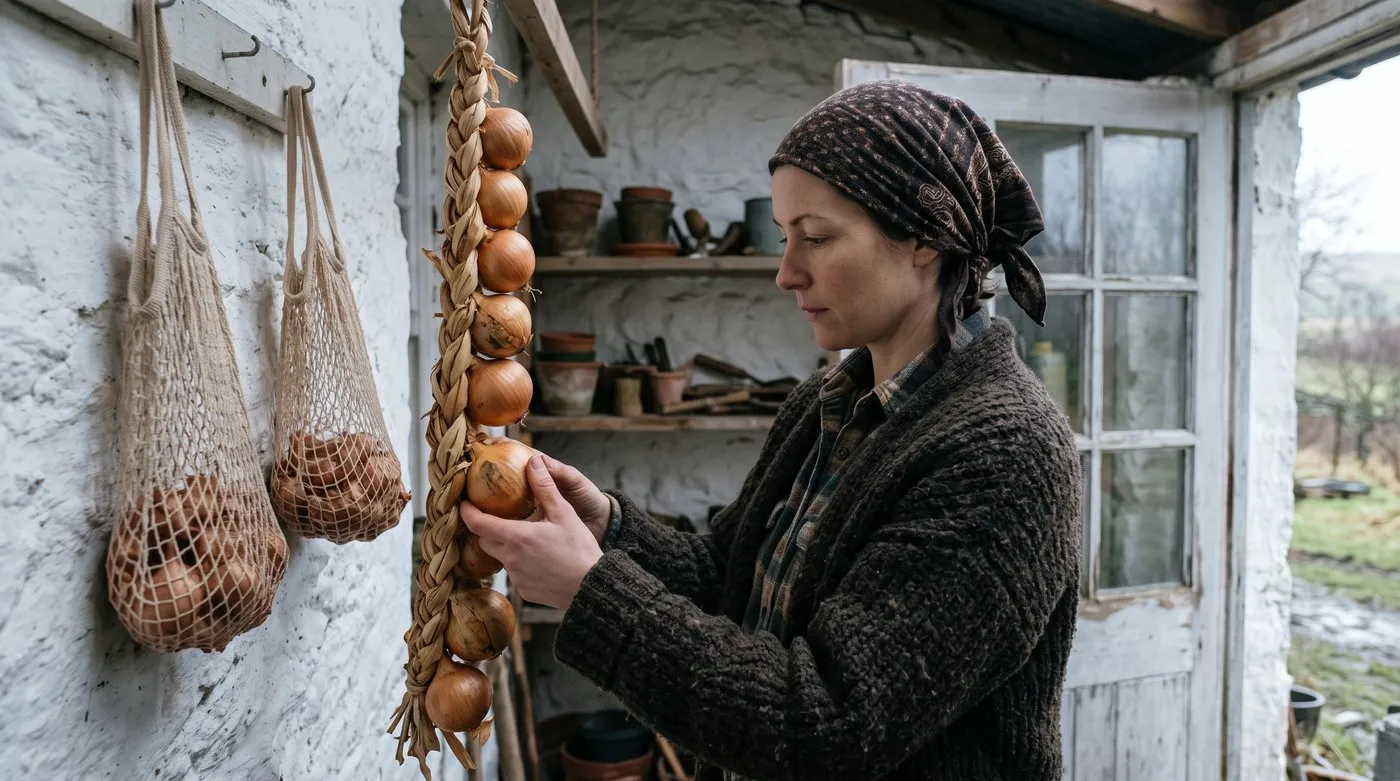
A plait keeps every onion in the air and looks lovely hung in a porch or larder.
How to store garlic
Garlic comes in two main types, and they store differently.
Softneck garlic, such as ‘Solent Wight’ and ‘Picardy Wight’, has soft, bendy stems once cured. It plaits easily and is the best type for keeping. Well-stored bulbs often last until spring.
Hardneck garlic, such as ‘Lautrec Wight’ and ‘Chesnok Red’, has a stiff central stalk. It won’t plait, so trim the stalk to a short stub and store the bulbs in a net or tray. It keeps for a shorter time, so use it first.
Leave the skins on and keep the heads whole until you need them. Once cloves are broken off, they dry out or sprout faster. The guide to the best garlic varieties lists more good keepers, and how to grow garlic covers when to lift.
Food safety: Never keep garlic in oil at room temperature, as it can cause botulism. Keep it in the fridge and use it within a few days, or freeze it.

Garlic bulbs bundled into an airy sack or net. Keep the heads whole until you need them.
How to store shallots
Shallots are some of the best keepers in the veg garden. Lift them as a clump and cure them whole. Once the skins are papery, break the clump into single bulbs.
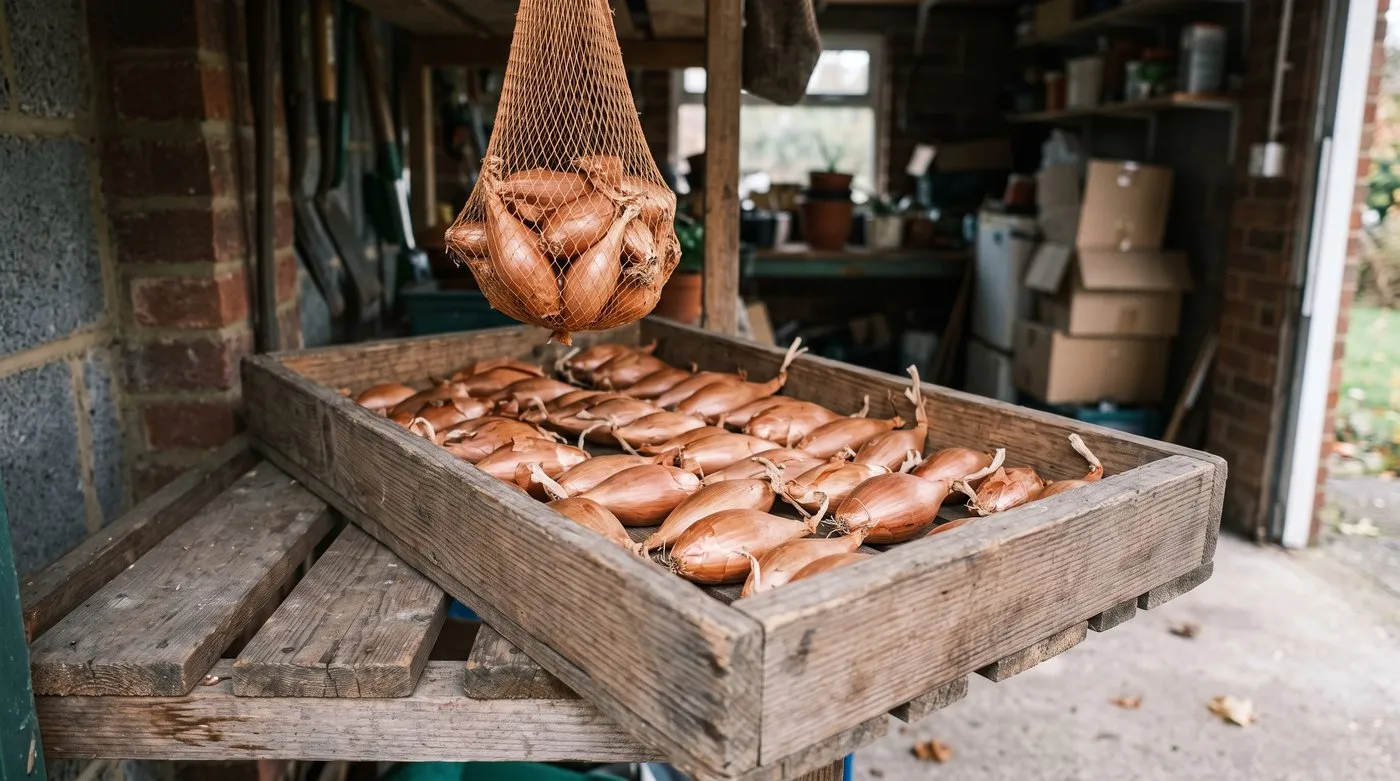
Single layers in a slatted tray keep shallots airy and easy to check. They’re among the best keepers you can grow.
Store them in net bags or a single layer in a slatted tray, somewhere cool and dry. Well-cured shallots such as ‘Longor’ and ‘Jermor’ often last until spring.
Saving your own: keep some firm, healthy, medium-sized bulbs in a paper bag in a cool, dry spot. Plant them out in late winter or early spring. The guide on how to grow shallots covers planting.
Which onions keep longest?
Onions grown from seed or sets for storing keep much longer than salad or early types.
- Good keepers: ‘Sturon’, ‘Centurion’ and ‘Hercules’ are long-standing favourites for storing.
- Red onions: many keep reasonably well but often not as long as good brown keepers. Use them earlier.
- Overwintered onions: sets planted in autumn are for eating in summer, not for long storage.
- Large show onions: grown for size, not keeping. Use them first.
The comparison of UK onion varieties has more on which to grow for storing.
How to spot trouble in store
Check your onions, garlic and shallots every week or two, and pull out problem bulbs before they spread.
A quick squeeze every week or two finds soft bulbs before they spoil their neighbours.
- Soft patches: press gently. Cut off small bad bits and use the rest straight away. Compost anything rotten right through.
- Grey mould at the neck: a sign of neck rot. Remove the bulb at once. The guide to onion diseases has pictures.
- Green shoots: the store is too warm, or the bulbs are near the end of their natural rest. Use them soon. The shoots are edible too.
- New roots at the base: the store is too damp. Move the rest somewhere drier and airier.
If a batch starts to turn, don’t waste it. Chop and freeze onions in portions for cooking, or pickle small shallots.
Common storage mistakes
- Storing before they’re fully cured. Soft necks let rot in. Wait until they rustle.
- Washing the bulbs. Brush them instead. The dry skin is their protection.
- Using plastic. Bags and lidded boxes trap moisture. Use nets, plaits or slatted trays.
- Keeping them somewhere warm or damp. Warmth makes them sprout; damp makes them rot.
- Forgetting to check. One rotten bulb can spoil those touching it.
Onion, garlic and shallot storage calendar
| Month | Job |
|---|---|
| June to July | Lift garlic once the lower leaves yellow. Cure it under cover |
| July to August | Lift onions and shallots once the tops flop. Cure for two to three weeks |
| August to September | Trim, plait or net, and move into store |
| October to February | Check every week or two. Use hardneck garlic and red onions first |
| February to March | Plant saved shallots. Use any bulbs starting to shoot |
| April onwards | Finish the last softneck garlic and good keepers before the new crop |
Frequently asked questions
How long do home-grown onions, garlic and shallots keep?
Several months if well cured and stored cool and dry. Good storing onions such as ‘Sturon’ often last into the new year and beyond. Softneck garlic keeps longer than hardneck, and shallots are among the best keepers of all.
What temperature should onions and garlic be stored at?
Cool, but above freezing, with dry, moving air. A frost-free garage, porch, shed or unheated room is ideal. Avoid warm kitchens and damp spaces, which make bulbs sprout or rot.
Can I store onions in the fridge?
Not whole cured onions for the long term. The fridge is too damp, so they soften and sprout. It’s fine for a cut or peeled onion for a few days.
Why are my stored onions sprouting?
Usually the store is too warm or too damp. Move the rest somewhere cooler, drier and airier. Use sprouting bulbs quickly. Thick-necked onions never keep well, so eat those first.
Can I store garlic in oil?
Not at room temperature, as it can cause botulism. Keep any garlic in oil in the fridge and use it within a few days, or freeze it. Whole cured bulbs store best dry.
Should I keep some shallots for planting next year?
Yes, shallots are easy to save. Keep some firm, healthy, medium-sized bulbs in a paper bag somewhere cool and dry. Plant them out in late winter or early spring.
Storing other crops too? Our guide to storing garden produce shows what keeps where, and the growing hub has guides for next year’s crop.
Our team produces practical UK gardening guidance from source research, contributor records and established horticultural practice. Editorial standards are overseen by Matt W.


