
Key takeaways
- Grow hyssop in full sun and free-draining soil; winter wet kills it faster than cold
- Sow indoors in March or April, or direct outdoors in May once the soil warms
- Plant 30-40cm apart, or 25-30cm apart for a low hedge
- Trim in spring as new shoots appear, and never cut into bare old wood
- Bees and butterflies love the flowers from July to September
- Use the strong, minty leaves sparingly in rich meat dishes and stews
Hyssop is a small, bushy herb with spikes of blue flowers that bees adore. Grow it in full sun on free-draining soil, trim it each spring and it will flower from July to September for years. It suits herb beds, gravel gardens, sunny pots and low hedges round a vegetable patch.
The short version: hyssop wants sun, drainage and a lean diet. Give it those and it is one of the easiest herbs you can grow. This guide covers sowing, planting, pruning, pots and how to use the leaves in the kitchen.
What is hyssop, and is it the same as anise hyssop?
Hyssop (Hyssopus officinalis) is a semi-evergreen shrubby herb from the dry hillsides of southern Europe. It grows into a neat bush about 45-60cm tall, with narrow dark green leaves and spikes of small flowers in summer. The leaves have a strong, minty, slightly bitter scent.
It is often mixed up with anise hyssop (Agastache foeniculum). That is a different, taller perennial with soft, aniseed-scented leaves. If that’s the plant you’re after, see the guide to growing agastache, the edible bee magnet.
Hyssop comes in three flower colours:
| Type | Flower colour | Good for |
|---|---|---|
| Hyssopus officinalis | Deep blue-violet | Bees, herb beds, low hedges |
| ’Albus’ | White | White gardens, kitchen herb beds |
| ’Roseus’ | Soft pink | Cottage borders, knot gardens |
| subsp. aristatus (rock hyssop) | Blue, compact | Pots, rock gardens, edging |
All are equally hardy and need the same care. The standard blue is the classic bee plant.

Pink ‘Roseus’ hyssop sits happily alongside lavender and thyme, as they all like the same sunny, well-drained spot.
Where to plant hyssop
Plant hyssop in full sun, in soil that drains freely. It is hardy, but cold, wet soil in winter rots the roots. This matters more than anything else you do.
- Chalk, limestone and sandy soils suit it perfectly with no preparation.
- Heavy clay needs plenty of horticultural grit dug in, or a raised bed. The guide to plants for clay soil has other ideas for heavy ground.
- Acid soil is fine if it drains well. Only lime very acid soil, after a simple pH test.
Don’t feed hyssop or plant it in rich, manured ground. Rich soil gives soft, floppy growth and fewer flowers. Lean, stony soil keeps it compact and fragrant, which is why it does so well in a gravel garden.
In the wetter west and north, a raised bed or a large pot gives the drainage it needs.
How to grow hyssop from seed
Sow hyssop indoors in March or April, or outdoors in May once the soil has warmed. Indoor sowing gives bigger plants in the first summer.
Indoors:
- Fill a seed tray or small pots with seed compost mixed with a handful of grit.
- Sow thinly on the surface and barely cover with a sprinkle of vermiculite.
- Keep at about 18-21°C, on a warm windowsill or in a propagator.
- Expect seedlings in two to four weeks. Germination is often patchy.
- Prick out into 9cm pots once they have two true leaves.
- Harden off from late April and plant out from mid-May.
Outdoors: rake the soil fine, sow thinly in a shallow drill and barely cover. Keep it damp until seedlings appear. Thin to 30-40cm apart.
First-year plants stay small and flower lightly. They fill out and flower freely from their second summer.

These seedlings have their first true leaves, so they’re ready to move into their own small pots.
Planting spacing and hyssop hedges
Space plants 30-40cm apart in a border. For a low hedge, plant 25-30cm apart in a single row. Hyssop is a traditional edging plant for herb gardens and knot gardens, and makes a pretty, bee-friendly alternative to box.
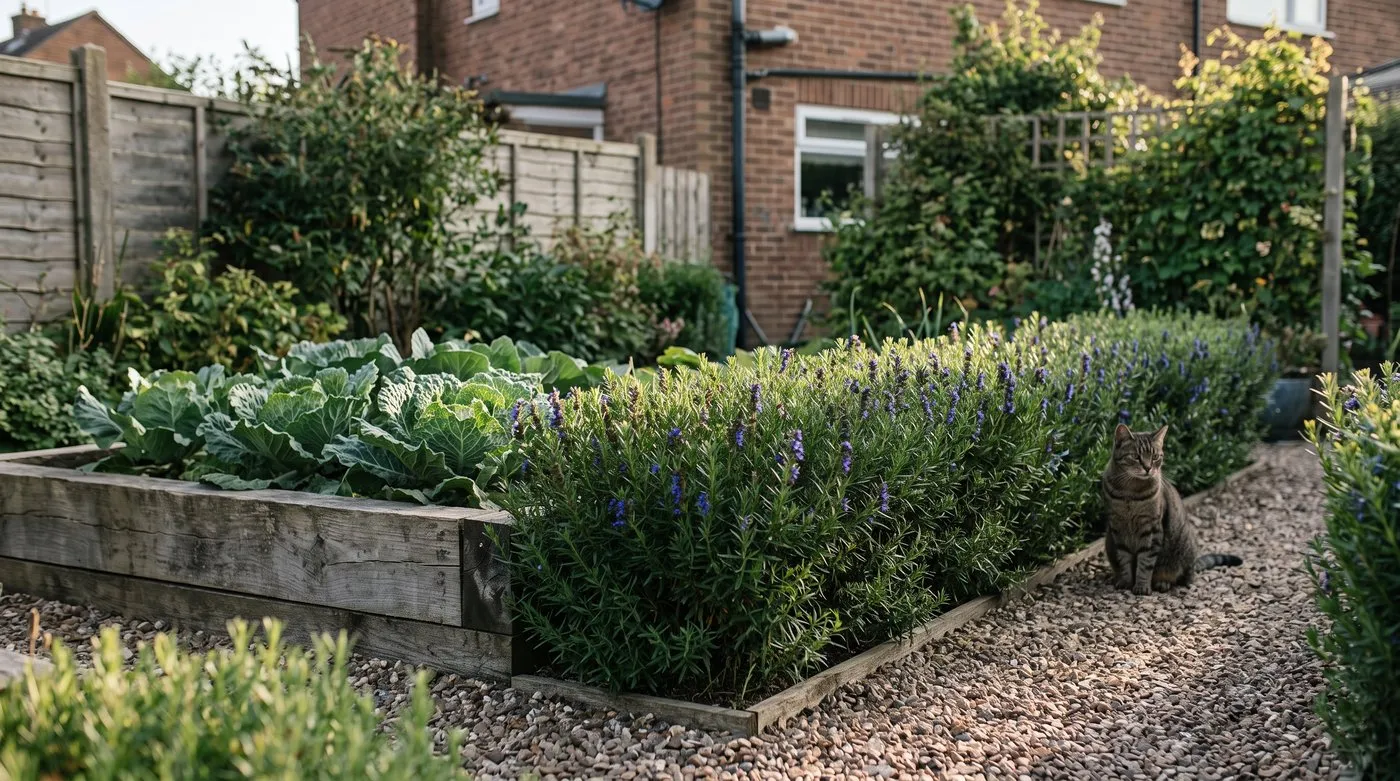
Planted 25-30cm apart, hyssop makes a neat, bee-friendly edging for a veg bed or herb garden.
Plant out in spring, at the same depth as the pot. Water in well, then water only in long dry spells until the plants settle. After that, they rarely need watering in the ground. For ideas on fitting it into a wider planting plan, see how to create a herb garden.
Why bees love hyssop
Hyssop is one of the best herbs for pollinators. Each spike carries lots of small, nectar-rich flowers that open in turn over several weeks. Bumblebees, honeybees, solitary bees, hoverflies and butterflies all visit.
Its long season, from July into September, helps bees through late summer. Grow it beside other summer herbs such as borage, the easy annual bee plant, and the bed will hum all summer.

A bumblebee working a blue hyssop spike. The flowers open a few at a time, so one plant feeds bees for weeks.
Does hyssop keep cabbage whites off brassicas?
Not reliably. Hyssop is a traditional companion plant for cabbages, and its strong scent may help hide them a little. It won’t stop cabbage white butterflies laying eggs on its own.
What it does do is bring in hoverflies and other helpful insects. For real protection, cover brassicas with fine insect mesh. The guide to controlling cabbage white butterflies explains how.
How to prune hyssop in spring
Prune hyssop in spring, once you see fresh green shoots near the base. That is usually late March or April. Cut last year’s stems back hard, to just above the new growth. Never cut into bare brown wood, as hyssop rarely regrows from it.
Avoid hard pruning in autumn. Leave the old stems over winter to protect the crown.
After the first flush of flowers, a light trim of the spent spikes keeps plants tidy and may bring a few more flowers. Even with good pruning, plants turn woody and sparse at the base after several years. Replace them then with new plants from seed or cuttings.
Cuttings are easy. Take 8-10cm softwood cuttings from non-flowering shoots in late spring or early summer. Root them in a gritty cutting compost, somewhere bright but out of direct sun.
Growing hyssop in pots
Hyssop grows well in a pot on a sunny patio, balcony or doorstep. Use a pot at least 30cm wide with drainage holes. Fill it with a loam-based compost such as John Innes No 2, mixed with plenty of grit.
Give it at least six hours of direct sun a day. Water when the top few centimetres of compost feel dry, and never leave the pot standing in water. There’s no need to feed. In winter, raise the pot on feet so it drains, and move it against a sunny wall in hard weather. Repot every couple of years into fresh compost.

A big terracotta pot and a sunny doorstep suit hyssop well. Let the compost dry a little between waterings.
Harvesting and drying hyssop
Pick fresh leaves whenever you need them through spring and summer. For drying, cut stems just before the flowers open, when the flavour is strongest. Cut on a dry morning, after the dew has gone.
Tie small bunches with twine and hang them upside down somewhere dry and airy, out of direct sun. They are ready when the stems snap cleanly. Strip the leaves and flowers into a jar and keep it in a dark cupboard. Use it within about a year. The guide to drying herbs by hanging, rack, oven or dehydrator covers the other methods.

Cut stems on a dry morning just as the first flowers open, when the leaves have the most flavour.
How to use hyssop in the kitchen
Hyssop tastes sharp and minty, a bit like a mix of rosemary, mint and sage. It is strong, so start with a leaf or two. It works well with rich meats such as lamb, pork, duck and game, and in bean soups and stews. Add the flowers to salads as a garnish.
Normal cooking amounts are fine. Don’t use hyssop essential oil, and skip strong teas or medicinal doses if you are pregnant or have epilepsy.

A few bunches hung from a beam give you hyssop for winter stews. Keep them out of direct sun so they hold their flavour.
Hyssop growing calendar
| Month | What to do |
|---|---|
| March | Sow indoors. Prune established plants once new shoots show |
| April | Prune if not done. Prick out seedlings. Start hardening off |
| May | Plant out from mid-May. Sow direct outdoors |
| June | Take softwood cuttings. Pick fresh leaves |
| July | Main flowering. Cut stems for drying as flowers open |
| August | Light trim of spent spikes. Keep picking |
| September | Last flowers. Collect seed if you want it |
| October to February | Leave stems standing. Raise pots on feet for winter |
Common mistakes with hyssop
- Hard pruning in autumn. Leaves the plant weak going into winter. Wait for spring.
- Rich soil and feeding. Gives floppy stems and fewer flowers. Keep it lean.
- Wet winter soil. The main cause of losses. Add grit, raise the bed or grow in a pot.
- Cutting into old wood. Bare brown stems rarely sprout. Stay just above the new growth.
- Expecting a big show in year one. Seed-raised plants flower properly from their second summer.
Frequently asked questions
Is hyssop hardy in the UK?
Yes, hyssop is hardy and survives most UK winters outdoors. Its real enemy is winter wet rather than cold, so plants on heavy, waterlogged soil often rot. Grow it in free-draining soil in full sun, and mulch round the crown with grit rather than bark on clay.
When should I sow hyssop seeds?
Sow indoors in March or April, or outdoors in May. Indoors, sow thinly on the surface of seed compost and barely cover. Keep it warm until it comes up, which can take a few weeks. Outdoors, wait until the soil has warmed and thin seedlings once they are big enough to handle.
What soil does hyssop prefer?
Hyssop likes free-draining, neutral to alkaline soil in full sun. It copes with poor, stony ground and chalk, and often does better there than in rich soil. On heavy clay, add plenty of grit or grow it in a raised bed or pot. Avoid soil that stays wet in winter.
When should I prune hyssop?
Prune hyssop in spring, once new shoots appear at the base. Cut last year’s stems back hard, but stay just above the new growth and never cut into bare brown wood. A light trim after the first flush of flowers keeps plants neat. Avoid hard pruning in autumn.
Is hyssop the same as anise hyssop?
No, they are different plants. Hyssop is Hyssopus officinalis, a small woody herb with a sharp, minty flavour. Anise hyssop is Agastache foeniculum, a taller perennial with aniseed-scented leaves. Both are excellent for bees.
Is hyssop good for bees?
Yes, hyssop is excellent for bees. Its spikes of small, nectar-rich flowers attract bumblebees, honeybees and solitary bees, and butterflies and hoverflies visit too. It flowers from midsummer into early autumn, when pollinators still need plenty of food.
Can you eat hyssop?
Yes, hyssop leaves and flowers are edible. The leaves taste strong, minty and slightly bitter, so use young ones sparingly in rich meat dishes, stews and soups. The flowers make a pretty salad garnish. Don’t take hyssop oil or medicinal doses, especially if pregnant.
Does hyssop protect cabbages?
Not reliably, though it is traditionally planted beside cabbages. Its strong scent may help hide brassicas from cabbage white butterflies, but it won’t stop them on its own. Its flowers do bring in hoverflies and other helpful insects. For dependable protection, cover brassicas with fine insect mesh.
Now your hyssop is sorted, browse more herbs and edibles to grow or read the guide to the best bee-friendly plants for UK gardens to plan the rest of the border.
Our team produces practical UK gardening guidance from source research, contributor records and established horticultural practice. Editorial standards are overseen by Matt W.


