Key takeaways
- Woody herbs like sage, rosemary, thyme, oregano and bay dry beautifully hung in bunches
- Basil, coriander and chives taste of very little dried, so freeze them
- Pick on a dry morning just before the plant flowers
- Dry gently: a low dehydrator setting, never a hot oven
- Keep leaves whole in airtight jars in a dark cupboard and crumble as you cook
Drying herbs is one of the cheapest, easiest ways to turn a summer glut into a year of flavour. Hang a few bunches of sage and thyme somewhere warm and dry, and in a week or two you’ll have jars of herbs that actually taste of something.
Here’s how to dry herbs four ways (hanging, flat on a rack, oven and dehydrator), which herbs to dry and which to freeze, when to pick, and how to store them so they keep their flavour. For drying other crops, see our guide on how to dry and dehydrate garden produce. For growing your own, see how to grow herbs in the UK.
Why most home-dried herbs taste of nothing
You know the jar: faded green dust on a sunny shelf above the cooker. The herbs were probably dried fine. It’s what happened afterwards that did the damage.
Three things steal flavour. Heat drives off the oils that give herbs their smell. Light fades the colour and the flavour. Air gets to work the moment you crumble the leaves.
So dry gently, store in the dark, and keep leaves whole until you cook. Do that and your sage will still taste like sage next spring.
Hard versus soft herbs: which dry and which do not
The herb itself makes the biggest difference. Some are happy on a string in the airing cupboard. Others wilt into grassy nothing.
Hard herbs (dry brilliantly)
- Sage: leathery leaves, dries in about a week hung up. Keeps its flavour really well.
- Rosemary: needles dry slowly, so give it up to two weeks. One of the best dried herbs there is.
- Thyme: the tiny leaves fall off the stems when dry, which makes them easy to strip. About a week.
- Oregano: a must for tomato sauces. Tastes even punchier dried.
- Bay: dry single leaves flat on a rack. Whole bay leaves keep for ages.
- Marjoram: oregano’s sweeter cousin. Lovely in slow-cooked dishes.
These all have tough, woody or waxy leaves that hold on to their flavour.
Soft herbs (better frozen)
- Basil: the classic one that disappoints. Dried basil loses most of its sweet smell.
- Mint: fine dried for tea, but loses its fresh zing for cooking.
- Parsley: OK dried for stocks and stews, but no good as a fresh-tasting garnish.
- Coriander leaf: always freeze it.
- Chives: turn into tasteless green flakes. Freeze them chopped instead.
- Dill: keeps some flavour but loses its bright lemony notes.
For soft herbs, our guide to freezing fresh herbs shows you the ice-cube tray trick. Seeds of coriander, dill and fennel are a different story: they dry really well, in much the same way as pods in our guide to drying beans and peas.
 Small bunches of woody herbs hung in a warm, dry pantry. They’ll be ready in one to two weeks.
The four UK drying methods compared
Pick a method by the herb, how much you’ve got and how quickly you want it done.
| Method | Best for | How long | Flavour |
|---|---|---|---|
| Hanging in bunches | Woody herbs | One to two weeks | Best |
| Flat on a rack | Soft herbs, bay, big leaves | About a week | Good |
| Oven, lowest setting | Small one-off batches | A few hours | Least good |
| Dehydrator, low setting | Regular batches, soft herbs | A few hours | Very good |
Hanging keeps the most flavour because it’s so slow and gentle. A dehydrator is quickest and most reliable. The oven works in a pinch, but it uses the most energy and loses the most flavour.
Harvesting herbs for maximum essential oil
When you pick matters more than how you dry. Herbs picked on a bright, dry morning in early summer taste far better than ones cut on a damp autumn evening.
Best month for each herb
- Sage: late May to mid July, before it flowers.
- Rosemary: April to June, and again in September and October.
- Thyme: June and July, as the flower buds form but before they open.
- Oregano and marjoram: late June to August, just before the flowers open.
- Bay: any time except midwinter.
- Parsley: late June to August. You can cut it several times.
- Mint and basil: mid June to early August. Pinch out flower tips to keep the leaves coming.
Time of day
Pick mid-morning, once the dew has dried but before the hottest part of the day. Wet leaves go mouldy as they dry. The RHS guide to harvesting and preserving herbs suggests much the same.
How much to take
For woody herbs like sage, rosemary, thyme and oregano, never cut more than a third of the plant at once. For annuals like basil, dill and coriander, cut stems just above the lowest pair of leaves so new side shoots grow.
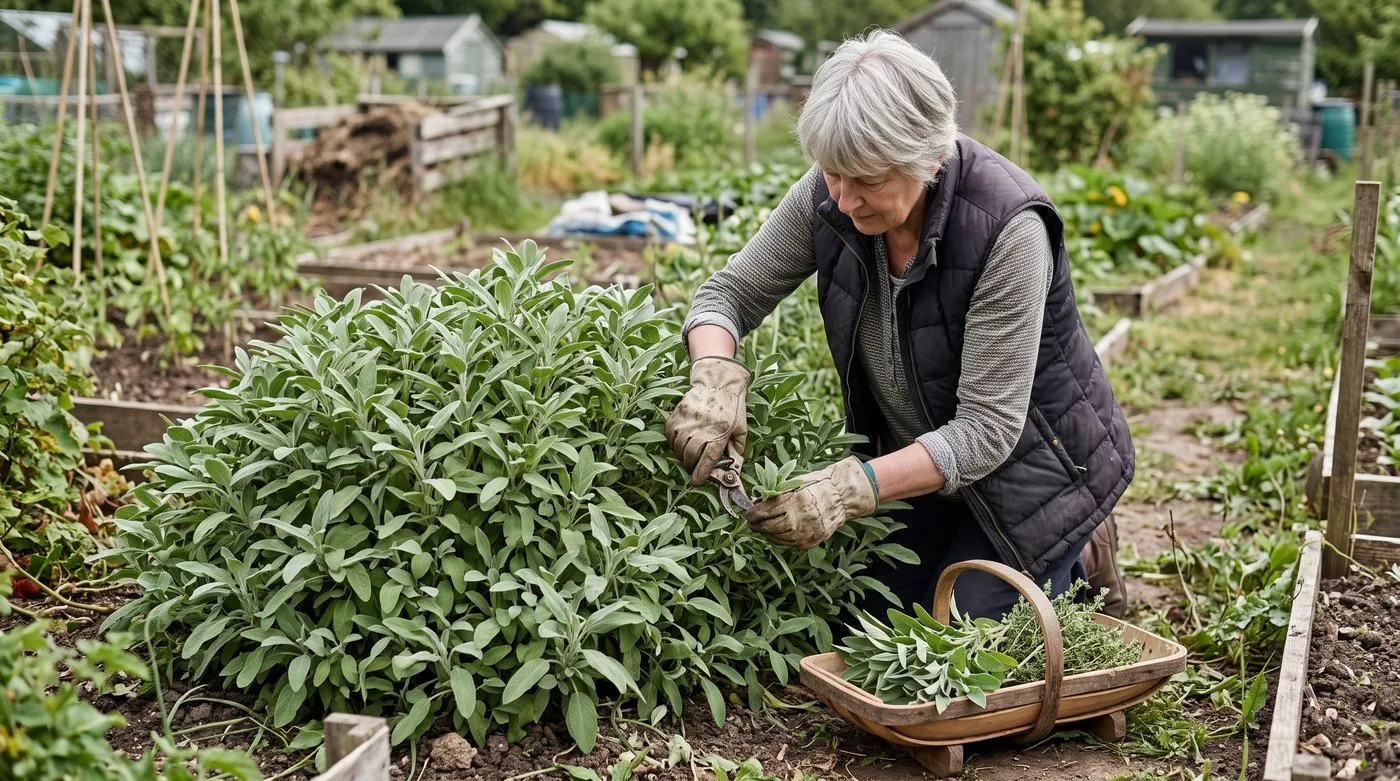
Pick on a dry morning once the dew has gone, as wet leaves go mouldy as they dry. Take no more than a third of a woody herb at once so it grows back.
Method 1: hang drying on twine
The traditional way, and the one that keeps the most flavour. All you need is garden twine, a hook and a warm, dry room.
- Strip the leaves off the bottom 5cm of each stem.
- Gather a small, loose bunch of about 8-12 stems. Big, tight bunches stay damp inside and go mouldy.
- Tie the stem ends with twine, leaving a loop for hanging.
- Hang upside down somewhere warm, dry and airy. An airing cupboard is perfect. A sunny windowsill isn’t, as the sun fades the leaves.
- Check after a week. They’re done when the leaves crackle and the stems snap rather than bend.
Method 2: screen drying flat
Best for big single leaves like bay and mint, and for soft herbs that flop in a bunch. A cooling rack or an old picture frame covered in muslin both work.
- Pick the leaves off the stems, or use whole sprigs of mint.
- Spread them out in a single layer without overlapping.
- Put the rack somewhere warm and dry, out of direct sun.
- Turn the leaves every couple of days.
- They’ll take about a week, depending on leaf size and how damp the room is.
Air reaches both sides of each leaf, so it’s quicker than hanging but still gentle. Great for parsley, dill, fennel fronds and bay.
 Drying flat keeps soft herbs like parsley, dill and fennel from bruising in a bunch.
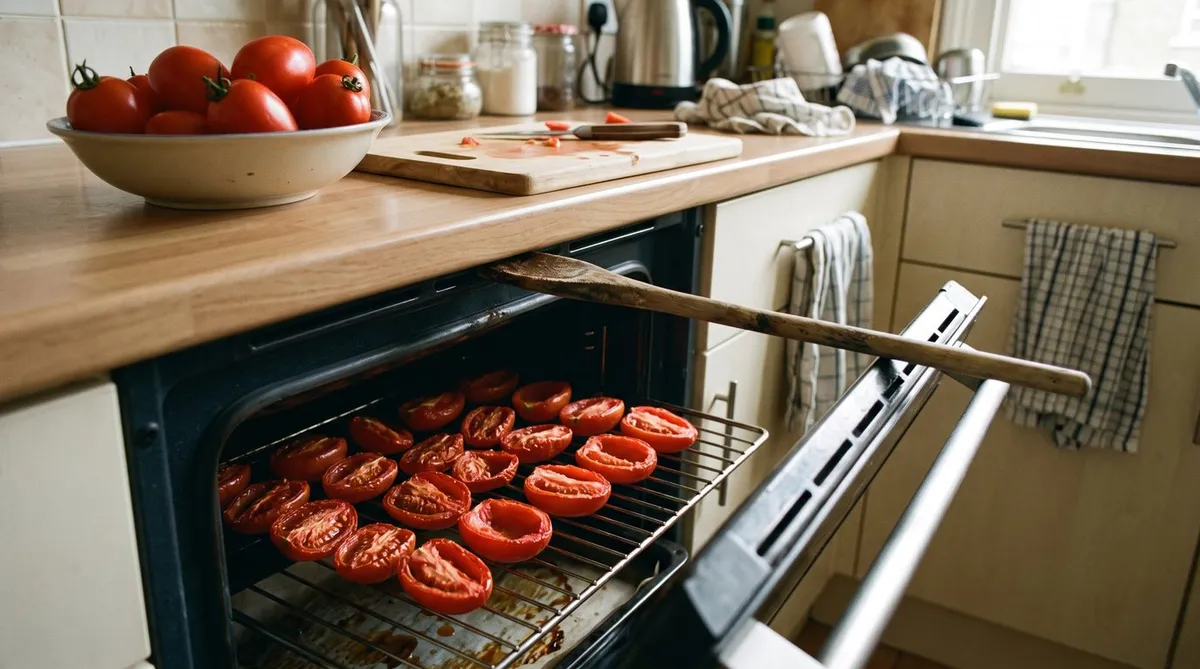
Method 3: oven drying at 40-50C
Use the oven only when you’ve nothing else, and for small batches.
- Set the oven to its lowest setting.
- Line a tray with greaseproof paper and spread the herbs out in one layer.
- Wedge the door open a crack with a wooden spoon so damp air can escape. Otherwise the herbs steam instead of dry.
- Check every half hour. It usually takes a few hours.
- They’re done when they crackle and the stems snap.
A fan oven works a little better, as the fan helps move damp air out. If your oven’s lowest setting is very hot, skip it and hang your herbs instead.
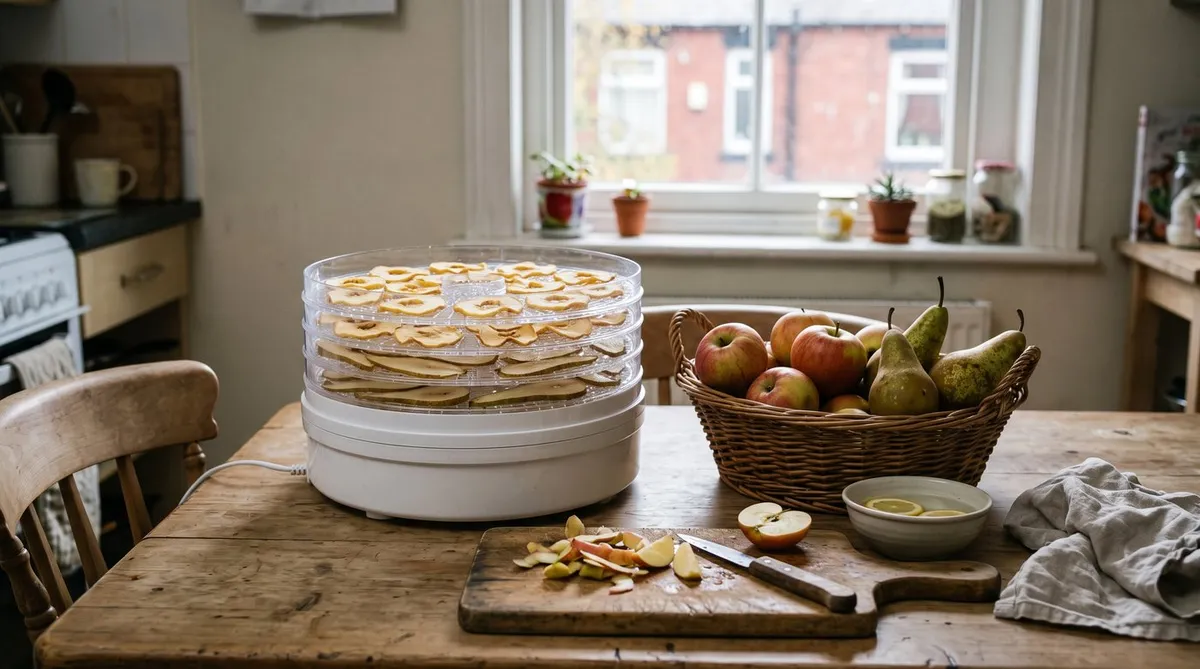
Method 4: dehydrator at 45-55C
- Set the dehydrator to a low setting, around 45-55C. Go lower for delicate parsley and dill.
- Spread the herbs over the trays in a single layer.
- Soft herbs take a couple of hours, woody ones a few hours more. Start checking after two hours.
- Swap the top and bottom trays halfway through.
- They’re done when the leaves crackle and crumble between your fingers.
A dehydrator is quick and reliable, and comes a close second to hanging for flavour. If you dry a lot of herbs and fruit, it soon earns its place.
 A dehydrator on a low setting dries herbs in a few hours without cooking away their flavour.
What goes wrong and why
Most disappointing batches come down to one of these.
- Too hot. The big one. High heat drives off the flavour. Keep it low.
- Drying in the sun. Sunlight fades colour and flavour. Dry everything in the shade.
- Bunches too big. Thick bunches stay damp in the middle and go mouldy. Keep them small.
- Crumbling before storing. Crushed leaves lose flavour fast. Store whole.
- Drying the wrong herb. Basil and coriander never dry well. Freeze them.
- Clear jars on a sunny shelf. Light fades the herbs. Use dark jars or a dark cupboard.
Storage: how to keep flavour for 12 months
Store them well and dried herbs keep their best flavour for about a year.
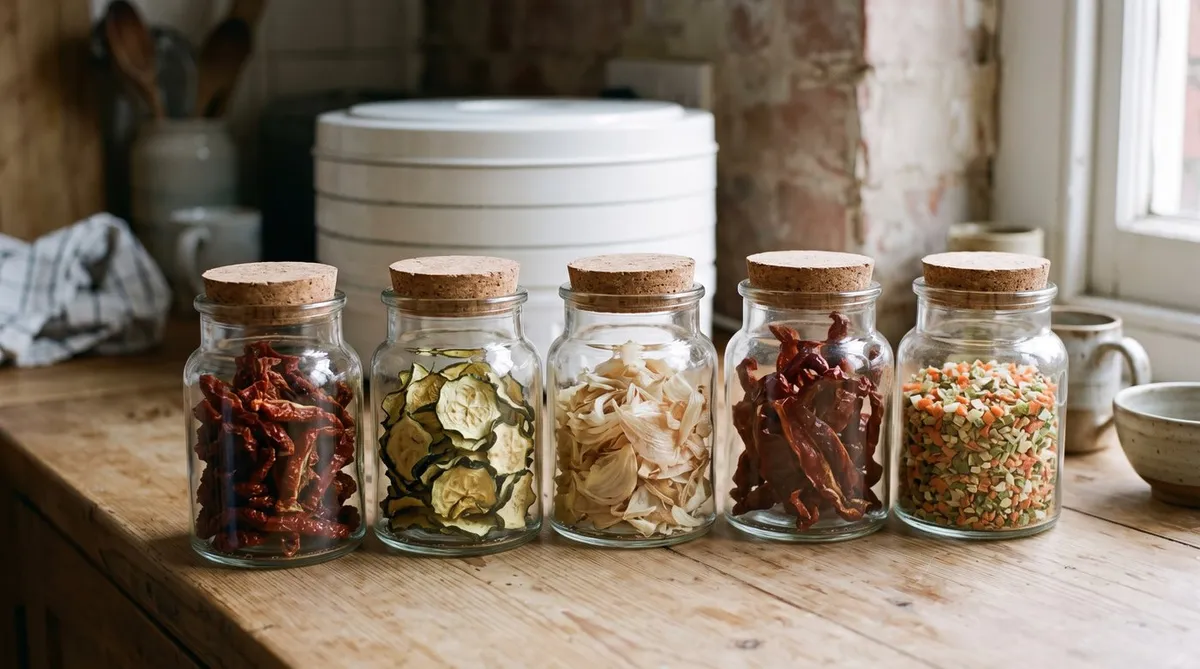
- Keep leaves whole. Crumble them over the pan, not before.
- Dark and cool. A cupboard away from the cooker is ideal. Brown glass jars help.
- Airtight. Screw-top glass jars are best. Plastic can take on the smell, and paper bags let in damp.
Small jars are better than big ones, as you’ll use them up while they’re at their best. Label each jar with the herb and the date so you use the oldest first.
 Whole leaves in airtight jars in a dark cupboard, each labelled with the date.
Yield expectations from a UK herb harvest
Herbs are mostly water, so expect a big pile of fresh leaves to shrink to a fraction of its weight. Roughly a quarter is a fair guide. Tough herbs like bay and rosemary shrink the least, while juicy ones like parsley shrink the most. A good bunch from one sage bush fills a small spice jar or two.
Month-by-month UK herb drying calendar
| Month | What to do |
|---|---|
| March | Order seeds for summer herbs |
| April | First cuts of rosemary, mint and chives (freeze the chives) |
| May | Sage, oregano and marjoram start growing strongly |
| June | Best month: pick sage, thyme, oregano and marjoram before they flower |
| July | More thyme, rosemary and oregano; freeze basil pinchings |
| August | Late sage and rosemary; a big parsley cut for drying flat |
| September | Last oregano and marjoram before the frosts |
| October | Bay leaves for drying whole; clear and store seed heads |
| November | Indoor herbs only |
| December-February | Use your jars; pot up basil and parsley to grow indoors |
To keep fresh herbs going indoors, see our guide to supermarket herbs indoors, which keeps a shop-bought basil pot alive for far longer.
How to crumble and use dried herbs
Rub a pinch between your palms. A well-stored herb crackles and gives off a clear smell.
- Take a small pinch of whole leaves from the jar.
- Rub between your palms over the pan. Sage and oregano crumble easily. Rosemary needles need chopping or a pestle and mortar.
- Add woody herbs like rosemary, sage and thyme early in cooking. Add dried parsley and dill at the end.
Dried herbs are stronger than fresh. As a rough guide, 1 teaspoon dried equals about 1 tablespoon fresh. Pop one whole bay leaf into a soup or stew and fish it out before serving.
For homemade tea, see making herbal teas from the garden, which covers chamomile, mint, lemon balm and lemon verbena.
Drying chamomile, lavender and other tea herbs
Tea herbs dry the same way. Often it’s the flowers you’re after rather than the leaves.
- Chamomile: pick the flowers when fully open, in late morning. Dry flat for about a week.
- Lavender: cut stems as the buds show colour but before they open. Hang for one to two weeks, then rub off the buds.
- Lemon balm: pick young leaves before it flowers. Hang or dry flat. Keeps its flavour better than you’d expect.
- Lemon verbena: strip the leaves and dry them flat. The lemony smell lasts really well.
- Mint for tea: dried mint makes a lovely cup, even if it’s a bit flat for cooking.
Four pots or a small patch of border is plenty for a tea garden.
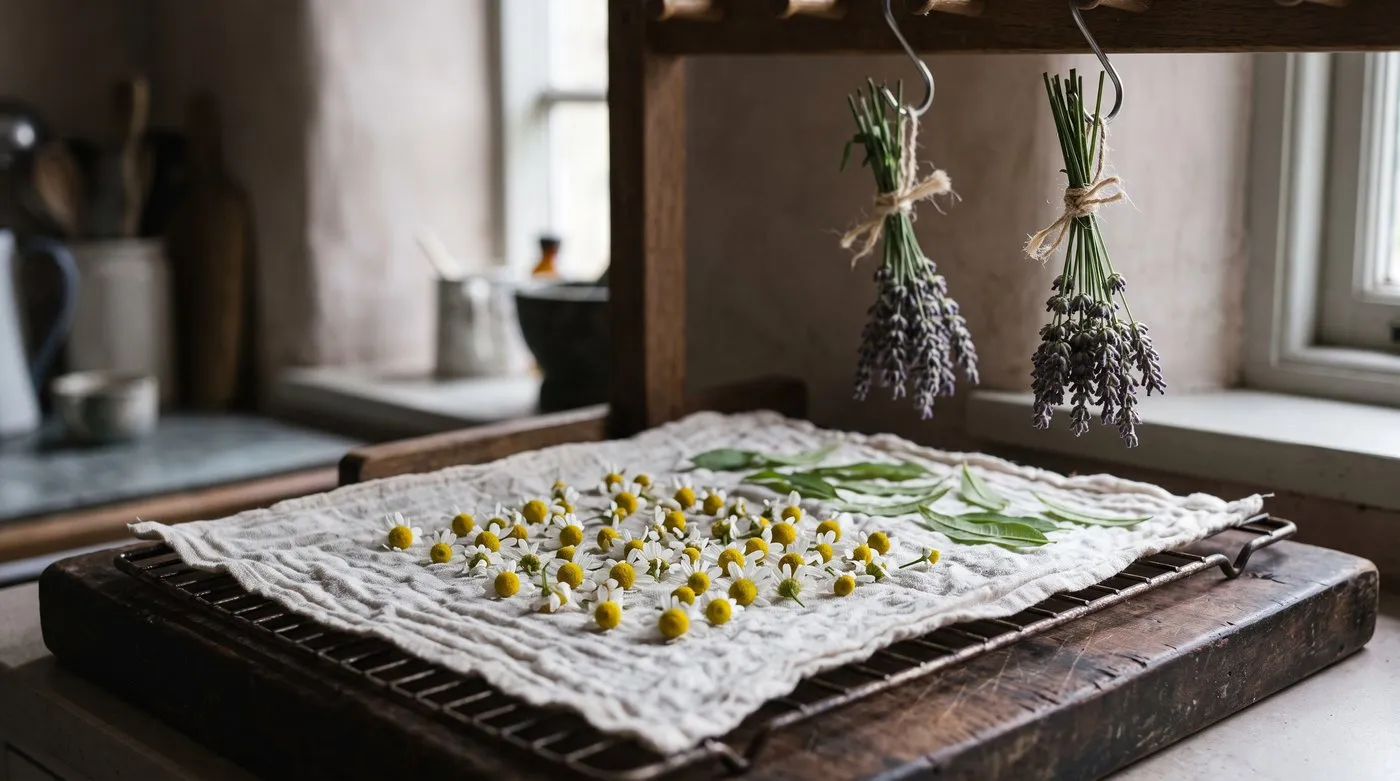
Chamomile flowers dry best flat for about a week. Cut lavender as the buds show colour, hang it, then rub off the buds once crisp.
Health and safety notes
A few simple habits keep your herbs safe. The Food Standards Agency has general food hygiene advice.
- Dry until completely crisp. If a leaf still bends, it’s still damp and could go mouldy.
- If a jar smells musty or shows white fluff, throw the whole lot away. Cooking won’t make mouldy herbs safe.
- Use clean glass jars with good lids.
For other ways to keep your harvest, see our guide on how to preserve fruit and vegetables, which compares drying, freezing and more.
Frequently asked questions
What is the best way to dry herbs in the UK?
Hang small bunches in a warm, dry room. This works best for woody herbs like sage, rosemary, thyme, oregano and bay. Keep them out of direct sun. Softer herbs like parsley and dill dry better flat on a rack or in a dehydrator on low. Basil and coriander keep more flavour frozen.
When should I harvest herbs for drying?
On a dry morning once the dew has gone. Just before the plant flowers is when the leaves taste best. Cut woody herbs just above a leaf joint so they grow back. Dry them soon after picking, as wilted leaves lose their smell quickly.
Can I dry herbs in the oven?
Yes, on the lowest setting with the door propped open. Too much heat bakes out the flavour. Spread the herbs in a single layer, check often and turn them now and then. They’re ready when the leaves crumble easily. It’s best for small, one-off batches.
How long do dried herbs keep?
About a year at their best. Keep them in airtight jars somewhere cool and dark. Whole leaves last longer than crumbled ones, so crumble as you cook. Older herbs are still safe but fade, so if they smell faint or like hay, make a fresh batch.
Which herbs should I not bother drying?
Basil, coriander, chives and chervil. Their soft leaves lose most of their flavour when dried. Freeze them instead, chopped in small bags or in ice cube trays topped up with water or oil. They’ll keep well in the freezer for several months.
Do I need to wash herbs before drying?
Only if they’re dirty. Washing adds water, which slows drying and can lead to mould. Clean garden herbs just need a gentle shake to get rid of dust and insects. If you do wash them, rinse quickly in cold water and dry well with a tea towel or salad spinner.
Related guides
To grow your own, see how to grow herbs, how to create a herb garden and our medicinal herb garden guide. Got an allotment? Try an allotment herb bed.
More preserving guides: start with storing garden produce. Then try drying apples and pears, drying beans and peas and drying vegetables for soup mix.
For the soft herbs that don’t dry well, head to our guide to freezing fresh herbs.
Our team produces practical UK gardening guidance from source research, contributor records and established horticultural practice. Editorial standards are overseen by Matt W.