Key takeaways
- A 2m x 2m bed holds a dozen or so herbs and fits most allotment plots
- Split it into a gritty, free-draining half and a richer, moister half
- Rosemary, thyme, sage, oregano and French tarragon hate winter wet
- Parsley, chives, coriander, dill and basil like more compost and steady water
- Grow mint in a large sunken pot so it can't take over the bed
- Sow coriander and dill little and often, every three to four weeks
An allotment herb bed puts all your kitchen herbs in one sunny spot instead of dotted between the veg. A 2m x 2m bed is a good size for most plots. Split it into two halves with different soil, because Mediterranean herbs and leafy herbs want opposite things.
This guide is about planning that bed on a plot: where to put it, how to prepare each half, which herbs go where and when to sow the quick ones. For a herb garden at home, see the guide to creating a herb garden.

A square bed split in two: woody herbs on the left, leafy herbs on the right. The stepping stones mean you can pick without treading on the soil.
Why give herbs their own bed on the allotment?
A dedicated bed is easier to look after and easier to pick from. Herbs tucked between veg rows get shaded out, dug up by accident or forgotten.
Herbs also don’t fit neatly into a crop rotation. Perennials such as rosemary and chives stay put for years. Giving them a permanent bed keeps your rotation beds free to move round each year. The guide to allotment layout ideas shows where a permanent bed fits on quarter, half and full plots.
A herb bed is lovely for wildlife too. Flowering thyme, chives, oregano and sage are busy with bees through summer.
Where to put your herb bed
Pick the sunniest, most sheltered spot on the plot. Most kitchen herbs want at least six hours of sun a day.
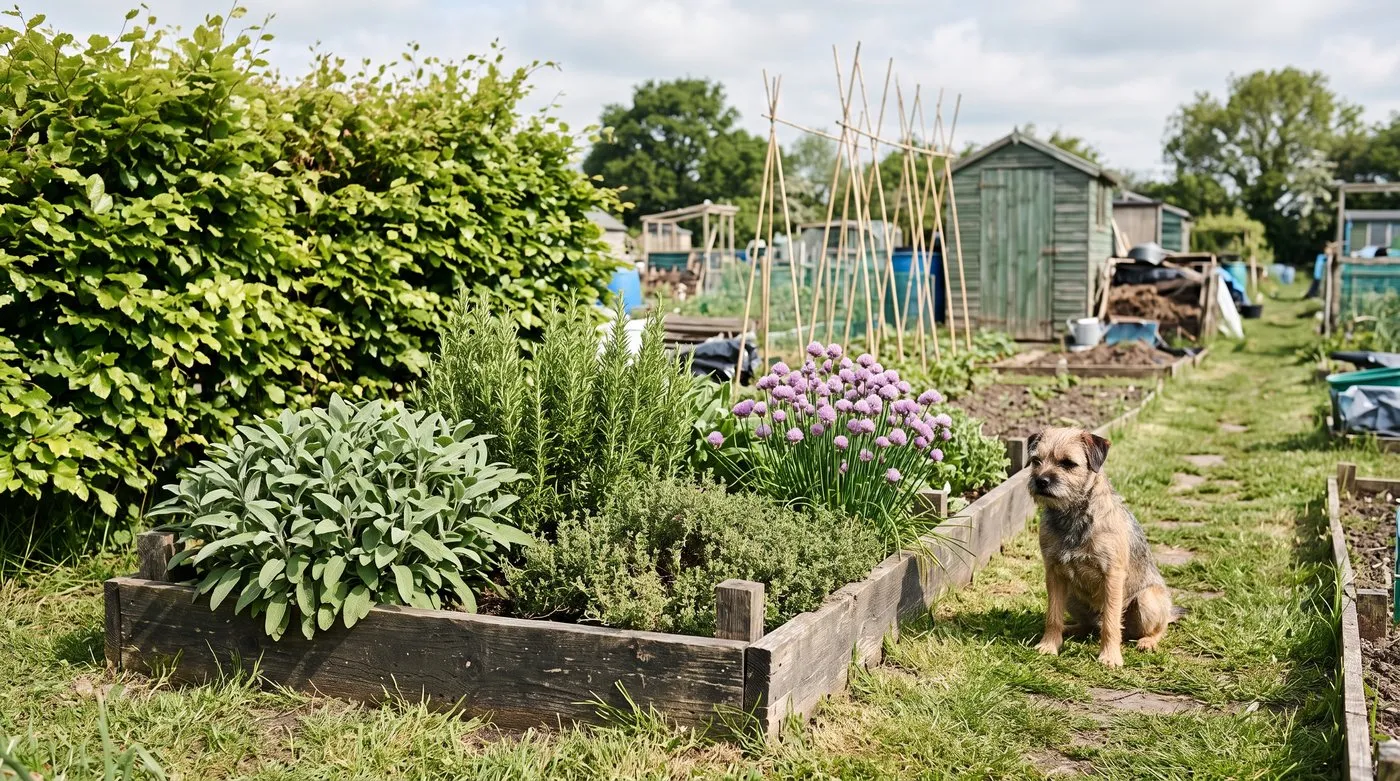
Full sun, shelter from the wind and right beside the path. That is the spot to look for on your plot.
- Shelter matters. Cold, drying winds damage rosemary and sage in winter. A hedge, fence or shed on the windy side helps, as long as it doesn’t cast shade.
- Avoid wet ground. Frost pockets and soggy corners kill Mediterranean herbs.
- Put it by the path. If you can pick on your way in or out, you’ll use the herbs far more.
- Raised or flat both work. A low raised bed helps drainage on heavy clay. On light soil, a bed at ground level is simpler.
A 2m-wide bed is too wide to reach the middle from the edge. Lay two or three stepping stones across it so you can pick without squashing the soil.
Split the bed into a dry half and a moist half
This is the most important step. Mediterranean herbs and leafy herbs need opposite conditions, so give each its own half.
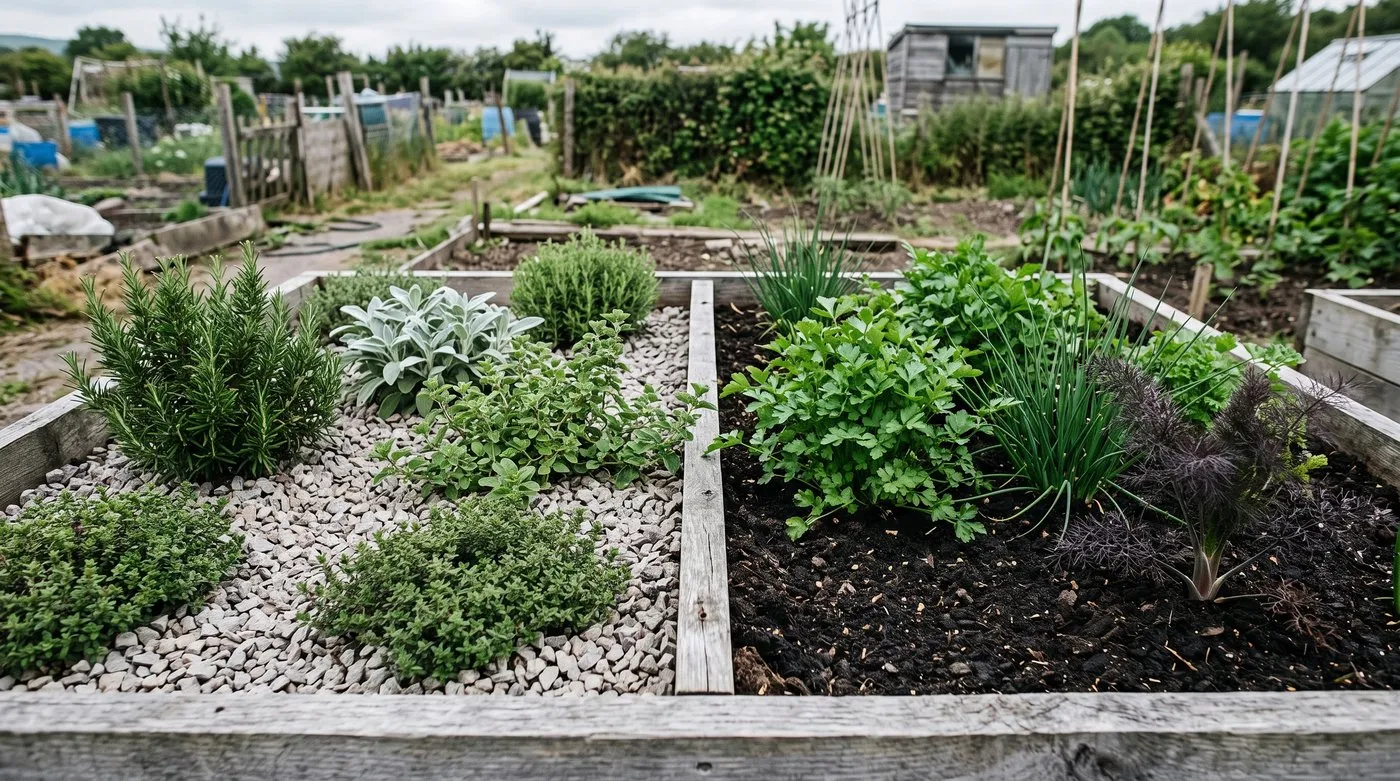
Gravel and grit on one side, rich compost on the other. Each group of herbs gets the soil it actually likes.
The dry half is for rosemary, thyme, sage, oregano, marjoram and French tarragon. They want lean, gritty soil that drains fast. Rich, wet soil gives soft growth that rots in winter. Put this half on the sunnier side.
The moist half is for parsley, chives, mint, coriander, dill, chervil and basil. They want soil with plenty of organic matter that holds water. In dry, poor soil they wilt or run to seed early.
Mark the line between the halves with a buried board or a row of edging stones. It stops the two soils mixing over time and shows you which half is which.
| Half | Herbs | Soil | Watering |
|---|---|---|---|
| Dry half | Rosemary, thyme, sage, oregano, marjoram, French tarragon | Gritty, lean, free-draining | Only in long dry spells once settled |
| Moist half | Parsley, chives, mint, coriander, dill, chervil, basil | Rich in compost, holds moisture | Once or twice a week in dry summer weather |
Preparing the soil for each half
Do this in early spring, before planting. Clear all perennial weeds first, especially couch grass and bindweed roots. They are a nightmare to pull out from among established herbs.
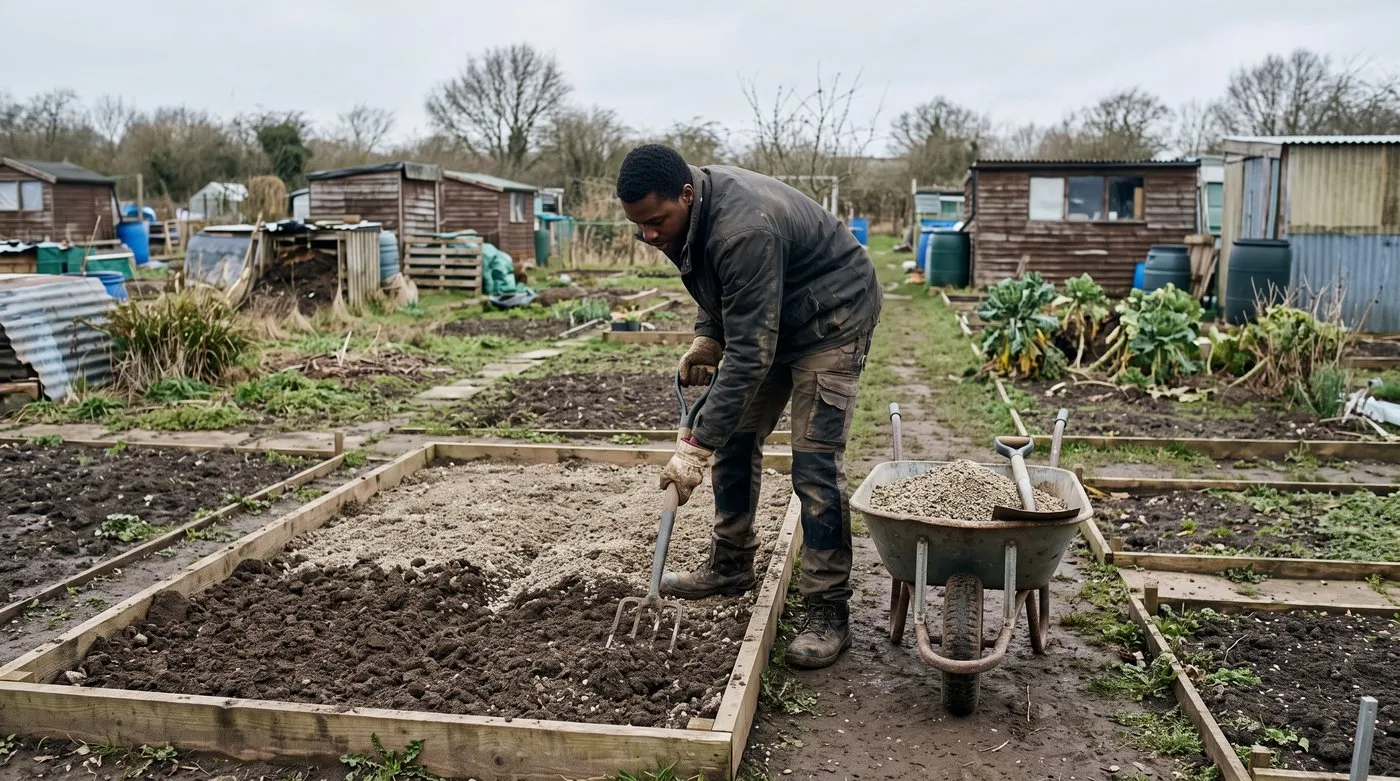
Grit opens up heavy soil so rosemary, thyme and sage don’t sit wet over winter. Leave out the manure on this half.
For the dry half: dig in plenty of coarse horticultural grit. On heavy clay, mound the soil slightly so water runs off. Add little or no compost or manure. These herbs grow tougher and tastier on poor soil.
For the moist half: dig in a good layer of well-rotted garden compost. A light sprinkle of a general fertiliser, such as fish, blood and bone, at the rate on the pack is plenty.
After planting, mulch the dry half with gravel. It keeps the crowns of the plants dry and suppresses weeds. Mulch the moist half with compost each spring to hold water in. If your plot has heavy, wet soil, the guide to improving clay soil explains what helps.
Which herbs to grow and where they go
A dozen or so herbs fill a 2m x 2m bed nicely. Put the tallest at the back, so they don’t shade the rest.
Dry half, back to front:
- Rosemary, one plant at the back corner. Upright types such as ‘Miss Jessopp’s Upright’ stay neat.
- Sage, one plant. Purple sage adds colour.
- French tarragon, one plant. Buy French, not Russian, which has little flavour. The guide to growing tarragon explains the difference.
- Oregano and marjoram, one or two of each.
- Thyme, two or three plants along the front edge.
Moist half, back to front:
- Bronze fennel, one plant at the back. It grows tall.
- Mint in its sunken pot, in a corner.
- Chives and garlic chives, a clump of each.
- Parsley, four to six plants.
- A sowing strip at the front for coriander, dill and chervil.
- Basil in summer only, after the frosts.
Bay is a good extra, but it can grow into a large shrub. Keep it in a big pot at one corner. Lemon balm spreads by seed and roots, so treat it like mint.

A bed right by the path makes picking a quick job, so the herbs actually get used. Pinching basil tips keeps it bushy too.
Keeping mint and other spreaders in check
Mint spreads fast through underground runners. Left loose, it will swamp a herb bed within a few years.
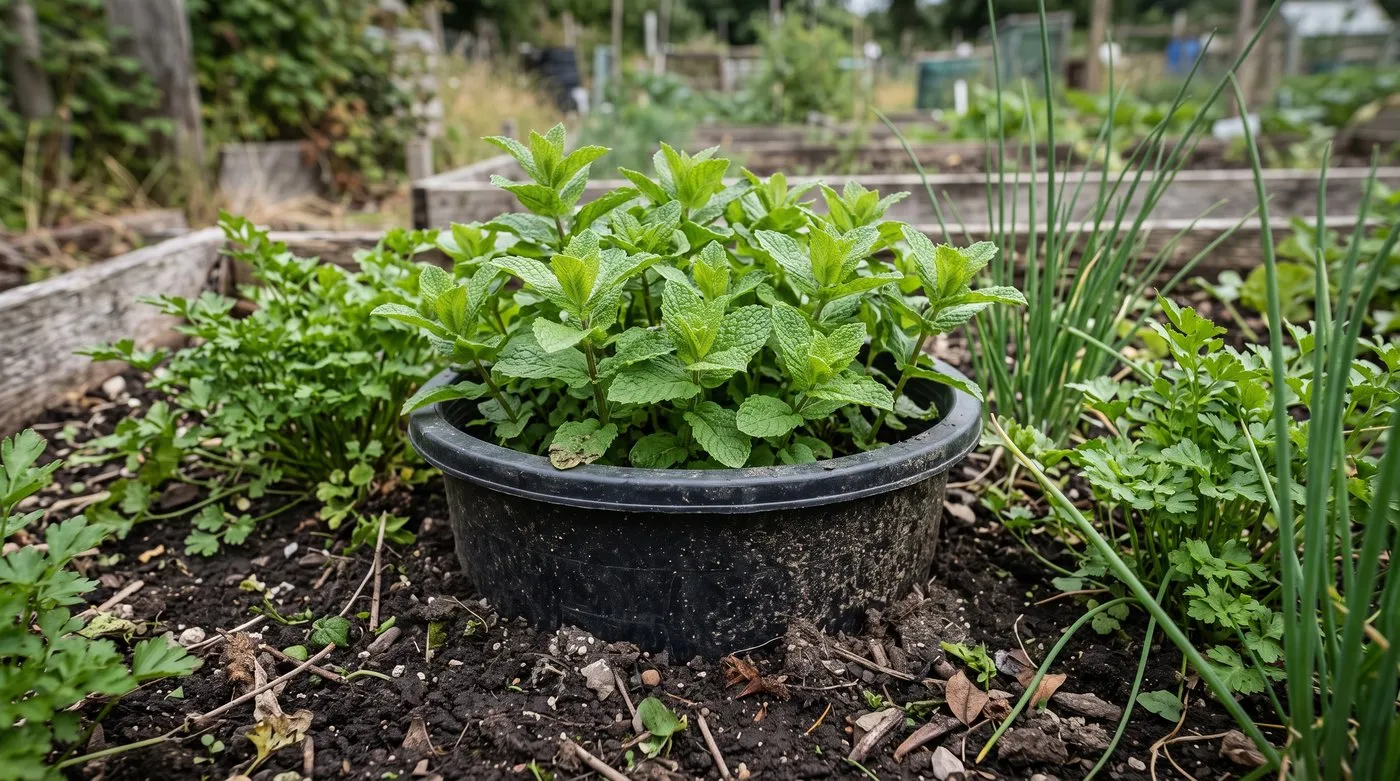
A sunken bucket with its rim showing keeps mint’s runners where they belong. Check the edge now and then for escapees.
Grow it in a large pot or old bucket sunk into the soil. Make drainage holes in the base. Leave the rim a few centimetres above ground so runners can’t sneak over the top. Pull out any that try. Lift, split and replant the clump every few years, as the middle gets tired.
Other herbs to watch:
- Lemon balm seeds itself everywhere. Cut it back after flowering.
- Garlic chives self-seed freely. Snip off the flower heads before they set seed.
- Borage and dill also self-seed. Handy if you want them back, a nuisance if not.
The guide to growing mint has more on varieties and keeping plants fresh.
Sowing quick herbs little and often
Coriander, dill and chervil grow fast and then run to seed. Sow a short row every three to four weeks for a steady supply.
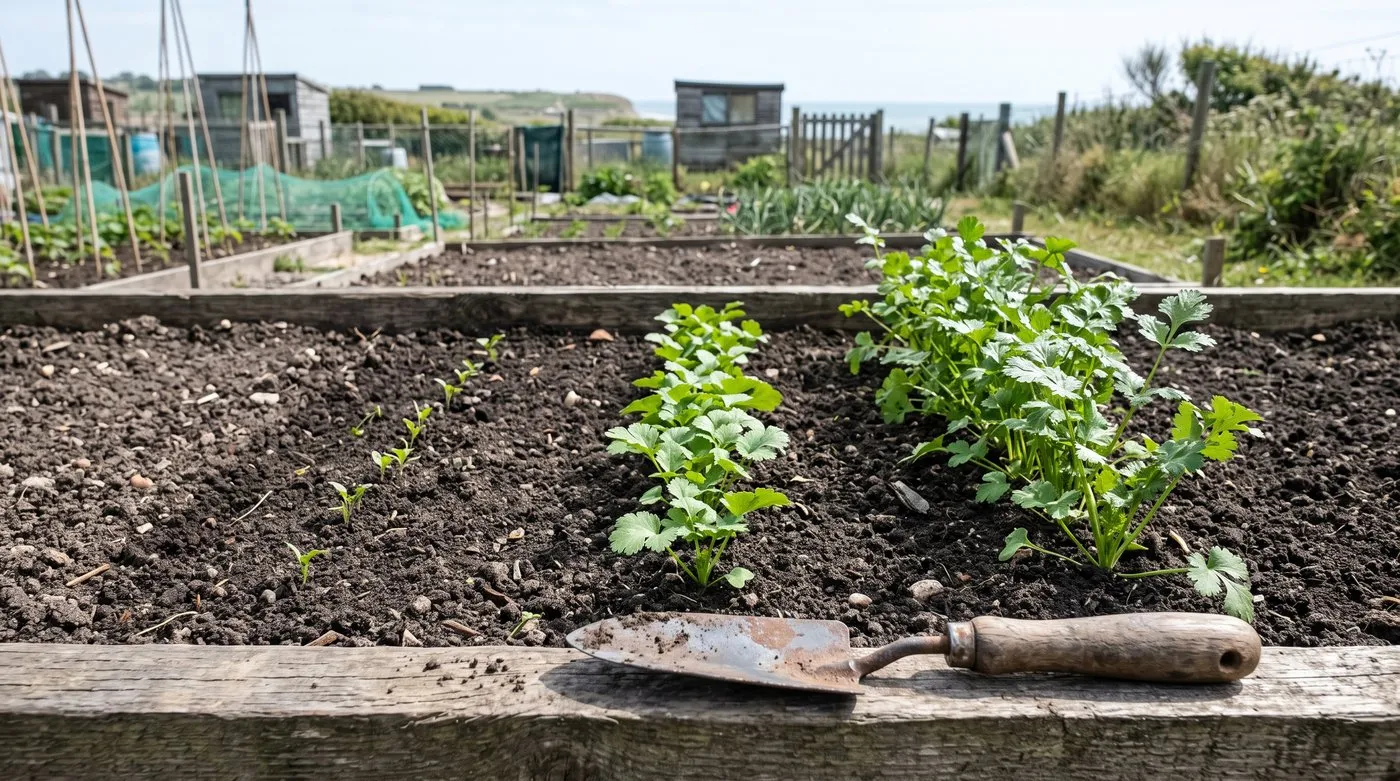
Short rows sown a few weeks apart mean there is always coriander ready to pick, even when one batch bolts.
- Coriander: sow direct from April to August. It bolts quickly in hot, dry weather, so spring and late summer sowings do best. Bolt-resistant varieties help. The guide to growing coriander without bolting has more tips.
- Dill: sow direct from April to July. It dislikes being moved, so don’t start it in pots.
- Chervil: sow in spring and again in late summer. It likes a bit of shade, so tuck it behind taller herbs.
- Parsley: sow in spring for summer picking and again in July for leaves through winter. It is slow to come up, so be patient.
- Basil: sow indoors in April or May. Plant out in early June once the nights stay warm. A cold snap turns it black.
Keep a small strip at the front of the moist half just for these sowings. Clear one row, sow the next.
Month-by-month allotment herb bed calendar
| Month | Jobs |
|---|---|
| February | Pick the spot. Clear perennial weeds. Order seed and plants |
| March | Prepare both halves. Fit the divider and stepping stones. Sow parsley under cover |
| April | Plant rosemary, sage, thyme, oregano, tarragon, chives and mint. Sow coriander and dill. Sow basil indoors |
| May | Mulch both halves. Sow more coriander and dill. Pick chives |
| June | Plant basil out once frosts have passed. Keep sowing. Pick little and often |
| July | Peak picking. Sow parsley for winter. Cut chives back hard after flowering for fresh leaves |
| August | Pick thyme, sage and oregano for drying. Last coriander and dill sowings |
| September | Lift basil before the first frost. Trim lavender if you grow it |
| October | Tidy dead annuals. Leave seedheads on fennel for birds |
| November to January | Pick rosemary, sage, thyme and parsley as needed. Keep off wet soil |
Picking, drying and freezing your herbs
Pick little and often. Regular picking keeps herbs bushy and stops them flowering too early.
- Soft herbs such as basil, parsley and coriander: pinch out the tips or cut outer stems.
- Woody herbs such as rosemary, thyme and sage: snip the soft young shoots. Don’t cut into old, bare wood, as it rarely regrows.
- Chives: cut to about 5cm above the ground. They regrow within weeks.
Rosemary, thyme, sage and oregano dry well. Basil, parsley and coriander keep better frozen. The guides to drying herbs and freezing fresh herbs cover both methods step by step.
Common allotment herb bed mistakes
One soil for everything. Rosemary in rich, wet soil rots in winter. Parsley in gritty soil sulks and bolts. Split the bed.
Loose mint. One unchecked plant can take over the whole bed. Sink it in a pot.
Sowing all the coriander at once. You get a glut, then it bolts. Sow a short row every few weeks.
Too much shade. Most kitchen herbs go leggy and lose flavour without at least six hours of sun.
Walking on the bed. It squashes the soil and harms drainage. Lay stepping stones.
Cutting woody herbs too hard. Rosemary, sage and thyme rarely regrow from old wood. Trim lightly after flowering instead.
Frequently asked questions
What is the best size for an allotment herb bed?
About 2m x 2m suits most plot holders. That holds a dozen or so kitchen herbs and is easy to reach with a few stepping stones. A 1m x 2m strip is plenty if you only cook with a handful of herbs.
Which herbs grow well in an allotment bed?
Rosemary, thyme, sage, oregano, chives, parsley and mint are the easy core. Add French tarragon, coriander, dill and basil for summer. Bay, lemon balm and chervil are good extras if you have room.
Where should I put my allotment herb bed?
Choose the sunniest, most sheltered spot on the plot. Avoid frost pockets, wet corners and the shade of sheds or hedges. Close to the path makes quick picking easy, so you use the herbs more.
How do I stop mint taking over the herb bed?
Grow it in a large pot or old bucket sunk into the soil. Make drainage holes in the base and leave the rim a few centimetres above ground. Pull out any runners that creep over the edge.
How often should I water an allotment herb bed?
Established Mediterranean herbs rarely need watering. Parsley, chives, coriander and basil need a good soak in dry spells, usually once or twice a week in summer. Water new plants regularly until they settle in, and mulch to hold moisture.
Can herbs stay on the allotment over winter?
Most perennial herbs survive a UK winter outside. Rosemary, thyme, sage, chives, mint and oregano are hardy if the soil drains well. Basil and coriander are annuals and die off. Lift a pot of parsley or chives under cover for winter picking.
Now your herb bed is planned, read the guide to growing herbs in the UK for care tips herb by herb, or find more plot ideas in the growing section.
Our team produces practical UK gardening guidance from source research, contributor records and established horticultural practice. Editorial standards are overseen by Matt W.