
Key takeaways
- Coriander bolts in heat, dry soil or after being moved, so sow it where it will grow
- Slow-bolt varieties like Calypso give you leaves for longer
- Sow a short row every two to three weeks from April to September
- Spring and late summer sowings give the best leaves
- Give summer sowings afternoon shade and water them regularly
- Let a few plants flower for the bees and a crop of coriander seed
Coriander has a reputation for bolting. You sow a row, it looks great, and a few weeks later it’s all spindly flower stems and hardly any leaves.
The good news is that bolting isn’t bad luck. Coriander loves cool weather and runs to flower when it’s hot, dry or disturbed. Work around that and you can pick fresh leaves from spring to autumn, plus a bonus crop of seeds.
Why does coriander bolt so quickly?
Coriander is a cool-weather annual. In the wild it grows fast in cool spring weather, then flowers and sets seed before summer heat arrives. Long, warm summer days tell it to do just that.
Once a flower stem appears, the plant puts its energy into seed. The leaves left behind go thin, feathery and less tasty.
Three things make bolting worse:
Heat. A sunny wall, a greenhouse or a dark pot in full sun can get very hot. Hot roots mean quick bolting.
Moving it. Coriander has a long tap root that hates being disturbed. Transplanting stresses it, and stressed coriander flowers.
Drying out. Letting the soil go dry, even briefly, pushes it to flower.
Our herb growing guide covers how other herbs cope with heat and dry spells.
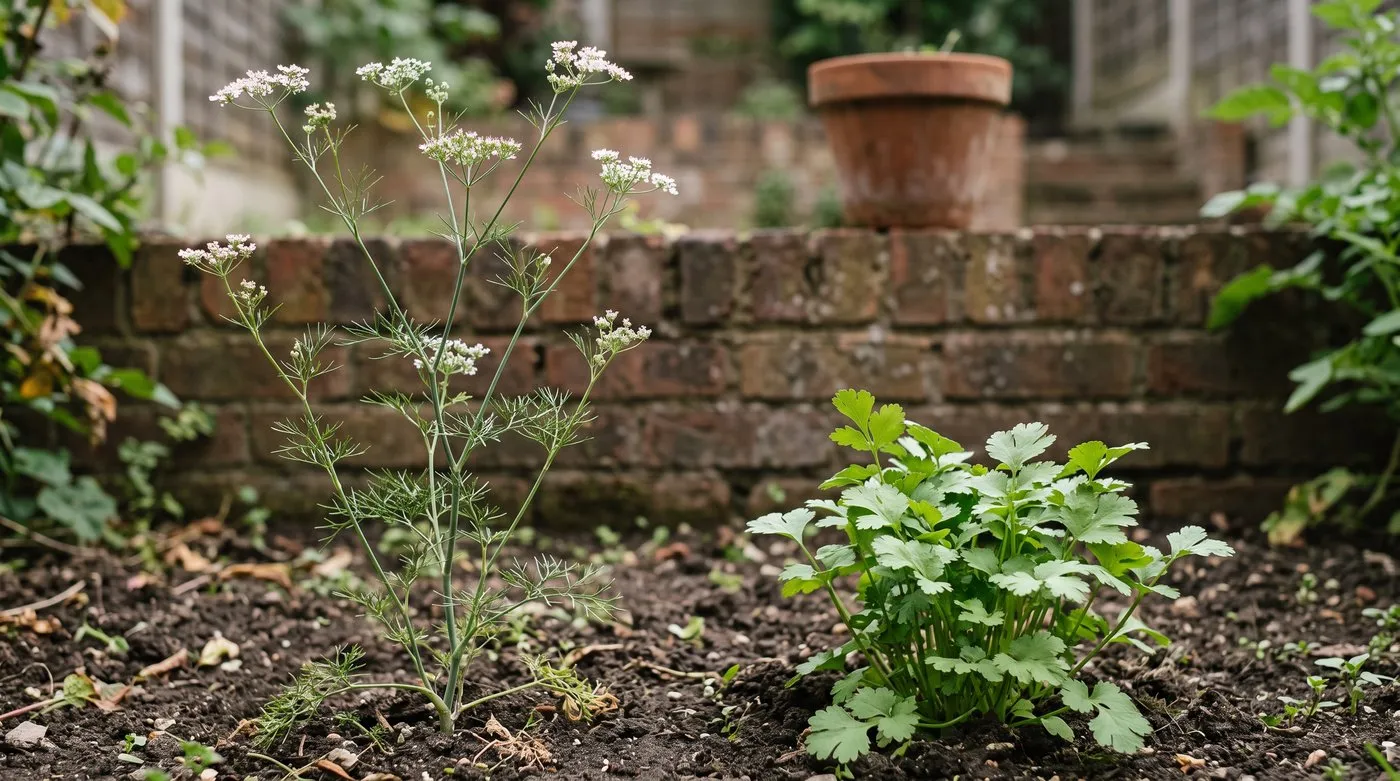
Once a flower stem shoots up, the leaves turn thin and feathery and the flavour fades. Heat, dry soil and moving the plant all bring it on.
Best slow-bolt coriander varieties
Some varieties are bred to stay leafy for longer. If you only change one thing, change your seed.
| Variety | Holds off bolting | Leaves | Flavour | Best for |
|---|---|---|---|---|
| Calypso | Very well | Broad, rounded | Classic, citrusy | Lots of leaves |
| Confetti | Well | Fine and feathery | Mild | Salads, garnish |
| Leisure | Fairly well | Broad, dark green | Strong | Curries and cooking |
| Standard coriander | Poorly | Medium | Classic | Seed |
| Santo | Fairly well | Medium | Balanced | Leaves then seed |
Calypso is a great pick for leaves. It was bred to be slow to bolt and gives broad, tasty leaves over a long spell.
Confetti looks a bit like dill, with fine, feathery leaves. It tastes milder than normal coriander and is lovely in salads.
Leisure has big, dark leaves with a strong flavour that stands up to cooking. Handy if you get through a lot in curries.
Santo is a good middle ground if you want leaves first and then a crop of seed.
How to sow coriander successionally
Sowing little and often is the best trick of all. No variety gives leaves all season from one sowing, so sow a fresh batch every two to three weeks.
Outdoor sowing
Sow straight where the plants will grow, and don’t transplant. Make a drill 1cm deep and sow seeds 2-3cm apart. Thin seedlings to about 5cm apart once you can handle them.
Start in early April once the soil has warmed a little, and keep going until late September. Spring and late summer sowings give the best leaves because it’s cooler.
For June to August sowings, pick a spot in part shade. The shady side of a fence or hedge works well. So does the shade of taller crops like runner beans or sweetcorn.
Water the drill before sowing and again gently afterwards. Keep the soil moist all the time. The RHS guide to growing coriander says the same: even moisture helps stop bolting.
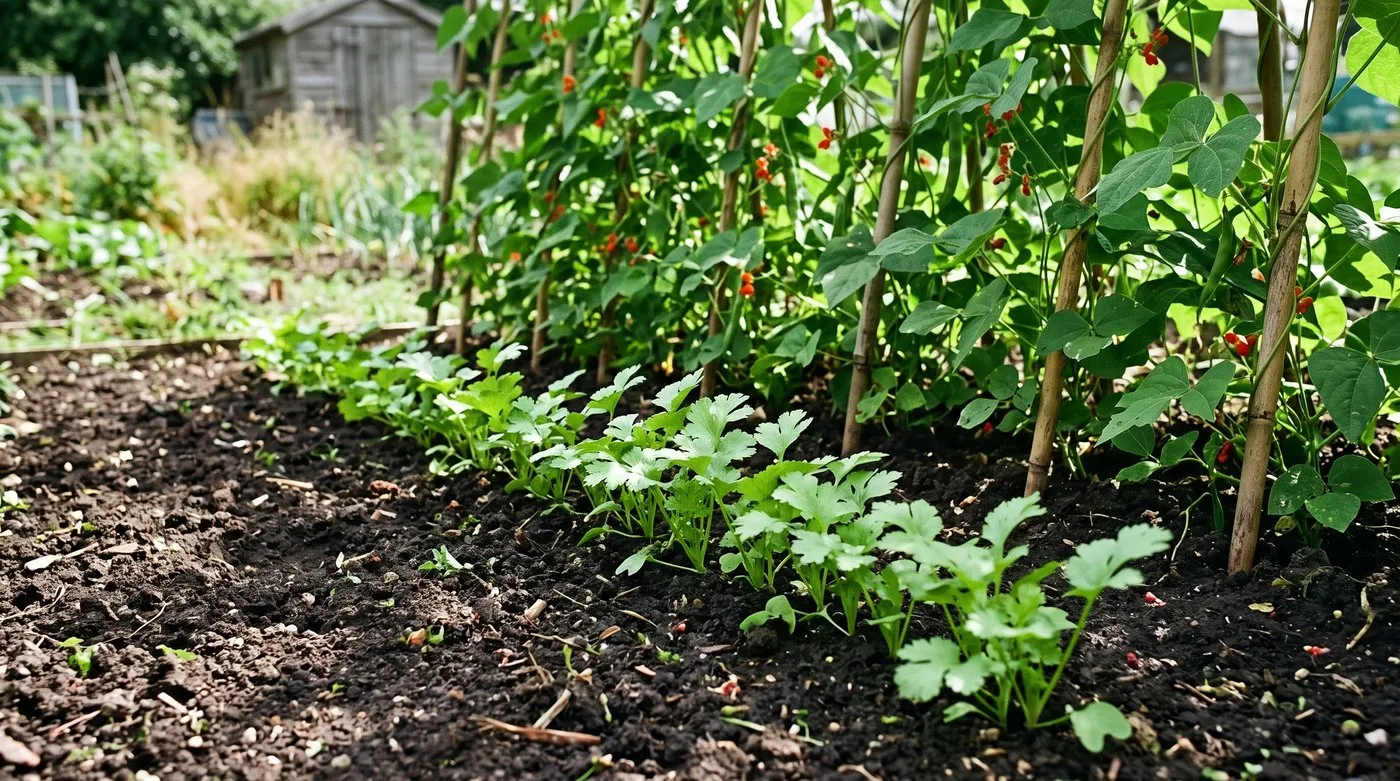
For summer sowings, the shady side of taller crops like runner beans keeps coriander cooler. Sow where it’s to grow, as it hates being moved.
Indoor sowing
Sow into pots or module trays of multipurpose compost. In modules, sow two or three seeds per cell and grow them on as a clump, so you never disturb the roots. Our guide to sowing seeds indoors covers the basics.
A cool, bright windowsill is better than a hot propagator. Seedlings usually appear in one to two weeks.
Growing coriander in pots and containers
Pots let you control shade and water, which are the two things that matter most. You can move a pot into the shade, or indoors during a heatwave.
Use a pot at least 15cm deep and 20cm wide. The tap root needs depth, and bigger pots stay moist for longer. Terracotta dries out fast, so plastic or glazed pots are better in summer.
Fill with multipurpose compost with a little perlite mixed in. Water when the top centimetre or two feels dry. In hot weather that may be every day.
Sow 1cm deep and about 2cm apart. Thin to 5cm, or leave them close and cut the whole patch young, at about 10cm. Our container vegetable gardening guide has more on growing food in pots.
From May to August, stand pots where they get morning sun and afternoon shade. An east-facing patio or windowsill is perfect. Full summer sun almost always means fast bolting.
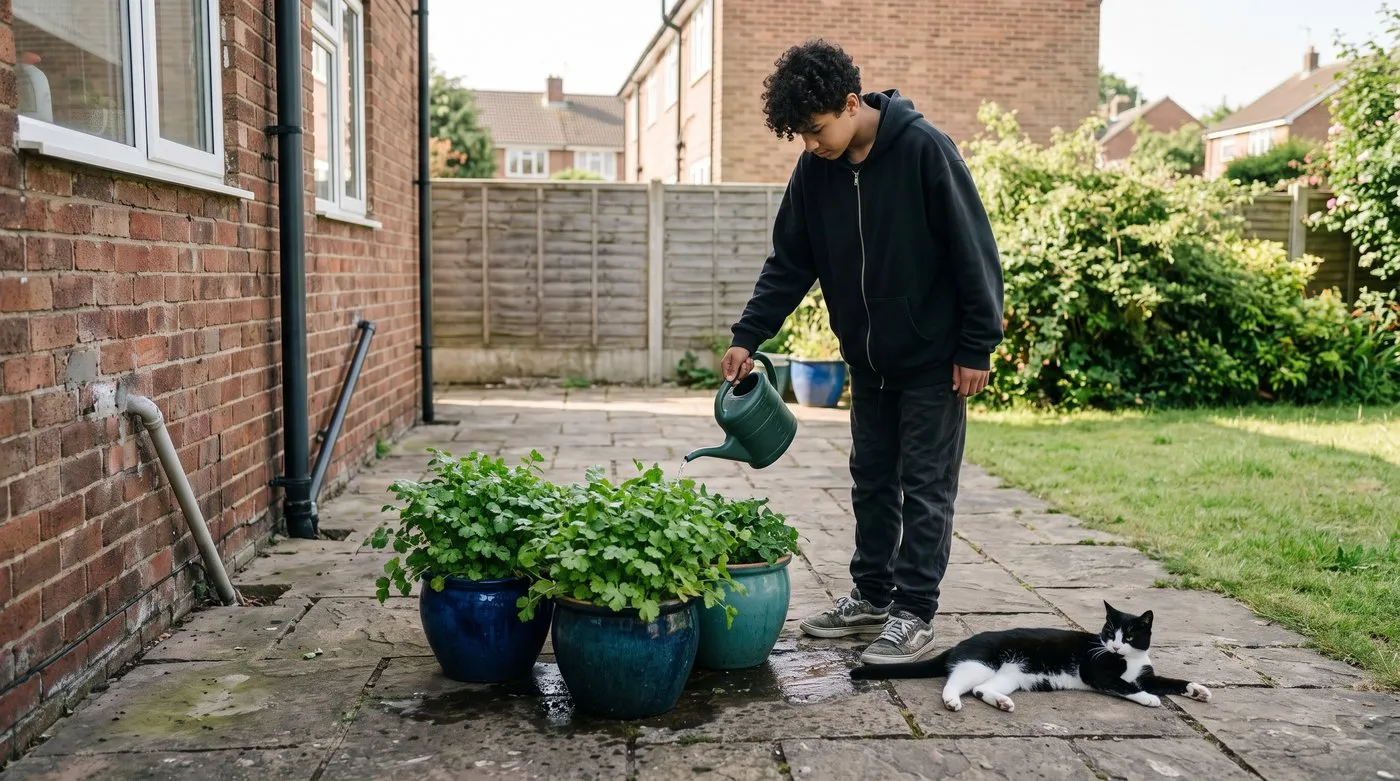
Morning sun and afternoon shade is the sweet spot for coriander in pots. Glazed or plastic pots hold moisture better than terracotta in summer.
Anti-bolting strategies that actually work
Put it all together and you’ll get far more leaves:
- Choose a slow-bolt variety like Calypso.
- Sow straight where it will grow, and never transplant.
- Sow a small batch every two to three weeks.
- Give summer sowings afternoon shade.
- Keep the soil moist all the time.
- Favour spring and late summer sowings.
Don’t forget autumn sowing. Coriander sown in September under a cloche or in a cold frame gives a flush of leaves in October and November, when cool, short days mean bolting is far less likely. Cover with fleece or cloches and you can often keep picking into December.
Harvesting coriander leaves and seeds
Coriander gives you two crops: fresh leaves and dried seeds.
Harvesting leaves
Start picking when plants are 10-15cm tall, usually a few weeks after the seedlings appear. There are two ways:
Cut the lot. Cut the whole plant 2cm above the soil. It may regrow once for a smaller second cut. This suits close-sown pots. It doesn’t regrow as well as parsley or basil.
Pick a few stems. Take outer stems at the base and let the middle keep growing. This keeps each plant going a little longer.
Pick in the morning for the best flavour. Coriander wilts fast, so stand stems in a glass of water in the fridge. To keep it longer, freeze chopped leaves in ice cube trays with a splash of water.
Harvesting seeds
When plants flower, the little white or pink flowers bring in hoverflies and bees. Leave the seed heads to turn brown on the plant.
Cut the heads and pop them upside down in a paper bag. Leave somewhere warm and airy for a week and the seeds will drop out. Store them in a jar away from light. Home-grown seed has a lovely warm, citrusy taste.
You can also use the green, unripe seeds, which taste sharper. Use them straight away, as they don’t keep.
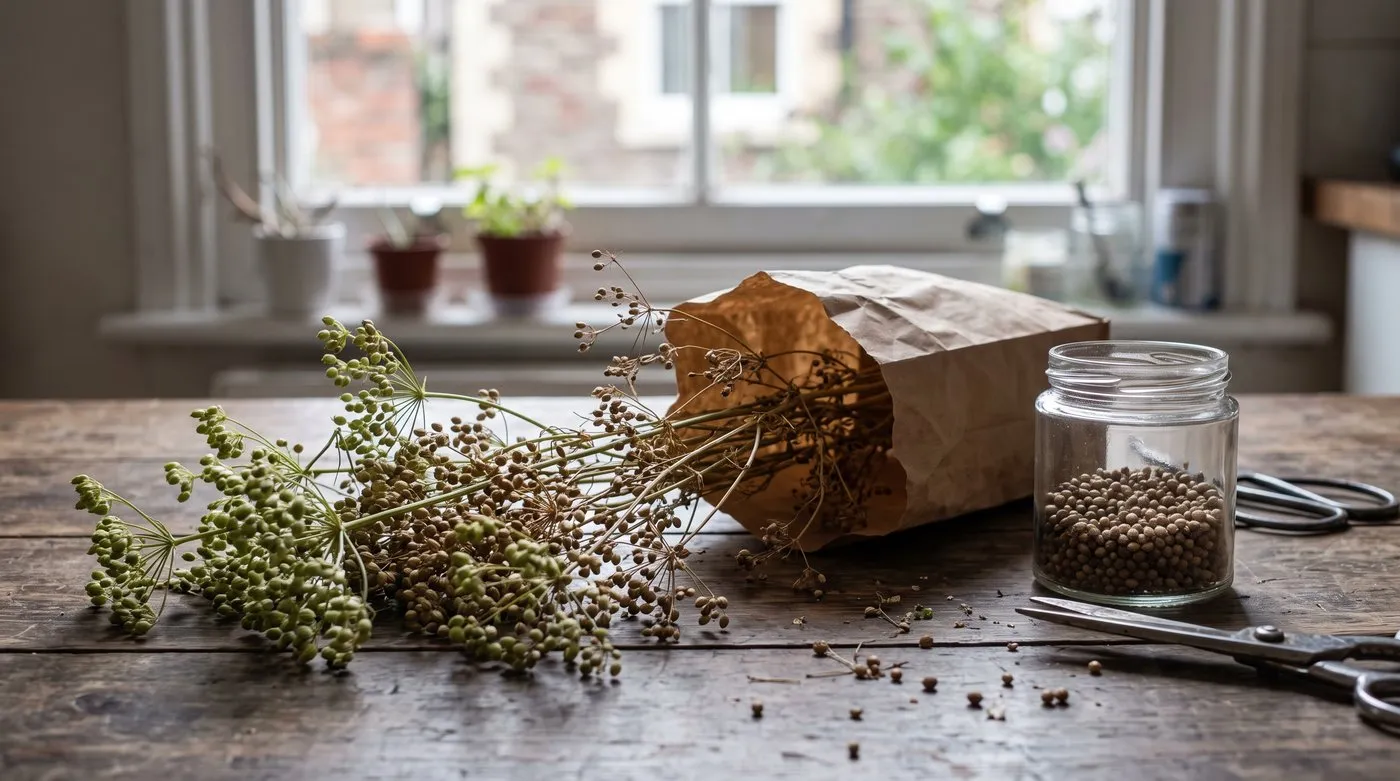
Let the seed heads turn brown on the plant, then dry them upside down in a paper bag. Green seeds are tasty too, but use them straight away.
Growing coriander through winter
Winter is a good time for leafy coriander indoors. Short, cool days mean it’s much less keen to bolt.
Grow it on a bright windowsill. Plants grow more slowly in winter, but the leaves are dark and full of flavour.
Sow in pots as above and keep at normal room temperature. Water less often than in summer, as plants drink less in low light. Pick lightly to keep them going.
With a cold frame or unheated greenhouse, autumn-sown coriander can get through a mild winter in the south. Cover with fleece on frosty nights. These plants give an early spring pick before outdoor sowings are ready.
Coriander companion planting
Coriander flowers bring in hoverflies and tiny parasitic wasps, both of which help keep aphids down. Let a few plants flower near aphid-prone crops like broad beans and lettuce.
Dill, chervil and anise make good neighbours, as they like similar conditions. Our companion planting guide has lots more pairings.
Coriander also does well tucked between tomatoes, which give it the afternoon shade it likes in summer.
Month-by-month coriander calendar
Allow a week or two later in northern England and Scotland.
| Month | Jobs |
|---|---|
| March | Buy slow-bolt seed. Get pots and compost ready. |
| April | First outdoor sowing. Sow indoors on a bright windowsill. |
| May | Sow another batch outside. Pick the first indoor plants. Keep watering. |
| June | Sow in part shade. Pick spring sowings. |
| July | Keep sowing in shade. Water daily in hot spells. Pick often. |
| August | Sow for autumn leaves. Let bolted plants set seed. |
| September | Last outdoor sowing, under cloches. Collect dried seed. |
| October | Bring pots indoors. Pick autumn-sown plants. |
| November | Windowsill growing. Fleece outdoor plants in cold snaps. |
| December | Keep picking indoor plants. Plan spring sowings. |
Our seed sowing calendar shows when to sow everything else, and our guide to growing herbs in the UK is the perfect next step.
Frequently asked questions
Why does my coriander always bolt before I can harvest?
Heat, long summer days and dry soil all make it bolt. Coriander is a cool-weather herb. Give it afternoon shade, keep the soil moist and pick a slow-bolt variety like Calypso. Sowing a little every two to three weeks means you always have young plants.
What is the best slow-bolt coriander variety?
Calypso is a great choice for leaves. It stays leafy longer than ordinary coriander before flowering. Confetti and Leisure are good too. All three are easy to find from UK seed suppliers and grow well in pots.
Can I grow coriander indoors in the UK?
Yes, a bright windowsill works well all year. Indoors it’s easier to keep coriander cool in summer. Use a pot at least 15cm deep. An east-facing window is ideal, as it avoids hot afternoon sun.
When is the best time to sow coriander in the UK?
Outdoors, sow from April to September. The best leaves come from spring and late summer sowings, when it’s cooler. Midsummer sowings bolt fastest. Indoors you can sow all year.
Should I let coriander go to seed?
Yes, let a few plants flower and set seed. Coriander seed is a lovely warm, citrusy spice. Cut the heads when they turn brown and dry them upside down in a paper bag. Dropped seeds often come up again next year.
How do I harvest coriander leaves properly?
Cut stems at the base once plants are 10-15cm tall. For a big pick, cut the whole plant 2cm above the soil. It may regrow once, but sowing fresh batches is more reliable than repeat cutting.
Can I grow coriander in winter in the UK?
Yes, on a bright windowsill indoors. It grows slowly but the leaves are lovely, and cool, short days mean less bolting. Outdoors it needs a cold frame, greenhouse or cloche to keep going through winter.
Our team produces practical UK gardening guidance from source research, contributor records and established horticultural practice. Editorial standards are overseen by Matt W.


