
Key takeaways
- Parsley seed can take a month or more to come up, so don't give up on it
- Flat-leaf has a stronger flavour, curly is milder and makes a good garnish
- Parsley is biennial: it flowers and dies in its second year, so sow fresh each year
- It's happy in part shade, which makes it handy for shadier patios
- Sow outdoors from April to August, 1cm deep, and thin to 15-30cm apart
- Use pots at least 20cm deep to give the long root room
Parsley is one of the handiest herbs in the kitchen, and one of the most frustrating to start from seed. A seed tray can sit bare for weeks before anything shows. The trick is knowing that parsley is slow, not difficult.
Once it gets going, parsley is easy. It’s happy in some shade, doesn’t mind cool weather, and keeps making leaves from early summer into autumn. A few plants will keep your kitchen supplied for months.
How to sow parsley seed
Sow parsley 1cm deep, indoors in modules from March or outdoors from April to August. Then be patient. The seed can take a month or more to come up, as the RHS parsley page points out.
Soaking the seed overnight in warm water helps soften its tough coat. Some gardeners also pour boiled water along the drill just before sowing to warm the soil. Neither trick makes parsley fast, but warmth and steady moisture help it come up more evenly.
Sowing outdoors
Sow outdoors from April to August, once the soil has warmed up and isn’t cold and soggy. Pick a spot in sun or part shade. Parsley is one of the few herbs that doesn’t need sun all day.
Make drills 1cm deep and 20-30cm apart. Sow thinly, cover lightly and water with a gentle rose. Once the seedlings have their first true leaves, thin them to 15-30cm apart and toss the thinnings into a salad. Sow a small batch every few weeks for a steady supply. Our seed sowing calendar shows when to sow herbs and vegetables through the year.
Sowing indoors
From March, sow a few seeds per module in peat-free seed compost, 1cm deep. Keep them warm and bright, in a propagator or on a sunny windowsill.
Thin to the strongest seedling in each module once true leaves appear. Harden them off for 7-10 days, then plant out from late April. Modules mean you don’t disturb the long root when you plant out. Our guide to sowing seeds indoors walks you through the whole method.
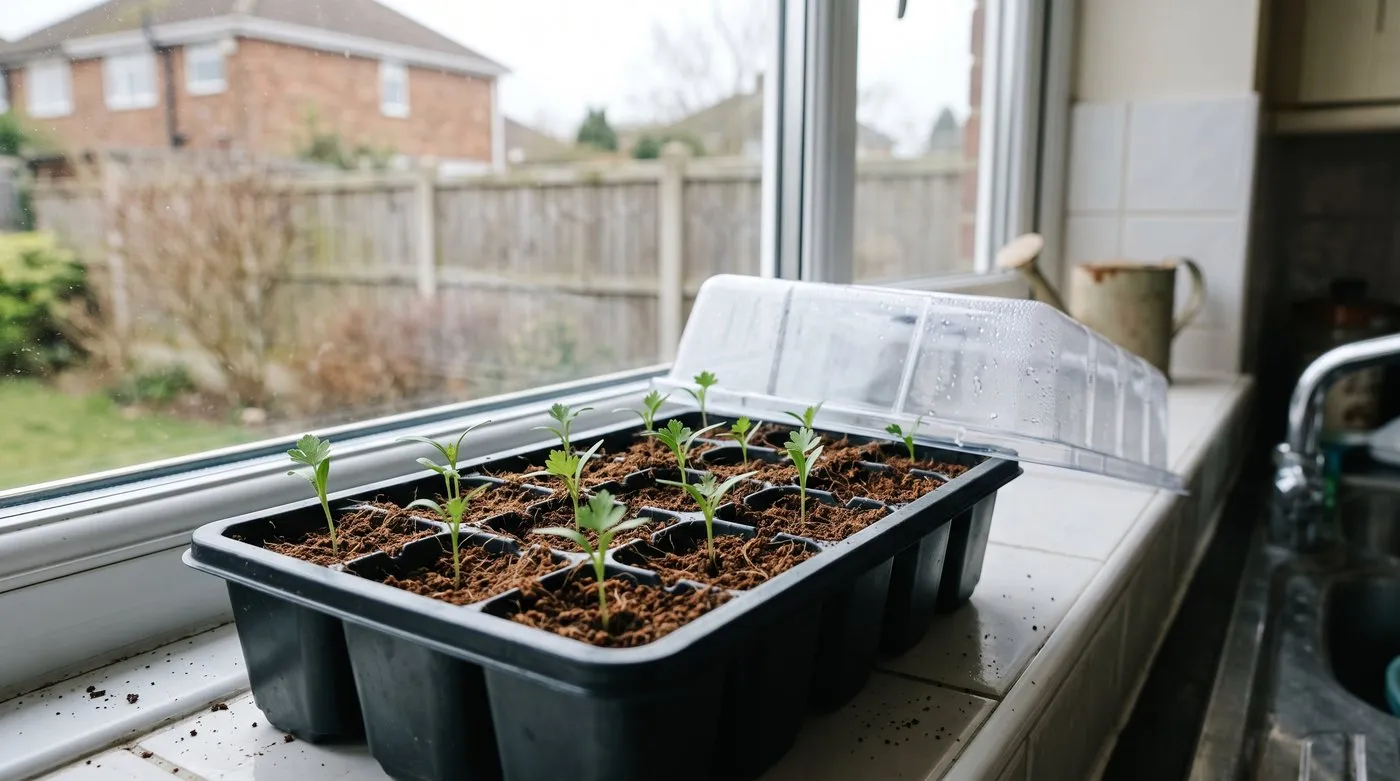
Thin each module to the strongest seedling once true leaves show. Modules keep parsley’s long root intact when you plant out.
Flat-leaf or curly parsley?
Flat-leaf has the stronger flavour and suits cooking. Curly is milder and looks lovely as a garnish. Both are equally easy to grow.
Flat-leaf parsley (also called Italian or French parsley) has broad, smooth leaves and a punchy, peppery taste. It’s the one for sauces, pesto, tabbouleh and anything where parsley should stand out.
Curly parsley has tightly ruffled leaves and a gentler, slightly grassy taste. It keeps its crunch and looks smart on a plate.
Here’s how some easy-to-find varieties compare:
| Variety | Type | Flavour | Good for |
|---|---|---|---|
| Titan (RHS AGM) | Flat-leaf | Strong | Cooking, salads, pesto |
| Italian Giant | Flat-leaf | Strong, peppery | Cooking, salads |
| French | Flat-leaf | Strong | Sauces, fresh use |
| Moss Curled (RHS AGM) | Curly | Mild, grassy | Garnish, soups, freezing |
| Envy (RHS AGM) | Curly | Mild | Pots, garnish |
| Hamburg | Root parsley | Root tastes a bit like parsnip | Soups, roasting |
Hamburg parsley grows an edible root like a small parsnip. You can eat the leaves too, but they’re coarser. Grow it like carrots, in deep soil without stones.
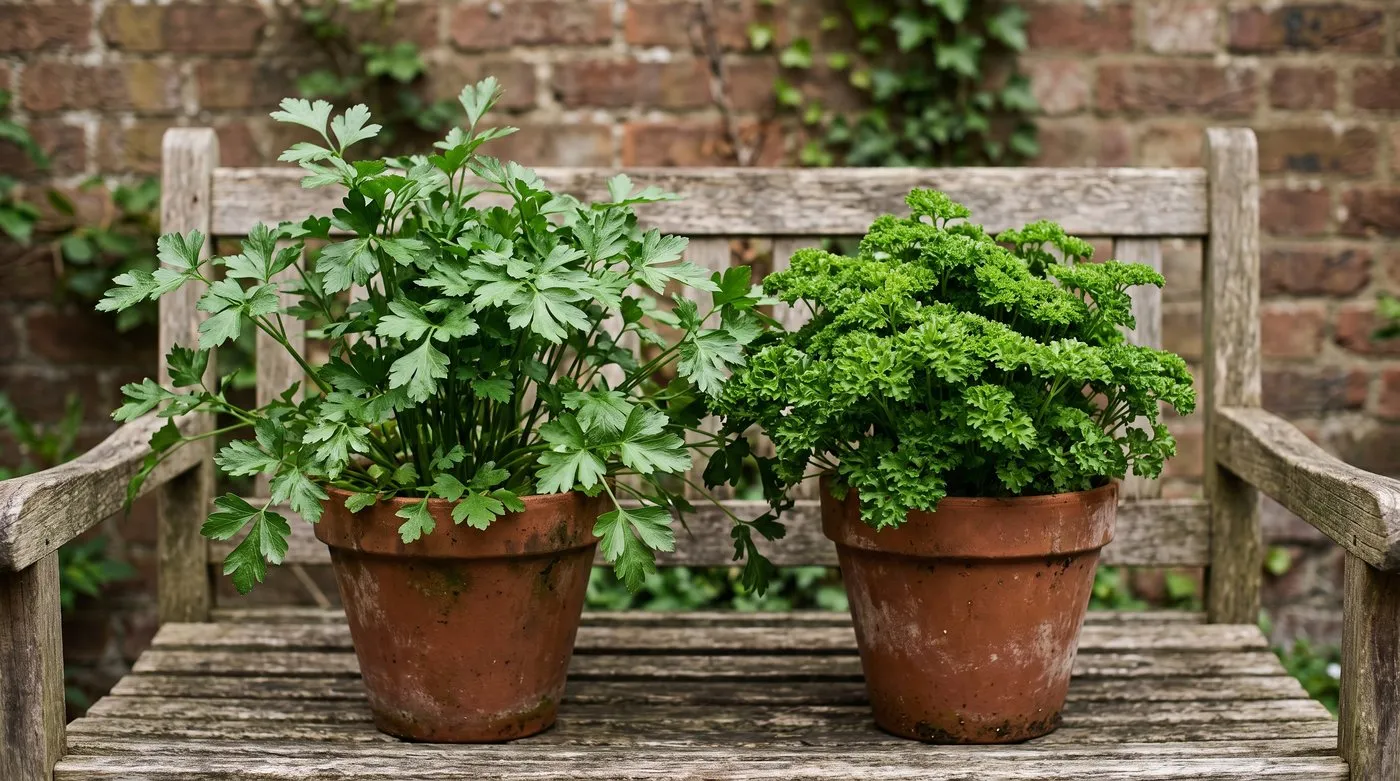
Flat-leaf on the left has the stronger taste for cooking. Curly on the right is milder and keeps its crunch, which is why it’s the garnish favourite.
Growing parsley in pots
Parsley does well in pots on patios, balconies and windowsills. The main thing is depth: use a pot at least 20cm deep.
Parsley grows a long tap root. A shallow pot cramps it, so the plant stays small and is more likely to flower early. Any pot with drainage holes will do, terracotta or fabric included.
Fill it with peat-free multipurpose compost and mix in a few handfuls of perlite or grit. Unlike rosemary and thyme, parsley likes its compost to stay moist, though not wet. Pots dry out fast, so check them often and move them into light shade in a heatwave.
Give potted parsley a balanced liquid feed every few weeks in the growing season. Plants in the ground rarely need it. Our container vegetable gardening guide has more on growing edibles in pots.
A spot with morning sun and afternoon shade is ideal in summer. Parsley prefers that to the baking sun that basil loves.
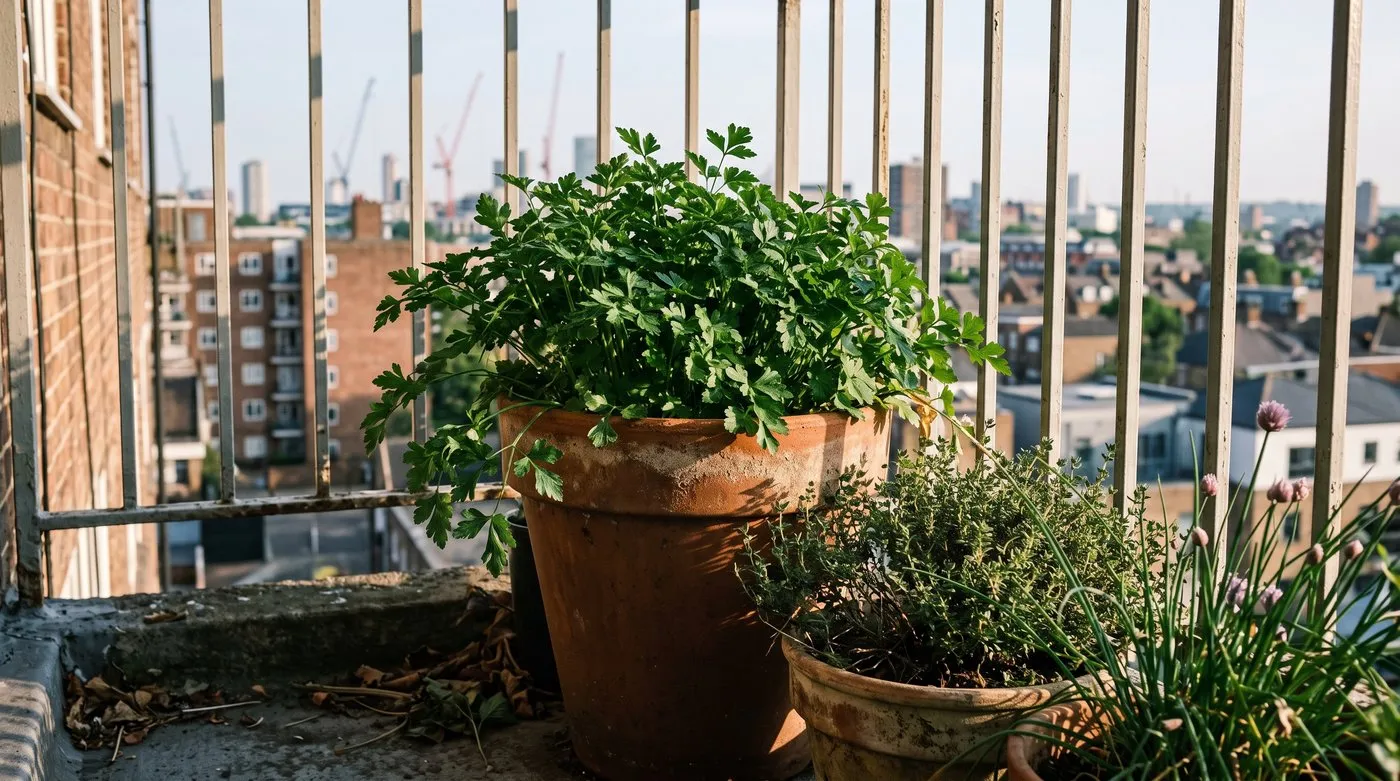
A deep pot gives parsley’s tap root room to grow. Morning sun with some afternoon shade suits it better than a baking hot spot.
Can you plant supermarket parsley in the garden?
It’s best not to. Supermarket pots are grown for a few weeks of picking indoors, and the RHS advises against planting them out, partly because of the risk of bringing in pests and diseases.
Each pot holds lots of thin, crowded seedlings fighting for space. Keep it on a bright windowsill and pick it over a few weeks. Splitting the clump into a few smaller pots of fresh compost can make it last longer. For the garden, sow your own seed or buy young plants from a nursery. Our guide to keeping supermarket herbs alive indoors shows how to split and repot them.
Why parsley is slow to germinate
The seed has a hard coat, and it needs plenty of warmth and moisture before it will sprout. Cold, wet soil is the worst combination.
That’s why the old tricks help. Soak the seed in warm water for 12-24 hours before sowing. Pour hot water along the drill to warm the soil. A heated propagator mat gives steadier warmth than a chilly windowsill.
You can also pre-sprout the seed. Fold it inside a damp paper towel, pop it in a plastic bag and keep it somewhere warm. Check every few days. Once tiny roots appear, sow the sprouted seeds into compost. No more guessing whether anything is happening.
Looking after parsley through the season
Parsley needs steady moisture, a feed if it’s in a pot, and regular picking. Beyond that it pretty much looks after itself until autumn.
Watering and feeding
Keep the soil moist but never soggy. Parsley is thirstier than most herbs, so water it in hot, dry spells. A mulch of garden compost around outdoor plants holds in moisture and feeds the soil slowly.
Plants in the ground usually manage without extra feed. Plants in pots like a balanced liquid feed every few weeks.
Good neighbours for parsley
Parsley grows happily next to tomatoes, chives and other herbs. Second-year plants that flower bring in hoverflies, whose larvae eat greenfly. Our companion planting guide has more good pairings.
Can parsley survive a UK winter?
Usually, yes. It dies back and slows right down in the cold, though, so you’ll need some cover to keep picking.
Pop cloches over the plants, or move pots into a greenhouse, coldframe or bright spot indoors. With enough light, parsley keeps growing slowly. Late-summer sowings are perfect for this, as they go into autumn young and leafy. Pots feel the frost more than plants in the ground, so group them against a sheltered house wall. Plants that make it through will regrow in spring, then flower that summer.
How to pick parsley
Pick from the outside in. Cut a few outer stems near the base and the plant keeps going for months.
Always take the outer stems first. New growth comes from the centre, so leave that alone. Never shear the whole plant flat or just strip leaves off the top.
Leave most of the leaves on the plant at any one time, as they fuel new growth. You can pick from late spring to autumn. The leaves are best before any flower stems appear. Once it flowers, they turn coarse.
To keep some for later, freeze rather than dry it. Chop the leaves, pack them into ice cube trays, top up with a little water and freeze. Drop a cube straight into soups and stews. Dried parsley keeps its colour but loses most of its flavour. Our guide to freezing fresh herbs has more ideas.
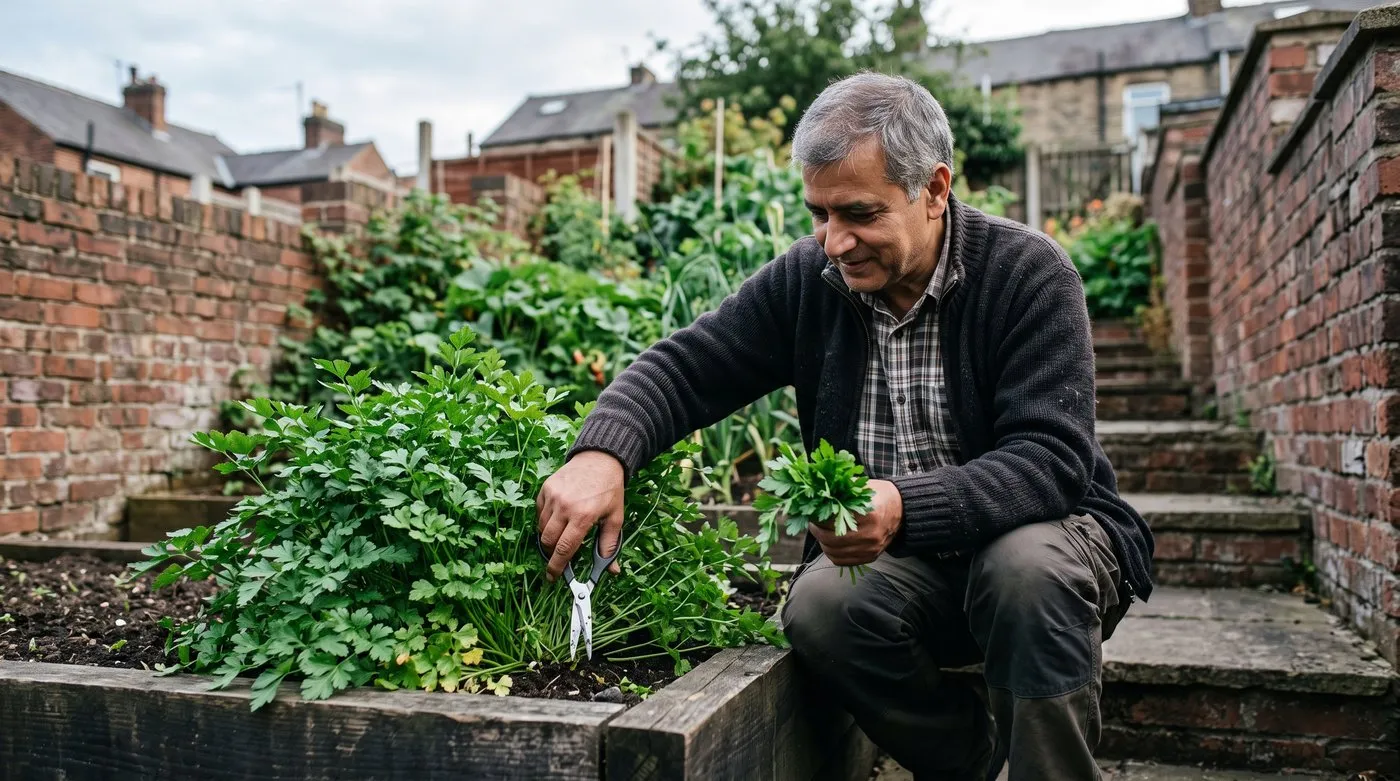
Take the outer stems near the base and leave the centre alone. That’s where the new growth comes from, so the plant keeps going for months.
Common parsley problems
Parsley is mostly trouble-free. The usual problems are early flowering, carrot fly, slugs and yellow leaves.
Flowering in the first year
If a first-year plant sends up flower stems, it’s usually stressed. Cold spells, drought or a cramped pot can all set it off. Snip the flower stems off straight away. You may get a few more weeks of leaves, but sow a fresh batch too.
Carrot fly and other pests
Parsley is in the carrot family, so carrot fly goes for it too. The grubs tunnel into the roots, and the plant wilts and yellows. The RHS carrot fly page suggests covering the crop completely with insect-proof mesh. Aphids, celery leaf miner and slugs also like parsley. Growing it in pots can help keep slugs off.
Yellow leaves
Old outer leaves turning yellow is normal as the plant ages. If young leaves in the middle turn yellow, the plant may be waterlogged, hungry or have damaged roots. Check the drainage first. If the compost is sodden, repot into fresh compost and water less often. A liquid feed helps hungry plants in pots.
Does parsley come back every year?
No. Parsley is a biennial. It makes leaves in its first year, then flowers, sets seed and dies in its second. Nothing you do changes that.
A plant that survives winter will give you a few weeks of early leaves in spring. Then it sends up a tall flower stem and the leaves turn tough. Only keep second-year plants if you want to save seed. If left to flower, it may seed itself around the garden.
The simple answer is to sow fresh parsley every year. A spring sowing covers summer and autumn. A late-summer sowing, kept under cloches, covers autumn, winter and early spring until the next batch is ready.
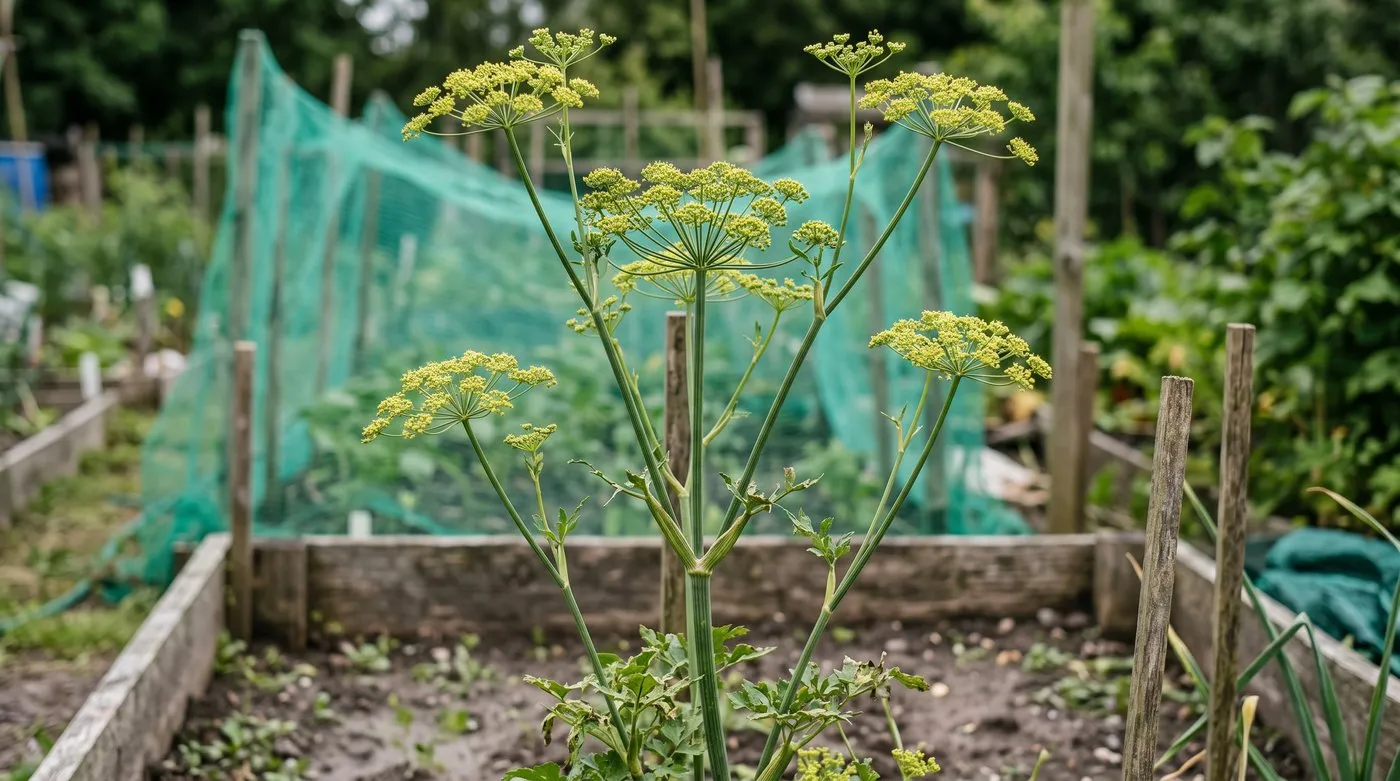
In its second summer, parsley sends up flower stems like these and the leaves go tough. Keep it only if you want seed, and sow fresh plants each year.
Month-by-month parsley calendar
These timings suit most of the UK. In Scotland and northern England, go a week or two later.
| Month | What to do |
|---|---|
| March | Sow indoors in modules somewhere warm and bright. Soak the seed overnight first. |
| April | Start sowing outdoors, 1cm deep, once the soil has warmed. |
| May | Thin outdoor seedlings. Plant out indoor-raised plants after hardening off. |
| June | Start picking outer stems. Feed plants in pots. Mulch plants in the ground. |
| July | Pick often. Water in dry spells. Keep crops covered with mesh against carrot fly. |
| August | Sow a last batch for autumn and winter picking. |
| September | Freeze any spare leaves. Get cloches ready for cold nights. |
| October | Cover plants with cloches or fleece, or move pots under cover. |
| November | Pick lightly from covered plants. Growth slows right down. |
| December | Last pickings from covered plants. Order seed for spring. |
Parsley sits happily alongside other kitchen favourites. Our guides to growing herbs and raised bed gardening will help you plan the rest of your plot.
Frequently asked questions
Why is my parsley so slow to germinate?
Parsley is just naturally slow. Seed can take a month or more to come up, and cold, wet soil slows it even more. Soak the seed overnight in warm water before sowing, and start it indoors somewhere warm for a more reliable result.
Can I grow parsley indoors on a windowsill?
Yes, it does well on a bright windowsill. Use a pot at least 20cm deep with drainage holes and give it your brightest spot. Turn the pot every few days so it doesn’t lean. The leaves are often smaller indoors, but regular picking keeps it going for months.
What is the difference between flat-leaf and curly parsley?
Flat-leaf tastes stronger and more peppery. Curly is milder and slightly grassy, and holds its shape well as a garnish. Most cooks reach for flat-leaf for sauces and salads. Both are just as easy to grow.
When should I sow parsley seeds in the UK?
Sow indoors from March, and outdoors from April to August. Sow small batches every few weeks for a steady supply. A late-summer sowing gives you young plants to pick through autumn and, under cloches, into winter.
Why has my parsley started flowering?
It’s usually in its second year. Parsley makes leaves in year one and flowers in year two. Cold spells, drying out or a cramped pot can also make young plants flower early. Snip off the flower stems to keep picking for a while, but sow a fresh batch too.
How do I harvest parsley without killing the plant?
Pick a few outer stems at a time, cutting near the base. Leave the centre and most of the leaves alone so the plant keeps sending up new stems. Never shear the whole plant flat.
Is parsley frost hardy?
Yes, it copes with normal UK frosts. Outdoor plants slow down and die back in winter, though. To keep picking, cover them with cloches or fleece, or move pots into a greenhouse, coldframe or bright porch.
Our team produces practical UK gardening guidance from source research, contributor records and established horticultural practice. Editorial standards are overseen by Matt W.


