
Key takeaways
- Sow dill where it is to grow, as moved seedlings flower early
- A short row every 3-4 weeks from April to July keeps leaves coming into autumn
- Fernleaf is a compact variety that suits pots and stays leafy longer
- Water in dry spells, because a thirsty plant flowers sooner
- Pick leaves before the flowers open, then leave a few plants to set seed
- Keep dill and herb fennel in separate spots, as fennel can shade it out
Dill is about as easy as herbs get. Scatter some seed in a sunny patch, and six to eight weeks later you’re snipping soft, feathery fronds for the salmon. Leave a few plants to flower and you get flat yellow heads buzzing with hoverflies, then a jar of seeds for pickling. Not bad for a packet that costs less than a cup of coffee.
There’s really only one thing that trips people up. Dill wants to flower, and it’ll do so the moment it feels stressed. Most of this guide is about keeping it leafy for longer.
Which dill variety should you grow?
Decide what you want most, leaves or seeds, and choose from there.
| Variety | Height | Best for | Quick to flower? |
|---|---|---|---|
| Mammoth (Long Island) | Tall | Seeds and pickling | Yes |
| Bouquet | Medium | All-round use | Middling |
| Fernleaf | Short | Pots and leaves | No |
| Dukat | Medium | Leaves for cooking | Middling |
| Hera | Medium | A long run of leaves | No |
Mammoth is the traditional pickling dill. It shoots up and flowers quickly, which is exactly what you want if big seed heads are the aim.
If you mostly want leaves for the kitchen, go for Hera or Fernleaf, both of which are slower to flower. Fernleaf only reaches about 45cm, so it’s the one for pots and window boxes.

Dill in full flower. Hoverflies and lacewings love the yellow heads.
How to sow dill directly outdoors
Sow it where it’s going to grow, and leave it there. Dill has a long, delicate taproot. Dig up a seedling to move it and the plant takes fright and goes straight to flower. That’s why you’ll rarely see good dill sold as young plants.
Sow from April to July, once the soil has warmed a little. For an early start in April, put a cloche over the spot for a fortnight beforehand to take the chill off.
- Make a shallow drill about 5mm deep, with rows 30cm apart.
- Sprinkle the seed thinly. A pinch of dry sand mixed in helps spread it evenly.
- Water gently. Seedlings usually show in about two weeks.
- Once the feathery leaves appear, thin to 15-20cm apart. The thinnings are lovely in a salad.

Young dill a few weeks after sowing. Thin to 15-20cm apart once the feathery leaves appear.
Most soils are fine, but dill doesn’t like sitting wet. On heavy clay, fork in some compost or grit first. The RHS growing guide for dill is handy if you want a second opinion, and our herb growing guide covers soil prep for the whole herb bed.
A sunny, sheltered spot is ideal. Taller varieties get top-heavy in flower and can snap in a gust, so push a few twiggy pea sticks in around them by July.
Succession sowing for continuous dill
A single sowing gives you roughly a month of good leaves. Then the plant starts to flower, and the leaves turn sparse and bitter. The way round it is to sow a little, often.
A short row every three or four weeks from April to July does the trick. By the time one batch is flowering, the next is ready to pick.
| Sow | Start picking | Flowers from |
|---|---|---|
| Early April | Late May | Late June |
| Late April | Mid June | Mid July |
| Late May | Early July | Early August |
| Late June | Mid August | Early September |
| Mid July | Late August | Late September |
Don’t skip the July sowing. It grows on in the cooler, damper days of late summer and often stays leafy for longer than the spring batches. It also gives a good crop of seed in autumn.
Coriander is just as keen to bolt. Our guide to growing coriander uses the same little-and-often plan.
How to stop dill bolting
“Bolting” is the gardener’s word for a plant rushing into flower. You can’t stop dill flowering altogether, because that’s how annuals work. You can slow it down, though.
Choose a slow variety. Fernleaf and Hera stay leafy for longer than Mammoth or Bouquet.
Keep the soil moist. Dry roots are a signal to flower and set seed fast. Water well in dry weather and spread a layer of compost around the plants to hold moisture in.
Don’t transplant it. Even seedlings raised in modules tend to sulk when planted out.
Find some summer shade. From June to August, a bit of afternoon shade really helps. The shady side of a row of runner beans or sweetcorn is perfect.
Thin early. Crowded seedlings compete for water and bolt sooner.
Pinch out the first flower stem. It won’t stop the plant for long, but it buys you another week or so of leaves.
Growing dill in containers
Dill grows well in pots, as long as you pick a compact variety like Fernleaf. Tall types blow over.
The pot needs to be at least 25cm deep to give that taproot room. Fill it with peat-free compost with a few handfuls of perlite stirred in. Sow thinly about 5mm deep, then thin to three or four plants in a 20cm pot.
Pots heat up quickly in sun, which hurries dill into flower. Give them full sun in spring, then move them somewhere with afternoon shade from June. In summer you’ll need to water most days.
Once the plants are about 15cm tall, give a liquid feed every couple of weeks. Our container vegetable gardening guide has more on feeding crops in pots.
Dill vs fennel: what is the difference?
They’re easy to mix up as seedlings, with the same feathery leaves and, later, the same yellow flowers. Grown on, they’re quite different plants.
| Dill | Herb fennel | |
|---|---|---|
| Lifespan | One year | Comes back each year |
| Height | Up to about 90cm | Much taller, up to about 2m |
| Leaves | Fine, blue-green | Bright green, thread-like |
| Flavour | Gentle and fresh | Strong aniseed |
Give them separate spots. Fennel grows far taller and can shade dill out completely. The two can also cross-pollinate, so if you save seed, keep them well apart.
For the tall perennial kind, including the lovely bronze fennel, see our fennel herb growing guide.
Companion planting with dill
Dill earns its place in the veg patch as much for the insects it brings as for the leaves. The flat flower heads attract hoverflies, lacewings and tiny parasitic wasps, all of which help keep pests in check.
Good neighbours:
- Cabbages, broccoli and kale. The little parasitic wasps that visit dill go after cabbage white caterpillars.
- Carrots. The strong scent may help confuse carrot root fly.
- Lettuce. Dill casts a little light shade in midsummer, which lettuce appreciates.
- Cucumbers. Partners in the garden and in the pickling jar.
Keep apart:
- Fennel. It grows tall enough to shade dill out, and seed savers keep the two separate to stop them crossing.
Our companion planting guide has lots more pairings for the veg patch.
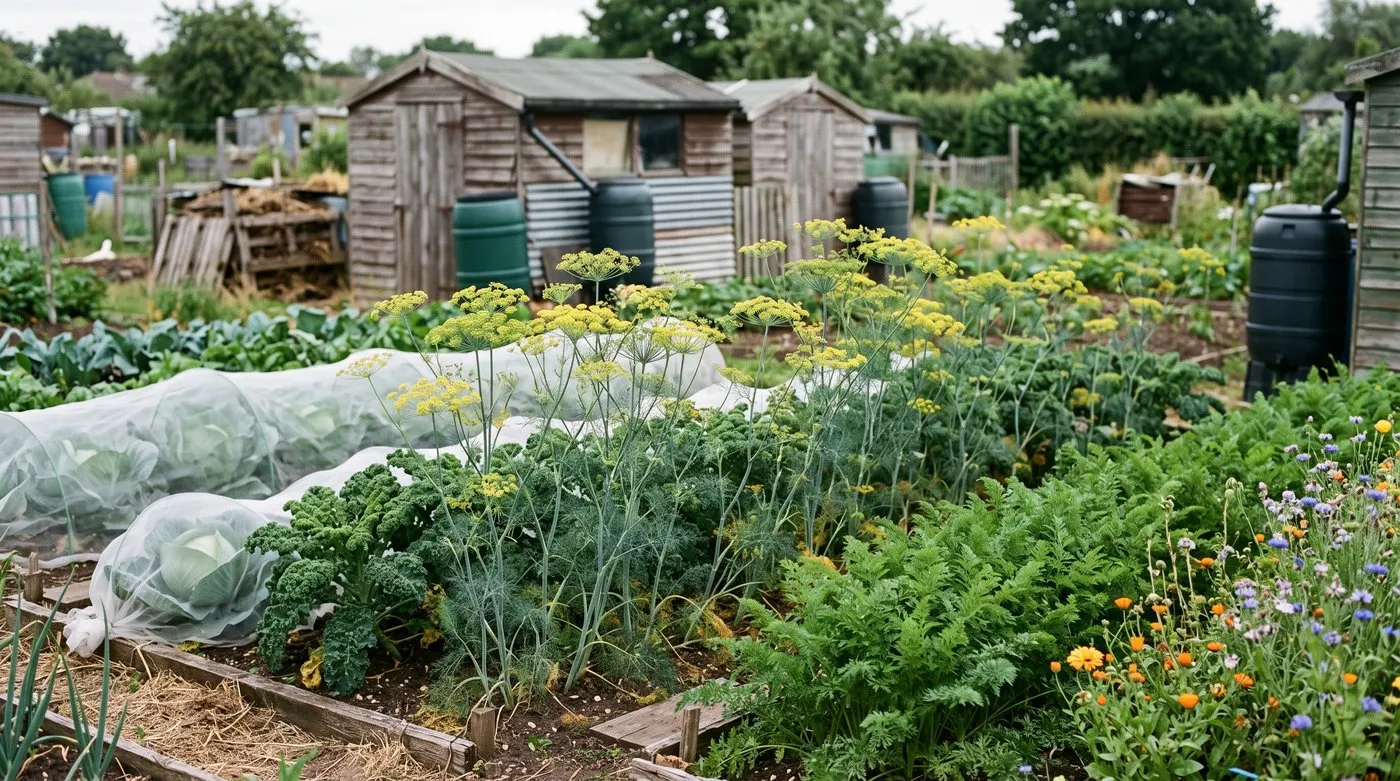
Dot dill between your brassicas. Its flowers pull in hoverflies and tiny wasps that help keep pests down.
How to harvest dill leaves
Start picking when plants reach 15-20cm, usually six to eight weeks after sowing. Mid-morning, once the dew has dried off, is the best time.
The usual approach is to snip outer fronds with scissors and let the centre keep growing. Picked this way, each plant keeps going for longer.
You can also cut the whole plant down to about 5cm. It sometimes regrows, but the second crop tends to be small. A fresh sowing is more reliable.

Snip fronds from the outside of the plant so the middle keeps growing.
As soon as you spot a flower stem pushing up, the leaves are on borrowed time. Use what’s left quickly, or let that plant flower for seed and for the insects.
Cut dill wilts fast. Stand the stems in a glass of water like a bunch of flowers, or wrap them in damp kitchen paper and keep them in the fridge for a few days.
How to harvest and save dill seeds
Dill seed is a lovely spice in its own right: warm, slightly bitter and a bit like caraway. Seed you’ve saved yourself is far more fragrant than a jar from the supermarket.
Let a few plants flower. A few weeks after the flowers open, the heads start to ripen.

Leave the flower heads to ripen until the seeds turn brown and rub off easily.
Cut the heads when the seeds have turned brown and papery, usually in August or September, and come away easily when rubbed between your fingers. Leave it too long and they’ll scatter all over the bed.
Cut each head with a short length of stem and put it upside down in a paper bag. Hang the bag somewhere warm and dry, like a shed or garage, for a couple of weeks. The seeds drop into the bottom as they dry. Store them in a labelled glass jar somewhere cool and dark. Our guide on drying and storing herbs has more tips.
Or leave a few heads on the plants and let nature handle it. Dill often comes up again by itself the following spring, as long as you don’t dig that patch over.
Preserving dill for year-round use
Fresh dill is best, but a few simple tricks keep the flavour going through winter.
Freezing keeps the flavour best. Chop the fronds, pack them into an ice cube tray, top up with water and freeze. A cube dropped into a soup or sauce at the end of cooking works a treat.
Drying is easy but loses some flavour. Hang small bunches upside down somewhere warm and airy for about a week, then crumble into a jar. Dried dill is best in slow-cooked dishes.
Dill vinegar takes no effort at all. Pack a jar with fronds, pour over white wine vinegar, seal and leave for a few weeks. Strain it and use it in dressings.
Dill butter is the one to try. Mash chopped dill into soft butter with a squeeze of lemon, roll it into a log in baking paper and freeze. Slice off a round for fish or hot new potatoes.
Cooking with dill: UK kitchen uses
Dill tastes fresh, grassy and faintly lemony. It goes brilliantly with fish, eggs, potatoes, cucumber and anything creamy.
Fresh leaves are great in:
- Gravadlax and cured salmon
- New potato salad with soured cream and lemon
- Cucumber pickles (pop a whole flower head in the jar)
- Scrambled eggs, stirred in right at the end
- A creamy sauce for fish
The seeds work in:
- Pickling spice mixes
- Rye bread, soda bread and crackers
- Soups and stews, toasted in a dry pan first
- Coleslaw dressing
Add the leaves at the very end of cooking, because heat kills their flavour quickly. The seeds are much happier with long cooking.
Month-by-month dill calendar
Here’s the year at a glance. In northern England and Scotland, everything may run a week or two later.
| Month | Jobs |
|---|---|
| March | Buy seed. Cover the bed with a cloche to warm the soil. |
| April | First sowing once the soil has warmed. |
| May | Thin seedlings. Sow again. Start picking early sowings. |
| June | Sow again, in a spot with some afternoon shade. Water in dry spells. |
| July | Last sowing. Stake tall varieties. Early sowings start to flower. |
| August | Pick leaves from summer sowings. Collect ripe seed heads. |
| September | Collect the last seeds. Leave some to self-sow. |
| October | Clear spent plants. Cover late sowings with fleece on cold nights. |
| November | Store dried seed in sealed jars. |
Dill gets on well with the other kitchen herbs. Our guides to growing parsley and growing herbs in the UK will help you fill the rest of the herb patch.
Common dill problems in UK gardens
Dill is mostly trouble-free. Here’s what to keep an eye on.
Flowering too soon. By far the most common complaint. Sow direct, keep it watered, choose a slow variety and sow little and often.
Greenfly. Squash small clusters with your fingers or wash them off with a jet of water. Once the dill flowers, hoverflies arrive and their larvae polish off the rest.
Powdery mildew. A white dusting on the leaves in late summer, usually in dry spells. Thin the plants so air moves through, water the soil rather than the leaves, and snip off the affected fronds.
Slugs and snails. They love tender seedlings. Our guide to dealing with slugs runs through the options. Once plants reach about 15cm, slugs rarely do much harm.
Frequently asked questions
Why does my dill always bolt before I can harvest the leaves?
Heat, dry soil and being moved all push dill into flower. It’s a fast annual, so it never stays leafy for long anyway. Sow it where it will grow, water in dry spells and give it some afternoon shade in midsummer. Sowing a fresh row every few weeks means there’s always a young plant to pick from.
Can I grow dill in pots in the UK?
Yes, as long as the pot is at least 25cm deep. Choose a compact variety such as Fernleaf and use peat-free compost. Pots dry out quickly, so water most days in summer. Morning sun with a little afternoon shade helps hold off flowering.
What is the difference between dill and fennel?
Dill is a shorter annual, while herb fennel is a tall perennial. Dill has fine, blue-green leaves and a gentle flavour. Fennel grows up to about 2m, returns every year and tastes much more strongly of aniseed. The seedlings look alike, so label the rows.
When is the best time to sow dill in the UK?
Outdoors from April to July. In spring, wait for the soil to warm up or warm it first under a cloche. Spring sowings give the longest run of leaves, and summer sowings are good for seed. Sow a little every three or four weeks for a steady supply.
Does dill come back every year?
Not the same plant, but it often seeds itself. Dill grows, flowers, sets seed and dies within a year. Leave a few seed heads to drop and you’ll usually find seedlings coming up in the same spot next spring.
What grows well next to dill?
Cabbages, carrots, lettuce and cucumbers all do well beside dill. Its flowers draw in hoverflies and other insects that eat aphids. The strong smell may also help hide carrots from carrot fly. Just keep tall herb fennel somewhere else.
How do I save dill seed for next year?
Cut the seed heads once they turn brown, usually in August or September. Put them upside down in a paper bag and hang it somewhere warm and dry for a couple of weeks. The seeds fall into the bag as they dry. Keep them in a sealed jar somewhere cool and dark.
Our team produces practical UK gardening guidance from source research, contributor records and established horticultural practice. Editorial standards are overseen by Matt W.


