
Key takeaways
- Herb fennel is a perennial grown for its leaves and seeds. Florence fennel is a different crop grown for its bulb
- Sow outdoors in spring where it will grow, or start indoors and plant out carefully
- Pick the leaves little and often from late spring to autumn
- Collect seeds when the heads turn brown, then dry them in a paper bag
- Give it room, as it grows tall and casts shade
- Bronze fennel looks lovely in borders and tastes just the same
Herb fennel is a tall, hardy perennial grown for its feathery, aniseed-flavoured leaves and its seeds. Unlike Florence fennel, it doesn’t make a bulb. It can grow up to about 2m, so give it a sunny spot behind smaller plants.
Common fennel vs Florence fennel
First things first: herb fennel and Florence fennel are different crops. Mixing them up is the most common fennel mistake.
Herb fennel (Foeniculum vulgare) is a tall perennial grown for its leaves and seeds. Plant it once in a herb bed or border and it comes back every spring with very little help.
Florence fennel is a shorter plant grown for the swollen white bulb at its base. It’s a vegetable rather than a herb, and it’s fussier about when you sow it.
This guide is all about herb fennel.

By midsummer, fennel is tall and airy, and its fine leaves sway in the breeze.
Types of fennel herb for UK gardens
There are two main kinds to grow, plus a lookalike to know about.
Green fennel is the standard kind, with bright green, thread-like leaves and a strong aniseed taste. Choose it if you mostly want it for the kitchen. It seeds itself the most freely.
Bronze fennel (‘Purpureum’) has gorgeous purple-bronze leaves that soften to coppery green over summer. It tastes just the same. It’s the best choice for a mixed border, looking great with silver plants, blue geraniums and late-summer perennials.
Giant fennel (Ferula communis) is a different plant altogether, grown just for its looks. It isn’t culinary fennel, so don’t use it in the kitchen.
How to sow and plant fennel herb
Fennel is easy from seed. Sowing straight into the ground gives the strongest plants, as the long root never gets disturbed.
Direct sowing (recommended)
Sow outdoors in April or May, once the soil has warmed. Pick a sunny spot with soil that drains well. Rake it fine and sow thinly in drills about 1cm deep, with rows 45cm apart. Keep the soil moist until seedlings appear, then thin them to 45cm apart.
Starting indoors
For an earlier start, sow in modules or small pots in March. Sow two or three seeds per module, 1cm deep, and keep them on a bright windowsill. Thin to one seedling. In late April, put them outside during the day for a week or so to get used to it. Plant out in early May, handling the roots gently.
Buying plants
Garden centres sell potted fennel from spring. Plant it at the same depth as in the pot, firm it in and water well. It’s the quickest way to a harvest, though a packet of seed gives you far more plants. Our guide to growing herbs suggests other easy herbs to grow alongside.
Sowing where it will grow is easiest. Fennel has a long root and doesn’t like being moved. Sow it in place, then thin the seedlings.
Growing conditions for fennel herb
Once it’s settled, fennel looks after itself. Just get the basics right.
Sun. Full sun. In shade it gets leggy and sets less seed.
Soil. Most soils that drain well, from sand and chalk to light clay. It struggles in waterlogged ground. On heavy soil, grow it in a raised bed or a well-drained herb bed.
Water. Water young plants in dry spells in their first year. After that it rarely needs it. Too much water can rot the roots.
Feeding. No need. A little compost mulch in spring is plenty.
Shelter. It’s tall, so a sheltered spot helps. In windy gardens, give it a cane for support.

Hoverflies, ladybirds and tiny wasps love fennel flowers, and they help keep aphids down.
Harvesting fennel fronds
You can start picking the feathery leaves (fronds) in late spring. Snip stems at the base with scissors and the plant will send up fresh shoots.
Regular picking keeps it bushy and holds off flowering. Once it flowers, the leaves get coarser. For leaves all summer, cut off flower stems as they appear. If you want seeds too, let a few stems flower and keep picking from the rest.
The young tips are the most tender and tasty, perfect for salads. Older, lower leaves are better for cooking.
Fronds wilt quickly, so use them on the day you pick them. To keep some, chop them finely, pack into an ice cube tray, top up with water and freeze.
Harvesting fennel seeds
Fennel seeds are a lovely spice to grow yourself. They’re usually ready in September or October.
Keep an eye on the seed heads from late August. The seeds are ready when they turn from green to light brown and rub off easily. Don’t wait for them to fall, or the birds and wind will get them first.
How to collect them:
- Cut the whole head with a bit of stem.
- Pop the heads upside down in a paper bag.
- Tie the bag round the stems and hang it somewhere warm and dry.
- Leave for a couple of weeks. The seeds drop into the bag.
- Pick out the bits and store the seeds in a sealed jar, out of the light.
Home-grown seed smells much stronger than shop-bought. Use it within a year or so for the best flavour.

The seeds are ready when the heads turn brown and the seeds rub off easily.
Bronze fennel as an ornamental border plant
Bronze fennel earns its place in almost any border. It’s useful in the kitchen and beautiful in the garden.
The shoots appear in spring as deep purple-bronze and open into clouds of fine leaves. Over summer the colour softens to coppery green, and by late summer the plant is a haze of yellow flowers above dark leaves. It looks superb with silver plants, blue geraniums and late salvias. Our scented plants guide has more fragrant border partners.
The dried stems and seed heads look lovely in frost too. Leave them standing until late winter, then cut back to about 15cm. Fresh growth soon follows.
It still seeds itself if you leave the heads on, so cut them off in late summer if you’d rather it didn’t.
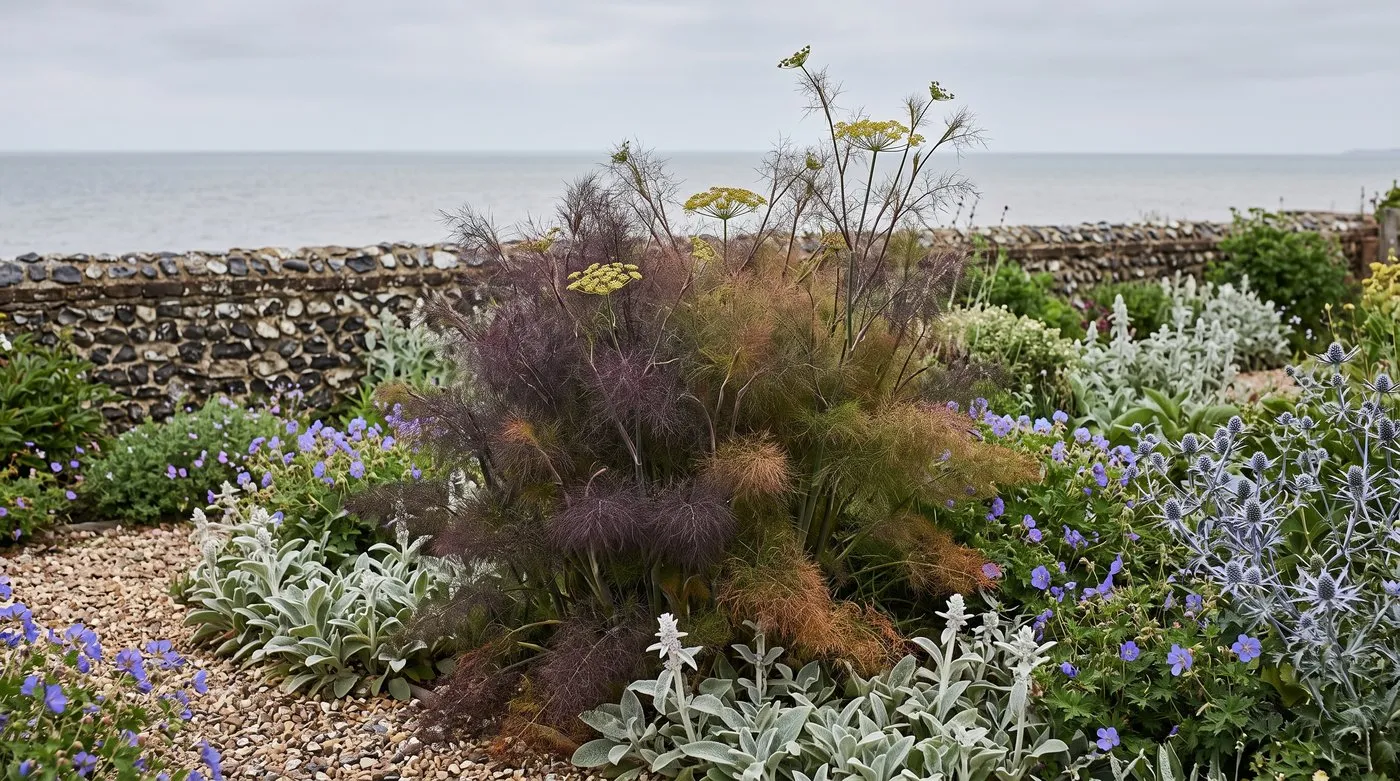
Bronze fennel tastes just like the green kind but looks far smarter in a border. Silver leaves and blue flowers really set it off.
Managing self-sowing
Fennel seeds itself freely. In a big, relaxed garden that’s a bonus. In a small or tidy one, it can be a nuisance.
Stop it. Cut off flower heads in late summer before the seed ripens. Keep one or two for seed if you like and remove the rest.
Pull them out. Seedlings appear from spring and are easy to spot by their thread-like leaves. Pull or hoe them while they’re small, before the root gets deep.
Move the ones you want. Lift wanted seedlings while they’re small, with plenty of soil round the roots, and water them in well.
Companion planting with fennel herb
Fennel is a bit of a loner in the veg patch, but it’s a great friend to helpful insects. Here’s how to fit it in with companion planting.
Plants to keep away from fennel
Dill and fennel look alike and attract the same insects. Rather than a fixed gap, just place them so neither shades the other and both are easy to pick. Our dill guide has more on growing dill.
Smaller crops can end up in fennel’s shade, as it grows so tall. Plant it at the back or on the north side of a bed, so it doesn’t block the sun from lower plants.
Good companions
Fennel gets on fine near most brassicas, root crops, lettuce and squash, as long as it isn’t shading them. A little light dappled shade can even help lettuce in midsummer.
Its real value is its flowers. They’re among the best for bringing in hoverflies, ladybirds and tiny parasitic wasps, which all help keep aphids and other pests down. For more ideas, see our edible flowers guide.
Fennel type comparison table
| Green fennel | Bronze fennel | Giant fennel (Ferula) | |
|---|---|---|---|
| Leaves | Bright green | Purple-bronze to copper | Green |
| Use in the kitchen? | Yes | Yes, same flavour | No |
| Looks in a border | Good | Excellent | Dramatic |
| Seeds itself | Lots | Some | A little |
| Hardy? | Yes | Yes | Needs a sheltered spot |
| Lifespan | Several years | Several years | Dies after flowering |
| Best for | Herb garden, cooking | Borders and cooking | A statement plant |
Culinary uses for fennel herb
Fennel has a warm, sweet aniseed flavour that loves fish, pork, Mediterranean veg and baking.
Leaves. Scatter chopped fronds over grilled fish, potato salad or roasted beetroot. They work instead of dill in most recipes. Add them at the end of cooking.
Seeds. Toast them lightly in a dry pan. Use them in bread, sausages, curries and fish marinades. Crush them for the most flavour.
Stems. Dried thick stems can go on the barbecue coals under fish for a lovely aniseed smoke. It’s a classic from the south of France, and it works brilliantly with mackerel and sea bass.
Pollen. Shake open flowers over a plate to collect the yellow pollen. It has a strong, sweet aniseed flavour that’s lovely sprinkled over pasta or roast veg.

Use fennel fronds on the day you pick them for the best flavour.
Common problems
Fennel is one of the easiest herbs to grow. Problems are rare.
Aphids. They sometimes cluster on young growth in spring. A jet of water knocks them off, and hoverflies drawn in by the flowers help later on.
Slugs. They can nibble young seedlings in a wet spring. Once plants are about 15cm tall, slugs lose interest.
Root rot. Only in waterlogged soil. Choose a well-drained spot or a raised bed.
Powdery mildew. A white dusting on crowded plants in late summer. Space plants 45cm apart and water the soil, not the leaves. You can pick off affected leaves.
Wind. Tall plants can blow over in exposed spots. Tie them to a cane, or grow them somewhere sheltered.
Frequently asked questions
Is fennel herb the same as Florence fennel?
No, they’re grown quite differently. Herb fennel is a tall perennial grown for its leaves and seeds. Florence fennel is grown as a vegetable for its swollen base.
When should you sow fennel herb seed in the UK?
Sow outdoors in spring, once the soil warms up. Sowing where it will grow avoids disturbing the long root. You can sow indoors too, but plant out gently and harden the plants off first.
Can you grow fennel herb in pots?
Yes, in a big, deep pot of at least 30 litres. The long root needs plenty of room. Use compost that drains well, stand it in full sun and water often in summer. It won’t grow as tall as in the ground, but it’s handy on a patio.
How do you harvest fennel seeds?
Cut the heads when they turn brown and dry. Do it before the seed starts to fall. Finish drying them in a paper bag, then store the dry seed in a labelled, sealed jar.
Does fennel self-sow and become a problem?
It can, if you leave the seed heads on. A single plant can scatter lots of seed over borders and paths. Cut off spent flower heads in late summer before the seed ripens. Any seedlings that do pop up are easy to pull out while they’re small.
Our team produces practical UK gardening guidance from source research, contributor records and established horticultural practice. Editorial standards are overseen by Matt W.


