Key takeaways
- Sow outdoors from late March to May, where you want it to flower
- It grows 60 to 90cm tall and flowers from June to October
- Bees love it, which helps nearby strawberries, tomatoes and squash
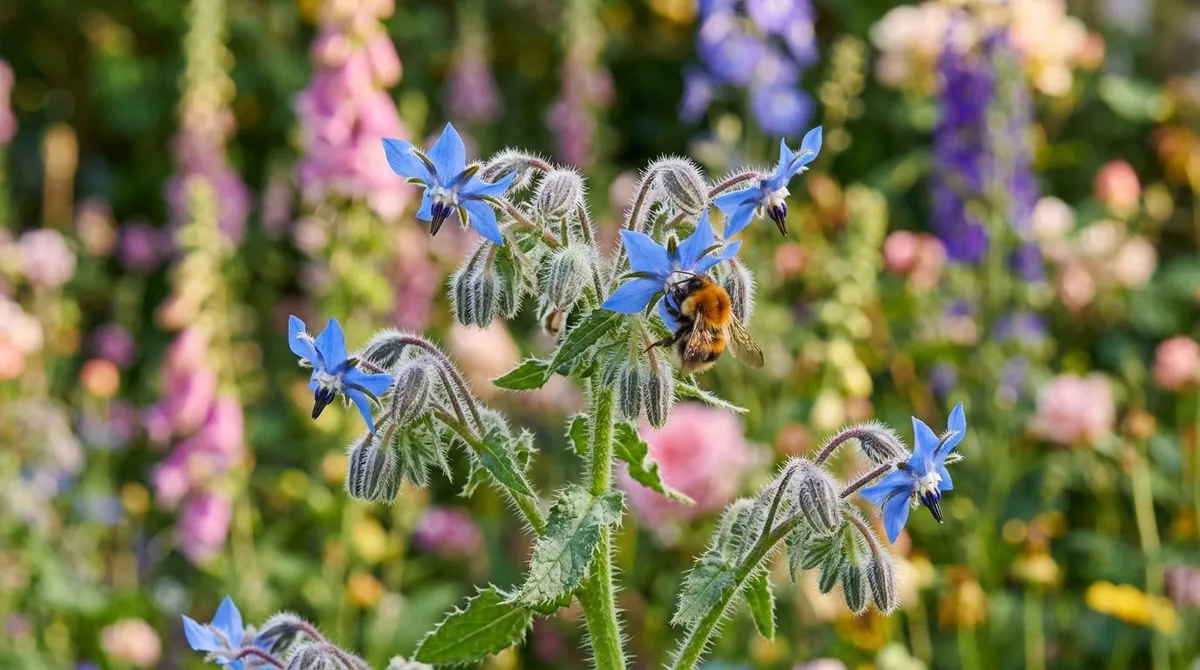
- The blue flowers are edible and taste of cucumber
- It seeds itself freely, so deadhead if you don't want it everywhere
Borage is a cheerful, easy annual herb that grows happily all over the UK. From June to October it’s covered in bright blue star-shaped flowers, and the bees can’t get enough of them. The flowers taste of cucumber, the plant seeds itself, and it’s a great friend to strawberries.
Here’s how to grow it, from sowing the seed to keeping its enthusiastic self-seeding under control. If you grow any fruit or veg, borage more than earns its space.
When and how to sow borage seed
Sow borage outdoors from late March to May, right where you want it to flower. It doesn’t like being moved, so sowing in place is best. Pick a sunny spot with soil that drains well. Poor, stony ground is fine.
Scatter seed thinly and cover with 1 to 2cm of soil. Water gently and keep it moist. Seedlings usually appear in one to two weeks once the soil has warmed a little. Thin them to 30 to 45cm apart when they have two pairs of proper leaves. Borage grows a long root early on, so thinnings don’t transplant well.
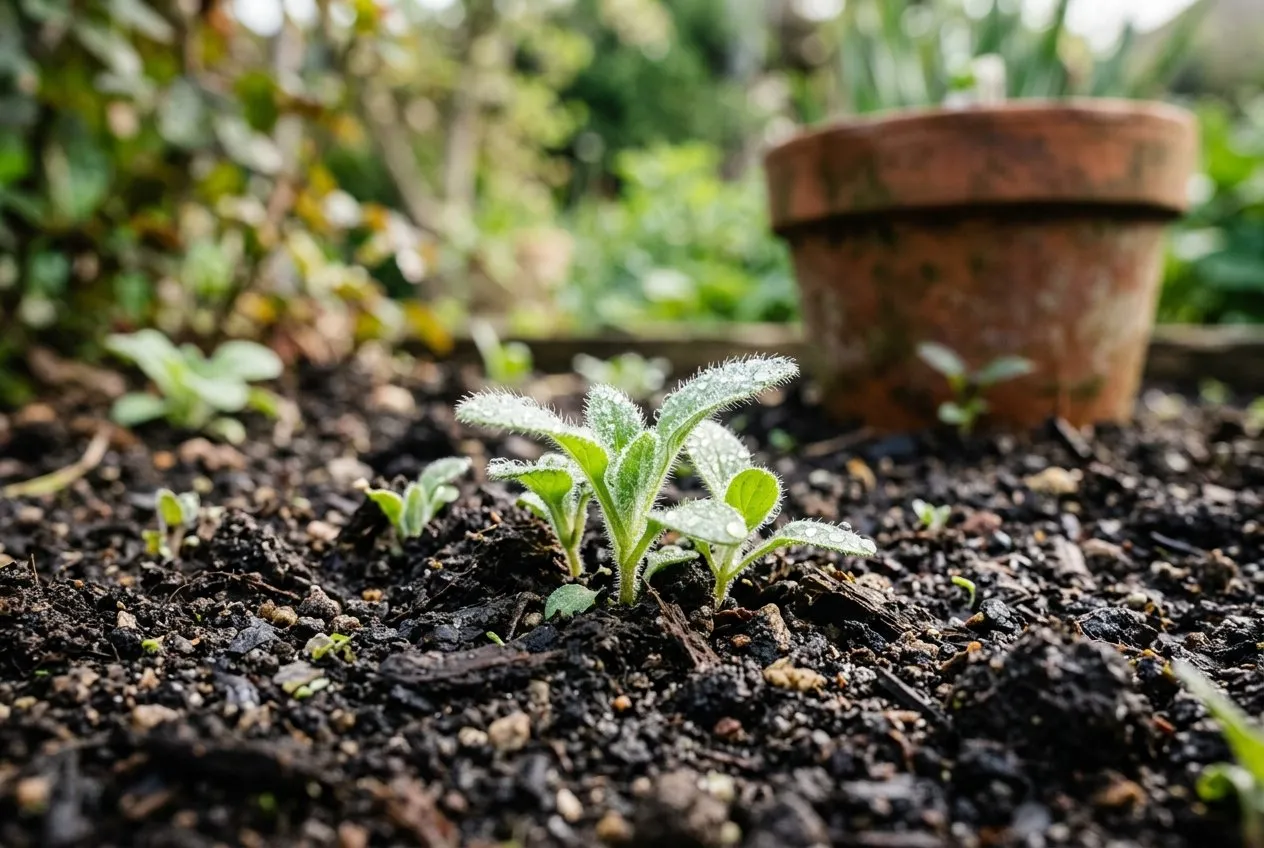 Borage seedlings are easy to spot by their fuzzy, rounded first leaves.
For a longer show, sow again in June. The second batch will flower into autumn as the first one finishes. Borage grows fast and can flower within about two months of sowing.
New to seeds? Our guide to growing herbs in the UK covers sowing outdoors and indoors.
What soil and position does borage need?
Full sun and any soil that drains well. Borage grows in clay, loam, sand and chalk. The only thing it really hates is waterlogged ground. On heavy clay, dig in some grit before sowing.
Sun gives you the most flowers and the sturdiest plants. In shade it gets leggy and flowers less. A south or west-facing border is perfect.
Don’t feed it. Rich soil gives lots of leaves and fewer flowers. It’s happiest in fairly poor ground, which is why it does so well on neglected corners and allotments.
Borage grows 60 to 90cm tall and about 40 to 60cm wide, with thick, bristly stems. Put it at the back of a border or give it its own patch where it won’t shade smaller crops.
Why borage is a pollinator powerhouse
Borage is one of the best plants you can grow for bees. Its flowers top up their nectar really quickly, so bees can keep coming back to the same plant all day.
Each plant makes lots of flowers that open one after another for months. You’ll get blooms from June until the first hard frosts. Honeybees, bumblebees and solitary bees all visit.
Companion planting borage with strawberries
Borage and strawberries are a classic pair. Borage pulls in bees, and strawberries need insects to pollinate them properly. Poorly pollinated flowers give small, wonky fruit.
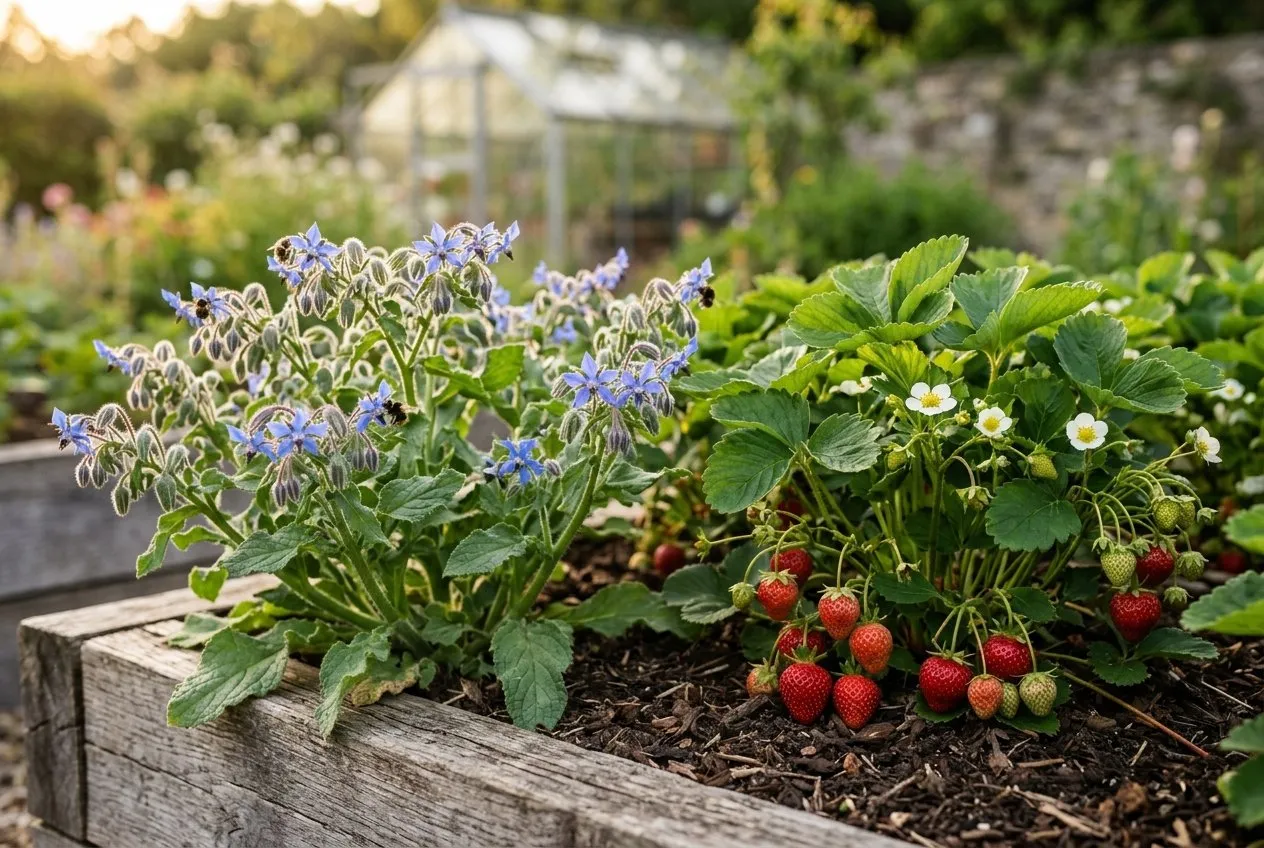 Borage next to the strawberry bed brings in the bees.
Plant borage at the ends of strawberry rows or in gaps between plants. It starts flowering in June, nicely in time for the strawberries.
It’s a good neighbour for tomatoes, courgettes and squash too, as they all need insect visitors. For more good pairings, see our companion planting guide.
Using borage flowers in food and drinks
The flowers are edible and taste gently of cucumber. The RHS borage page is a nice extra read.
Pick flowers in the morning when they’re fully open. Pinch the blue star away from the green part at the back. The petals bruise easily, so be gentle.
Three ways to use borage flowers:
| Use | How | Best for |
|---|---|---|
| Ice cubes | Freeze single flowers in water in an ice cube tray | Summer drinks and lemonade |
| Salad topping | Scatter fresh flowers over salads | A pop of colour and a hint of cucumber |
| Sugared petals | Brush with egg white, dust with caster sugar, leave to dry | Cakes and puddings |
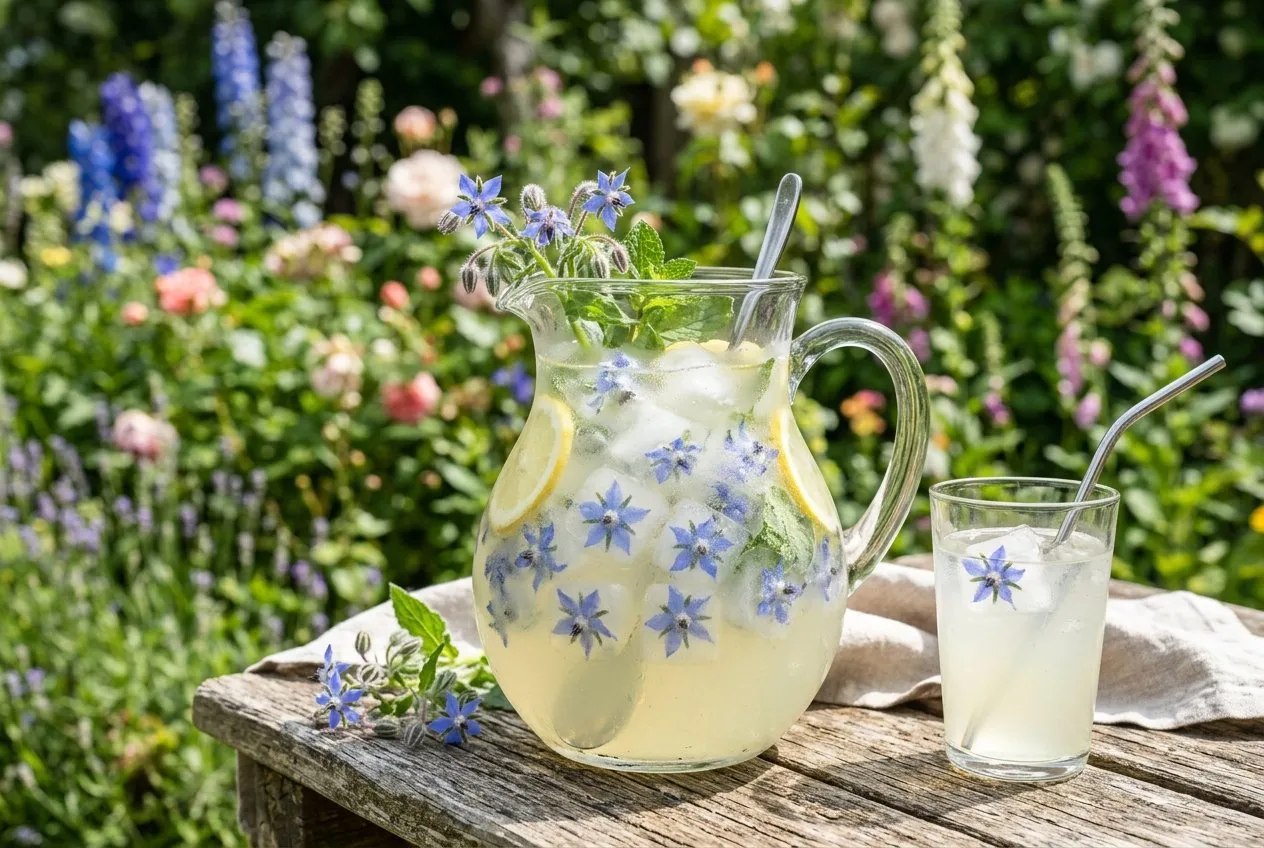 Borage ice cubes look lovely in summer drinks.
Very young leaves taste of cucumber too, but only eat them now and then in small amounts. They get hairy and tough as they grow.
For more flowers you can eat, see our edible flowers guide.
How to manage borage self-seeding
Deadhead if you want less borage, and leave the seed heads if you want more. Borage is an annual and dies in autumn, but it drops plenty of seed first. New plants come up the next spring on their own.
That’s great for an easy bee patch. It’s less great when borage pops up in paths and between paving.
To get more: Leave the old flower stems in autumn. Don’t dig around the plant until spring. Seedlings appear from March and are easy to spot by their round, hairy first leaves.
To get less: Deadhead through the summer, before the seeds drop. Pull out whole plants in autumn. A quick hoe in spring clears most unwanted seedlings.
Seedlings don’t move well because of the long root. Thin them where they are. If you want borage somewhere new, just sow fresh seed there.
Some gardeners also grow borage to help open up heavy soil with its deep root. See our green manures guide for more soil-improving plants.
Growing borage in containers
Use a deep pot, at least 30cm deep and 25cm wide. Fill it with free-draining compost mixed with a handful of grit or perlite.
Stand it in full sun. Water when the top 3cm of compost feels dry. Pots dry out quicker than the ground and may need watering every day in summer.
Potted borage stays smaller, around 40 to 50cm tall, but still flowers and still pulls in the bees. It’s a lovely addition to a patio herb garden.
Bonus: seeds land on the patio rather than bare soil, so you get less self-seeding.
Common problems with borage
Borage is very easy and rarely has serious problems.
Aphids sometimes gather on young shoot tips in early summer. Blast them off with water. Ladybirds and hoverflies usually sort them out within a week or two.
Powdery mildew may show up as white dust on leaves in late summer, especially in dry weather. It looks scruffy but rarely kills the plant. Pick off bad leaves and don’t cram plants together.
Slugs may nibble young seedlings. Protect them with beer traps or a ring of grit until they’re about 10cm tall. After that, the hairy leaves put most slugs off.
Flopping is the most common complaint, especially after rain. Tie plants to a cane, grow them among sturdier neighbours, or choose a spot out of strong wind.
Borage varieties to grow
Ordinary borage, Borago officinalis, is the one to grow. It has the classic blue flowers and seed is easy to find.
‘Alba’ has white flowers. It grows, tastes and feeds bees just like the blue one. Grow both together for a pretty mix.
Borago pygmaea is a small perennial cousin with pale blue flowers. It only reaches about 30cm, so it suits rockeries or the front of a border. You’ll find it at specialist nurseries, and it doesn’t self-seed as wildly.
Monthly borage growing calendar
| Month | What to do |
|---|---|
| March | Sow outdoors once the soil starts to warm |
| April | Thin seedlings to 30 to 45cm apart |
| May | Sow a second batch for later flowers |
| June | First flowers. Start picking for the kitchen |
| July to September | Peak flowering. Deadhead to keep it going |
| October | Let some plants seed. Clear away old plants |
| November to February | Nothing to do. Seeds wait in the soil |
Frequently asked questions
Is borage easy to grow in the UK?
Yes, it’s one of the easiest plants you can grow. It copes with poor soil, dry spells and light shade, though it flowers best in sun. Sow outdoors from March to May and it comes up in a couple of weeks. After that it seeds itself and needs little more than a drink in long dry spells.
Can you eat borage flowers?
Yes, the flowers are edible and taste mildly of cucumber. Pick them in the morning when fully open. Scatter them on salads, freeze them in ice cubes or use them to decorate cakes. Only eat flowers from plants that haven’t been sprayed.
Does borage come back every year?
Not the same plant, but its seedlings usually do. Borage is an annual and dies after setting seed. It drops so much seed that new plants pop up next spring. Thin them out and pull any in the wrong spot, as they don’t move well.
Is borage good for bees?
Yes, it’s one of the best bee plants you can grow. The flowers refill with nectar quickly, so bees keep coming back all day. Honeybees, bumblebees and solitary bees all love it. A second sowing in June keeps the flowers going until the frosts.
How do I stop borage from spreading?
Cut off the old flower stems before the seeds drop. Or let a few plants seed where you want them and pull out the rest. The seedlings are easy to spot by their big, hairy leaves and pull out cleanly when small. A quick hoe in spring gets most of them.
Can I grow borage in a pot?
Yes, in a pot at least 30cm deep. It has a long taproot, so depth matters. Use free-draining compost and water often in dry weather. Potted plants stay smaller. Keep the pot in full sun and stake it if it flops.
What grows well next to borage?
Strawberries are the classic partner. They benefit from all the bees borage brings in. Tomatoes, courgettes, squash and beans like the extra visitors too. Borage can sprawl, so plant it at the edge of a bed where it won’t shade smaller crops.
Our team produces practical UK gardening guidance from source research, contributor records and established horticultural practice. Editorial standards are overseen by Matt W.