Key takeaways
- Put your herb garden in sun and as close to the kitchen door as you can
- Most culinary herbs need at least six hours of direct sun a day
- A raised bed about 1.2m square holds around eight herbs
- Group herbs by their needs, with dry-loving Mediterranean herbs kept apart from leafy ones
- Give mint its own pot, or it will take over the bed
- Parsley, chives and mint cope with a shadier spot
A herb garden is one of the most useful things you can add to any garden, balcony or back step. The best ones are simple, sunny and close to the kitchen.
This guide is about planning and setting one up: where to put it, which layout to choose, how to build and plant a raised bed, and which herbs to group together. For sowing, picking and keeping individual herbs going, see our guide on how to grow herbs. If you want a herb border that looks good all year as well as feeding you, our herb border design ideas cover the ornamental side.
Where should you put a herb garden?
In the sunniest spot you have, as close to the kitchen door as possible. If you have to trek down the garden in the rain, you’ll soon stop picking.
Most culinary herbs need at least six hours of direct sun a day. A south or west-facing wall is ideal, because it gives extra warmth and shelter from cold winds. Avoid low, damp spots where water sits after rain, as Mediterranean herbs hate wet roots.
Only got a shady corner? You can still grow herbs. Parsley, chives, mint and chervil cope with three or four hours of sun.
Four herb garden layout ideas
Pick the layout that suits your space and how much you want the herb garden to be a feature.
Kitchen door border
The simplest option: a strip of soil about 60-90cm wide along the house wall outside the kitchen. Put rosemary and sage at the back, where the wall gives warmth, and parsley and chives at the front within easy reach. Edge it with creeping thyme for a tidy finish.
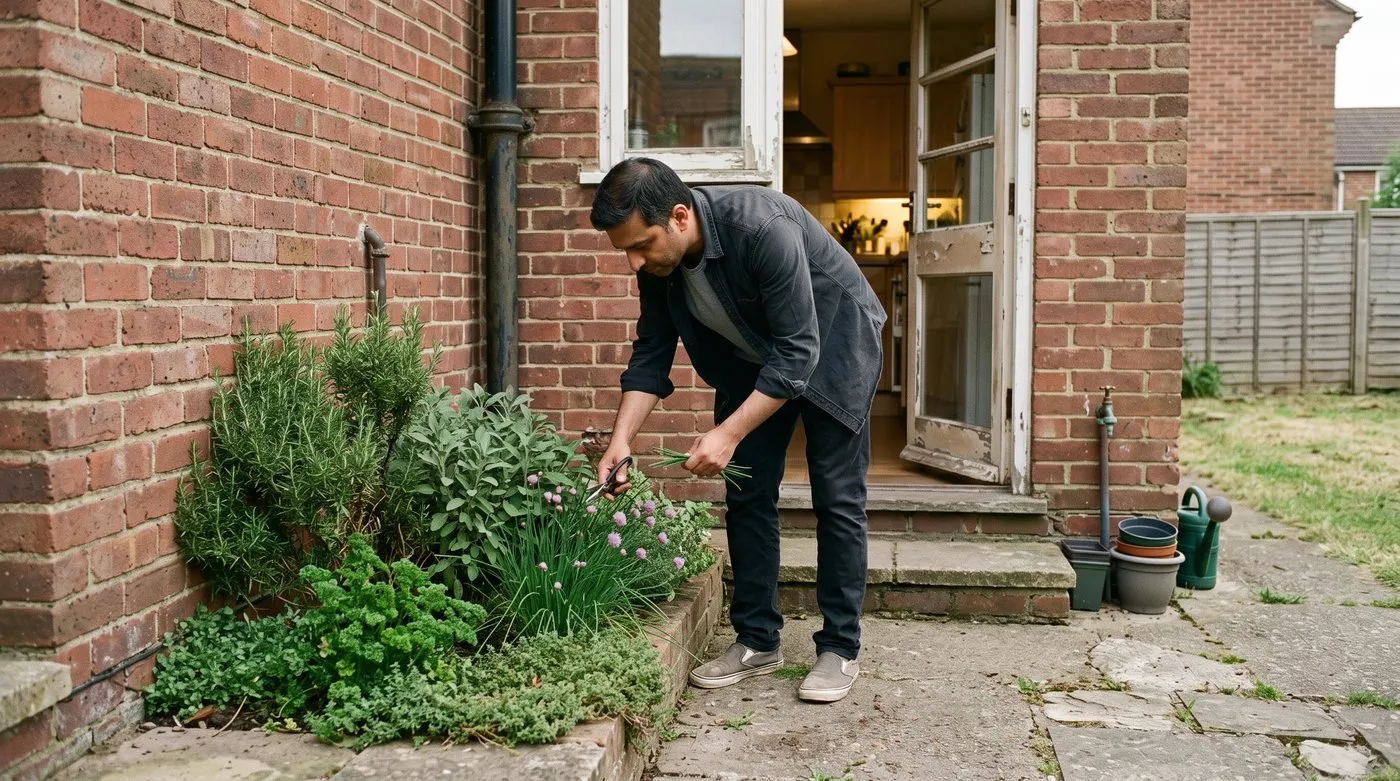
A narrow strip by the back door is the easiest herb garden of all. Warm-loving herbs go against the wall.
Raised bed
A raised bed gives sharp drainage, which Mediterranean herbs love, and the extra height makes picking easier. It’s the best choice on heavy clay. See the step-by-step plan below.

A raised bed right by the kitchen door means fresh herbs are only a few steps from the pan.
Herb wheel
A circular bed split into wedges like the spokes of a wheel, with a different herb in each section. Brick, stone or gravel paths make the spokes. It’s a classic cottage garden look and works best where the herb bed is a feature in its own right. Keep vigorous herbs such as mint out of it, or they’ll cross the lines.
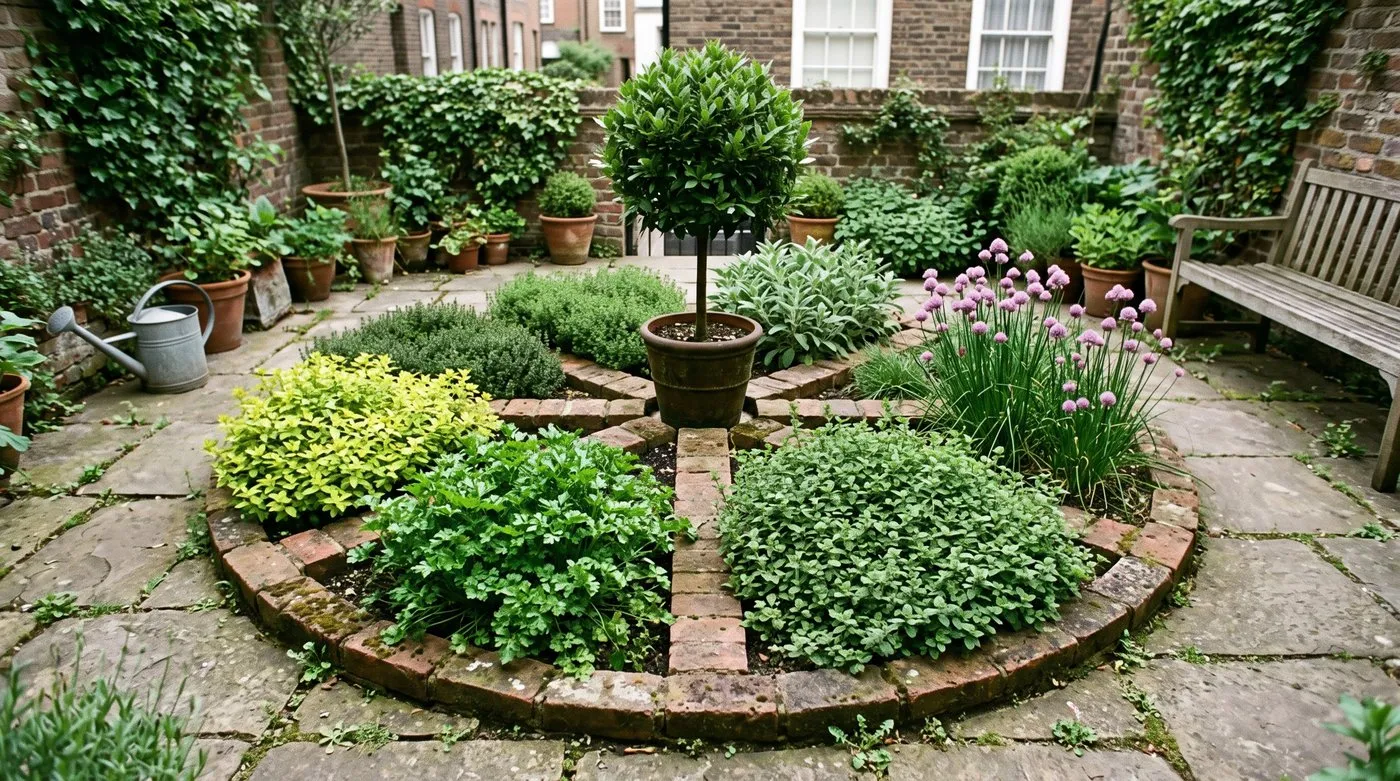
A herb wheel keeps each herb in its own wedge and makes a lovely feature in a small space.
Pots and containers
A group of pots on a sunny patio, step or balcony suits small gardens and renters. You can move tender basil indoors when it turns cold, and it’s the best way to keep mint in check.

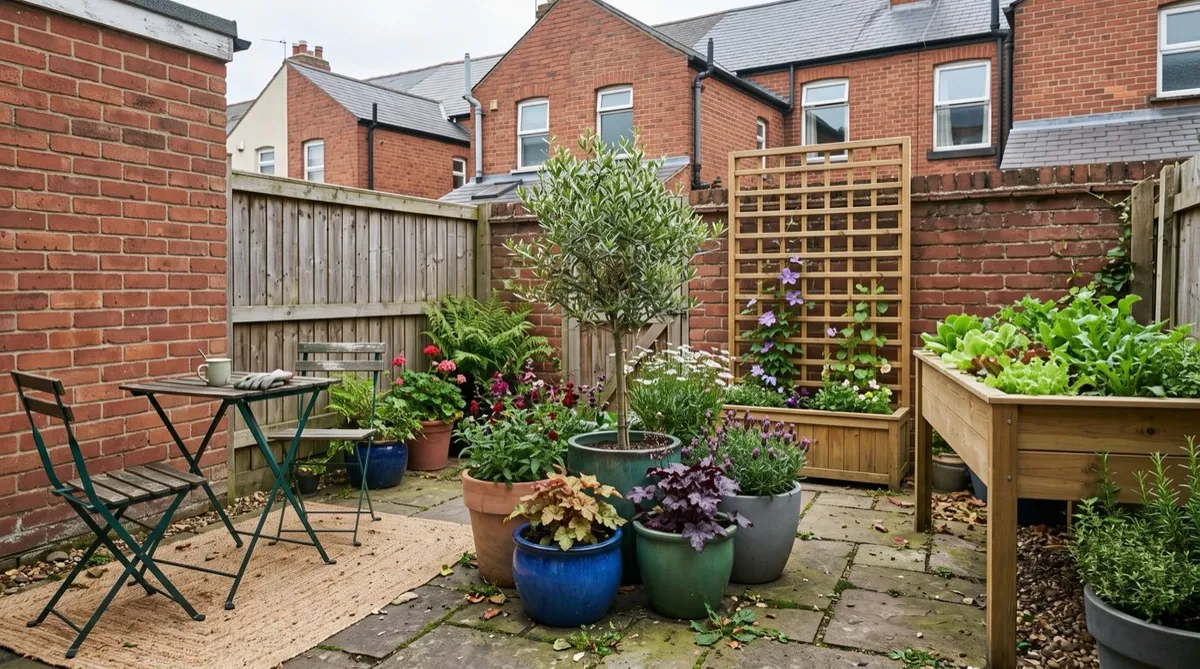
A cluster of pots on a sunny patio is a herb garden too, and you can take it with you when you move.
Which herbs should you grow together?
Group herbs by what they need. Mediterranean herbs like it dry, lean and sunny. Leafy herbs like richer, moister soil. Plant them together in the same patch and one group always struggles.
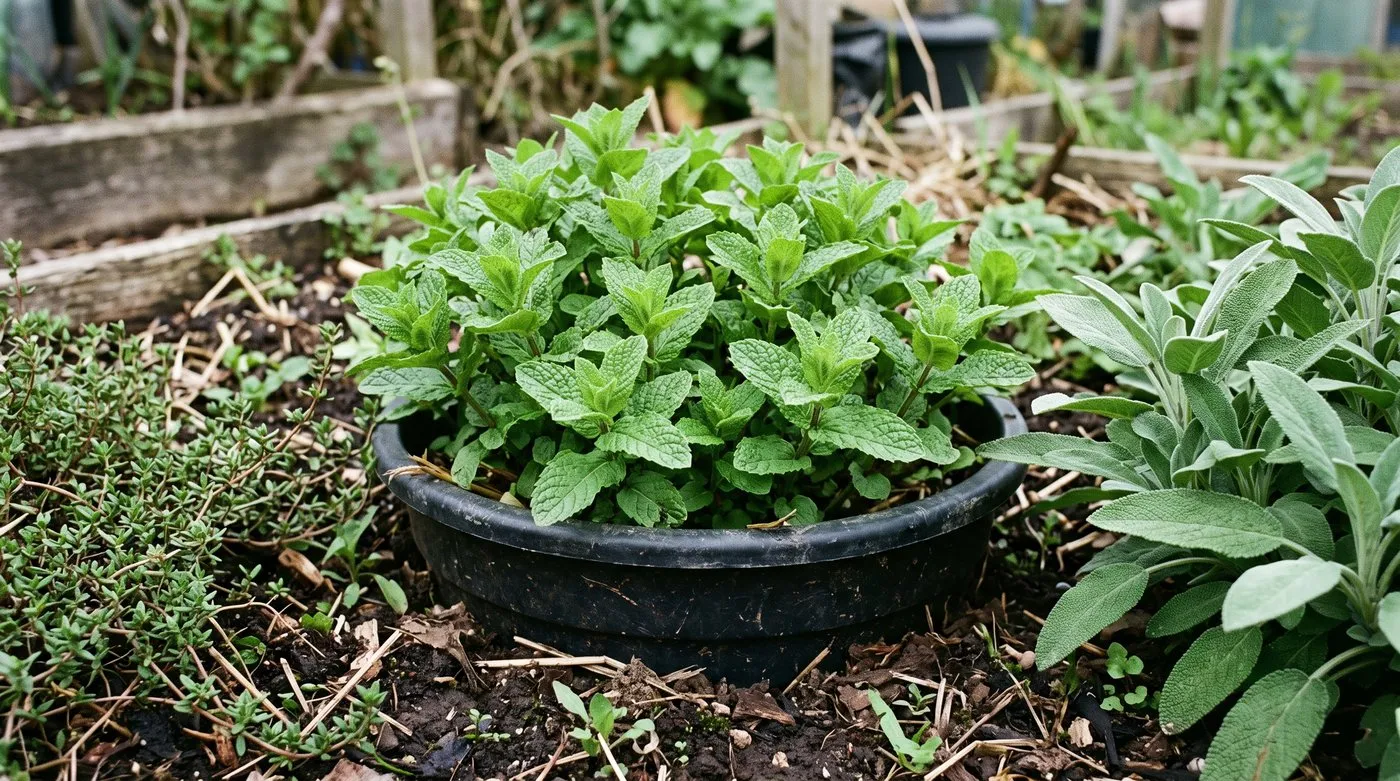
Sinking mint in a big pot with the rim showing stops its runners taking over the rest of the bed.
| Group | Herbs | Water | Soil | Feeding |
|---|---|---|---|---|
| Mediterranean | Rosemary, thyme, sage, oregano, bay | Little, once established | Gritty, free-draining | Very little |
| Leafy | Parsley, basil, coriander, chives, dill | Regular, keep moist | Fertile, holds moisture | A liquid feed every few weeks in pots |
| Spreaders | Mint, lemon balm, horseradish | Regular | Any reasonable soil | Very little |
Give the spreaders their own space. Mint spreads by underground runners and can fill a bed in a season. Lemon balm seeds itself everywhere, so cut it back before it sets seed. Horseradish is almost impossible to dig out once it’s in, so grow it in a big pot or a corner you can spare. Sinking mint in a large bottomless pot, with the rim just above the soil, helps in open ground, but check for escaping runners.
Best herbs for a new herb garden
Start with herbs that are easy and that you’ll actually cook with.
| Herb | Sun | Soil | Comes back each year? | Good with |
|---|---|---|---|---|
| Rosemary | Full sun | Poor, gritty | Yes, evergreen | Roasts, bread |
| Thyme | Full sun | Poor, gritty | Yes, evergreen | Stews, stuffing |
| Sage | Full sun | Well-drained | Yes | Pork, butter sauces |
| Chives | Sun or part shade | Moist, fertile | Yes | Eggs, potatoes, salads |
| Mint | Sun or part shade | Moist | Yes, spreads | Drinks, lamb, peas |
| Parsley | Sun or part shade | Moist, fertile | Biennial | Sauces, garnish |
| Basil | Full sun, sheltered | Rich, moist | No, tender annual | Pesto, tomatoes |
| Coriander | Sun, light shade in summer | Moist, fertile | No, annual | Curries, salsa |
Basil needs warmth, so it’s happiest in a pot in the sunniest, most sheltered spot. Our guide to growing basil explains how to keep it going. For a steady supply of parsley, see growing parsley from seed.
How to build and plant a herb raised bed
A raised bed about 1.2m square and 20-30cm deep is a good size for a first herb garden.
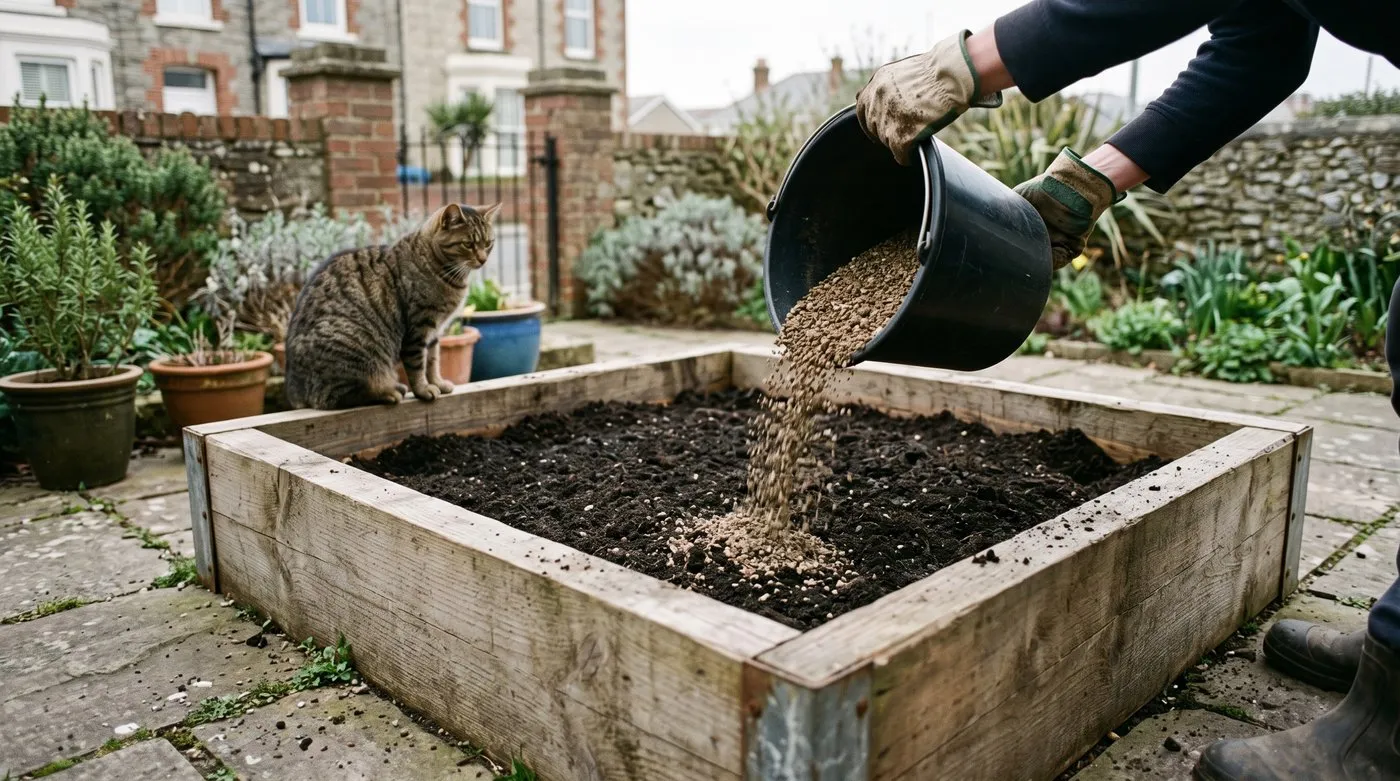
Mix grit into the compost before you plant. Rosemary, thyme and sage need that sharp drainage.
Building it
- Cut scaffold boards or sleepers to make a square frame about 1.2m each side.
- Screw the corners together with exterior wood screws, or use corner posts for extra strength.
- Set it on level ground in full sun. Fork over the soil underneath to help drainage.
- Fill with roughly two parts multipurpose compost to one part horticultural grit, mixed well.
For more on raised beds in general, see our raised bed guide for beginners.
Planting plan for a 1.2m square bed
Put the tallest herbs in the middle or at the back and low ones round the edges:
- Centre: one rosemary, which can reach 1m or more in time.
- Middle: one sage, one oregano and one flat-leaf parsley.
- Edges: three thymes along the sunny front and a clump of chives at each end.
That’s around eight herbs, with the sun-lovers together and the ones you pick most within easy reach. Grow mint and basil in pots alongside.
Setting up a container herb garden
Use terracotta pots if you can: they breathe, which helps stop compost getting soggy. Choose pots at least 25cm across for single herbs, or a 45cm trough for three. Every pot needs drainage holes, and pot feet help in winter.
For Mediterranean herbs, mix three parts multipurpose compost to one part grit or perlite. Leafy herbs are happy in multipurpose compost with a handful of grit stirred in.
Herbs in pots run out of food faster than those in the ground. Give leafy herbs a balanced liquid feed every few weeks from May to September. Woody herbs need far less: a little slow-release feed in spring is plenty.
Designing a herb garden that looks good all year
Include some evergreens so the herb garden doesn’t look bare in winter. Rosemary, bay, thyme and winter savory keep their leaves, and sage holds on in milder winters. Variegated thymes such as ‘Silver Queen’ add colour even in January.
Let a few herbs flower. Chives, thyme, oregano and rosemary flowers are loved by bees. A bay clipped into a lollipop standard adds height and a touch of formality to a relaxed planting.
Herb garden calendar: setting up and first year
| Month | What to do |
|---|---|
| March to April | Build or prepare the bed. Plant rosemary, thyme, sage and chives. Sow parsley and coriander under cover |
| May | Sow coriander and dill outdoors. Start picking new growth |
| Late May to June | Plant basil outside once nights are warm. Water new plants in dry spells |
| July to August | Pick little and often. Sow more coriander. Watch for rosemary beetle on rosemary, sage and lavender |
| September to October | Take cuttings of rosemary, sage and thyme. Bring basil indoors. Plant more hardy herbs while the soil is warm |
| November to February | Raise pots onto feet. Top up grit around Mediterranean herbs. Plan next year’s additions |
Growing on an allotment? Our allotment herb bed plan sets out a bigger layout with dry and moist zones.
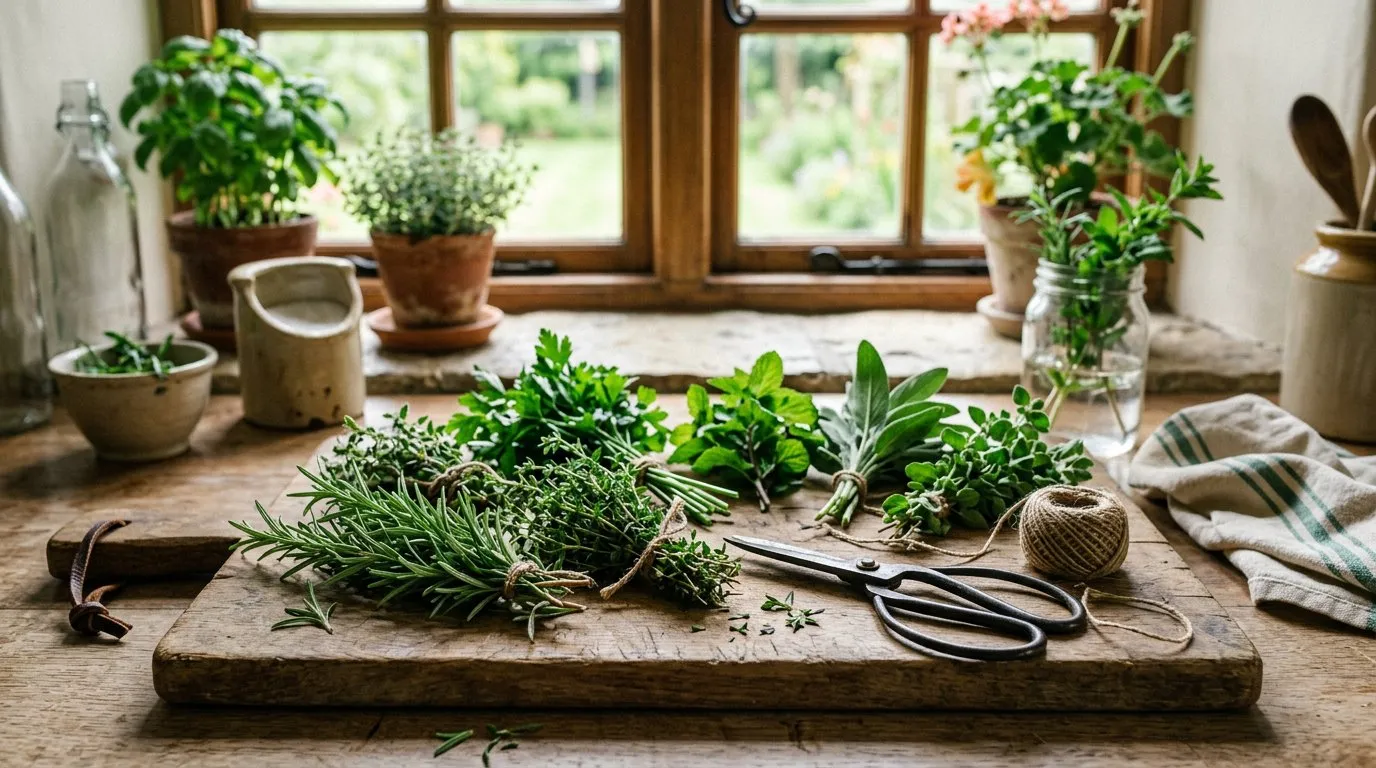
The whole point: a board full of fresh herbs, picked a few steps from the kitchen. Morning is a good time to cut.
Common herb garden mistakes
- Putting it too far from the house. If it’s a trek, you won’t use it.
- Planting in shade. Rosemary, thyme and sage need sun to stay compact and tasty.
- Mixing dry-lovers and moisture-lovers. Group herbs by their needs.
- Letting mint loose. Always contain it.
- Rich soil and heavy feeding. Mediterranean herbs grow soft and lose flavour. Keep their soil lean.
- Wet winter roots. More herbs die from wet than cold. Add grit and raise pots.
Now you’ve set up your herb garden, read our guide on how to dry and store herbs so you can enjoy your harvest all winter, or find more on the growing hub.
Frequently asked questions
Where is the best place for a herb garden?
A sunny spot close to the kitchen door is ideal. Most culinary herbs need six or more hours of direct sun. A south or west-facing wall gives extra warmth and shelter. If the herbs are a long walk away, you’ll stop picking them.
Can I grow herbs in shade?
Yes, some herbs cope with part shade. Parsley, chives, mint and chervil grow well with three or four hours of sun. Sweet cicely and sweet woodruff like dappled shade. Rosemary, thyme and sage turn leggy and lose flavour in shade, so keep them in the sun.
What herbs grow well together in one pot?
Rosemary, thyme, sage and oregano share the same needs. They like gritty compost and not much water. Parsley, chives and basil prefer a moister pot of their own. Keep mint on its own, because it swamps anything it shares with.
How big should a herb garden be?
Start small: a bed about 1.2m square holds around eight herbs. That’s plenty for most households. Even a 45cm pot by the back door grows three herbs. Begin with the four or five you cook with most, then add more.
What herbs come back every year in the UK?
Rosemary, thyme, sage, oregano, chives, mint and bay are perennial. They come back every year in most UK gardens if the soil drains well. Parsley is a biennial, so sow it fresh each year or two. Basil, coriander and dill are annuals and need sowing each spring.
When should I plant a herb garden in the UK?
Plant hardy herbs in spring or early autumn. Rosemary, thyme, sage and chives go in from March or April. Wait until late May or June to put basil outside, once nights are warm. Sow coriander and dill outdoors from April.
How do I keep herbs alive in winter?
Good drainage is the main thing. Raise pots onto feet so they don’t sit wet, and mulch round Mediterranean herbs with grit. Bring basil indoors before the first frost. Pick evergreen herbs lightly in winter so you don’t weaken them.
Our team produces practical UK gardening guidance from source research, contributor records and established horticultural practice. Editorial standards are overseen by Matt W.