Key takeaways
- Match the planting to your tenancy length, not the other way round
- Annuals and salads give a full garden in the first summer of a short let
- Perennials, evergreens and dwarf fruit in large pots move house with you
- Put pots over about 35cm across on wheeled caddies before you fill them
- Photograph the garden on move-in day and keep any permission in writing
- Stop heavy watering a couple of days before moving so pots are lighter and less messy
A rental garden works best when you plan it around how long you’ll stay. On a short let, grow fast annuals and salads that look great this summer. Staying longer? Build up perennials, evergreens and even fruit trees in big pots. Either way, everything lives in containers so it all comes with you on moving day.
This guide is about planning and moving a rental garden. For the deposit-safe basics, such as no-drill trellis, clamp-on planters and solar lights, see rental garden ideas you can take with you.
Before you start: check the tenancy and take photos
Read the garden clause in your tenancy agreement first. Most make you responsible for basic upkeep, like mowing and weeding, and ban changes without permission. If you want to dig a bed or remove a shrub, ask in writing and keep the reply.
Then walk the garden on move-in day and take plenty of dated photos of the lawn, fences, beds and paving. Your deposit should be protected in a government-backed scheme, and the GOV.UK tenancy deposit protection page explains how disputes are settled. Photos are your proof the garden went back as it came.
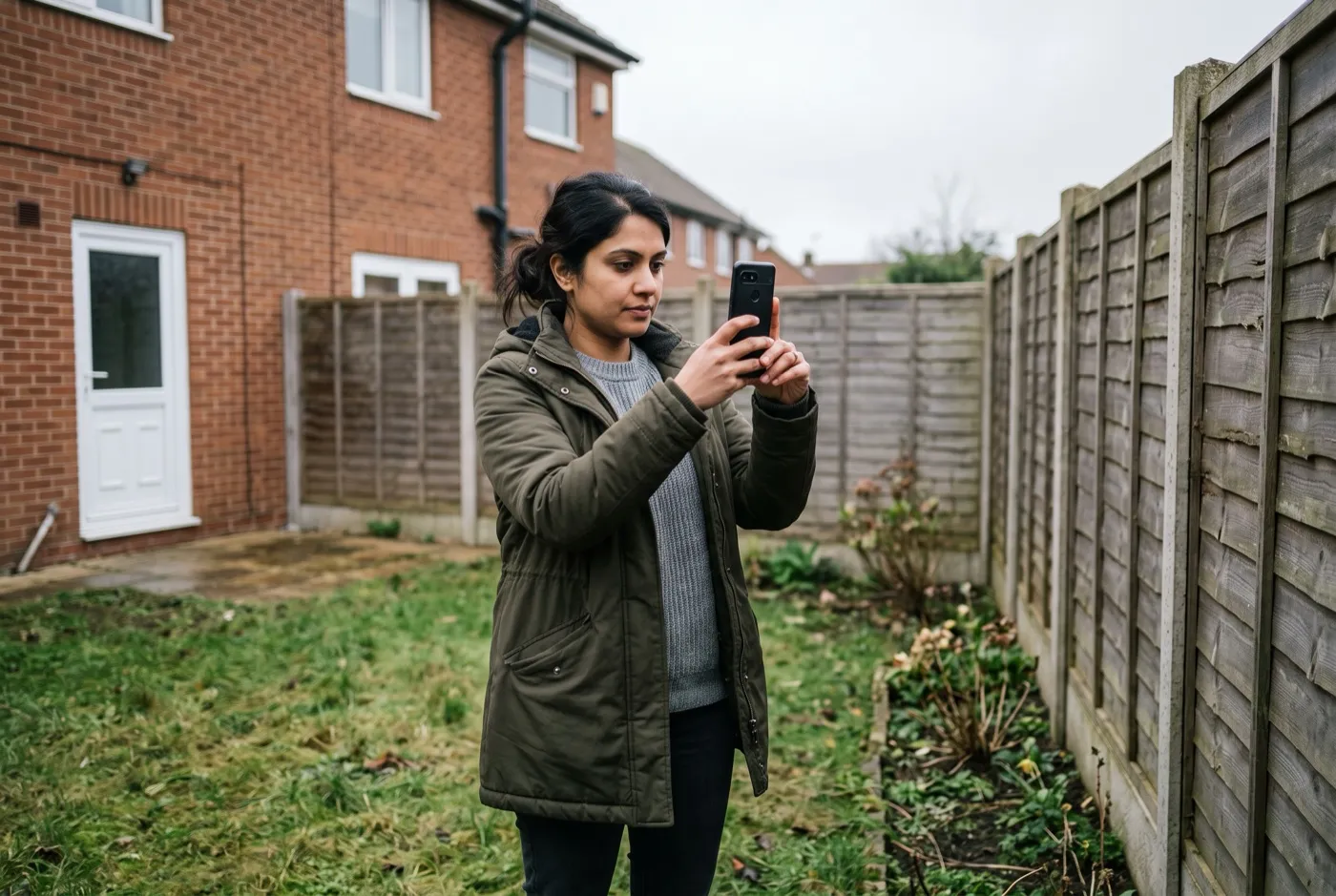
Take photos on day one, of the lawn, fences and beds. They settle any argument at check-out.
What to plant for your tenancy length
Choose plants for the time you’ve got, not a shrub that needs three years to fill out.
| How long you’ll stay | What to grow | Why |
|---|---|---|
| Up to a year | Annual flowers, salads, tomatoes, courgettes, herbs | Quick results in the first summer |
| One to three years | Perennials, grasses and evergreens in pots | Better each year, and easy to move |
| Three years or more | Dwarf fruit trees, bay, small trees in big pots | Worth the investment, still portable |
Short lets. Sow sweet peas up an obelisk, cosmos and calendula in mid-size pots, and nasturtiums spilling from grow bags. Add cut-and-come-again salads, plus a tomato or courgette in each grow bag. The guide to vegetables that thrive in pots has plenty more.
Two or three years. Perennials in pots get bigger and better each season. Hardy geraniums, salvias, heucheras and grasses all do well, with hostas in shade. Add an evergreen, such as a clipped bay or pittosporum, so the group still looks good in January. The guide to the best plants for pots year-round has a full list.
Longer stays. A dwarf apple on M27 rootstock grows happily in a large pot for years. Patio cherries, figs and blueberries do the same. Never plant a fruit tree in the landlord’s soil, because you’d have to leave it behind. See growing fruit in pots for varieties.
Use big pots as the backbone
Start with three or four large pots, 40cm across or more, rather than lots of small ones. Big pots hold a small tree, a shrub or a climber on an obelisk, and they give the garden structure. Lots of little pots look cluttered and dry out fast.
Group them in threes, in a mix of sizes, around a seating area or in a corner. The guide to grouping pots for impact shows how to arrange them.
Gardener’s tip: Put every pot over about 35cm across on a wheeled plant caddy before you fill it. You can follow the sun, clear space for a party and roll it to the van on moving day.
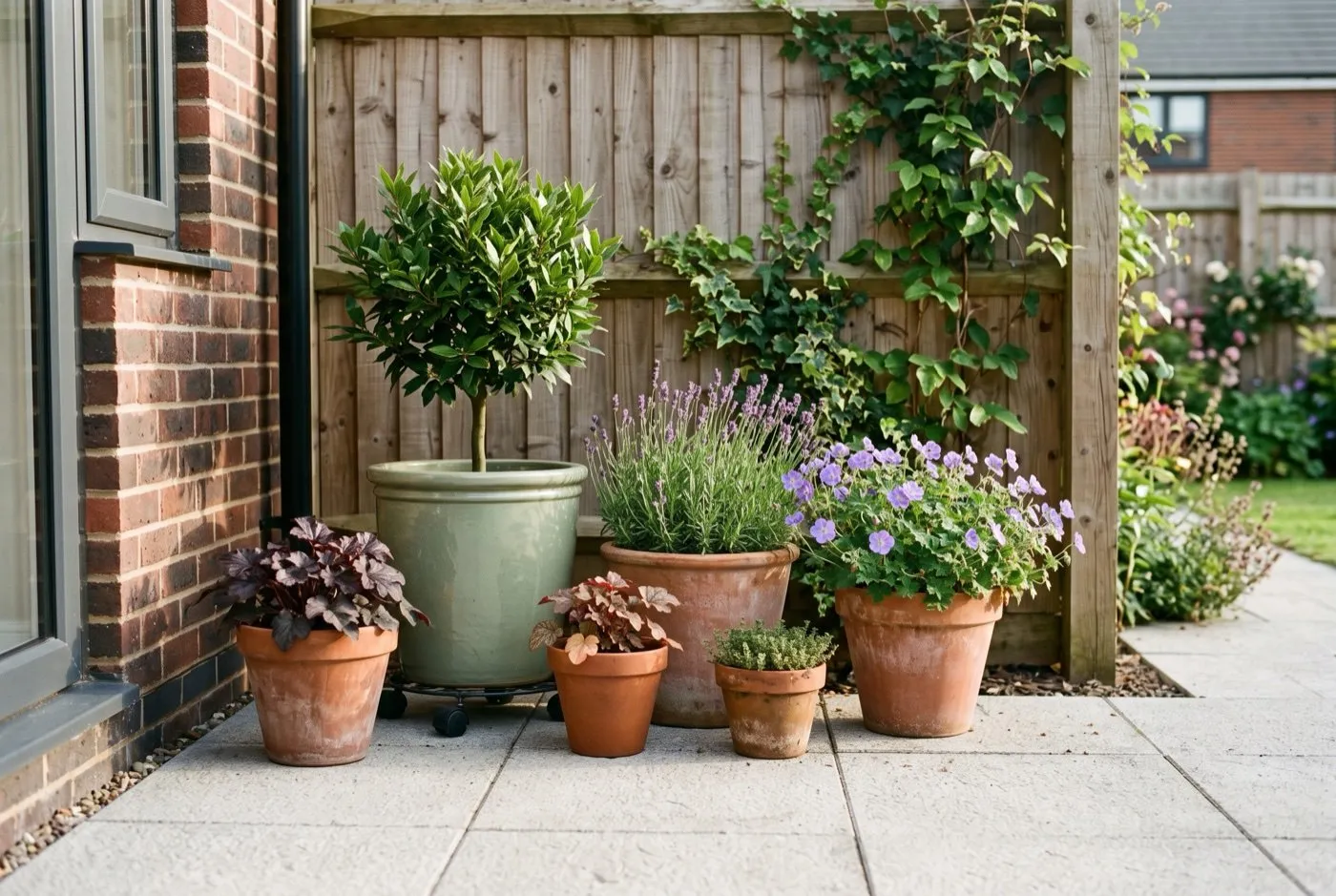
A few big pots grouped together look like a planted border, and every one of them can move house with you.
Raised planters on legs and grow bags
A raised planter on legs is the best way to grow veg on paving or poor soil in a rented garden. It gives you a decent depth of compost without touching the ground underneath, and it lifts away when you leave.
Fabric grow bags are the budget option. They’re cheap, fold flat between moves and grow a courgette, a potato crop or a tomato each. If you’d rather build something, the raised bed for under £10 is screwed together, so you can take it apart again.
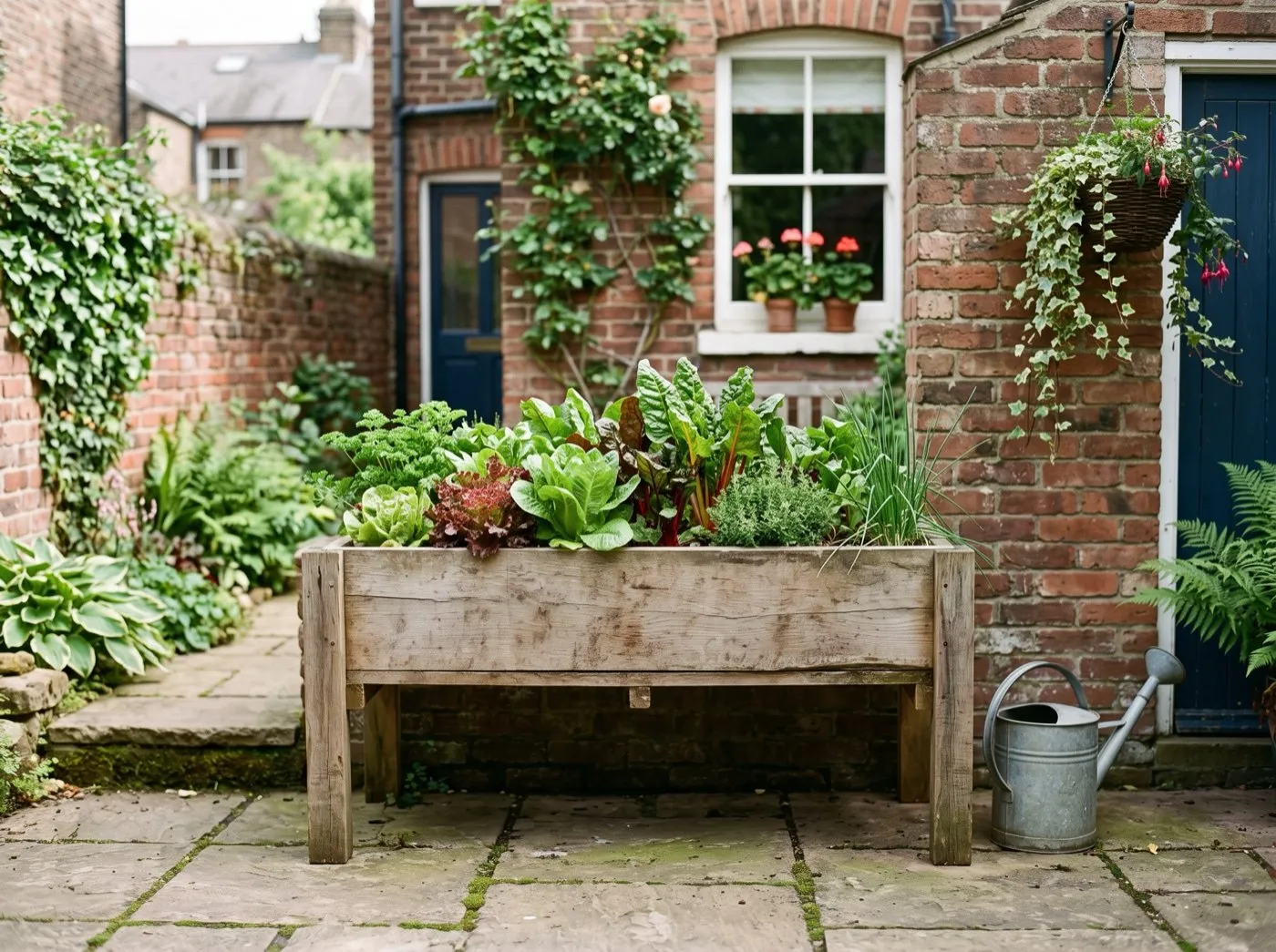
A planter on legs gives you a veg bed without digging, and it lifts straight off the paving when you leave.
A simple rental garden shopping list
Start with the pots and compost, then add the rest as you go.
- Three large frost-proof pots, 40-45cm across, plus wheeled caddies
- Three or four mid-size pots, around 30cm
- Peat-free multipurpose compost
- A raised planter on legs, or a few fabric grow bags
- One or two obelisks for climbers such as sweet peas
- A freestanding trellis in a heavy trough, if you need privacy
- Seeds for annuals and salads, plus a few small perennials
Growing from seed and buying small plants keeps the cost down. Plants in 9cm pots soon catch up with bigger ones in a large container.
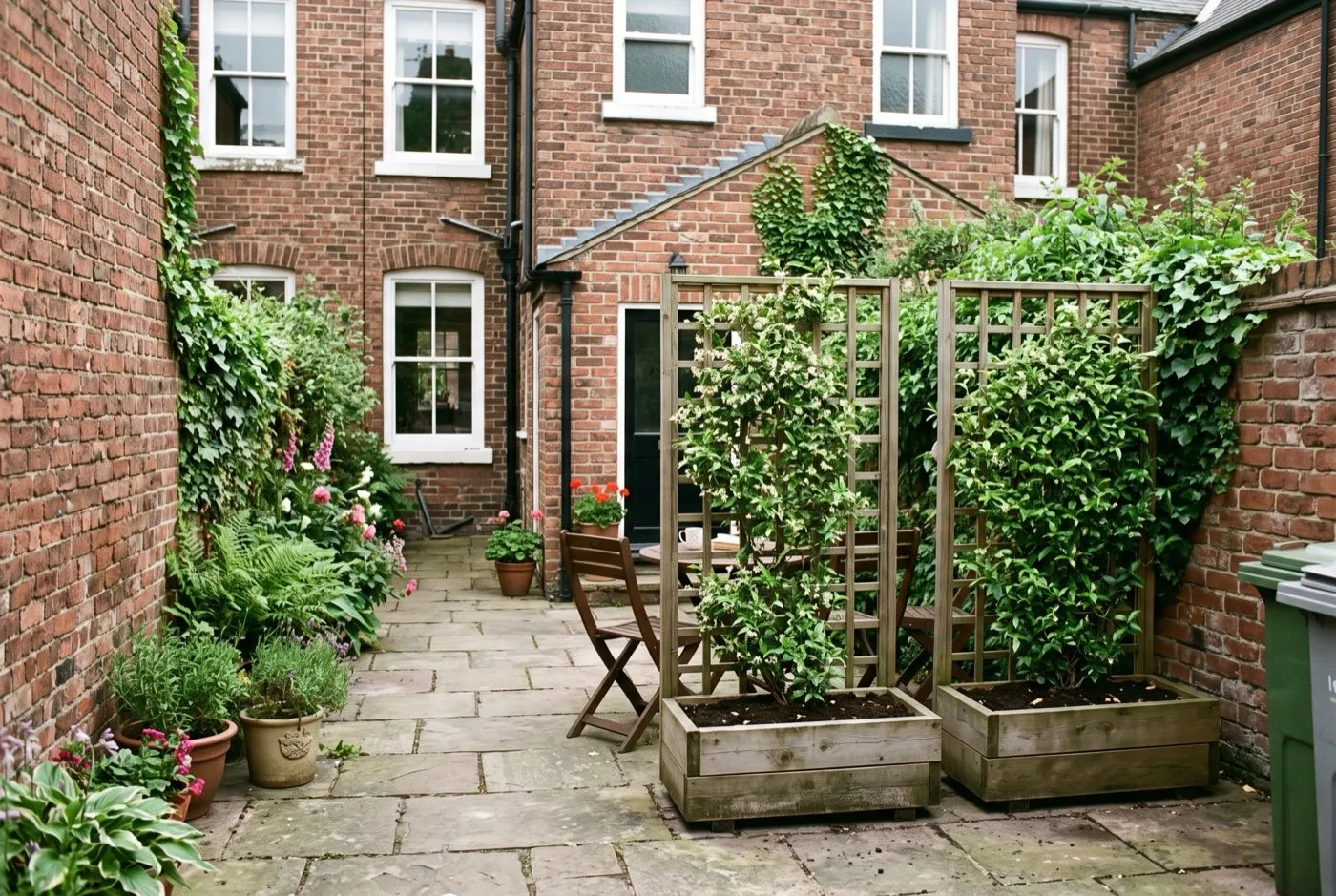
Trellis in a heavy trough gives privacy without a single screw in the landlord’s fence.
Moving day: how to take your garden with you
Plan the move a couple of weeks ahead, and the plants will travel well.
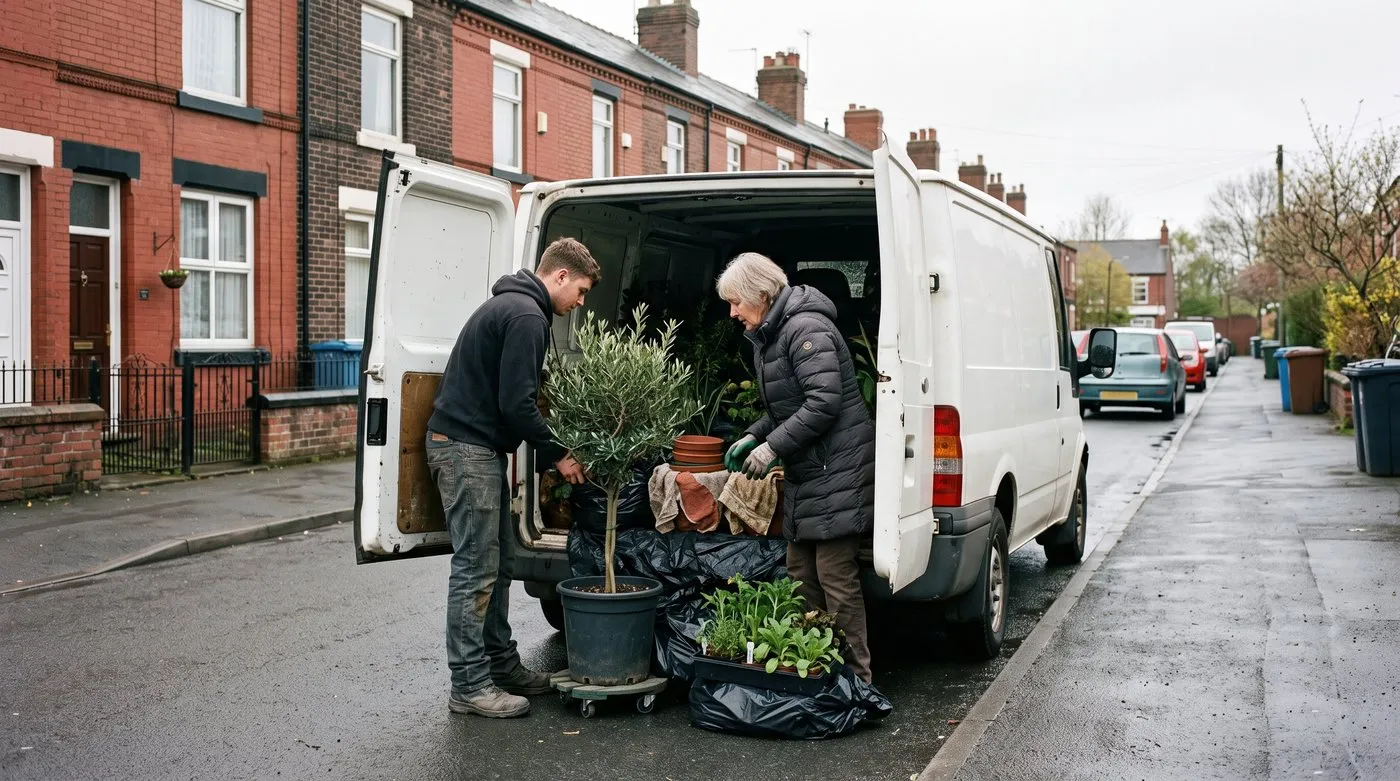
Pack pots upright and tight, slightly dry, with something underneath to catch any compost.
- Two weeks before: stop feeding. Check every pot lifts freely, as roots often grow out of drainage holes into the ground. Pot-bound plants can be root pruned and repotted.
- A few days before: tie in or trim long stems so plants fit the van without snapping.
- Two days before: water lightly, then stop. Damp compost holds together, while soaking-wet pots are heavier and leak everywhere.
- On the day: wrap glazed pots in old towels or bubble wrap. Load them upright, packed tightly so nothing slides, with bin bags or trays underneath.
- At the new place: unload the plants first if you can, water them well and keep them out of strong sun for a few days.
Common mistakes in rented gardens
- Planting in the ground. Plants in the soil usually count as part of the property. Keep everything in pots.
- Drilling fences or walls. Fences often belong to the landlord or a neighbour. Use freestanding supports instead.
- Buying lots of tiny pots. They dry out fast and look cluttered. Fewer, bigger pots work better.
- Forgetting the basics. Most tenancies make you responsible for mowing and tidying. Neglect is an easy deduction.
- Overloading a balcony. Big pots of wet compost are heavy. Check weight limits with your landlord or managing agent.
Now you’ve planned a garden that moves with you, read the guide to patio garden ideas for small spaces to make the most of your current plot. For more ideas, browse our garden design guides.
Frequently asked questions
Can I dig a border in a rented garden?
Not without your landlord’s written permission. Most tenancies ask you to return the garden as you found it, and a new border changes that. Some landlords say yes, especially if you offer to put it back. Ask first, keep the reply, and photograph the area before you start.
Will gardening affect my deposit?
Not if you leave the garden as you found it. Pots, planters and furniture standing on the surface are your belongings. Digging up lawn, removing shrubs or drilling fences can lead to a deduction. Keep everything freestanding and keep dated photos from move-in day.
Do I need permission to put pots in a rented garden?
No, pots and planters on the surface don’t change the property. Permission comes in when you alter something fixed, such as digging beds, drilling walls or fences, or removing turf. On a balcony, check weight limits with your landlord or managing agent before adding big pots.
Can I take my plants with me when I move out?
Yes, anything in a pot is yours to take. Plants you put in the ground usually count as part of the property. You’d have to dig them out and make good, or leave them behind. That’s the main reason to grow everything in containers.
What can I grow in a rental garden on a one-year tenancy?
Fast annuals, salads and summer veg. Sweet peas, cosmos, nasturtiums and sunflowers flower from a spring sowing. Cut-and-come-again lettuce is ready in a few weeks, and tomatoes and courgettes crop from summer. If you might stay longer, add perennials in pots.
What fruit can I grow in pots as a renter?
Dwarf apples, patio cherries, figs and blueberries all grow well in large pots. Choose apples on a very dwarfing rootstock such as M27. Blueberries need ericaceous compost and rainwater. All of them can go in the van when you move.
Our team produces practical UK gardening guidance from source research, contributor records and established horticultural practice. Editorial standards are overseen by Matt W.