
Key takeaways
- With free wood, exterior screws are usually the only thing you need to buy
- Rejected scaffold boards are the best free wood, thicker and longer-lasting than pallets
- Only use pallets stamped HT (heat-treated), never MB or unmarked ones
- Keep beds about 1m wide so you can reach the middle without treading on the soil
- Lay wet cardboard under the bed to smother grass and weeds, rather than plastic membrane
- Fill cheaply with your own compost, leaf mould, manure and a little topsoil
You can build a 1m by 2m raised bed for under £10 if you track down free wood. Rejected scaffold boards and heat-treated pallets are often free for the asking. With those, a box of exterior screws is the only thing you need to buy. The build takes an afternoon with a drill and a saw.
This guide covers where to find the wood, which wood to avoid, how to put it together and how to fill it without spending a fortune. For the bigger picture of growing in raised beds, including soil and watering, see raised bed gardening for beginners.
What you need for a budget raised bed
For one 1m by 2m bed, about 22cm deep, you need:
- Two 2m boards for the long sides
- Two 1m boards for the ends
- Four corner stakes, about 40cm long, cut from fence post offcuts or chunky timber
- About 16 exterior wood screws, long enough to go through the board and well into the stake
- Flattened cardboard boxes for under the bed (optional)
- A drill, a saw and a hammer
Scaffold boards are about 22cm wide and nearly 4cm thick. That means one board high makes a bed deep enough for most veg. A typical board is long enough to cut into both 2m sides, or into a long side and an end.
Exterior screws are the main thing you’ll buy. A box usually holds enough for several beds, so the cost per bed goes down each time you build another.
Where to find free wood for a raised bed
Free wood turns up in more places than you’d think. These are the best places to look.
Local scaffolding companies
Scaffold boards with splits or damaged ends are taken out of use for safety reasons. Firms often have to get rid of them, so many are happy for you to take them away. Ring a few local scaffolders and ask for rejected or condemned boards. A split at one end doesn’t matter for a raised bed, as you’ll cut around it.
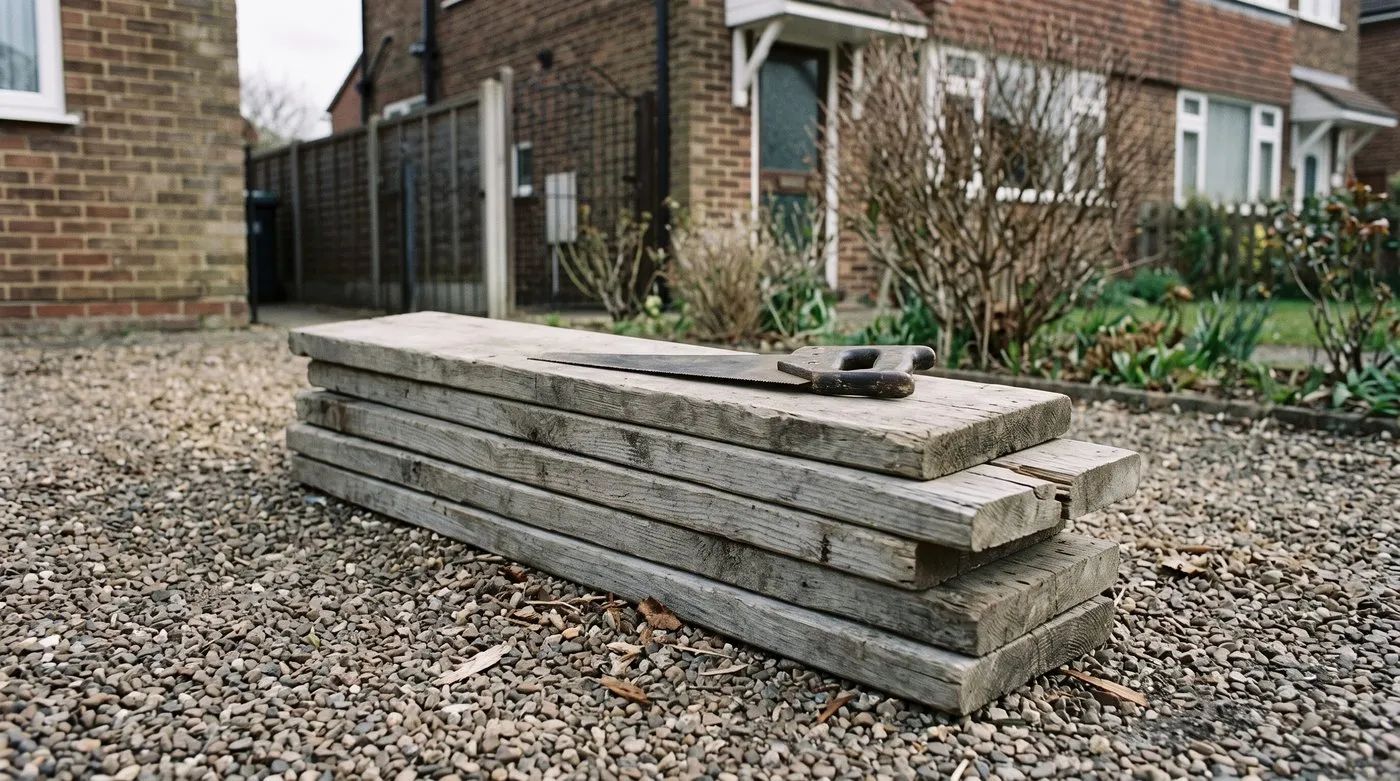
Rejected scaffold boards like these are often free from local firms, and a split end doesn’t matter.
Scaffold boards are usually untreated softwood. Skip any that are covered in paint, oil or tar.
Construction skips and builders
Building sites and skips often hold usable timber. Always ask the owner or builder before you take anything. Avoid wood that is painted, glued together as chipboard or full of nails you can’t remove.
Freecycle and local free listings
Freecycle groups and the free sections of local selling sites regularly list timber, decking boards and old beds. Most are collection only, so you’ll need a car or a friend with a van.
Pallets
Pallets are everywhere, from industrial estates to builders’ merchants. Their slats are thinner and shorter than scaffold boards, so they make lower beds that don’t last as long. They’re still a good free option.
Warning: Only use pallets stamped HT (heat-treated). Avoid pallets stamped MB, which were fumigated with methyl bromide, a toxic pesticide. Also skip unmarked pallets and any with stains or spills, as you can’t know what they carried.

Look for HT in the stamp on a pallet’s side. That means heat-treated, the kind that’s fine for a veg bed.
How to build a raised bed from scaffold boards
Building the bed takes an afternoon. A first one may take a bit longer, and the next goes much faster.
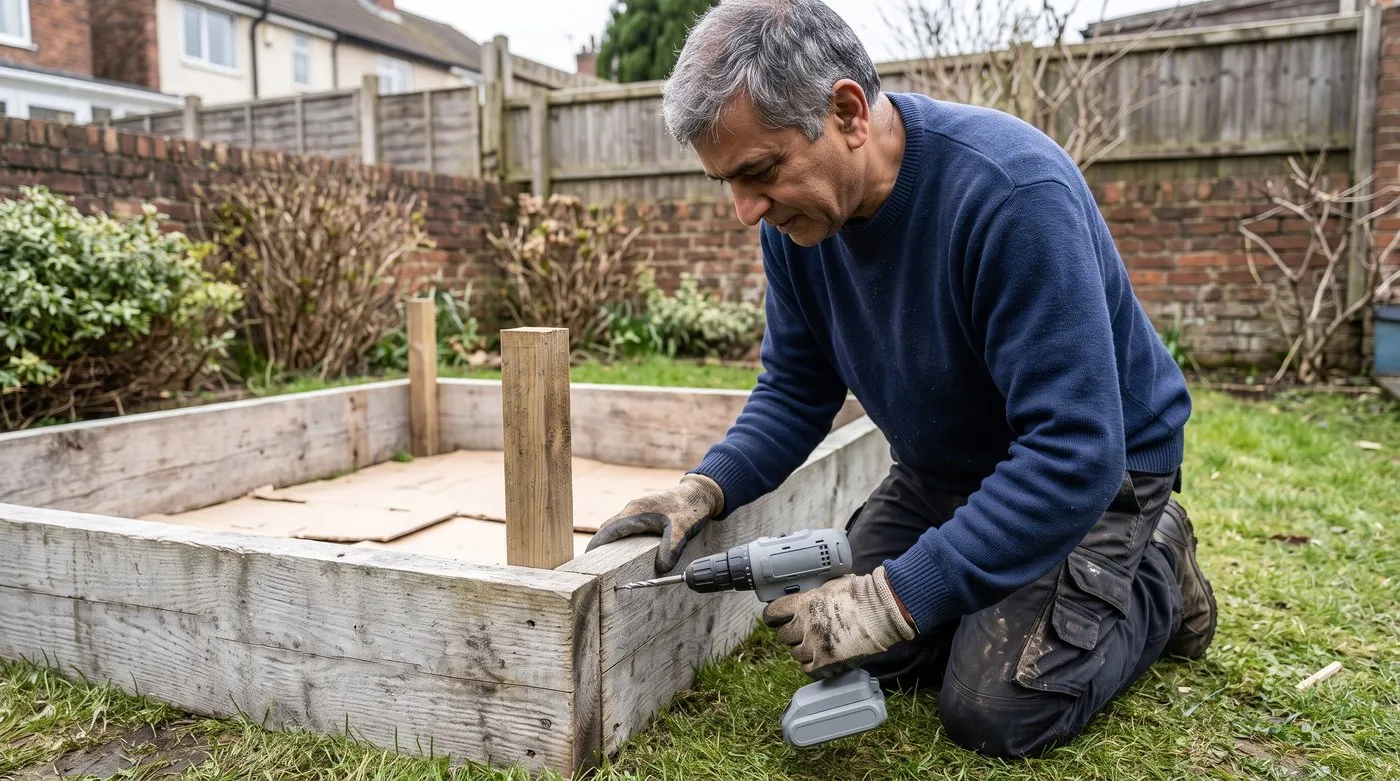
Two screws per board at each corner stake hold the frame firm. A pilot hole stops old boards splitting.
- Cut the wood. Saw the boards into two 2m lengths and two 1m lengths. Cut four corner stakes about 40cm long, with a point on one end. A handsaw is fine. The cuts don’t need to be perfect.
- Mark and clear the site. Mark out a 1m by 2m rectangle with string and canes. Pull out perennial weeds such as docks, dandelions and couch grass. You don’t need to dig.
- Lay the cardboard. Spread flattened cardboard over the area, overlapping the edges, and soak it with a watering can.
- Fix the sides to the stakes. Lay a long board flat, place a stake at each end on the inside face and screw through the board into the stake. Use two screws per board at each stake. Do the same with the other long side.
- Add the ends. Stand both long sides up and screw the 1m end boards to the stakes to make a box.
- Set the bed in place. Tap the stakes into the ground so the boards sit firmly on the soil. Check it’s roughly square by measuring the diagonals. They should be about the same.
Gardener’s tip: Drill a small pilot hole before each screw, especially near the board ends. Old scaffold boards split easily.
Is pallet wood or scaffold board better for a raised bed?
Scaffold boards are better if you can get them. They’re thicker, longer and stronger, so they last longer and need fewer joins. Pallet slats are thinner and usually only around 1.2m long. A long pallet bed can bow outwards under the weight of soil, so add an extra stake halfway along each side.
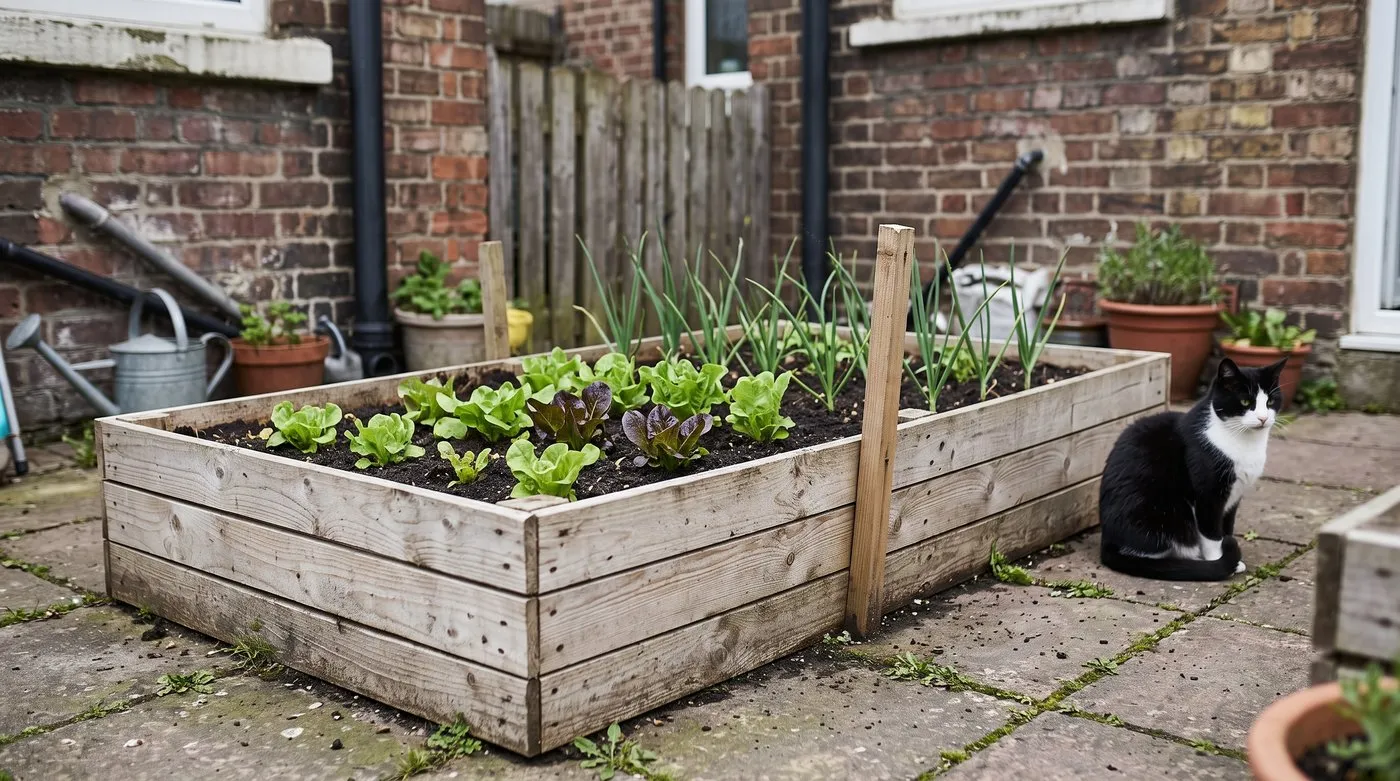
Pallet slats make a lower bed. An extra stake halfway along stops the sides bowing out.
If you have the choice, use scaffold boards for the sides and pallet blocks or offcuts for the corner stakes. Other cheap options include old decking boards and reclaimed sleepers. The guide to railway sleeper garden edging explains which sleepers are safe near food crops.
How to fill a raised bed cheaply
A 1m by 2m bed about 20cm deep holds about 0.4 cubic metres of soil. Bought topsoil and bagged compost can cost far more than the bed itself, so fill it with free and cheap materials where you can.
| Filling method | What goes in | Good for |
|---|---|---|
| Topsoil and compost | Roughly half topsoil, half compost | Planting straight away |
| No-dig layers | Cardboard, then well-rotted manure, then compost | Cheap and full of life |
| Hugelkultur | Logs and branches at the bottom, soil and compost on top | Using up woody waste |
| Your own compost and leaf mould | Homemade compost mixed with some soil | Free, once you have a heap |
No-dig layers are a cheap way to fill a budget bed. Lay cardboard, then well-rotted manure, then a layer of compost on top to sow into. Stables often give away manure if you collect it. The no-dig gardening guide explains the layers in more detail.
Many councils also sell composted green waste in bulk, which is usually cheaper than bags from a garden centre. Leaf mould from autumn leaves is completely free if you have a little patience. The guide to making leaf mould shows how.
If you have plenty of prunings and logs, a hugelkultur raised bed uses them up as the base layer.

Layers of cardboard, manure and compost fill a bed cheaply. Top it with finer compost so seeds have something crumbly to grow into.
Should you line a raised bed?
Cardboard under the bed is useful, but plastic is best avoided.
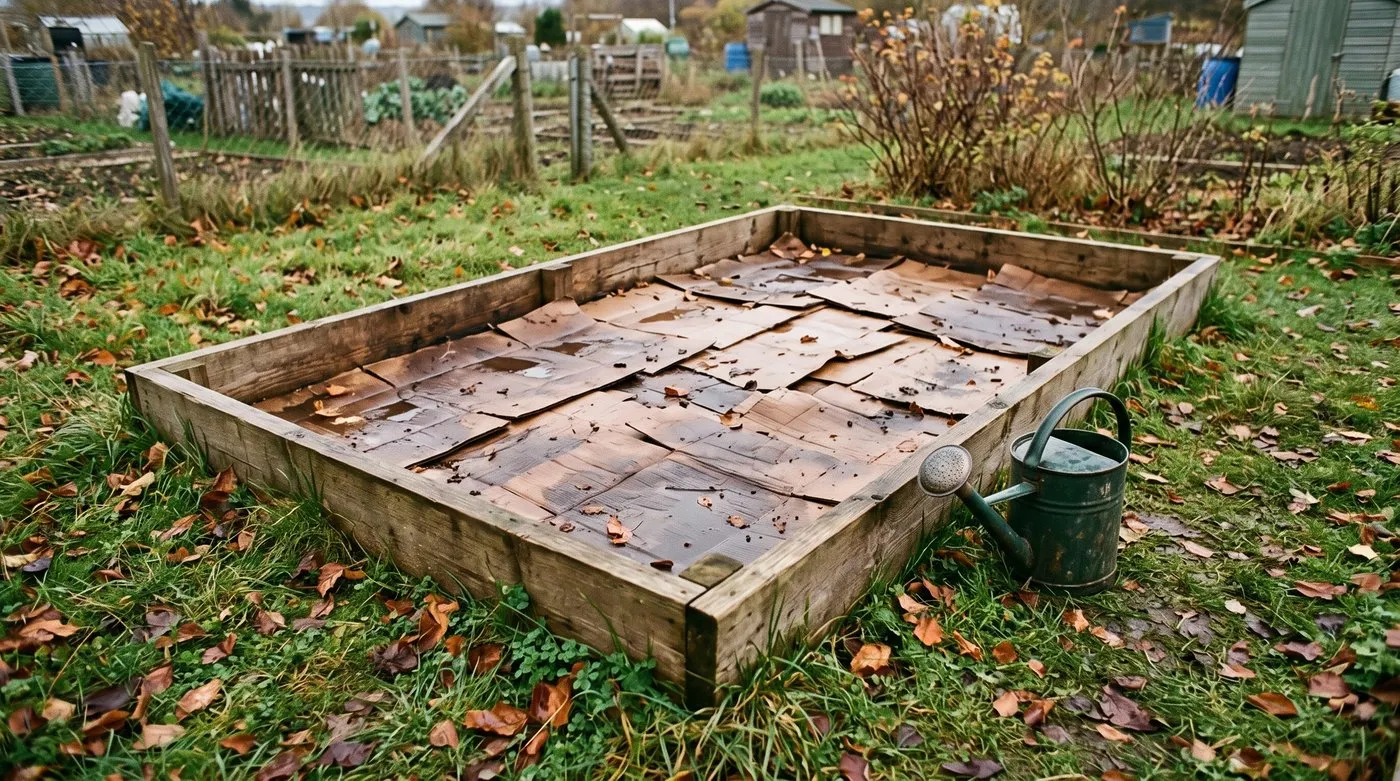
Overlap the cardboard and soak it well. It smothers the grass and rots away within months.
Use cardboard or newspaper on grass or weedy ground. Lay two or three layers under the bed before filling and soak it. It smothers grass and annual weeds, then rots away within months. Tough perennial weeds such as bindweed may still push through, so pull them as they appear.
Skip plastic weed membrane underneath. It slows drainage and keeps worms from moving up into the bed.
Lining the inside of the sides is optional. Some gardeners staple an old compost bag or pond liner offcut to the inside of the boards to keep them drier. It’s not essential for a cheap bed you can repair as it goes.
What to grow in a 1m x 2m raised bed
A bed this size can feed you salads and veg all summer. Pick one plan for your first year:
- Salad bed: lettuce, spring onions, radish sown every few weeks, a few dwarf French beans, and basil and parsley around the edges.
- Root bed: short rows of carrots, beetroot, spring onions and turnips. Loose raised-bed soil gives straight roots.
- Brassica bed: six to eight plants in total, such as kale, cabbage and broccoli, spaced about 45-60cm apart and covered with netting against pigeons and caterpillars.
- Mixed kitchen bed: two tomato plants at the sunny end, lettuce, a row of carrots, spring onions and dwarf French beans, with herbs around the edges.
The square foot gardening guide shows how to fit even more into a small bed.

Once you’ve built one bed, the next is quicker. A row of them makes an allotment much easier to manage.
Common mistakes when building a budget raised bed
- Using thin pallet wood for a long bed. Long, thin sides bow outwards under the weight of soil. Use scaffold boards, or add a stake halfway along each side.
- Using the wrong pallets. MB-stamped, unmarked or stained pallets don’t belong in a veg bed. Stick to HT.
- Building the bed too wide. If you can’t reach the middle, you’ll end up treading on the soil. Keep it to about 1m, or 1.2m at most.
- Not clearing perennial weeds. Couch grass and bindweed grow up through cardboard. Dig them out before you build.
- Filling with poor soil. A bed full of subsoil grows poor crops. Mix in plenty of compost or well-rotted manure.
For more ideas on shapes, paths and materials, browse the raised bed garden design ideas or the rest of the how-to guides.
Frequently asked questions
Can you really build a raised bed for under £10?
Yes, if you can get the wood for free. Rejected scaffold boards, pallets and offcuts for the corner stakes are often free to collect. Then a box of exterior wood screws is the only thing left to buy. A drill and a saw do the rest.
Where do I get free wood for a raised bed?
Ask local scaffolding firms for rejected boards. Also try Freecycle, free listings on local selling sites and builders with leftover timber. Always ask before taking anything from a skip. Check the wood isn’t painted, oily or treated with something unknown.
How long does a raised bed from scaffold boards last?
Usually several years, though untreated softwood slowly rots where it touches wet soil. Thicker boards last longer than thin pallet slats. Replace boards one at a time as they go soft, and the bed carries on.
Is pressure-treated wood safe for vegetable growing?
Modern pressure-treated timber is widely used for veg beds. Avoid old treated timber of unknown age and old railway sleepers, which may contain arsenic or creosote. Reclaimed scaffold boards are usually untreated, but skip any that look oily or painted.
What size raised bed is best for vegetables?
About 1m wide and 1.5-3m long suits most gardens. At 1m wide you can reach the middle from either side without stepping on the soil. Boards 20-25cm deep give enough depth for most veg, as roots can also grow down into the ground below.
Do I need to line a raised bed?
Usually not, but cardboard underneath helps on grass or weedy ground. Lay flattened, wetted cardboard on the ground before filling to smother grass and annual weeds. It rots away within months. Avoid plastic membrane, which slows drainage and keeps worms out.
How much soil does a 1m x 2m raised bed need?
About 0.4 cubic metres if the bed is 20cm deep. Mix roughly half topsoil with half well-rotted compost, manure or leaf mould. Filling with your own compost and layered organic matter keeps the cost down.
Once your bed is built and filled, read the guide on how to make compost at home so you can top it up for free every year.
Our team produces practical UK gardening guidance from source research, contributor records and established horticultural practice. Editorial standards are overseen by Matt W.


