
Key takeaways
- The usual sleeper is 2.4m long, 200mm wide and 100mm thick, and is a two-person lift
- New oak lasts longest; new treated softwood is cheaper and fine for most edging
- Never use old creosoted sleepers near food crops, seating or play areas
- Bed sleepers on gravel in a shallow trench so water drains away from the wood
- Pin each sleeper with steel rods driven into firm ground so it doesn't move
Railway sleepers give you a bold, solid edge that stays put for years. They’re heavy enough to hold a crisp line along a border, path or lawn, and tall enough to raise a bed or hold back a low bank. Lay them on gravel, pin them in and they need almost no looking after.
This guide covers which sleepers to buy, the creosote rule, how to lay them and some ideas for using them. If you’re still choosing between materials, the guide to garden edging ideas compares sleepers with stone, brick, steel and concrete.
Which railway sleepers should you buy?
For most gardens, new treated softwood is the best value and new oak is the best quality. Old reclaimed sleepers have the most character but come with a catch.
| Sleeper type | Look | How long it lasts | Safe near food and seating? |
|---|---|---|---|
| New oak | Golden, weathers to silver-grey | Decades | Yes |
| New treated softwood | Pale or green-tinged pine | At least ten years | Yes |
| Reclaimed (creosoted) | Dark, tar-stained, old bolt holes | Long, but varies | No |
New oak is dense and naturally rot-resistant, so it doesn’t need treating. It’s the heaviest and most expensive, and fresh oak can leak dark tannin stains onto paving at first.
New softwood is pressure-treated pine or spruce. It’s cheaper, lighter to handle and easy to stain or paint if you want a colour.

New oak weathers to a soft silver-grey after a couple of seasons and needs no treatment.
Are old railway sleepers safe in a garden?
Not near food or people. Most genuine reclaimed sleepers were treated with creosote, a tarry wood preservative. It can leach into soil, rub off on skin and clothes, and smells strongly on hot days. Reusing creosoted timber is restricted in the UK, and it shouldn’t go anywhere with frequent skin contact.
Warning: Don’t use creosoted sleepers to edge vegetable, fruit or herb beds, or around play areas, seats or paths where people brush past. Keep them for ornamental borders only.
If you love the reclaimed look, some suppliers sell new sleepers with a dark finish, or untreated reclaimed hardwood. Ask the supplier exactly how the timber was treated before you buy.

Old sleepers like this have bags of character, but keep them to flower borders, away from veg and seating.
How heavy is a railway sleeper?
Heavy. The standard UK sleeper is 2.4m long, 200mm wide and 100mm thick, and a chunkier 250mm by 125mm size is sold for retaining work. Softwood is lighter, while new oak and the bigger sizes are a real struggle for one person.
- Always lift with two people, one at each end, bending your knees.
- Use a sack truck or a couple of scaffold poles as rollers for longer distances.
- Wear gloves, as oak splinters and old sleepers can hide bits of metal.
- Stack sleepers on battens off the ground until you use them.
Check where the delivery lorry can drop them. Carrying a pallet of sleepers through a terraced house isn’t anyone’s idea of fun.
How to lay railway sleeper edging
Lay single sleepers on a gravel bed in a shallow trench, then pin them. It’s a good weekend job for two people.
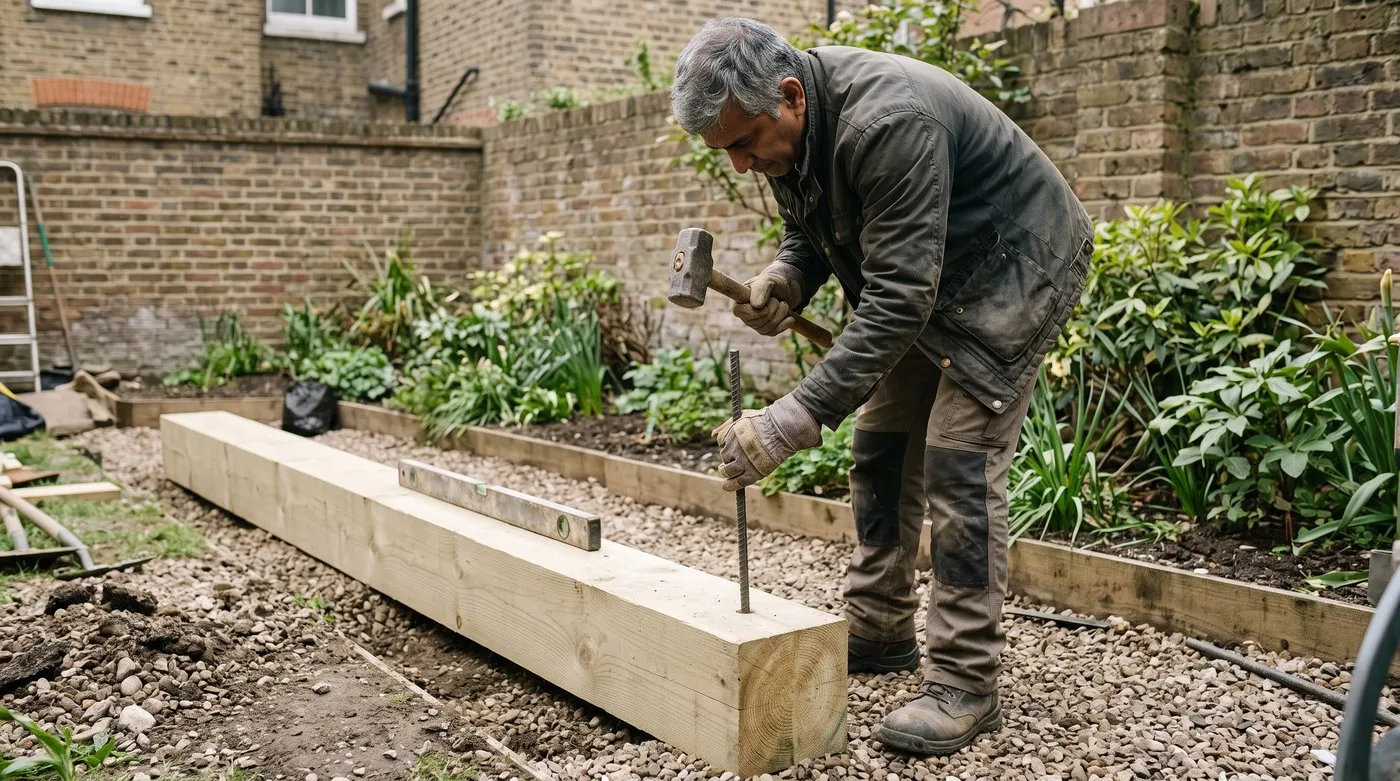
Two steel rods through each sleeper stop it creeping out of line after a wet winter.
- Mark the line. Use a string line between pegs for straight edges. Sleepers don’t bend, so make curves from short straight lengths cut at an angle.
- Dig a shallow trench. Go down about 8-12cm so the sleeper sits partly below ground. This stops it being pushed sideways.
- Add a gravel bed. Spread about 5cm of gravel or sharp sand in the trench and rake it level. This lets water drain away from the wood.
- Set and level each sleeper. Butt the ends tight together and check with a spirit level. Tap high spots down with a rubber mallet.
- Pin it. Drill two holes through each sleeper and drive steel rods (rebar) about 60cm long into firm ground below.
- Backfill with gravel. Pack gravel, not soil, against the buried face so the timber can dry out.
Cutting sleepers safely
A chainsaw cuts a sleeper in one go. A circular saw usually goes most of the way through, so turn the sleeper and cut from the other side, or finish with a handsaw. Mark the cut on all four faces first so it comes out square. Wear eye and ear protection, gloves and sturdy boots, and rest the sleeper on firm supports.
Railway sleeper edging ideas
Sleepers work almost anywhere you want a strong, simple line. A few favourite uses:
- Border edging. One sleeper laid on its side along a bed gives a clean line and a handy seat when weeding.
- Mowing strip. Sleepers laid flat and level with the lawn let the mower run straight over the edge, so there’s less trimming. The lawn edging guide has more ways to keep lawn edges crisp.
- Low raised beds. One or two layers make a raised bed for veg or herbs. Use new oak or softwood here, never creosoted timber.
- Path edges. Sleepers either side of a gravel path hold the gravel in. See garden path ideas for layouts.
- Steps on a slope. Sleepers make simple risers, with gravel or bark treads behind.
- Terraces. Stepped sleeper beds turn an awkward slope into level planting areas.

New timber sleepers are safe for herbs and veg. Screw the corners together so the bed stays square.

Sleeper steps make an easy climb up a slope. Pin each riser and pack gravel behind it.
Building low raised beds and terraces with sleepers
For a raised bed, butt the corners together and fix each one with two long timber screws. Pin the bottom layer to the ground as you would for edging. For a second layer, stagger the joints like brickwork and screw it to the layer below. Lining the inside with a permeable membrane keeps wet soil off the wood and helps it last. The guide to raised bed garden design ideas has plenty of layouts.
For terraces, keep each step low and set each layer back slightly into the slope. Put gravel behind every sleeper so water drains out. Anything holding back more than a low bank of soil needs proper retaining wall design, so get advice from a builder or engineer.

Low sleeper terraces turn a slope into usable beds. Keep each step low and drain the back of every tier.
Sleepers or other edging?
Choose sleepers when you want a chunky edge that can also raise a bed or hold a low bank. For a thin, modern line flush with the lawn, steel or aluminium is neater; the guide to steel and Corten in garden design shows how it’s used. For a softer, natural look, rock and stone edging suits cottage and informal gardens better.
Common mistakes with railway sleeper edging
- Using creosoted sleepers near food or people. This is the serious one. Keep them for ornamental beds.
- Not pinning them. Unpinned sleepers creep out of line, especially on clay that swells and shrinks.
- Backfilling with soil. Wet soil against the wood speeds up rot. Use gravel behind and below.
- Skipping the level base. Sleepers on lumpy ground rock and leave gaps. Always lay a level gravel bed.
- Leaving cut ends in wet soil. Cut end grain soaks up water. Brush on an end-grain preserver or keep it surrounded by gravel.
When to do sleeper jobs through the year
| Season | What to do |
|---|---|
| Winter | Plan the layout and measure runs while beds are bare. Order sleepers |
| Spring | Lay sleepers once the soil is workable and not waterlogged |
| Summer | Seal cut ends in dry weather. Check terraces for any lean after storms |
| Autumn | Clear leaves from behind sleepers. Check older softwood for soft spots at ground level |
Now you know how to lay sleepers, read the guide to raised bed gardening for beginners to fill your new beds. For more projects, browse our garden design ideas.
Frequently asked questions
Can I use reclaimed railway sleepers for vegetable bed edging?
No, not if they’ve been treated with creosote. Creosote can leach into the soil and rub off on skin. Keep creosoted sleepers for ornamental borders, away from food crops, seating and play areas. For vegetable beds, use new oak or new treated softwood instead.
How much does railway sleeper edging cost?
New softwood is the cheapest, and new oak costs the most. A standard sleeper is 2.4m long, so divide the length of your edge by 2.4 to work out how many you need. Allow extra for gravel, steel rods, screws and delivery, which adds up for heavy timber.
Do railway sleepers need to be pinned to the ground?
Yes, pin them so they stay put. Loose sleepers can creep out of line over winter, especially on clay. Drill through each sleeper and drive steel rods or stakes into firm ground. Where sleepers are stacked, screw the layers together with long timber screws too.
How long do railway sleepers last as garden edging?
New oak lasts for decades, and treated softwood usually lasts at least ten years. Drainage makes the biggest difference. Sleepers sitting in wet soil rot much faster, so bed them on gravel and pack gravel behind them rather than soil.
What is the best way to cut a railway sleeper?
A chainsaw is fastest, but a circular saw works too. Most circular saw blades won’t go right through a 100mm sleeper in one pass, so cut from both sides or finish with a handsaw. Wear eye and ear protection, gloves and sturdy boots, and support the sleeper firmly.
Can you lay railway sleepers as edging without digging?
Only on firm, level ground. Lay them flat, butt the ends together and pin each one. On soft or uneven ground, dig a shallow trench and bed them on gravel, or the line will rock and look wonky. Check with a spirit level as you go.
Our team produces practical UK gardening guidance from source research, contributor records and established horticultural practice. Editorial standards are overseen by Matt W.


