Key takeaways
- Choose the look first, then the budget: steel and brick are crisp, stone is soft, sleepers are bold
- A flush brick or steel mowing strip means no more trimming the lawn edge by hand
- Sink about a third of any stone or upright sleeper below ground so it stays put
- Use new oak or treated softwood sleepers, not old creosoted ones, near food, seats and play areas
- Cast concrete and log roll are the cheapest; steel, setts and new oak cost the most
- Stick to one or two edging materials across the garden for a calm, finished look
Good garden edging makes a bed look deliberate. It keeps the grass out of the border, holds mulch and soil in place and saves you hours of trimming.
The material sets the style and the budget. Sleepers look bold, stone looks soft and natural, concrete is the cheap workhorse, and brick and steel give the crispest lines. This guide compares the main choices for UK beds and borders side by side, so you can pick one and get it fitted properly. If you just want a sharp grass edge without building anything, our lawn edging guide shows how to cut one with a half-moon iron.
Why edge a bed or border at all?
Edging saves work as much as it looks good. A proper edge does four jobs:
- It defines the shape. A clean line makes a bed look planned, not like a vague patch.
- It keeps grass out. A physical barrier stops grass roots and runners creeping into the border.
- It holds soil and mulch. Raised edging keeps soil in a bed and bark or gravel where it belongs.
- It makes mowing easier. A flush mowing strip lets the mower run right to the edge, so there’s nothing to trim.
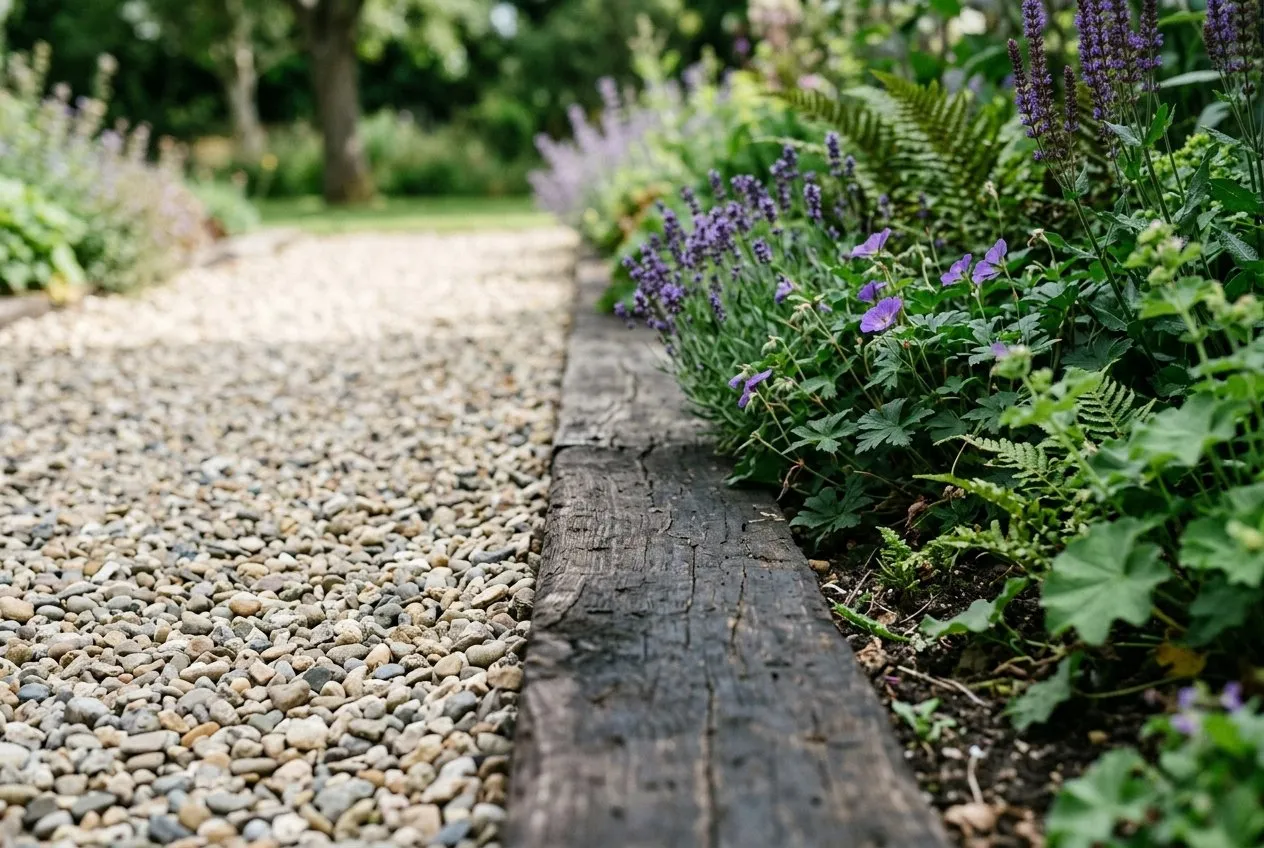
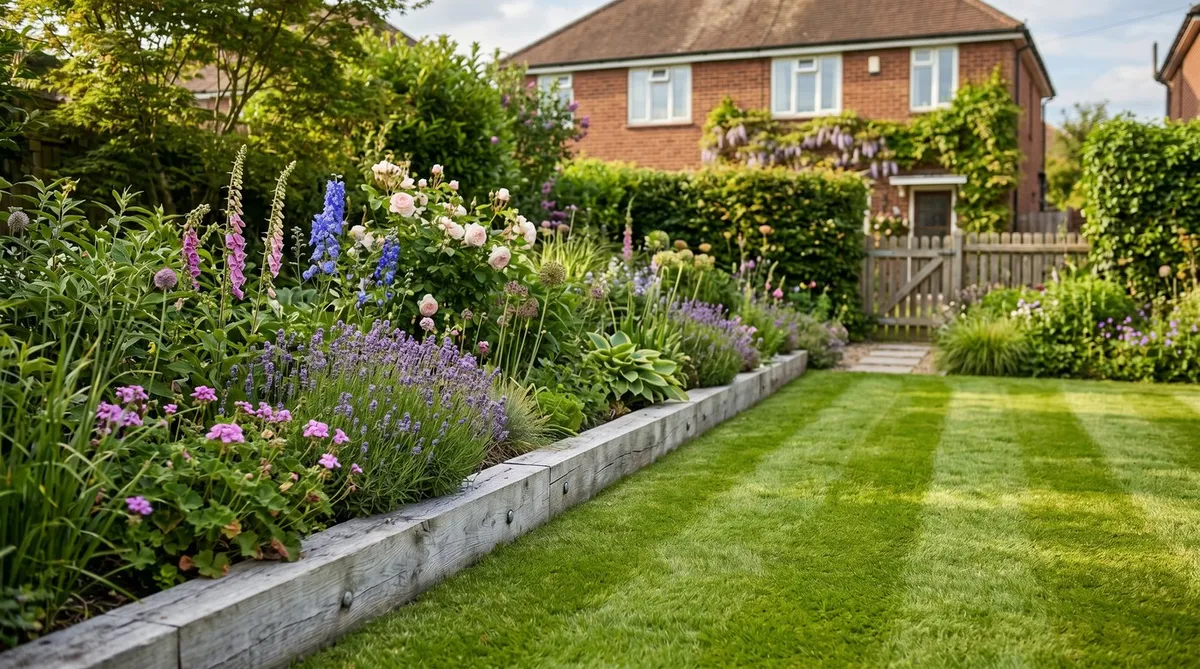
A sleeper laid flat gives a firm line between path and border, so gravel stays out of the bed and soil stays off the path.
Garden edging materials compared
Pick the look you want first, then check the budget and upkeep. Here’s how the main materials stack up.
| Material | Look | How long it lasts | Cost | Best for |
|---|---|---|---|---|
| Railway sleepers | Bold, chunky | Softwood 10 years plus, oak longer | Medium to high | Raised beds, holding a change in level |
| Natural rock and stone | Soft, informal | Decades | Low to high | Cottage borders, rockeries, gravel gardens |
| Cast concrete | Clean, any curve | Decades | Low | Long curves on a budget |
| Brick on edge | Traditional, warm | Decades | Medium | Mowing strips, formal beds |
| Steel or Corten | Sleek, modern | Decades | Medium to high | Crisp curves, modern gardens |
| Setts and cobbles | Characterful | Decades | High | Period and town gardens |
| Timber log roll | Rustic | A few years | Low | Quick, temporary edges |
The fitting matters as much as the material. Even the best edging tips over if it sits on loose soil.
Railway sleeper edging for bold, raised beds
Sleepers give the boldest edge and double as low walls for raised beds. One sleeper edges more than two metres in one go.
- Use new timber near food and seats. New oak and treated softwood sleepers are clean to handle. Old reclaimed sleepers are often soaked in creosote, which can ooze out on hot days. Keep those away from crops, seating and play areas.
- Lay flat or on edge. Flat gives a wide, low edge you can sit on. On edge gives more height for a raised bed.
- Fix them firmly with long timber screws at the corners, or steel pins driven through into the ground.
- Give them a gritty base so the timber doesn’t sit in wet soil and rot.
For sizes, weights and step-by-step fitting, see our guide to railway sleeper garden edging.
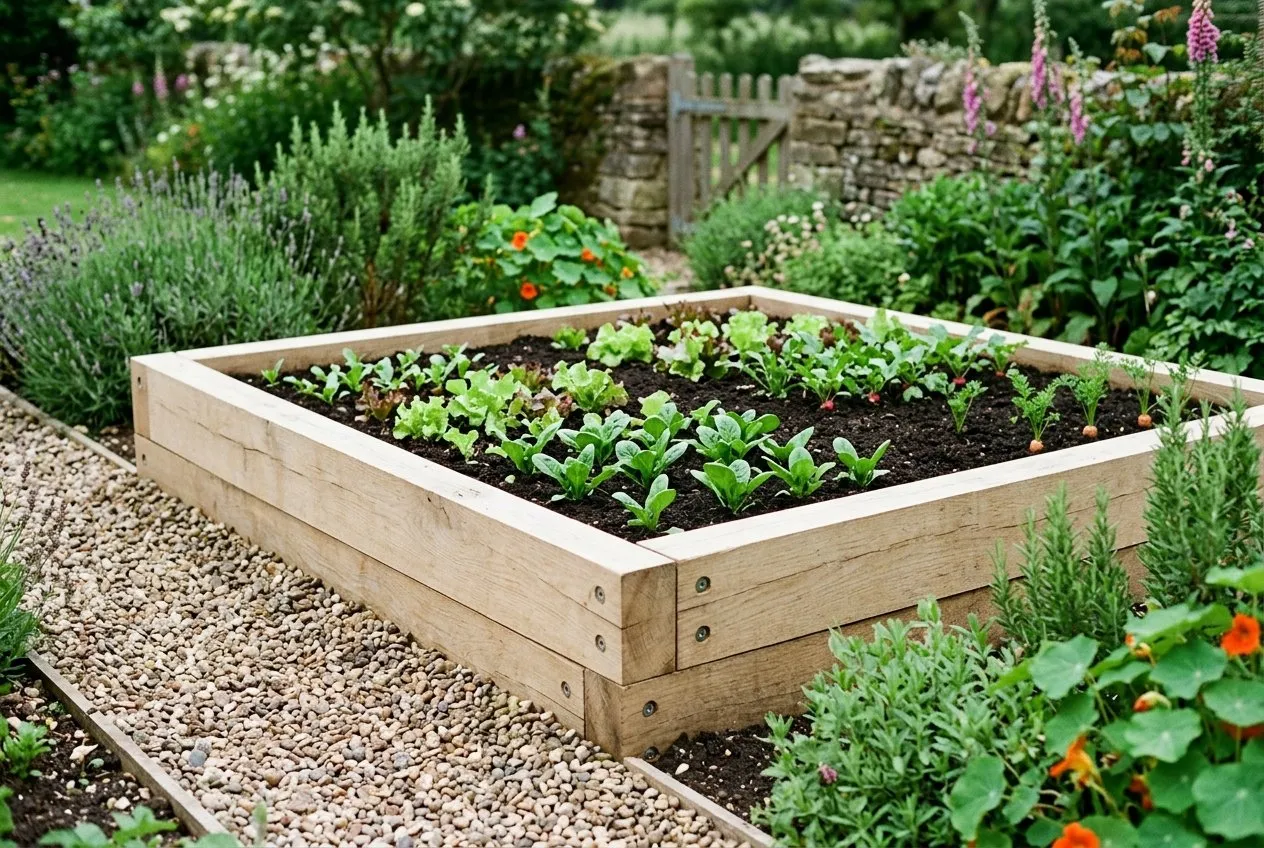
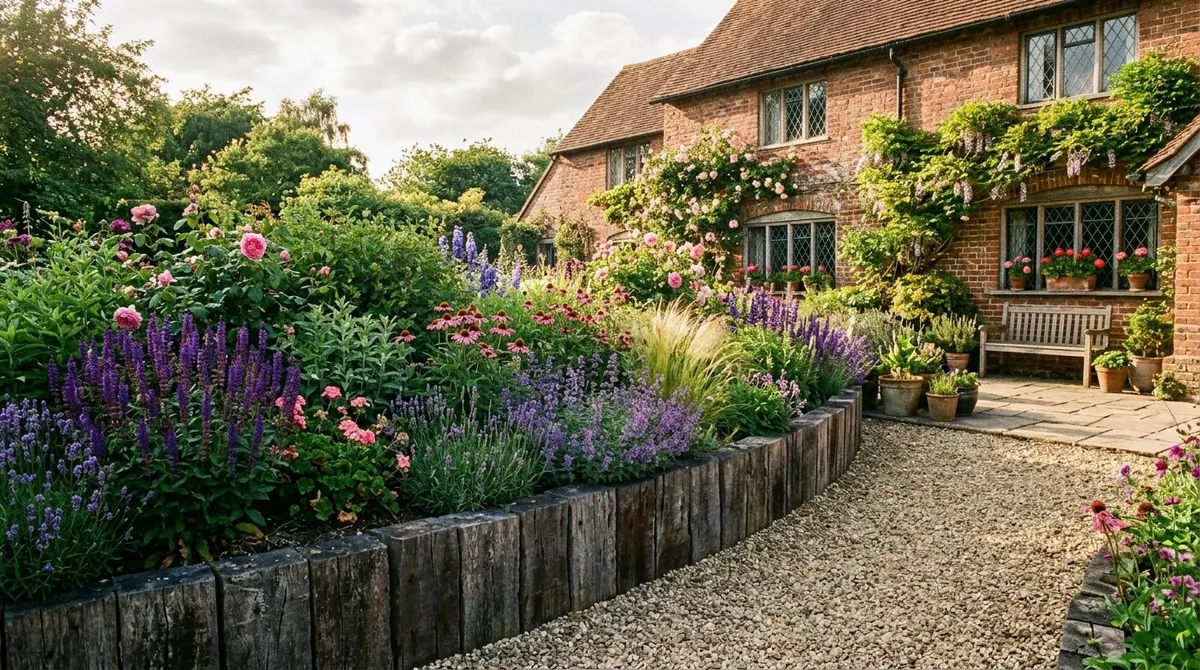
New oak sleepers make a smart raised bed and are the safe choice around vegetables.
Rock and stone edging for an informal look
Natural stone gives the softest edge and lasts for ever. It suits cottage borders, gravel gardens and anywhere a relaxed look fits.
- Choose similar-sized stones for a calm, even line, or mix sizes for a more natural tumble.
- Bury about a third of each stone. Stones sitting on the surface get kicked out of place.
- Dry-lay for a relaxed look, or bed bigger stones on mortar where they must hold a level.
- Leave planting pockets for thyme, aubrieta or other low alpines to soften the line.
Local stone always looks most at home. The same stone works well in a rockery or a gravel garden, which ties the garden together. Our rock and stone edging ideas cover stone types and styles in more detail.
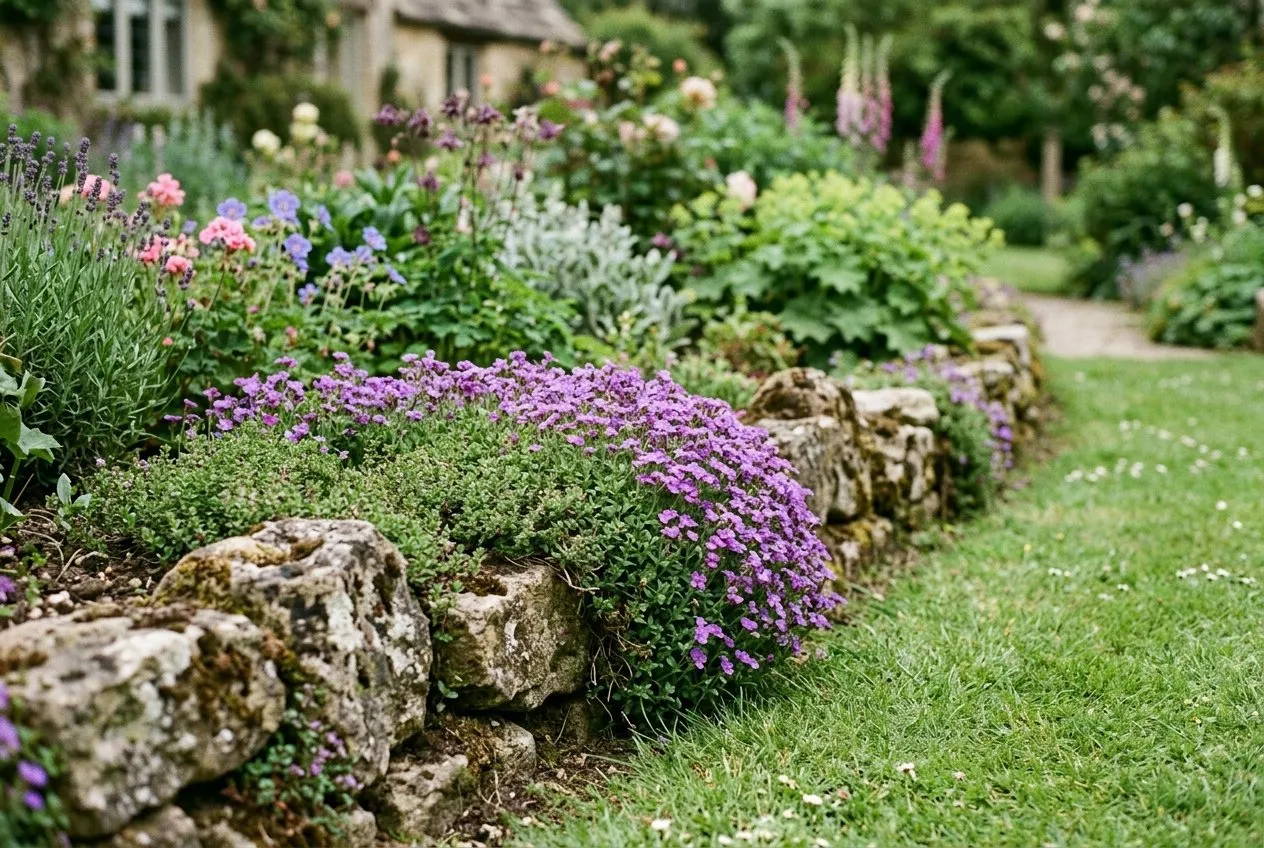
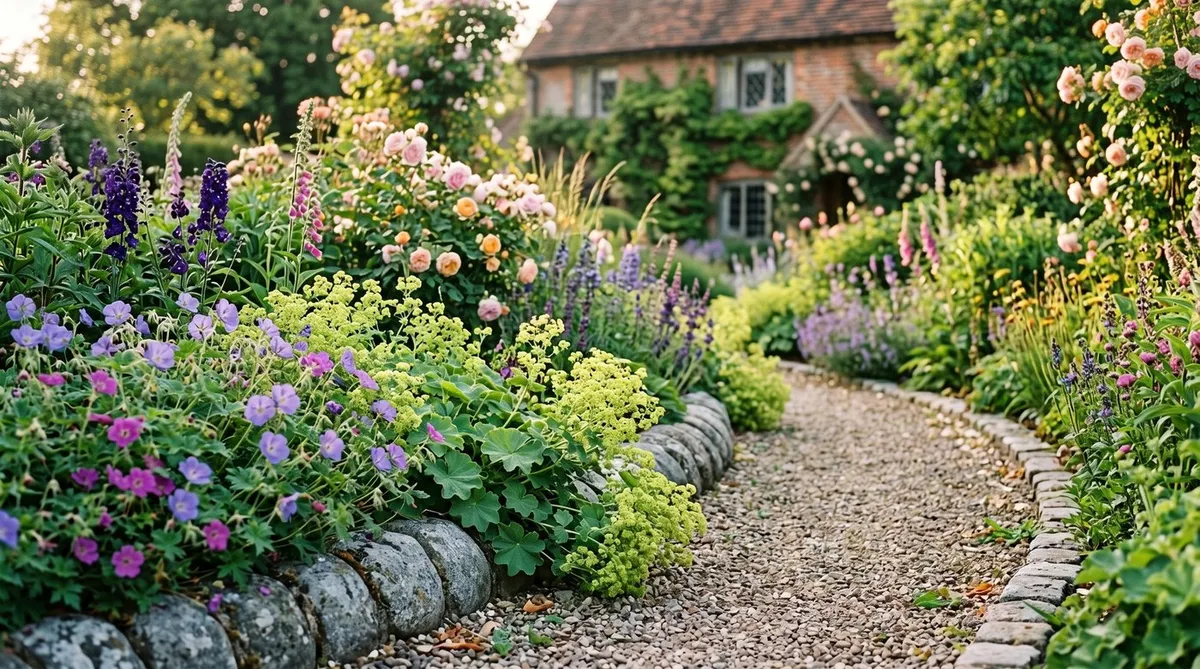
Gaps between the stones are the perfect spot for aubrieta and thyme, which soften a stone edge within a season.
Concrete edging for curves on a budget
Concrete is the cheapest tough edging, and it can follow any curve. Modern finishes have done a lot for its dull reputation.
- Cast it in place by pouring concrete into curved timber formwork. It costs little in materials.
- Board-formed concrete picks up the wood grain from the formwork for a textured finish.
- Pre-cast kerb edging lays quickly on a mortar bed for a neat, straight edge.
On long runs, leave a joint every couple of metres so the concrete can move without cracking. For more ways to use it around the garden, see our ideas for landscaping with concrete.
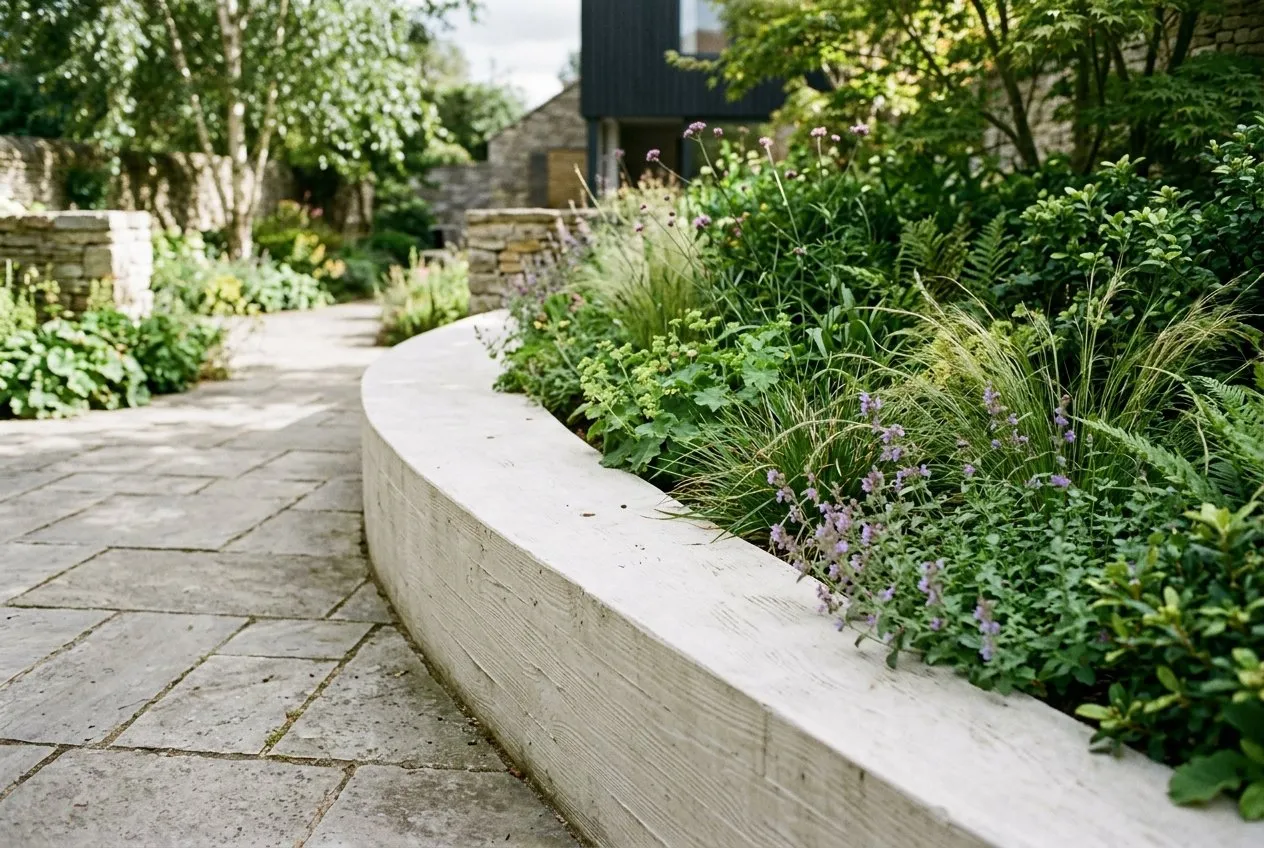
A board-formed concrete edge keeps the wood grain from its mould, which gives a cheap material a smart, modern look.
Brick and steel: the crispest, lowest-upkeep edges
For a clean line you never have to trim, brick and steel are hard to beat.
Brick on edge set flush with the lawn makes a classic mowing strip. Lay the bricks on a mortar bed with a wedge of mortar behind them, called haunching, to hold the line. The mower wheel then runs along the top.
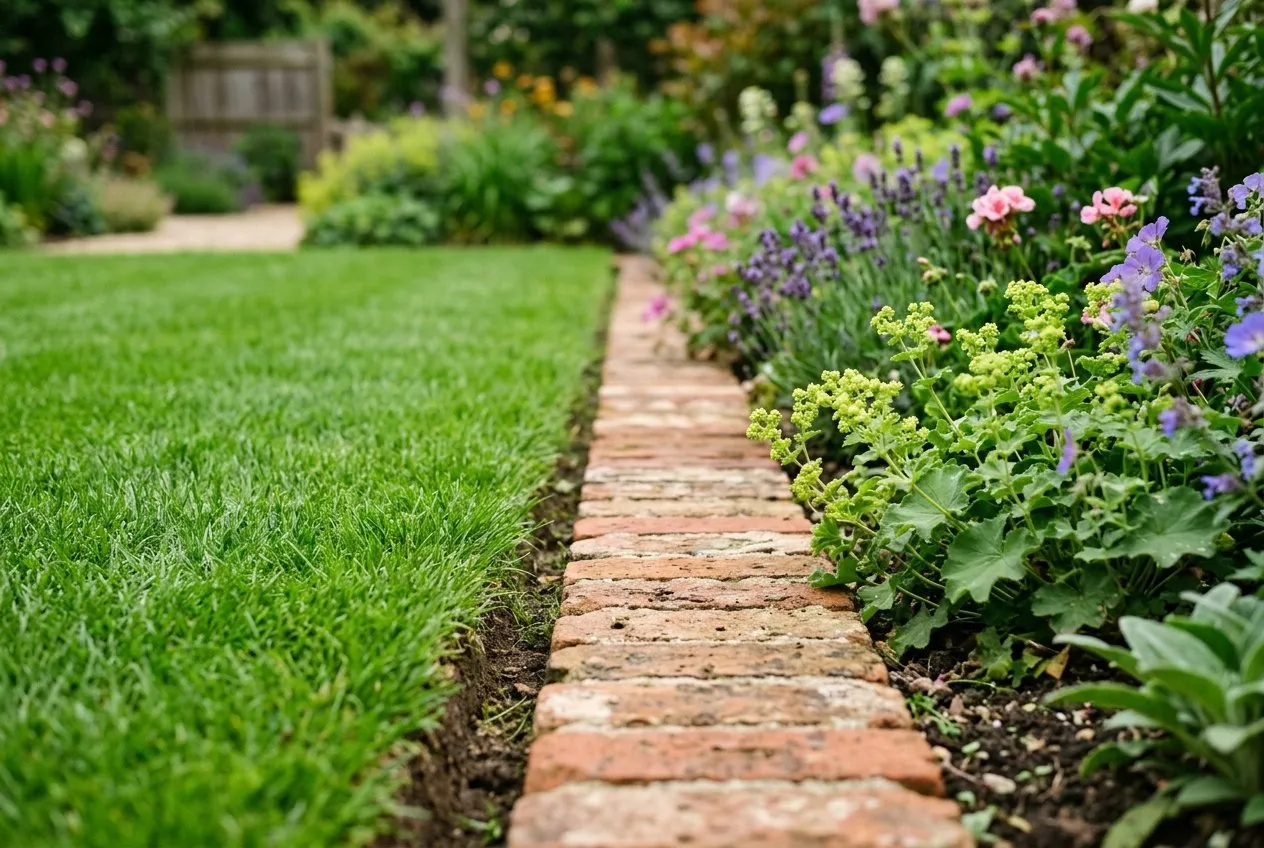
Set level with the grass, a brick strip lets the mower run straight along the edge, so there’s no trimming.
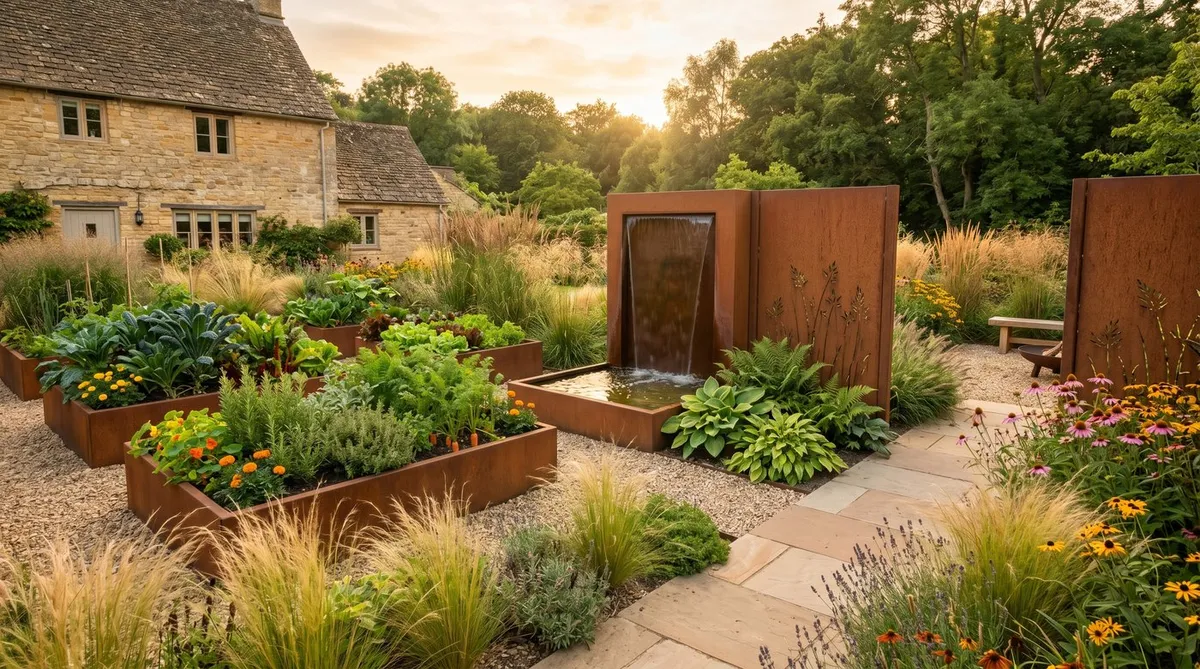
Steel edging, including rusty-orange Corten, is thin, strong and bends into smooth curves. Most of it sits below ground, with a slim lip showing. It’s ideal for modern gardens and for borders that meet a lawn. Tap it in with a rubber mallet and a block of wood, so you don’t bend the top.
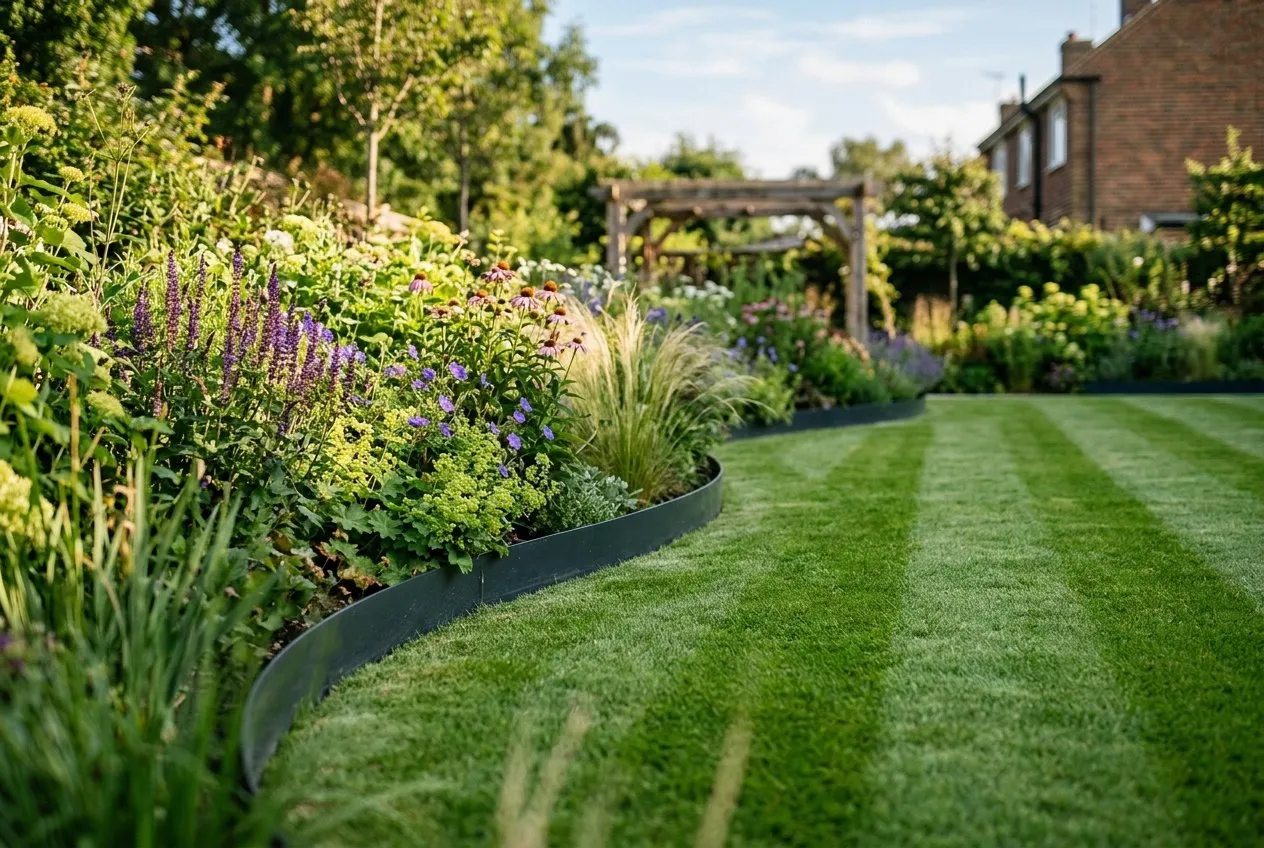
Steel edging is almost invisible from a distance. All you see is a clean line between lawn and border.
How to fit garden edging so it lasts
Whatever the material, the base decides whether an edge lasts decades or tips over in a season.
- Mark the line. Use a string line for straight runs and a hosepipe for curves.
- Dig a firm trench. Edging needs a solid base, not loose soil, so compact the bottom.
- Bury enough of it. About a third of any stone or upright sleeper goes below ground. Mowing strips sit flush.
- Haunch brick and kerbs. A wedge of mortar behind them holds the line.
- Let water drain. A gravel backfill stops water sitting against timber and rotting it.
Gardener’s tip: Lay out your hosepipe along a new curve and leave it for a day. Look at it from the house and an upstairs window before you dig.
Common garden edging mistakes
- Not burying it deep enough. Stones and sleepers sitting on the surface tip and wander. Bury about a third.
- Old creosoted sleepers near food or play areas. Use new timber where you grow crops or where children play.
- No haunching behind brick. Unsupported bricks fall into the border over time.
- A raised lip along the lawn. If the mower can’t run over it, you’ll be trimming by hand for ever. Set mowing strips flush.
- Too many materials. Three types of edging in one garden looks busy. Pick one or two and repeat them.
For more ideas on paths, patios and planting, browse our garden design guides. Now you’ve picked your edging, read our guide on how to create a low-maintenance garden for the next step.
Frequently asked questions
What is the best material for garden edging?
It depends on your style and how much trimming you want to do. Steel and flush brick give the crispest, lowest-upkeep edge. Sleepers suit bold raised beds, stone suits informal borders and cast concrete is the cheap, tough choice for curves.
Are railway sleepers safe for garden edging?
New oak and treated softwood sleepers are safe for garden edging. Old reclaimed sleepers treated with creosote are different. Creosote can ooze out in hot weather, so keep them away from food crops, seating and children’s play areas.
How do you edge a garden bed with rocks?
Set similar-sized stones into a shallow trench and bury about a third of each. That keeps them firm. Butt them together for a solid line, or leave gaps for low plants such as thyme. Bed them on mortar where they need to hold a level.
What is the cheapest garden edging?
Log roll and cast concrete are the cheapest options. Log roll is quick but rots within a few years. Concrete poured into simple timber formwork costs little, follows any curve and lasts for decades.
How do you stop grass growing into a border?
Fit a physical edge set flush with the lawn. A steel strip or brick mowing strip stops grass roots and runners crossing into the bed. A spade-cut edge also works, but it needs recutting several times a season.
How deep should garden edging go?
Bury about a third of any stone or upright sleeper below ground. Steel edging usually goes in with most of its height buried and a small lip showing. Set mowing strips flush with the lawn so the mower runs over them.
Our team produces practical UK gardening guidance from source research, contributor records and established horticultural practice. Editorial standards are overseen by Matt W.