Key takeaways
- Keep beds no wider than 1.2m so you never need to step on the soil
- 30cm high suits most veg; go to 60-80cm if you want to avoid bending
- Sleepers and steel last for years; thin scaffold boards need replacing sooner
- Fill with roughly half topsoil and half compost
- Add 5cm of compost each spring as the level sinks
Raised beds fix three of the biggest headaches in UK gardening: soggy clay, cold soil in spring and an aching back. A well-planned raised bed garden crops well from the first year and gets better every year after.
Getting the size right
The size of a bed decides how easy it is to use. Too wide and you can’t reach the middle. Too narrow and you spend a lot on wood for not much growing space.
Width: 1.2m at most. This is the one that matters. Most adults can reach about 60cm comfortably, so a 1.2m bed can be reached from both sides without stepping on the soil. Against a wall or fence, make it 60cm wide, as you can only get at it from one side.
Length: 1.8m to 3m. Timber often comes in 2.4m lengths, so that size saves cutting. Keep it under 3m or people will step across instead of walking round.
Height: 30cm to 60cm. On reasonable soil, 30cm is plenty for most veg, and it lifts the roots above wet clay. Carrots and parsnips like a bit more depth or loosened soil underneath. To avoid bending, or for wheelchair access, build to 60-80cm. For flower beds, 45cm looks about right in most gardens.
| What it’s for | Width | Length | Height | Roughly how much fill |
|---|---|---|---|---|
| Standard veg bed | 1.2m | 2.4m | 30cm | 0.9 cubic metres |
| Against a wall | 0.6m | 2.4m | 30cm | 0.45 cubic metres |
| Easy reach (seated) | 0.9m | 1.8m | 60cm | 1 cubic metre |
| Deep root crops | 1.2m | 2.4m | 45cm | 1.3 cubic metres |
| Flowers | 1.2m | Any | 45cm | Depends on length |
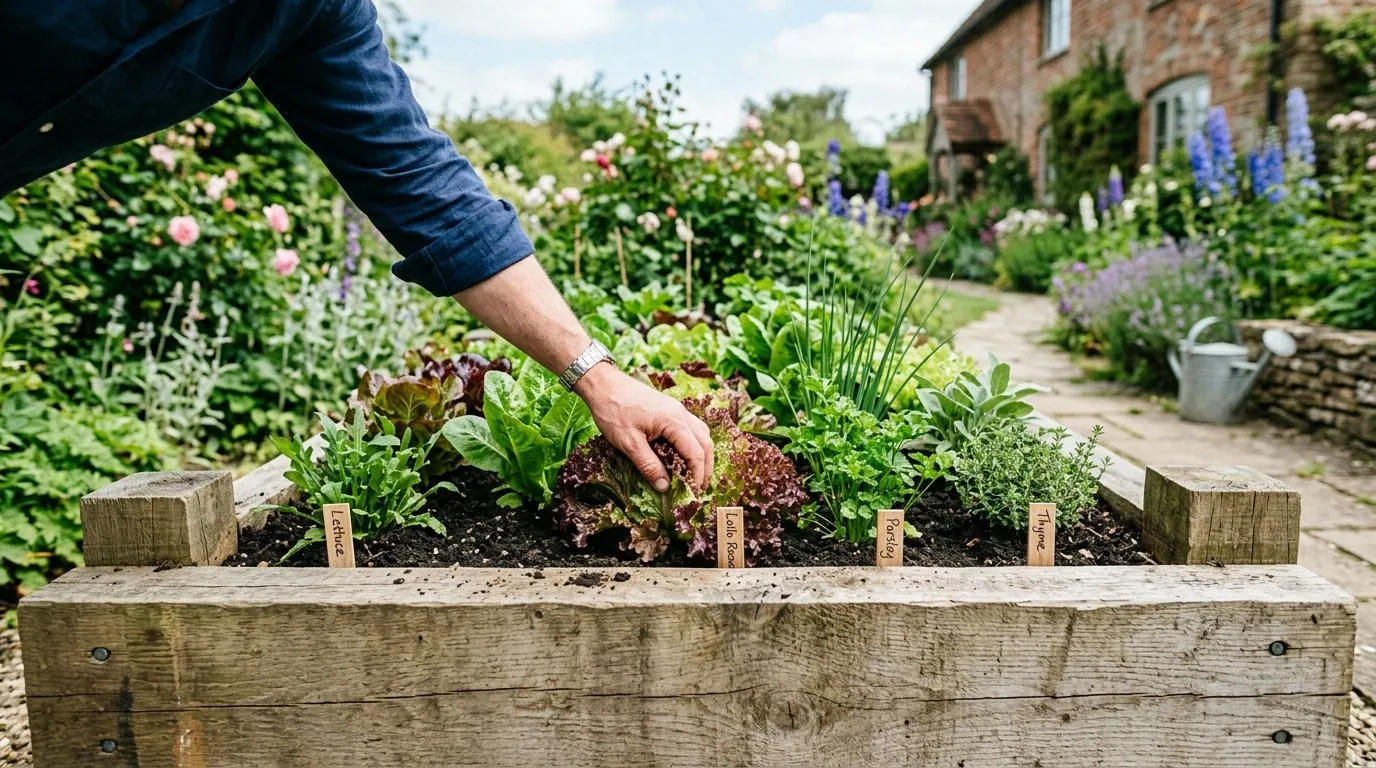
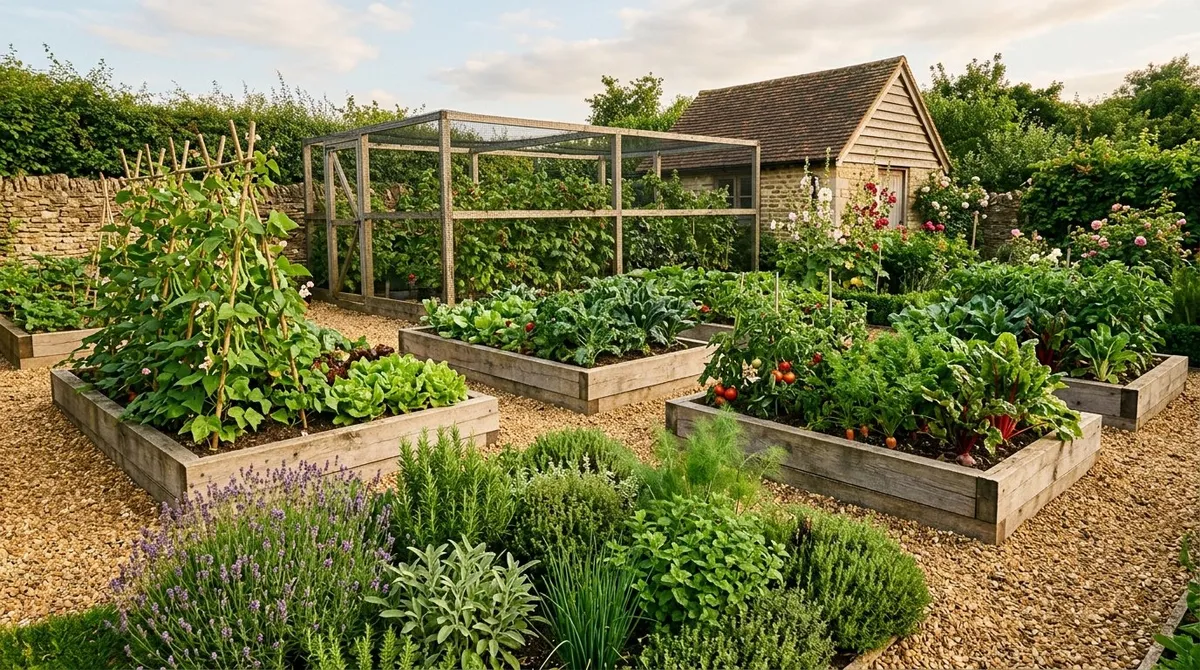
A classic raised bed: 1.2m wide so you can reach from both sides, 30cm high for most veg and 2.4m long to match timber lengths.
Choosing what to build with
Treated softwood sleepers are the best all-rounder. They’re heavy enough to stack without posts, thick enough to last for years and look solid and smart.
Scaffold boards
Cheaper than sleepers, but thinner. They need corner posts, and extra posts along longer sides, so they don’t bow under the weight of soil. Expect to replace them sooner than sleepers.
Galvanised steel
Steel beds are very popular, and it’s easy to see why. They don’t rot, look modern and come as simple kits. The thin metal warms up quickly in spring, which warms the soil sooner. On the flip side, it cools quickly at night and can get very hot in full summer sun, so keep the soil well watered and mulched.
Brick or stone
The most permanent and most expensive choice. You’ll need proper foundations and a fair bit of building work. The result lasts decades and suits formal garden designs. Brick and stone hold heat, so the soil stays warm a little longer into autumn.
Layouts for different garden sizes
Small garden (4-6 beds)
Four 1.2m x 1.2m beds in a square, with a cross of 60cm paths through the middle. That’s plenty of room for salads, herbs and seasonal veg for a couple.
Medium garden (8-12 beds)
Two rows of four 1.2m x 2.4m beds, with 60cm paths between them and a 90cm path down the middle for a wheelbarrow. Enough for a good range of family veg.
Allotment style (whole plot)
Longer beds (1.2m x 3m) in rows, with 45cm paths between them and one wide main path. This packs in the most growing space. It works well for serious veg growing and follows classic allotment ideas.
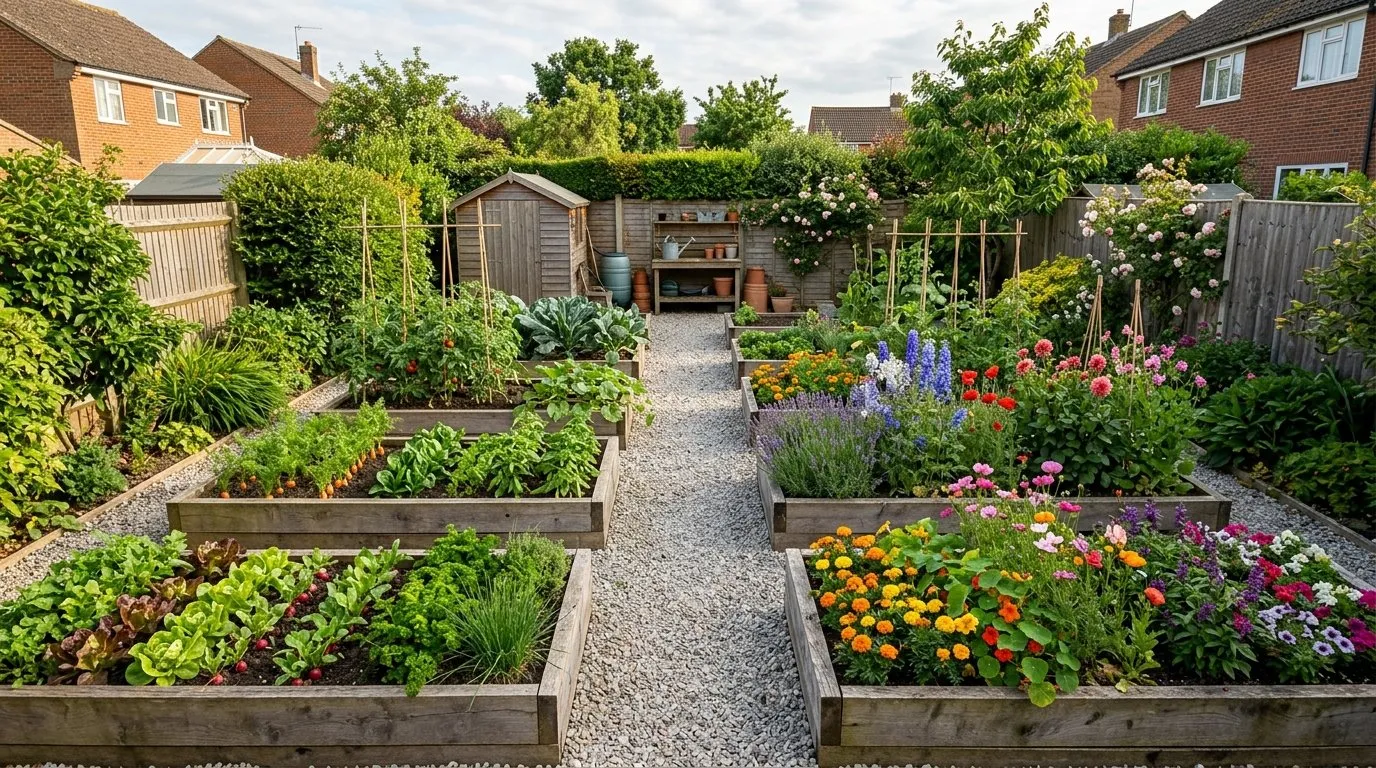
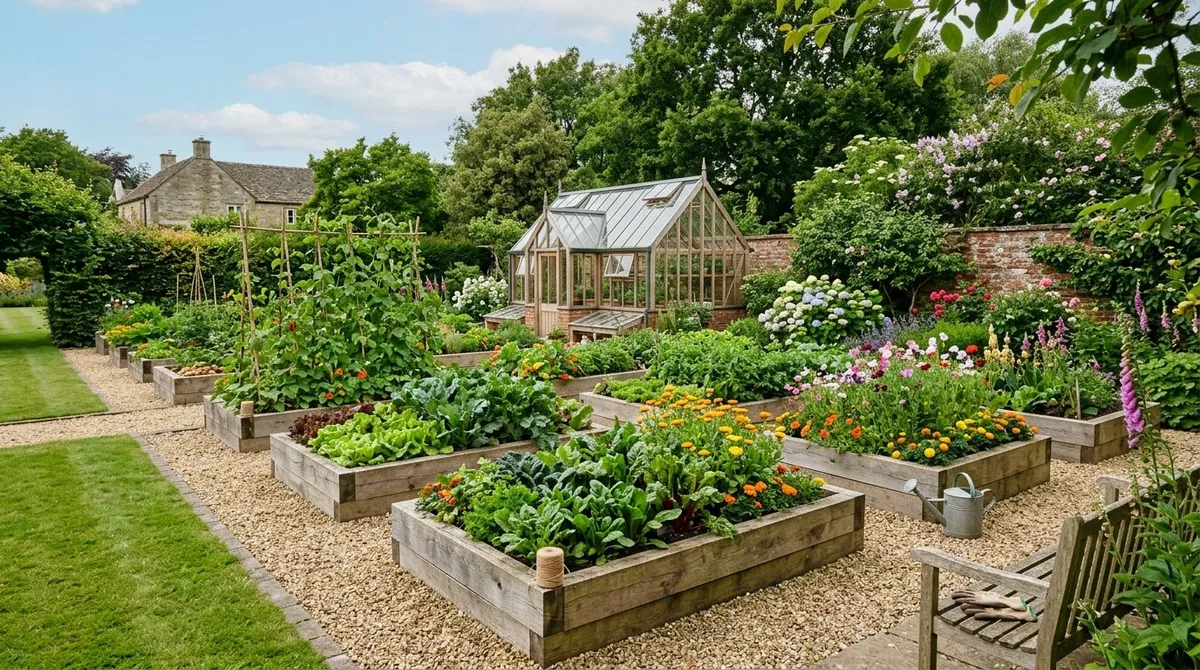
A medium garden plan: eight 1.2m x 2.4m beds with 60cm side paths and a 90cm central path for the wheelbarrow.
Filling raised beds: the right mix
What goes inside matters as much as the box. Don’t fill beds with just heavy clay from the garden. It packs down and drains badly, which defeats the point.
How much you need: multiply length x width x height in metres. A 1.2m x 2.4m x 0.3m bed needs just under 0.9 cubic metres. Order a little extra, as the mix settles over the first year.
Buying it: for one bed, bags are fine. For several beds, a bulk delivery of topsoil is far cheaper than bags.
Planting ideas for raised beds
Veg beds
Crop rotation is easy with raised beds. Give each bed a family of plants and move them round each year:
- Bed 1: Peas and beans: broad beans, peas, runner beans
- Bed 2: Cabbage family: broccoli, cauliflower, kale
- Bed 3: Roots: carrots, beetroot, parsnips
- Bed 4: Onion family and others: onions, garlic, leeks
Flower beds
Raised beds are brilliant for cottage garden borders, herbs and mixed planting. The extra height brings small plants closer to eye level and gives a relaxed garden some shape.
Fill them with perennials, grasses and bulbs. Lavender, salvias, echinacea and dahlias all love the good drainage.
Cut flower beds
Give a bed or two over to cut flowers. Sweet peas, dahlias, cosmos and sunflowers all give lovely long stems in rich, free-draining soil.
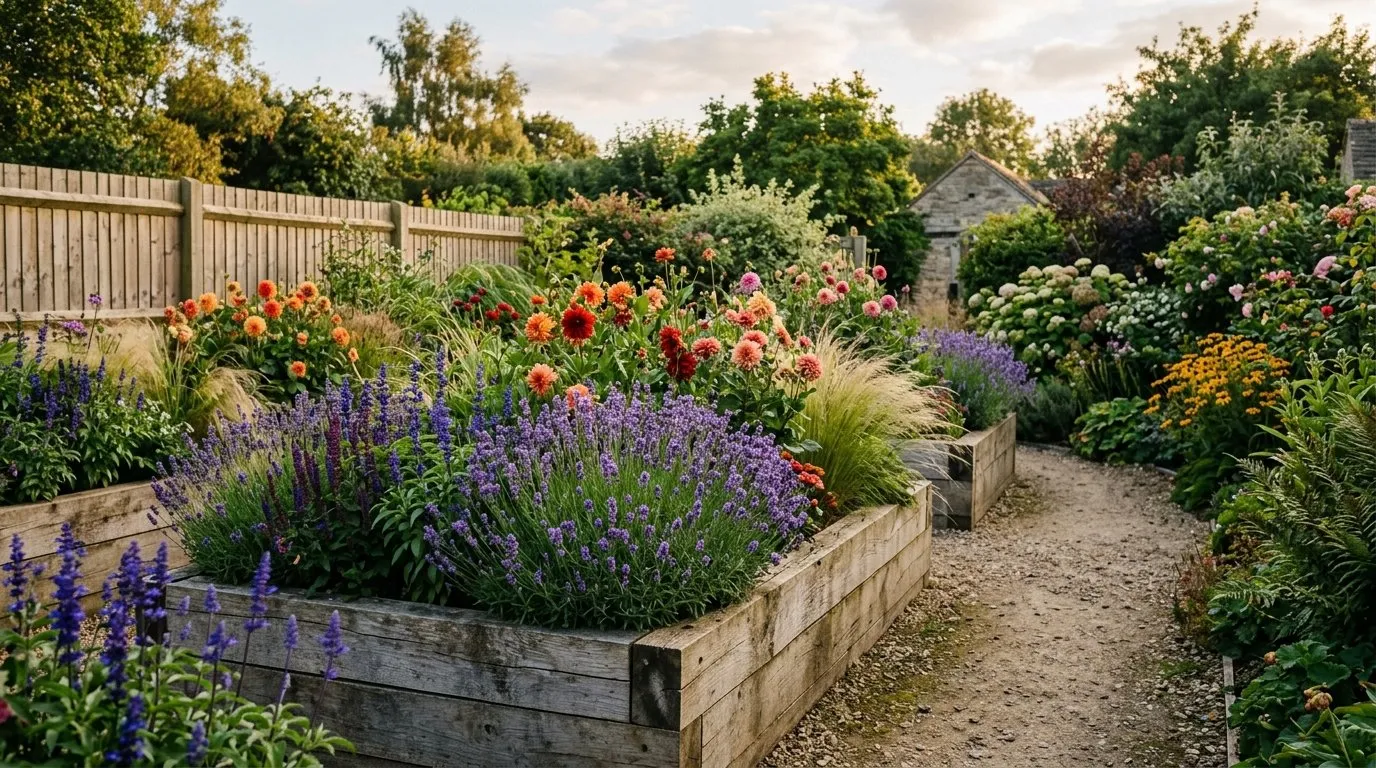
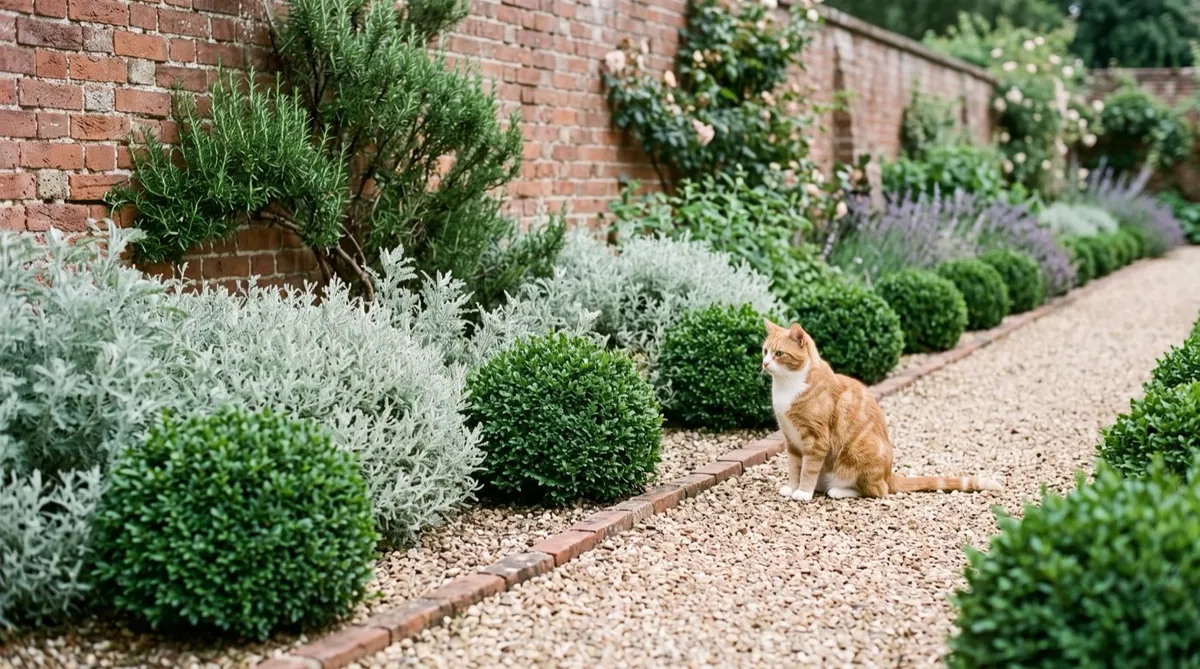
Raised flower beds with lavender, salvias, grasses and dahlias, lifted up where you can enjoy them.
Looking after raised beds through the year
Spring (March): Spread 5cm of compost on top before the season starts. The level sinks a few centimetres each year as the compost breaks down, and this top-up is all the feeding the soil needs.
Summer: Water when it’s dry. Raised beds drain faster than the ground, so they need watering more often in dry spells. Mulch with compost or straw to hold moisture in.
Autumn: Clear finished crops. Sow a green manure, or cover the soil with cardboard and compost to keep weeds down and feed it over winter.
Winter: Check the wood for rot and tighten loose screws. Plan next year’s crop rotation and order seeds.
Frequently asked questions
What is the best size for a raised bed UK?
About 1.2m wide is ideal. That lets you reach the middle from both sides without stepping on the soil. Length is up to you, and 2.4m is a handy size. Don’t go too long, or people start hopping over instead of walking round. Leave paths wide enough for a wheelbarrow.
How deep should a raised bed be for vegetables?
About 30cm suits most vegetables, especially on top of dug soil. Carrots and parsnips like more depth, or loosened soil underneath. To avoid bending or for wheelchair access, build beds 60-80cm high. Tall beds take a lot of filling, so put bulky material in the bottom.
What is the best material for raised beds UK?
Timber is the favourite, with a good balance of cost, looks and lifespan. Pressure-treated softwood and sleepers are affordable and last for years. Larch or cedar cost more but resist rot well. Galvanised steel lasts a long time with little upkeep. Avoid old creosoted railway sleepers for food crops.
What do you fill raised beds with?
Good topsoil mixed with well-rotted compost. Roughly equal parts of each works well for veg. In deep beds, put bulky organic material at the bottom, like woody prunings or rough compost, to save on soil. Top up with compost each year as the level sinks.
Do raised beds need drainage?
Usually not, as they’re open at the bottom. Water drains down into the ground below. Don’t line the base with plastic, as that traps water. To stop weeds coming up from below, use cardboard or permeable fabric instead. On a hard surface, make sure water can escape.
How much does it cost to build a raised bed UK?
It depends mostly on the material and size. Simple softwood boards are cheapest. Thick sleepers, durable timbers and steel kits cost more but last longer. Filling a deep bed can cost as much as building it. Shop around locally, and look at reclaimed timber to save money.
Should I line a raised bed with plastic?
Only the inside walls of a timber bed, never the base. A liner on the walls keeps wet soil off the wood, which slows rot. Leave the base open so water drains away. A lining with no drainage at the bottom leaves the soil waterlogged. Steel and stone beds don’t need lining.
Related reading
Our team produces practical UK gardening guidance from source research, contributor records and established horticultural practice. Editorial standards are overseen by Matt W.