Key takeaways
- A sunny, sheltered spot and a few packets of easy annuals are all you need to start
- Sow hardy annuals outdoors in March or April, half-hardy ones under cover in April
- Pinch out the tips of young cosmos and sweet peas for bushier plants with more stems
- Put up netting or canes before plants get tall, not after they flop
- Pick every few days: the more you cut, the more most annuals flower
Growing cut flowers is easier than most people think. If you can sow a row of lettuce, you can grow a summer’s worth of vases. Pick a sunny patch, sow a handful of easy annuals in spring and keep picking. This guide walks you through your first season, from seed packet to the first bunch on the kitchen table.
What do you need to start growing cut flowers?
You need a sunny, sheltered spot, some seed packets and a few canes or a roll of netting. That’s genuinely it for the first year.
Sun matters most. Aim for at least six hours of direct sun a day. Shady spots give weak, leaning stems. Shelter comes next, because wind snaps tall stems and knocks over sweet peas.
Soil should be weed-free and crumbly. Fork in a layer of well-rotted compost before sowing. You don’t need a big dedicated bed: a strip of veg plot, a raised bed or a gap at the back of a border all work. Grow in rows, like veg, so you can reach every plant to pick.
If you want to plan a proper patch with paths and bed widths, the cutting garden layout plans show sizes that work for small and large gardens.
Five easy cut flowers for a first season
Start small with five forgiving flowers. Between them they cover June to the first frosts.
- Sweet peas: scented, prolific and the classic British cut flower. Sow in October or February to March under cover, plant out in April. Pick every couple of days or they stop flowering. Our sweet pea growing guide covers sowing in root trainers and tying in.
- Cosmos: feathery leaves and daisy flowers in white, pink and crimson. Plants reach about 90-120cm and flower from July to the frosts.
- Cornflowers: blue buttons that are tough as old boots. Sow outdoors in spring or autumn.
- Sunflowers: choose branching types such as ‘Velvet Queen’ or ‘Valentine’ for lots of smaller stems. Single-stem types give one big flower each.
- Dahlias: grown from tubers rather than seed. Plant in May and they flower from July until frost. See growing dahlias for staking and winter care.
Once you’ve got the hang of these, the list of best flowers for cutting has plenty more to try, from zinnias to roses.
Safety note: Sweet pea seeds are poisonous. Keep packets out of reach of children and pets.

A simple cane wigwam is all sweet peas need. Pick every couple of days and they’ll keep going for months.
Sowing cut flowers: hardy versus half-hardy
The packet tells you which group a flower is in, and that decides when and where to sow.
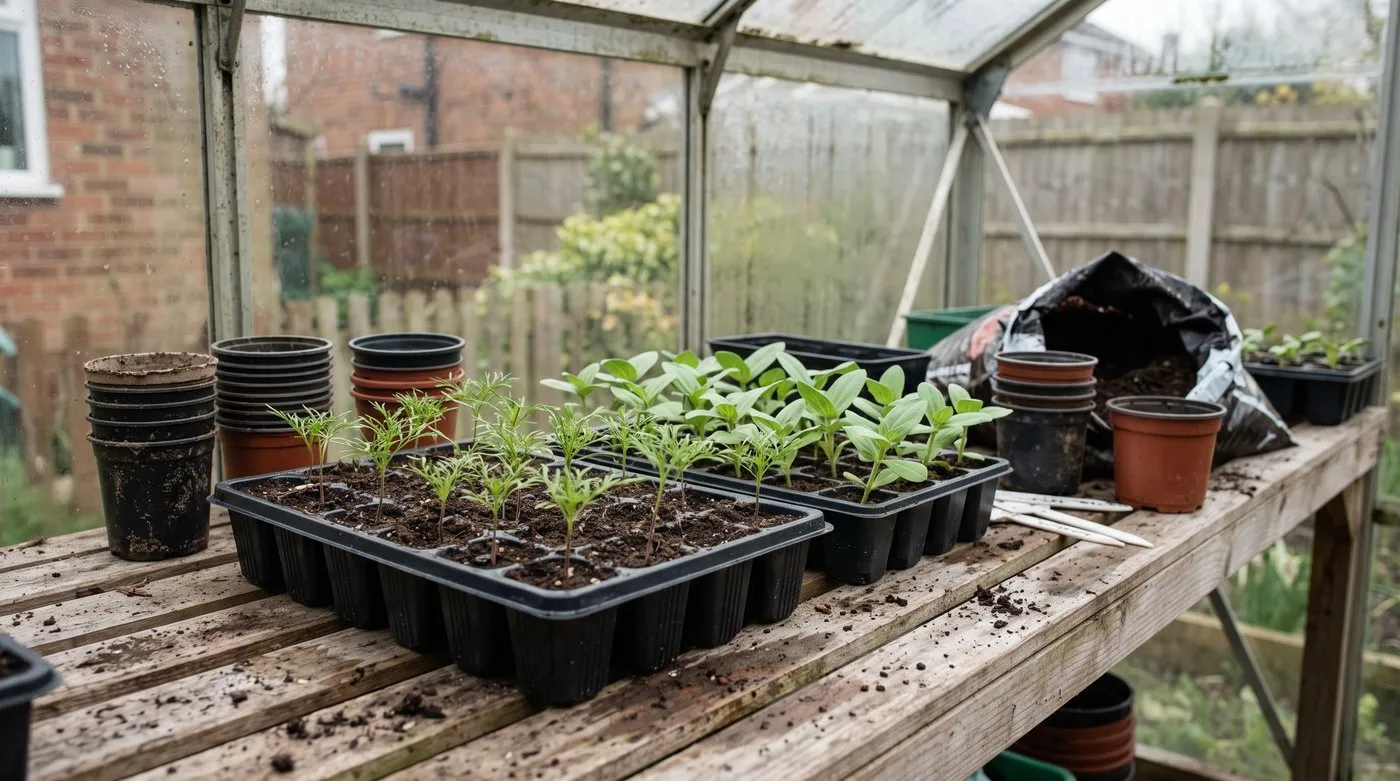
Tender flowers like cosmos and zinnias start indoors in April. They go out in late May once the frosts are over.
Hardy annuals cope with cold. Sow them straight into the ground in March or April, in shallow drills, then thin the seedlings. Cornflowers, ammi, larkspur, calendula and nigella all belong here. Many can also be sown in September. Autumn sowings make bigger plants that flower earlier the next summer. The guide to sowing hardy annuals direct runs through drills and thinning step by step.
Half-hardy annuals are killed by frost. Sow cosmos, zinnias and sunflowers in modules or small pots indoors or in a greenhouse in April. Harden them off for a week or two, then plant out in late May once frosts have passed. In the north, wait until early June.
Space most plants about 20-30cm apart. Tight spacing gives taller, straighter stems, which is just what you want for vases.
How to pinch out for more stems
Pinching out means nipping off the growing tip of a young plant. It sounds brutal, but it turns one main stem into several, and you get many more flowers to cut.
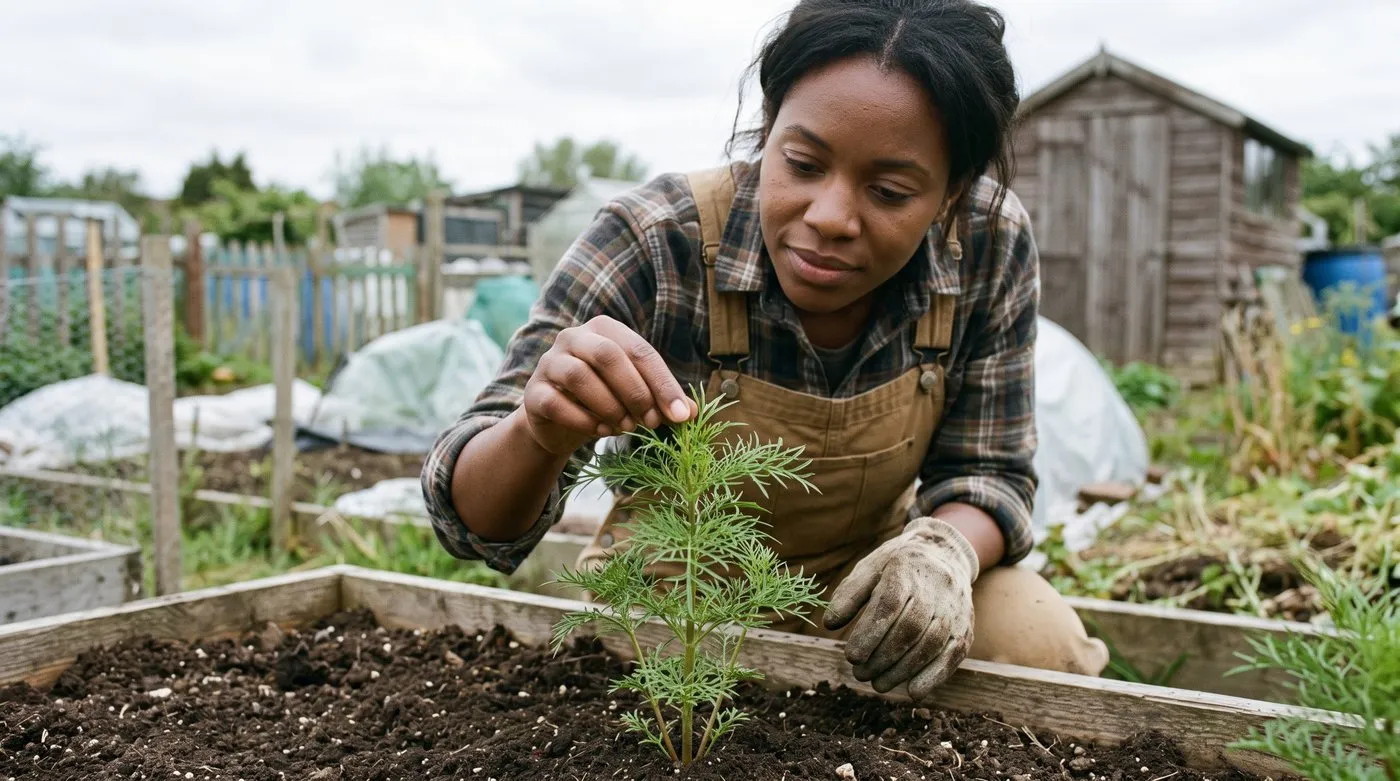
Nipping out the tip feels harsh, but it turns one stem into several. That means many more flowers to cut.
Pinch when the plant is about 15cm tall, or has three or four pairs of leaves. Snap or snip the tip just above a pair of leaves. New shoots grow from the leaf joints below.
Pinch cosmos, zinnias, snapdragons and sweet peas. Leave single-stem sunflowers and stocks alone, because they only make one flower anyway. For a flower-by-flower list, see which cut flowers to pinch out.
Supporting tall stems before they flop
Put supports in before plants need them. Trying to prop up a flopped plant in July rarely works.
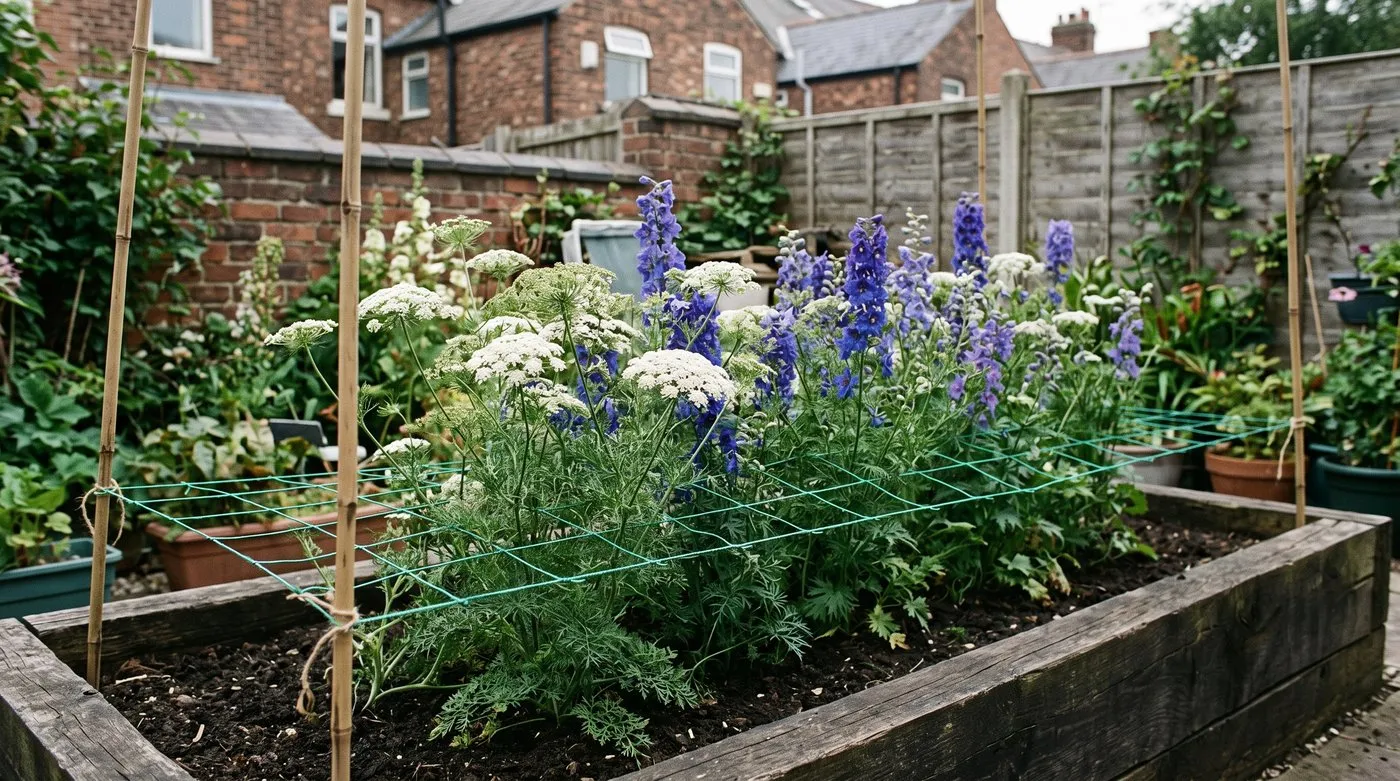
Flat netting over the row lets stems grow straight up through it. Put it on early and you won’t need to tie anything.
- Sweet peas: a cane wigwam or trellis about 2m tall. Tie in young shoots until the tendrils grip.
- Dahlias: one sturdy stake each, put in at planting time so you don’t spear the tuber later.
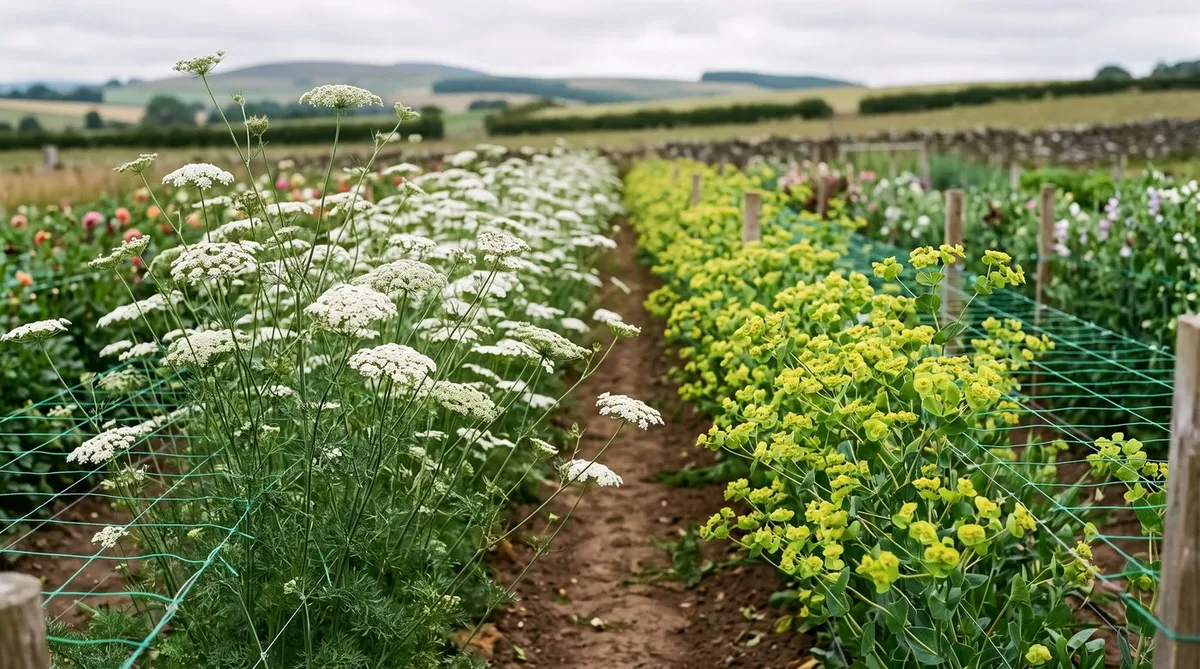
- Cosmos, ammi and larkspur: a layer of wide-mesh netting stretched flat over the row on canes, about 40cm above the soil. The plants grow up through it and stay upright.
Watering and feeding through summer
Water new plants well until they settle, then water in dry spells. A good soak once or twice a week beats a daily sprinkle. Mulching with compost keeps moisture in and weeds down.
Most annuals in compost-enriched soil need little feeding. Too much fertiliser gives lots of leaf and fewer flowers. Pots are the exception: give container plants a liquid tomato feed every couple of weeks from July.
Picking: cut and come again
Cut-and-come-again flowers make new stems every time you pick. Cosmos, sweet peas, zinnias, dahlias and calendula all work this way. Leave them to set seed and they slow down or stop.
Pick early in the morning, when stems are full of water. Use clean, sharp scissors or secateurs. Cut long stems just above a pair of leaves, so new shoots grow from there. Put the stems straight into a bucket of cool water.
Strip any leaves that would sit below the waterline, then let the bucket stand somewhere cool for a few hours before arranging. The guide to conditioning cut flowers explains which stems need special treatment.

One morning’s pick from a small patch. A garden bunch has far more variety than a shop one, and that’s half the fun.
Growing cut flowers in pots
No flower bed? Many cut flowers grow happily in containers on a patio or balcony. Use pots at least 40cm wide, filled with peat-free multipurpose compost.
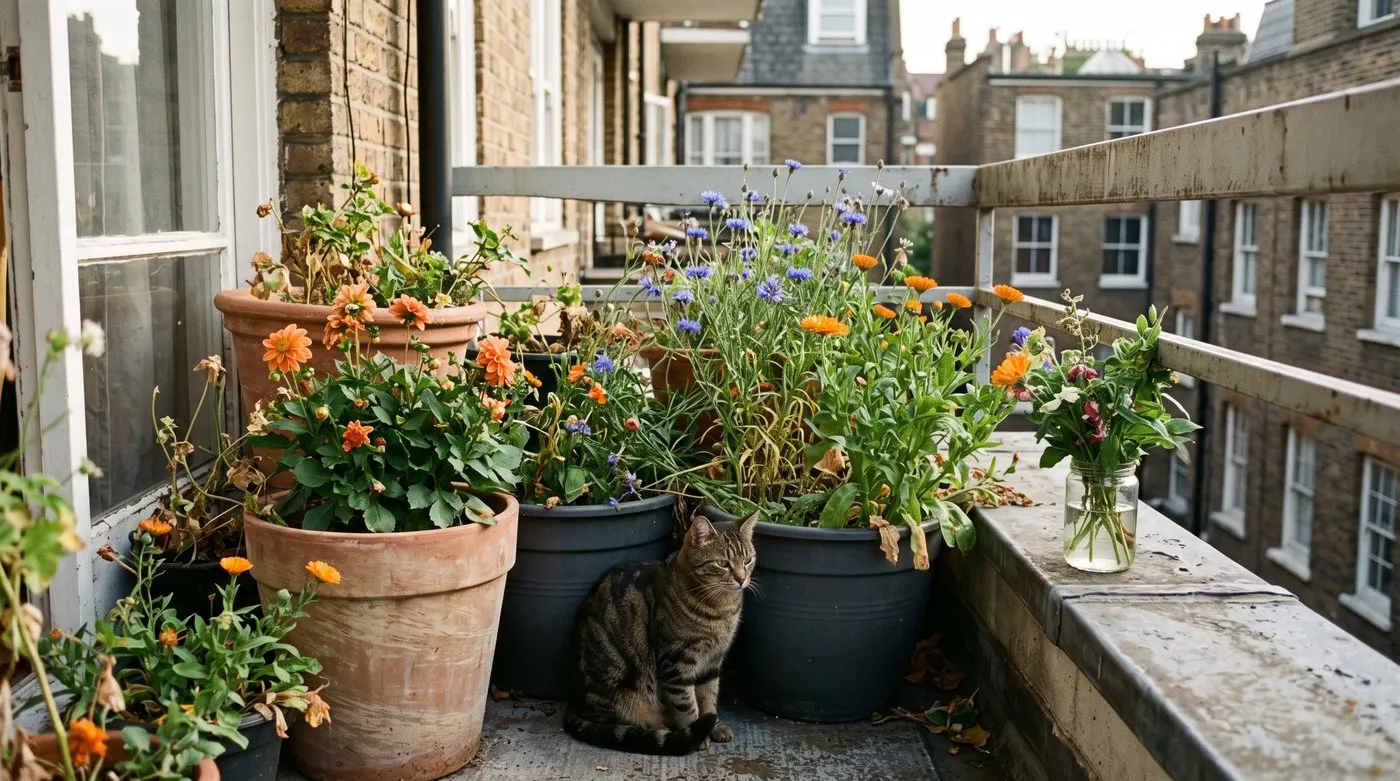
A few big pots give little jam-jar bunches all summer. Check them daily in warm weather, as pots dry out fast.
Good choices are pot dahlias such as the Gallery series, dwarf sweet peas, cornflowers, calendula and dwarf sunflowers. Pots dry out quickly, so check them daily in warm weather and feed every couple of weeks once flowering starts. You won’t get armfuls, but you’ll get small jam-jar bunches all summer.
Month-by-month cut flower calendar
| Month | What to do |
|---|---|
| January | Order seeds and dahlia tubers |
| February | Sow sweet peas under cover if not sown in autumn |
| March | Sow hardy annuals outdoors: cornflowers, ammi, larkspur, calendula |
| April | Sow cosmos, zinnias and sunflowers under cover. Plant out sweet peas |
| May | Harden off and plant out half-hardy annuals late in the month. Plant dahlia tubers |
| June | First sweet peas and cornflowers. Put up netting. Sow a second batch of sunflowers |
| July | Main picking season. Pick every few days |
| August | Peak flowers. Keep picking and watering in dry spells |
| September | Sow hardy annuals for next year. Save seed from favourites |
| October | Lift dahlias after the first frost or mulch them deeply in mild areas. Sow sweet peas |
| November | Clear spent annuals and mulch the bed |
Common mistakes with cut flowers
- Planting in shade. Stems lean and flower poorly. Pick the sunniest patch you have.
- Sowing tender flowers out too early. One late frost kills cosmos and zinnias. Wait until late May.
- Leaving supports too late. Netting goes on when plants are knee-high, not after a storm.
- Being too polite to pick. Flowers left to go to seed tell the plant its job is done. Cut often.
- Overfeeding. Rich feeds give leafy plants with few flowers.
Now your first season is planned, read our guide to arranging flowers from your garden to make the most of every bunch. More seasonal ideas are in our growing hub.
Frequently asked questions
What is the easiest cut flower to grow in the UK?
Cosmos is one of the easiest cut flowers to grow. Sow it under cover in April or outdoors in late May. It flowers from midsummer until the first frosts, and the more you cut, the more it flowers. Cornflowers, calendula and sunflowers are easy too.
When should I sow cut flower seeds?
Sow hardy annuals outdoors in March or April, half-hardy ones under cover in April. Cornflowers, larkspur and ammi can also be sown in September for bigger, earlier plants next year. Plant out cosmos and zinnias once frosts have passed, usually late May.
Do cut flowers grow back after cutting?
Yes, most annual cut flowers send out new stems after cutting. Cosmos, dahlias, zinnias and sweet peas are known as cut-and-come-again flowers. Cutting encourages side shoots that soon flower. Single-stem sunflowers are the exception, with just one flower per plant.
How much space do I need to grow cut flowers?
A single bed about 3m by 3m gives plenty of flowers for the house. Even a few large pots on a patio will give you small bunches all summer. Grow in rows so every plant is easy to reach, pick and support.
What cut flowers can I grow in shade?
Foxgloves, astrantia, lady’s mantle and Sweet William cope with partial shade. Honesty and aquilegia are worth trying too. Most cut flowers need at least six hours of sun for straight, strong stems. Foxgloves are poisonous, so wear gloves and keep them away from pets.
Should I pinch out cut flowers?
Yes, pinch out branching types like cosmos, sweet peas and zinnias when young. Nip off the growing tip just above a pair of leaves when the plant is about 15cm tall. It makes a bushier plant with more, longer stems. Don’t pinch single-stem sunflowers.
Our team produces practical UK gardening guidance from source research, contributor records and established horticultural practice. Editorial standards are overseen by Matt W.