Key takeaways
- Keep beds about 1.2m wide so you can reach the middle from either side
- Space most annuals 30 to 40cm apart and dahlias and sunflowers about 60cm
- Run beds north to south if you can, with the tallest plants at the north end
- Leave paths at least 45cm wide, as plants spill over them by midsummer
- Split the beds into spring, summer and autumn blocks for flowers from March to November
A good cutting garden layout comes down to two things. You should be able to reach every plant without stepping on the soil, and you should be able to cut every stem without squashing its neighbours. Get the bed width, spacing, direction and the order of tall and short plants right, and you’ll get more flowers and better stems.
What is the best layout for a cutting garden?
Rectangular beds about 1.2m wide, planted in rows, with paths at least 45cm wide between them. It’s not the prettiest layout, but it gives the best stems for cutting because plants get plenty of light and air and you can reach them easily.
At 1.2m wide, you can reach the middle of a bed from either side without treading on it. Trampled soil is a common cause of short, weak stems. Roots need loose soil to grow deep and find water.
Make paths at least 45cm wide, rather than the 30cm many of us start with. By midsummer, plants lean well out over the edge, and a narrow path vanishes. A 45cm path stays usable all season and lets you pick without snapping stems.
How do I choose the right plot size for my cutting garden?
Pick a size that matches how many flowers you want and how much time you have. Bigger isn’t always better: a large plot you can’t keep up with soon fills with weeds.
| Plot size | Varieties | Good for | Time it takes |
|---|---|---|---|
| 2m x 3m | 5 or 6 | A small bunch most weeks | A little |
| 3m x 4m | 8 to 10 | A vase a week, plus extras | Moderate |
| 3m x 6m | 14 to 18 | Your home plus regular gifts | Quite a bit |
| 4m x 6m | 20 or more | Plenty to give away | A lot |
If it’s your first cutting garden, start around 3m x 4m. You’ll get enough variety for weekly vases, it’s manageable in peak season, and you can make it bigger later.
See our guide to growing cut flowers in the UK for choosing varieties once your layout is sorted.
How do I lay out a 3m x 4m cutting garden?
The beds: the simplest setup is one bed 1.2m wide and 4m long, with a path down each side. If you have room, add narrower 60cm beds along the edges.
Planting plan for a 1.2m x 4m bed (rows run across the bed, starting at the north end):
| Row | Row width | Plant | Spacing | Height |
|---|---|---|---|---|
| 1 (north end) | 60cm | Dahlias | 45 to 60cm apart | Tallest |
| 2 | 40cm | Sunflowers or larkspur | 20 to 30cm apart | Tall |
| 3 | 40cm | Cosmos | 30cm apart | Medium |
| 4 | 40cm | Sweet peas on netting | 15cm apart | Medium |
| 5 | 30cm | Zinnias | 25 to 30cm apart | Medium |
| 6 | 30cm | Ammi or scabious | 20 to 25cm apart | Shorter |
| 7 | 30cm | Cornflowers or stocks | 20cm apart | Short |
| 8 (south end) | 30cm | Foliage like eucalyptus or rosemary | 30 to 45cm apart | Shortest |
With the tallest at the north end and the shortest at the south, nothing gets left in the shade.

A 3m x 4m cutting garden with dahlias at the back, cosmos in the middle, and zinnias and ammi near the path.
What is the best layout plan for a small cutting garden?
In a small plot, every plant needs to earn its place. Go for flowers that keep giving.
Tips for a small cutting garden:
- Choose cut-and-come-again annuals over one-stem plants. Cosmos, sweet peas and zinnias keep flowering all season the more you pick. A standard sunflower gives you one stem.
- Grow upwards. Put a frame or netting at one end for sweet peas, which take up very little ground.
- Grow five or six things well rather than cramming in more.
Small plot plan (2m x 3m):
| Row | Row width | Plant | Picking |
|---|---|---|---|
| 1 (north) | 60cm | 3 dahlias | July to October |
| 2 | 40cm | Sweet peas on netting | June to September |
| 3 | 40cm | 6 cosmos | June to October |
| 4 | 30cm | 6 zinnias | July to October |
| 5 (south) | 30cm | Foliage like rosemary or mint | All year |
That’s enough for a vase on the kitchen table most weeks from June to October, in a space smaller than most sheds.
For the best hardy annuals to fill your rows, see our guide to the best hardy annual flowers for cutting from seed.
How do I plan seasonal succession in my cutting garden layout?
Split your space into three seasonal blocks. Sow everything at once and you get one big glut in July and August. Three blocks spread the flowers from spring to late autumn.
The three blocks:
- Block 1: Spring (picking March to May). Give about a third of the space to spring bulbs and biennials, like tulips, daffodils, anemones, ranunculus, wallflowers and sweet williams. Plant them in autumn for your first stems in spring. Once they’re over in early summer, use the space for late sowings.
- Block 2: Summer (picking June to August). The biggest block, for sweet peas, cosmos, larkspur, snapdragons, cornflowers, stocks, ammi and scabious. Sow indoors from February to April and plant out once frosts are over. Sow again every few weeks for a steady supply.
- Block 3: Late summer and autumn (picking August to November). Dahlias, zinnias, asters, chrysanthemums and grasses. They need more space each but give long stems right at the end of the season.
| Block | Picking | Key plants | Sow or plant | First flowers |
|---|---|---|---|---|
| Spring | March to May | Tulips, daffodils, anemones, ranunculus | Autumn | March |
| Summer | June to August | Sweet peas, cosmos, larkspur, snapdragons | February to April, indoors | June |
| Autumn | August to November | Dahlias, zinnias, asters, chrysanthemums | May | August |
Our succession planting guide explains how to keep sowings rolling for both flowers and veg.

Three blocks: spring bulbs at the far end, summer annuals in the middle, and dahlias and zinnias nearest the path.
What is the monthly cutting garden planting calendar?
Here’s a month-by-month guide to sowing, planting and picking, to keep flowers coming from March to November.
| Month | Sow indoors | Sow or plant outside | Pick |
|---|---|---|---|
| January | Order seeds. Check stored dahlia tubers | Nothing yet | Dried seed heads, hellebores |
| February | Sweet peas, snapdragons, stocks | Nothing yet | Hellebores, pussy willow |
| March | Cosmos, zinnias, scabious | Sow larkspur, ammi and cornflowers direct | Daffodils, anemones |
| April | Sunflowers, asters | Plant ranunculus | Tulips, daffodils, wallflowers |
| May | A last sowing of cosmos | Plant dahlias and tender annuals once frosts are over | Tulips, ranunculus, sweet williams |
| June | Nothing needed | Sow more cosmos every few weeks | Sweet peas, larkspur, ammi, cornflowers, snapdragons |
| July | Nothing needed | Keep picking to keep plants flowering | Sweet peas, first dahlias, cosmos, sunflowers, stocks |
| August | Nothing needed | Start sowing hardy annuals for next spring | Dahlias, cosmos, zinnias, asters, snapdragons |
| September | Nothing needed | Plant spring bulbs like daffodils and anemones | Dahlias, cosmos, late sweet peas, chrysanthemums |
| October | Nothing needed | Lift dahlias after the first frost, or mulch thickly in mild areas | Chrysanthemums, asters, late dahlias, grasses |
| November | Nothing needed | Plant the last tulips. Mulch beds | Late chrysanthemums, dried seed heads |
| December | Plan next year and order seeds | Nothing needed | Hellebores, holly, dried grasses |
For sowing dates variety by variety, see our flower planting calendar.
How do I build support structures into my cutting garden layout?
Put supports in when you plant, not once things start flopping. Pushing canes in around tall cosmos risks snapping stems and damaging roots.
Flat netting over the bed: the easiest support for a cutting garden. Stretch flower netting flat across the bed at about 30cm high, with a second layer at about 60cm, held up by sturdy posts at the corners. Plants grow up through the squares and stay straight. It’s great for larkspur, snapdragons, stocks and dahlias.
Posts and wires or netting for sweet peas: put a strong post at each end of the row and run wires or tall netting between them. Sweet peas climb up it and give you long, straight stems.
A stake for each dahlia: push in a strong cane about 1.2 to 1.5m tall when you plant. Tie the main stem loosely with soft twine as it grows. Without support, heavy flower heads bend over and kink their necks.
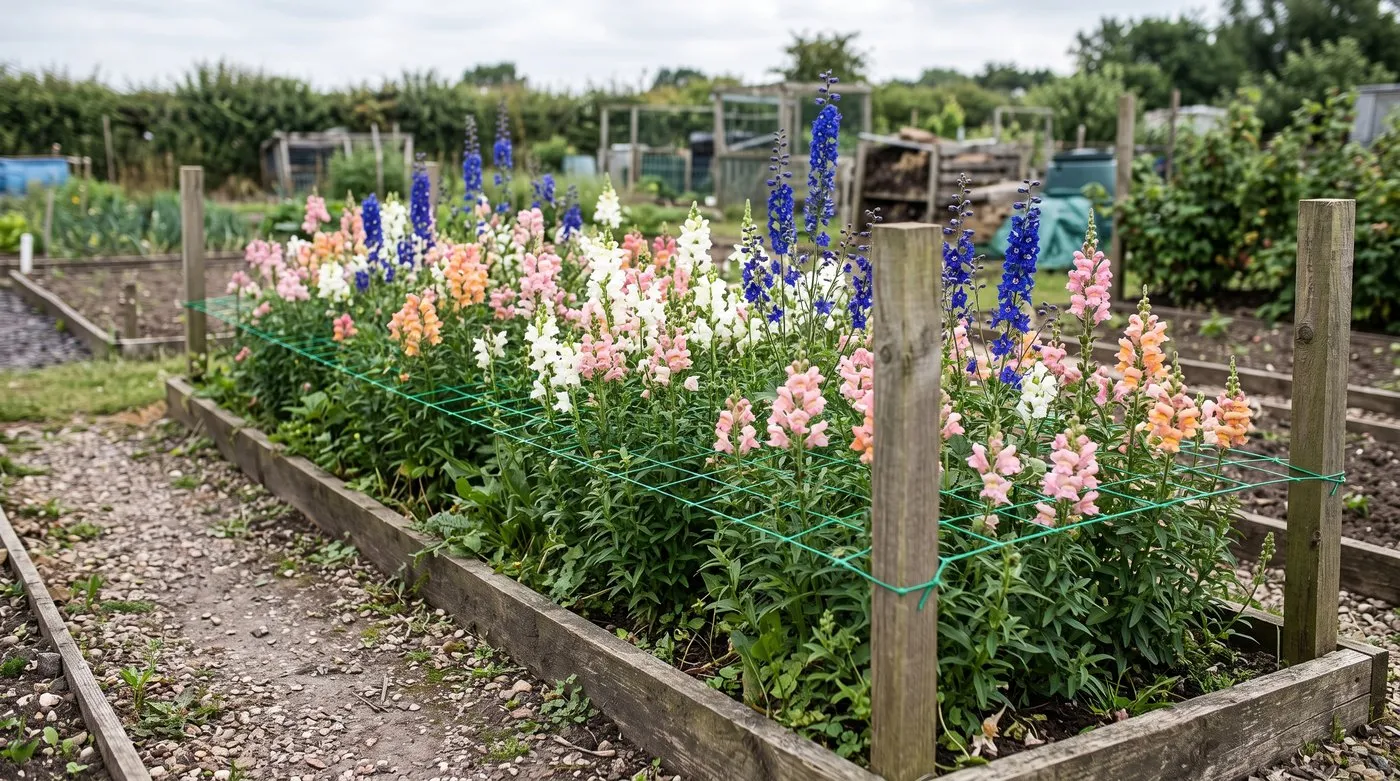
Put netting in at planting time and stems grow straight up through it. A second layer at about 60cm helps taller flowers.
How do I plan a large cutting garden layout?
With a bigger plot, you can grow 20 or more varieties across the seasons. At this size, plan in zones: beds for each season, proper paths, and a strip for permanent foliage plants that stay put.
Large plot plan (3m x 6m):
| Zone | Size | What goes in |
|---|---|---|
| Foliage strip | 0.6m x 6m, north side | Eucalyptus, pittosporum, rosemary, bronze fennel. Stays put |
| Spring bulb bed | 1.2m x 2m | Tulips, daffodils, ranunculus, anemones, planted in autumn |
| Summer annual bed | 1.2m x 3m | Sweet peas, cosmos, larkspur, cornflowers, snapdragons, ammi |
| Late season bed | 1.2m x 3m | Dahlias, zinnias, asters, chrysanthemums |
| Main path | 0.6m x 6m | Gravel, wide enough for a wheelbarrow |
| Side paths | 0.45m x 6m | For picking from both sides |
The foliage strip gives you greenery for every vase without any replanting. Cut eucalyptus hard each March to keep it bushy and full of young, round leaves.

An August picking of dahlias, cosmos, zinnias and larkspur, all from one morning in the cutting garden.
What path materials work best in a cutting garden?
Cutting garden paths get a lot of wear. You’ll be up and down them several times a week, often with muddy boots, so they need to drain well.
Gravel over landscape fabric is the most practical choice. It drains well, keeps weeds down and isn’t slippery when wet. The fabric stops the gravel sinking into the soil. Top it up every few years.
Bark chippings are cheaper and easy to lay, but they rot down within a few years and get slippery in the wet. They’re fine for side paths but not the main route.
Grass paths look lovely in summer and cost nothing, but they turn muddy after rain. As you’ll be picking in all weathers, they’re not ideal for the main path.
Why wider row spacing prevents fungal problems
Air moving between rows helps prevent mould and mildew, such as grey mould on sweet peas and cosmos. The RHS cut flower pages have more on growing healthy cutting flowers. If in doubt, space plants a little wider.
How do I integrate a cutting garden into an existing garden?
You don’t need a whole separate garden. Most of us squeeze cutting flowers into an existing layout.
A bed or two in a mixed garden. Set aside one or two beds, about 1.2m x 2 to 3m, in an existing border or veg patch. Keep them separate from your show borders so you can pick freely without spoiling the view.
Sweet peas on what you already have. Grow sweet peas up a fence, trellis or arch you’ve already got. It’s the best cutting flower to add if you have no spare bed.
Dahlias in pots. Three or four big pots, at least 30 to 40cm across and deep, with one dahlia each, on a patio or beside a path give you plenty of stems. Our guide to sowing seeds indoors covers getting dahlias and annuals started under cover.
For a fun flower that’s great fresh or dried, see our guide to growing craspedia, or learn how to grow gomphrena for papery globe flowers that keep their colour.
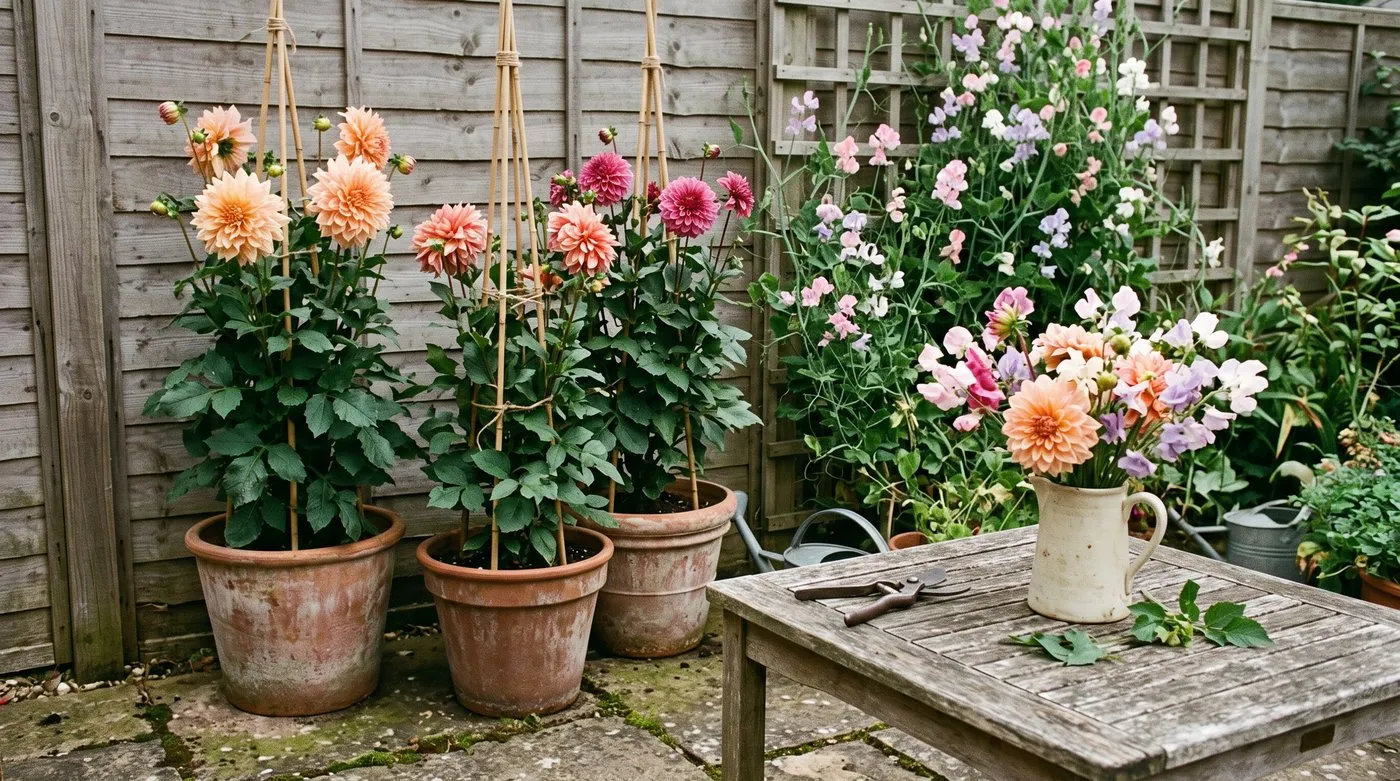
No spare bed? A few big pots of dahlias and sweet peas up an existing fence still give you stems every week.
Frequently asked questions
How wide should cutting garden beds be?
About 1.2m, if you can reach it from both sides. That lets you reach the middle without stepping on the soil. If the bed backs onto a wall or fence, keep it to about 60 to 75cm. Wider beds mean treading on the soil, which squashes it and harms roots.
How far apart should rows be in a cutting garden?
About 30 to 40cm for most annuals. Give bigger plants like dahlias and sunflowers about 60cm. Crowded plants grow weaker, floppier stems. Good spacing also makes picking easier and helps keep diseases away. Check each seed packet too.
Which direction should cutting garden rows run?
Run your beds north to south where you can. Then both long sides of the bed get sun during the day. Put the tallest plants at the north end so they don’t shade the shorter ones.
How do I plan a succession cutting garden?
Group plants by when they flower: early, mid-season and late. Early beds can hold spring bulbs and hardy annuals. Mid-season suits sweet peas, cosmos and larkspur. Late beds suit dahlias, zinnias and asters. Sow quick annuals again every few weeks in spring and early summer to keep stems coming into autumn.
How much space do I need for a cutting garden?
About 2m x 3m is a good minimum. That fits five or six varieties and gives you small bunches through summer. Around 3m x 4m gives more choice and steadier picking. Bigger plots give plenty for gifts but take more time to sow, stake and cut.
Do I need raised beds for a cutting garden?
No, raised beds are handy but not essential. They help most on heavy clay or wet ground, as they drain better and warm up faster in spring. On good, free-draining soil, beds in the ground work well. Either way, add plenty of compost or well-rotted manure each year.
How do I create a small cutting garden layout in a limited space?
Use one bed of about 1.2m x 3m. Grow five or six varieties in short rows. Grow sweet peas up a frame or wigwam at one end to save space, and put a few dahlias in big pots on a nearby patio. Even this little layout gives regular posies from early summer to autumn.
Related reading
- How to create a cutting garden in the UK, the companion guide on choosing varieties, preparing soil and your first year
- How to grow cut flowers in the UK, a plant-by-plant growing guide for the best cutting flowers
- Succession planting guide, how to stagger sowings for flowers all season
- Flower planting calendar, month-by-month sowing, planting and picking
- Raised bed garden design ideas, how to design and build raised beds for a cutting garden
Our team produces practical UK gardening guidance from source research, contributor records and established horticultural practice. Editorial standards are overseen by Matt W.