
Key takeaways
- Sow indoors from mid-March, one seed per module, because zinnias hate their roots being disturbed
- Plant out only after the last frost, late May in the south and June further north
- Pinch out the tip at 15cm tall for lots more flowering stems
- Pick Zinnia elegans for cutting and compact types like 'Persian Carpet' for pots
- Deadhead every few days to keep flowers coming until the first frost
- Give them full sun, shelter and free-draining soil, and water at the base
Zinnias are one of the brightest half-hardy annuals you can grow in the UK. Sow them indoors in spring, plant them out once the frosts are over, and they’ll give you bold flowers from July right up to the first frost. Pinch and deadhead them and you’ll have plenty to cut for the house.
Which type of zinnia should I grow?
There are three main types, and each suits a different job. Pick the one that matches what you want: vases, borders or pots.
Zinnia elegans is the tall one most people picture. It grows 60-90cm with big double flowers in almost every colour except blue. Flower shapes range from dahlia-like to spiky cactus types and little pompoms. It’s the one to grow for a cutting garden.
Zinnia haageana is short and bushy, around 25-40cm. Its smaller flowers come in warm mixes of red, gold and mahogany. ‘Persian Carpet’ is the best-known one. It copes with wind better than elegans and looks great at the front of mixed borders and in pots.
Zinnia marylandica is a cross between elegans and a smaller species. The ‘Zahara’ and ‘Profusion’ series belong here. They’re compact, shrug off mildew well and are the easiest choice for a windy or exposed garden.
| Zinnia elegans | Zinnia haageana | Zinnia marylandica | |
|---|---|---|---|
| Height | Tall (60-90cm) | Short (25-40cm) | Short (25-45cm) |
| Flowers | Big, double | Small, two-tone | Medium, single or semi-double |
| Best for | Cutting, back of border | Pots, border edges | Exposed spots, low fuss |
| Mildew | Prone | Fair | Very tough |
How to sow zinnia seeds indoors
Zinnias come up fast but hate having their roots disturbed. So sow one seed per module or small pot, not in a seed tray you’ll need to prick out later.
 Zinnia seedlings a few weeks old. One seed per module means no root disturbance when you plant them out.
When: Mid-March to mid-April. Very early sowings tend to get leggy, while later ones catch up quickly in the warmth. Our guide to sowing seeds indoors covers the basics.
How: Fill modules or 9cm pots with multipurpose compost with a little perlite mixed in. Push one seed about 6-8mm deep. Water from below, cover with a clear lid and keep somewhere warm, like a heated propagator. They usually pop up in about a week.
Once they’re up: Take the lid off straight away and move them to your brightest spot. If they start to stretch, a grow light just above them helps a lot. Once the first true leaves open, start a weak liquid feed once a week.
How to harden off and plant out zinnias
Zinnias hate cold, and any frost kills them. Wait until the last frost has passed. That’s usually late May in southern England and June in the Midlands, the north and Scotland.
Harden them off over 10-14 days. Put them outside somewhere sheltered for a couple of hours, then a bit longer each day. Bring them in at night for the first week. Our hardening off guide walks you through it.
Where to plant: Full sun and free-draining soil. On heavy clay, dig in some grit and compost first. Avoid shady or soggy spots, as zinnias just sit and sulk there.
Spacing: Plant tall elegans 30-40cm apart and the compact types 25-30cm apart. Water them in well. A mulch of compost helps hold moisture, but keep it off the stems.
How to pinch zinnias for more flowers
Pinching is the easiest way to get more flowers. When a seedling is about 15cm tall, nip out the tip. The plant then grows side shoots, and each one ends in a flower.
Pinch just above a pair of leaves with your fingers or snips. New shoots appear within a week or so. The side shoots grow nice long stems, perfect for cutting.
The catch: Your first flowers arrive a little later, because you’ve removed the first bud. You get many more stems overall, though. If you want early colour for summer flower displays, leave a few plants unpinched.
 Rows of Zinnia elegans ready for picking. Cut when the first ring of petals is fully open.
How to deadhead zinnias properly
Deadhead every few days all summer. Once a flower starts making seed, the plant slows down on new buds. Keep removing the old heads and it keeps flowering until the frost.
Where to cut: Follow the old stem down to the first pair of strong leaves and cut just above them. Use clean scissors or secateurs rather than snapping, as torn stems can go mouldy.
For the vase: Cut when the first ring of petals is fully open. A handy test is the “wiggle test”: hold the stem a little way below the flower and give it a gentle shake. If it stays stiff, it’s ready. Strip off the lower leaves and change the water every couple of days. Our guide to conditioning cut flowers helps them last longer. Celosia grows on the same timetable and looks lovely in the same bunch.
Saving seed: In September, leave a few of your best heads on the plant. When the petals are dry and papery, cut them and hang them somewhere dry for a couple of weeks. Rub out the seeds and keep them in a labelled paper envelope. Our seed saving guide has more.
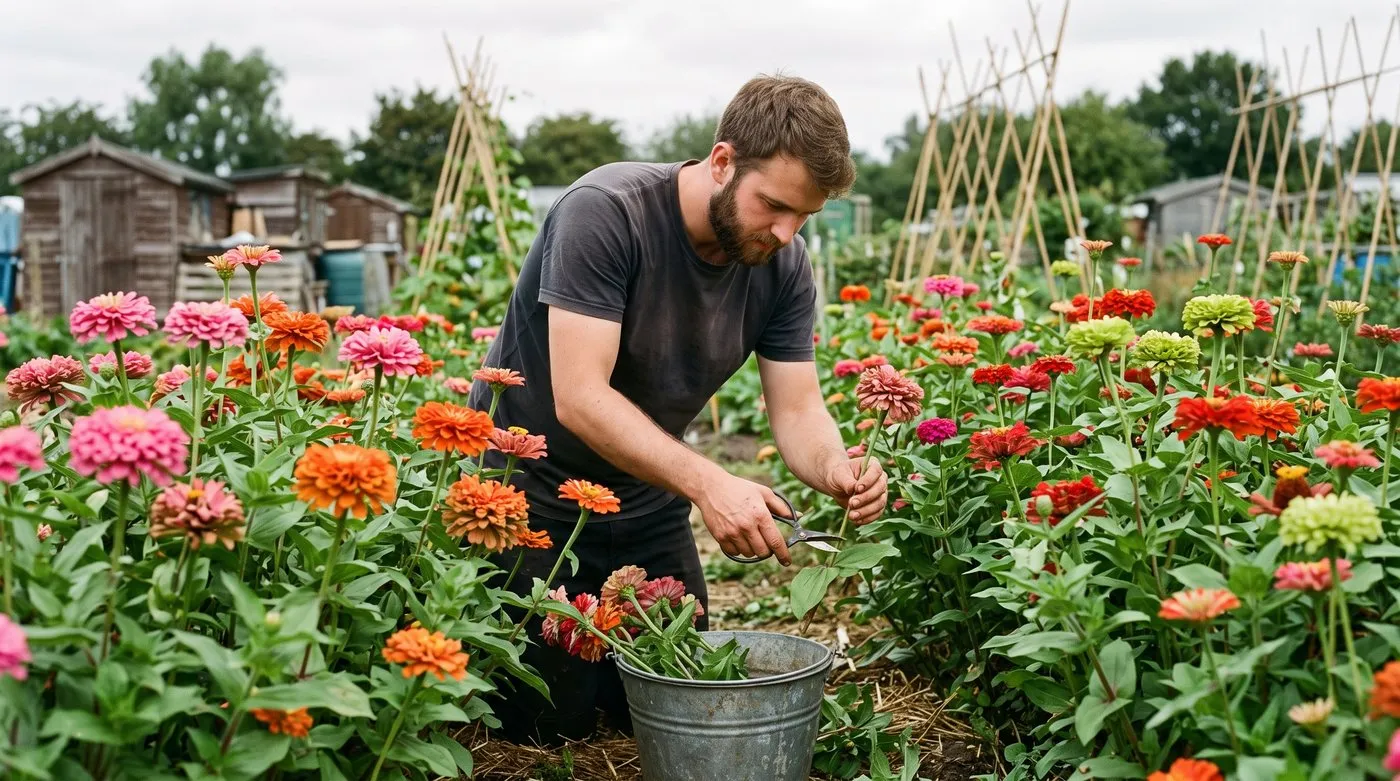
Cut faded flowers back to the first strong pair of leaves. Deadheading every few days keeps zinnias flowering until the frost.
Growing zinnias in containers
Zinnias do well in pots on a sunny patio or balcony. The compact haageana and marylandica types are the best choice. Tall elegans needs a big pot to stay upright.
 ‘Persian Carpet’ zinnias in terracotta pots. Compact types are happy in pots 25cm across or more.
Pot size: At least 25cm across for compact types and 30cm for elegans. Terracotta suits them, as it dries out a bit between drinks.
Compost: Multipurpose compost with plenty of perlite or grit mixed in. Good drainage matters, because soggy roots rot fast.
Watering and feeding: Water at the base, often in hot weather, and let the top of the compost dry a little in cooler spells. Once buds appear, give a tomato feed once a week to keep the flowers coming.
Container zinnias look great alongside dahlias in pots. Our container combinations guide has more ideas.
Common zinnia problems in the UK
Powdery mildew is the big one. You’ll see a white dusty coating on the leaves from late summer, especially in humid weather. Space plants well, water at the base and choose tough varieties like Zahara or Profusion. Pick off affected leaves and bin them. See our guide to common plant diseases for more.
Slugs and snails love young plants just after planting out. Keep a close eye for the first couple of weeks. Wildlife-friendly slug pellets (ferric phosphate) or nematodes both help. Our guide to getting rid of slugs has lots more ideas.
Grey mould turns up in cool, wet summers as fuzzy grey patches. Clear away dead flowers and leaves, don’t overcrowd plants, and avoid watering in the evening.
Leaf spot shows as brown spots on the lower leaves in wet weather. Remove the spotty leaves and mulch around the base so rain doesn’t splash soil up.
Stunted, yellowing plants were usually planted out too early into cold soil. Zinnias stop growing when it’s chilly. Wait until the weather has properly warmed up.
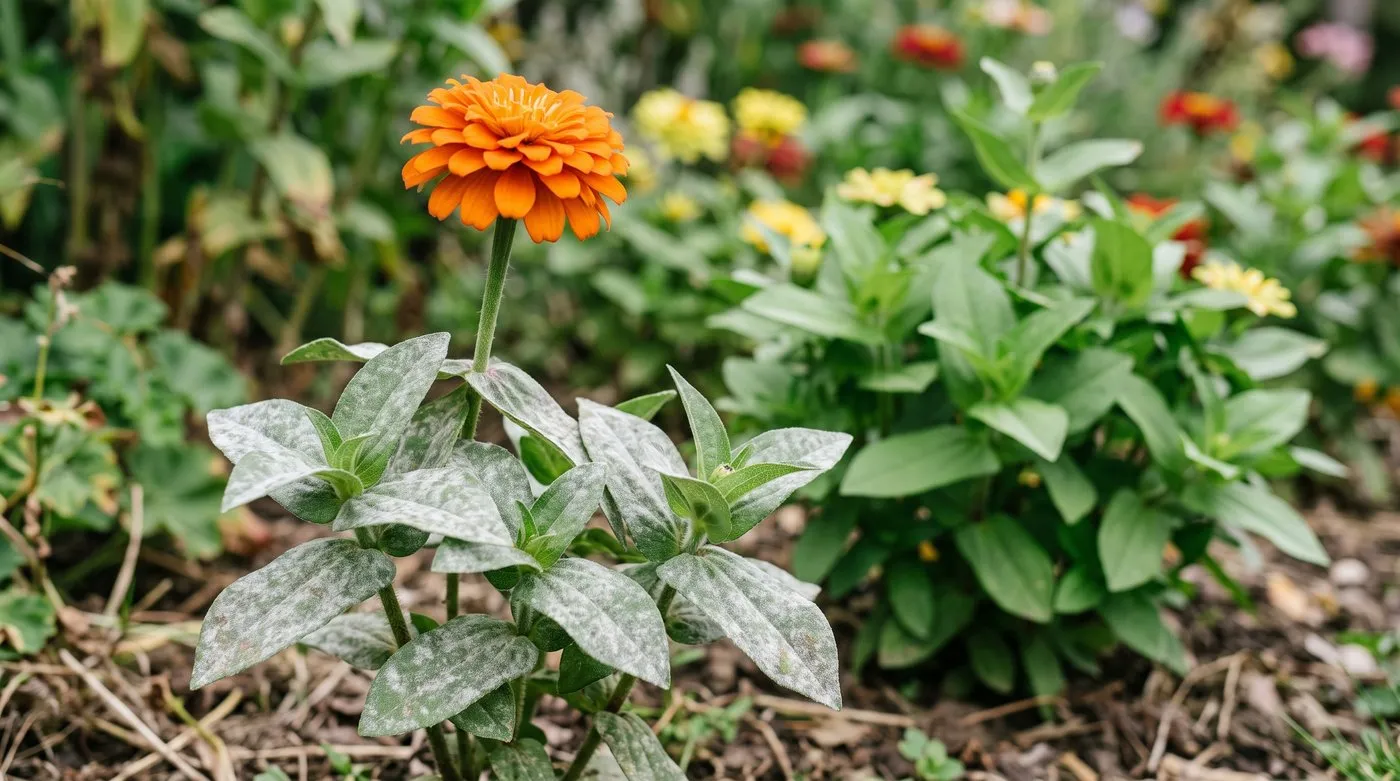
A white dusty coating on the leaves is powdery mildew. Water at the base, space plants well and bin the worst leaves.
Month-by-month zinnia care calendar
| Month | What to do |
|---|---|
| January | Order seed. Pick varieties for cutting, borders and pots. |
| February | Clean modules and get your propagator or grow light ready. |
| March | Sow indoors from mid-March somewhere warm. |
| April | Keep sowing. Pot on if roots fill the modules. Start a weak feed. |
| May | Harden off. Plant out in late May in the south once frosts are over. |
| June | Plant out further north. Pinch tips at 15cm. Water in dry spells. |
| July | First flowers. Deadhead every few days and start cutting. Feed weekly. |
| August | Peak flowering. Watch for mildew. Keep deadheading and feeding. |
| September | Leave a few heads to set seed. Keep cutting the rest. |
| October | The first frost ends the season. Pull out plants and compost them. |
| November | Clean and store seed in paper envelopes. |
| December | Browse catalogues and plan next year’s colours. |
For the rest of your flowers, use our flower planting calendar.
Best zinnia varieties for UK gardens
Here are some good, easy-to-find picks for different spots.
For cut flowers:
- ‘Benary’s Giant’ (elegans, around 90cm). Big double flowers on long stems.
- ‘Oklahoma’ (elegans, around 75cm). Fully double flowers in lots of colours.
For borders and bedding:
- ‘Zowie! Yellow Flame’ (elegans, around 60cm). Red and yellow two-tone flowers that really stand out.
- ‘Lilliput’ (elegans, around 45cm). Little pompom flowers on a bushy plant. Lovely for cottage garden planting.
For containers and small spaces:
- ‘Persian Carpet’ (haageana, around 30cm). Two-tone red, gold and mahogany flowers. It branches by itself, so there’s no need to pinch.
- ‘Zahara Double Fire’ (marylandica, around 25cm). Cherry red flowers on a tough, compact plant.
Zinnias as pollinator plants
Zinnias are great pollinator plants, loved by bees, butterflies and hoverflies. Single and semi-double flowers are best, as insects can get to the centre easily.
For wildlife, leave some heads to go to seed in autumn, as goldfinches enjoy them. Grow zinnias with cosmos and sunflowers for a long run of flowers for insects.
Zinnias sit happily alongside the best annual flowers to grow from seed, though remember they’re half-hardy and need frost-free weather. Once you’ve got the hang of keeping them warm, they’ll reward you with months of colour. The RHS zinnia growing guide is a handy next read.
Frequently asked questions
When should I sow zinnia seeds in the UK?
Sow indoors from mid-March to mid-April. Keep them somewhere warm and they come up in about a week. Don’t sow or plant outside until the frosts are over, which is late May in the south. In northern England and Scotland, wait until June.
Can zinnias survive UK winters?
No, they can’t. Zinnias are half-hardy annuals and the first autumn frost finishes them off. Sow fresh seed each spring. You can save seed from your best flower heads in September by letting them dry on the plant.
Why are my zinnia seedlings leggy and weak?
They’re not getting enough light. Seedlings stretch towards the window when early spring days are short. Move them to the brightest spot you have, or use a grow light just above them. Don’t sow too early either, as mid-March to April sowings catch up fast.
Do zinnias grow well in pots in the UK?
Yes, if you choose a compact variety. ‘Persian Carpet’ and ‘Thumbelina’ stay short and suit pots 25cm across or bigger. Use free-draining compost with some perlite or grit mixed in. Water often in summer and give a weekly tomato feed once buds appear.
How do I stop zinnias getting powdery mildew?
Water at the base, never over the leaves. Mildew loves wet leaves in still, humid air. Space plants 25 to 30cm apart, water in the morning, and grow tougher types such as the Zahara or Profusion series. Pick off and bin any affected leaves.
Should I pinch out zinnia seedlings?
Yes, pinch out the tip at about 15cm tall. The plant then sends out side shoots, and each one gives you a flower. You get far more stems for cutting. Nip it off just above a pair of leaves with your fingers or snips.
What are the best zinnia varieties for UK gardens?
It depends what you want them for. For cutting, try ‘Benary’s Giant’ or ‘Oklahoma’. For borders, ‘Zowie! Yellow Flame’ is a cheerful red and yellow. For pots, go for ‘Persian Carpet’ or the Zahara series.
Our team produces practical UK gardening guidance from source research, contributor records and established horticultural practice. Editorial standards are overseen by Matt W.


