
Key takeaways
- Pick in the early morning, while the stems are full of water
- Cut stems at an angle with sharp secateurs, ideally under water
- Strip off every leaf that would sit below the water line
- Use the flower food sachet, or a little sugar with a drop of bleach
- Change the water every 2 days and trim a little off each stem
- Keep vases away from sun, radiators and fruit
Cut flowers that are picked and prepared well last days longer than ones plonked straight in a vase. There’s no secret to it. It all comes down to how you pick, trim, water and feed each stem, so the flower can keep drinking once it’s off the plant. Florists call this “conditioning”, and it only takes a few minutes.
When is the best time to harvest cut flowers?
Pick in the early morning, while it’s cool and the stems are full of water. By the middle of a hot afternoon, plants have lost a lot of moisture through their leaves, and the flowers flag sooner. Early evening is the next best time.

An early start pays off: morning-picked stems are at their juiciest.
Pick each flower at the right stage. Cut roses when the bud is half open and feels soft when you gently squeeze it. Dahlias need to be fully open, because they won’t open any more once cut. Sweet peas are ready when 2 or 3 flowers are open and the top bud is still closed.
Take a bucket of lukewarm water out with you and pop each stem in as soon as you cut it. Air gets into a cut stem very quickly. If stems have been lying around out of water, re-cut them before they go in the vase.
How do you cut flower stems for a vase?
Cut each stem at an angle, ideally under water. This stops air bubbles getting into the stem and blocking its drink, which is a common reason for flowers drooping on day one. An angled end also can’t sit flat on the bottom of the vase and seal itself off.

Cutting under water keeps air out of the stem.
Use sharp secateurs or a clean knife rather than scissors, which squash the stem instead of slicing it. A squashed end drinks poorly and goes slimy faster.
To cut under water, fill a washing-up bowl with lukewarm water. Hold the bottom few centimetres of the stem under the surface and make your cut there.
Stem conditioning by flower type
Different stems like slightly different treatment after that first cut.
Soft stems (sweet peas, cosmos, zinnias): an angled cut is all they need. Stand them in deep water for an hour or two.
Woody stems (roses, hydrangeas, lilac): after the angled cut, make a short upward slit of about 3cm into the base to help them drink. Stand them in deep water for a few hours or overnight.
Hollow stems (dahlias, delphiniums, lupins): turn the stem upside down, fill it with water, then plug the end with a little cotton wool before it goes in the vase.
Milky sap stems (poppies, euphorbias): dip the cut end in just-boiled water for about 10 seconds to seal the sap. Euphorbia sap irritates skin, so wear gloves.
What water should you use for cut flowers?
Most flowers like lukewarm water to start with. It’s taken up more easily than icy water from the tap. The RHS suggests lukewarm water for most cut flowers.
Spring bulb flowers are the exception. Tulips, daffodils and hyacinths prefer cold water. In warm water, tulips keep growing and flop about.
Fill the vase about two-thirds full. Then check that no leaves sit under the water. Leaves left in the water rot quickly and turn it murky, and that gunk blocks the stems.
How often should you change vase water?
Change the water every 2 days. Germs build up quickly in vase water, especially in a warm room. If the stem ends feel slimy, you’ve left it too long.
Each time you change the water, trim about 2cm off each stem at an angle. This cuts off the clogged end so the stem can drink again. Add fresh flower food to the new water too.
Does flower food actually work?
Yes, the little sachet that comes with bought flowers really helps. It’s the easiest way to keep a vase going longer than plain tap water.
It does three jobs. Sugar feeds the flowers. A mild cleaner keeps germs down in the water. And it makes the water slightly acidic, which helps stems drink.
Flower food vs DIY preservatives
| Option | Worth it? | Notes |
|---|---|---|
| Plain tap water | Fine at a pinch | Change it often |
| Flower food sachet | Yes, the best choice | Use at the packet rate |
| Sugar plus a drop of bleach | Yes, a good backup | 1 tsp sugar and 2 drops bleach per litre |
| Lemonade | Sometimes | Not the clear winner people think |
| Aspirin | Not really | Skip it |
| Vodka | Not really | Save it for yourself |
| Copper coins | No | Skip it |
If you’ve run out of sachets, make your own. Stir 1 teaspoon of white sugar and 2 drops of household bleach into each litre of lukewarm water. The sugar is food and the bleach keeps the water clean. Keep it well out of reach of children and pets. Don’t bother with aspirin, coins or vodka.
How long do different cut flowers last in a vase?
Some flowers are naturally long-lasting and some are fleeting, however well you look after them. Knowing which is which helps you plan.
| Flower | Rough vase life with good care | When to pick |
|---|---|---|
| Roses | About a week or more | Half-open bud |
| Dahlias | About 5 to 7 days | Fully open |
| Sweet peas | About 4 to 5 days | 2 or 3 flowers open |
| Chrysanthemums | Two weeks or more | Fully open |
| Sunflowers | About a week or more | Petals just opening out |
| Zinnias | About a week or more | Fully open, firm centre |
| Cosmos | About 5 to 7 days | Just opened |
| Snapdragons | About a week or more | Bottom third open |
| Foxgloves | About a week | Bottom flowers open |
| Alstroemeria | Up to two weeks | Buds showing colour |
For a vase that lasts, mix long-lasters like chrysanthemums, alstroemeria or the long-lasting chincherinchee with shorter-lived flowers like sweet peas. Swap the sweet peas out after a few days and the arrangement still looks full. Growing your own cut flower patch gives you fresh stems all summer.

A well-prepared mixed vase, kept going with fresh water every couple of days.
What is the best vase placement for cut flowers?
Keep vases out of direct sun and away from radiators and the fruit bowl. Heat makes petals lose water fast, so a vase in a sunny window fades days sooner.
Ripening fruit gives off a gas called ethylene, which makes flowers age and drop their petals. Keep your arrangements well away from the fruit bowl, especially bananas and apples.
The best spot is a bright, cool room out of direct sun. In summer, move the vase to the coolest room overnight and it’ll last noticeably longer. A cutting garden layout with beds near the kitchen door makes picking and arranging easy.
Avoid draughty spots by open windows on windy days, too. Moving air dries petals faster.
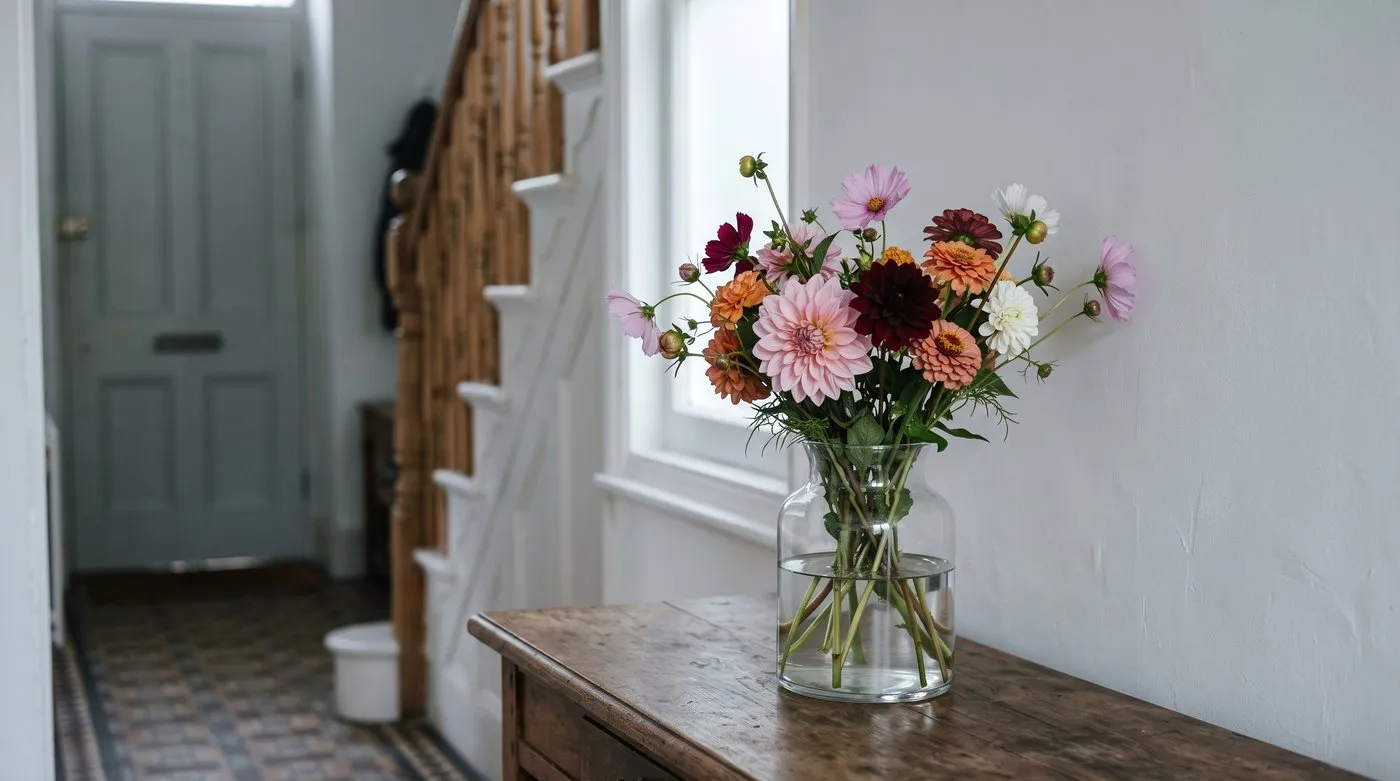
A cool, bright spot out of direct sun keeps flowers going longest. Keep them away from radiators and the fruit bowl too.
Step-by-step conditioning method
- Pick early in the morning straight into a bucket of lukewarm water
- Strip the lower leaves, so nothing will sit below the water
- Cut each stem at an angle under water
- Slit woody stems about 3cm up from the base
- Fill hollow stems with water and plug them with cotton wool
- Seal milky stems in just-boiled water for about 10 seconds
- Give them a long drink in deep water in a cool spot for a few hours
- Add flower food to a clean vase, at the packet rate
- Fill the vase about two-thirds with lukewarm water and arrange
- Stand it somewhere cool and bright, away from heat and fruit
- Change the water every 2 days, trimming 2cm off each stem
For dried herbs and flowers, skip all this and hang bunches upside down in a warm, dry room. Some everlasting flowers can do both: gomphrena lasts well in water before you dry the clover-like heads.
Common conditioning mistakes to avoid
Leaving leaves under the water. This is the big one. They rot fast and clog every stem in the vase. Be ruthless. Better too few leaves than too many.
Using icy tap water. Very cold water is slow to be taken up. Use lukewarm water for everything except spring bulbs.
Leaving stems out of water after cutting. Air gets in quickly. Take a bucket to the garden and re-cut stems before arranging.
Cramming the vase. Packed stems get squashed and the water fouls faster. If stems are jammed in tight, take a third out.
A sunny windowsill. A south-facing sill in summer is the worst spot. The water warms up and petals drop. A cooler, shadier room keeps them going longer.
Frequently asked questions
Should I cut flower stems at an angle or straight?
Cut at an angle. It gives the stem more surface to drink through, and it stops the end sitting flat on the bottom of the vase and sealing itself off. Use sharp secateurs or a knife, not scissors, which squash the stem.
Does cutting flower stems underwater really help?
Yes, it stops air bubbles getting into the stem. Trapped air can block the stem’s drink and make flowers droop early, even in fresh water. Just hold the stem ends under the water in a bowl and cut there.
How often should I change vase water?
Every 2 days is ideal. Germs build up in old water and clog the stem ends, especially in a warm room. Each time, trim about 2cm off each stem and add fresh flower food.
What is the best DIY flower food for cut flowers?
Sugar and a drop of bleach in the water. Use 1 teaspoon of white sugar and 2 drops of household bleach per litre. The sugar feeds the flowers and the bleach keeps the water clean. A shop sachet is still the easiest choice if you have one.
Why do my sweet peas wilt after one day in a vase?
Their thin stems lose water very quickly. Pick them early in the morning, put them straight into water, and give them a deep drink for a couple of hours before arranging. Keep the vase out of the sun. Even then, sweet peas only last about 4 to 5 days, so keep picking.
Can I condition woody-stemmed flowers like roses the same way?
Almost, but they need a bit more help. Cut at an angle, make a short slit about 3cm up the stem, and strip thorns and leaves below the water line. Stand them in deep lukewarm water for a few hours or overnight before arranging. Well-prepared roses last about a week or more.
What temperature water should I put cut flowers in?
Lukewarm water suits most cut flowers. It’s taken up more easily than icy tap water. Spring bulb flowers like tulips and daffodils are the exception, as they prefer cold water.
Our team produces practical UK gardening guidance from source research, contributor records and established horticultural practice. Editorial standards are overseen by Matt W.


