
Key takeaways
- Plant tubers about 20cm deep in spring to protect them from frost
- Give it a sunny spot and soil that drains well
- Flowers from June to October and lasts up to two weeks in a vase
- Pull stems from the base instead of cutting them
- Mulch the crown well in autumn, especially in the first couple of years
- Divide crowded clumps every three or four years in March or April
Alstroemeria, also called the Peruvian lily, is a real workhorse. It flowers from June right through to the first frosts, and the stems last up to two weeks in a vase. Give it sun and good drainage, plant it deep, and pick the stems the right way.
Modern garden varieties come in every colour from deep red to pure white, and many are compact enough for pots. Get two things right, planting depth and how you pick, and alstroemeria is easy to grow.
Which alstroemeria varieties grow best in the UK?
Pick a variety to suit the spot. Tall ones give long stems for the vase, while compact ones suit pots and the front of the border.
| Variety | Height | Flower colour | Best for |
|---|---|---|---|
| ’Indian Summer’ | 80-100cm | Bronze-orange | Borders, cutting |
| Princess Lilies series | 30-40cm | Lots of colours | Pots, front of border |
| ’Summer Paradise’ | 70-90cm | Salmon-pink | Cutting gardens |
| Ligtu hybrids | 60-90cm | Soft pastels | Cottage gardens |
| ’Summer Breeze’ | 80-100cm | Yellow-gold | Cutting, sunny borders |
| ’Friendship’ | 50-60cm | Pink and cream | Pots, mixed borders |
| ’Mars’ | 70-80cm | Deep red | Hot colour borders |
| ’Sweet Laura’ | 60-80cm | Bright yellow, scented | Scent, cutting |
 Planting tubers in spring, about 20cm deep with the growing points facing up.
How to plant alstroemeria tubers
Plant tubers about 20cm deep in free-draining soil from March to May. This is the step that matters most. Shallow planting is the main reason plants are lost over winter.
Where to plant: Choose a sunny spot, ideally a south or west-facing border. Alstroemeria copes with a little shade but flowers less.
Getting the soil ready: Dig a hole about 30cm deep and wide. On heavy clay, mix in a bucket of grit and some garden compost, as alstroemeria hates sitting wet. On chalk or sand, add organic matter to help hold moisture. Our guide to improving clay soil shows you how.
Planting:
- Put a layer of grit in the bottom of the hole.
- Set the tuber with its growing points facing up.
- Fill in with your improved soil so the crown sits about 20cm down.
- Water well.
- Mark the spot with a cane so you don’t dig it up by mistake.
Spacing: Leave 45-60cm between plants. They spread slowly underground and fill gaps over a few seasons. Keep them about 40cm from neighbouring perennials.
Potted plants: Plants bought in pots can go in from April to September. They settle faster than bare tubers. Plant them a little deeper than they sat in the pot and mulch over the top.
Month-by-month alstroemeria calendar
| Month | What to do |
|---|---|
| January | Order tubers. Check the mulch on established plants. |
| February | Get planting spots ready with grit and compost. |
| March | Plant tubers once the soil warms. Divide crowded clumps when shoots are 5-8cm. |
| April | Keep planting. Mulch around new shoots. |
| May | Start tomato feed every two weeks. Stake tall varieties. |
| June | First flowers. Pull stems for the vase. Remove faded ones. |
| July | Peak flowering. Keep feeding and pulling. Water in dry spells. |
| August | Still flowering. Leave a few Ligtu seedheads if you’d like them to spread. |
| September | Flowering slows. Stop feeding. Cut yellowing leaves to the ground. |
| October | Last flowers go over after the first frosts. Add a thick bark mulch over the crown. |
| November | Nothing to do. Leave dead stems as markers. |
| December | Check the mulch hasn’t blown away. Browse catalogues. |
Pair alstroemeria with other summer flowers for colour from May to October.
Growing alstroemeria for cut flowers
Alstroemeria is one of the longest-lasting cut flowers you can grow. Stems last up to two weeks in clean water, which is why florists love it.
How to pick: Hold the stem firmly near the soil. Pull upwards with a steady twist and it comes away cleanly. This encourages the plant to send up new flowering shoots. Cutting with secateurs leaves a stump that doesn’t do this as well.
Getting stems ready: Strip the leaves from the lower two-thirds of each stem, as leaves under water rot and shorten vase life. Stand the stems in a bucket of cool water for a couple of hours before arranging. Our guide to conditioning cut flowers has more tips.
Making them last:
- Change the water every three days.
- Add a sachet of flower food.
- Keep the vase out of direct sun and away from the fruit bowl, as ripening fruit makes flowers fade faster.
- Trim 2cm off the stems when you change the water.
A few established plants will keep you in flowers most of the summer. For a cutting garden, plant a row along a sunny fence, 45cm apart.
 Fresh alstroemeria in a vase. Pull a few stems each week and the plant keeps on flowering.
How to divide alstroemeria
Divide crowded clumps every three or four years in March or April. Dividing is the easiest way of propagating alstroemeria. It keeps plants flowering well and gives you more for free.
When: Wait until the new shoots are 5-8cm tall. The plant is growing then, but the shoots are short enough to handle. Don’t divide in autumn or winter, when resting tubers can rot.
How:
- Water the plant well the day before.
- Lift the whole clump with a fork, digging well out from the centre.
- Shake off loose soil to see the fleshy tubers.
- Gently pull the clump into pieces, each with several shoots and plenty of roots.
- Trim off any broken tubers with a clean knife.
- Replant straight away, about 20cm deep.
- Water well.
Go gently: The tubers are brittle and snap easily. A small piece with unbroken tubers does better than a big piece with damaged roots.
Divisions may make leaves but few flowers in their first year. By the second summer they’ll be flowering properly.
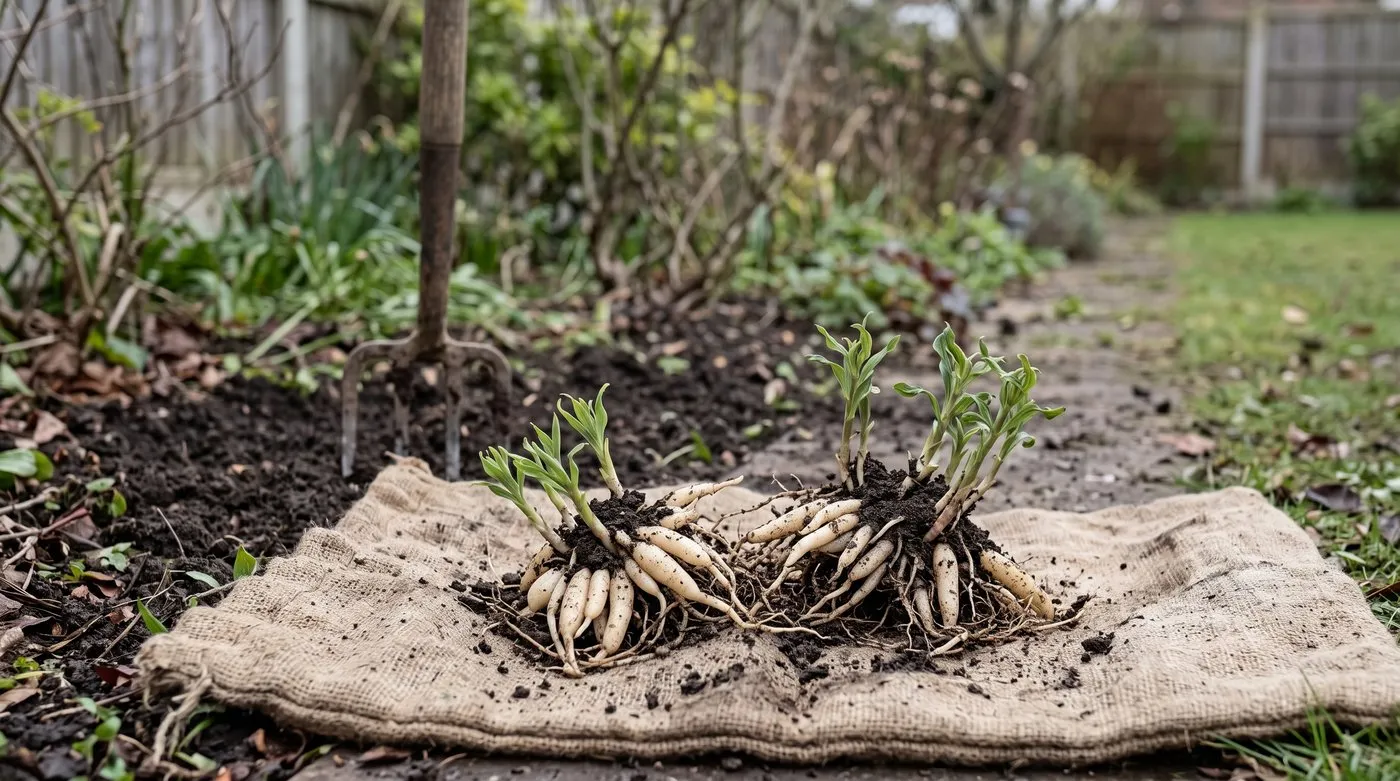
Divide when the new shoots are 5 to 8cm tall. The tubers snap easily, so ease the clump apart gently rather than chopping through it.
Growing alstroemeria in containers
Compact alstroemeria is lovely in pots on a patio or doorstep. The Princess Lilies series is bred to be short, about 30-40cm, and flowers from June to October.
What you need:
- Pot size: at least 30cm wide and 40cm deep
- Material: terracotta or frost-proof glazed pots
- Drainage: plenty of holes, with crocks over them
- Compost: peat-free multipurpose with some perlite mixed in
Planting: One tuber per 30cm pot, or three per 45cm pot. Plant about 15cm deep, growing points up, and water well.
Feeding: Give tomato feed every two weeks from May to September. It helps flowers rather than leaves.
Winter: From November to March, move pots against a sunny, sheltered wall and wrap them in bubble wrap or hessian. Water only now and then. In colder northern gardens, move pots into an unheated greenhouse or cold frame.
 Compact alstroemeria in big terracotta pots on a sheltered patio.
Common alstroemeria problems
Slugs and snails. They love the young shoots in March and April. Scatter a few ferric phosphate pellets thinly around plants if damage is bad. Our guide to getting rid of slugs has lots more ideas. Beer traps nearby help too.
Rot in wet soil. Alstroemeria dies quickly in waterlogged ground. Look out for yellow leaves, soft stems and a nasty smell at the base. Prevention is the cure: add grit at planting, improve drainage on clay soils, and don’t pile wet compost over the crown.
Frost damage. Tubers planted too shallow can be damaged by frost, showing as black, mushy shoots in spring. Plant about 20cm deep and add a thick bark mulch for the first two autumns. Established plants with deep roots rarely suffer.
Red spider mite. In hot, dry summers these tiny mites can make leaves look speckled and bronze. Mist the leaves in the evening. For a bad attack, buy the predatory mite Phytoseiulus persimilis, a natural control.
Lots of leaves, few flowers. The usual causes are not enough sun, too much nitrogen feed, or a crowded clump. Divide in spring, replant somewhere sunnier and switch to tomato feed.
Alstroemeria in cottage garden borders
Alstroemeria fits right into a cottage garden. The soft pastel Ligtu hybrids, in apricot, pink, salmon and cream, blend beautifully with roses, geraniums, delphiniums and lavender.
Good combinations:
- Back of border: ‘Indian Summer’ behind catmint and hardy geraniums
- Middle: Ligtu hybrids with English roses and penstemons
- Front: Princess Lilies with dianthus and low salvias
- Cutting row: tall varieties along a sunny fence for cut flowers
Colour ideas: Orange and yellow alstroemeria look great with blue salvias and purple alliums. Pink ones suit white roses and silver-leaved plants. Deep red ‘Mars’ is striking next to lime-green alchemilla.
It spreads slowly underground, which is handy for filling gaps. Just keep an eye on it so it doesn’t crowd out smaller neighbours.
Quick picks:
- Planting depth: about 20cm, for the best chance through a cold winter
- Best for pots: the Princess Lilies series
- Best on clay: Indian Summer and Ligtu hybrids, with grit in the planting hole
For more long-flowering plants that come back every year, see our guide to the best perennial plants for UK gardens.
Frequently asked questions
When should I plant alstroemeria in the UK?
Plant tubers from March to May, once the soil warms up. Potted plants from the garden centre can go in from April to September. Spring planting gives the roots a whole season to settle before winter. In the north, wait until mid-April when late frosts are less likely. Potted plants often flower in their first summer.
How deep should I plant alstroemeria tubers?
About 20cm deep, with growing points facing up. Deep planting keeps the crown safe from frost. On light, sandy soil in the milder south, 15cm is enough.
Why is my alstroemeria not flowering?
Usually it isn’t getting enough sun. Alstroemeria likes a sunny spot for most of the day. Other causes are shallow planting, too much high-nitrogen feed, or an old, crowded clump. Divide it in spring, move it somewhere sunnier if needed, and use tomato feed from May.
Can I grow alstroemeria in pots and containers?
Yes, in a pot at least 30cm wide and 40cm deep. Use multipurpose compost mixed with some perlite for drainage. The compact Princess Lilies are great in pots. Water when the top few centimetres feel dry and feed every two weeks with tomato feed from May to September. In winter, move pots against a sunny, sheltered wall.
Should I cut or pull alstroemeria stems?
Pull them, don’t cut them. Hold the stem near the soil and pull with a gentle twist. It comes away cleanly and the plant sends up new shoots. Cutting leaves a stump that can rot in wet weather.
Is alstroemeria hardy in the UK?
Most garden varieties cope well with a UK winter if planted deeply. Plant them about 20cm deep and add a thick bark mulch over the crown in autumn, especially in the first couple of years. The compact Princess types are a bit more tender, so give them extra cover in cold, exposed gardens.
How do I divide alstroemeria?
In March or April, once new shoots are 5-8cm tall. Dig widely around the clump and lift it carefully. Gently pull the fleshy tubers apart into pieces with several shoots each. Replant 20cm deep in soil with added compost, water in and mulch. The tubers snap easily, so go slowly.
Our team produces practical UK gardening guidance from source research, contributor records and established horticultural practice. Editorial standards are overseen by Matt W.


