
Key takeaways
- Fully hardy and happy in almost any soil, including heavy clay
- Grows in sun or part shade, but not deep shade
- Lime-green flowers from June to August, lovely in a vase
- Cut the whole plant back after flowering for fresh leaves and fewer seedlings
- Divide clumps every three or four years in spring or autumn
- Very few pests or diseases bother it
Alchemilla mollis, also called lady’s mantle, is one of the easiest perennials you can grow. It’s happy in sun or part shade and on almost any soil, from heavy clay to thin chalk. Plant it, cut it back once a year, and it carries on for years.
Its soft, scalloped leaves catch raindrops like little silver beads. Frothy lime-green flowers follow from June to August, softening path edges and filling gaps between taller plants. Left alone, it seeds itself everywhere. One cut after flowering keeps it neat.
Which Alchemilla should I grow?
Most people want Alchemilla mollis, but there are a couple of smaller cousins for tight spots.
Alchemilla mollis is the one you’ll see everywhere. It forms a soft, hairy dome 30-45cm tall with clouds of tiny lime-green flowers. It holds the RHS Award of Garden Merit, a sign it’s a reliable garden plant. It’s the plant tumbling over path edges in classic cottage garden planting plans.
Alchemilla erythropoda is a little one, just 15-20cm tall, with blue-green leaves. Use it in rock gardens, troughs and the front of raised beds, where A. mollis would swamp smaller plants.
Alchemilla alpina is lower still, with silver-backed leaves. It suits gritty, well-drained spots like walls and alpine beds.
| A. mollis | A. erythropoda | A. alpina | |
|---|---|---|---|
| Height | 30-45cm | 15-20cm | 10-15cm |
| Spread | 45-60cm | 25-30cm | 30-40cm |
| Self-seeding | Lots | Some | A little |
| Leaves | Soft and hairy | Blue-green | Silver underneath |
| Best for | Borders, edging, ground cover | Rock gardens, troughs | Alpine beds, walls |
| Soil | Almost any | Free-draining, gritty | Gritty |
Where to plant Alchemilla mollis
It grows in sun or part shade on almost any soil. Clay, chalk, sand, acid or alkaline, it really isn’t fussy. It’s fully hardy too, so winter cold won’t worry it. The RHS plant page has the details if you’d like them.
Good spots include:
- Border edges, where it softens hard lines and spills over paths
- Under deciduous trees, in dappled light
- Between roses, as ground cover that goes with every colour
- North-facing borders, where lots of plants sulk
- Slopes and banks, where its dense roots help hold the soil
The one place it dislikes is ground that stays waterlogged for weeks, where the crown can rot. If your soil holds puddles, raise the planting area a little and mix in some grit. Otherwise it’s one of the best plants for clay soil you can choose.
 Lady’s mantle spilling over a stone path, with lavender and roses close by.
How to plant Alchemilla mollis
Plant potted alchemilla any time from March to October, or bare-root pieces in spring or autumn. It’s simple:
- Dig a hole twice as wide as the root ball and just as deep.
- On very sandy soil, mix a handful of garden compost into the soil you dug out.
- Set the plant so the crown sits level with the soil, not buried.
- Firm the soil around it with your hands.
- Water well.
- Mulch with bark or compost, keeping it a little away from the crown.
Spacing: 45cm apart for edging, or 30cm apart for faster ground cover. Leave a bit more room next to smaller neighbours.
Looking after Alchemilla mollis through the year
This is one of the easiest perennials going. Once settled, it needs very little. The one job that really matters is the cut after flowering.
The big cut (late July): When the flowers start to look tired, cut every stem down to about 5cm with shears. Don’t be shy, the whole mound goes. Fresh green leaves come back within a few weeks and stay neat until the frosts. This also stops it seeding all over the garden.
Watering: New plants need a weekly drink for the first couple of months. After that, alchemilla is fairly drought tolerant. Only water in a long dry spell.
Feeding: Usually not needed. On very poor soil, scatter a handful of general fertiliser around each plant in March. Too much feed makes it floppy.
Winter: Nothing to do. The leaves die back after the first hard frost. Leave them until March, then clear them away to make room for new growth.
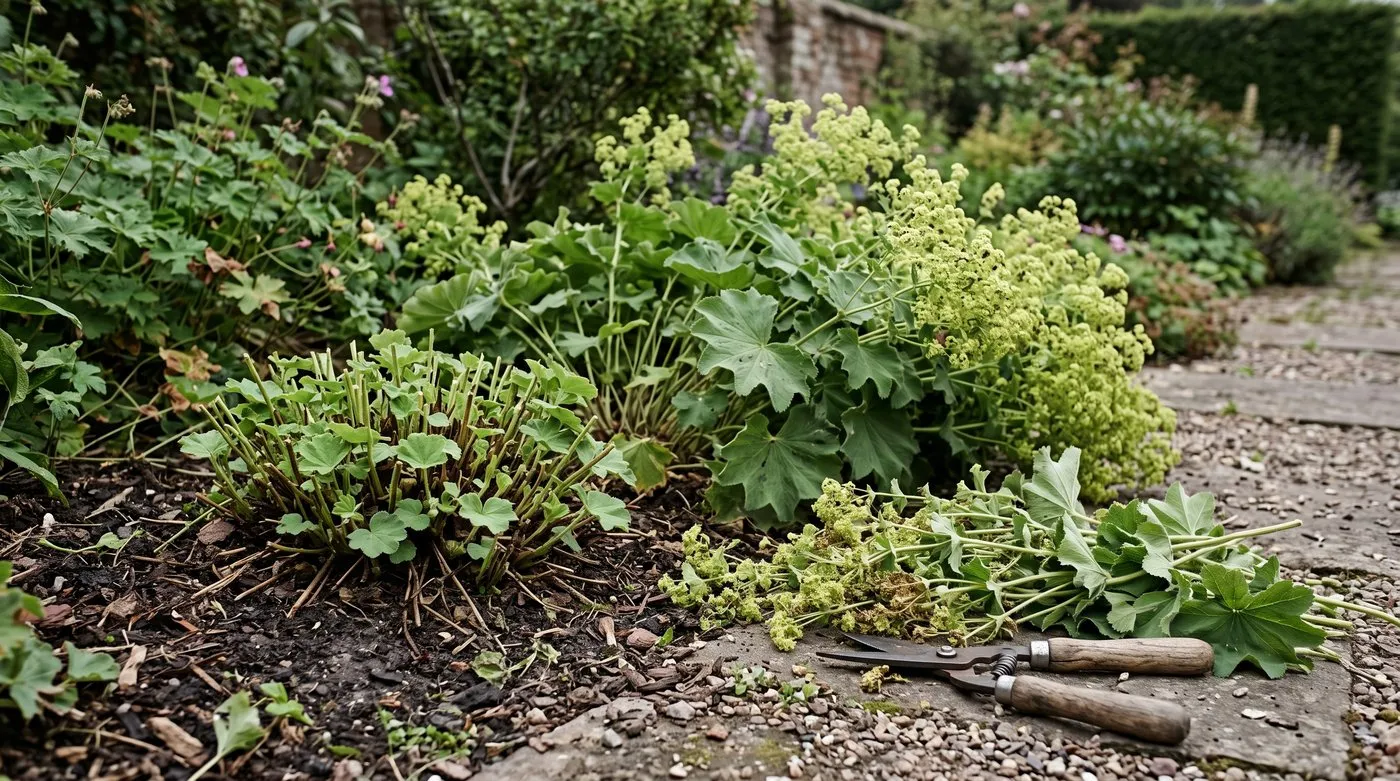
Don’t be shy with the July cut. The whole mound comes back with fresh leaves in a few weeks, and it stops lady’s mantle seeding everywhere.
Dividing and propagating Alchemilla mollis
Dividing is the easiest way to get more plants. You’ll have flowering-sized plants in one season. Self-sown seedlings take longer to fill out.
 Splitting a big clump in spring. Each piece with a few crowns soon settles in.
How to divide (March or September):
- Lift the whole clump with a garden fork.
- Shake off loose soil so you can see the crowns.
- Split it with two forks back to back, or cut with a sharp knife.
- Make sure each piece has a few crowns and healthy roots.
- Replant straight away at the same depth.
- Water well and keep moist for about a month.
Divide every three or four years. Old clumps go woody in the middle and flower less. Splitting them perks them right up.
From seed: Sow fresh seed on moist compost in September and leave the pots outside over winter. The cold helps it come up the next spring. Prick out seedlings into small pots and plant out in autumn. They flower in their second year. You can also dig up self-sown seedlings from March and move them where you want.
What to plant with Alchemilla mollis
Lady’s mantle goes with almost anything. Its lime-green flowers link other colours together, and its leaves fill gaps at the feet of taller plants and smother weeds.
Classic partners:
- Roses: the ultimate cottage garden pairing. Lime-green looks great with every rose colour. Plant alchemilla about 30cm from shrub roses to hide their bare stems. It’s a favourite plant combination for UK borders.
- Lavender: likes similar spots and flowers at the same time. Purple and lime-green really pop together.
- Geranium ‘Rozanne’: the violet-blue flowers of this hardy geranium look lovely against alchemilla all summer.
- Foxgloves and delphiniums: tall spires rising above alchemilla’s low mounds give that tiered cottage look.
Hard-working ground cover: its dense leaves shade the soil, which helps keep moisture in and weeds down. Try it under fruit trees, between roses and along the front of mixed borders.
 Fresh-cut lady’s mantle softening a jug of roses and foxgloves.
Using Alchemilla mollis as a cut flower
Florists love it as a filler, and you can cut plenty without spoiling the plant. It lasts about a week in a vase.
Cutting tips:
- Cut when most of the tiny flowers on a spray are open.
- Cut in the morning, before the heat of the day.
- Use a sharp knife or clean secateurs.
- Pop stems straight into cool water.
- Strip off any leaves that would sit below the water.
If you’re planning a cutting garden, a few plants will keep you in sprays from June to August.
It dries well too. Hang bunches upside down somewhere warm and dark for a couple of weeks. Dried sprays are great in wreaths.
Common Alchemilla mollis problems
Lady’s mantle has very few problems. Its hairy leaves don’t appeal much to slugs, and diseases rarely bother it. The main issue is how keen it is to spread.
Floppy growth: On rich, damp soil or in heavy shade, stems flop outwards and the neat dome falls apart. Stop feeding, water less, and move it somewhere sunnier if you can.
Slug damage: Not common, though young seedlings can get nibbled in a wet spring. If slugs are a pain in your garden, our guide to getting rid of slugs naturally can help.
Crown rot: Only happens in waterlogged soil. Raise the bed a little or mix grit into the planting hole.
Month-by-month Alchemilla mollis calendar
| Month | What to do |
|---|---|
| January | Plan new plantings. Order bare-root plants. |
| February | Clear last year’s dead leaves. Look for seedlings to move. |
| March | Divide big clumps. Plant new ones. |
| April | Mulch around plants, keeping it off the crowns. |
| May | Growth takes off. Nothing to do but enjoy it. |
| June | First flowers. Start cutting sprays for the house. |
| July | Peak flowering. Cut the whole plant to 5cm once the flowers fade. |
| August | Fresh new leaves fill out. |
| September | Divide if needed. Move seedlings. Sow seed. |
| October | Final tidy. Plant new divisions. |
| November | Leaves die back after the first hard frost. Leave them be. |
| December | Resting. Nothing to do. |
If you grow it with other summer flowers, the July cut tidies the front of the border just as later plants take over.
Lady’s mantle gives a lot for very little effort. For more easy plants, see our guide to the best perennials for UK borders.
Frequently asked questions
Is Alchemilla mollis invasive in UK gardens?
No, but it does self-seed very freely. The fix is easy. Cut all the flower stems down to about 5cm as soon as the flowers fade, usually late July. That stops seeds forming. Any seedlings that do appear pull out easily while they’re young. If you’d like a few more plants, leave one or two flower heads to seed.
Can I grow Alchemilla mollis in full shade?
It copes with part shade but not deep shade. Under a dense evergreen it gets leggy and flowers poorly. Morning sun with afternoon shade, or the dappled light under deciduous trees, suits it nicely.
When is the best time to divide Alchemilla mollis?
In March or September. Spring divisions settle in fastest because the plant is just starting to grow. Lift the clump with a fork, split it into pieces with a few crowns each, and replant straight away at the same depth. Water well for the first month. Spring divisions can flower the same year.
Why are my Alchemilla mollis leaves turning brown?
In late summer, it’s usually just old leaves. They look tired after flowering. Cut the whole plant down to about 5cm and fresh green leaves soon follow. If leaves brown in spring, the soil may be too wet. Add grit to help it drain, or move the plant somewhere drier.
Does Alchemilla mollis attract bees and pollinators?
It gets some visitors, mainly small insects like hoverflies. It isn’t one of the best plants for bees. Grow it alongside bee favourites like lavender and hardy geraniums for a border that buzzes.
How far apart should I plant Alchemilla mollis?
About 45cm apart for edging or ground cover. Plants spread to around 45-60cm and knit together within a couple of summers. For quicker cover, plant 30cm apart. Leave a bit more room next to small plants so alchemilla doesn’t smother them.
Can I grow Alchemilla mollis in a container?
Yes, in a pot at least 30cm wide. Use multipurpose compost with some grit mixed in for drainage. Water when the top few centimetres feel dry. Pot-grown plants fill their pots quickly, so divide them every two or three years. A single liquid feed in April is plenty.
Our team produces practical UK gardening guidance from source research, contributor records and established horticultural practice. Editorial standards are overseen by Matt W.


