
Key takeaways
- Sow small batches every few weeks to avoid a glut followed by nothing
- Sow lettuce every 2 to 3 weeks from March to August
- Radishes are the quickest crop, ready about 4 to 6 weeks after sowing
- Sow French beans every 3 weeks from mid-May to early July
- Fill gaps with quick catch crops and slot fast crops between slow ones
- Cloches and fleece stretch the season at both ends
Every allotment holder knows the feast-or-famine pattern. Nothing for weeks, then suddenly more lettuce than you can eat and more beans than the freezer can hold. Then it’s all gone and the bed sits empty.
Succession planting fixes this. Instead of sowing all your seed in one go, you sow a little every few weeks. You get a steady, manageable supply of fresh veg from spring to autumn.
How succession planting works
Succession planting means sowing a small batch of the same crop every few weeks. Each batch is ready at a different time, so the harvest is spread out instead of arriving all at once.
Take lettuce. If you sow a short row in early March, another three weeks later, and so on until August, you’ll have lettuce from late spring into autumn. No gaps and no gluts.
It works because most veg are only at their best for a short time. A lettuce is perfect for a week or so before it bolts. Radishes are ready for about a week. Bush French beans crop heavily for a couple of weeks, then slow down. Staggered sowings mean the next batch is ready as the last one finishes.
It works best for quick crops. It’s not worth it for slow crops like pumpkins, parsnips or Brussels sprouts. Nor for crops that keep cropping for months, like courgettes and cordon tomatoes.
Best crops for succession sowing
The best crops grow fast, are only at their best briefly, and can be sown over a long season.
The very best
Lettuce is the classic succession crop. It goes over quickly in warm weather. Sow every 2 to 3 weeks from March to August. Our lettuce growing guide covers which varieties to choose.
Radishes are the quickest of all, ready about 4 to 6 weeks after sowing. Sow every 2 to 3 weeks from March to September. Winter radishes like mooli go in from July.
Spring onions take a couple of months or so. Sow every 3 to 4 weeks from March to July. White Lisbon and Ishikura are reliable.
Spinach is quick but bolts in summer heat, so little and often suits it well. Sow every 3 weeks from March to September, choosing bolt-resistant varieties for summer.
Also very good
French beans: bush types crop for a few weeks then slow down. Sow every 3 weeks from mid-May to early July for beans from July into autumn.
Beetroot: small, golf-ball roots taste best. Sow every 3 to 4 weeks from April to July. See our beetroot growing guide for varieties.
Carrots: slower, but still worth staggering. Sow every 4 to 6 weeks from March to June. Our carrot growing guide covers sowing and keeping carrot fly away.
Peas: mangetout and sugar snaps crop for a few weeks. Sow every 3 weeks from March to June. See our pea growing guide for supports and varieties.
How often to sow each crop
Getting the gap right is the key. Too often and you waste seed and space. Too rarely and you get gaps.
| Crop | Sow every | From | Until | Ready in roughly |
|---|---|---|---|---|
| Leaf lettuce | 2 weeks | March | August | 6 to 8 weeks |
| Head lettuce | 3 weeks | March | July | 10 to 12 weeks |
| Radish | 2 weeks | March | September | 4 to 6 weeks |
| Spring onion | 3 weeks | March | July | 8 to 12 weeks |
| Spinach | 3 weeks | March | September | 6 to 8 weeks |
| French beans | 3 weeks | Mid-May | Early July | 8 to 10 weeks |
| Beetroot | 3 to 4 weeks | April | July | 8 to 12 weeks |
| Early carrots | 4 weeks | March | June | 10 to 14 weeks |
| Mangetout peas | 3 weeks | March | June | 10 to 12 weeks |
| Turnips | 3 weeks | March | August | 6 to 8 weeks |
| Salad rocket | 2 weeks | April | September | 4 to 6 weeks |
| Coriander | 2 to 3 weeks | April | August | 6 to 8 weeks |
Handy rule: sow the next batch when the last one has come up and shown its first true leaves. This works better than counting days, because the weather changes how fast seeds grow.
 Sowing the next batch of lettuce. Sow again once the last batch shows its first true leaves.
Month-by-month succession plan
This plan covers March to September for an average UK garden. Up north, start two or three weeks later. In the south, you can start a week or two earlier. Our seed sowing calendar has more on timings.
March
The season starts. Cold soil is the main hold-up, so use cloches or fleece to warm it.
- Sow outside under cloches: lettuce, radish, spinach, early peas
- Sow indoors: lettuce in modules to plant out later, early beetroot
- Tip: Jot the date in a diary. This is batch one.
A cloche warms the soil enough for seeds to come up weeks earlier than in open ground. Even a sheet of clear plastic laid on the soil for a week before sowing helps.
April
The soil is warming and the days are longer. Most seeds now come up happily without cover.
- Sow outside: more lettuce, radish, spring onions, spinach and peas, plus the first carrots and turnips
- Sow indoors: French beans to plant out once the frosts are over
- Tip: When March sowings show true leaves, sow the next batch.
May
The last frosts pass in most of the UK, usually mid to late May. Tender crops can go out once hardened off.
- Sow outside: everything from April, plus French beans from mid-May, more beetroot, coriander and rocket
- Plant out: lettuce raised indoors
- Tip: You should now have two or three batches of lettuce and radish on the go.
June
The busiest month. Long days and warm soil mean quick growth. Switch to lettuce that’s slow to bolt, such as Lollo Rossa, Little Gem or Batavia types.
- Sow outside: more lettuce, radish, French beans, beetroot, spring onions and carrots, plus the last peas
- Tip: The first radishes and baby lettuce from March should be ready to pick.
July
Picking is in full swing and gaps open up in the beds. Fill them with catch crops (see below).
- Sow outside: more lettuce, radish, beetroot and spinach, plus the last French beans and spring onions
- Pick: lettuce, radishes, peas, early beetroot, spring onions, French beans
- Tip: Clear finished peas and sow something quick in their place.
August
Choices narrow as autumn nears. Stick to fast crops that will beat the shortening days. Our vegetable planting calendar lists what you can sow now.
- Sow outside: last lettuce, more radish and spinach, winter rocket, spring cabbage
- Pick: French beans, beetroot, carrots, lettuce, spring onions
- Tip: Get cloches ready for late sowings. Order garlic and autumn onion sets.
September
The season winds down for most crops. Cover late sowings to keep them going into autumn.
- Sow under cloches: last radishes, winter lettuce, lamb’s lettuce, winter spinach
- Pick: maincrop carrots, beetroot, late French beans, autumn lettuce, spinach
- Tip: Fleece late sowings. Clear finished crops and sow green manure on empty beds.
 Three batches of beetroot at different stages. Staggered sowings give a rolling harvest instead of one glut.
Catch cropping: filling the gaps
Catch cropping means growing something quick in the gap between two main crops. It means no bed sits empty in the growing season.
Good chances to catch crop:
| When you clear | Sow this in the gap |
|---|---|
| Early potatoes (July) | Lettuce, radish, turnips |
| Peas (July) | French beans, spinach, beetroot |
| Broad beans (July) | Lettuce, spring onions, spring cabbage |
| Garlic (July) | Radish, rocket, lamb’s lettuce |
| Early carrots (July) | Late lettuce, winter spinach |
| Onions (August) | Winter lettuce, lamb’s lettuce under cloches |
Clear the old crop and sow the new one the same day, or within a few days. Rake the soil level, sow and water. Every week you wait is growing time lost.
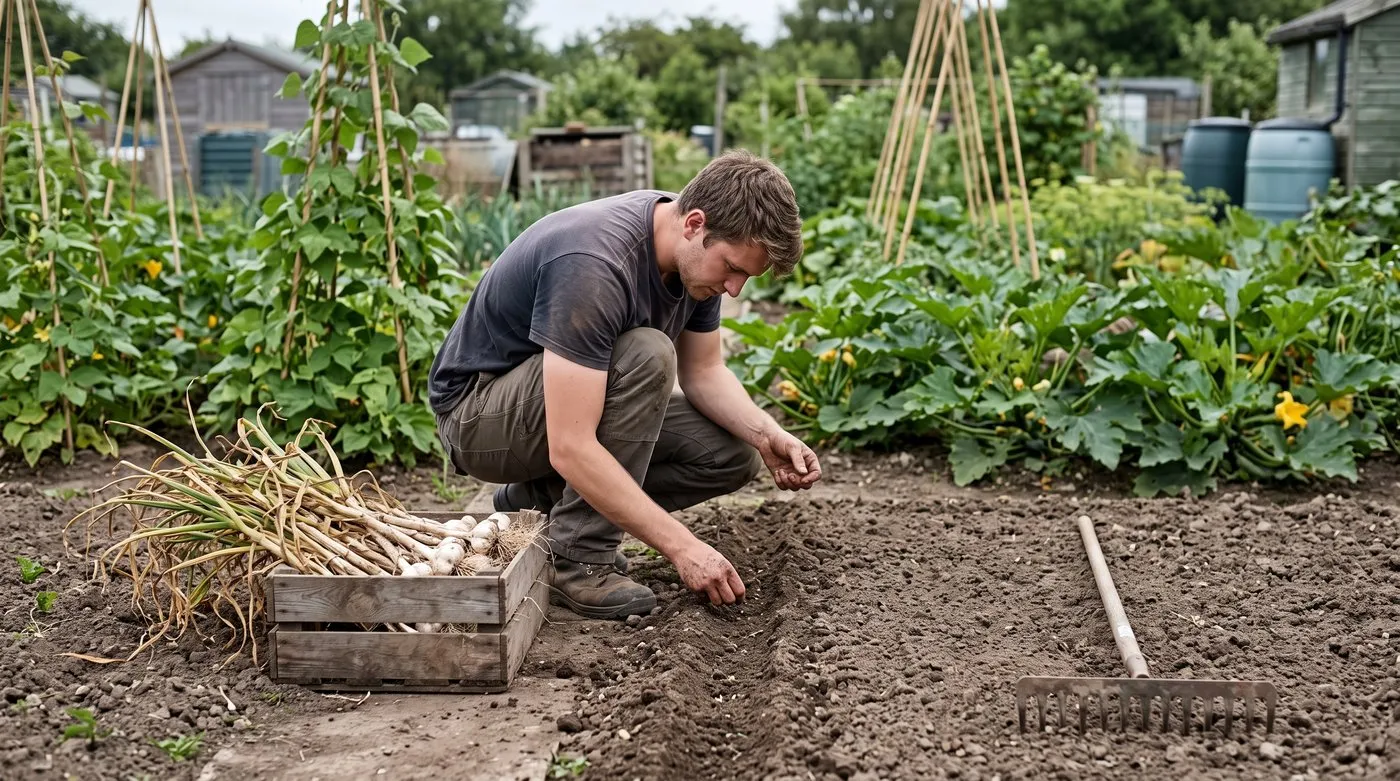
Clear one crop and sow the next the same day. Quick salads like rocket and radish fill the gap before autumn.
Interplanting for more from each bed
Interplanting means growing two crops in the same bed at once. You pair a slow crop with a quick one that’s picked before the slow one needs the room.
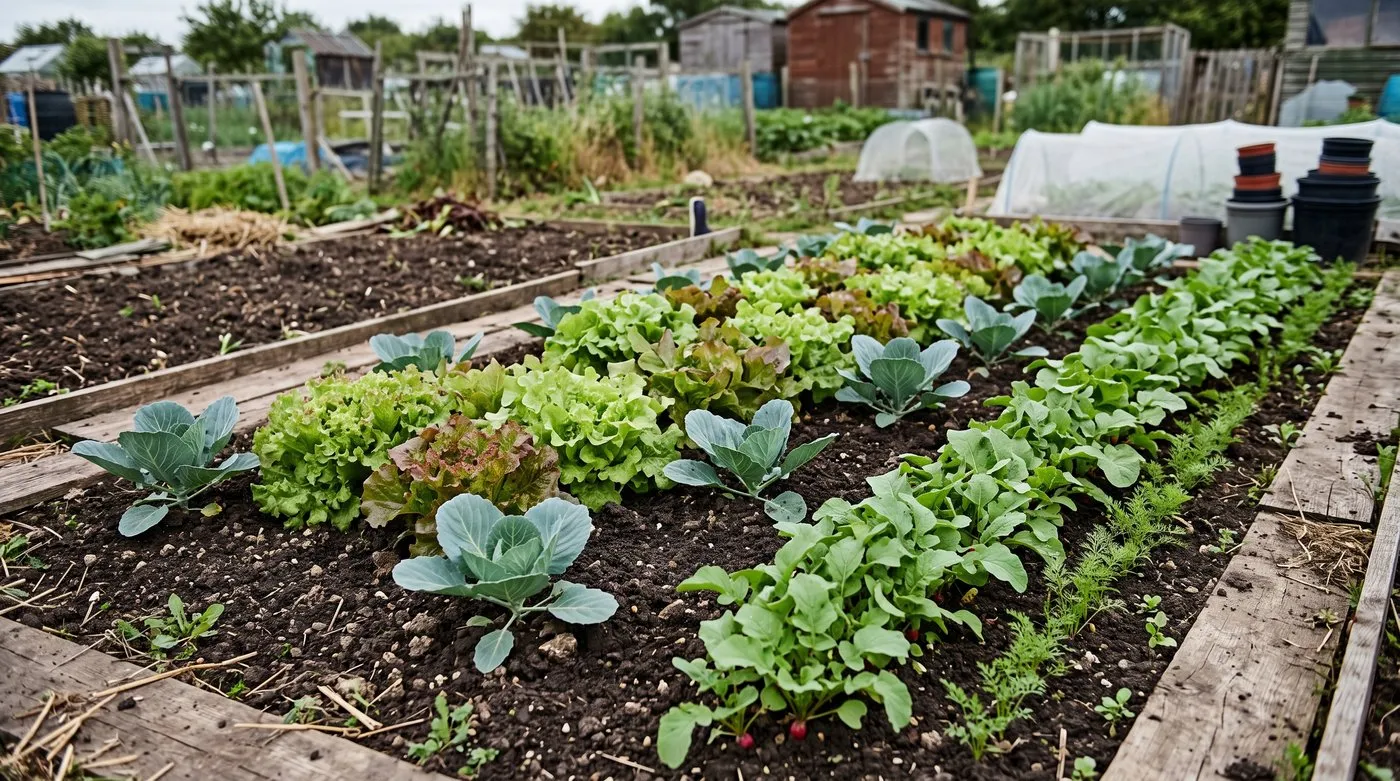
Quick lettuces in the gaps between cabbages are picked long before the cabbages need the room. Two crops, one bed.
Good pairings
- Lettuce between cabbages: plant the cabbages at their normal spacing and sow lettuce in the gaps. You’ll pick the lettuce long before the cabbages fill out.
- Radish with carrots: sow a few radish seeds in the carrot row. The radishes come up fast and mark the row while the slow carrots get going.
- Spring onions between sweetcorn: tall sweetcorn leaves plenty of space at ground level.
- Spinach under climbing beans: the beans give light shade, which helps stop spinach bolting in summer.
It works best when one crop is tall and the other short, or one is quick and the other slow.
Avoiding gluts
Gluts come from sowing too much at once. Little and often is the answer, but you also need to sow the right amount each time.
Ask yourself four quick questions for each crop:
- How much do we eat each week?
- How much does one sowing give?
- How long does it stay at its best?
- Sow enough to cover that time, then sow again to fill the next gap.
Most people still sow too much each time. Start smaller than you think. You can always sow more, but you can’t un-sow a glut.
Stretching the season with cloches and fleece
Cloches and fleece add a few weeks at each end of the UK season. That gives you more sowings and more pickings.
Early in the year
Cover beds with cloches or clear plastic for a couple of weeks before sowing to warm the soil. Then sow hardy crops like lettuce, radish and spinach underneath. Open them up on warm days so they don’t overheat.
Late in the year
As it gets cold in October, cover late lettuce, spinach, rocket and lamb’s lettuce with cloches or fleece. Winter lettuces like Winter Density and Arctic King cope with frost but grow very slowly without cover. Our winter salad harvesting guide covers salad all winter long.
Which cover to use
| Cover | Best for | Cost |
|---|---|---|
| Fleece | Light frost protection | Low, reusable |
| Plastic tunnel cloche | Warming the soil early | Low |
| Rigid cloche | Winter salads | Medium |
| Cold frame | Hardening off, winter crops | Medium |
| Unheated greenhouse | Year-round salads, early starts | Higher |
To get a head start indoors before planting out, see our guide to indoor seed sowing. The RHS succession sowing page has more ideas too.
Planning your first succession season
Start with just two or three crops. Lettuce and radish are easiest, as they’re quick and forgiving. Add French beans once you’ve got the rhythm.
Here’s a simple first-year plan:
| When | Lettuce (a few plants) | Radish (short row) | French beans (short row) |
|---|---|---|---|
| Early March | Sow under cloche | Sow under cloche | - |
| Late March | Batch 2 | Batch 2 | - |
| Mid-April | Batch 3 | Batch 3 | - |
| Early May | Batch 4 | Batch 4 | - |
| Mid-May | Batch 5 | Batch 5 | Batch 1 |
| Early June | Batch 6 | Batch 6 | Batch 2 |
| Late June | Batch 7 | Batch 7 | Batch 3 |
| Mid-July | Batch 8 | Batch 8 | - |
| Early August | Batch 9 (last) | Batch 9 | - |
| Late August | - | Batch 10 | - |
| Mid-September | - | Batch 11 (under cloche) | - |
Three short rows, sown every few weeks, give you salad and beans for months.
 A late-July trug of lettuce, radish, French beans and beetroot, all from different batches.
Succession planting in containers
It works just as well in pots. In fact, it’s easier, as you only sow a pinch of seed at a time.
Use troughs or window boxes at least 15cm deep for lettuce, radish and salad leaves. Deeper pots suit beetroot, spring onions and French beans.
Sow a small batch every 2 to 3 weeks. When a pot is picked, top it up with fresh compost and sow again. A few troughs on a rota give you salad for much of the year.
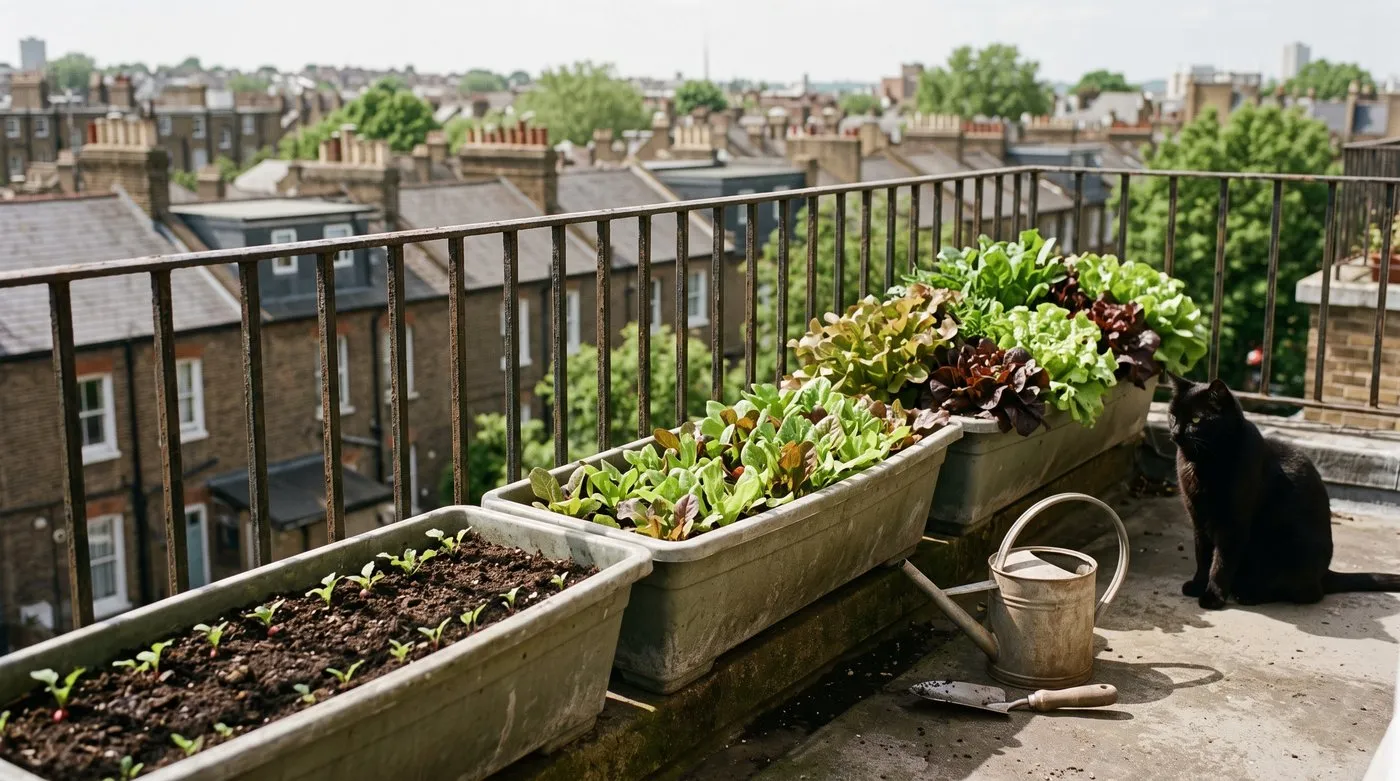
A few troughs on a rota keep the salad coming. When one is picked, top it up with fresh compost and sow again.
Succession planting and crop rotation
The two work together nicely. Crop rotation decides which family grows in each bed. Succession sowing decides when and how often you sow in it.
For example, the onion and salad bed in a four-bed rotation suits succession lettuce, spring onions and spinach. The pea and bean bed suits batches of French beans.
Troubleshooting
Most problems come down to timing or the weather.
Batches ready at the same time
In hot weather, later sowings can catch up with earlier ones. Leave a longer gap between sowings in summer and a shorter one in spring.
Gaps between pickings
Your gap between sowings is probably too long for that crop. Sow a week sooner next time. Keep notes and tweak each year.
Lettuce and spinach bolting in summer
Heat makes leafy crops run to flower. Use bolt-resistant varieties from June to August and sow in light shade if you can. Water regularly, as dry soil makes them bolt even faster.
Lettuce not coming up in summer
Lettuce seed struggles to germinate in hot weather. Sow in the evening and keep the soil damp. Or sow indoors where it’s cooler and plant the seedlings out.
Slugs eating seedlings
Every new batch is tasty to slugs while it’s small. Protect young sowings with barriers or cloches, and go out with a torch on damp evenings. Once plants have a few true leaves, they cope better with a nibble.
Now you’ve got the hang of succession planting, our seed sowing calendar has month-by-month sowing dates for every crop.
Start small, keep notes and grow a bit more each year. Soon you’ll be picking something fresh nearly every week from spring to autumn.
Frequently asked questions
What is succession planting?
It means sowing the same crop little and often. For example, sow a short row of lettuce every few weeks from spring to late summer, rather than one long row in April. You get a steady supply instead of a glut followed by a gap.
Which vegetables are best for succession sowing?
Quick crops that are only at their best briefly. Lettuce, radish, spring onions, French beans, beetroot, spinach and carrots are all good. Slow crops like Brussels sprouts, parsnips and pumpkins gain little, as they fill the ground for months anyway.
How often should I sow succession crops?
It depends on the crop. Sow lettuce and radish every two to three weeks, and French beans and beetroot every three to four. Carrots need sowing less often. A simple rule is to sow again once the last batch is up and growing.
Can I succession sow in a small garden?
Yes, it’s perfect for small gardens. Sow short rows instead of long ones. Use pots and window boxes for salads and herbs. Every bit of space keeps producing through the season.
What is catch cropping?
It’s growing a quick crop in the gap between two main crops. For example, after lifting early potatoes, sow radishes or salad leaves. Pick them before the next main crop needs the space.
How do I extend the succession sowing season?
Use cloches, fleece and cold frames. They warm the soil and shelter seedlings, so you can sow earlier in spring and keep autumn crops growing longer. An unheated greenhouse or polytunnel stretches it further still.
What is the difference between succession planting and interplanting?
Succession means sowing one crop at different times. Interplanting means growing different crops side by side. For example, sow quick lettuces between slow cabbages and pick them before the cabbages need the room. Both get more food from a small space.
Our team produces practical UK gardening guidance from source research, contributor records and established horticultural practice. Editorial standards are overseen by Matt W.


