
Key takeaways
- Hardy crops like broad beans and peas can go outside from late February or March
- Start tender crops like tomatoes and courgettes indoors, somewhere warm
- Plant tender crops out after the last frost, usually late May
- In northern England and Scotland, sow outdoors two to three weeks later
- Sow lettuce and radish little and often for steady pickings
Growing vegetables in the UK is all about timing. Each crop has its own sowing window, a time to plant out, and a harvest season that depends on when you started. Get it right and an allotment or back garden can give you food from late spring right through winter.
This calendar covers 29 popular vegetables, based on average conditions. If you garden in northern England or Scotland, add two to three weeks to the outdoor dates. New to growing? Start with our guide on how to start a vegetable garden.
The master vegetable planting calendar
Here’s the big one. Dates are for average UK conditions, so northern gardeners should add two to three weeks to outdoor sowing and planting out.
| Vegetable | Sow indoors | Sow outdoors | Plant out | Harvest |
|---|---|---|---|---|
| Broad beans | Jan-Feb | Feb-Apr, Oct-Nov | Mar-Apr | Jun-Aug |
| Peas | Mar-Apr | Mar-Jun | Apr-May | Jun-Sep |
| Runner beans | Apr-May | Late May-Jun | Late May-Jun | Jul-Oct |
| French beans | Apr-May | Late May-Jun | Late May-Jun | Jul-Sep |
| Tomatoes | Feb-Mar | - | Late May-Jun | Jul-Oct |
| Courgettes | Apr | - | Late May-Jun | Jul-Sep |
| Cucumbers | Apr | - | Jun | Jul-Sep |
| Squash/pumpkin | Apr | - | Late May-Jun | Sep-Oct |
| Sweetcorn | Apr | Late May | Late May-Jun | Aug-Sep |
| Potatoes (first early) | - | - | Mid-Mar-Apr | Jun-Jul |
| Potatoes (second early) | - | - | Apr | Jul-Aug |
| Potatoes (maincrop) | - | - | Mid-Apr-May | Aug-Oct |
| Carrots | - | Mar-Jul | - | Jun-Nov |
| Parsnips | - | Feb-Apr | - | Oct-Mar |
| Beetroot | Mar | Mar-Jul | Apr-May | Jun-Oct |
| Onions (sets) | - | Mar-Apr | - | Aug-Sep |
| Onions (seed) | Jan-Feb | Mar | Apr | Aug-Sep |
| Garlic | - | Oct-Feb | - | Jun-Aug |
| Leeks | Jan-Mar | Mar-Apr | May-Jul | Sep-Mar |
| Spring onions | - | Mar-Aug | - | May-Oct |
| Lettuce | Feb-Mar | Mar-Aug | Apr-Jul | May-Oct |
| Spinach | - | Mar-May, Aug-Sep | - | May-Nov |
| Radish | - | Mar-Aug | - | Apr-Sep |
| Kale | Apr-May | May-Jun | Jun-Jul | Oct-Mar |
| Broccoli/calabrese | Mar-Apr | Apr-May | May-Jun | Jul-Nov |
| Brussels sprouts | Feb-Mar | Mar-Apr | May-Jun | Nov-Feb |
| Cauliflower | Jan-Mar | Apr | May-Jun | Jun-Nov |
| Turnips | - | Mar-Aug | - | May-Oct |
| Swede | - | May-Jun | - | Oct-Feb |
Handy tip: print this out and pin it up in the shed, so the dates are right there when you need them.
What vegetables can I sow in January and February?
Early in the year, most sowing happens indoors, for slow crops that need a long season. Onions from seed, leeks, cauliflower and early Brussels sprouts can go into small cells on a bright windowsill or in a heated propagator. Chillies and aubergines like an early start too, as they take ages to ripen.
Outside, the ground is usually too cold and wet. You can sow broad beans in pots in a cold greenhouse or cold frame, ready to plant out in March. Garlic can still go in during February if the soil isn’t waterlogged. Parsnips can be sown in late February in mild southern gardens, but they’re slow and patchy in cold soil, so March is often better.
Light is the big limit now. Seedlings on a windowsill lean towards the glass, so turn the trays every day or use a grow light.
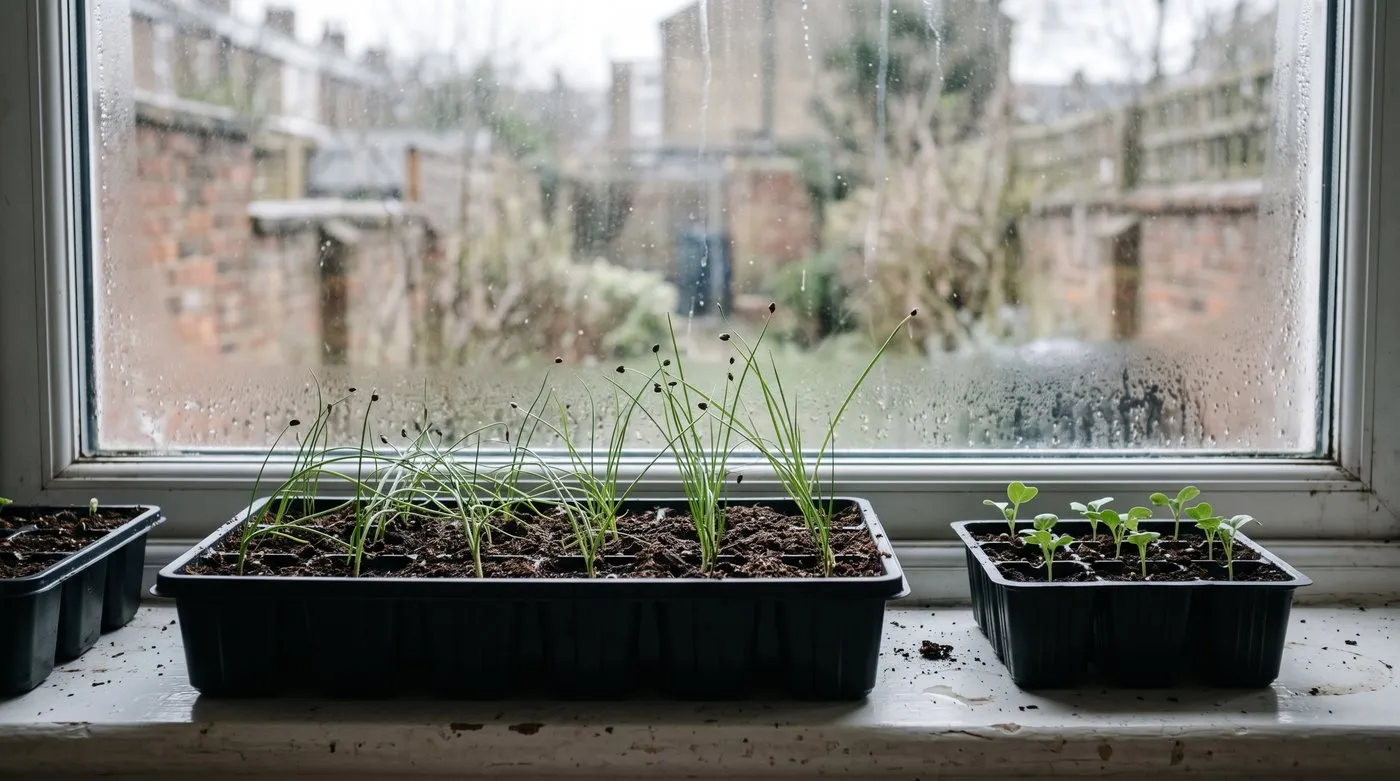
Slow crops like onions and leeks start indoors in January and February. Turn the trays every day so the seedlings don’t lean towards the glass.
Spring sowing priorities
March and April are the busiest months, so sow the slowest crops first.
First week of March
Start tomatoes, peppers and aubergines indoors somewhere warm. They’re slow and need several weeks indoors before they go out. Our guide on when to plant tomatoes has the exact timings.
Outside, sow broad beans about 5cm deep. They cope with cold soil. Peas follow once the soil warms up a little. Parsnips can go in now too, using fresh seed. Our March planting guide has the full list.
Mid to late March
Sow carrots under fine mesh or fleece to keep carrot fly off. Sow beetroot about 3cm deep. Spring onions and lettuce go in for the first summer salads. In the south, plant first early potatoes from mid-March.
April
The big month for outdoor sowing. Turnips, spinach and radish can go straight into the ground. Start courgettes, squash and sweetcorn indoors. Sow kale and Brussels sprouts for autumn and winter. See our April planting guide.
Don’t sow runner beans, French beans or courgettes outside in March or April. One late frost will kill them, so wait until late May.

A spring sowing setup. Keeping seed packets, labels and your plan together makes sowing day much easier.
May
Once the risk of frost has passed, plant out your tender crops: tomatoes, courgettes, squash, sweetcorn and cucumbers. Sow runner beans and French beans straight outside from late May. See our May planting guide.
Successional sowing for continuous harvests
A really common mistake is sowing everything at once, which gives you a glut and then nothing. Successional sowing means sowing a little every few weeks instead.
| Crop | Sow every | When | What you get |
|---|---|---|---|
| Lettuce | 2 weeks | Mar-Aug | Salad leaves May-Oct |
| Radish | 2-3 weeks | Mar-Aug | A fresh batch about a month after each sowing |
| Spring onions | 3 weeks | Mar-Aug | Mild onions all summer |
| Beetroot | 3-4 weeks | Mar-Jul | Fresh roots Jun-Oct |
| Carrots | 3-4 weeks | Mar-Jul | Roots from June onwards |
| French beans | 3 weeks | May-Jul | Pods Jul-Sep |
| Peas | 3 weeks | Mar-Jun | Pods Jun-Sep |
Pop the dates in a diary or set reminders on your phone. It’s easy to forget mid-season sowings when you’re busy watering.

A busy midsummer allotment. Sowing little and often from March to July keeps the harvest coming.
Summer maintenance tips
By June, most sowing is done, and the jobs turn to watering, feeding and keeping pests at bay. There’s still time for a few sowings though, so check our June planting guide.
Watering
Vegetables like steady moisture, especially once they’re fruiting. Blossom end rot on tomatoes, where the bottom of the fruit goes black, is nearly always down to uneven watering. Water at the base of plants, ideally in the morning, and try to keep the leaves dry.
Feeding
Start feeding tomatoes with a high-potash tomato feed once the first flowers have set fruit. Courgettes and squash enjoy a liquid feed every couple of weeks. Root crops don’t need extra feed if you added compost to the soil.
Pest control
Slugs are the biggest threat to young plants. Beer traps, copper tape and nematodes all help. A fine mesh barrier about 60cm high helps keep carrot fly away from carrots. Cabbage white butterflies lay their eggs on cabbage family crops from May, so netting is a good idea.
Companion planting may help a little too. Strong-smelling herbs and onions can help hide carrots from carrot fly, and nasturtiums can lure blackfly away from your beans.
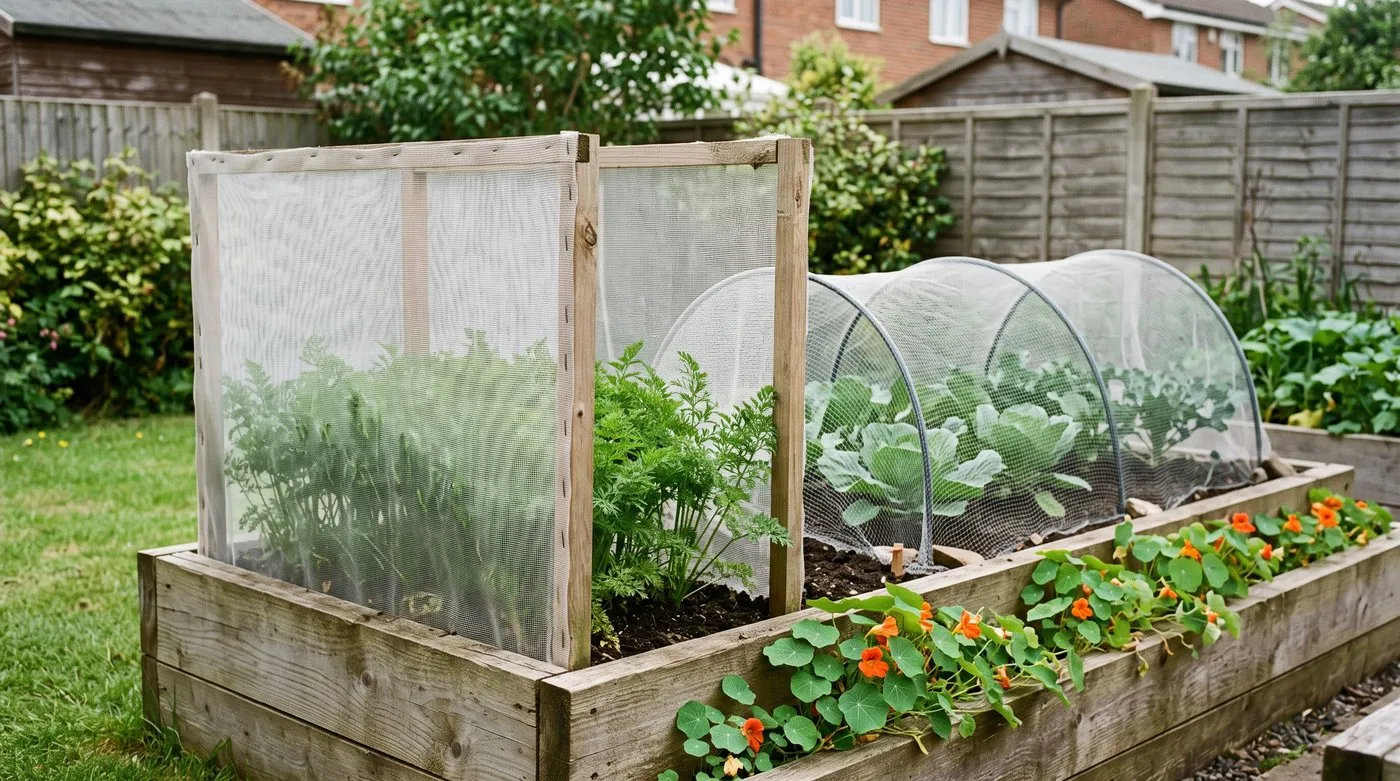
A fine mesh barrier about 60cm high helps keep carrot fly off, and netting stops cabbage whites laying eggs on your brassicas from May.
Autumn and winter crops
Crops sown in summer and planted in autumn give you fresh food through winter and into spring.
What to sow in July and August
| Crop | Sow | Harvest | Notes |
|---|---|---|---|
| Kale | Jun-Jul | Oct-Mar | Very hardy, even tastier after frost |
| Spring cabbage | Jul-Aug | Mar-May | Sits through winter as small plants |
| Perpetual spinach | Aug | Oct-Apr | Keep picking through winter |
| Winter lettuce | Aug-Sep | Nov-Mar | Grow under cloches or fleece |
| Overwintering onions | Sep-Oct (sets) | Jun-Jul | Plant before the soil cools |
Garlic
Plant garlic cloves from October to February. Garlic needs a cold spell to make good bulbs, which is why autumn planting works so well. The RHS garlic guide has more. Plant cloves 15cm apart, pointy end up, with the tip just below the surface. Lift them the following June or July.
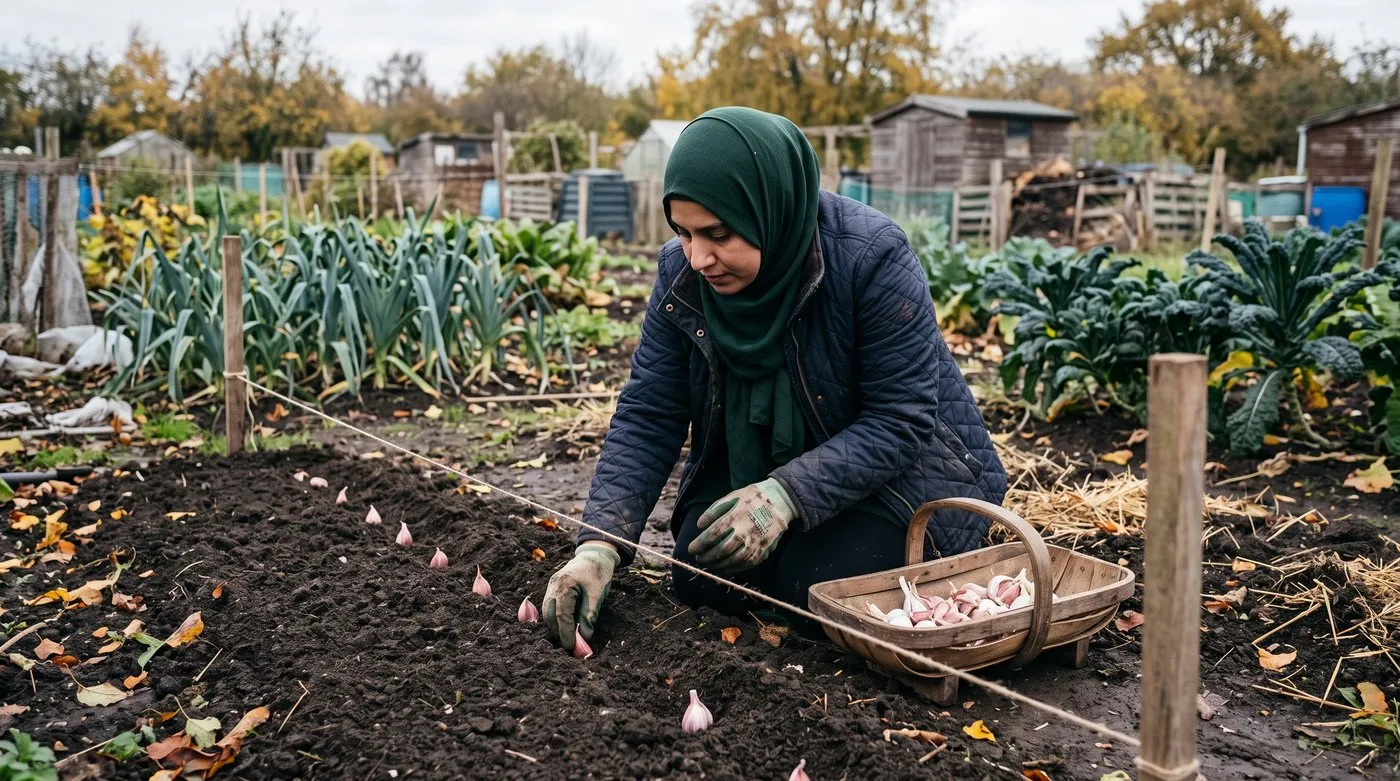
Garlic needs a cold spell to make good bulbs, so autumn planting works well. Set cloves 15cm apart, pointy end up, with the tip just below the surface.
Overwintering broad beans
In mild areas, sow ‘Aquadulce Claudia’ broad beans in November. They settle in over winter and crop earlier the next spring.

An autumn harvest of squash, kale, leeks and roots, all sown earlier in the year.
What vegetables can I plant in October and November?
Autumn is for crops that sit through winter and crop early next year. Garlic, autumn onion sets and shallots go in now, along with hardy broad beans such as ‘Aquadulce Claudia’. Hardy peas such as ‘Meteor’ or ‘Douce Provence’ can be sown in mild areas or under cloches.
In an unheated greenhouse or polytunnel, winter salads like mizuna, rocket and lamb’s lettuce keep growing slowly. Plant out spring cabbages by early October so they settle in before the cold.
It’s also a good time to clear finished crops and spread compost or manure on empty beds. Heavy clay can be dug over and left rough, so winter frosts break up the lumps.
Quick-start guide for beginners
Here are five easy crops for your first year.
1. Potatoes: Plant first earlies in March and dig them up in June. Hard to get wrong.
2. Courgettes: One or two plants give you plenty all summer. Sow indoors in April and plant out in late May.
3. Runner beans: Sow outside in late May and pick from July. A wigwam of beans goes a long way.
4. Lettuce: Sow outside from March. Cut-and-come-again types keep growing back.
5. Radish: The fastest crop in the garden. Sow from March and pick about a month later.
For more help, see our beginner’s guide to starting a vegetable garden. Raised beds are a great way to begin, as the soil warms up faster and drains well. Once you’re comfortable, why not try some fruit? Grape vines trained along a sunny fence or wall take up hardly any ground.
Regional timing adjustments
Northern and hilly gardens warm up later and get frosts for longer, so sow outside a bit later.
| Region | Timing | Usual last frost |
|---|---|---|
| South-west England, London | On time, or a week early | Late April |
| Midlands, East Anglia | On time | Early to mid May |
| Northern England | 1-2 weeks later | Mid to late May |
| Scotland (lowlands) | 2-3 weeks later | Late May to early June |
| Scotland (highlands) | 3-4 weeks later | June |
Height matters too. Gardens high up are cooler than those near sea level, so give them a bit longer before sowing outside.
Common mistakes
Sowing too early outdoors
Seeds rot in cold, wet soil before they get going. A soil thermometer is cheap and takes the guesswork out. Wait for about 7C for hardy crops and 12C for tender ones.
Forgetting to thin seedlings
Crowded carrots end up twisted and small. Thin beetroot to one plant per spot. Thin seedlings once they have their first proper leaves, ideally in the evening when carrot fly is less about.
Ignoring crop rotation
Growing the same family in the same spot every year lets pests and diseases build up. The RHS crop rotation guide groups crops into cabbage family, peas and beans, onions, potatoes and roots, and moves them round every few years.
Planting out without hardening off
Plants raised indoors need a week or two of getting used to the outdoors bit by bit. Skip this and they can sulk for weeks. Our guide on how to sow seeds indoors explains how.
Not sowing successionally
One big sowing of lettuce in March gives you a glut, then nothing. Sow short rows every fortnight from March to August instead.
Now your planting calendar is sorted, read our guide on how to start a vegetable garden for step-by-step help setting up your plot.
Related reading: Rhubarb has a picking cut-off that this calendar doesn’t cover. See our guide to when to stop picking rhubarb.
Frequently asked questions
When should I start planting vegetables in the UK?
Start outdoors from late February or early March. Hardy crops like broad beans, peas and parsnips cope with cold soil of around 7C. Start tender crops indoors from March and plant them out after the last frost in late May. Exact timing depends on where you live and how warm your soil is.
What vegetables can I plant all year round in the UK?
No vegetable grows outdoors all twelve months. With a bit of planning, though, you can pick something nearly all year. Sow spring onions and lettuce every few weeks from March to August. Grow kale, leeks and Brussels sprouts for picking from November to March.
Is March too early to plant vegetables outside?
No, March is a great time for hardy vegetables. Broad beans, peas, parsnips, carrots and beetroot can all go in once the soil reaches about 7C. In northern England and Scotland, wait until later in March. Keep tender crops indoors until late May.
What is the easiest vegetable to grow in the UK?
Radishes are the easiest of all. They come up within days and are ready in about a month. Sow them straight outside from March to August. Lettuce, courgettes, runner beans and potatoes are great for beginners too.
How do I know when my soil is warm enough to sow?
Push a soil thermometer about 10cm into the ground. Most hardy crops need at least 7C. Tender crops need 12C or more. Check first thing in the morning, when the soil is at its coolest.
Should I sow seeds indoors or outdoors?
It depends on the crop. Tender crops like tomatoes, peppers and courgettes need a warm start indoors. Hardy crops like peas, beans and root vegetables usually do better sown straight outside.
What vegetables can I still sow in June?
Plenty, including French beans, runner beans, beetroot, carrots and lettuce. Spring onions and turnips can go in too. Start kale and calabrese indoors for autumn pickings. Keep sowing little and often to keep the harvest coming.
Our team produces practical UK gardening guidance from source research, contributor records and established horticultural practice. Editorial standards are overseen by Matt W.


