Key takeaways
- Stop pulling outdoor rhubarb by the longest day, 21 June, for young crowns; well-established crowns can run into early July
- Take no more than one-third to half of the stalks in any single session, leaving the rest to feed the crown
- Twist and pull each stalk cleanly from the base; never cut, as a cut stump rots back into the crown
- Do not pick at all in year one, take only a few stalks in year two, then harvest fully from year three
- Rhubarb leaf blades are toxic with oxalic acid; eat only the stalk and compost the leaves
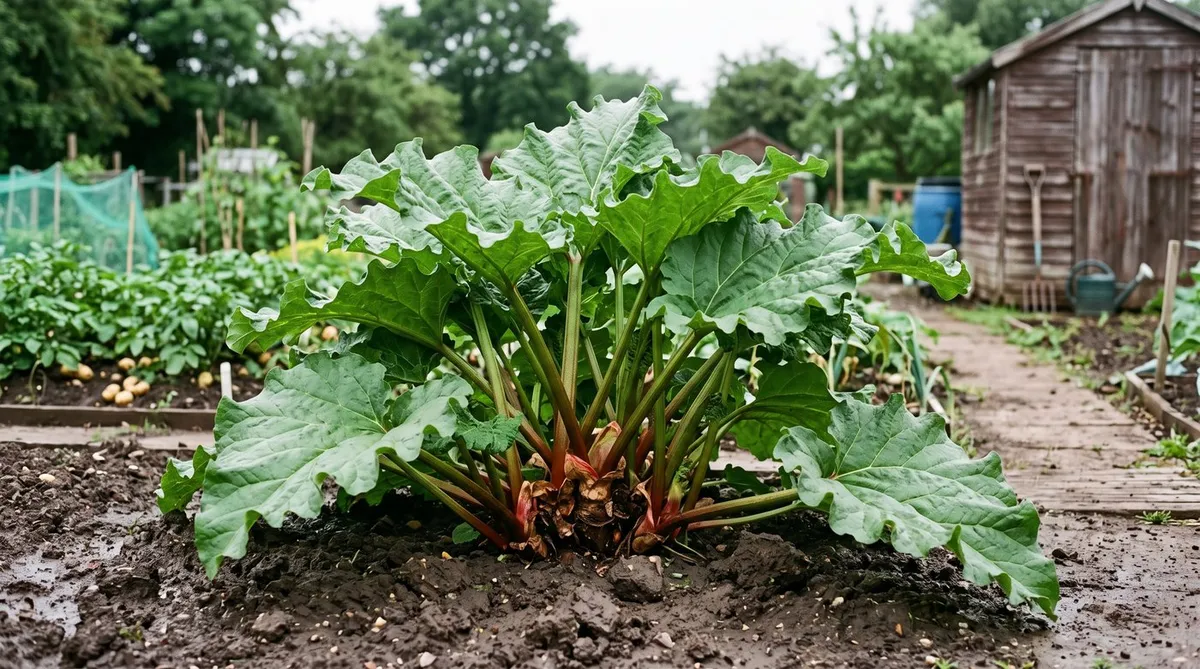
Knowing when to stop picking rhubarb is the difference between a crown that crops for twenty years and one that fades in five. The short answer is simple: stop harvesting outdoor rhubarb by the longest day, 21 June, for young crowns, and by early July for well-established ones. The reason is the whole point. After midsummer the plant needs to keep its remaining leaves so it can photosynthesise and refill the crown with energy for next spring.
When to stop picking rhubarb in the UK
Stop pulling outdoor rhubarb around mid-to-late June, and treat the longest day, 21 June, as the traditional cut-off. That date is a rule of thumb, not a hard border, and the right stop point depends on the age of the crown.
Everything after that stays on the plant. The stalks you leave are not wasted. Their leaves are the solar panels that will rebuild the crown for next year. This is the single habit that separates a long-lived rhubarb patch from a tired one. If you learn nothing else, learn to walk away by midsummer.
Why you stop harvesting after midsummer
Rhubarb is a perennial that stores its energy in a fleshy underground crown. Each stalk you pull is a leaf stalk, and each leaf is a factory turning sunlight into sugars. Through spring the plant spends stored energy pushing out those stalks. Through late summer it does the reverse, drawing carbohydrate reserves back down into the crown to bank for next year.
Pull stalks past midsummer and you interrupt that recharge. The crown enters winter half-empty and cannot power a full flush of stalks in spring. Keep it up for two or three seasons and the crown simply runs down, throwing thinner and thinner stems until it dies out. This is the root cause of most failing rhubarb: not disease or poor soil, but relentless picking that never lets the plant restock.
The recovery window matters more than most gardeners realise. From July to the first hard frost, usually late October in the Midlands, the plant needs a full leaf canopy working at capacity. Roughly four months of undisturbed growth stands behind every strong spring crop. The Royal Horticultural Society sets out the same principle in its RHS guide to growing rhubarb, which stresses resting the plant after midsummer.
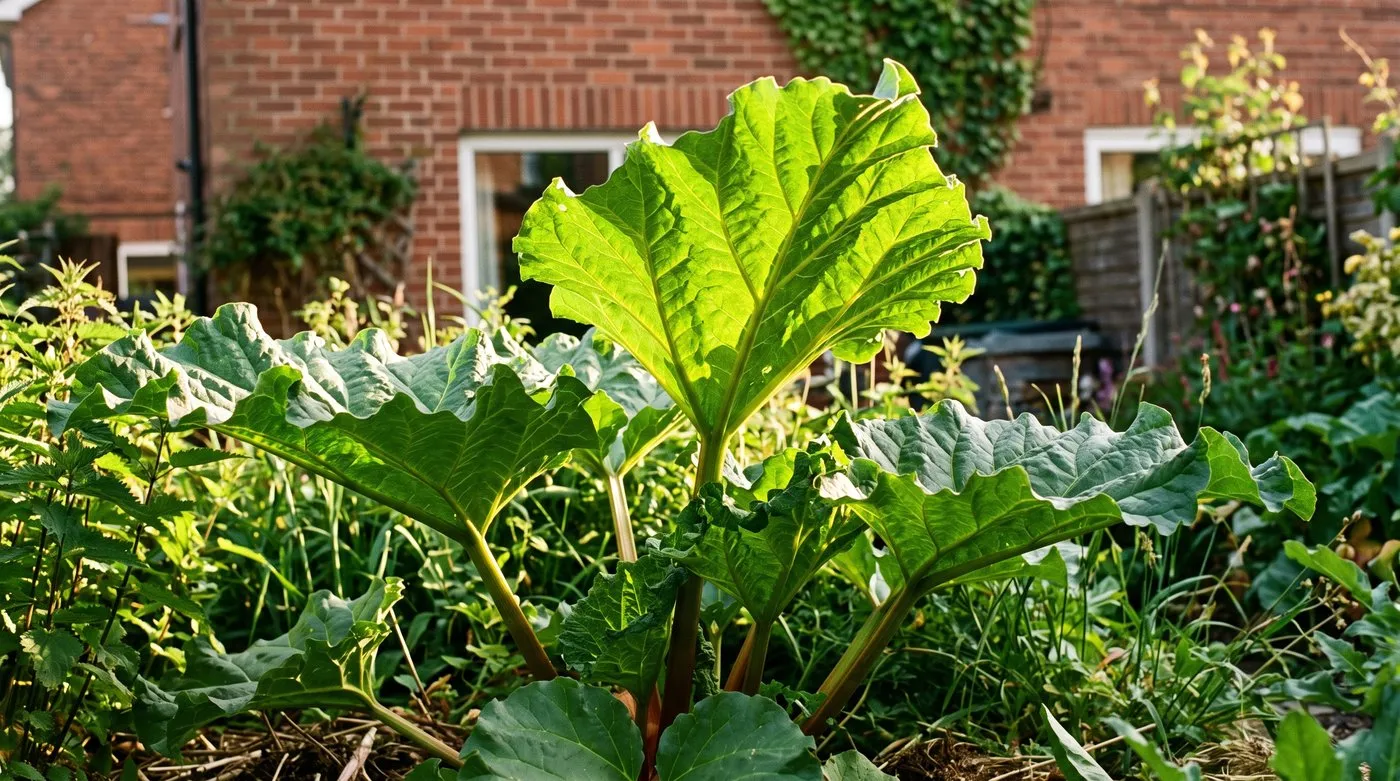 Full leaves left after the stop date act as the crown’s power supply, banking sugars underground from July through to the first frosts.
How rhubarb quality drops as the season ends
There is a second, quieter reason to stop by midsummer: late stalks are simply worse. As the season runs on, the character of the stalks changes in three ways, and none of them is in your favour.
First, they get thinner. Early maincrop stalks on a good crown run 25 to 35mm thick. By late July the same plant throws stems nearer 15 to 20mm, spindly and quick to wilt. Second, they turn greener and tougher. The bright red of a May stalk gives way to a green, stringy stem with a coarse skin that needs peeling. Third, they get more sour. Levels of oxalic and malic acid in the stalk climb through summer, so late rhubarb has a harsh, mouth-puckering tartness that swallows more sugar in the pan.
So the plant is telling you to stop just as the quality falls off a cliff. You lose very little by leaving the late stalks. In truth, a June stalk poached with a little sugar is a different food from a woody August one.
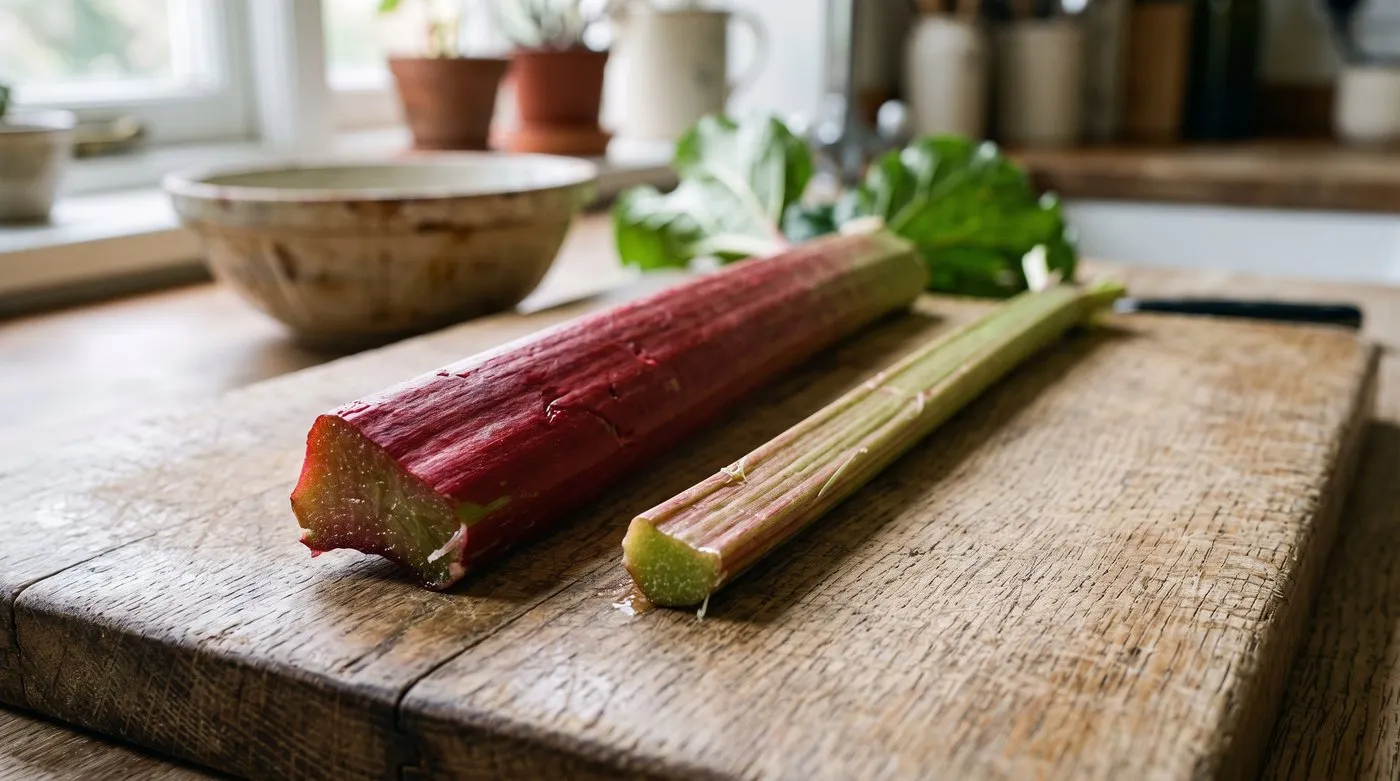 Left, a thick red maincrop stalk from May. Right, a thin green late-season stalk. Quality drops sharply as acid levels rise through summer.
Forced, maincrop and late-season harvests compared
The table ranks the three windows by overall value, weighing eating quality against the toll each takes on the crown.
| Harvest window | Timing (UK) | Stalk quality | Impact on crown | Overall rating |
|---|---|---|---|---|
| Forced (under a forcer) | Late Jan to Mar | Pale pink, tender, sweet, low acid | High: exhausts the crown, needs 2 years’ rest after | Best flavour, use sparingly |
| Maincrop (natural outdoor) | Apr to 21 Jun | Thick, red, firm, balanced tartness | Low if you stop by midsummer | The gold standard, crop freely |
| Late-season | Jul to Aug | Thin, green, tough, very sour | High: robs next spring’s crop | Avoid, leave on the plant |
Maincrop is the harvest to build your year around. Force only a well-fed, mature crown, and never force the same plant two years running. A crown that is forced then rested behaves like an athlete who sprints then recovers. Push it every year and it burns out. Forcing is one way to stretch the season, and our guide to forcing crops for earlier harvests covers the method for rhubarb and other early crops.
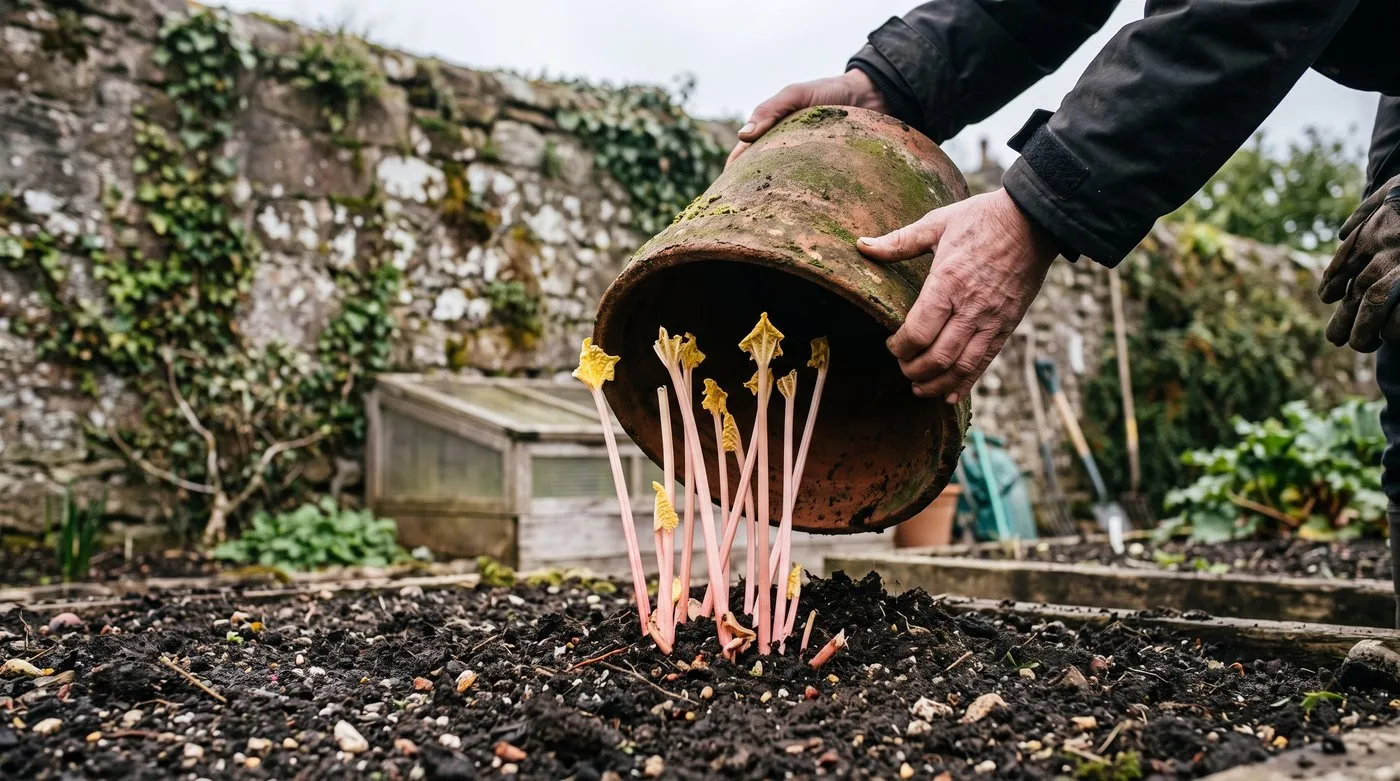 Forced rhubarb under a lifted forcer: pale, sweet and weeks early. Forcing exhausts the crown, so it needs two full years of rest afterwards.
The rhubarb year month by month
How to pick rhubarb stalks correctly
How you remove a stalk matters as much as when. Done right, harvesting takes nothing from the crown but the stalk itself. Done wrong, it opens a wound that rots. Follow these five steps.
- Choose a mature stalk from the outside of the clump. Take the biggest, reddest stems on the perimeter first. Leave the young central stalks to grow on.
- Grip the stalk low, right at the base. Get your hand down where the stalk meets the crown, not halfway up. A high grip snaps the stalk and leaves a stump.
- Twist and pull in one smooth motion. Rotate the stalk slightly and pull outward and up. It should come away cleanly with a small swollen heel at the bottom.
- Never cut with a knife. A cut leaves a wet stump that rots and can carry the rot down into the crown. Pulling seals better and removes the whole stalk.
- Take no more than a third to a half of the stalks at once. Leaving at least half the leaves keeps the crown fed and working. Strip a plant bare and you starve it.
Twist off the poisonous leaf blade in the garden and drop it straight on the compost. That leaves you carrying only clean, kitchen-ready stalks indoors.
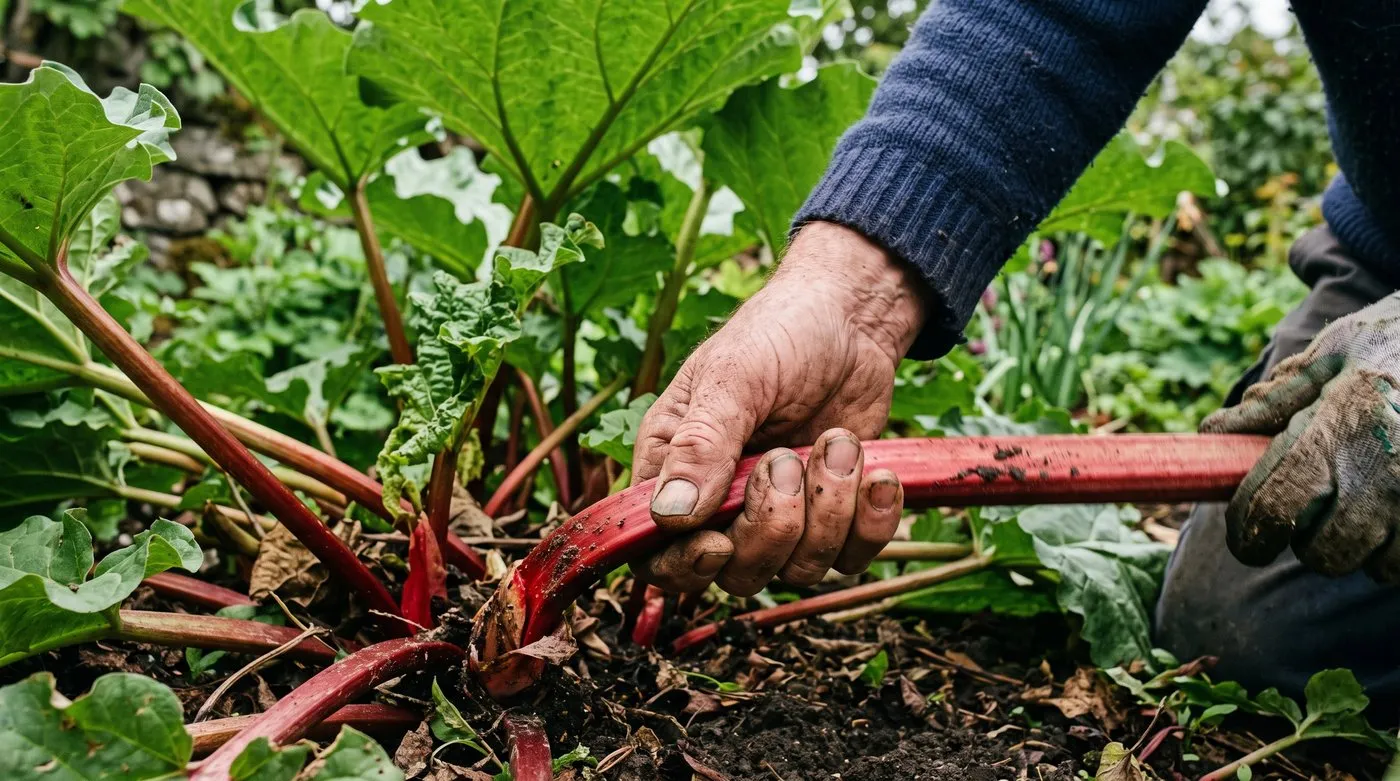 Grip low, twist and pull. The stalk lifts away with its heel intact, leaving no stump to rot back into the crown.
Removing flower spikes before they drain the crown
A rhubarb plant that throws up a thick flower stalk is bolting, and it is a direct drain on the crown you are trying to protect. The flower spike is a fat, knobbly stem that shoots up from the centre, topped with a foaming cream flower head. Left alone, it pours the plant’s energy into making seed, exactly the reserves you want banked underground.
Bolting is more common on stressed, old or dry crowns. Frequent bolting is a sign a crown needs dividing, which is best done in winter dormancy. Persistent flowering year after year usually means the plant is telling you it is time to lift and split it.
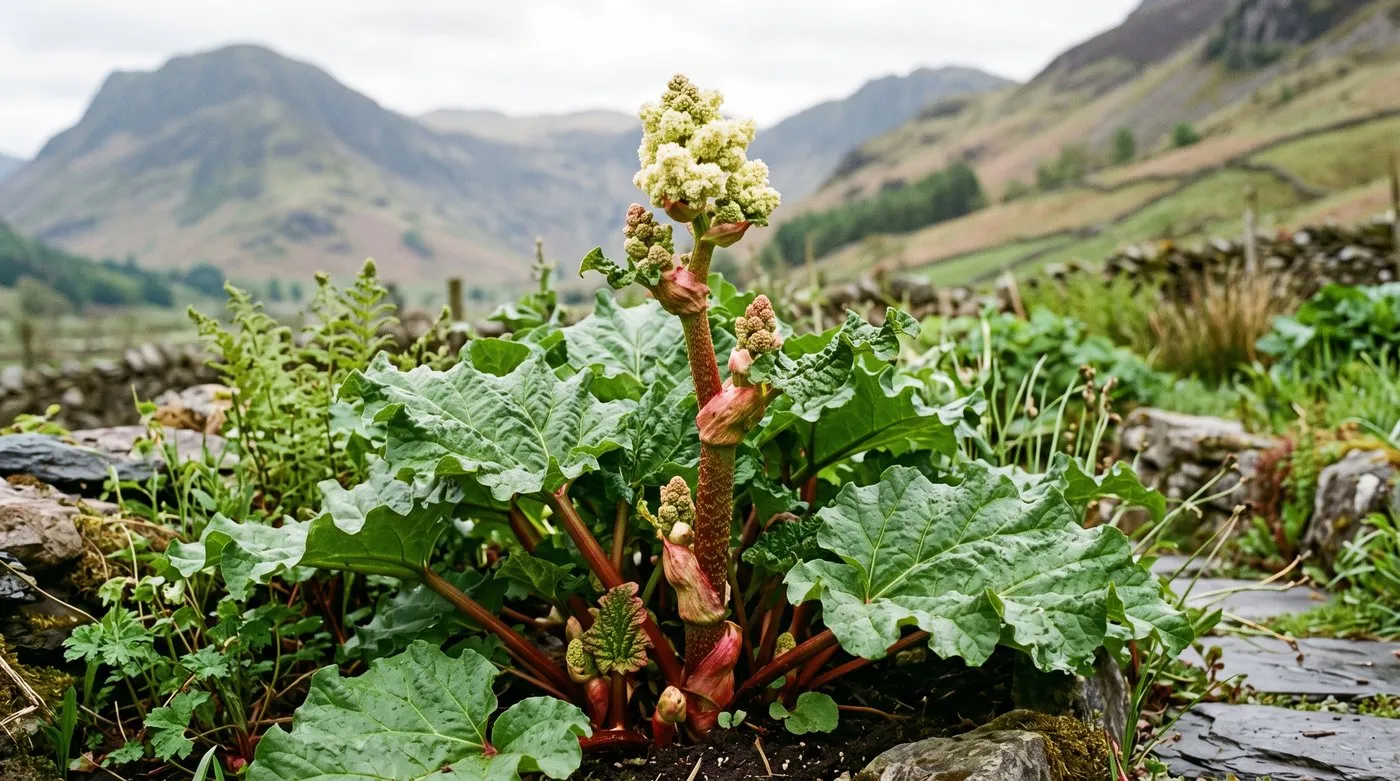 A flower spike bolting from the crown. Snap it off at the base at once, as flowering drains the reserves you are trying to build.
What to do after you stop: feed, mulch and water
Stopping the harvest is only half the job. The second half is helping the rested crown rebuild fast. Three simple tasks make the difference through late summer and into autumn.
Mulch to hold moisture. A 5 to 7cm layer of organic matter over the root zone locks in summer water and feeds the soil life below. On free-draining ground it is close to essential in a dry July.
Keep it watered. In a dry spell, a big rhubarb plant can lose water faster than the roots draw it up. A deep soak once a week beats a daily splash. Consistent moisture through late summer directly builds the crown for spring.
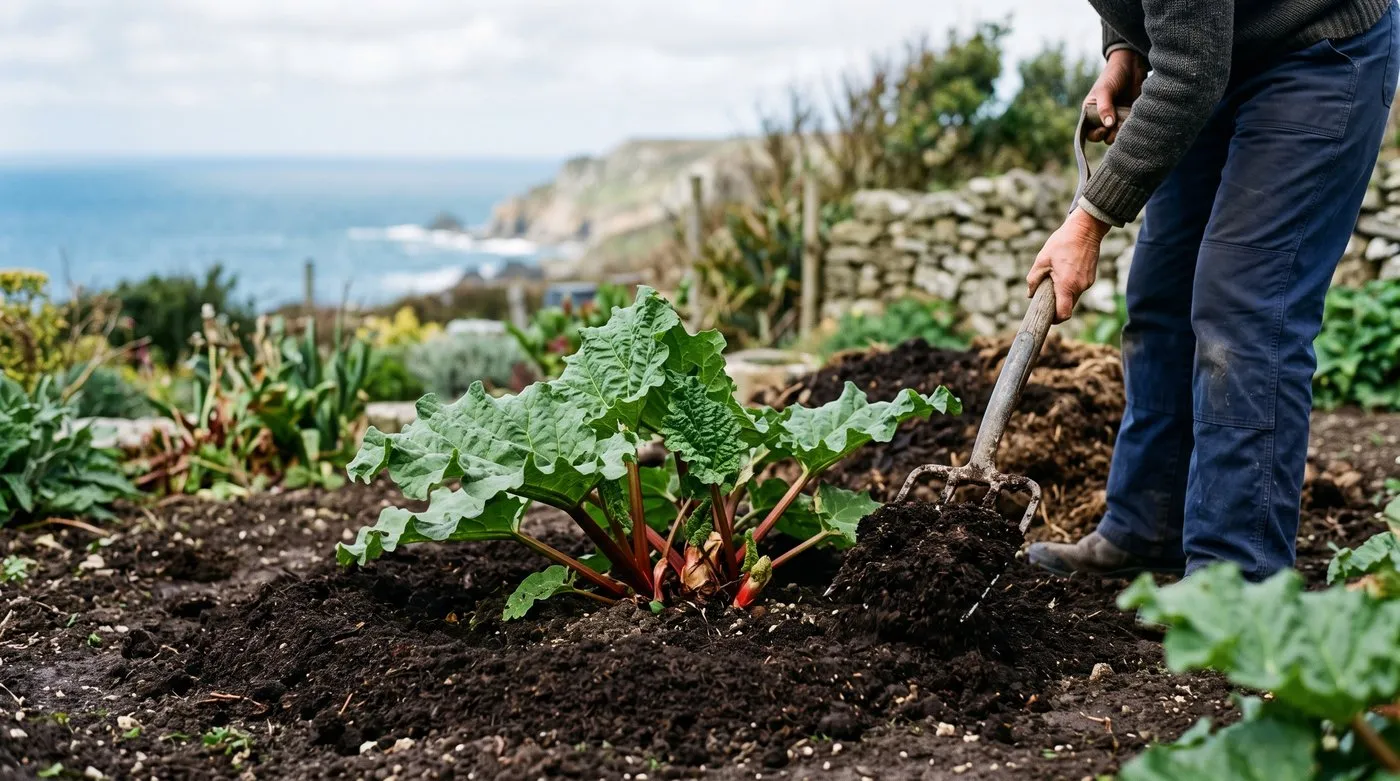 Mulching a rested crown with well-rotted manure in late summer. Keep it clear of the crown centre to avoid rotting the growing point.
Why rhubarb leaves are toxic and where they belong
The stalk is a treat. The leaf blade is poison. Rhubarb leaves contain high concentrations of oxalic acid, along with other compounds, at levels that make them genuinely harmful to eat. This is not garden folklore. It is why only the stalk has ever been sold or cooked.
Symptoms of eating the leaf run from a burning mouth and sore throat to nausea and worse in quantity. You would need to eat a fair weight of leaf to reach a dangerous dose, but there is no reason ever to try. Twist the leaf blade off in the garden and never let it near the kitchen.
The good news: the leaves are fine on the compost heap. The oxalic acid breaks down as the leaves rot, and they do not poison your compost or the plants you later feed with it. A pile of rhubarb leaves rots down into perfectly usable compost, so add them to your compost heap without a second thought.
Warning: Never eat rhubarb leaf blades, and never feed them to livestock or pets. The oxalic acid content is toxic. Only the stalk is edible. Cut the leaf away in the garden and compost it, keeping only the clean stalk for cooking.
Establishing a new crown: the three-year rule
Everything above assumes an established crown. A newly planted crown plays by stricter rules, and breaking them is the quickest way to lose a young plant.
Year one: pick nothing at all. A crown planted this spring must keep every leaf to build its root system. Pulling stalks now robs a plant that has no reserves to spare. It is the hardest instruction to follow and the most important.
Year two: take two or three stalks only, and stop by early June. Year three onward: harvest fully, following the midsummer stop date like any mature crown. This slow start pays back for decades. A crown treated patiently in its first two years can crop well for fifteen to twenty years.
Plant bare-root crowns from autumn to early spring while dormant, spacing them about 90cm apart on rich, deep soil. For the full planting method, from soil prep to spacing, see our guide on growing rhubarb from a bare crown. Get the establishment right and the stop-date discipline does the rest.
Common mistakes when you stop picking rhubarb
Now you know when to stop picking rhubarb and why, read our guide to forcing crops for earlier harvests for the next step in stretching your rhubarb season into late winter.
Frequently asked questions
When should you stop picking rhubarb?
Stop picking outdoor rhubarb by the longest day, 21 June. Young crowns benefit most from an early stop. Well-established plants that are three years old or more can take a few extra pulls into early July. After that, leave every remaining stalk on the plant so the leaves can feed the crown.
Why do you stop harvesting rhubarb after June?
The plant needs its leaves to rebuild the crown’s energy reserves. Rhubarb pulls sugars back down into the crown through late summer, ready for next spring. Keep stripping the stalks and the crown never recharges, so the following year’s crop is thinner and smaller.
Can you eat rhubarb in July and August?
What happens if you keep pulling rhubarb all summer?
Should you cut or pull rhubarb stalks?
Always pull, never cut. Grip the stalk low, then twist and pull it cleanly away from the base of the crown. A cut leaves a stump that rots and can spread into the crown. Pulling removes the whole stalk with its little swollen heel intact.
Can you pick rhubarb in the first year?
No, never harvest a newly planted crown in its first year. The young plant needs every leaf to build a strong root system. Take only two or three stalks in year two, then harvest fully from year three onward. Patience early on gives decades of cropping.
Are rhubarb leaves poisonous?
Yes, rhubarb leaf blades are toxic and should never be eaten. They contain high levels of oxalic acid, which is harmful in quantity. Only the stalk is edible. The leaves are perfectly safe to add to the compost heap, where the acid breaks down harmlessly.
Our team produces practical UK gardening guidance from source research, contributor records and established horticultural practice. Editorial standards are overseen by Matt W.