Key takeaways
- Open-freeze berries on a tray first, then bag them, so they don't set into one lump
- A light sprinkling of sugar helps sliced strawberries, rhubarb and apricots hold up
- Light syrup suits peaches, nectarines and other fruit that browns when cut
- Pick fruit dry, freeze it the same day and only wash it if it's dirty
- Use most frozen fruit within about a year, and cook or blend it straight from frozen
Freezing is the easiest way to keep a garden fruit glut. Spread berries on a tray, freeze them, then tip them into bags. Softer fruit does better with a little sugar or a light syrup. No jars, no boiling, just trays, bags and a freezer at -18°C.
This guide goes crop by crop, so you know exactly what to do with each fruit as it ripens. For a wider look at jam, drying and bottling, see the guide to preserving fruit and vegetables.
The three ways to freeze fruit
Almost all fruit goes into the freezer one of three ways. Pick the right one and the rest is easy.
Open-freezing (dry pack)
Spread the fruit in a single layer on a tray lined with baking paper. Freeze for a few hours until hard. Then tip it into freezer bags, squeeze out the air and seal.
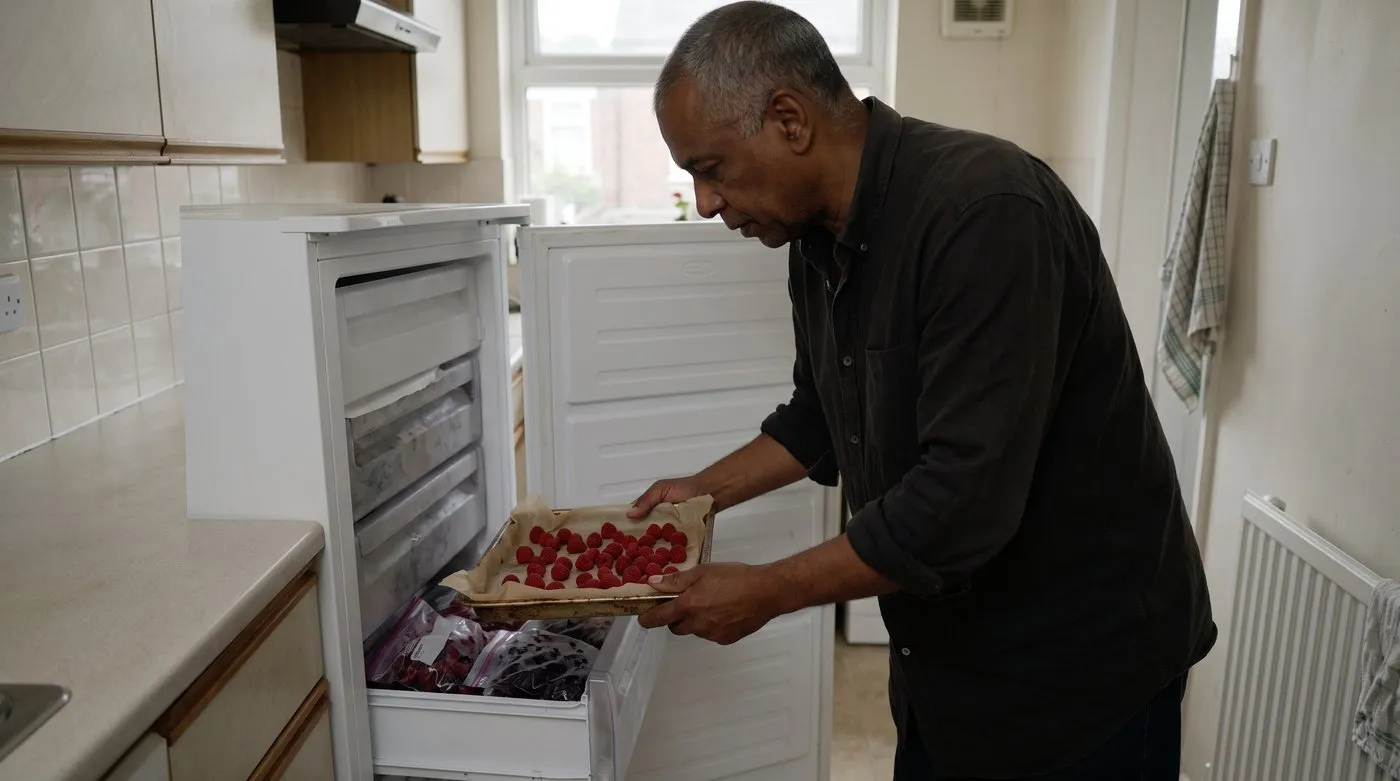
Spread berries out on a lined tray so each one freezes separately. Bag them once they’re hard.
This is the best way to freeze firm berries: raspberries, blackcurrants, redcurrants, blueberries, gooseberries and blackberries. Each berry freezes separately, so you can shake out a handful for porridge without thawing the whole bag. It works for pitted cherries and halved plums too.
Sugar pack
Layer the fruit with sugar in a freezer tub, roughly 100g of sugar to 500g of fruit. The sugar draws out a little juice and helps the fruit keep its colour and texture.
This suits sliced strawberries, rhubarb chunks, apricot halves and any soft fruit you plan to bake with later. Remember the sugar is already in the tub when you follow a recipe.

A light sprinkle of sugar helps sliced strawberries hold together in the freezer. They’re ideal for pies and crumbles later.
Syrup pack
Cover the fruit with a light sugar syrup in a freezer tub. Leave a couple of centimetres of space at the top, as the syrup expands as it freezes.
Use syrup for fruit you want to serve as a pudding, such as peach halves, apricots and poached pears. The syrup keeps air off the cut surfaces, so the fruit browns less. Berries don’t need it.

Peach halves keep their colour best under a light syrup. Leave a little space at the top for it to expand.
How to freeze each garden fruit
Use this table as a quick guide. Most fruit keeps its best flavour for about a year. Pears and peaches are best used sooner.
| Fruit | Prepare | Method |
|---|---|---|
| Raspberries, tayberries, loganberries | Pick dry, look over, don’t wash unless dirty | Open-freeze |
| Blackberries | Look over for bugs, wash only if muddy | Open-freeze |
| Blueberries | Remove stalks | Open-freeze |
| Blackcurrants | Strip from stalks, top and tail for table use | Open-freeze |
| Redcurrants and white currants | Strip off the stalks with a fork | Open-freeze |
| Gooseberries | Top and tail | Open-freeze |
| Strawberries | Hull. Slice larger ones | Open-freeze small ones, sugar pack slices |
| Cherries | Remove stones | Open-freeze |
| Plums, damsons, greengages | Halve and remove stones | Open-freeze |
| Rhubarb | Cut into short chunks | Open-freeze or sugar pack |
| Apples | Peel, core and slice, or cook into purée | Open-freeze slices, tub the purée |
| Peaches and nectarines | Dip in boiling water, peel, halve and stone | Syrup pack |
| Apricots | Halve and stone | Sugar or syrup pack |
| Pears | Peel, core and poach | Syrup pack |
Tips for the trickier fruits
Strawberries
Strawberries are the fruit most likely to disappoint. They go soft when thawed, however you freeze them. Small whole berries are fine for smoothies and sauces. For pies and crumbles, slice them and use a sugar pack. Or blend them into a purée and freeze it in small tubs, ready to use as a sauce.
Raspberries and blackcurrants
These two are freezer stars. Pick on a dry day and don’t wash them unless you must. Open-freeze, and they stay separate in the bag for months. If blackcurrants are for jam, you don’t need to top and tail them, as you can sieve the stalks out later. The guide to growing raspberries covers picking for a long season.
Plums, damsons and greengages
Halve them, twist out the stone and open-freeze them cut side up. The cut faces may darken a little, but the flavour is fine. Damsons are fiddly to stone, so many people freeze them whole and remove the stones after cooking.
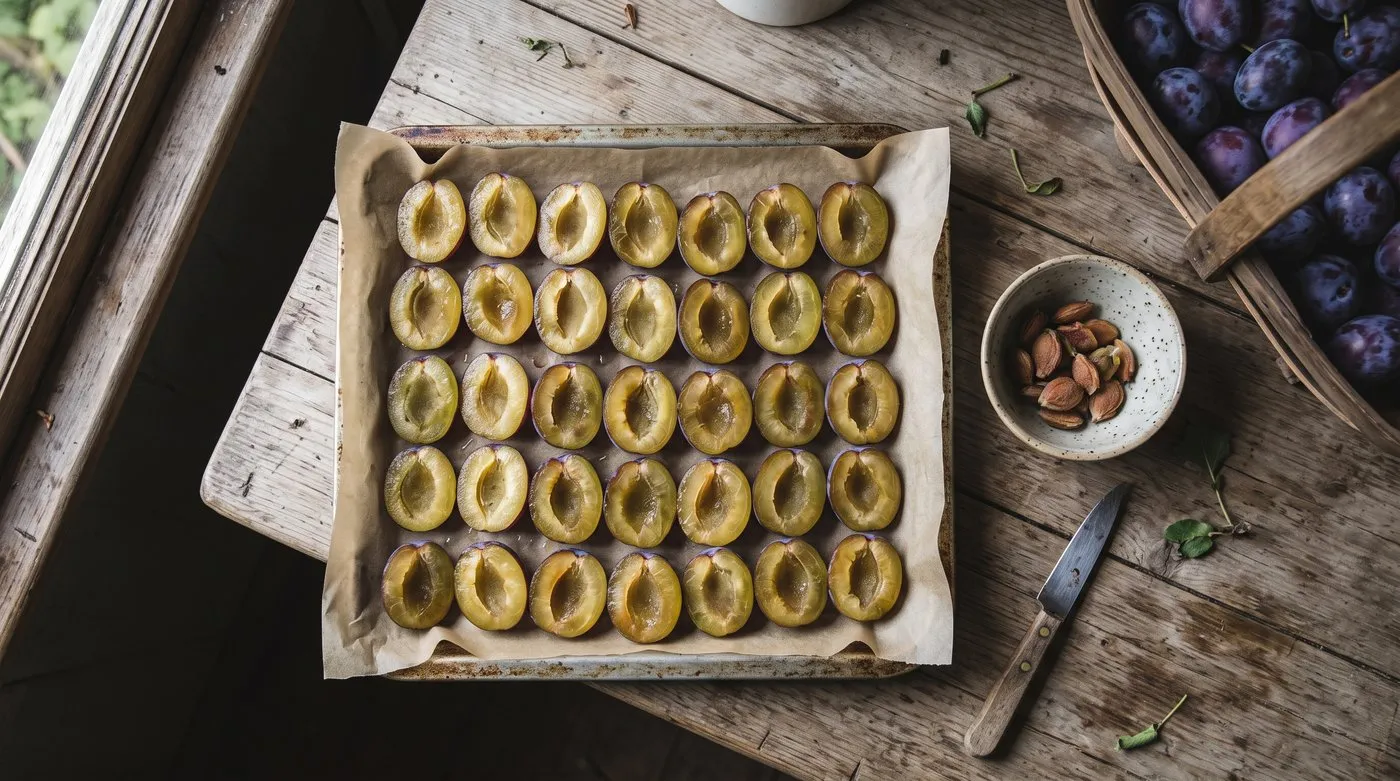
Halve plums and twist out the stones, then freeze them cut side up on a tray.
Apples and pears
Apples freeze best sliced or cooked. Peel, core and slice them, dip the slices in water with a squeeze of lemon to slow browning, then open-freeze for pies and crumbles. Or cook them down to a purée, cool and freeze in tubs.
Pears are the hardest fruit to freeze. Raw pear goes soft and brown. Poach the halves in light syrup first, then freeze them in the syrup. Pears can also be bottled in syrup, or stored fresh for a while. The guide to storing apples and pears shows how.
Rhubarb
Rhubarb freezes very easily. Cut the stalks into short chunks and open-freeze them, or pack with a little sugar. A quick blanch for a minute helps keep the colour, but it’s optional.
Labelling and storing frozen fruit
A little order in the freezer means you’ll actually use what you saved.
- Label every bag with the fruit, the date and the weight.
- Pack in useful portions, such as 400-500g for a crumble or a batch of jam.
- Keep each fruit together in one basket or drawer.
- Use the oldest first. Put new bags at the back.
Use freezer bags or rigid tubs, not thin food bags. Squeeze out as much air as you can before sealing, as air causes freezer burn. A vacuum sealer helps if you freeze a lot.

Write the fruit, date and weight on every bag. It saves a lot of guessing six months later.
How to use frozen fruit
For anything cooked or blended, use fruit straight from frozen. Tip it into crumbles, the jam pan, smoothies or sauces without thawing. That way you keep all the juice.
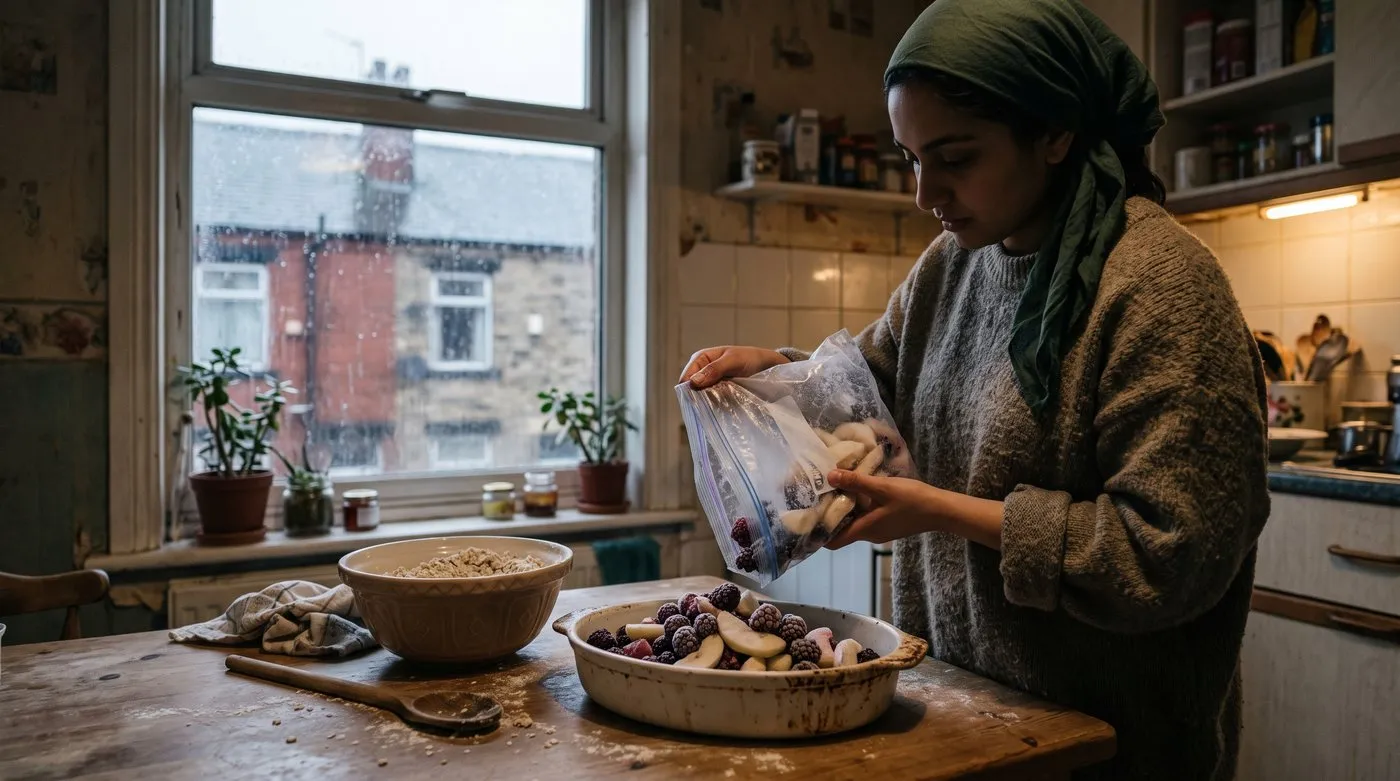
No need to thaw fruit for a crumble. Tip it in frozen and you keep all the juice.
For fruit served with cream or yoghurt, thaw it slowly in the fridge overnight. It will be softer than fresh, so it suits fools, compotes and toppings rather than tarts.
For a tart or pie, thaw the fruit in the fridge and drain off the juice, so the pastry doesn’t go soggy. Simmer the juice down to a glaze and pour it back over.
Frozen fruit is great for jam later in the year, when the kitchen is cooler. The guide to making jam from garden fruit covers setting points and jars.
Fruit freezing calendar
| Month | What to freeze |
|---|---|
| June | Strawberries, early gooseberries, rhubarb |
| July | Raspberries, blackcurrants, redcurrants, cherries, gooseberries |
| August | Blackberries, plums, greengages, blueberries, autumn raspberries |
| September | Apples, pears, damsons, late plums, blackberries |
| October | Late apples, quince (cooked first) |
Common fruit freezing mistakes
- Freezing wet fruit. Water turns to ice and the berries stick together. Blot rinsed fruit dry on a tea towel first.
- Bagging berries without open-freezing. They set into one solid block. Freeze them on a tray first.
- Using thin food bags. They split and let in air. Use freezer bags or tubs.
- Freezing raw pears. They turn brown and mushy. Poach them in syrup first.
- Forgetting to label. Every red bag looks the same by winter. Write the fruit and date on each one.
Frequently asked questions
Is it better to freeze fruit whole or sliced?
It depends on the fruit. Firm berries such as blackcurrants, blueberries and raspberries freeze best whole on an open tray. Strawberries keep better sliced and lightly sugared. Plums and other stone fruit are best halved and stoned, and apples are usually sliced or cooked first.
Do I need to blanch fruit before freezing?
No, most fruit doesn’t need blanching. Berries, currants, cherries and plums can go straight in. Some people blanch rhubarb briefly to keep its colour. Peaches are dipped in boiling water for a few seconds just to loosen the skins.
How long does frozen fruit last?
Use most frozen fruit within about a year for the best flavour. It stays safe for longer at -18°C, but slowly goes softer and less tasty. It is still fine for jam, crumbles and smoothies. Date every bag so you use the oldest first.
Can I freeze fruit in ordinary food bags?
Use freezer bags or tubs, not thin food bags. Thin bags can split and let air in, which causes freezer burn. Squeeze out as much air as you can before sealing, and label each bag with the fruit and date.
Can I make jam from frozen fruit?
Yes, frozen fruit makes good jam. Freezing is a handy way to hold fruit until you have time. Freezing can lower the pectin a little, so some cooks add a little extra fruit or some redcurrants to help it set. Weigh the fruit while it is still frozen.
Should I wash fruit before freezing?
Only if it’s dirty, and then dry it well. Raspberries and blackcurrants picked dry from your own garden usually need just a quick look over. Wet fruit freezes into a lump and gets icy, so blot it dry on a tea towel first.
Got a glut of veg as well? The guide to freezing vegetables has blanching times for every crop. For more on growing and using fruit, visit the fruit growing hub.
Our team produces practical UK gardening guidance from source research, contributor records and established horticultural practice. Editorial standards are overseen by Matt W.