Key takeaways
- Blanch most vegetables briefly before freezing so they keep their colour and flavour
- Cool them in iced water for as long as they boiled, then dry them well
- Open-freeze on a tray before bagging so the pieces stay loose
- Freeze vegetables on the day you pick them, especially peas and sweetcorn
- Lettuce, cucumber, radish and raw potato don't freeze well
- Cook most frozen veg straight from the freezer, but thaw and squeeze spinach first
Freezing is the quickest way to save a glut of garden veg. Blanch the vegetables briefly in boiling water, cool them in iced water, dry them, then freeze them on a tray before bagging. Done like this, beans picked in August still taste of summer in February.
The step most people skip is blanching, and it’s the reason home-frozen veg often turns dull and tasteless by winter. This guide gives you blanching times crop by crop, plus how to cook everything from frozen. For freezing fruit and the basics of freezing the whole harvest, see the guide to freezing garden produce.
Why blanch vegetables before freezing?
Vegetables contain natural enzymes that keep working slowly even in the freezer. Over a few months they fade the colour, flatten the flavour and toughen the texture.
Blanching is a quick boil that switches those enzymes off. It’s long enough to stop them, but short enough to leave the vegetable almost raw in the middle, so it cooks like fresh later. It also brightens the colour.
Skip it and most vegetables taste fine for a few weeks, then go downhill. If you want to keep them for months, blanch first.
How to blanch and freeze vegetables, step by step
You need a big pan, a large bowl of iced water, a slotted spoon or wire scoop, a timer and a baking tray.
- Get a big pan boiling. Use plenty of water and bring it to a fast, rolling boil.
- Fill a bowl with iced water. Add plenty of ice so the water stays really cold.
- Prepare the vegetables. Wash, trim and cut them into even pieces. Work in small batches so the water keeps boiling.
- Blanch. Lower a batch into the pan. Start the timer when the water comes back to the boil.
- Cool fast. Lift the batch straight into the iced water. Leave it for about the same time as it boiled, or until cold right through.
- Drain and dry. Tip into a colander, then pat dry on a clean tea towel. Leftover water turns to ice.
- Open-freeze. Spread the pieces in a single layer on a tray and freeze for an hour or two until hard.
- Bag and label. Tip into freezer bags, squeeze out the air, seal and label.
The most common mistake is putting too much in at once. The water stops boiling, the blanch doesn’t work properly and the batch suffers later. Keep the batches small and let the water return to the boil between rounds.

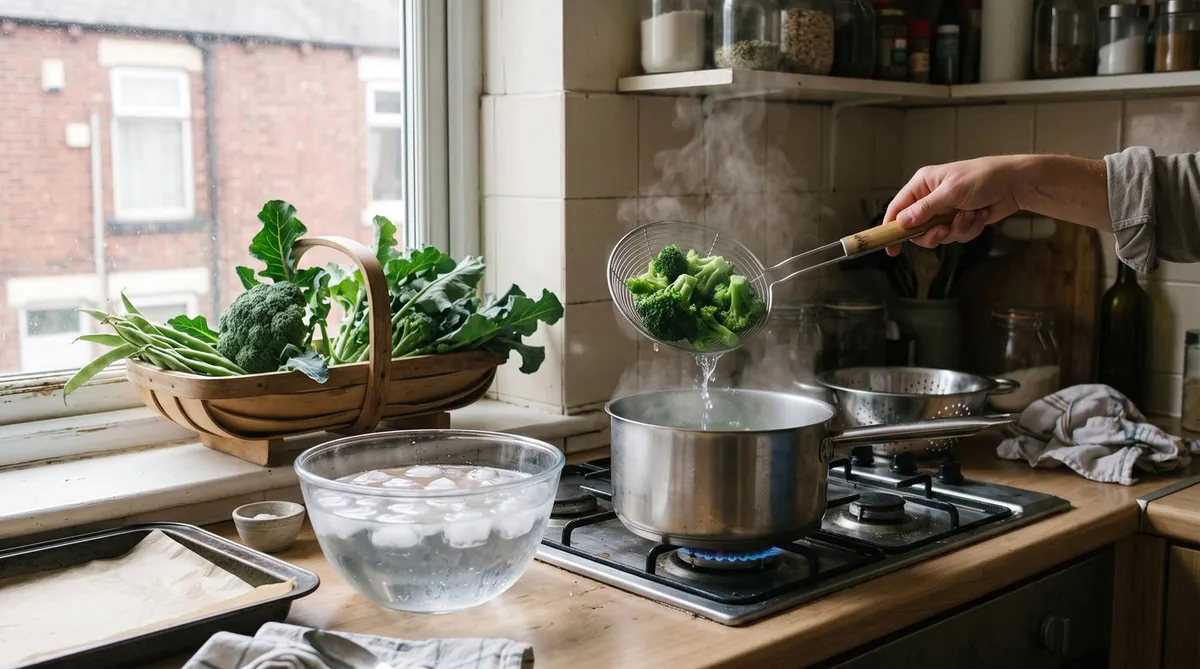
Straight from the boiling pan into iced water. Cooling the peas quickly stops them cooking and keeps them bright green.
Blanching times for garden vegetables
Time each batch from when the water returns to a full boil.
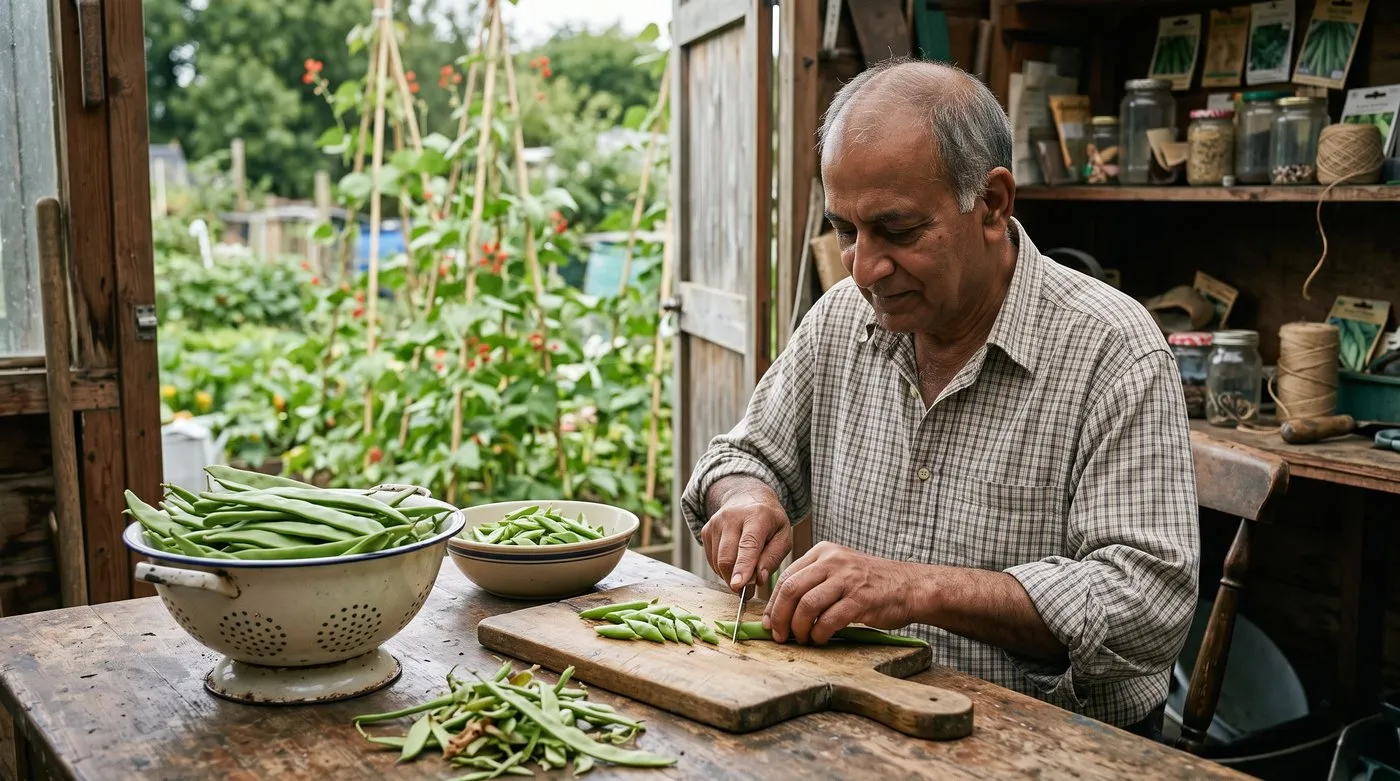
Slice runner beans before blanching. They freeze evenly and cook quickly from frozen.
| Vegetable | Preparation | Blanch time |
|---|---|---|
| Asparagus, thin spears | Trim woody ends | 2 minutes |
| Asparagus, thick spears | Trim woody ends | 4 minutes |
| Broad beans | Shell from the pods | 2-3 minutes |
| Broccoli | Cut into florets | 3 minutes |
| Brussels sprouts, small | Trim the base | 3 minutes |
| Brussels sprouts, large | Trim the base | 5 minutes |
| Cabbage | Shred | 1-2 minutes |
| Carrots | Slice or dice | 2 minutes |
| Cauliflower | Cut into florets | 3 minutes |
| Courgettes | Slice thickly | 3 minutes |
| French beans | Top and tail | 3 minutes |
| Kale | Strip from the stalks and chop | 2 minutes |
| Kohlrabi | Peel and dice | 1 minute |
| Mangetout and sugar snaps | Top and tail | 1.5-2 minutes |
| Peas | Shell from the pods | 1-1.5 minutes |
| Runner beans | Top, tail, string and slice | 2 minutes |
| Spinach and chard leaves | Wash | 2 minutes |
| Sweetcorn, small cobs | Husk and remove the silk | 7 minutes |
| Sweetcorn, medium cobs | Husk and remove the silk | 9 minutes |
| Sweetcorn, large cobs | Husk and remove the silk | 11 minutes |
| Turnips | Peel and dice | 2 minutes |
For sweetcorn kernels, blanch the whole cobs for about 4 minutes, cool them, then cut the kernels off. Pick sweetcorn and peas just before you freeze them, as they lose sweetness quickly after picking. The guides to growing peas and growing sweetcorn explain when each is ready.
Runner beans freeze well if you slice them first. They cook faster from frozen and are easier to portion. The guide to growing runner beans has tips for keeping the crop coming.
Pumpkin and winter squash are easier to cook first. Roast or steam the flesh, mash it, cool it and freeze it in tubs. Tomatoes don’t need blanching for cooking. Freeze them whole or chopped, and the skins slip off as they thaw.
Which vegetables don’t freeze well?
Anything you eat for its raw crunch tends to freeze badly. Watery cells burst as the ice forms, and the vegetable collapses when it thaws.
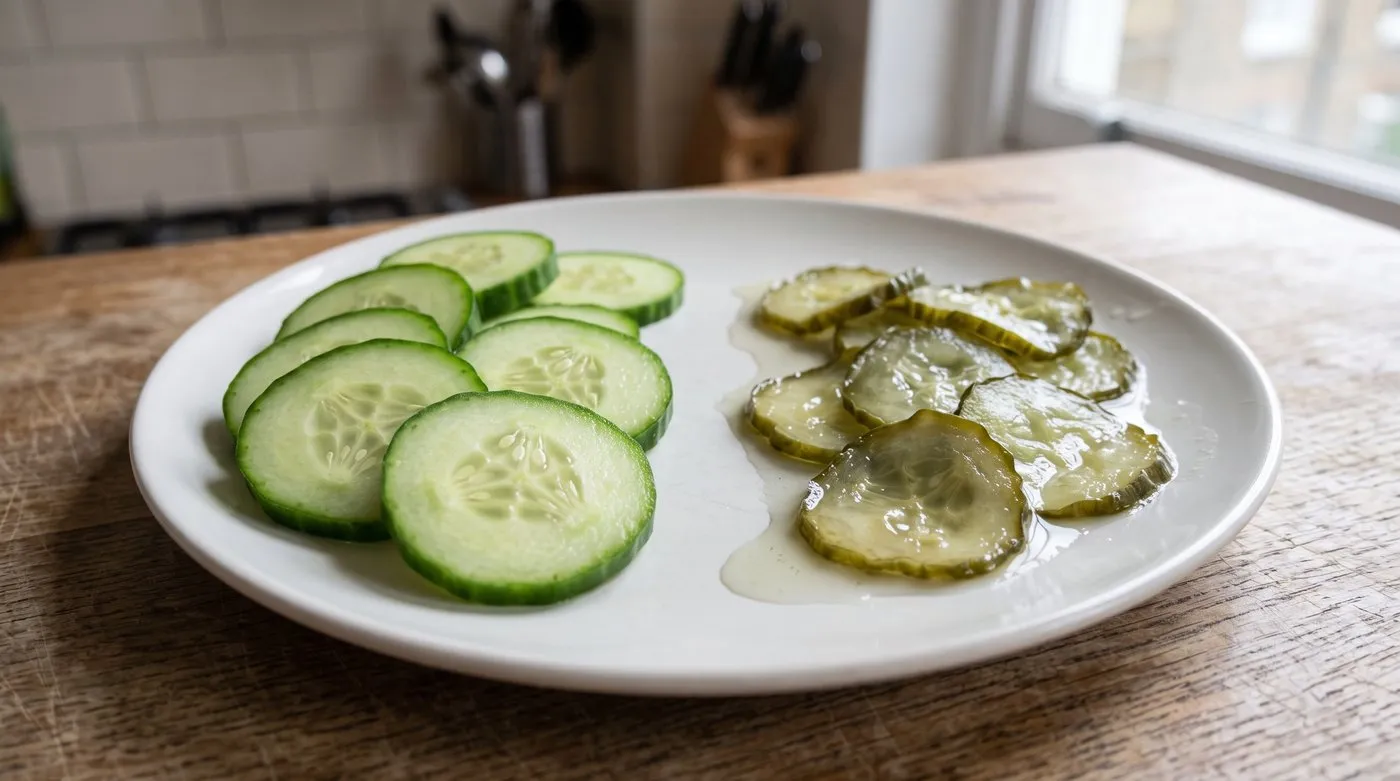
Cucumber is one to eat fresh. After freezing it thaws into limp, watery slices.
- Lettuce and salad leaves turn to slime.
- Cucumber goes watery and limp.
- Radish goes soft and loses its flavour.
- Raw potato discolours and goes grainy. Cook it first, as mash, roasties or chips.
- Celery loses its crunch but is fine for soups and stews.
- Whole tomatoes are fine for sauces but no good for salads.
For root crops you’d rather keep fresh, the guide to storing root vegetables over winter covers boxes of sand and clamps.
How to open-freeze and bag vegetables
Open-freezing stops vegetables freezing into one solid lump. After blanching and drying, spread the pieces on a tray in a single layer. Freeze for an hour or two, until each piece is hard. Then tip them into a bag. They stay loose, so you can pour out just what you need.
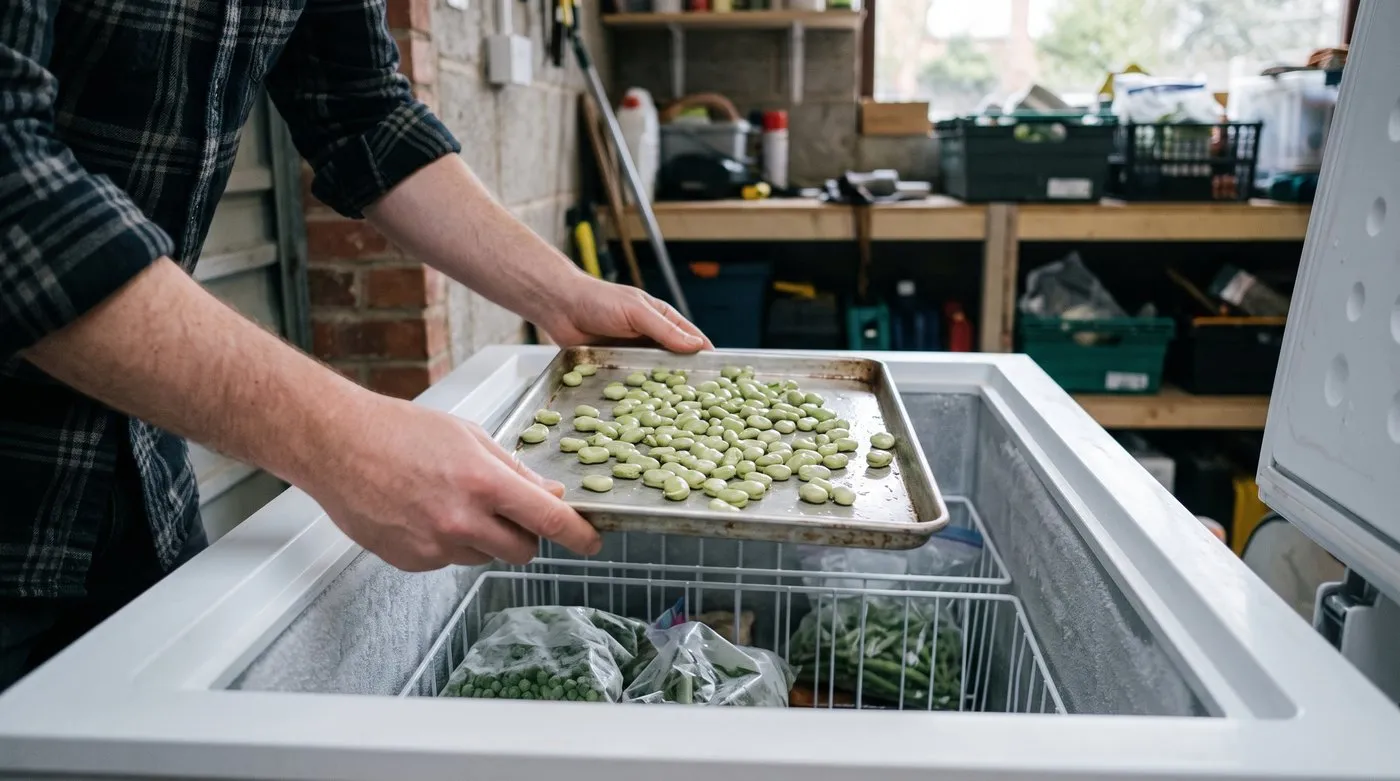
Freeze blanched beans on a tray first. Once they’re hard, bag them and they’ll pour out loose.
It’s worth doing for peas, broad beans, broccoli, sweetcorn kernels, sliced beans, courgette slices and sprouts. Spinach can be squeezed into balls and frozen as portions. Purées and sauces go straight into tubs or flat bags.
Use freezer bags or tubs, and squeeze out as much air as you can. Air causes freezer burn, the dry, pale patches that spoil the taste. A vacuum sealer helps if you freeze a lot. Write on every bag:
- What it is: “runner beans”, not “veg”.
- The date frozen.
- The weight or number of portions.

Label every bag with what’s inside and when it went in. Frozen greens all look the same by January.
Freezer temperature and keeping track
Keep your freezer at -18°C or colder. A cheap freezer thermometer is worth having, as the dial isn’t always accurate. If your freezer has a fast-freeze setting, switch it on a few hours before a big batch goes in.
Don’t cram it so full that air can’t move, and keep each crop together in one basket or box. Put new bags at the back and use the oldest first. Most blanched vegetables keep their best quality for about a year. Courgettes, cauliflower and leeks soften sooner, so use those first.
Thinking of a second freezer for the glut? The guide to choosing a chest or upright freezer weighs up the options.

Keep each crop together and labelled, and you’ll always find the peas.
How to cook vegetables from frozen
Most vegetables are best cooked straight from frozen.
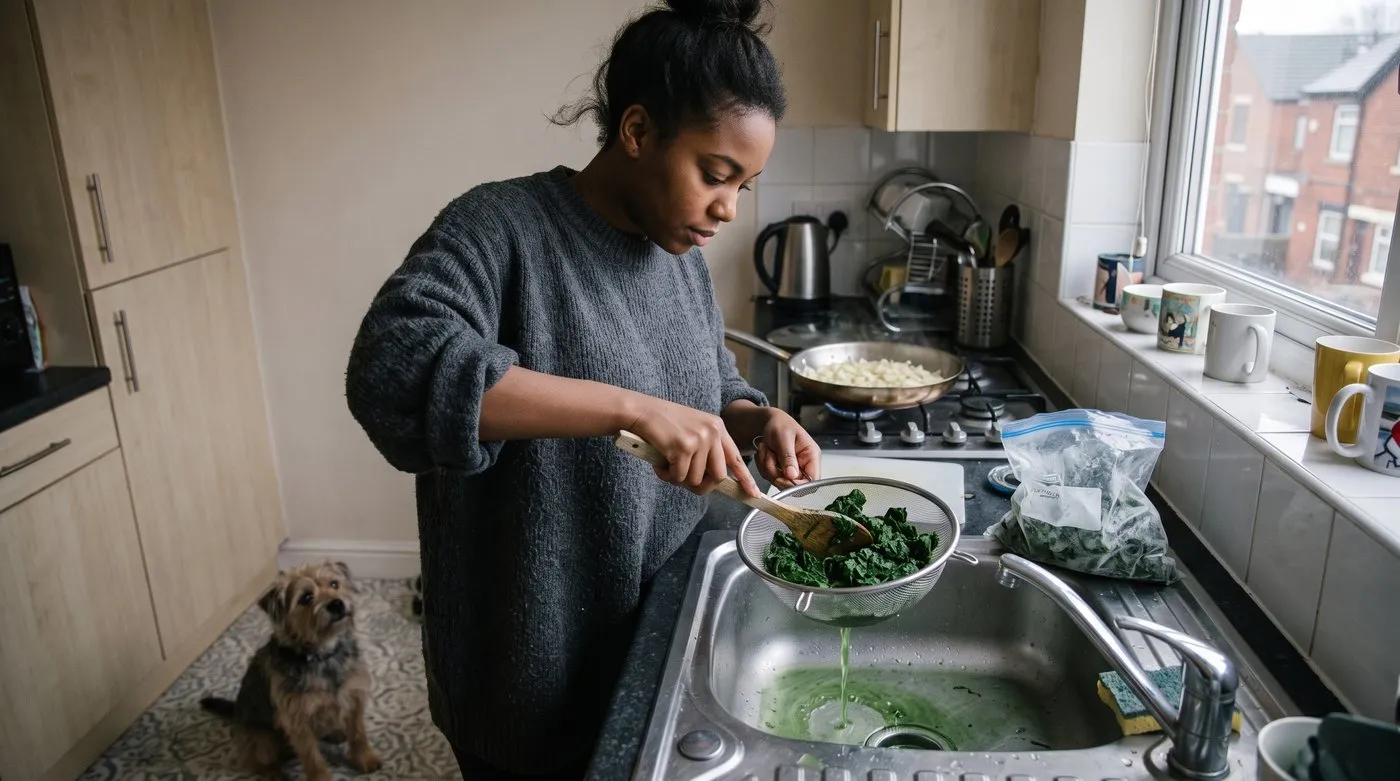
Thaw frozen spinach and press out the water before it goes in the pan, or your sauce will be swimming.
- Peas, broad beans, mangetout: into boiling water for 2-3 minutes.
- Runner and French beans: into boiling water for a few minutes until tender.
- Broccoli, cauliflower, sprouts: steam from frozen, or roast in a hot oven.
- Sweetcorn: kernels into the pan for a few minutes. Cobs into boiling water until hot through.
- Carrots, turnips, kohlrabi: straight into stews and soups. Allow a few extra minutes.
- Spinach, chard and kale: thaw in a sieve, squeeze out the water, then add to the dish.
- Courgettes: thaw and drain on kitchen paper first, or they’ll water down a sauce.
Don’t refreeze raw vegetables once they’ve thawed. Cook and eat them. If you cook them into a soup or stew, you can freeze that cooked dish.
Freezing calendar for garden veg
| Month | What to freeze |
|---|---|
| May to June | Asparagus, first peas, early broad beans, spinach |
| July | Peas, broad beans, French beans, runner beans, mangetout, courgettes |
| August | Runner beans, sweetcorn, broccoli, courgettes, French beans |
| September | Sweetcorn, last beans, kale, chard, tomatoes for sauce |
| October | Squash purée, early sprouts, cauliflower, last chard |
When everything comes at once, the guide to using up a garden glut has more ideas beyond the freezer.
Common vegetable freezing mistakes
- Skipping the ice bath. Hot vegetables keep cooking and go soft. Cool them fast in iced water.
- Overloading the pan. The water stops boiling and the blanch doesn’t work. Do small batches.
- Freezing wet vegetables. Water turns to ice and the pieces stick together. Dry them first.
- Bagging without open-freezing. You get a solid block. Freeze on a tray first.
- Freezing tired produce. Freezing doesn’t improve anything. Freeze young, fresh vegetables on the day you pick them.
Frequently asked questions
Why do you have to blanch vegetables before freezing?
Blanching stops natural enzymes that slowly spoil vegetables in the freezer. Without it, colour, flavour and texture fade over the months. A short boil switches the enzymes off. Cool the vegetables straight away in iced water so they don’t carry on cooking.
How long do frozen vegetables keep?
Most blanched vegetables keep their best quality for about a year at -18°C. Peas, beans, broccoli, sweetcorn and spinach freeze particularly well. Courgettes and cauliflower soften sooner, so use them first. Label bags with the date and aim to finish them before next year’s crop.
Which vegetables don’t freeze well?
Lettuce, cucumber, radish and raw potato all freeze badly. Their watery flesh collapses when thawed, and raw potato discolours. Whole tomatoes are fine for cooking but not for salads. Cooked or puréed versions of most of these freeze much better.
Can you freeze vegetables without blanching them?
Yes, but they lose quality much faster. Unblanched vegetables are fine if you’ll use them within a few weeks. For anything you want to keep for months, blanch first. Peppers, onions and chopped tomatoes freeze reasonably well raw for cooking.
Do you need to thaw frozen vegetables before cooking?
No, cook most frozen vegetables straight from the freezer. Tip peas, beans, broccoli and sweetcorn straight into boiling water, a hot pan or a stew. The main exceptions are spinach and chard, which are best thawed and squeezed to get rid of the water.
Can you refreeze vegetables that have thawed?
Don’t refreeze raw vegetables once they’ve thawed. Cook and eat them instead. If you cook them into a soup or stew, you can freeze that cooked dish. Thawed raw vegetables should be used soon or thrown away.
Fruit ripening too? The guide to freezing fruit covers berries, plums and apples crop by crop. For more on growing your own, visit the growing veg hub.
Our team produces practical UK gardening guidance from source research, contributor records and established horticultural practice. Editorial standards are overseen by Matt W.


