Key takeaways
- A half plot is about 125 square metres, half a traditional 10-pole plot
- Half plots often come up sooner on waiting lists than full plots
- A joint tenancy usually needs council or committee approval
- With informal sharing, the named tenant stays responsible for the plot
- Sub-letting for money is usually banned and can cost you the tenancy
- Put any sharing arrangement in writing, including what happens if one of you leaves
A half plot or a shared allotment is a great way to get growing without taking on a full plot alone. You get a shorter wait, less work and someone to share the watering in a heatwave.
There are three ways to do it, and each has its own rules. This guide explains them, what councils usually allow, how to set up a simple sharing agreement and how to make a smaller plot really productive. If you haven’t applied yet, start with our guide on how to get an allotment.
What is a half plot?
A half plot is half a traditional allotment. A full plot is 10 poles (also called rods or perches), about 250 square metres, so a half plot is about 125 square metres.
| Plot type | Size | Suits |
|---|---|---|
| Full plot | 10 poles, about 250 sq m | Keen growers with plenty of time |
| Half plot | 5 poles, about 125 sq m | Couples, beginners, busy households |
| Quarter plot or starter bed | Varies by site | Trying it out, salads and herbs |
A full plot is a big job. A half plot is enough for plenty of fresh veg through summer and autumn, without taking over every weekend. Many councils offer half plots to help shorten waiting lists.
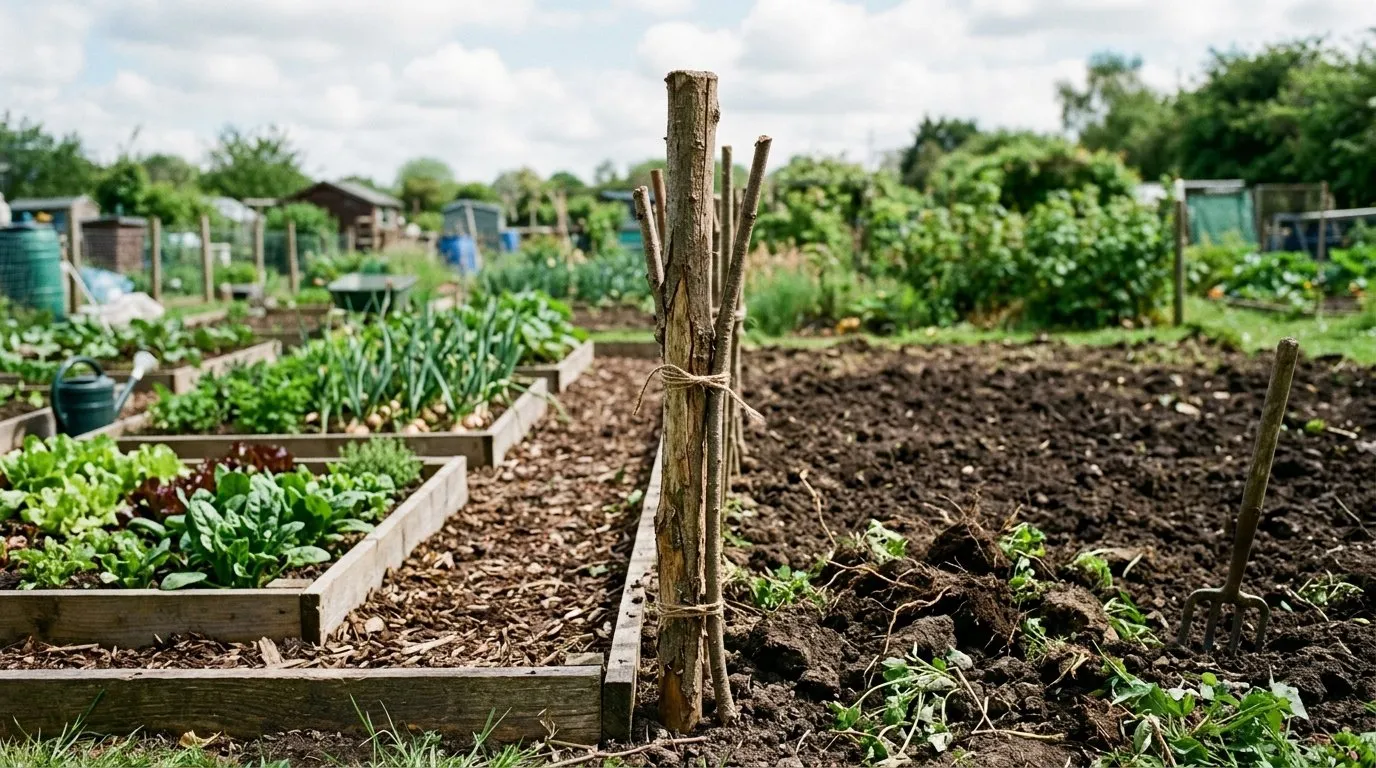
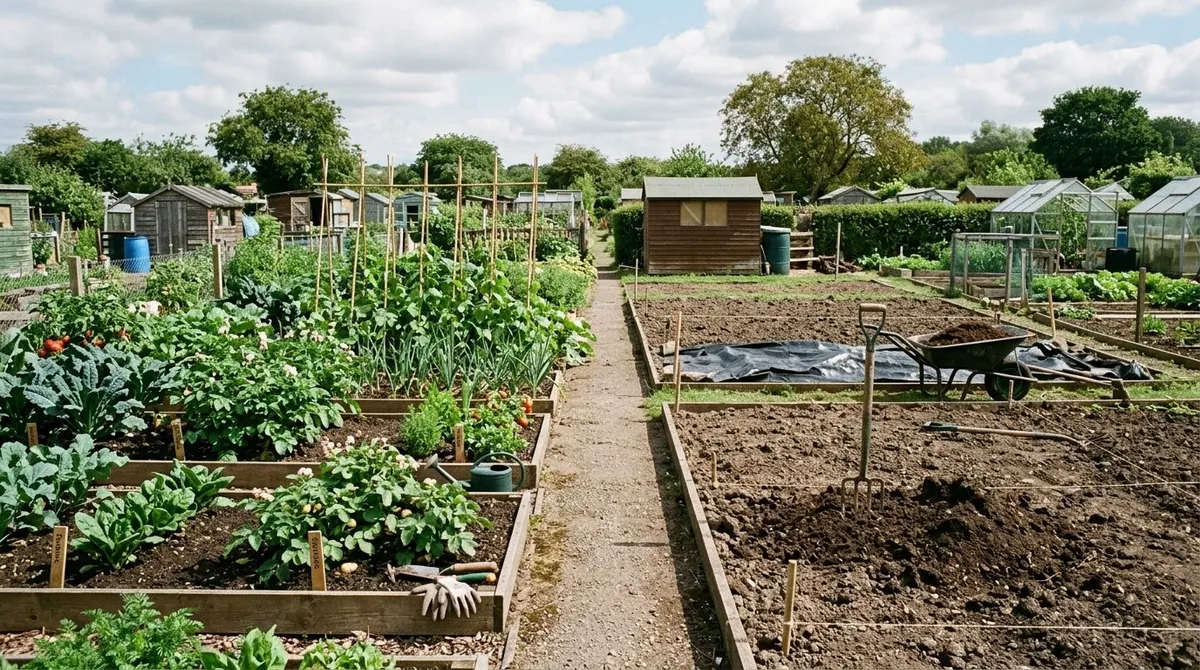
A clear marker between two halves helps everyone see who looks after which bit.
Three ways to share an allotment
Each option works differently, so check which one your site allows.
1. A council half plot
The council gives you half a plot as your own tenancy. You sign the agreement, pay the rent and look after your half. Someone else holds the other half.
It’s simple and the space is all yours. The downside is that you’re still managing it on your own.
2. A joint tenancy
Two people are named on one tenancy for a full plot. You share the rent, the work and the responsibility. This usually needs approval from the council or the site committee.
You get a full plot with half the workload each. It needs a bit of paperwork, and it’s harder to untangle if one of you wants to leave.
3. An informal helper
The named tenant invites a friend or family member to help. Many councils are fine with this, as long as no money changes hands. But the named tenant stays responsible for everything on the plot.
It’s easy to start and easy to stop. Just remember that if your helper breaks a site rule, you’re the one who answers for it.
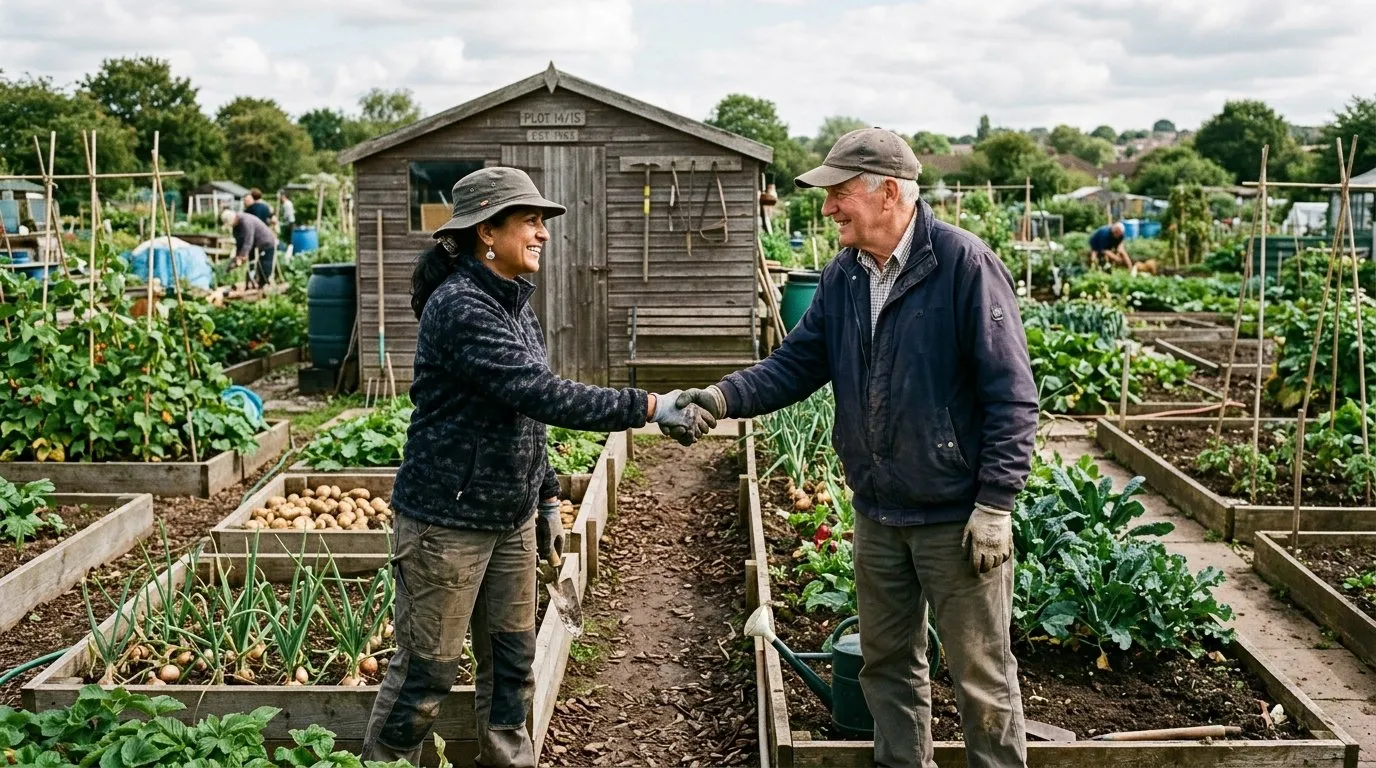
Whatever kind of share you agree, talk it through first and check what your site committee needs from you.
When does sharing an allotment make sense?
Sharing works well in lots of situations:
- A couple or family taking on one plot together.
- A full plot that’s become too much. Ask your site secretary whether it can be split into two halves, or whether a joint tenant can join you.
- An older gardener who’d like company and help with the heavy jobs. Our guide to allotment gardening as you age has more ideas.
- A friend on a long waiting list. Having them help on your plot keeps them growing while they wait.
No allotment free nearby? Sharing someone’s back garden is another option, and our guide to sharing or renting out a garden explains how it works.

Sharing a plot across generations works well: one brings know-how, the other brings energy for the digging.
What do councils usually ban?
Rules vary, so always read your own tenancy agreement. Our guide to allotment rules in the UK covers the common ones in more detail.
- Sub-letting for money. Charging someone to use your plot is usually banned and can cost you the tenancy.
- Running a business. Allotments are for growing for yourself and your family. Selling the odd surplus may be allowed, but check first.
- Unapproved structures. Sheds, polytunnels, fruit cages and sometimes fruit trees often need permission. Without it, you may be asked to remove them.
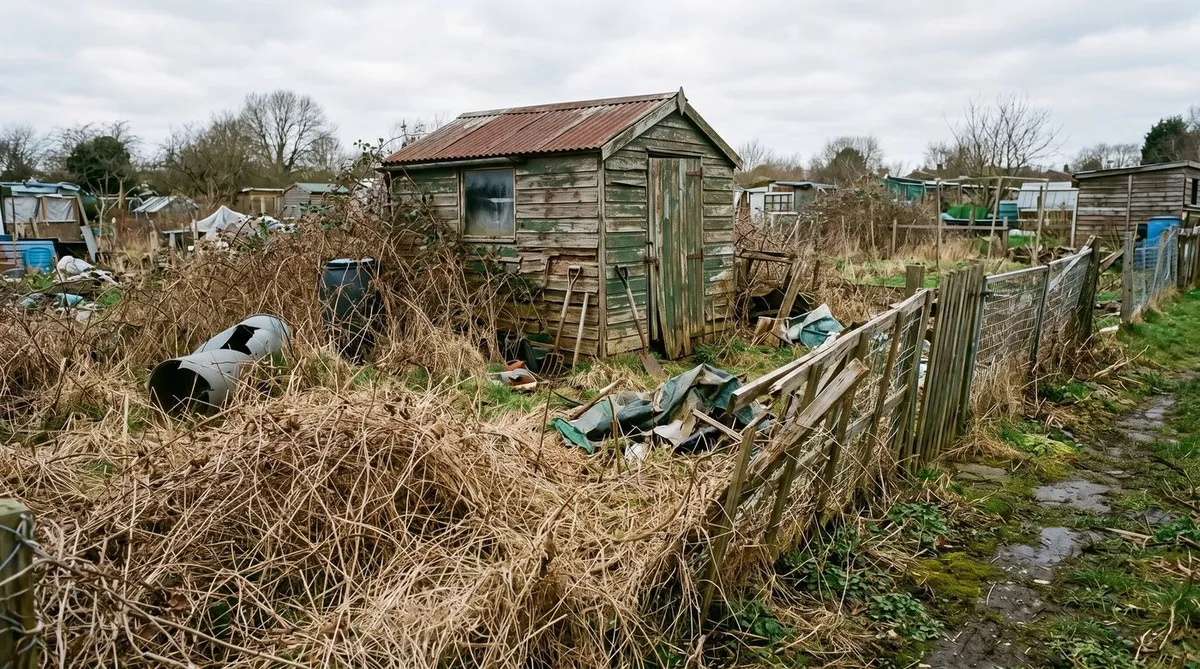
- Letting the plot go. If it isn’t cultivated, the council can issue a non-cultivation notice, even if your sharing partner was meant to do the work.
How to write a plot-sharing agreement
Put your arrangement in writing, even if it’s informal. One page is enough. Cover:
- Money. Who pays the rent and any water charge, and in what split?
- Space. Who looks after which area, or is everything shared?
- Big decisions. Planting fruit trees or putting up a shed should need you both to agree.
- Time. Roughly how much each of you expects to do, especially in busy months.
- Disagreements. How you’ll sort out a problem if you can’t agree.
- Leaving. How much notice to give, and who keeps the tools, plants and shed.
It feels formal between friends, but it saves a lot of awkwardness later. A short chat at the gate every week or two keeps things running smoothly too.
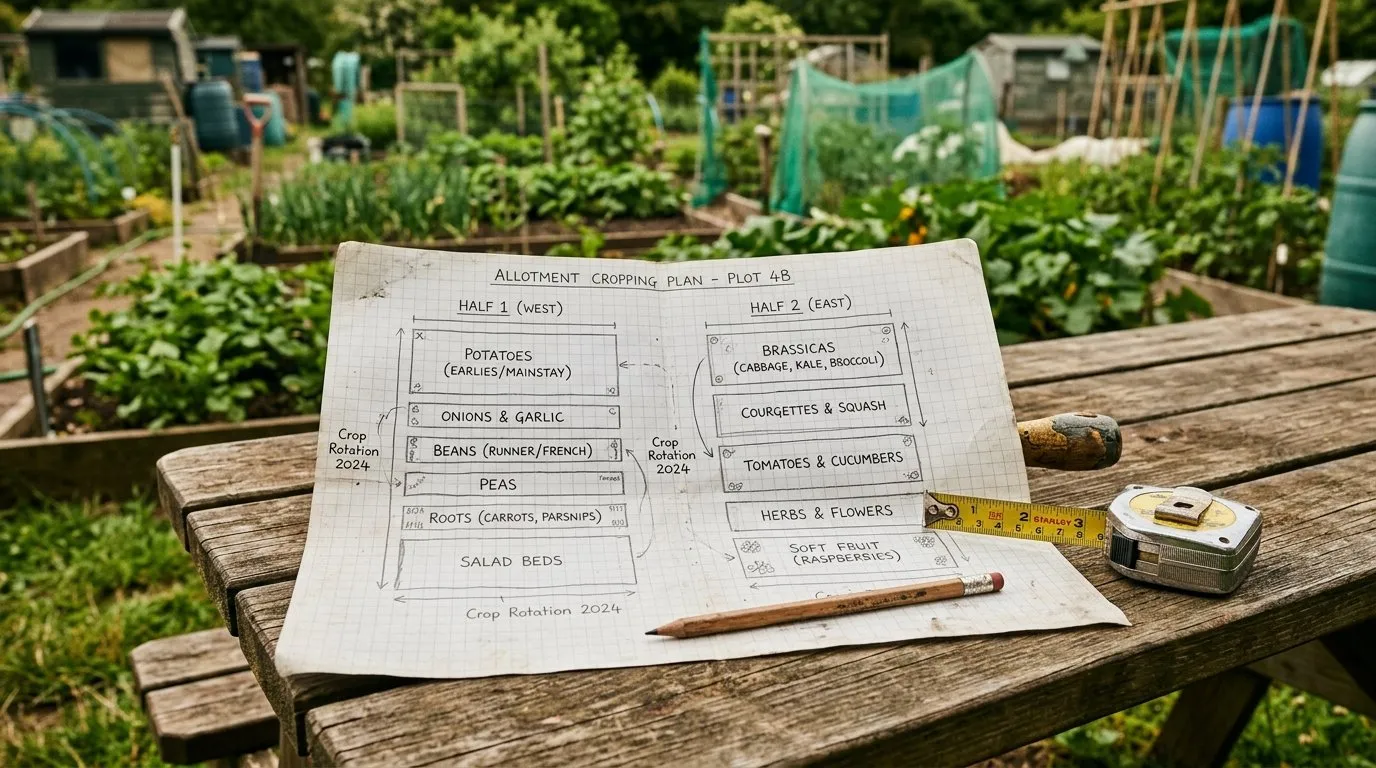
A simple shared cropping plan shows who grows what and where, which heads off most disagreements.
How to make the most of a half plot
A half plot needs a bit more planning than a full one. Focus on crops that give you the most for the space.
- Go easy on space-hungry crops. Maincrop potatoes take a lot of room. Earlies, or a short row, may suit you better.
- Grow lots of salad. Leaves, rocket and oriental greens grow fast and keep coming if you sow little and often. Our guide to succession planting explains how.
- Grow upwards. Climbing beans, peas and squash on a frame give more crop per square metre.
- Try trained fruit. Cordon apples and pears grow as single stems against a post-and-wire frame, so they take up very little ground. Check your site allows fruit trees first.
- Plant a few perennial herbs. Sage, thyme, chives and rosemary give you something to pick for much of the year.
Our allotment layout ideas have plans you can adapt for a smaller plot.
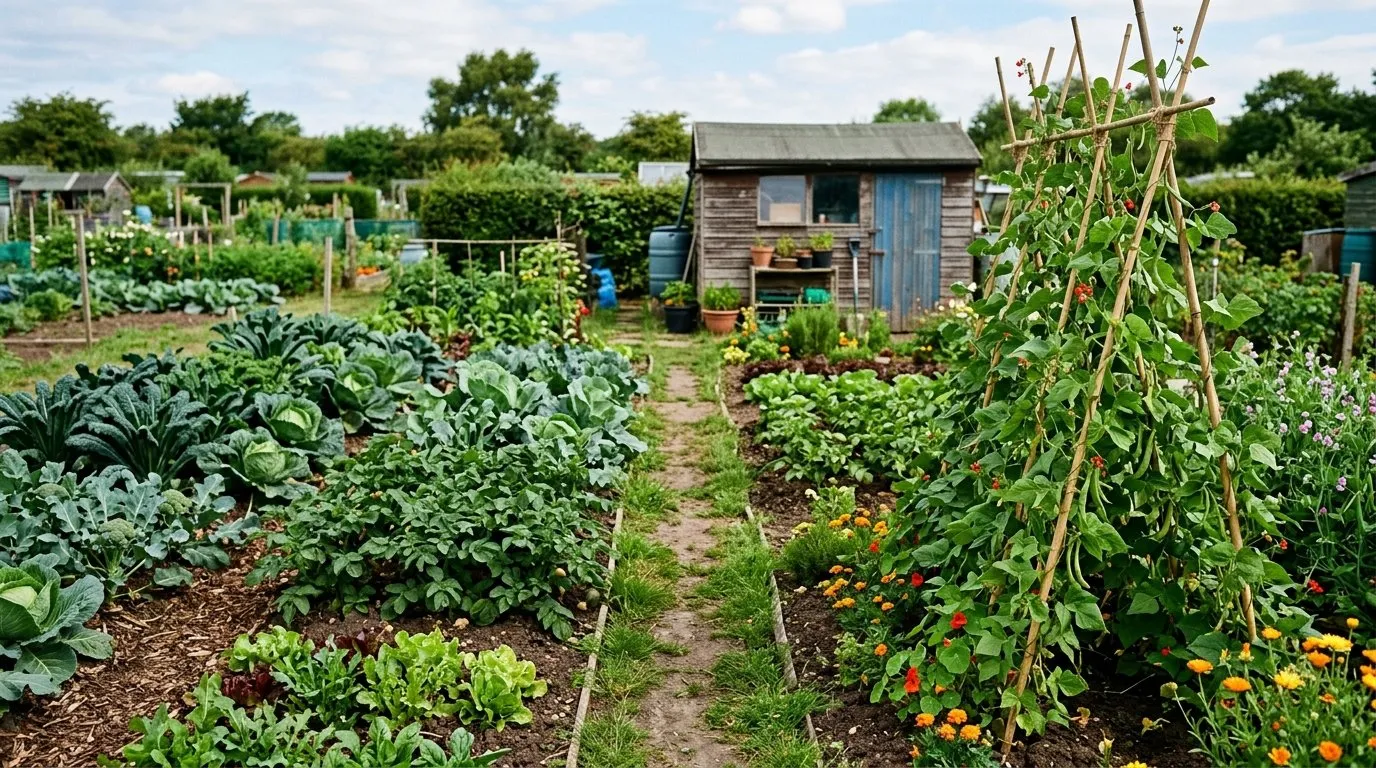
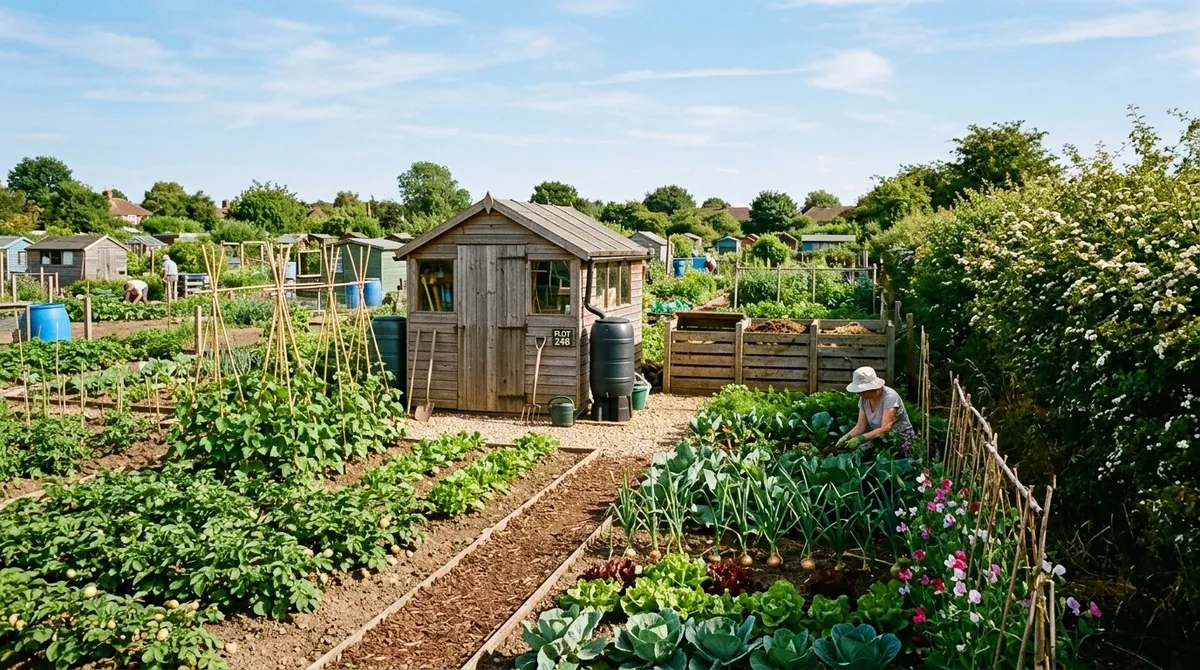
A well-planned half plot in summer. Climbing beans on a frame make the most of the space.
Common mistakes when sharing an allotment
- No written agreement. Most fall-outs come from unspoken expectations. Write them down.
- Not telling the committee. Even informal help is easier if the site knows who’s on your plot.
- Taking money for a share. That can count as sub-letting. Split the actual costs instead.
- Taking on a full plot too soon. A half plot is a gentler first year while you learn what you enjoy growing.
- Assuming the other person will cover the dull jobs. Agree who does the weeding and watering in busy months.
Frequently asked questions
What is a half plot UK allotment?
A half plot is half a standard allotment, about 125 square metres. A traditional full plot is 10 poles, about 250 square metres. Half plots suit beginners, busy households and anyone who wants a smaller commitment.
Can I share my UK allotment with someone else?
Usually yes, but the rules vary by council. Many allow a helper, but the named tenant stays responsible. A joint tenancy may need approval. Sub-letting for money is usually banned, so check your tenancy agreement first.
How much does a half plot cost in the UK?
Usually about half the full plot rent. Fees vary a lot between councils and sites, and water charges may be added. Many councils offer concessions, so check your council’s allotment pages for current fees.
How do I get a half plot from my council?
Join the waiting list and say you’d like a half plot. Apply through your council’s allotment service or the site association. Half plots often come up sooner than full ones, so it’s worth asking at several sites.
What happens if my plot share partner stops doing their share?
The named tenant is still responsible for the plot. If it gets neglected, the council can issue a non-cultivation notice. A written agreement saying who does what, and what happens if someone leaves, makes this much easier to sort out.
Got your half plot? Read our allotment for beginners guide for your first season, and find more plot jobs in our how-to guides.
Our team produces practical UK gardening guidance from source research, contributor records and established horticultural practice. Editorial standards are overseen by Matt W.