Key takeaways
- You sign a fresh tenancy agreement; the previous tenant's doesn't pass to you
- Ask the site secretary who owns any shed, greenhouse or fruit left on the plot
- Get anything you buy or are given from the old tenant agreed in writing
- Read the site rules on cultivation, sheds, bonfires and weedkillers before you start
- Clear and crop a section at a time, and cover the rest to keep weeds down
- Talk to the site secretary early if the plot is very overgrown
When you take on a vacant allotment plot, start with the paperwork, not the spade. Sign your own tenancy agreement, find out who owns anything left on the plot, and read the site rules. Then clear and plant one section at a time.
A neglected plot can look daunting, but it’s often a great start. The soil may have rested for a year or two, and old fruit bushes or a shed can be a real bonus. This guide covers your first few weeks: the questions to ask, what to check and how to plan. If you’re still on a waiting list, the guide on how to get an allotment explains how to find one.
What happens when you take on a vacant plot?
You sign a new tenancy agreement with whoever runs the site, usually the council or an allotment association. The previous tenant’s agreement ended when they left, and it doesn’t pass to you.
Your agreement sets out:
- The rent and when it’s due. You may pay part of a year if you start mid-season.
- The site rules, which you agree to follow.
- What counts as cultivating the plot, and how quickly you need to get going.
- How the tenancy can end, on either side.
Read it properly before you sign, and ask for a copy of the separate site rules too. The guide to allotment rules in the UK covers the common ones.

Walk the plot with the site secretary before you start. It’s the best time to ask about boundaries, sheds and anything left behind.
Who owns the shed and anything left behind?
It depends on your tenancy agreement and site rules, so ask rather than assume. On some sites, structures stay the old tenant’s property until they sell, give or remove them. On others, anything left after a tenant goes passes to the site.
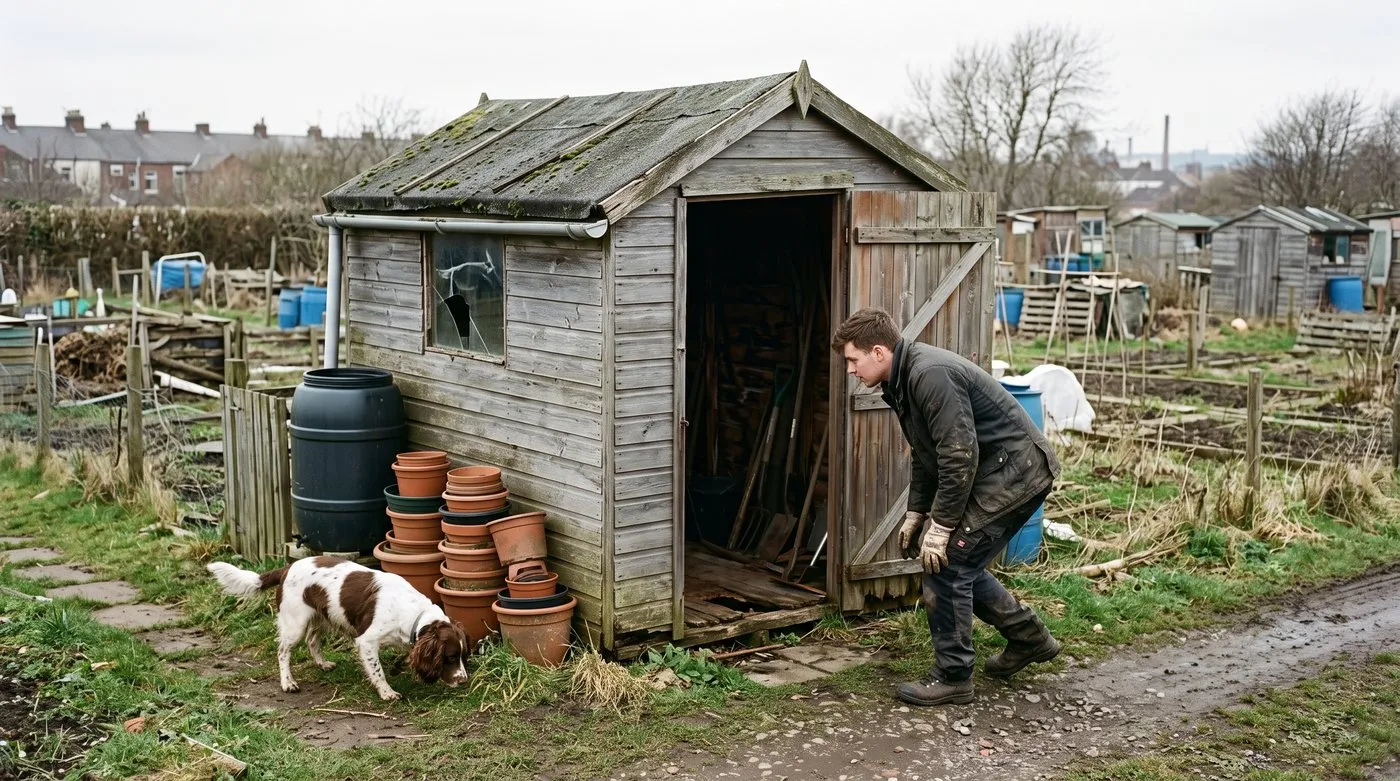
Before you use an inherited shed, check who owns it and whether the floor, roof and glass are safe.
Ask the site secretary about each of these:
- Sheds, greenhouses and polytunnels
- Water butts, compost bins and cold frames
- Fruit trees, fruit bushes, rhubarb and asparagus
- Old timber, carpet, glass or rubbish left lying around
If you buy or are given anything by the old tenant, get it in writing, even a short email. Note what’s included and the date. It saves awkward conversations later.
Check that any shed or greenhouse is safe before you use it. Look for rotten floors, loose glass and broken roofs. If you’re thinking of replacing an old shed, the guide to choosing an allotment shed covers the options.
Warning: Old plots can hide broken glass, rusty wire and old carpet. Wear stout gloves and boots, and check the ground before you kneel.
Questions to ask the site secretary
Walk the plot with the secretary, or another committee member, on your first visit. Take a notebook and your phone for photos. Useful questions include:
- Where exactly are the plot boundaries?
- What’s left on the plot, and who owns it?
- Where are the nearest water taps and the rubbish or skip area?
- Are bonfires allowed, and when?
- Are any weedkillers or chemicals banned on the site?
- What are the rules on sheds, greenhouses, ponds and fruit trees?
- Are chickens or bees allowed on the site?
- How long do new tenants have to get the plot growing?
- Are there known problems on the site, such as rabbits, badgers or clubroot?
Photograph everything on the plot as you go. It gives you a record of what was there on day one.
How to assess a neglected plot
Spend a few visits looking before you dig. A neglected plot tells you a lot about itself.
- Weeds: annual weeds such as chickweed and groundsel hoe off easily. Perennial weeds such as couch grass, bindweed, brambles and mare’s tail need more patience.
- Soil: dig a hole a spade’s depth or two in a few places. Look for dark, crumbly topsoil and see whether the ground below is hard or waterlogged.
- Drainage: puddles, moss or rushes after rain suggest wet ground. Plan raised beds there.
- Sun: note where shade falls from sheds, hedges and trees at different times of day.
- Neighbours’ plots: see what grows well nearby, and ask. Allotment holders are usually glad to share tips.
A simple soil test kit from a garden centre tells you if the soil is very acid. That helps you decide whether to lime the brassica bed later.

A test hole shows how deep the good topsoil goes and whether the ground below is hard or wet.
Your first few weeks on the plot
Take it steady. Clearing a whole plot in one go is the quickest route to burnout.
- Sign the tenancy and get a copy of the site rules.
- Walk the plot with the secretary and photograph everything.
- Sort out ownership of the shed, greenhouse and any fruit.
- Clear away rubbish safely, using the site’s skip or tip arrangements.
- Pick one small section near the path or water tap to clear first.
- Cover the rest with cardboard, a weed membrane or thick mulch to stop weeds spreading.
- Plant something quick in your cleared section, such as potatoes, salads or beans.
The guide on how to clear an overgrown allotment plot covers strimming, digging and dealing with tough weeds in detail. For the worst offender, see the guide to beating couch grass.

Clear one section properly before moving on. Small wins keep you going.
Keep your tools simple to start with: a spade, fork, hoe, rake, trowel and watering can will do most jobs. Hold off on a rotavator. On weedy ground it can chop perennial roots into pieces, and each piece can grow into a new plant.
Planning your first year
Clear and crop a section at a time, keeping the rest covered. That way the plot looks cared for, the weeds stay under control, and you’re eating your own veg in the first summer.
| Season | What to do |
|---|---|
| Late winter to early spring | Sign up, walk the plot, clear rubbish, cover most of it |
| Spring | Clear your first section; plant potatoes, onions, peas and broad beans |
| Late spring | Sow salads, beans and courgettes; start clearing the next section |
| Summer | Water, weed and harvest; keep uncovered ground hoed |
| Autumn | Clear more ground; plant garlic and overwintering onions |
| Winter | Spread compost or manure; plan next year’s layout |
Covering ground with cardboard and a thick layer of compost or manure smothers many weeds over a season. Tough perennials such as bindweed may need a longer cover and some digging out. Check that cardboard and membranes are allowed on your site, as some have rules. The guide to allotment layout ideas helps you plan beds and paths.

Plant one part, cover the rest. The cardboard and compost keep weeds down until you’re ready for that ground.
What if the plot next door is abandoned?
Tell the site secretary, and stick to the facts: which plot, and what you’ve noticed. They’ll contact the tenant and follow the site’s own process. People sometimes have good reasons for being away, such as illness.
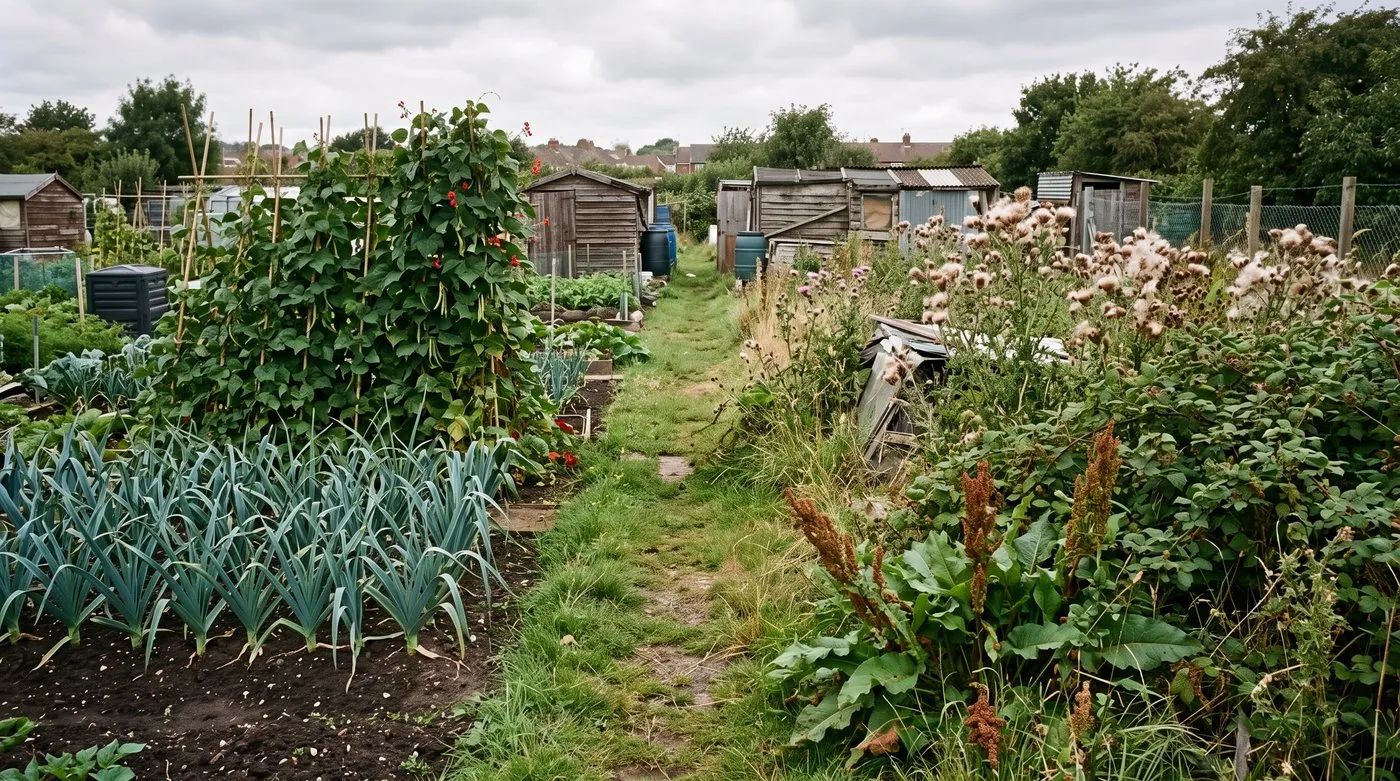
Weeds seeding next door can spread to your plot. Tell the site secretary rather than tackling it yourself.
If seeding weeds from next door are spreading onto your plot, ask the secretary whether you can cut back the edge. Don’t clear, use or take anything from another plot without written permission, however neglected it looks.
Common mistakes on a new allotment
- Starting before you’ve signed. Wait until the tenancy is in your name.
- Assuming the shed is yours. Check who owns it, and get any deal in writing.
- Trying to clear everything at once. Clear a section, cover the rest, and keep going steadily.
- Rotavating perennial weeds. It can spread couch grass and bindweed further.
- Spending big too soon. Learn the plot for a season before buying a polytunnel or big kit.
- Keeping yourself to yourself. Say hello to your neighbours. Most are generous with advice, seedlings and spare kit.
Frequently asked questions
What happens when I take on a vacant allotment plot in the UK?
You sign a new tenancy agreement with the council or allotment association. It’s separate from the previous tenant’s agreement. You pay the rent, agree to the site rules and usually agree to get the plot growing within a set time.
Who owns the shed and structures on a vacant allotment plot?
It depends on your tenancy agreement and site rules. Sometimes the old tenant still owns them, and sometimes they’ve passed to the site. Ask the site secretary, and get any sale or gift in writing.
Can I be evicted from a UK allotment plot?
Yes, if you break the terms of your tenancy. The usual reasons are not cultivating the plot, breaking site rules or not paying rent. Most sites send a warning and give you time to put things right first.
How long do I have to bring an allotment plot into cultivation?
It depends on your site, so check your tenancy agreement. Most expect steady, visible progress in the first few months. If the plot is badly overgrown, ask the site secretary for a realistic plan and agree it in writing.
What if the neighbouring plot is abandoned?
Tell your site secretary, sticking to the facts. They’ll contact the tenant and follow the site’s process. Don’t clear or use the plot yourself without written permission, however neglected it looks.
Can I keep the fruit bushes and rhubarb on my new plot?
Usually, yes, but ask first. Established fruit, rhubarb and asparagus are often a welcome bonus with a plot. Check with the site secretary that the old tenant isn’t planning to take them.
Now you’ve got the keys, read the allotment guide for beginners to plan what to grow, or browse more how-to guides. The National Allotment Society also has helpful advice for new plot holders.
Our team produces practical UK gardening guidance from source research, contributor records and established horticultural practice. Editorial standards are overseen by Matt W.