Key takeaways
- Ask your site secretary first, as size, colour and position rules vary from site to site
- Pressure-treated tongue-and-groove timber is the best all-rounder for most allotments
- Plastic and metal sheds need little upkeep but are harder to fit shelves inside
- A level slab base with the floor raised on bearers does more for shed life than anything else
- Look for solid doors, a through-bolted hasp and a closed-shackle padlock when you buy
- Site the shed where it won't shade your beds or your neighbour's
The best allotment shed is the one your site allows, standing on a level base, in a spot that doesn’t shade your crops. Get those three right and almost any decent shed will serve you for years.
This guide is for the buying decision: rules, size, material, base and the security features to look for. Once it’s up, our allotment shed ideas and storage guide shows you how to fit it out inside.
What to check with your allotment site before you buy
Ask your site secretary or council before you spend a penny. Sheds on allotments are controlled by your tenancy agreement, and the rules vary a lot from site to site.
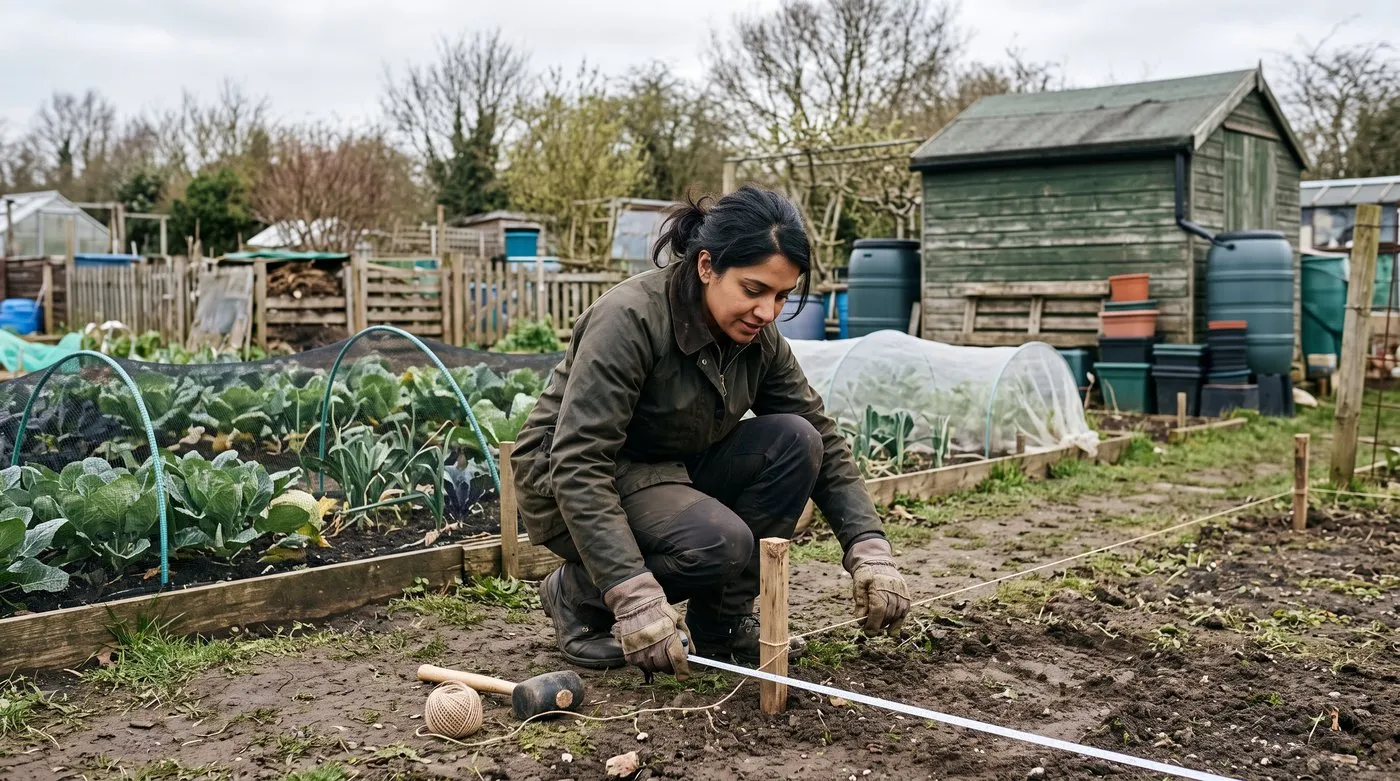
Peg out the footprint before you buy. It shows you the real size and whether it will shade anything.
Most sites want a written request first, sometimes with a sketch of the shed and where it will go. Some approve anything within published limits. Others discuss each request at a committee meeting, so allow a few weeks. Put in for permission early in the year if you want the shed up by spring.
Questions to ask before buying:
- What is the largest shed footprint and height allowed on a plot this size?
- Are any materials or colours ruled out?
- Where on the plot must the shed go?
- Is a concrete base allowed, or only slabs you can lift?
Get the answers by email if you can. Our guide to allotment rules in the UK covers what tenancies usually say about sheds, greenhouses and other structures.
Warning: Putting up a shed without permission can mean taking it down again at your own cost. Always get the yes in writing first.
What size allotment shed do you need?
Buy the size your site allows and your plot needs, not the biggest you can find. A 6x4ft shed holds hand tools, a fork and spade, a few bags of compost and seed boxes. An 8x6ft shed adds room for a potting bench and a chair out of the rain.
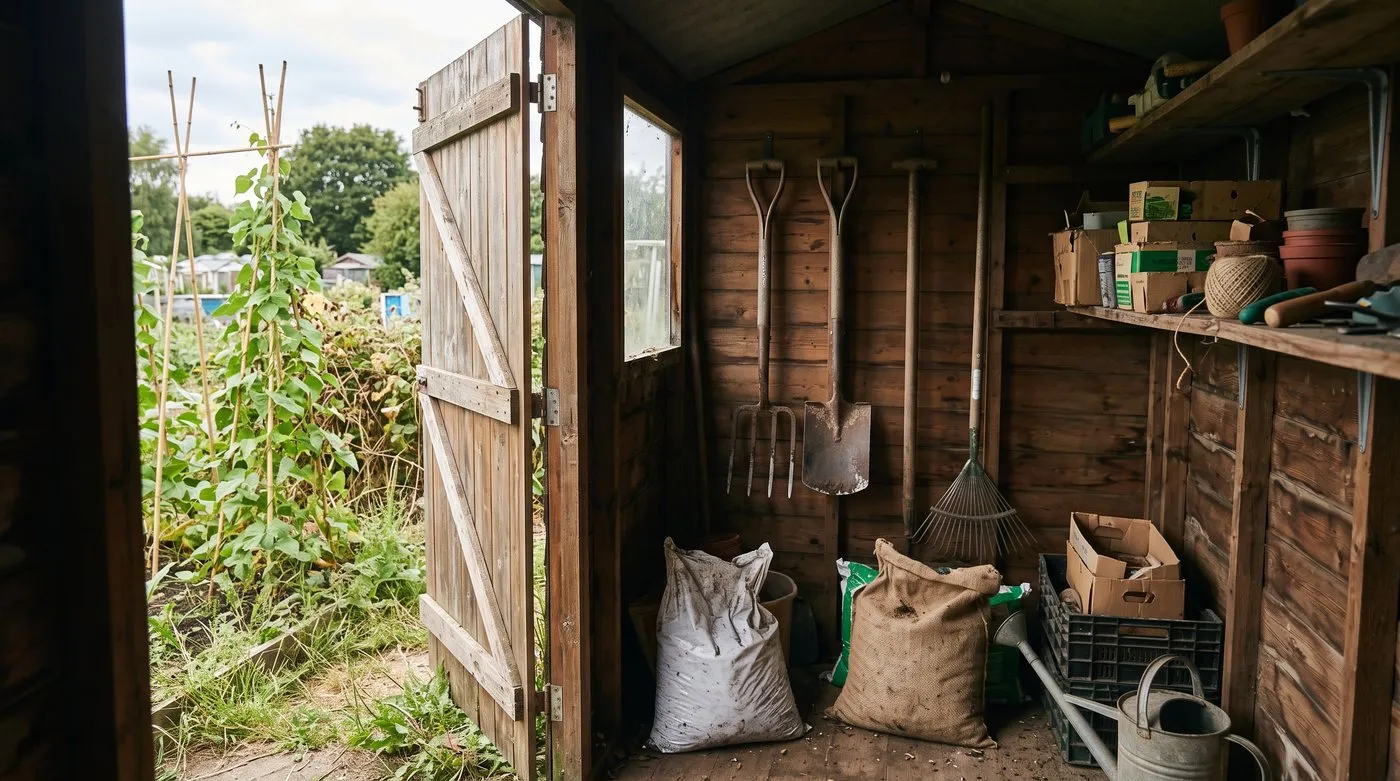
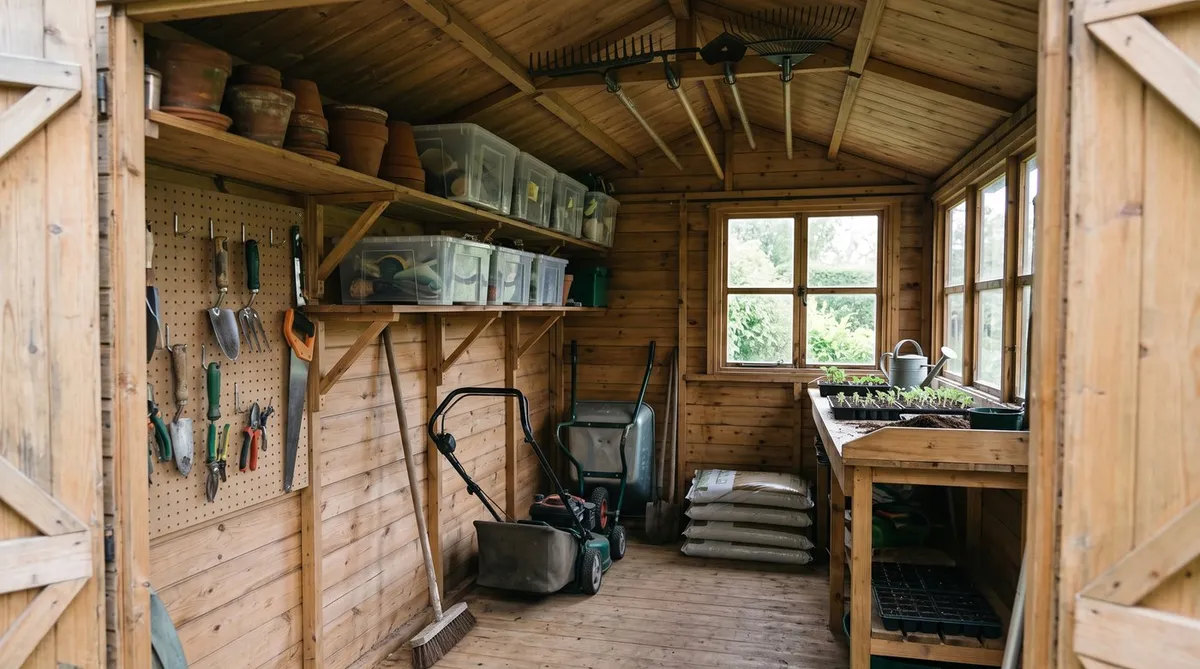
A 6x4ft shed fits the basics nicely. If you want a potting bench and a chair too, look at something bigger.
Think about what you’ll store. Long tools, a wheelbarrow and a mower take floor space fast. If you want to pot up seedlings inside, you’ll need a bench along one wall and room to stand.
Check the height limit against the roof style. Apex sheds have a pitched roof and are measured to the ridge. Pent sheds slope one way and are measured to the high side. A tight height limit can rule out some apex designs.
On a half plot, a small shed or a lidded storage box may be all the rules allow. Our guide to half plots and plot-sharing has more on making a smaller plot work.
Which shed material is best for an allotment?
Pressure-treated tongue-and-groove timber is the best all-rounder for most plots. Plastic and metal need less upkeep but are harder to fit out inside.
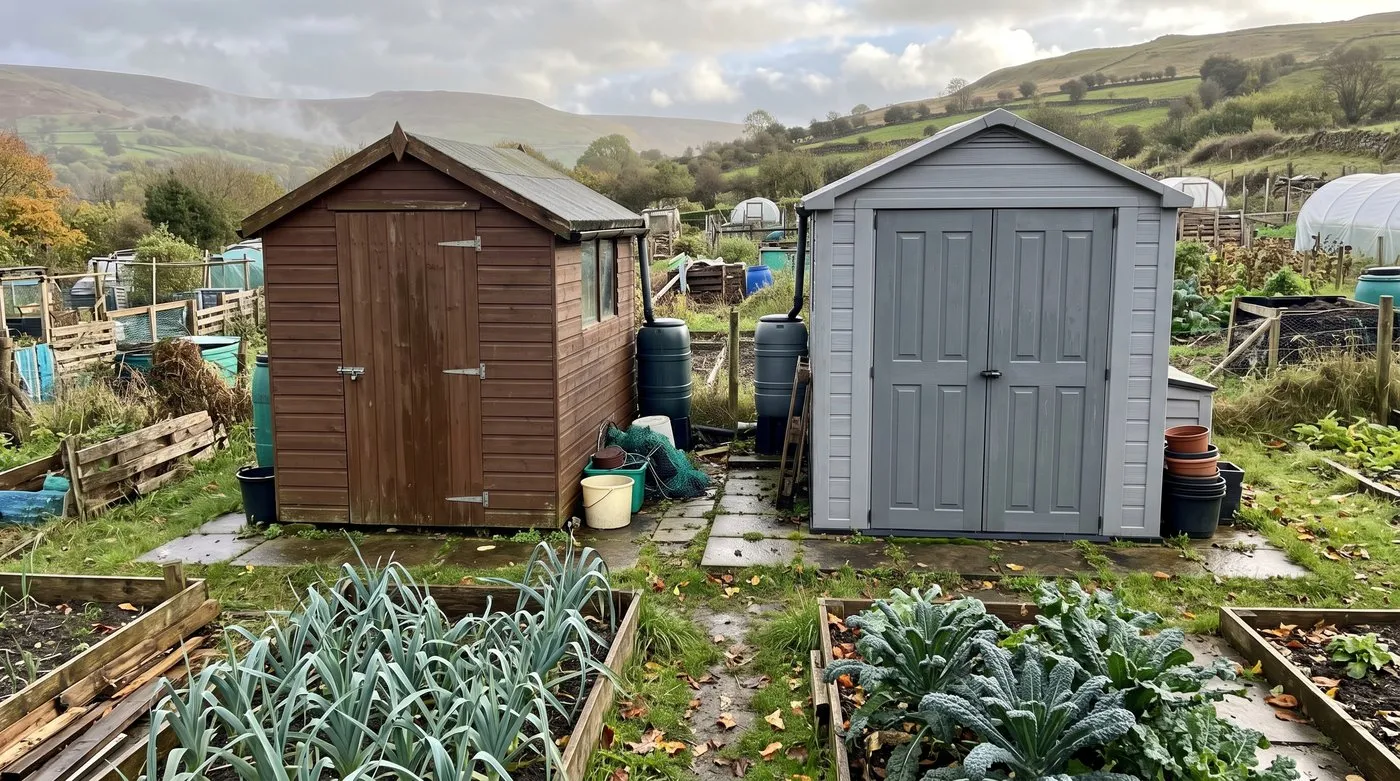
Timber is easy to fit out and repair, while plastic never needs treating. Both last well on a good base.
| Material | Upkeep | Fitting shelves | Good points | Watch out for |
|---|---|---|---|---|
| Tongue-and-groove timber (pressure-treated) | Re-treat every few years | Easy | Sturdy, easy to repair, looks right | Rots if left on wet ground |
| Overlap timber | Re-treat often | Easy | Cheapest | Thin boards warp and let rain in |
| Heavy-duty plastic | None | Hard, use freestanding units | No rot, no treatment | Must be fixed down on windy sites |
| Galvanised metal | Very little | Hard, needs special fixings | Most secure | Hot in summer, condensation inside |
Timber is the classic choice. Tongue-and-groove boards lock together, so they keep rain out better than cheap overlap boards. You can screw shelves, hooks and a bench straight to the walls. Treat it with a wood preservative when you first put it up, then every few years.
Plastic doesn’t rot and never needs painting. It suits plot-holders who can’t face upkeep. Use a freestanding shelf unit inside, and fix the shed firmly to its base.
Metal is the hardest shed to break into, which helps on sites with theft problems. It gets hot in sun and can drip with condensation, so it’s poor for storing seed. Check your site allows it, as some don’t.
What is the best base for an allotment shed?
Level paving slabs on a firm sub-base make the best base for most allotment sheds. A good base keeps the floor dry and the frame square, which matters more for shed life than the material.
Lay the slabs on a compacted layer of hardcore or sand and cement. Check them with a long spirit level in both directions. Then sit the shed on pressure-treated bearers, so air can move under the floor. Make the base a little bigger than the shed, so rain drips onto slab, not soil.
A poured concrete slab is just as good, but many sites don’t allow one because it’s hard to remove when you leave. Avoid bare soil, old pallets or a few loose bricks at the corners. These settle unevenly, twist the frame and let damp creep up into the floor.

A level slab base, checked with a long spirit level, keeps the floor dry and stops the doors sticking.
If your plot gets waterlogged, fix the drainage first. The flooded allotment drainage guide explains how.
Which security features to look for when buying
Choose a shed with solid doors, sturdy hinges and frame timbers thick enough to take a proper hasp. A strong lock is only as good as the door it’s fitted to.
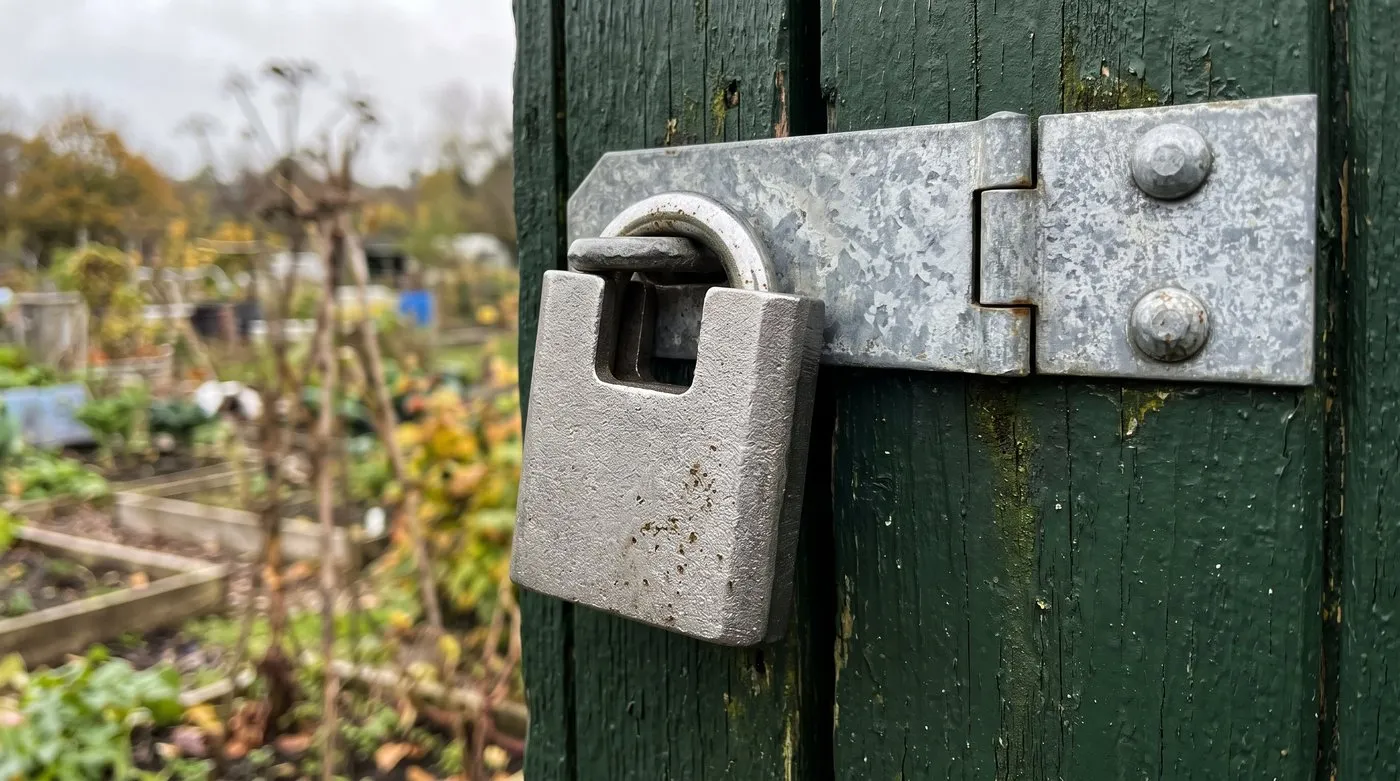
A closed-shackle padlock on a bolted-through hasp is far harder to cut or prise off than a cheap lock.
- Hasp and staple: fix it with coach bolts through the door, nuts on the inside, so it can’t be unscrewed.
- Padlock: a closed-shackle padlock, where the body shields the shackle, is much harder to cut.
- Hinges: use security screws or bolts so the hinges can’t be undone from outside.
- Windows: a windowless shed, or one with a small window you can cover, keeps tools out of sight.
No allotment shed is thief-proof. Take power tools and anything valuable home. Our guide to allotment security covers the wider site, from gates to marking your tools.
Where should the shed go on your plot?
Put the shed where it won’t shade your beds or your neighbour’s, and where your site rules say. In practice that’s often the north end of the plot, by the main path.
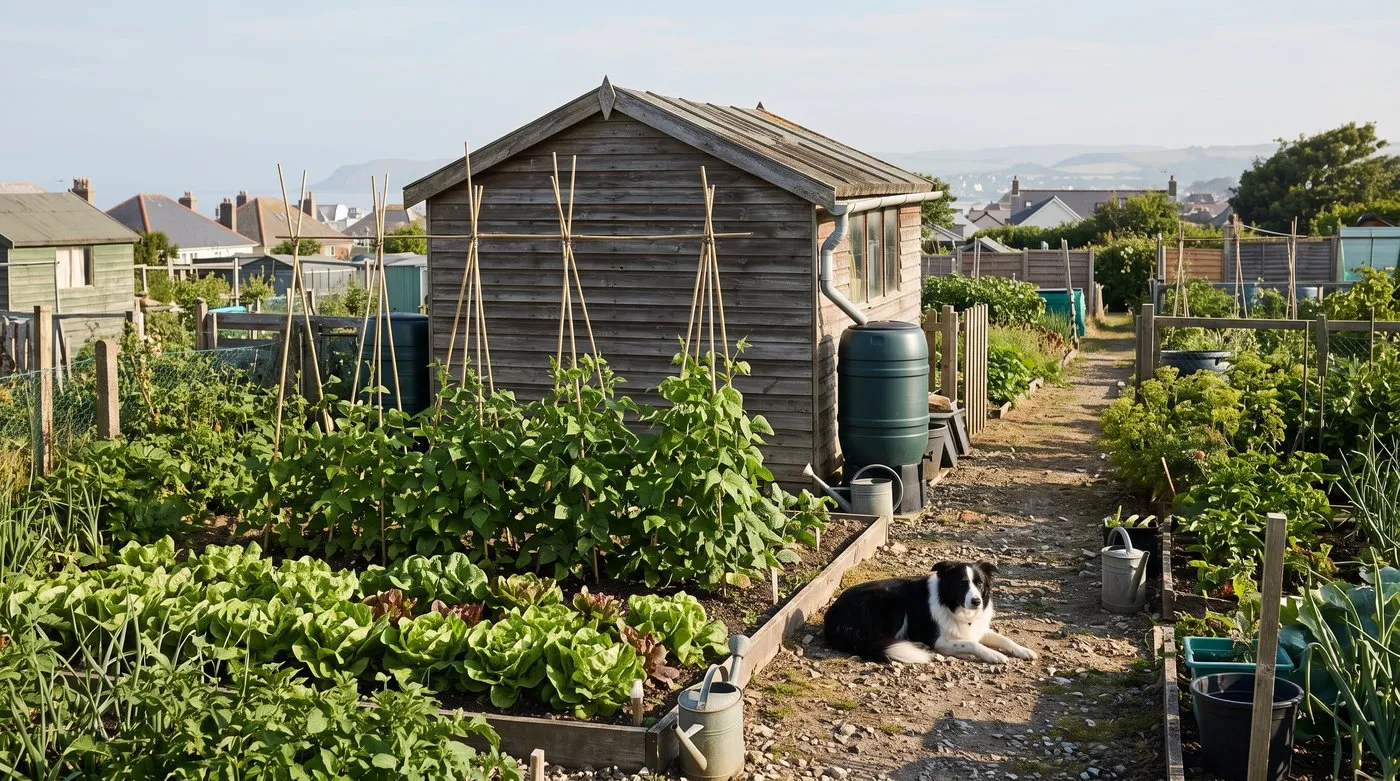
Set at the end of the plot, the shed shades the path, not your crops. A gutter and water butt are an easy bonus.
A shed on the north side throws its shadow onto the path or compost bays, not your crops. Near the path makes carrying compost and tools easier. Add a gutter and a water butt to the roof to catch rain right where you need it. The allotment layout ideas guide shows how the shed fits with beds, paths and compost.
Leave a gap of at least a stride round the back and sides. You’ll need it to re-treat timber and clear leaves, and it lets air move.
When is the best time to put up an allotment shed?
Spring is ideal: apply in late winter, then build in a dry spell in April or May. The ground is firm enough to lay a base, and you’ll have the shed for the whole season.
Avoid laying a slab base in frost, as mortar won’t set properly. Treat timber on a dry day, when the boards have had a chance to dry out. Once it’s up, check the roof felt and hinges each autumn before the winter weather.
Common mistakes when choosing an allotment shed
- Buying before asking. A shed that breaks site rules may have to come down.
- Skipping the base. A shed on soil or loose bricks twists, rots and won’t lock properly.
- Going too cheap. Thin overlap sheds with flimsy hinges let rain in and are easy to force.
- Leaving tools on show. A window full of strimmers is an open invitation. Cover it or take them home.
- Forgetting shade. A tall shed on the south side of the plot can shade a whole bed in summer.
Frequently asked questions
Do I need planning permission for an allotment shed in the UK?
Usually not, but you almost always need your site’s permission. Sheds on allotments are controlled by the tenancy agreement. Ask the site secretary or council in writing, often with a sketch of the size and position, before you buy.
How big can an allotment shed be?
It depends entirely on your site rules. Limits vary between councils and associations, and some set smaller sizes for half plots. Check your tenancy or ask the site secretary for the maximum footprint and height before you buy.
What is the best material for an allotment shed?
Pressure-treated tongue-and-groove timber suits most allotments best. It’s easy to fit shelves and hooks to, easy to repair and fits the allotment look. Plastic needs no treatment, and metal is the most secure, but both are harder to fit out inside.
Are plastic sheds good for allotments?
Yes, if your site allows them and you anchor them well. They don’t rot and need no treatment. You can’t easily screw shelves to the walls, so use a freestanding shelf unit. Lightweight models need fixing down on exposed sites.
What should I look for in a secure allotment shed?
Look for solid doors, strong hinges and room for a through-bolted hasp. Add a closed-shackle padlock and cover or skip windows. Take power tools home, as no shed is thief-proof.
What is the best base for an allotment shed?
Level paving slabs on a firm sub-base are the best all-round shed base. Sit the shed on treated bearers so air can move under the floor. Avoid bare soil and a few loose bricks, which settle unevenly and speed up rot.
Can a shed go anywhere on an allotment plot?
No, most sites control where a shed can go. Many ask for sheds at one end of the plot, in line with neighbours. Sheds mustn’t block paths or shade the next plot, so agree the spot first.
Shed sorted? Head to our allotment shed ideas and storage guide to fit it out, or browse more plot ideas in the garden design hub.
Our team produces practical UK gardening guidance from source research, contributor records and established horticultural practice. Editorial standards are overseen by Matt W.