Key takeaways
- An 8x6ft shed suits most households; go for 10x8ft if you want a workbench or potting area
- Tongue-and-groove timber is the sturdiest wooden shed; overlap is cheapest but lets in draughts
- Always use a level base of slabs, concrete or treated bearers, never bare soil
- Within 2m of a boundary, keep the shed no taller than 2.5m to avoid planning permission
- Hang tools on pegboard, shelves and ceiling hooks so the floor stays clear
- Treat timber every year or two and fit a proper hasp and padlock
A garden shed is one of the most useful things you can add to a garden. It keeps tools and the mower dry, gives you somewhere to pot up when it’s raining, and keeps garden chemicals safely out of children’s reach. Pick the right one, stand it on a good base and organise it well, and it’ll serve you for years.
This guide covers choosing a shed for a home garden: size, material, base and planning rules. Then it shows how to organise the inside so you can always find what you need. If your shed is on an allotment, our allotment shed ideas cover site rules and plot life.
What size garden shed do you need?
For most households, an 8x6ft shed is the sweet spot. It holds a push mower, a strimmer, hand tools on the walls and a small bench. Most people buy too small and fill it within a year, so go one size bigger than you think.
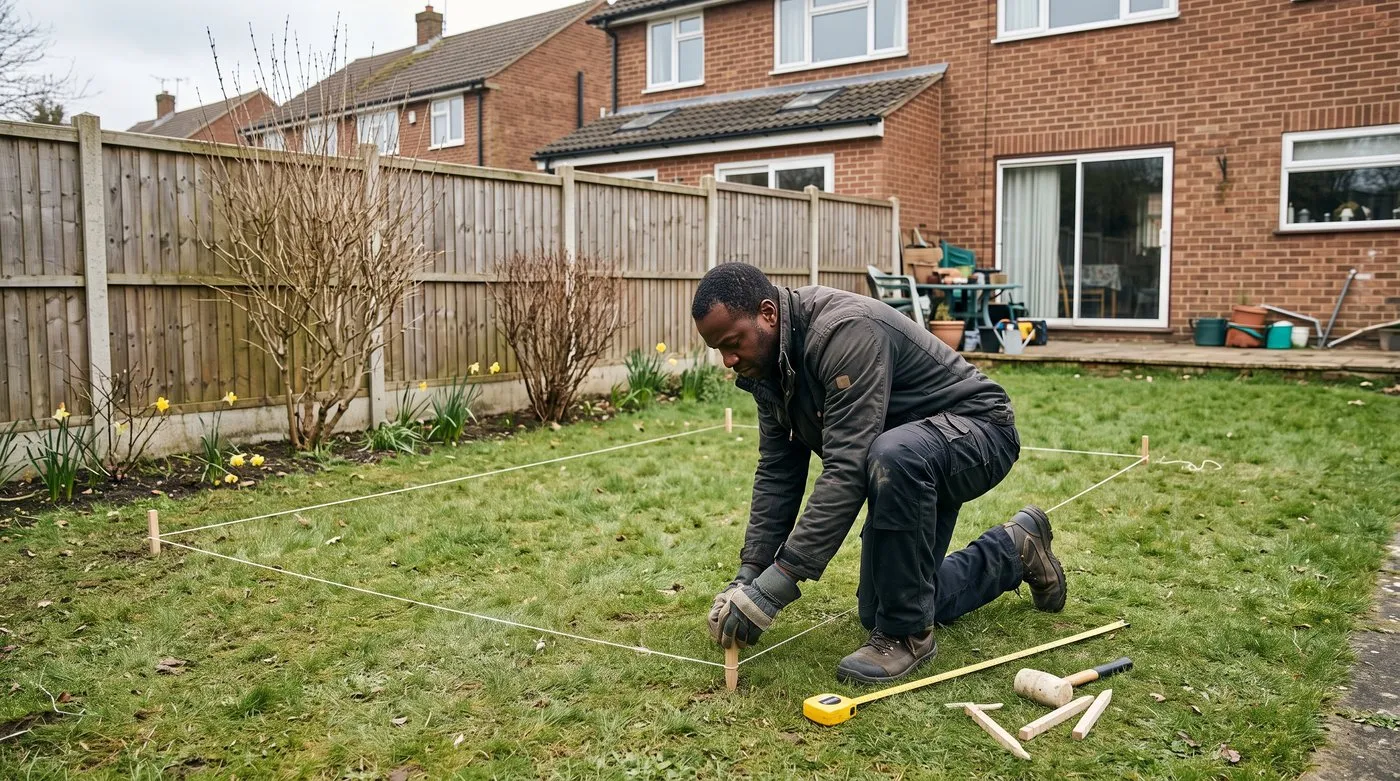
String and pegs show you how much room a shed really takes up before you buy.
| Size (ft) | Good for |
|---|---|
| 6x4 | Hand tools, a small mower, small gardens |
| 7x5 | Tools plus a mower and wheelbarrow |
| 8x6 | Tools, mower and a small bench |
| 10x6 | Potting shed or workshop with storage |
| 10x8 | A proper workshop with room to move |
Gardener’s tip: Mark out the footprint with string and pegs before you order. A shed that looks big in a catalogue can feel small on the ground. Leave a gap all round so you can reach the walls to treat them.
Timber, metal or plastic: which shed is best?
Timber is the classic choice and the easiest to fit out. Metal and plastic need less upkeep but are harder to customise.
Overlap timber boards sit over one another like roof tiles. They’re the cheapest but let in draughts and wind-driven rain. Shiplap boards fit together with a rebate and are more weatherproof. Tongue-and-groove boards interlock tightly, making the strongest, driest wooden shed.
Metal sheds bolt together from steel panels. They don’t rot and need no painting, but bare metal “sweats” with condensation, they dent easily and fixing shelves to thin steel is fiddly. Bolt them firmly to the base so they don’t move in strong winds.
Plastic sheds are rot-proof and easy to put up. They’re less rigid than timber, and it’s harder to hang heavy shelves on them.
| Material | Upkeep | Condensation | Easy to fit shelves? | Best for |
|---|---|---|---|---|
| Overlap timber | Treat regularly | Low | Yes | Cheap, basic storage |
| Shiplap timber | Treat regularly | Low | Yes | A good all-rounder |
| Tongue-and-groove | Treat regularly | Low | Yes | Workshops, potting sheds |
| Metal | Very little | High | Fiddly | Pure storage |
| Plastic | Very little | Medium | Harder | Small, low-upkeep storage |

A climbing rose and a window box help a timber shed blend into the garden. Leave room behind climbers so you can still treat the walls.
What base does a garden shed need?
Every shed needs a solid, level base. A shed on bare soil or grass soaks up damp, and the floor soon rots. Choose from three main options:
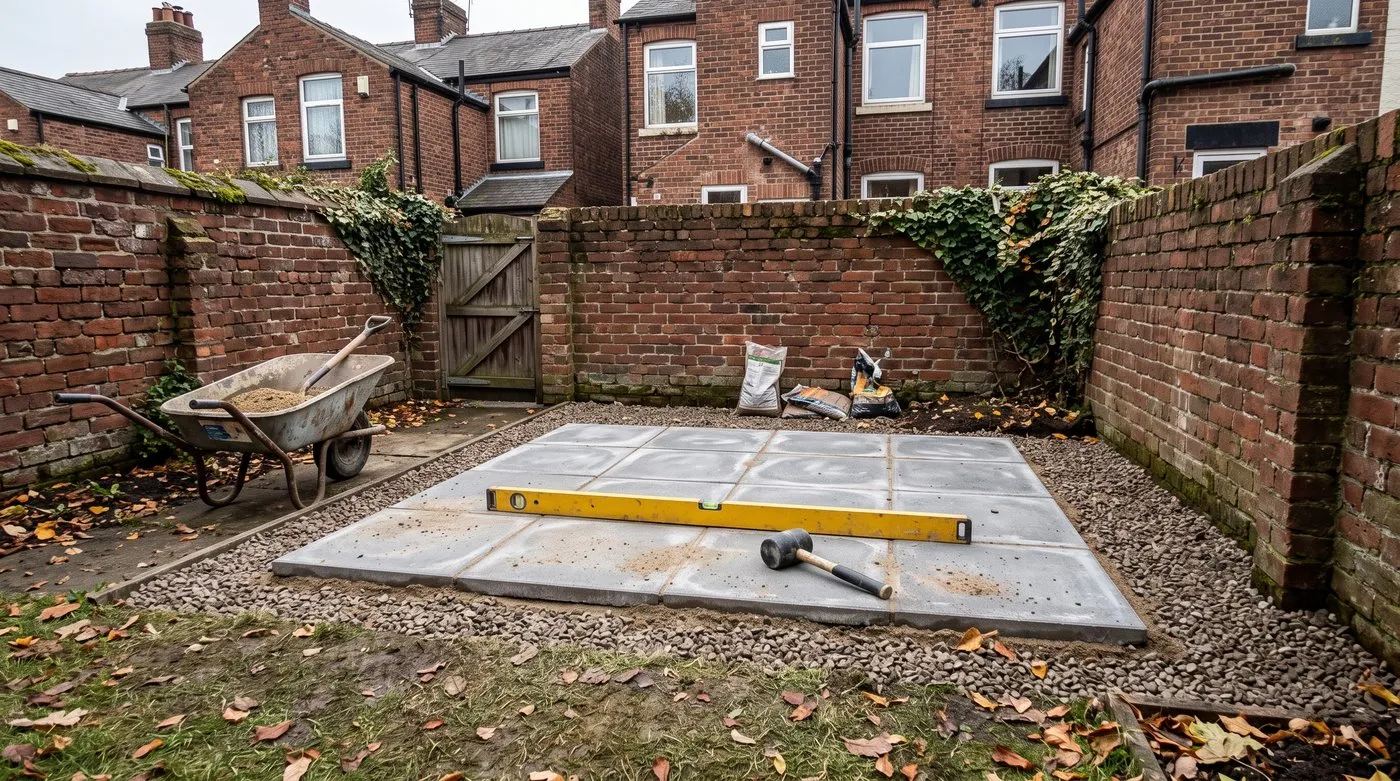
Check the base is level in both directions, or the shed door will stick and the windows may crack.
- Concrete slab. The strongest and longest-lasting base. Lay it on compacted hardcore and make it slightly bigger than the shed so rain runs away from the walls.
- Paving slabs. Laid on a levelled bed of sand and cement. Cheaper and quicker than concrete, and fine for most small and medium sheds.
- Treated timber bearers. Laid on compacted gravel or slabs. They lift the floor and let air flow underneath, which is handy where concrete isn’t practical.
Whatever you choose, check it’s level in both directions with a long spirit level. A twisted base makes doors stick and windows crack. Our guide to laying a patio shows how to level slabs on a sand and cement bed.
Warning: Never put a shed straight onto grass or soil. Even a cheap shed deserves a proper base, which costs far less than replacing a rotten floor.
Do you need planning permission for a shed?
Most garden sheds don’t need planning permission in England, as long as they follow the permitted development rules:
- Near a boundary. Within 2m of a boundary, the shed must be no taller than 2.5m at its highest point.
- Elsewhere in the garden. It can be up to 4m tall with a dual-pitched roof, or 3m with other roofs, with eaves no higher than 2.5m.
- Not in front of the house. Sheds can’t go forward of the front wall that faces the road.
- Half the garden at most. Sheds and other outbuildings can’t cover more than half the land around the house.
Listed buildings, conservation areas, national parks and National Landscapes (formerly AONBs) have tighter rules, so check with your council. Wales, Scotland and Northern Ireland have their own rules. The Planning Portal guide to outbuildings explains the details for England.
How to organise a garden shed
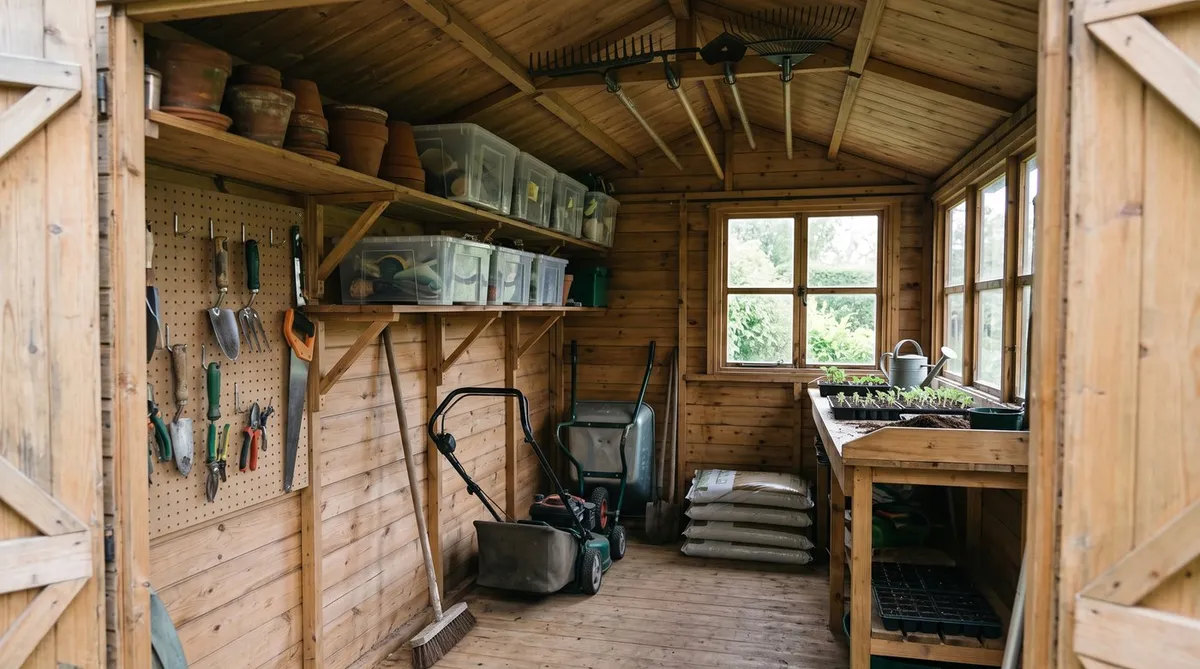
Get everything off the floor and onto the walls and ceiling. A shed with everything piled on the floor wastes most of its space, and you can never reach the thing at the back.
Pegboard. Fix a sheet of pegboard to one wall and hang trowels, forks, secateurs, saws, string and tape on hooks. You can see every tool at a glance and spot when one’s missing.
Shelves above head height. Run deep shelves along two or three walls for pots, seed trays, plant feed and seasonal bits. Use clear plastic boxes with labels for small things.
Ceiling hooks. Screw hooks into the roof joists to hang rakes, brooms and hoes flat against the ceiling, well out of the way.
A magnetic strip. A kitchen-style knife strip by the bench holds small metal tools and scissors within easy reach.
A home for everything on the floor. Keep the floor for the mower, wheelbarrow and compost bags, and give each one its own spot.
Keep garden chemicals in their original containers, on a high shelf or in a lockable cupboard, away from children and pets. For keeping blades and handles in good shape, our guide to garden tool storage covers cleaning, oiling and sharpening.

Hanging tools in groups, with labels for each, means you can grab what you need and see straight away if something’s missing.
Adding power and light to a shed
Power in a shed means power tools, a radio, good lighting and even a small heater in winter. Use a registered electrician for any mains supply. They’ll usually run an armoured cable underground from the house to a small consumer unit with RCD protection in the shed.
For simple lighting, a solar panel and battery kit runs LED strip lights and charges a phone without any wiring. It won’t power heavy tools or a heater, though. Inside, a bright LED batten light on the ceiling gives even light, and a battery motion-sensor light is handy for quick trips in the dark.
How to keep your shed secure
A shed full of tools, bikes and a mower is a target, and its ladders and tools can be used to break into the house. The basic latch on most new sheds isn’t much of a lock.
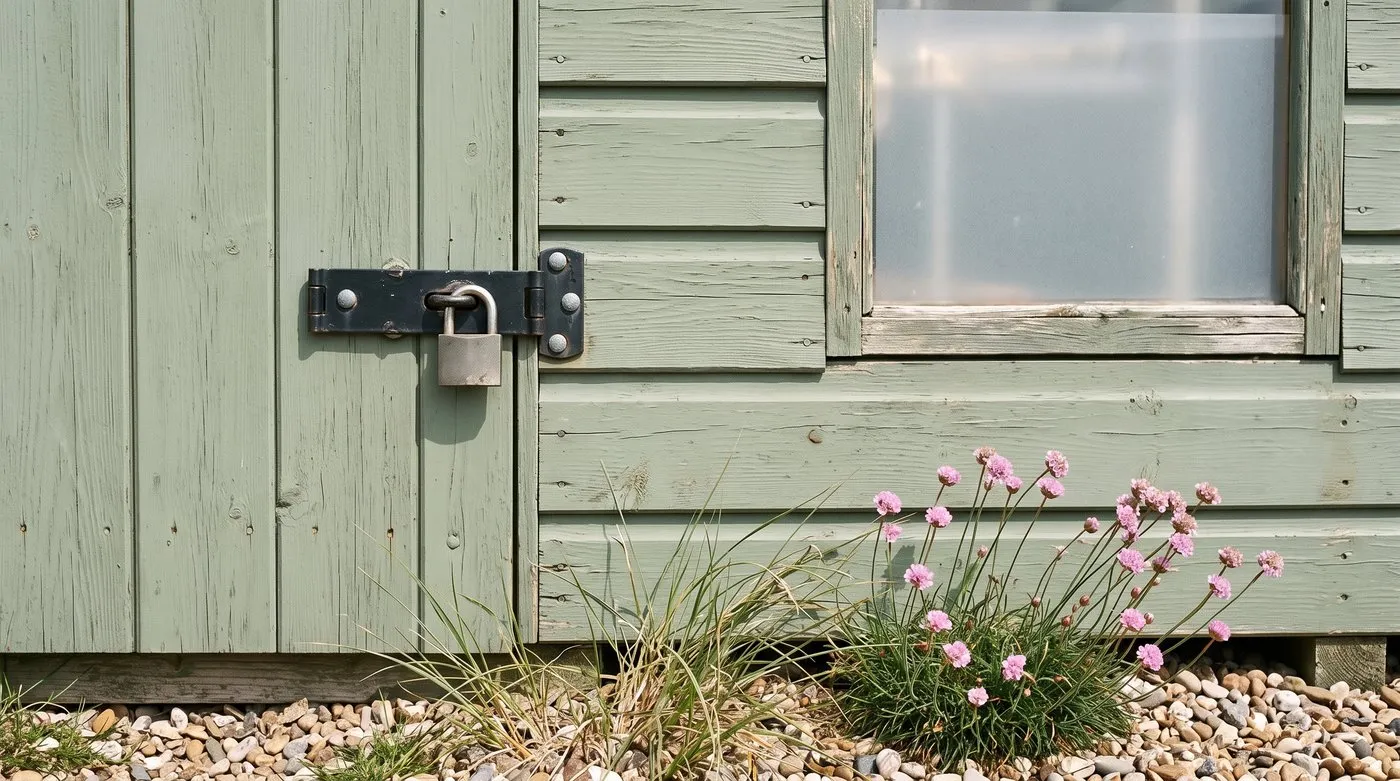
Coach bolts through the hasp, a sturdy padlock and frosted window film make a shed far less tempting.
- Swap it for a heavy-duty hasp and padlock, fixed with coach bolts right through the door and frame.
- Fit hinge bolts so the door can’t be lifted off if the hinges are unscrewed.
- Stick frosted film on the windows so nobody can see what’s inside.
- Chain bikes and mowers to a ground anchor bolted into the base.
Our garden security tips cover gates, lighting and planting for the rest of the garden.
How to stop a shed rotting
Timber sheds need a little care each year. A regular routine adds years to their life.
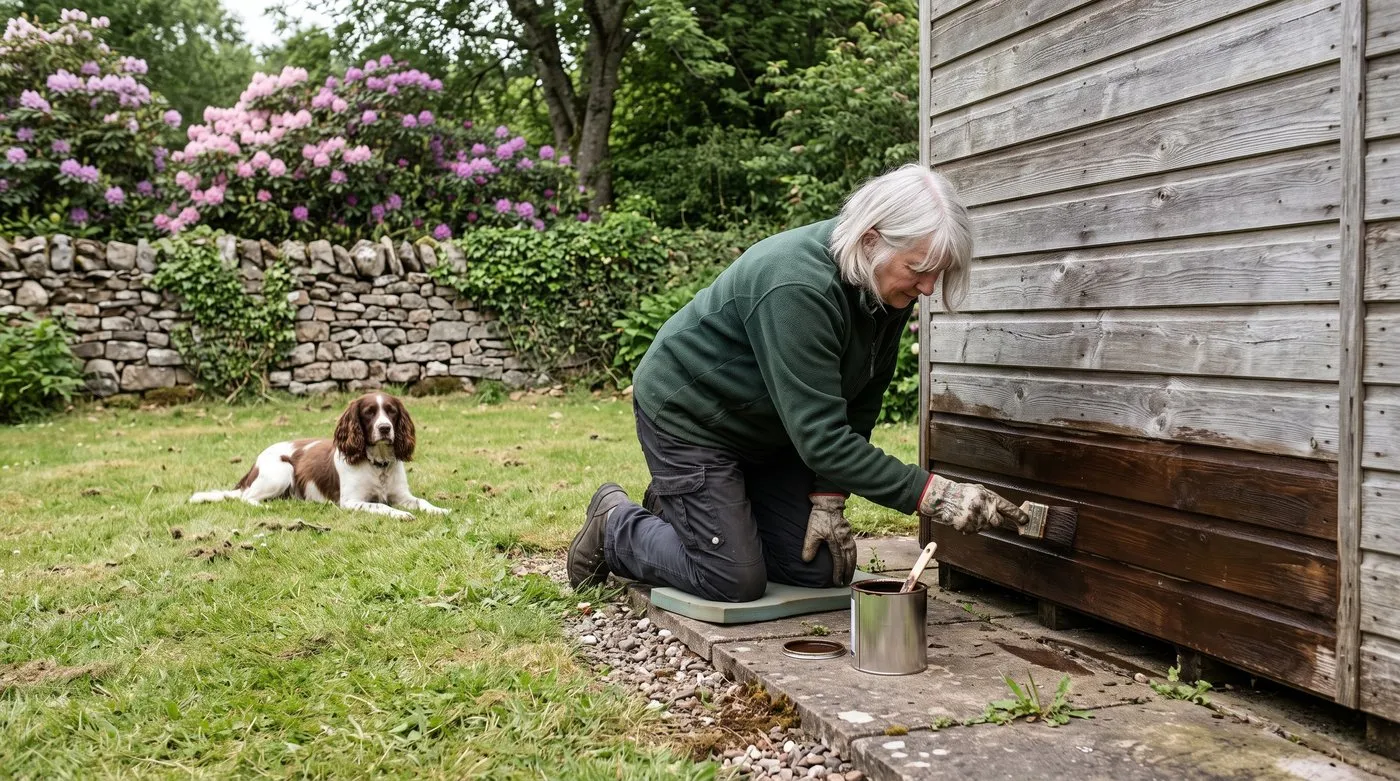
Pay most attention to the bottom boards, which get splashed by rain and rot first.
- Clean the outside in spring with a stiff brush and warm soapy water. Skip the pressure washer, which forces water into the joints.
- Check for soft spots, splits and rot, especially along the bottom of each wall.
- Repair small splits with exterior wood filler and replace any soft, rotten boards.
- Treat the wood with a preservative, stain or paint in dry weather. Most need redoing every year or two.
- Check the roof felt and replace it when it cracks or lifts.
Keep the area around the base clear of leaves, soil and plants, so air can move and the walls dry out. Fit small vents on opposite walls to cut condensation, which rusts tools. If you fancy something different on top, a green roof for a shed adds planting and keeps it cooler in summer, as long as the structure is strong enough.
Turning a shed into a potting shed or workshop
A shed can be much more than storage.
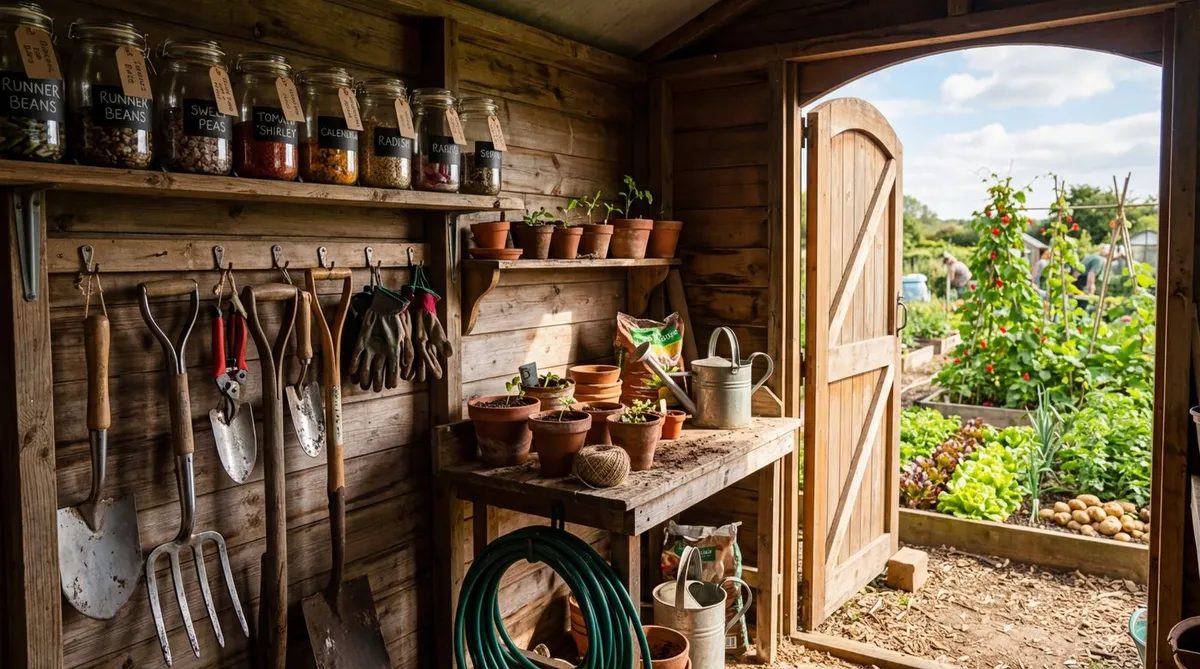
Potting shed. Add a sturdy bench at waist height along the wall under the window, with shelves above for pots and trays. Hang dibbers, labels and trowels on a pegboard by the bench. A compost heap nearby saves a lot of barrow trips.
Workshop. You’ll want mains power, a solid bench with a vice and bright overhead lighting. A 10x8ft shed gives room for a long bench and a saw stand. Insulate and line the walls if you plan to work in there through the winter.

A bench under the window, with pots and compost to hand, turns an ordinary shed into a handy potting shed.
Common mistakes when buying a shed
- Buying too small. It fills up in months. If you have a mower and a strimmer, start at 8x6ft.
- Skipping the base. A shed on soil or grass gets a rotten floor. Lay slabs, concrete or bearers.
- Not checking the height. Close to a fence, a tall apex roof can tip a shed over the 2.5m limit. Check the measurements before you order.
- No ventilation. A sealed shed traps damp and rusts your tools. Fit small vents.
- Trusting the factory lock. Upgrade to a proper hasp and padlock on day one.
For more ideas for the whole garden, browse our garden design guides. Run out of space in the shed already? Read our guide to garden storage solutions for the next step.
Frequently asked questions
What size garden shed do I need?
An 8x6ft shed suits most households. A 6x4ft shed holds hand tools and a small mower. Go for 10x8ft if you want a workbench, a potting area or a small workshop.
Do I need planning permission for a garden shed?
Usually not, if you follow a few simple rules. In England, a shed within 2m of a boundary must be no taller than 2.5m. It can’t go in front of your house, and listed buildings and some protected areas have stricter rules.
What is the best base for a garden shed?
A concrete slab is the strongest, longest-lasting base. Paving slabs on a levelled bed suit most small and medium sheds. Pressure-treated bearers on compacted gravel work where concrete isn’t practical. Never put a shed on bare soil.
How do I stop my shed from rotting?
Keep it off the ground and treat the timber regularly. Stand it on a raised, level base, treat it with a wood preservative every year or two in dry weather, and clear leaves from the roof and around the base.
What is the difference between overlap and tongue-and-groove sheds?
Tongue-and-groove boards interlock, so the walls are stronger and more weatherproof. Overlap boards just sit over one another, which is cheaper but lets in draughts. Shiplap sits in between.
Can I put electrics in a garden shed?
Yes, but use a registered electrician. They’ll run a buried armoured cable from the house to a small consumer unit with RCD protection in the shed. For basic lighting only, a small solar kit is an easy alternative.
How do I organise a small garden shed?
Get everything off the floor. Hang hand tools on pegboard, put shelves above head height and hang long tools from ceiling hooks. Keep the floor for the mower and wheelbarrow, and label your boxes.
Is a metal shed better than a timber shed?
It depends on how you’ll use it. Metal sheds need no painting and won’t rot, but they suffer from condensation and dent easily. Timber is easier to fit shelves to and nicer to work in, but needs regular treatment.
Our team produces practical UK gardening guidance from source research, contributor records and established horticultural practice. Editorial standards are overseen by Matt W.