Key takeaways
- Bolt and padlock the side gate first, as it's an easy way into the back garden
- Keep front boundaries low, about 1m, and back fences up to 2m
- Plant prickly pyracantha, berberis or holly under windows and along fences
- Gravel paths give away footsteps, and motion-sensor lights show up movement
- Lock the shed and chain up ladders, so nobody can use your tools against you
- Use several layers together, as no single measure is enough on its own
Your garden is the first line of defence for your home, but it’s often the last part people think about securing. Many break-ins start with an unlocked side gate, a wobbly fence or a handy ladder left by the shed. The good news is that good garden security is mostly cheap, simple and can look lovely too.
This guide covers the three layers that put intruders off: the boundary, deterrents and detection. The idea is simple. No single measure is enough, but several together make your garden far more trouble than it’s worth.
What are the three layers of garden security?
Good garden security uses three layers that back each other up:
- The boundary. Fences, gates, walls and hedges that physically keep people out.
- Deterrence. Things that make your garden look like hard work, such as thorny plants, gravel, lights and cameras, so an intruder moves on.
- Detection. Anything that gives away someone who does get in, like motion-sensor lights, crunchy paths and cameras.
You don’t need all of these at once. Start with the side gate and the shed, then add the rest as time and budget allow.
How to secure your side gate and boundary
Start with the side gate, as it’s an easy way into the back garden. Fit a strong bolt and padlock on the inside, and make the gate as tall as the fence so it’s hard to climb. If you can, hang it so it opens inwards and the hinges sit on your side.
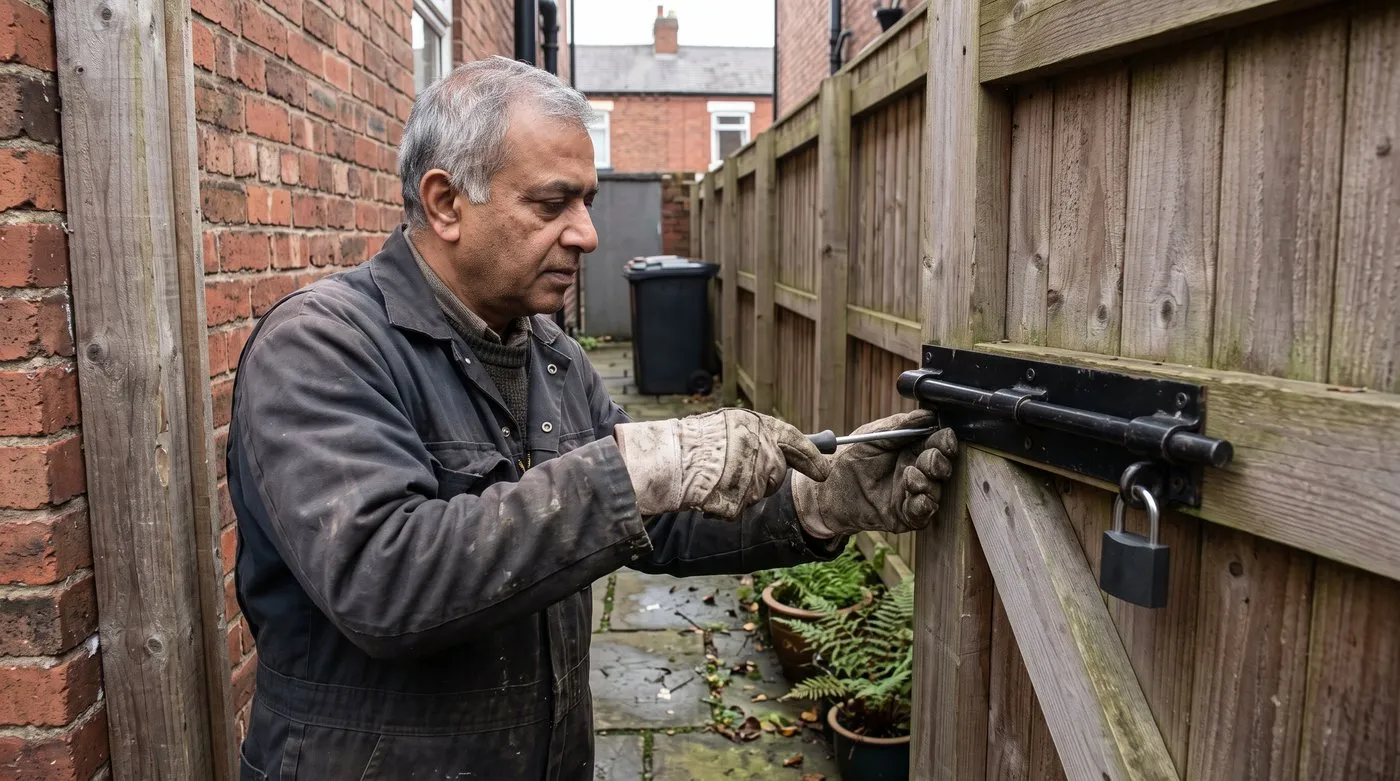
A strong bolt and padlock on the inside of the side gate is one of the cheapest security upgrades you can make.
Get the boundary heights right. Keep the front boundary low, about 1m, so neighbours and passers-by can see the front of your house. A tall front hedge or wall gives an intruder somewhere to hide. Make back and side fences higher, up to 2m, which is the usual limit without planning permission in England.
Fit trellis on top of a fence. It’s too flimsy to climb without breaking noisily, and it makes a great home for thorny climbers. Remember it counts towards the 2m limit. Check your fence panels are fixed in place, not just slotted into posts where they can be lifted out. Our guide to garden fence ideas has plenty of options that look good and stay solid.
Which plants deter burglars?
Prickly, dense plants are the prettiest security you can have. Defensive planting means putting thorny shrubs along boundaries and, above all, under ground-floor windows, where nobody wants to push through thorns to reach the glass.
| Plant | Why it works | Best spot |
|---|---|---|
| Pyracantha (firethorn) | Sharp thorns, evergreen, dense | Walls, fences, under windows |
| Berberis | Spiny, dense, colourful | Low barriers, under windows |
| Holly | Prickly evergreen, makes a tall hedge | Boundary hedges |
| Hawthorn | Thorny, fast-growing native hedge | Boundaries, rural gardens |
| Climbing roses | Thorny, cover walls and trellis | Walls, fences, trellis |
A thorny hedge looks far nicer than a bare fence, and birds love the berries. Train pyracantha or a thorny climbing rose along the fence by the side gate, and plant berberis under windows. Holly makes a tough, prickly evergreen hedge for a longer boundary.
Keep very thorny plants back from paths and play areas where children run about. Wear thick gloves when you prune them.

Pyracantha’s thorns and dense growth make a barrier few people want to push through, and the berries feed birds in winter.
How to use lights, gravel and cameras
Motion-sensor lights are much better than lights left on all night. A light that suddenly snaps on draws the eye and unsettles an intruder. One that’s always on just becomes part of the background. Fit them over gates, paths and dark corners, and angle them down so they don’t dazzle your neighbours. Our garden lighting ideas show how to mix security lights with softer lighting.

A motion-sensor light over a path snaps on when someone walks past, which is far more off-putting than one left on all night.
Gravel is a cheap, noisy alarm. A gravel path along the side of the house and under windows can’t be crossed quietly. If you like the look, our guide on how to create a gravel garden shows how to plant it up.
Cameras and video doorbells both deter and detect. Point them at the gate, the shed and the back of the house. Keep them aimed at your own property, though. Once a camera films a neighbour’s garden or the street, data protection rules apply.

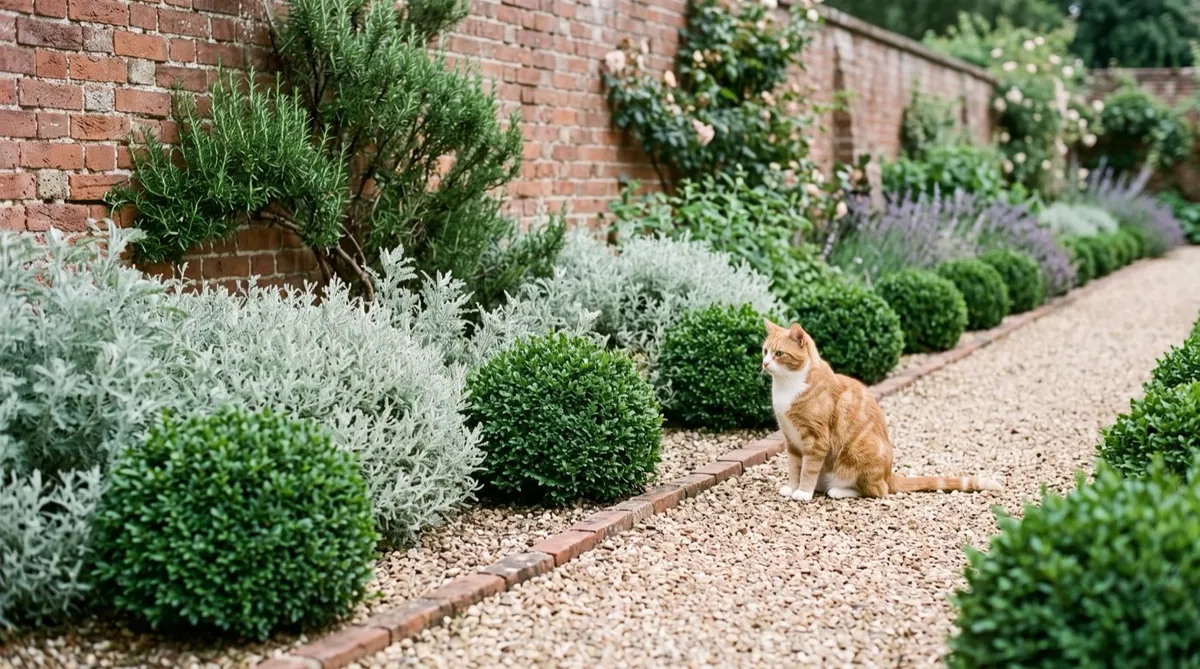
Gravel and prickly shrubs under a window make two layers in one: you hear anyone coming, and the glass is hard to reach.
How to secure your garden shed
A garden shed is a burglar’s toolbox. It holds spades, crowbars and ladders, which are exactly what someone needs to force a door or reach an upstairs window.
- Fit a strong hasp and padlock, fixed with coach bolts that can’t be undone from outside.
- Chain up ladders inside the shed, or lock them flat to a wall. Never leave one out.
- Anchor bikes and mowers to a ground anchor inside.
- Mark tools with your postcode and photograph anything valuable.
- Cover the window with a net curtain or frosted film so nobody can see what’s inside.
Our guide to garden tool storage has more ideas for keeping kit safe and dry.

A solid hasp and padlock keeps your ladders and tools from being used to break into the house.
Warning: Never leave a ladder out in the garden or leaning on the shed. It gives instant access to first-floor windows, which are often left open in summer.
Keeping your garden secure while you’re away
A garden that looks lived in is much less of a target. Before you go away, put away tools, lock the ladder and shed, and move wheelie bins away from fences, as a bin makes a handy step up.
Ask a neighbour to help while you’re gone. They could take in parcels, park on your drive and put your bins out and back in on collection day. Trim any plants that block cameras or the view of your windows from the street. Set your security lights and cameras running and check they work before you leave.
Common garden security mistakes
- A tall front hedge or wall. It hides the house and gives an intruder cover. Keep the front low.
- Leaving the side gate unlocked. An easy way in. Bolt and padlock it.
- An unlocked shed. It hands over tools and ladders. Fit a proper hasp and padlock.
- Lights left on all night. People stop noticing them. Use motion sensors instead.
- Loose fence panels. Panels that slot in can be lifted straight out. Fix them in place.
- Cutting a security hedge in spring. It’s an offence to damage an active bird nest. Our guide on when to cut hedges has the safe times.
For more ideas on boundaries, paths and planting, browse our garden design guides. Got a plot as well? Read our guide to allotment security to keep your shed and crops safe there too.
Frequently asked questions
How can I make my garden more secure?
Use several layers: a strong boundary, deterrents and ways to spot intruders. Bolt the side gate, plant prickly shrubs, fit motion-sensor lights, lay gravel and lock the shed. Together they make your garden far harder to get into unseen.
What is the most common way burglars enter a garden?
An unlocked or flimsy side gate is a common way into a back garden. It’s often easier to walk through a gate than climb a fence. A strong bolt and padlock on the side gate is a cheap, quick fix.
What plants deter burglars?
Dense, prickly plants are the best deterrent. Pyracantha, berberis, holly, hawthorn and thorny climbing roses all make good barriers. Plant them along fences and under ground-floor windows.
Should garden security lights be on all the time?
No, motion-sensor lights work better. A light that suddenly switches on draws attention to movement. A light left on all night just becomes part of the background. Point sensors at gates, paths and dark corners.
How high should my garden fence be for security?
Keep front boundaries about 1m high so the house stays visible. Back and side fences can usually be up to 2m without planning permission in England. Trellis on top counts towards that height.
Why should I lock my garden shed?
Sheds hold the tools and ladders a burglar could use on your house. Fit a strong hasp and padlock, chain ladders up, and never leave tools lying around the garden overnight.
Our team produces practical UK gardening guidance from source research, contributor records and established horticultural practice. Editorial standards are overseen by Matt W.