
Key takeaways
- Choose a sunny spot, ideally facing south or west
- On heavy clay, dig plenty of sharp grit into the top 30cm first
- Spread 5-7cm of 20mm pea gravel or angular flint
- Lavender, stipa, alliums, sedum and eryngium are reliable choices
- Water new plants through the first summer, then they mostly look after themselves
A gravel garden turns a dry, sunny spot with poor soil into a lovely, easy-going bed that hardly needs watering once it’s settled.
Red hot pokers love it here, as our guide to growing kniphofia explains.
The best-known example is Beth Chatto’s gravel garden in Essex, made on an old car park and never watered. Her idea was simple: pick plants that suit the conditions, rather than fighting the soil with a hose.
Strip off the lawn, help the drainage, spread gravel, and plant tough, dry-loving plants that look after themselves. It suits front gardens especially well, where a patch of tired lawn often looks worse than bare earth.
How to plan a gravel garden
Start with the sun. Gravel gardens do best in full sun, so a south or west-facing spot is ideal. East-facing is fine if buildings don’t shade it. North-facing works, but you’ll need shade-tolerant plants instead.
Measure the area so you know how much gravel to order. A bulk bag covers roughly 8-10 square metres at 5cm deep.
Then sketch a rough layout. The best gravel gardens aren’t flat seas of stone. Use curved edges, clusters of plants and a path or two. Put tall grasses like Stipa gigantea or miscanthus at the back, rounded plants like santolina and lavender in the middle, and let creeping thyme and sedum spill across the front.

Eryngium, thyme and sedum are happy in gravel with very little care.
How to prepare soil for a gravel garden
Good drainage is the key. Get it right and plants settle quickly. Skip it and you could lose a lot of them in the first wet winter.
On sandy or chalky soil, there’s not much to do. Clear the area, dig out tough weeds like bindweed and couch grass, and rake it level.
On clay, dig plenty of sharp grit into the top 30cm to open it up. If the clay is very heavy or waterlogged, raise the whole bed 15-20cm with a mix of topsoil and grit. It’s more work, but drainage is then sorted.
The weed membrane debate
You don’t have to use weed membrane. Landscapers often lay it by habit, but it isn’t always right for a gravel garden.
Why use it: It blocks tough weeds like bindweed and dock for the first couple of years, and stops gravel sinking into soft soil.
Why skip it: It stops plants seeding themselves about, which is half the charm of a gravel garden. Leaves collect on top and weeds sprout in them anyway. And in time it breaks down into tatty strips of plastic.
How to choose the right gravel
For most gardens, 20mm pea gravel or angular flint is the one to pick. Here are the main choices.

Spreading gravel 5-7cm deep. A spirit level helps keep the edging straight.
| Gravel | Colour | Best for | Good to know |
|---|---|---|---|
| Pea gravel | Golden, honey | General planting | Rounded, comfy underfoot, natural look |
| Angular flint | Grey, blue-grey | Slopes and paths | Locks together and stays put |
| Cotswold chippings | Warm cream | Cottage gardens | Soft look, suits stone houses |
| Slate chippings | Blue-grey, plum | Modern gardens | Flat pieces, bold against green leaves |
| Mixed natural gravel | Mixed tones | Informal and wildlife gardens | Blends in almost anywhere |
Anything under 10mm sticks to shoes and ends up indoors. Anything over 40mm looks like a building site and is hard to walk on. For areas over about 10 square metres, a bulk bag is much better value than lots of small bags.
Best plants for a gravel garden UK
Choose plants that love sun, dry soil and poor ground. Mediterranean plants are the obvious choice, but plenty of British wildflowers are happy in gravel too.
The same tough plants suit seaside gardens, where coastal garden design uses gravel to cope with wind and salt. For a longer list, see our guide to drought-tolerant plants. Love alpines? A crevice garden uses the same sharp drainage in narrow gaps between stones. Russian sage is another winner, and our guide on how to grow Russian sage covers its late-summer haze of blue. Euphorbias fit in well too. Our euphorbia growing guide says which ones to pick and how to handle the sap, which irritates skin.
Tall plants (60-150cm):
- Stipa tenuissima (Mexican feather grass): soft, wispy and always moving. Seeds itself around
- Verbena bonariensis: tall purple flowers from June to October, loved by butterflies
- Eryngium (sea holly): steel-blue flower heads, happy by the sea
- Echinacea purpurea: pink-purple coneflowers, great for bees
Rounded plants (30-60cm):
- Lavender: scented, tough and much loved. See our guide to growing lavender for pruning tips
- Santolina (cotton lavender): silver leaves and yellow button flowers
- Artemisia (wormwood): silvery, scented leaves that shrug off drought
- Silver curry plant: silver leaves with a warm curry smell, loves sharp drainage
Low growers (under 30cm):
- Creeping thyme: a scented carpet that smells lovely when you brush past
- Sedum (stonecrop): fleshy leaves and autumn flowers for bees
- Alliums: bulbs planted through the gravel, with purple balls in May and June and seed heads that last for months
Many of these also suit sandy soil and make good ground cover instead of lawn. Sharp drainage means you can even try growing cacti outdoors, as the gravel stops winter rot. On the driest, highest edge, lewisia adds candy-striped flowers that would rot in ordinary border soil.
Step-by-step: how to create a gravel garden
Step 1: Clear the site. Lift the turf and clear weeds and rubbish. Dig out tough perennial weeds a few weeks before planting. Any bit of bindweed root left behind will come back.
Step 2: Help the drainage. On clay, dig plenty of sharp grit into the top 30cm. On sandy soil, skip this.
Step 3: Put in edging. Steel, stone or timber edging marks the edge and stops gravel creeping onto paths and walkways. For a softer look, try edging with rocks and stone. Set the top of the edging a couple of centimetres above where the gravel will sit.
Step 4: Lay membrane (optional). If you’re using it, overlap the sheets by 15cm and pin them down. Cut a cross where each plant will go.
Step 5: Set out the plants. Stand the pots where you think they’ll go. Group them in threes and fives, 30-60cm apart depending on how big they’ll get. Step back and have a good look before planting.
Step 6: Plant. Dig a hole twice as wide as the pot, water the hole, and plant at the same depth as it was in the pot. Fill back in with soil mixed with grit.
Step 7: Spread the gravel. Rake it out to an even 5-7cm. Leave a small gap around each stem so the base of the plant stays dry.
Step 8: Water well. Give everything a good soak. Water regularly in dry spells through the first summer only.
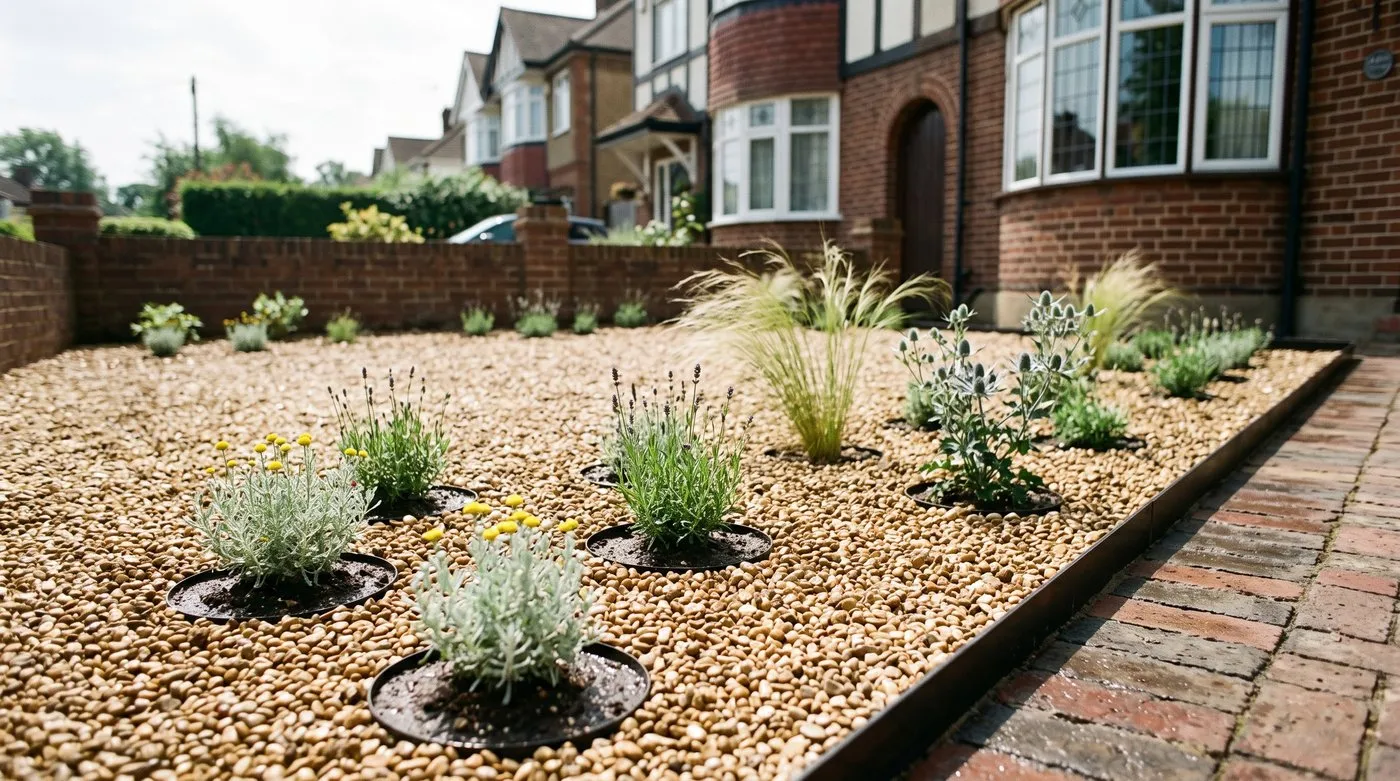
Plant in threes and fives and leave bare stone between groups. They’ll knit together over a few seasons without you needing to water much.
Gravel garden maintenance calendar
| Month | Jobs |
|---|---|
| March | Cut back grasses that need it. Split crowded clumps. |
| April-May | Pull up unwanted seedlings. Top up gravel at the edges. |
| June | Trim lavender after its first flush. Stake tall verbena in windy spots. |
| July-Aug | Remove dead flowers. Established plants rarely need watering. |
| September | Plant bulbs through the gravel. Save seed from favourites. |
| October-Nov | Leave seed heads for wildlife and winter shape. Clear fallen leaves. |
| December-Feb | Very little to do. Plan and order plants for spring. |
Common mistakes to avoid
Too little gravel. A thin layer lets weeds root and the membrane show. Lay at least 5cm.
The wrong grit for clay. Builder’s sand makes clay worse. Use sharp horticultural grit, which opens the soil up.
Planting too close. Some bare stone between plants is part of the look. Leave gaps and let plants fill in over a few seasons.
Forgetting about winter wet. British winters are much wetter than Mediterranean ones. Pick plants that cope with wet winters as well as dry summers. Try a new plant in one spot before planting a whole drift.
Bright white stone. It looks harsh in most UK gardens. Honey-coloured pea gravel or grey flint looks much more natural.

A gravel garden in October. Grasses, sedum and allium seed heads keep it looking good into winter.
Gravel can also help keep a fire pit area safe, as covered in using gravel as a firebreak around a fire pit. To choose a pit, compare the best fire pits for UK gardens. For more design ideas, the RHS guide to gravel gardens is well worth a look.
Frequently asked questions
How deep should gravel be in a gravel garden?
Lay it 5-7cm deep. Any thinner and weeds root easily or the membrane shows through. Any deeper and self-sown seedlings struggle to come through, which makes the garden look less natural over time.
Do gravel gardens work on clay soil?
Yes, but get the clay ready first. Dig plenty of sharp grit into the top 30cm to help it drain. Without this, plants like lavender and santolina can rot in soggy winter clay.
What is the best gravel for a garden UK?
20mm pea gravel or angular flint. Pea gravel is rounded and comfy underfoot. Angular flint locks together and stays put on slopes. Avoid anything under 10mm, as it sticks to shoes and wanders indoors.
Do I need a weed membrane under gravel?
No, it’s optional. Membrane blocks tough weeds, but it also stops plants seeding themselves about and can show through as it ages. Many lovely gravel gardens use just a thick layer of gravel over well-prepared soil.
How much does a gravel garden cost UK?
Roughly £15 to £30 per square metre. That covers gravel, edging, membrane if you use it, and plants. For bigger areas, a bulk bag of gravel delivered is much cheaper than lots of small bags.
What plants grow best in a gravel garden?
Lavender, stipa, alliums, sedum, eryngium and thyme are reliable. All are happy with dry, poor soil and full sun. Wildflowers like verbascum and viper’s bugloss also do well.
Do gravel gardens need watering?
Only through the first summer. Water new plants regularly while they settle in. After that they rarely need it, because the gravel keeps the soil underneath cool and slows drying.
More gravel garden reading
- Best Plants for Sandy Soil UK, as many gravel favourites love sandy soil too
- How to Grow Lavender UK, for pruning, soil and variety tips
- Front Garden Ideas UK, since gravel suits front gardens beautifully
- Drought-Tolerant Plants for UK Gardens, for more plants that cope with dry spells
- Best Ground Cover Plants UK, for low growers to fill the gaps
Our team produces practical UK gardening guidance from source research, contributor records and established horticultural practice. Editorial standards are overseen by Matt W.


