
Key takeaways
- Naturalistic planting uses drifts of grasses and perennials, cut back once in late February
- Gravel gardens with drought-tolerant plants suit sunny, free-draining spots and need little watering
- Wilder front gardens with wildflowers and rain gardens help pollinators and drainage
- Outdoor rooms link the house and garden with built-in seating, shelter and lighting
- Reclaimed brick and local stone are replacing imported paving
- Mix two or three trends that suit your plot rather than copying a show garden wholesale
The garden design trends worth copying right now are mostly about working with British weather. Think drifts of grasses and perennials, gravel instead of thirsty lawn, wilder front gardens, and patios that feel like an extra room.
The good news is that most of these ideas suit an ordinary garden, not just a show garden. Here’s what each trend is, why it’s popular and how to use it at home.
What is naturalistic planting and why is it everywhere?
Naturalistic planting uses drifts of grasses and perennials that look like a wild meadow, but planned. Designers such as Piet Oudolf made the style famous, and it’s now a fixture at Chelsea and in town gardens alike.
It works because the plants are tough. Echinacea, rudbeckia, salvias and grasses like stipa cope with wet winters and dry summers. The trick is to plant in bold groups of five to seven of each plant, not single specimens dotted about. That makes it look planned rather than messy.
It’s low maintenance too. Leave the stems and seedheads standing over winter for birds and frosty mornings. Cut everything back to about 10cm in late February, and it all regrows. For a full planting plan, see our guide to prairie planting.

Small perennials planted in groups soon knit together into a natural-looking drift.
How do you make a wilder front garden?
Swap some lawn or paving for wildflowers, native shrubs and permeable surfaces. A wilder front garden helps pollinators, soaks up rain and looks lovely from the street.
Start small. Turn a strip of lawn into a wildflower area, or let a patch grow longer and see what appears. Our guide to creating a wildflower lawn explains how to sow and manage one. Yellow rattle is useful, as it weakens grass and gives wildflowers a chance.
A rain garden is a shallow planted dip that collects water from a downpipe. Our rain garden guide shows how to build one.
If you need parking, use permeable gravel or paving rather than solid concrete. In England, covering more than five square metres of a front garden with a non-permeable surface needs planning permission.

A wilder front garden with poppies, daisies and a gravel path is a cheerful welcome home, and the bees love it.
What is the best drought-tolerant garden design?
A gravel garden is the easiest drought-tolerant design for most UK gardens. Plant tough, sun-loving plants, then spread gravel around them as a mulch.
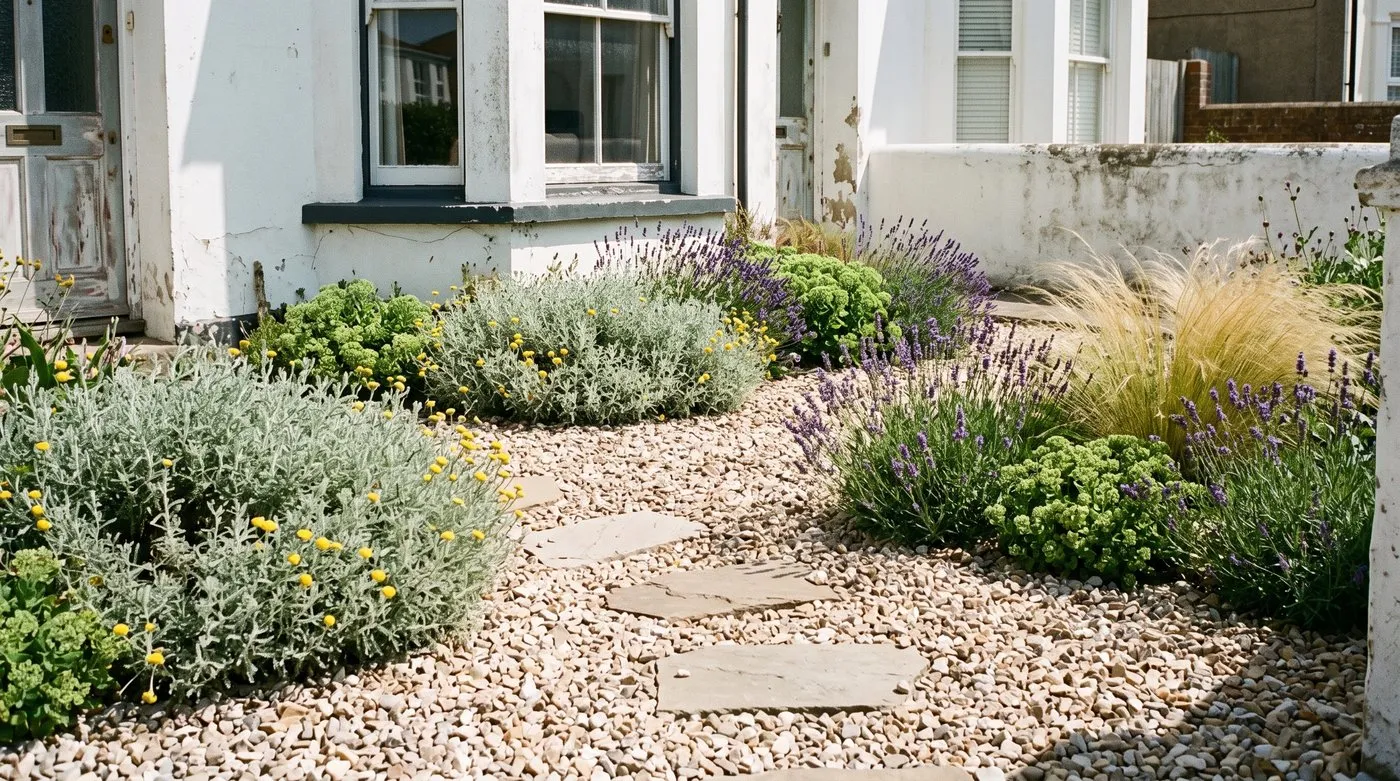
A gravel garden in full sun needs very little watering once the plants have settled in.
The gravel keeps roots cool, holds moisture and smothers weeds. Use angular gravel, which locks together better than rounded pea gravel. Good plants include lavender, rosemary, santolina, sedums and stipa grasses. Our list of drought-tolerant plants has many more.
The most famous example is Beth Chatto’s gravel garden in Essex. It was made on a dry, gravelly old car park and is famous for never being watered once planted. Our guide to the Beth Chatto dry garden explains how to copy it. Gravel gardens do best in full sun on free-draining soil. On heavy clay, improve drainage first or choose plants that cope with wet winters.
For a sun-baked spot with a holiday feel, see our guide to Mediterranean garden planting.
Are outdoor living rooms still popular?
Yes. Gardens are increasingly designed as an extra room, linked to the house rather than separate from it.
The key features are simple:
- Built-in seating from sleepers or rendered block walls gives permanent structure and saves on furniture.
- Shelter from a pergola, shade sail or small roof means you can sit out in light rain.
- Lighting turns the space into an evening room. Warm white lights along steps and under benches look cosy without glare.
- A level threshold or wide doors make it easy to step out from the kitchen.
If you’re adding mains lighting outdoors, have a qualified electrician fit it.

A green wall, pots at different heights and string lights make this tiny courtyard feel like part of the kitchen.
What does biophilic design mean for a garden?
Biophilic design simply means bringing plants close to where you live, so you see and touch them every day. It’s especially popular in small city gardens and courtyards.
Use plants at different heights: a green wall or climbers on the boundary, pots on steps, and something leafy right by the back door. Glass doors that open fully help blur the line between kitchen and garden. Even one big pot of ferns by the door counts.
Which climate-resilient plants should you choose?
Choose plants that cope with both summer drought and wet winters. Hotter, drier summers are making this a priority for many UK gardeners.
Ornamental grasses are a great backbone. Miscanthus, Calamagrostis ‘Karl Foerster’ and Stipa gigantea give structure all year, sway in the wind and leave winter seedheads for birds. Mediterranean herbs such as lavender and rosemary love sun and good drainage.
Help the soil too. A thick mulch of compost, bark or gravel holds moisture. Water butts catch roof water for dry spells. Fewer thirsty pots and bedding plants means less watering.

Lavender, grasses and gravel cope happily with dry summers, and a small pond adds water for wildlife.
What sustainable materials are garden designers using?
Reclaimed and local materials are replacing imported stone. They look good, age well and travel fewer miles.
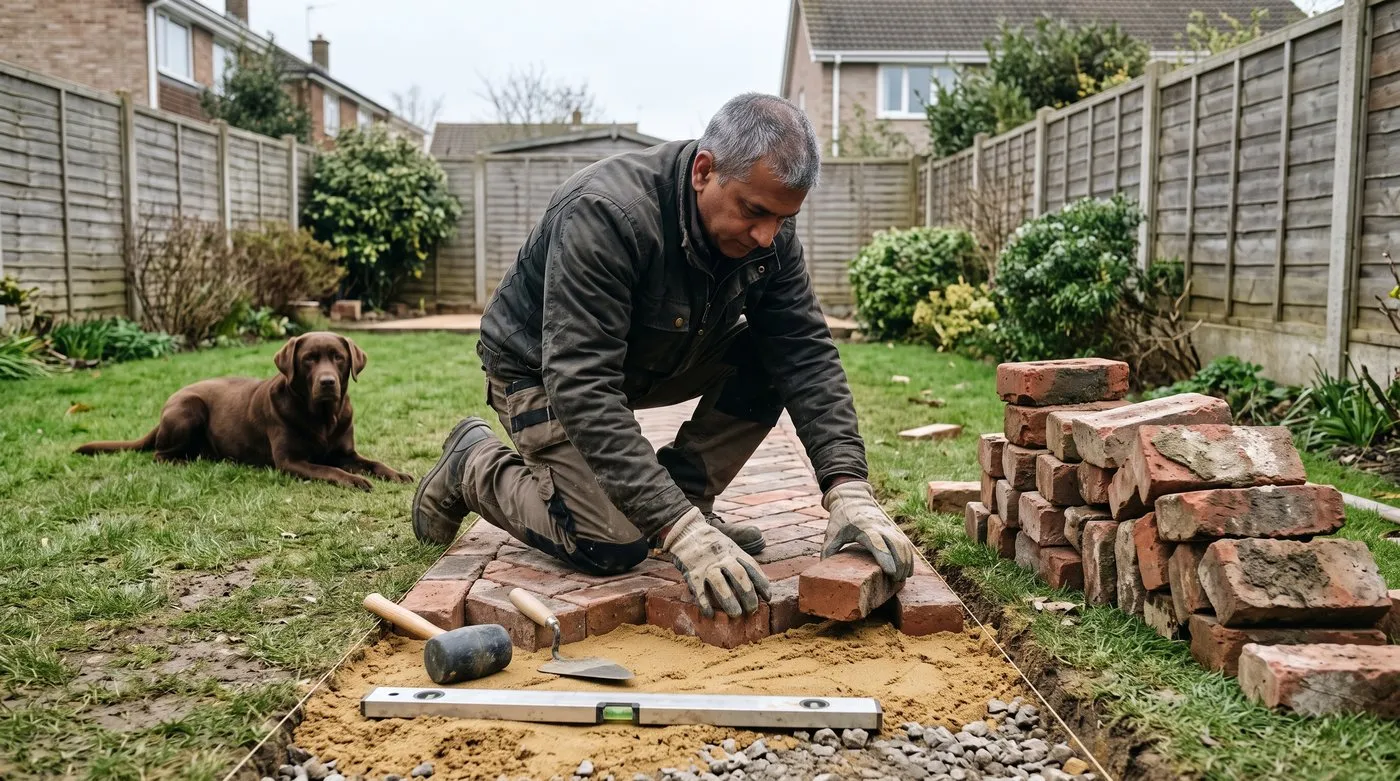
Reclaimed bricks give a new path instant character. Pick frost-resistant ones for paving.
Reclaimed brick from salvage yards brings instant character to paths and raised beds. Choose frost-resistant bricks for paving, as soft bricks can flake in hard winters. Local stone, such as Yorkstone, often looks more at home in a British garden than imported paving. Permeable surfaces, like gravel, resin-bound gravel and porous block paving, let rain soak away instead of running into drains.
Which garden design trend suits your garden?
Most gardens suit two or three of these trends. This table helps you choose.
| Trend | Best for | Upkeep | Good to know |
|---|---|---|---|
| Naturalistic planting | Sunny borders, medium to large gardens | Low | One big cut back in late winter |
| Wilder front garden | Front gardens, wildlife lovers | Very low | Use permeable surfaces for parking |
| Gravel garden | Sunny, free-draining spots | Very low | Water new plants in the first summer |
| Outdoor room | Families, entertaining | Low | Needs good lighting and some shelter |
| Biophilic courtyard | City and small gardens | Medium | Pots need regular watering |
| Reclaimed materials | Paths, patios, raised beds | Very low | Check bricks are frost-resistant |
How do you combine trends in one garden?
Pick two or three that suit your plot and how you use it, then link them with a simple plan. Don’t try to copy a show garden in one go.
A common approach is to put the outdoor room nearest the house, with naturalistic or gravel planting beyond it. Wilder areas and wildflowers go at the far end. Gravel paths connect the zones. Our guide to designing a garden from scratch shows how to draw up that kind of plan.
You don’t have to do it all at once. Build the paths and seating first, then add the planting over the next season or two.
Common mistakes when following garden trends
Copying a show garden exactly. Show gardens are built for one week in May. Pick the ideas that suit your space, soil and time.
Planting single specimens. Naturalistic planting only works in groups. One echinacea looks lost; seven look like a drift.
Gravel in the wrong place. Gravel gardens need sun and good drainage. In shade or on wet clay, they turn mossy and plants rot.
Paving the front garden solid. It adds to flooding and may need planning permission in England. Use permeable materials.
Cutting everything back in autumn. Grasses and seedheads look great all winter and shelter wildlife. Wait until late February.
Frequently asked questions
What are the biggest garden design trends in the UK right now?
Naturalistic planting, gravel gardens and wilder front gardens lead the way. They’re driven by hotter, drier summers and a wish to help wildlife. Ornamental grasses, drought-tolerant perennials and rain gardens are replacing thirsty lawns and bedding. Outdoor rooms linked to the house stay popular too.
How do you make a gravel garden?
Clear the weeds, plant drought-tolerant plants, then spread gravel around them. Use angular gravel, which locks together better than rounded pea gravel. Choose a sunny spot with free-draining soil. Water new plants in their first summer, then they should cope on their own.
Do I need planning permission to change my front garden?
Swapping a lawn for wildflowers or planting needs no permission. In England, paving over more than five square metres of a front garden with a non-permeable surface does need planning permission. Permeable gravel or paving that lets rain soak away avoids the problem.
What plants work best in a naturalistic planting scheme?
Echinacea, rudbeckia, salvias and ornamental grasses form the backbone. Add see-through plants like Verbena bonariensis for height. Plant in groups of five to seven rather than single plants. Achillea and Salvia nemorosa give early summer colour.
How do I make my garden more climate resilient?
Choose tougher plants, mulch the soil and catch rainwater. Lavender, rosemary and grasses cope well with dry spells. A thick mulch holds moisture in the soil. A water butt or rain garden makes use of roof water, and permeable surfaces help drainage.
What is the best low-maintenance garden design?
A gravel garden with drought-tolerant perennials needs the least upkeep. It needs no mowing and little watering once settled. Cut back once a year in late winter and pull the odd weed. It works best in full sun on free-draining soil.
Ready to try one? Start with our step-by-step guide on how to create a gravel garden, or browse more garden design ideas.
Our team produces practical UK gardening guidance from source research, contributor records and established horticultural practice. Editorial standards are overseen by Matt W.


