Key takeaways
- A wild garden is mostly self-seeding planting held together by a little firm editing
- A crisp mown path or edge, 60-80cm wide, makes it look deliberate, not abandoned
- Plant structural perennials and grasses first, then add self-seeders
- Leave stems standing over winter and cut back once, in late February
- Keep the front garden neater than the back, and tell the neighbours your plans
- Pull brambles, ground elder and bindweed on sight
The wild overgrown garden is one of the few trends that asks you to do less work, not more. It swaps tidy bedding and short lawn for long grass, self-seeding flowers and seed heads left standing through winter. The catch is that it’s easy to get wrong: without a little editing, wild quickly tips into neglected.
This guide shows you how to get the look on a UK plot, which plants do the work and how to keep the neighbours on side. For the bigger picture of returning a garden to nature, see our guide to rewilding your garden.
What is the wild overgrown garden look?
It’s deliberate disorder. Tall stems stay up through winter. Annuals and biennials seed themselves where they like. Grass paths run between rough planting, and seed heads, leaf litter and dead wood stay put.
You’ll hear it called rewilding lite, the messy garden movement, wild gardening or naturalistic planting. The labels overlap. The common thread is a garden that looks relaxed but is still clearly cared for.
It isn’t true rewilding, which removes human management over huge areas, as at the Knepp estate in Sussex. A wild garden keeps your hand visible at the edges and along the paths.
The style draws on designers such as Beth Chatto, whose Gravel Garden in Essex showed the value of choosing plants that suit the conditions. Piet Oudolf made drifts of perennials and grasses with winter seed heads popular, at gardens such as Scampston in North Yorkshire. Nigel Dunnett and James Hitchmough of the University of Sheffield brought sown naturalistic meadows to the London Olympic Park.
Why “doing nothing” doesn’t work
Left completely alone, most UK gardens turn into bramble, nettle, ground elder and ivy within a few seasons. That isn’t the look.
Think of it as mostly wild, with a little firm editing. The editing is what makes the difference:
- Thinning self-sown seedlings in spring
- Pulling thugs such as ground elder, bindweed and creeping buttercup
- Mowing paths and edges
- One big cut-back at the right time
Most of this work comes in two short bursts: the cut-back in late February and seedling thinning in March.

A front-garden mini-meadow can look lovely from the pavement. A tidy path and a clean edge keep it looking intentional.
How to create a wild garden step by step
1. Choose a plant list and stick to it
Don’t buy one of everything. The wild look comes from repeating a fairly short list of plants and letting them self-seed, not from huge variety.
2. Plant the structure first
Start with perennials and grasses that hold the garden together all year. Try Verbena bonariensis at the back, a grass such as Deschampsia cespitosa or Calamagrostis ‘Karl Foerster’, clumps of echinacea or achillea, and Knautia macedonica.
3. Add self-seeders
Sow or plant opium poppy, foxglove, teasel, bronze fennel, aquilegia, forget-me-not, honesty and nigella. They’ll be patchy in the first year but fill in over the next two. Foxgloves are poisonous if eaten, so think about where they go if you have young children or pets that chew plants.
4. Cut back once, not twice
Leave everything standing through winter for the birds and insects. Do one cut-back in late February or early March, down to a few centimetres. Compost the cuttings on site if you can.
5. Mow paths and leave the rest
Mow a path through the planting and keep it short through summer. Everything either side can stay long.
6. Edit, don’t weed
Each March, pull or move extra foxglove, aquilegia and poppy seedlings. Pull every bramble, nettle, ground elder and bindweed seedling you find. Leave the rest alone.

Forget-me-nots and aquilegia happily seed themselves into the lighter, damper spots under trees.
The best self-seeders for UK wild gardens
Verbena bonariensis is the star. Its tall, airy stems rise above everything else without casting shade, and it seeds itself reliably.
Foxgloves and teasel are biennials. They grow leaves in their first year, flower in their second, then die after seeding. Sow or plant them two springs running so there are flowers every year.
Other good self-seeders include opium poppy, bronze fennel, aquilegia, forget-me-not, honesty and nigella. Our guide to taming forget-me-nots shows how to keep the prolific ones in check.
Avoid plants that run or smother, such as mint, Macleaya and ribbon grass, in a small garden. Never plant invasive non-natives such as Japanese knotweed, Himalayan balsam or giant hogweed. Letting them spread into the wild is an offence. Our list of banned plants in UK gardens has the details.
What wildlife will a wild garden attract?
Usually far more than a tidy garden, and it keeps building over the years. Long grass, flowers and seed heads feed insects and birds. Standing stems shelter overwintering insects. Leaf litter and log piles give cover to beetles, frogs and hedgehogs.
A few plants do a lot of the work:
- Knautia macedonica for bees
- Verbena bonariensis for butterflies such as peacocks and small tortoiseshells
- Teasel for goldfinches, which eat the seeds in winter
- Bronze fennel for hoverflies
- Ox-eye daisy for small beetles and flies
- Knapweed for bumblebees
Hedgehogs often move into a dense, unmown border, so check long grass carefully before you strim. Our guide to a hedgehog-friendly garden has more tips.

Native knapweed is a bumblebee favourite and fits beautifully into a wild garden.
The mown path: the one trick that matters most
A mown path tells everyone the wildness is on purpose. The same planting with no path looks abandoned. With a crisp mown strip through it, it looks designed.
- Width: at least 60cm, and 80cm is comfier to walk.
- Shape: curve it. Curves look natural, straight lines look like a service track.
- Mowing: weekly from about April to September, then less often in autumn.
- Keep it simple: one loop or one route through. Too many paths in a small garden break the spell.
- Edges: a strimmed edge keeps it crisp. You don’t need timber or steel edging.

One curving mown path through long grass and cow parsley is what stops it looking abandoned.
Keeping neighbours happy and staying within the rules
A wild garden can worry neighbours, especially at the front. These steps cover most problems.
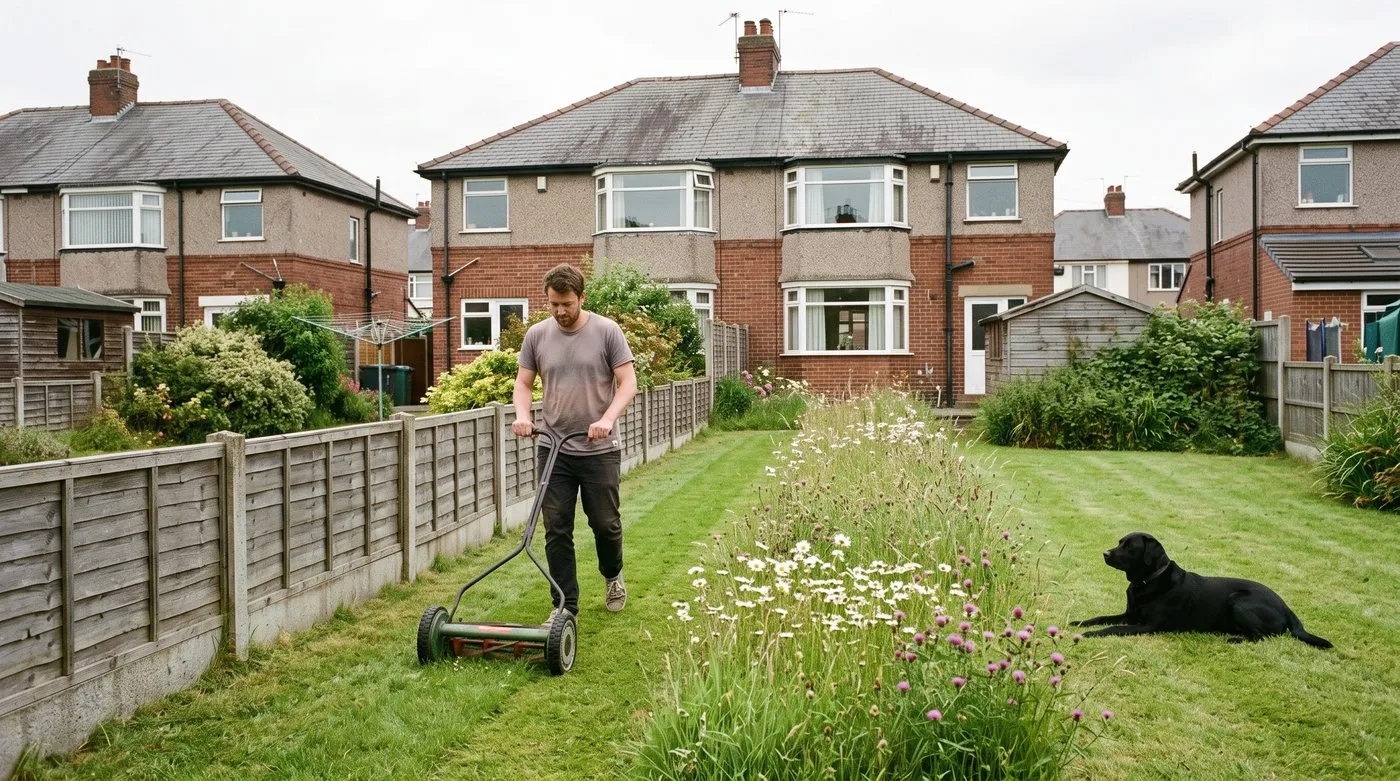
A neat mown strip along the shared fence tells the neighbours the long grass is on purpose.
Keep the front neater than the back. Front gardens are seen by everyone who walks past, so that’s where complaints start. Keep it tidier there and let the back go wilder.
Give the boundary a crisp edge. A mown strip or clipped hedge along a shared boundary shows the garden is intentional. Don’t let growth spill into a neighbour’s plot.
Talk to the neighbours first. Most front-garden complaints come from surprise, not the planting. Tell them what you’re doing before the lawn disappears.
Check your deeds on a new estate. Some estate management companies have rules about front lawns, so read them before turning the front into a meadow.
Councils in England and Wales can make owners tidy land that harms the look of an area. They use these powers for derelict sites, rubbish and fly-tipping. A planted, clearly looked-after wild garden is very unlikely to be targeted.
When does wild tip into neglect?
There’s a real line between wild as a style and a garden that’s been abandoned. Warning signs include:
- Brambles and ground elder taking over big patches
- No mown paths or edges anywhere
- Rubbish or building waste lying about
- Bindweed, mare’s tail or creeping buttercup smothering the planting
- Overgrowth pushing into neighbours’ gardens or over the pavement
A wild garden has clear edges, clear paths and only the plants you’d choose. A neglected one has none of those.

A crisp lawn edge next to tall, loose planting is what makes wild look deliberate rather than forgotten.
Wild garden or cottage garden?
| Wild garden | Cottage garden | |
|---|---|---|
| How plants arrive | Mostly self-seeded | Mostly planted |
| Editing | Light, mainly in spring | Close, all season |
| Winter stems | Always left standing | Often cut in autumn |
| Cut-back | Once, late winter | Often autumn and spring |
| Lawn | Long grass with mown paths | Neat lawn |
| Replanting | Rarely | Some each year |
If you want something in between, our guide to the contemporary cottage garden takes cottage structure and adds a looser, self-seeding feel.
Wild garden calendar
| Month | Main job |
|---|---|
| January | Leave seed heads standing for finches |
| February | One big cut-back in the last week or early March |
| March | Thin foxglove, aquilegia and poppy seedlings |
| April | Start mowing paths. Pull any thug seedlings |
| May | Plant verbena and grass plugs in gaps |
| June | Mow paths weekly. Leave some foxgloves to set seed |
| July | Pull brambles and bindweed. Enjoy the show |
| August | Let everything set seed, no cutting |
| September | Sow biennials such as foxgloves and teasel for next year |
| October | Mow paths less often |
| November | Last path mow. Leave everything else standing |
| December | Plan which clumps to divide or move in spring |
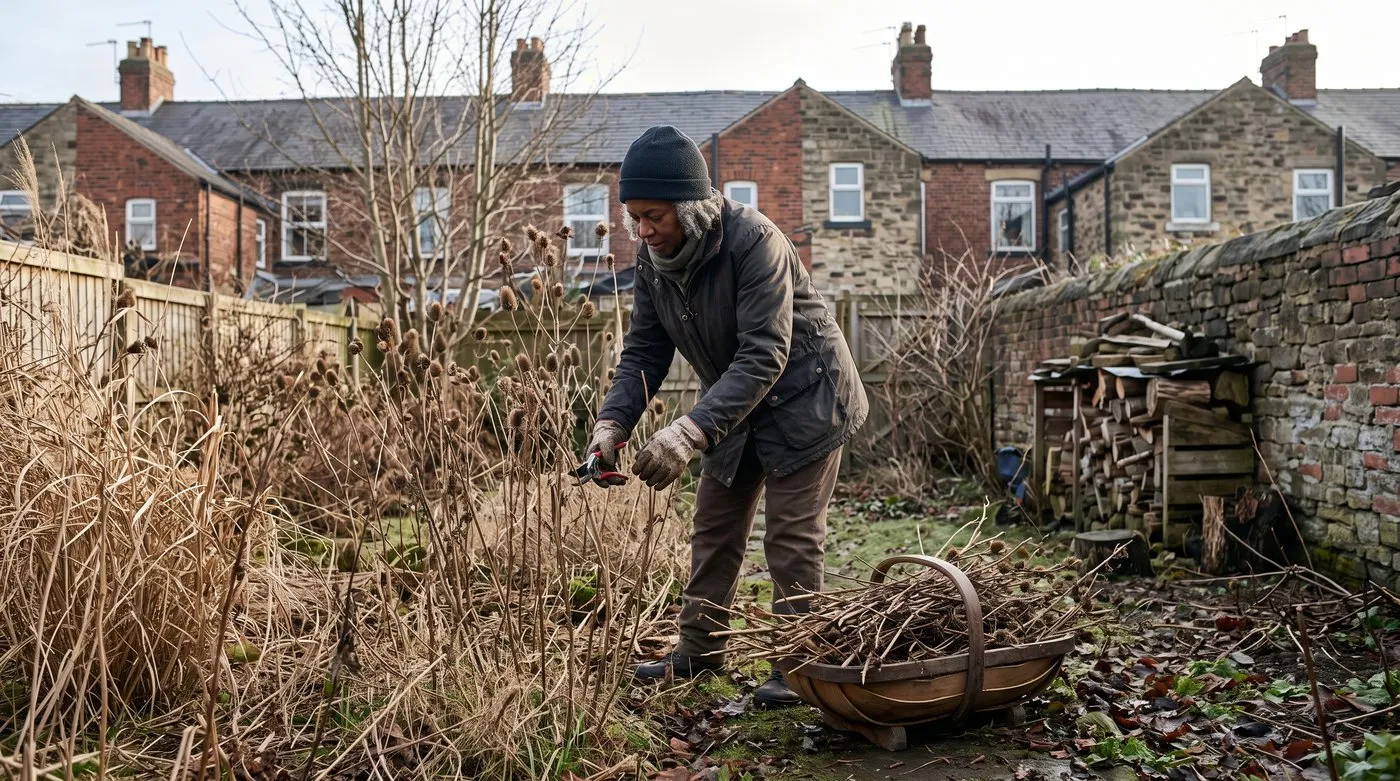
One cut-back in late February leaves winter shelter for insects and seed for the birds until the last moment.
Common wild garden mistakes
No structure. A garden built only on self-seeders has nothing to look at in winter. Plant the perennials and grasses first.
Cutting back in autumn. It removes winter shelter for insects and food for birds. Cut once, in late February.
No crisp edge. Without a mown strip or path, people read the garden as abandoned.
Cheap generic wildflower seed. Many mixes are mostly non-native annuals that vanish after a year. Choose native mixes suited to your soil. Our guide to making a wildflower meadow explains what to sow.
Letting thugs run. A wild garden copes with a few weeds, but not with brambles, ground elder and bindweed taking over. Pull them on sight.
Frequently asked questions
What is the wild overgrown garden trend?
It’s naturalistic planting taken a step further than a cottage garden. Long grass, self-seeded flowers and dead stems left standing over winter replace neat beds and short lawn. It’s sometimes called rewilding on a garden scale, and the aim is a relaxed look that helps wildlife.
How is a wild garden different from a cottage garden?
A cottage garden is planted and edited closely; a wild garden mostly self-seeds. Cottage gardens use chosen plants placed for effect, often with annuals added each spring. A wild garden lets plants wander and find their own spots, with you editing lightly.
What are the best self-seeders for a UK wild garden?
Verbena bonariensis, foxgloves, opium poppies, teasel, bronze fennel and aquilegia are reliable. All seed freely in UK gardens. Let them set seed before you cut back, then thin the extra seedlings in spring, when it’s easy to see what has come up.
Will a wild garden upset my neighbours?
Not usually, if it has a neat, clearly cared-for edge. A mown strip along the boundary shows the planting is intentional. Keep paths, bins and the front gate tidy, keep the front garden neater than the back, and talk to the neighbours first.
Can the council force me to tidy a wild garden?
Very rarely, and only if the land harms the look of the area. Councils in England and Wales have powers to make owners tidy land, but they use them for derelict sites and rubbish. A planted, clearly looked-after wild garden is unlikely to be targeted.
How much wildlife does a wild garden support?
Usually much more than a neat, closely mown garden. Long grass, flowers and seed heads feed insects and birds. Standing stems shelter overwintering insects, and leaf litter and log piles give cover to beetles, frogs and hedgehogs.
How long does a wild garden take to look right?
About three years. The first year often looks bare and uneven. The second is colourful but patchy. By the third, the self-seeders have spread and the perennials have filled out, and it keeps improving with light editing.
Now you know how to keep wild looking deliberate, take the next step with our guide to creating a wildlife garden, or browse more garden design ideas.
Our team produces practical UK gardening guidance from source research, contributor records and established horticultural practice. Editorial standards are overseen by Matt W.