Key takeaways
- Reducing lawn area by 50% can triple invertebrate diversity within two seasons
- A 3m x 3m wildflower patch supports 100+ pollinator species from May to September
- Native hedging of hawthorn and blackthorn feeds 300+ insect species per tree
- A 13cm x 13cm fence gap connects gardens into corridors for hedgehogs and amphibians
- Rewilding cuts annual garden maintenance by 40-60 hours compared to a traditional lawn
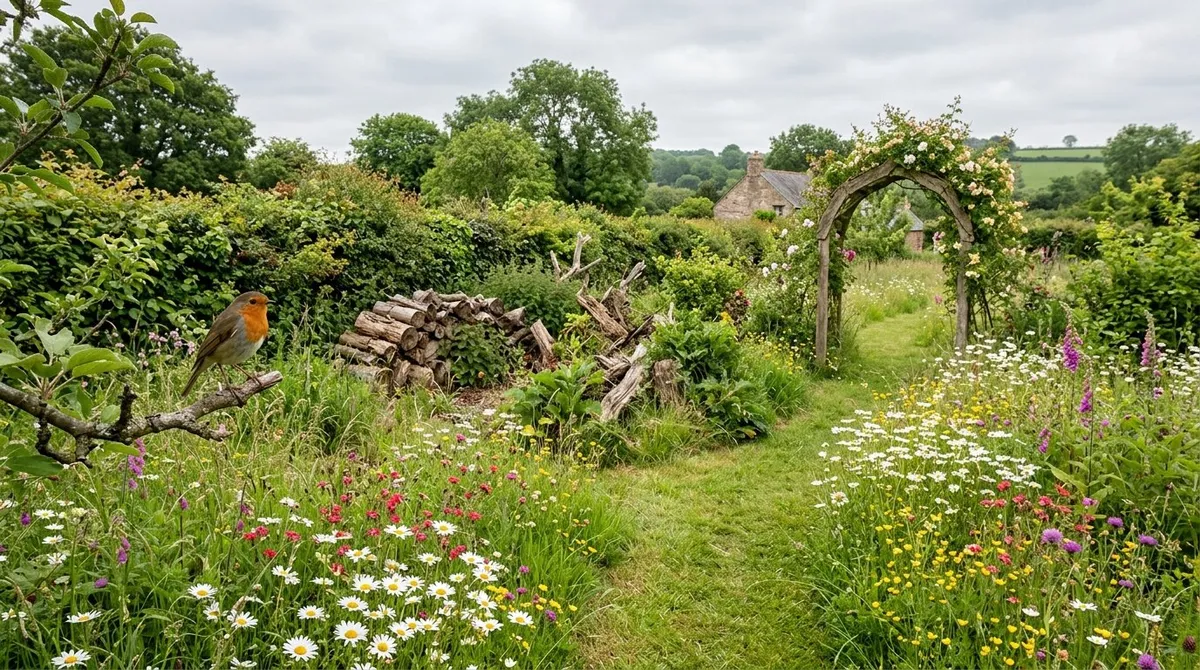
Rewilding a garden means reducing intensive management and allowing more natural processes. In practice, that may include mowing less, adding a pond, retaining seed heads, planting suitable native species and leaving some dead wood.
How much lawn should I replace when rewilding?
Start with 50%. A typical UK garden has 80-100 sq m of lawn. Converting half to mixed habitat, meadow, native planting, and ground cover, triples invertebrate diversity within two growing seasons. You keep the other half for sitting, playing, and walking.
Three approaches work well:
- No-mow zones. Mark out a 3m x 3m section and stop mowing in April. Existing seed bank produces white clover, self-heal, bird’s-foot trefoil, and buttercups within 8 weeks. No cost. No effort.
- Wildflower overseeding. Scarify the turf in September, broadcast yellow rattle seed at 1g per sq m, and add ox-eye daisy, knapweed, and field scabious. Yellow rattle weakens the grass, letting wildflowers compete. See our wildflower lawn guide for full method.
- Full meadow conversion. Strip the turf entirely and sow a native wildflower mix on the exposed soil. This gives the fastest results but costs more. Our mini meadow guide covers this approach for smaller spaces.
Mow the wildflower areas once in late August after seeds have set. Rake off the cuttings to reduce soil fertility. Lower fertility means more wildflowers and fewer dominant grasses.
What native plants should I choose for rewilding?
Native plants support 50 times more insect species than non-native ornamentals. A single native oak hosts 2,300 invertebrate species. A cherry laurel? Fewer than 50. That gap matters because insects sit at the base of the food chain, more insects means more birds, bats, hedgehogs, and amphibians.
Focus on plants that provide nectar, pollen, berries, and shelter across the full year:
| Plant | Type | Height | Wildlife value | Season |
|---|---|---|---|---|
| Hawthorn | Tree/hedge | 6-8m | 300+ insect species, berries for thrushes | May-Jun flowers, Sep-Nov berries |
| Blackthorn | Hedge | 3-4m | Early nectar for bees, sloes for birds | Mar-Apr flowers |
| Dog rose | Scrambler | 2-3m | Hoverflies, bees, rose hips | Jun-Jul flowers |
| Foxglove | Biennial | 1-1.5m | Long-tongued bumblebees | Jun-Jul |
| Red campion | Perennial | 60-80cm | Moths, hoverflies | May-Nov |
| Ox-eye daisy | Perennial | 40-60cm | Bees, beetles, hoverflies | Jun-Sep |
| Wild primrose | Perennial | 10-15cm | Early bees, butterfly larvae | Mar-May |
| Devil’s-bit scabious | Perennial | 30-60cm | Marsh fritillary, bees | Jul-Oct |
| Ragged robin | Perennial | 30-60cm | Long-tongued bees, hoverflies | May-Jun |
| Ivy | Climber | 20m+ | Late nectar (Oct), winter berries, nesting | Sep-Nov flowers |
Plant in groups of 5-7 of each species. Drifts of native planting look natural and help pollinators find food efficiently. Red campion is one of the easiest to start with; our red campion guide covers growing it in the shadier spots where little else flowers. Our guide to UK native plants covers sourcing and planting in detail. If you have a spare corner, layering a few native trees, shrubs and ground flora into a pocket woodland packs the most habitat into the least space.
How do I create wildlife corridors between gardens?
A single rewilded garden is good. Connected rewilded gardens are transformative. Hedgehogs roam up to 2km per night, they can’t do that if every garden is fenced off. Frogs migrate between ponds. Bees forage across multiple gardens. Corridors make all of this possible.
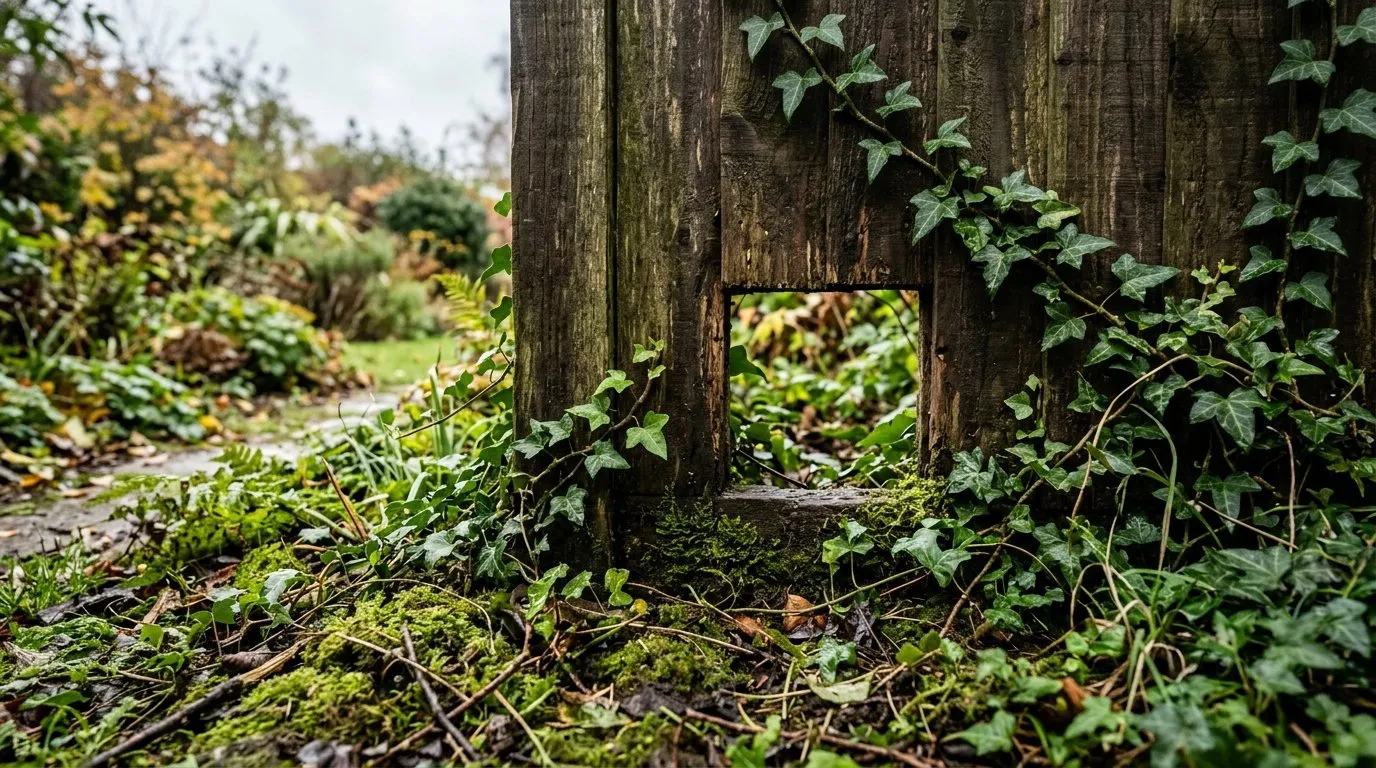 A 13cm x 13cm hedgehog highway cut at the base of a fence panel. One gap per boundary connects gardens into wildlife corridors.
Practical corridor features:
Talk to your neighbours. Rewilding works best when two or three adjacent gardens connect their habitats. The Wildlife Trusts run a neighbourhood corridor scheme that provides free resources.
What habitat features does a rewilded garden need?
Plants alone aren’t enough. A rewilded garden needs physical features for shelter, water, and breeding. Each one supports different species, and adding all five turns a garden into a functioning ecosystem.
| Feature | Dimensions | Materials | Species supported | Setup time |
|---|---|---|---|---|
| Wildlife pond | 1m x 1m minimum, 60cm deep | Butyl liner, native marginals | Frogs, newts, dragonflies, water beetles | 1 day |
| Log pile | 1m x 0.5m x 0.5m | Hardwood logs, varying sizes | Stag beetles, hedgehogs, toads, fungi | 30 minutes |
| Stone pile | 0.5m x 0.5m x 0.3m | Local stone, rubble, broken pots | Slow worms, spiders, mining bees | 30 minutes |
| Compost heap | 1m x 1m x 1m | Open-sided bay, mixed waste | Grass snakes, slow worms, beetles | 2 hours |
| Dead hedge | 2m long, 0.5m wide, 1m tall | Pruning waste between upright stakes | Wrens, dunnocks, hedgehogs, insects | 1 hour |
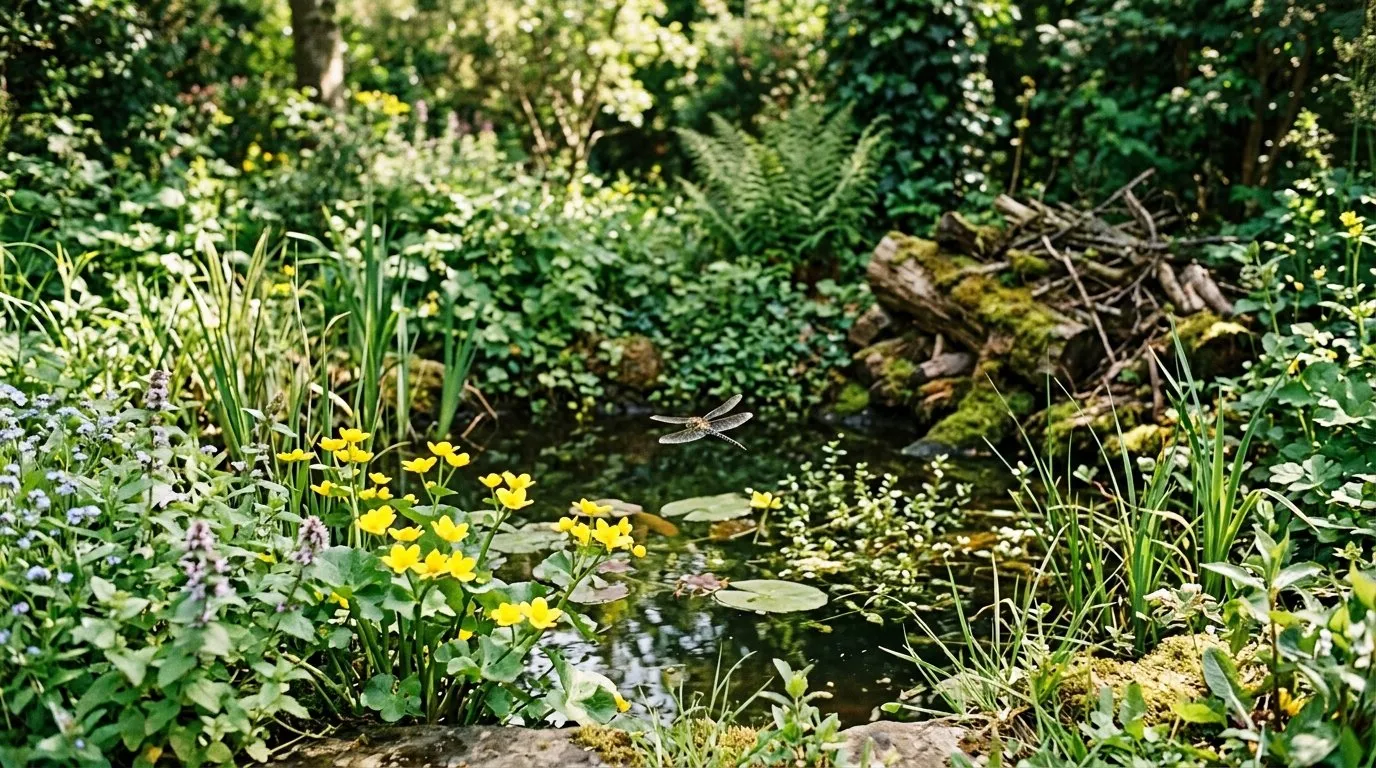 A wildlife pond with native marginals. Even a 1m x 1m pond supports frogs, newts, dragonflies, and water beetles.
Place the pond in a spot that gets at least 6 hours of sunlight. Position the log pile within 10m of the pond so amphibians can move between them. Build the dead hedge along a boundary where it doubles as screening.
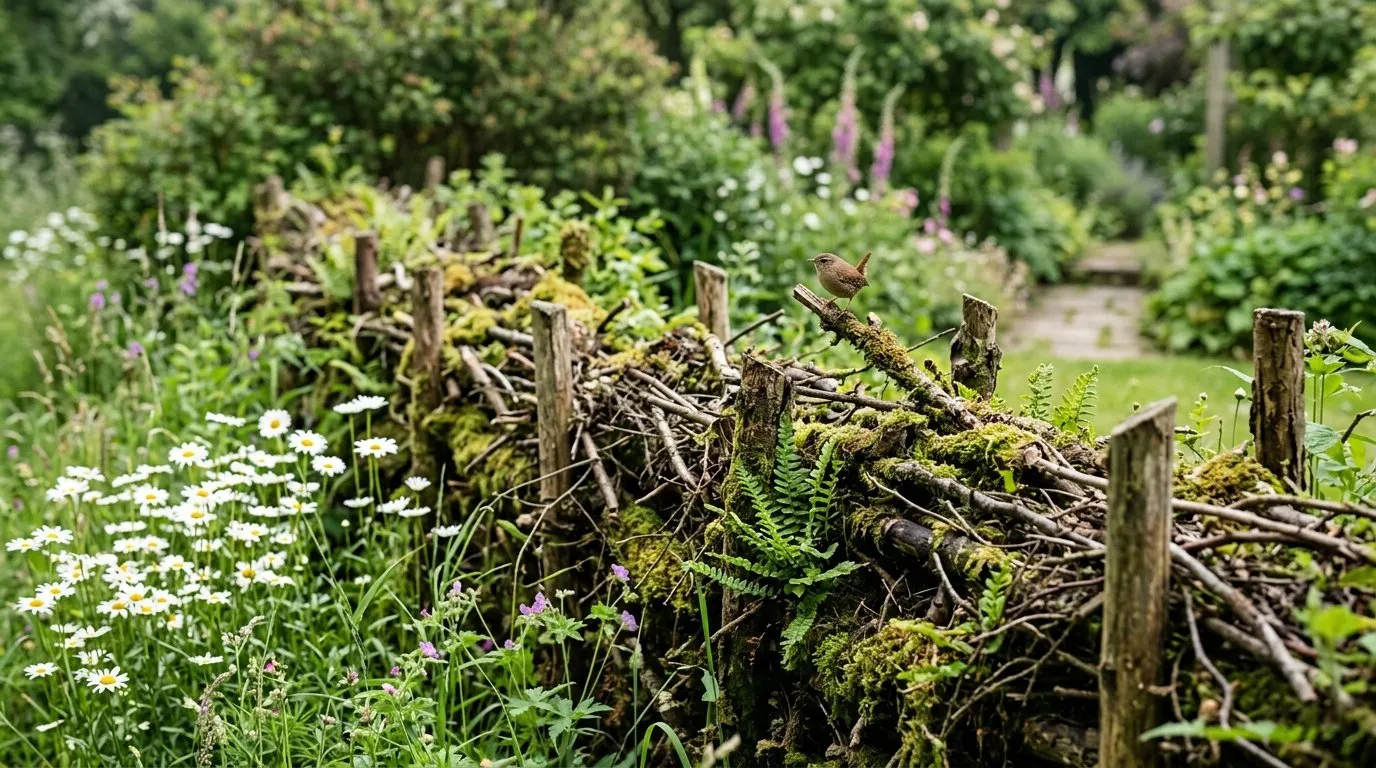 A dead hedge built from garden pruning waste. It costs nothing and provides shelter for wrens, dunnocks, and hedgehogs.
The dead hedge deserves a closer look. Drive pairs of stakes 0.5m apart along the desired line and pack the gap with pruning waste, hedge trimmings, and small branches. It looks rustic from day one and gets covered in moss and ivy within two seasons. Wrens nest in it. Hedgehogs shelter beneath it. And it costs nothing if you use your own garden waste.
Month-by-month rewilding action calendar
Rewilding isn’t a single weekend project, it’s year-round. Here’s one key action per month:
| Month | Action | Detail |
|---|---|---|
| January | Plan your layout | Sketch which areas become meadow, pond, and native planting |
| February | Build a dead hedge | Use winter pruning waste between upright stakes |
| March | Stop mowing the no-mow zone | Mark the area with canes or a mown path border |
| April | Sow wildflower plugs | Plant ox-eye daisy, knapweed, and field scabious into meadow areas |
| May | Add a pond | Dig, line, and plant with native marginals |
| June | Cut hedgehog highways | 13cm x 13cm gaps at fence base, one per boundary |
| July | Build a log pile | Stack 5-10 hardwood logs in a shady spot near the pond |
| August | Cut the meadow | Mow once, rake off cuttings to reduce fertility |
| September | Sow yellow rattle | Broadcast at 1g per sq m into scarified lawn areas |
| October | Plant native hedging | Bare-root hawthorn, blackthorn, and field maple at 5-6 per metre |
| November | Leave the leaves | Pile fallen leaves under hedges for hedgehog hibernation |
| December | Hang bird feeders | Sunflower hearts, fat balls, and a water dish near cover |
These actions fit neatly with current garden design trends that prioritise ecological function alongside appearance.
How do I manage a rewilded garden long-term?
Rewilding reduces work, but it doesn’t eliminate it. A 150 sq m rewilded garden needs roughly 60-80 hours of maintenance per year, compared to 120-140 for a conventional lawn-and-border setup. The saving comes from less mowing, less weeding, less watering, and no annual bedding.
Key ongoing tasks:
- Meadow cut. Once per year in late August. Use a scythe or strimmer set high. Rake off all cuttings within 3 days.
- Hedge trim. Once per year in late February, before nesting season starts on 1 March. Cut one side only each year to preserve berries.
- Pond maintenance. Remove blanket weed by hand in June. Thin oxygenating plants if they cover more than 60% of the surface. Never empty and refill.
- Invasive species. Remove Himalayan balsam, Japanese knotweed, and giant hogweed immediately if they appear. These outcompete native species.
- Selective weeding. Pull dock, nettle, and bramble from wildflower areas if they start to dominate. Leave small patches of nettles, they feed red admiral and painted lady caterpillars.
Don’t tidy in autumn. Dead stems shelter overwintering insects. Seed heads feed visiting birds through winter. Leaf piles protect hibernating hedgehogs. Wait until late March to cut back dead growth, by then insects have emerged and hedgehogs have woken.
Which wildlife species benefit most from rewilding?
A rewilded garden in the Midlands recorded 47 bird species, 22 butterfly species, 8 bumblebee species, 3 amphibian species, and over 400 invertebrate species across a single year. Before rewilding, the same garden, then mostly lawn with ornamental borders, recorded 19 bird species and 6 butterfly species.
The species that gain most are the ones in serious decline:
Common mistakes when rewilding a UK garden
Rewilding fails when people skip the planning. Avoid these:
- Sowing wildflowers on fertile soil. Most wildflowers need poor, low-nutrient soil. Rich garden soil grows rank grass that smothers them. Strip the topsoil or sow yellow rattle first to weaken the grass.
- Planting non-native meadow mixes. Some seed mixes sneak in North American or continental species. Buy from UK native seed suppliers like Emorsgate or Naturescape.
- Ignoring connectivity. One rewilded garden surrounded by paved plots and solid fences won’t achieve much. Cut hedgehog highways and plant boundary hedging.
- Removing all lawn. Children and dogs need lawn. Keep 40-50% as mown grass and rewild the rest. A 2m mown path through a meadow area looks intentional.
- Cutting the meadow too early. Wait until late August. A June cut destroys nesting habitat and stops seeds from setting.
How rewilding fits with the RHS Bringing Nature Home campaign
The RHS Bringing Nature Home 2026 campaign encourages every UK gardener to make at least one change for wildlife. According to their survey, 87% of gardeners want to help wildlife but don’t know where to start. Rewilding gives them a structured approach rather than a scattergun of individual add-ons.
Their three priority actions, adding water, planting native species, and reducing mowing, are the same core rewilding steps covered here. Even one change, a no-mow patch, a small pond, a single native hedge, contributes to the national effort.
Rewilding your garden isn’t about giving up control. It’s about choosing where nature leads and where you keep structure. A mown path through a wildflower meadow. A pond beside a seating area. A native hedge framing the view. You end up with a garden that works harder for wildlife, and gives you less work to do.
Frequently asked questions
What does rewilding a garden mean?
It means letting natural processes replace intensive management. You reduce mowing, plant native species, add habitat features like ponds and log piles, and allow self-seeding. The goal is a self-sustaining ecosystem rather than a manicured plot. A rewilded garden still has paths, seating areas, and structure.
How long does it take to rewild a garden?
Visible results appear within one growing season. A no-mow patch produces wildflowers in 8-12 weeks. Planted native hedging takes 3 years to fill out. A wildlife pond attracts amphibians within 6 months. Full rewilding of a 150 sq m garden takes 2-3 years.
Can I rewild a small garden?
Yes, even a 3m x 3m space works for rewilding. A mini meadow, a sunken water dish, and a single native climber on a fence provide habitat for dozens of species. Window boxes with native wildflowers feed pollinators in the smallest spaces.
Will rewilding make my garden look messy?
Not if you add structure and intention. Mown paths through long grass look deliberate. Defined wildflower beds with edging look designed. A log pile beside a pond looks like a feature. The RHS calls it managed wildness.
What wildlife will a rewilded garden attract?
Results depend on location and the habitats you create. Ponds may attract aquatic insects and amphibians, while flowers support pollinators. Hedges, seed heads, leaf litter and log piles provide food or shelter for different species.
Our team produces practical UK gardening guidance from source research, contributor records and established horticultural practice. Editorial standards are overseen by Matt W.