Key takeaways
- Native plants feed far more of our insects, and so our birds, than most exotic plants
- Hawthorn, blackthorn and guelder rose make a fantastic mixed wildlife hedge
- Field maple and hazel are native trees that suit smaller gardens
- Wildflower meadows need poor soil, so don't feed them
- Sow yellow rattle in autumn to help wildflowers beat the grass
- Buy UK-grown plants to avoid bringing in pests and diseases
Native plants grew up in British soils and rain, alongside British insects and birds. That’s why they’re so good for wildlife: many of our insects can only feed on particular native plants, and our birds feed on those insects. This guide covers the best native trees, shrubs, wildflowers, bulbs and grasses for gardens of all sizes, plus where to buy them.
Why native plants matter for UK gardens
Lots of British insects are fussy eaters. Their caterpillars can only feed on certain plants. The brimstone butterfly’s caterpillars, for example, only eat buckthorn and alder buckthorn. The speckled wood’s caterpillars feed on grasses such as false brome and cock’s-foot. A garden full of exotic plants can look lovely but offer these insects very little.
Native trees such as oak, birch and hawthorn host a huge range of insects, far more than most introduced ornamental trees.
That matters for garden birds too. Blue tits and other songbirds feed their chicks on masses of caterpillars, and many of those caterpillars live on native trees and shrubs. Plant natives and you feed the whole food chain.
You don’t need to go fully native. Even a native hedge or a few wildflowers among your other plants makes a real difference.
Which native plants support the most wildlife?
Some natives are real wildlife magnets. Here are some of the best.
| Plant | Type | Who it helps | Flowers |
|---|---|---|---|
| Silver birch | Tree | Siskins, redpolls, lots of moth caterpillars | March (catkins) |
| English oak | Tree | Blue tits, moth caterpillars | April (catkins) |
| Scots pine | Tree | Coal tits, goldcrests | Spring |
| Hawthorn | Tree or shrub | Fieldfares, redwings, bees | April to May |
| Blackthorn | Shrub | Early bees, bullfinches | March to April |
| Crab apple | Tree | Blackbirds, bees | April to May |
| Hazel | Shrub or tree | Dormice, nuthatches | February to March (catkins) |
| Dog rose | Shrub | Bees, birds that eat the hips | June to July |
| Elder | Shrub or tree | Blackcaps, thrushes | May to June |
| Guelder rose | Shrub | Bullfinches, blackbirds, hoverflies | May to June |
| Wild cherry | Tree | Bees, thrushes | April to May |
| Common dog violet | Wildflower | Fritillary caterpillars, queen bumblebees | March to May |
| Wild marjoram | Wildflower | Butterflies, lots of bees | July to September |
| Oxeye daisy | Wildflower | Bees, hoverflies | May to September |
| Teasel | Biennial | Goldfinches (seeds), bumblebees | July to August |
| Harebell | Wildflower | Mining bees, skippers | July to September |
Native trees for gardens
For more detail, see our guide to the best native trees for UK gardens. Here are five favourites.
English oak (Quercus robur): A wildlife superstar, but it grows huge. Only plant one in a big garden. Plant a small bare-root tree in late autumn or winter. Happy on clay and loam.
Silver birch (Betula pendula): Light, airy and quick to settle in, especially on free-draining, acid soil. Also gets tall, so give it room.
Hawthorn (Crataegus monogyna): The most adaptable native. It grows on chalk, clay, loam and sand, and soon gives you blossom and berries. A must for a mixed native hedge. Our hedge planting guide covers spacing and trimming.
Field maple (Acer campestre): The best native tree for a small garden. Lovely golden autumn colour, happy on clay and chalk, and easy to keep small with a light prune in late winter.
Hazel (Corylus avellana): Lots of stems, yellow catkins in February and nuts after a few years. Cut it back to the base every few years (called coppicing) to keep it compact. Dormice, nuthatches and tits love it.
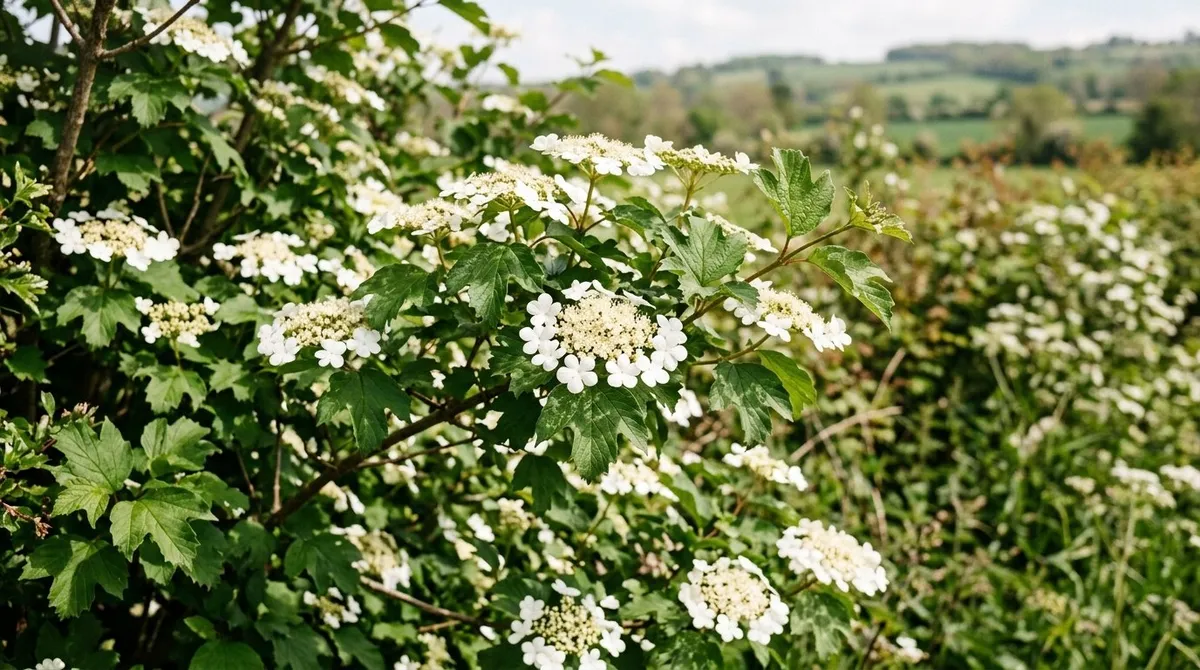
 Hawthorn and blackthorn blossom in a mixed native hedge in spring.
Native shrubs: the backbone of a wildlife garden
Native shrubs fill the gap between ground-level plants and trees. They give birds somewhere to nest, berries to eat and flowers at just the right height.
Blackthorn (Prunus spinosa): Flowers in March before its leaves appear, one of the first native flowers for early bees. Its sloes ripen in autumn and feed birds into winter. It spreads by suckers, so keep it in check with a mown edge. Happy on chalk, clay and loam.
Guelder rose (Viburnum opulus): Flat white flowers in early summer, then clusters of shiny red berries from late summer into winter, and scarlet autumn leaves. Likes moist soil. Our guelder rose growing guide covers planting, pruning and dealing with viburnum beetle.
Dog rose (Rosa canina): A scrambling shrub with pink flowers in early summer and bright red hips that feed blackbirds and thrushes through winter. Copes with poor, thin soils. Grow it through a hedge or on its own.
Elder (Sambucus nigra): Fast-growing and happy in almost any soil, including damp spots. Creamy flower heads in early summer buzz with insects, and the berries feed blackcaps and blackbirds in autumn. Easy to grow from cuttings.
Hazel (Corylus avellana): Already mentioned as a tree, but coppiced every few years it makes a lovely big shrub with more catkins and nuts.
Short on space? A mixed native hedge of three or more of these shrubs gives birds food, nesting and shelter in a narrow strip. It’s hard to beat for wildlife.
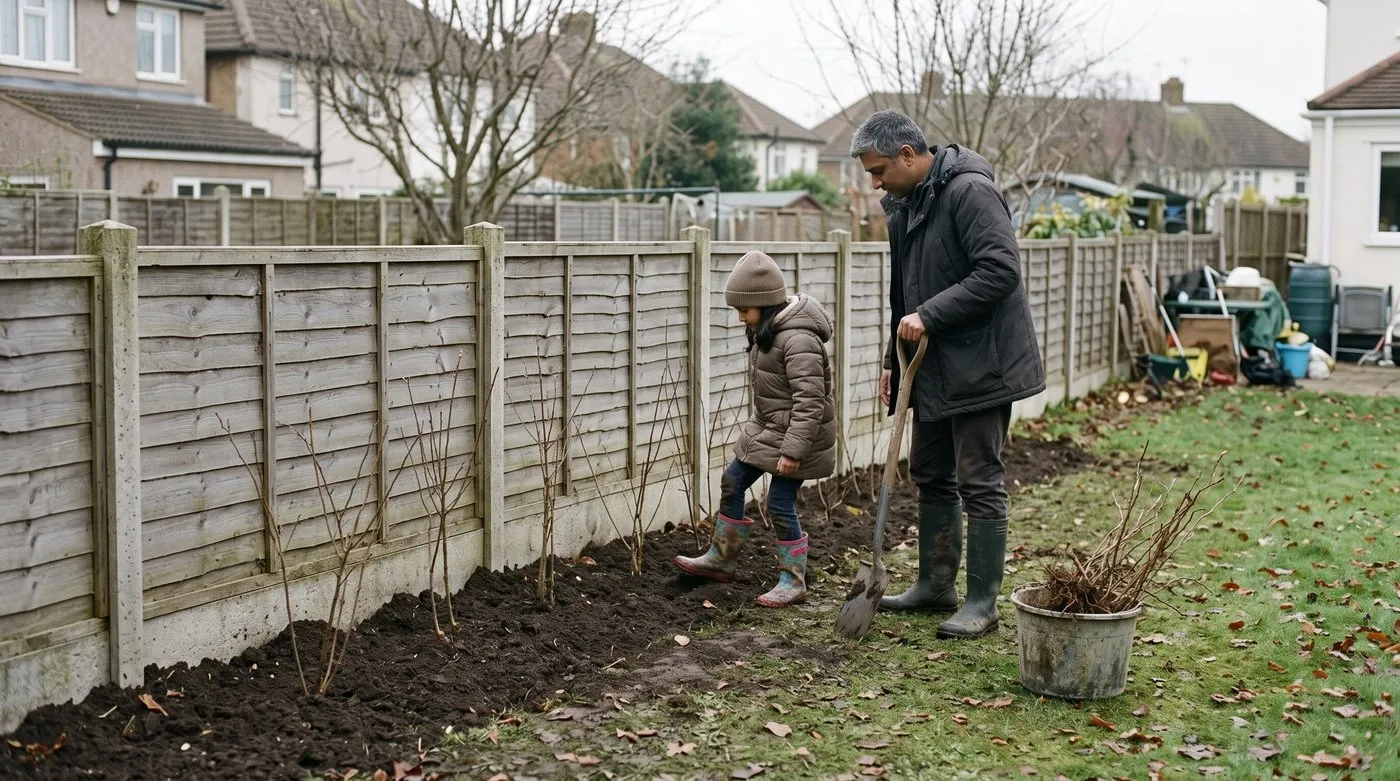
A mixed hedge of three or more native shrubs packs food, nesting and shelter into a narrow strip. Bare-root whips are cheap to plant in winter.
Native wildflowers and how to use them
Native wildflowers fall into two groups. Meadow flowers need poor soil with little competition from grass. Border and woodland-edge flowers are happy in ordinary garden beds.
Meadow wildflowers
Meadow flowers need poor soil. On rich garden soil, grasses soon crowd them out. Either start with naturally poor ground (sandy or thin over chalk), or strip off the top layer of soil before you sow.
The secret weapon is yellow rattle (Rhinanthus minor). It feeds partly off grass roots, which weakens the grass and makes room for flowers. Sow it in autumn, as it needs winter cold to come up. Give a new meadow two or three years to settle in.
Our guide to creating a wildflower lawn walks you through it. For smaller spaces, try the mini-meadow method.
Good meadow flowers:
| Flower | Height | Flowers | Good for | Soil |
|---|---|---|---|---|
| Yellow rattle | Short | May to July | Keeping grass in check | Poor soil only |
| Oxeye daisy | Medium | May to September | Bees, hoverflies | Any poor soil |
| Meadow buttercup | Medium | April to July | Bees, hoverflies | Clay to loam |
| Field scabious | Medium | June to October | Bees | Chalk, loam |
| Harebell | Short | July to September | Mining bees | Sandy, chalk |
| Tufted vetch | Scrambling | June to August | Bees | Any poor soil |
| Common knapweed | Medium | June to September | Butterflies | Clay, loam |
| Bird’s-foot trefoil | Short | May to September | Common blue caterpillars | Sandy, chalk |
| Wild carrot | Medium | June to August | Hoverflies | Chalk, free-draining |
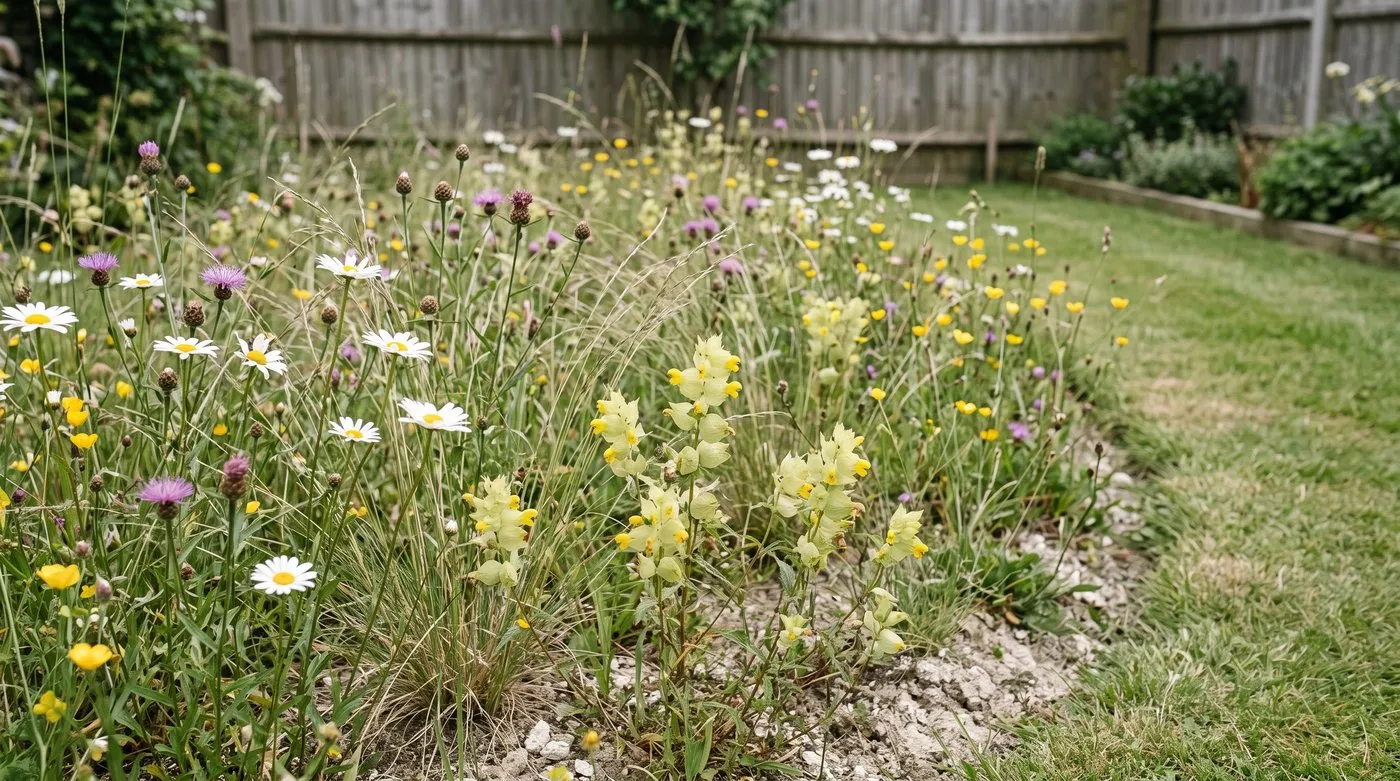
Yellow rattle weakens the grass so meadow flowers can get a foothold. Give a new patch two or three years to really settle in.
Border wildflowers
These are happy in normal garden soil alongside your other perennials. They’re an easier way in than a whole meadow.
Foxglove (Digitalis purpurea): Tall spires of tube-shaped flowers in early summer, adored by bumblebees. It self-seeds happily. All parts are poisonous, so keep it away from children and pets that chew plants. Our guide to growing foxgloves has more.
Primrose (Primula vulgaris): One of the first spring flowers, a welcome early meal for queen bumblebees. Best in part shade under trees or shrubs. See our primrose growing guide for planting and dividing.
Red campion (Silene dioica): Pink flowers over a really long season, from spring into autumn. Happy in part shade and on clay or loam.
Wild garlic (Allium ursinum): Starry white flowers in spring and a strong garlic smell when you crush the leaves. It spreads into big patches in moist shade, so give it room. The leaves are edible, but make sure you know it well, as it can be confused with poisonous plants.
Teasel (Dipsacus fullonum): A tall, striking plant. Bumblebees visit the flowers in summer, and goldfinches feast on the seedheads in autumn and winter.
Common dog violet (Viola riviniana): A small spring flower and the food plant for several of our fritillary butterflies. You’ll usually find it at specialist nurseries rather than garden centres.
 Native bluebells and wood anemones in a woodland garden. Always buy bluebells from nursery-grown stock.
Native bulbs for shade and woodland gardens
Native bulbs flower in spring when hungry insects are just waking up. Once settled, you can leave them alone.
Bluebell (Hyacinthoides non-scripta): The nation’s favourite, flowering in spring under trees. It’s protected by law, so never dig up bulbs or collect seed from the wild. Buy nursery-grown bulbs labelled Hyacinthoides non-scripta, not the Spanish bluebell or the hybrid. Plant in autumn in moist, well-drained soil in part shade.
Wood anemone (Anemone nemorosa): Delicate white flowers in early spring that open in the sunshine. It spreads slowly. Buy it in early autumn, as dried-out roots sold later often fail. Likes moist soil in part or full shade.
Wild daffodil (Narcissus pseudonarcissus): Smaller and paler than garden daffodils, and very pretty in rough grass, on banks or under fruit trees. Bees can reach its simple flowers far more easily than big double daffodils.
Wild garlic (Allium ursinum): See above.
Native grasses
Native grasses are a bit overlooked, but lots of butterfly and moth caterpillars feed on them.
Yorkshire fog (Holcus lanatus): Soft, downy leaves. Copes with poor, damp ground and clay.
Meadow fescue (Festuca pratensis): Fine, upright grass that grows on clay and loam.
False brome (Brachypodium sylvaticum): A grass for shady woodland gardens, and food for speckled wood caterpillars.
Tufted hair-grass (Deschampsia cespitosa): Makes a big, airy tussock. Copes with wet clay and looks great in a damp corner.
Common bent (Agrostis capillaris): Fine, wispy grass for thin, acid soils. Often found in wildflower meadow mixes.
Keep perennial rye grass out of wildflower areas. It’s native, but it’s a bully and will swamp the flowers.
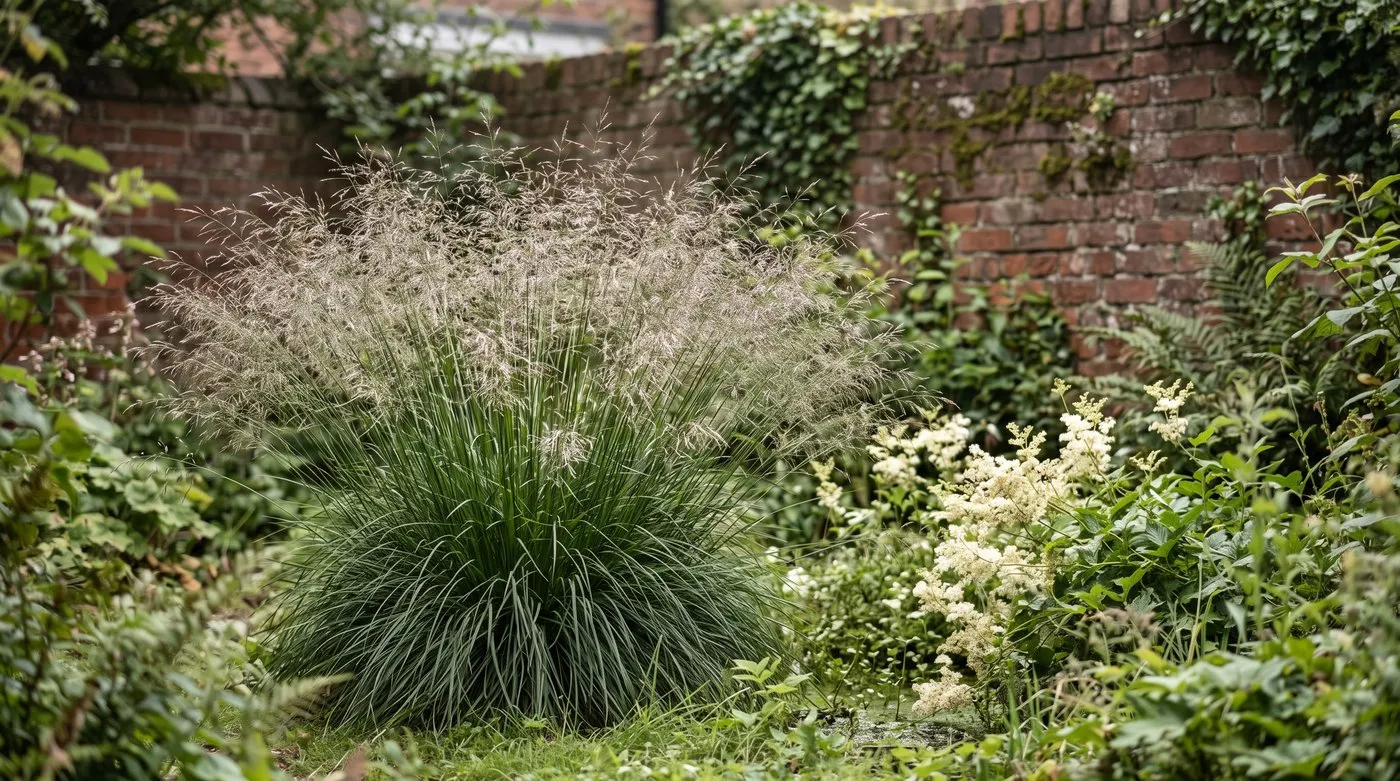
Tufted hair-grass copes with wet clay and makes a lovely airy tussock. Native grasses like this feed plenty of butterfly and moth caterpillars too.
Native plants by garden situation
Use this table to match native plants to your garden.
| Situation | Trees | Shrubs | Wildflowers |
|---|---|---|---|
| Sunny and dry | Field maple, crab apple | Blackthorn, dog rose, gorse | Wild marjoram, harebell, viper’s bugloss |
| Sunny and damp | Alder | Guelder rose, elder, dogwood | Meadowsweet, ragged robin, purple loosestrife |
| Part shade | Hazel, wild cherry | Hawthorn, spindle, buckthorn | Bluebell, wood anemone, primrose, red campion |
| Full shade | None | Elder, holly | Wild garlic, hart’s-tongue fern, false brome |
| Heavy clay | Hawthorn, alder, field maple | Blackthorn, elder, buckthorn | Meadow buttercup, ragged robin, marsh marigold |
| Windy or coastal | Hawthorn, blackthorn | Gorse, dog rose, elder | Sea campion, thrift, bird’s-foot trefoil |
| Small garden | Field maple (kept pruned), hazel | Guelder rose, dog rose | Border wildflowers rather than a meadow |
In a small garden, skip oak, birch and alder, which all get too big.
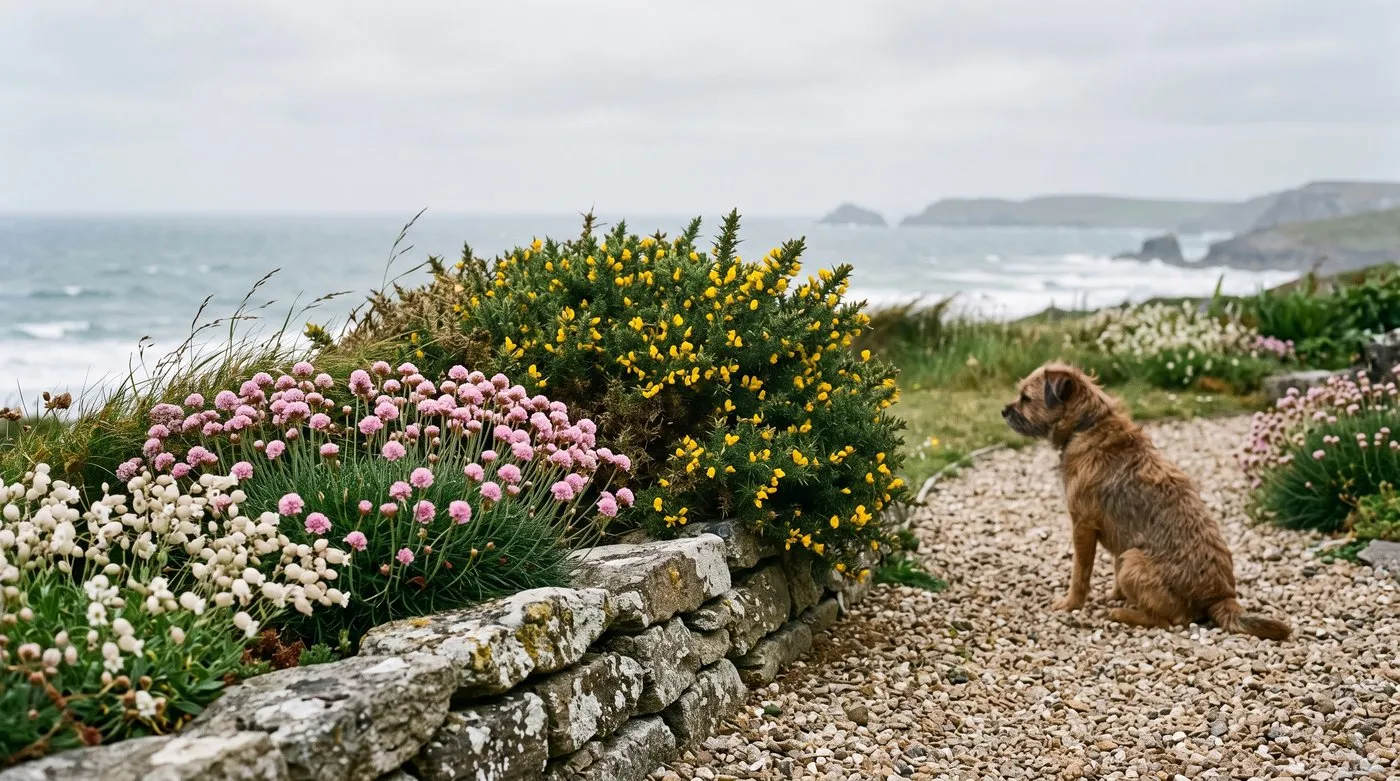
In a windy coastal garden, natives like thrift, sea campion and gorse shrug off the salt spray that defeats many other plants.
Where to source UK native plants
Buy UK-grown plants and seed where you can. Imported plants can bring in pests and diseases, which is how ash dieback reached Britain. The RHS guidance on buying plants suggests checking plants for signs of pests and disease before you buy.
Good places to look:
- Specialist native seed suppliers, such as Emorsgate Seeds, for wildflower and grass seed
- Native plant nurseries, such as Habitat Aid, for trees, shrubs, bulbs and seed
- The Woodland Trust, for native trees and hedging
- Your local Wildlife Trust, as some hold native plant sales
What to check on the label:
- The full plant name, such as Crataegus monogyna, not just “hawthorn”
- Where it was grown, ideally “grown from UK-collected seed” or “UK grown”
- Whether it’s a named variety. The plain wild species is usually the better choice for wildlife.
Creating a wildlife garden with native plants
Start small. A native hedge, a patch of border wildflowers or a few spring bulbs under a tree are all great first steps. Add a pond or a log pile and you’ll soon see more visitors. Our guide to creating a wildlife garden has plenty more ideas.
Frequently asked questions
What are the best UK native plants for a small garden?
Hawthorn, field maple and dog rose make great structure in a small space. Wild marjoram, red campion, oxeye daisy and common knapweed suit borders and pots. All of these are loved by insects and need little feeding. A short native hedge, such as hawthorn mixed with other natives, adds shelter and food for wildlife.
Where can I buy UK native plants?
Try specialist native plant and wildflower nurseries, many of which sell online. The Woodland Trust and some local wildlife trusts can help with native trees and hedging too. Look for plants and seed grown in the UK where you can. UK-grown stock also lowers the risk of bringing in plant pests and diseases.
What is the difference between native and naturalised plants?
Native plants arrived in Britain naturally after the last ice age. Naturalised plants were brought here by people but now grow wild and spread on their own. Sweet chestnut is one example, and many experts think the snowdrop is another. Native plants usually feed more of our insects, because they’ve lived alongside each other for thousands of years.
Do UK native plants need fertiliser or watering once established?
Most settled native plants need little or no feeding or watering. They’re used to British soils and rain. Feeding wildflowers can actually harm them, as rich soil helps grasses crowd them out. Water new trees, shrubs and plants in dry spells during their first year. After that, most cope on their own unless there’s a long drought.
Can native plants grow in shade?
Yes, lots of native woodland plants love shade. Bluebell, wood anemone, wild garlic and primrose do well under deciduous trees. Hart’s-tongue fern and sweet woodruff are happy in shade too, and herb robert copes with dry shade under shrubs. Plant spring woodland flowers where they get light before the trees come into leaf.
Are native wildflowers difficult to establish from seed?
Not if you prepare the ground well and sow at the right time. Many come up best after an autumn sowing, as winter cold wakes the seed up. Yellow rattle must be sown in autumn. Cornfield annuals such as poppy and cornflower are among the easiest. Sow onto bare, weed-free, poor soil at the rate on the packet.
Which native plants are best for clay soil?
Meadowsweet, ragged robin, purple loosestrife and marsh marigold love damp clay. Knapweed and oxeye daisy cope well on drier clay. For shrubs, guelder rose, hawthorn and blackthorn are happy in heavy soil. In really wet spots, native sedges (Carex) do better than most grasses.
Related reading
- Native Trees for UK Gardens, with soil, size and wildlife notes for each tree
- How to Create a Wildflower Lawn, from preparing the ground to the first year
- Mini Meadow Wildflower Area, for a small wildflower patch
- Create a Wildlife Garden in the UK, for more ways to welcome wildlife
- Hedge Planting Guide UK, for planting and trimming a native hedge
Our team produces practical UK gardening guidance from source research, contributor records and established horticultural practice. Editorial standards are overseen by Matt W.