
Key takeaways
- Match the tree to your space first; oak, birch and wild cherry grow far too big for most back gardens
- Field maple, hawthorn, rowan and crab apple are the best all-rounders for typical gardens
- Alder suits wet ground, birch and rowan suit light acid soils, field maple and hawthorn cope with clay and chalk
- Buy UK-grown bare-root trees and plant them from November to March
- Keep a weed-free mulched circle and water in dry spells for the first two or three summers
- Native trees feed caterpillars, which in turn feed nesting birds
The best native tree for your garden is the one that fits your space and soil. For most UK gardens that means a smaller native such as field maple, hawthorn, rowan or crab apple. Bigger natives like oak and birch need much more room. Buy UK-grown bare-root trees, plant them in winter, and look after them for the first few summers. You’ll get blossom, berries and plenty of wildlife for years.
If you’re short of space, the guide to the best small native trees picks out ten compact choices. This guide helps you match a native tree to your plot and soil, then buy and plant it well.
Why plant a native tree?
Native trees are those that arrived in Britain naturally after the last ice age. Many native insects have grown up alongside them and feed only on particular trees. Oak, birch, willow and hawthorn support huge numbers of caterpillars and other insects.
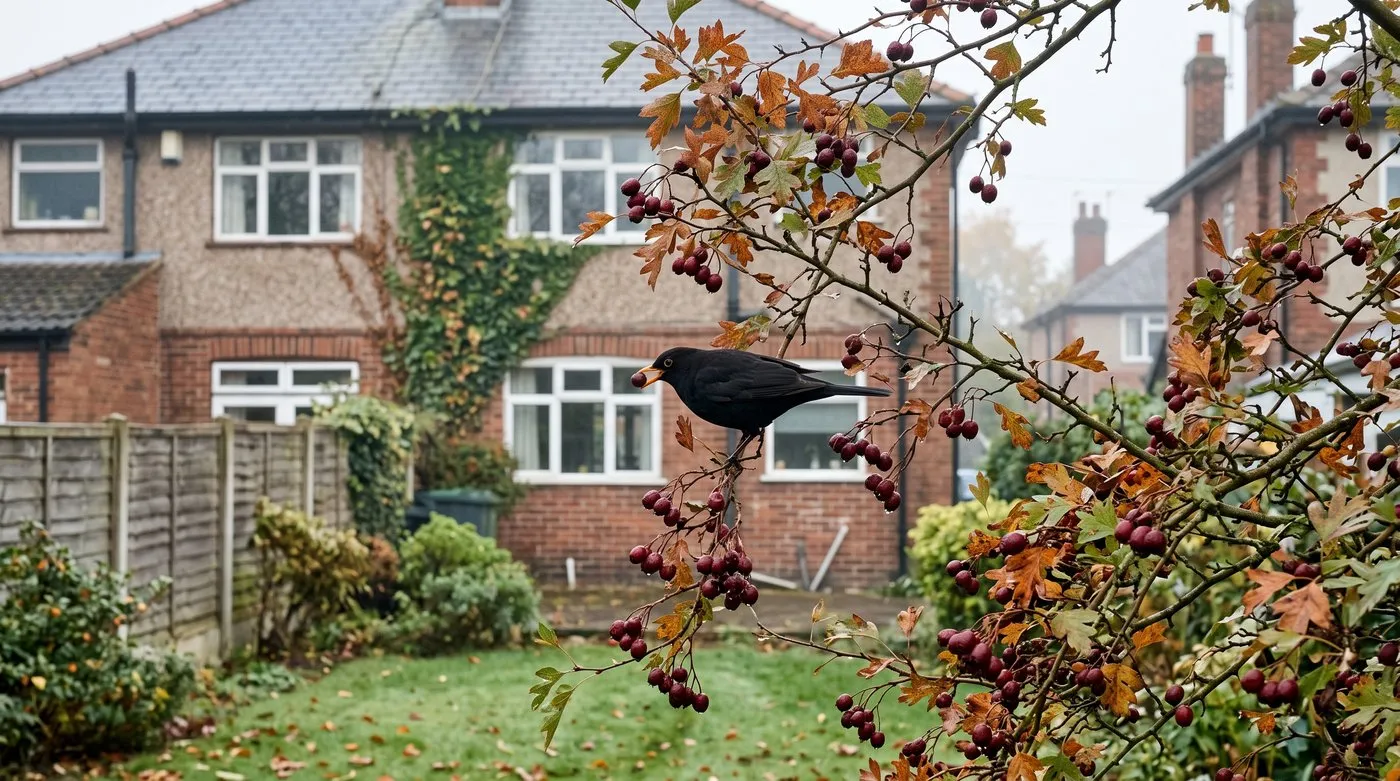
Native trees feed wildlife all year. Hawthorn’s red haws keep blackbirds and thrushes going into winter.
That matters for birds. Blue tits and great tits rely on caterpillars to feed their chicks in spring. Native blossom feeds bees, and berries such as haws and rowan berries feed thrushes and blackbirds in autumn and winter. Even one native tree makes a garden busier with wildlife.
Which native tree suits your garden size?
Start with the space. A tree that outgrows its spot means years of heavy pruning or a costly removal.
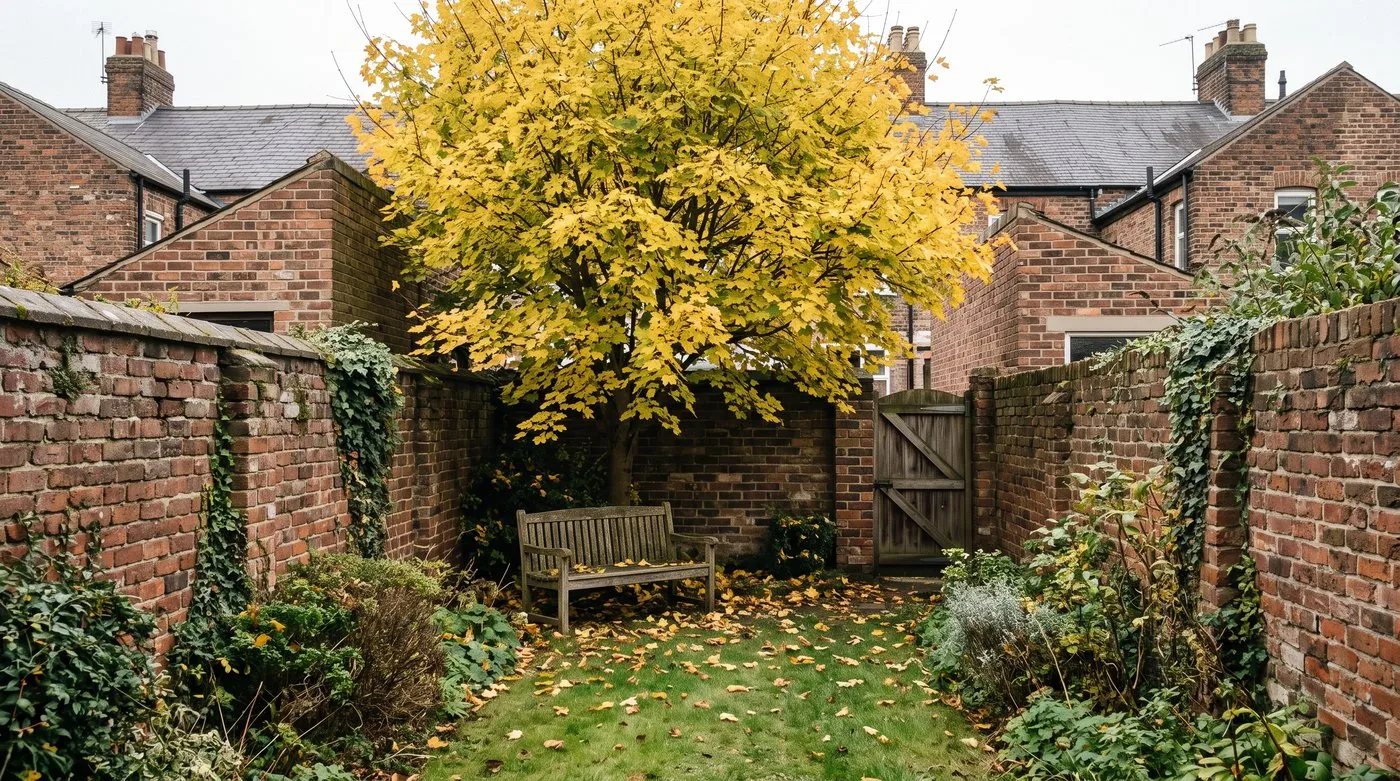
Field maple stays a sensible size, copes with most soils and turns butter-yellow in autumn.
- Very small gardens and courtyards: guelder rose, hawthorn kept as a small tree, or field maple kept trimmed.
- Typical back gardens: field maple, rowan, crab apple, hawthorn, wild service tree.
- Larger gardens: add silver birch, wild cherry and, on wet ground, alder.
- Big plots and paddocks: oak, Scots pine and beech, which need lots of room to spread.
Plant big trees well away from the house, drains and boundaries. The guide to trees for privacy has ideas if you want screening as well.
Native trees compared
| Tree | Usual height | Soil | Best for |
|---|---|---|---|
| Field maple | 8-10m, easily kept smaller | Most soils, including clay and chalk | Small gardens, autumn gold |
| Hawthorn | 5-8m | Almost any | Blossom, haws, nesting birds |
| Rowan | 8-12m | Light, acid or thin soils | Berries, cooler and upland gardens |
| Crab apple | 6-9m | Most soils | Blossom and small fruits |
| Guelder rose | 3-4m | Moist soils, including clay | Tiny spaces, red berries |
| Silver birch | 15-20m | Light, free-draining, acid | Larger gardens, white bark |
| Wild cherry | 15-20m | Well-drained loam | Blossom in larger gardens |
| Alder | 15-20m | Wet, even waterlogged | Pond edges and soggy corners |
| English oak | 20m+ | Deep soils, clay is fine | Big plots only |
Heights vary with soil and pruning, so treat them as a guide.
Matching native trees to your soil
- Heavy clay: field maple, hawthorn, crab apple and oak all cope. The guide to improving clay soil helps around the planting area, though trees themselves don’t need rich soil.
- Wet or waterlogged ground: alder and guelder rose are happiest. Willows also love wet soil but grow big fast.
- Chalk and limestone: field maple, hawthorn, whitebeam and wild service tree do well.
- Light, sandy or acid soil: silver birch, rowan and Scots pine thrive.
- Thin, poor soil and exposed sites: rowan and hawthorn are tough choices.
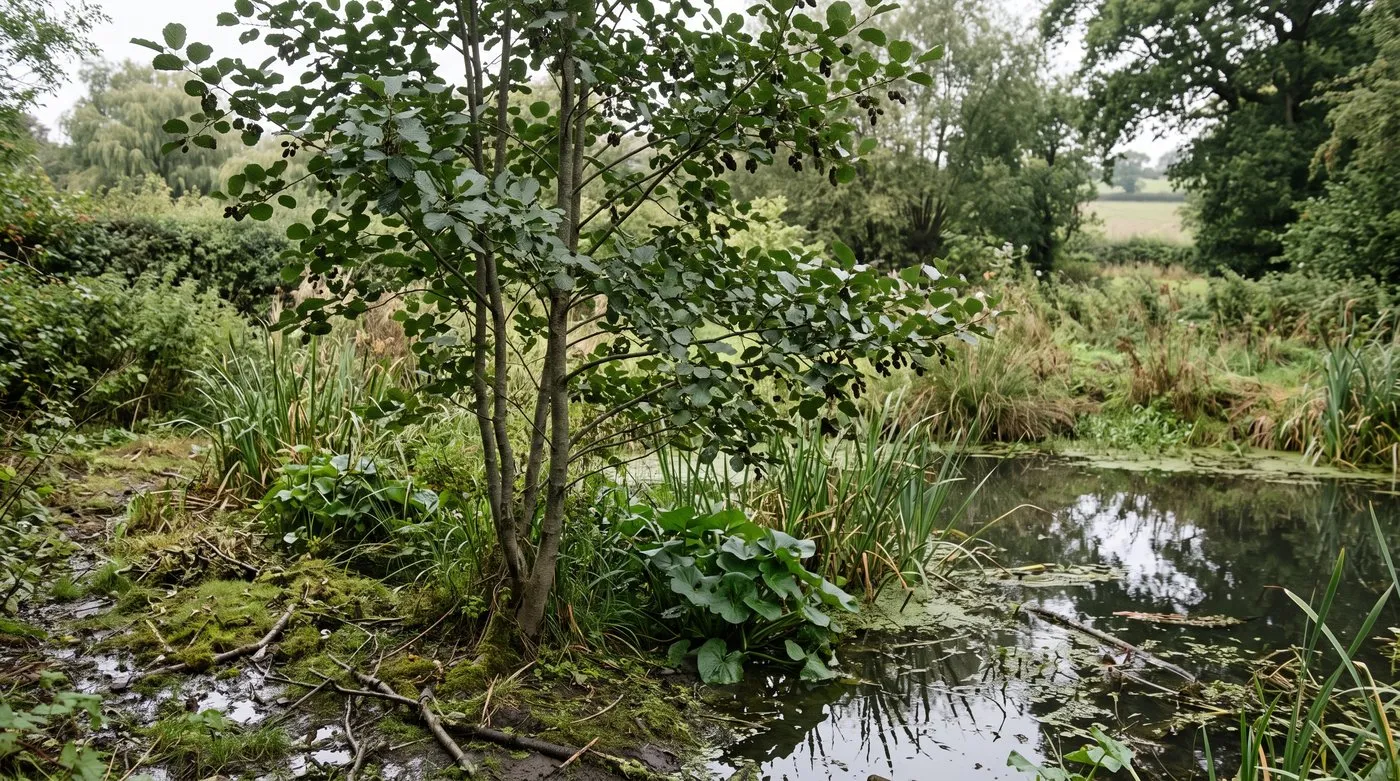
Got a soggy corner? Alder is happy with wet feet and its little cones feed finches in winter.
Not sure what you’ve got? Watch where water sits after rain, and use a simple soil test kit before you buy.
Native trees worth knowing
English oak is Britain’s great wildlife tree, but it grows into a huge, spreading tree. Plant it only where it has plenty of room for generations to come.
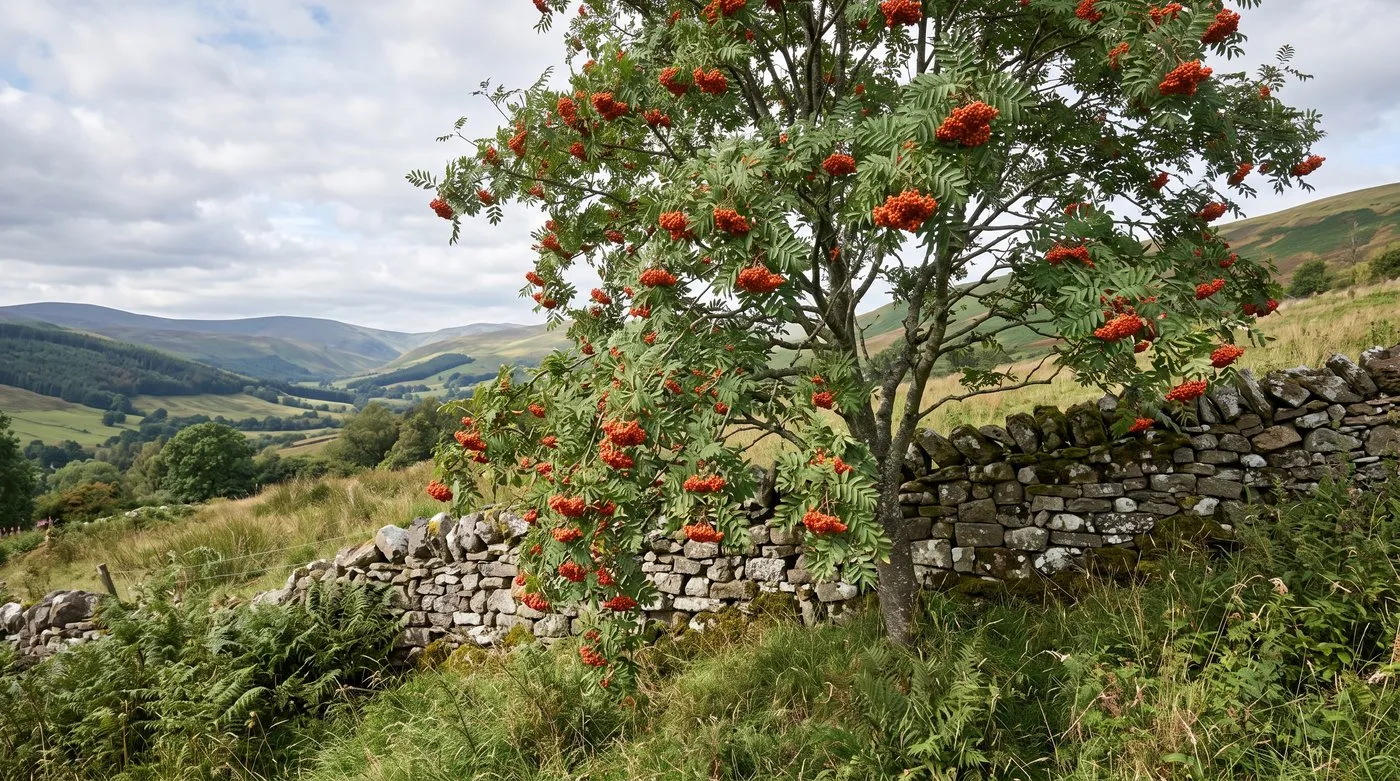
Rowan is a natural choice for cooler, upland gardens, and its berries are a favourite with birds.
Silver birch has lovely white bark and light shade. It grows fast on light, acid soils but struggles on heavy wet clay. Multi-stemmed birches can suit a medium garden.
Hawthorn grows almost anywhere, from clay to chalk to coastal sites. White May blossom in spring is followed by red haws that thrushes and blackbirds love. It also makes a great native hedge; see the hedge planting guide.
Field maple is Britain’s native maple. It copes with most soils, takes pruning well and turns butter-yellow in autumn. It’s one of the best native trees for a small garden.
Rowan, or mountain ash, has white spring flowers and orange-red berries from late summer, a favourite of birds. It does best in cooler, lighter soils and is a natural choice for northern and upland gardens. See how it compares in the best trees for autumn colour.
Crab apple gives pink-white blossom in spring and small fruits in autumn. The wild species, Malus sylvestris, is the native one; garden crab apples are bred forms that also help wildlife.
Alder is the tree for wet ground. Its roots can fix nitrogen from the air, and its small cones feed siskins and redpolls in winter.
Guelder rose is a large shrub or small tree with flat white flowers, shiny red berries and red autumn leaves. It suits damp soil and small spaces.
Elder grows fast and gives elderflowers and berries. It can look scruffy, so cut it back hard every few years to keep it compact.
Scots pine is Britain’s native pine and grows best on sandy, acid soil. Yew and juniper are the other native conifers. Yew is poisonous to people, pets and livestock, so think carefully where children or animals play.
Bare-root or pot-grown native trees?
For native trees, bare-root is usually the better buy. They’re dug up from the nursery field in winter, sold without pots and planted from November to March.
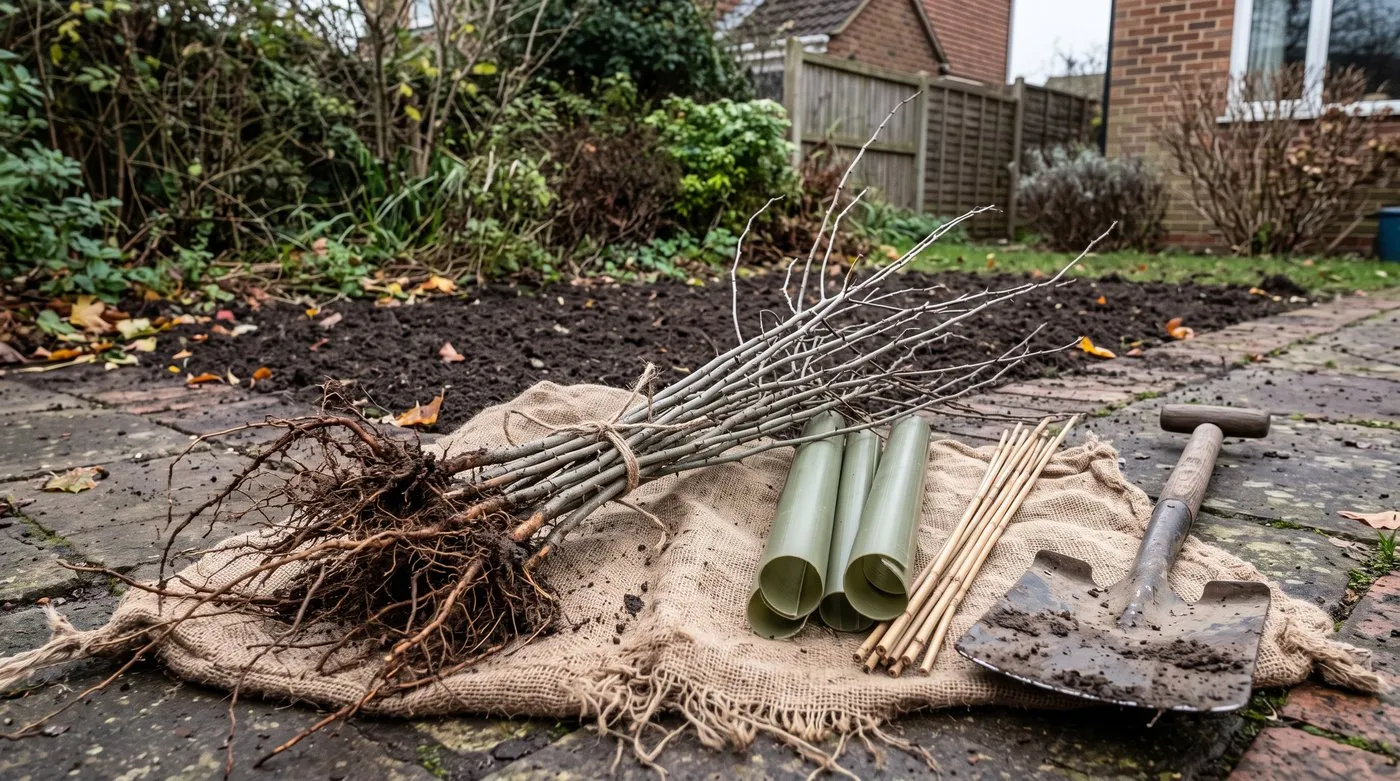
Bare-root whips look like sticks in winter, but they’re cheap, easy to plant and settle in quickly.
| Bare-root | Pot-grown | |
|---|---|---|
| Planting time | November to March | Any time, best in autumn |
| Cost | Cheaper | Dearer |
| Choice of natives | Wide | Smaller |
| Best for | Hedges, several trees, young whips | A single bigger tree for instant impact |
Young bare-root trees called whips are small, thin and cheap, and often settle in faster than bigger trees. Pot-grown trees can go in at other times, but avoid planting in hot, dry summer weather.
Buying UK-grown native trees
Buy UK-grown trees from a nursery that can tell you where they were raised. Imported nursery plants can bring in pests and diseases. Ash dieback was first found in Britain on imported nursery stock in 2012. Nurseries in the Plant Healthy scheme follow good biosecurity practice.
When you buy, look for moist, fibrous roots, healthy buds and stems with no sunken patches or cracks. Turn down pot-grown trees with roots circling tightly round the pot.
How to plant a native tree
- Keep roots moist. If you can’t plant straight away, heel bare-root trees into a trench of soil.
- Clear a circle of grass and weeds about 1m across.
- Dig a hole wide enough to spread the roots out, and only as deep as the roots.
- Plant at the right depth. The point where roots meet the stem should sit at soil level.
- Backfill with the soil you dug out. Don’t add compost or fertiliser to the hole. Firm gently with your foot.
- Stake and guard. A short stake suits larger trees. Fit a guard if rabbits or deer visit.
- Water and mulch. Water well, then spread 5-7cm of bark or wood chip mulch over the circle, keeping it off the stem.
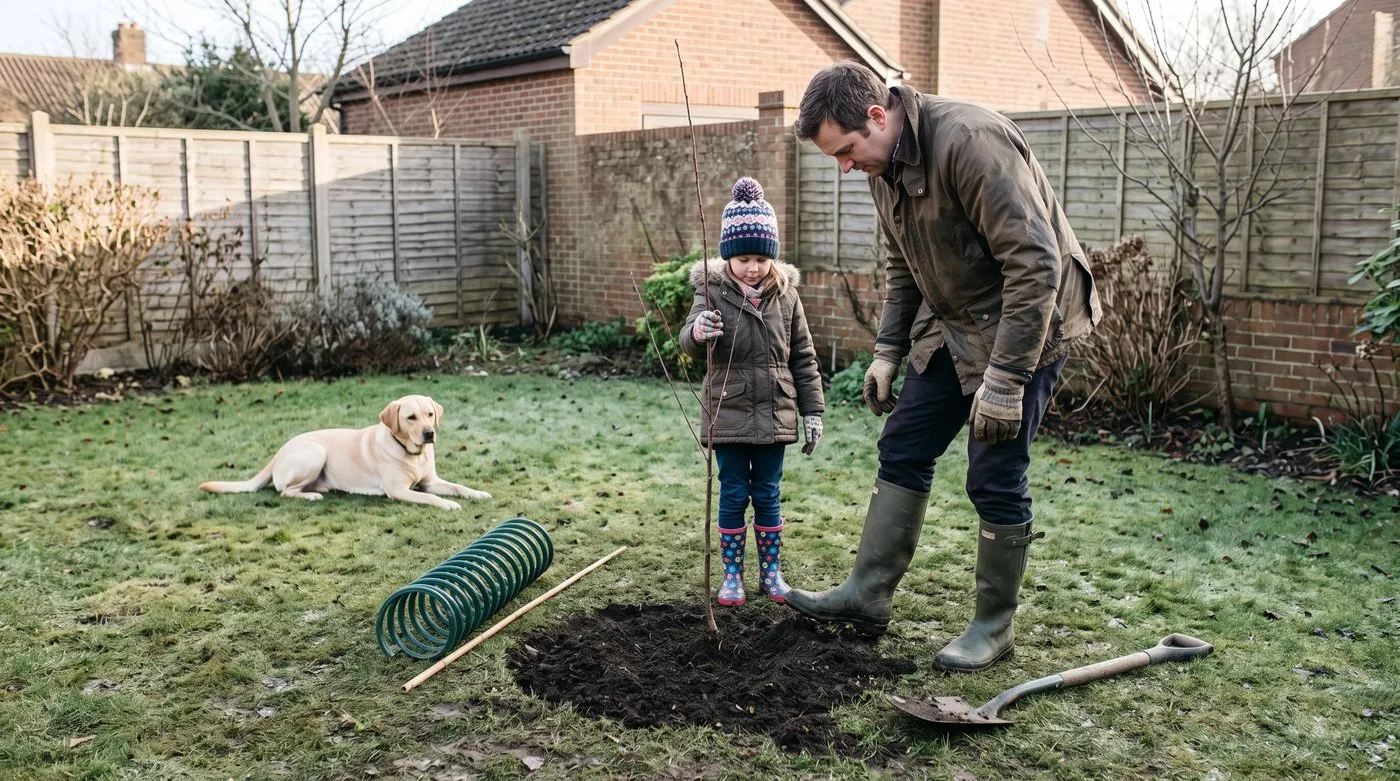
Plant with the base of the stem at soil level, firm gently, then fit a guard if rabbits visit.
The bare-root planting guide linked at the end goes through each step in more detail.
Aftercare for the first three years
The first few summers decide whether a young tree thrives.
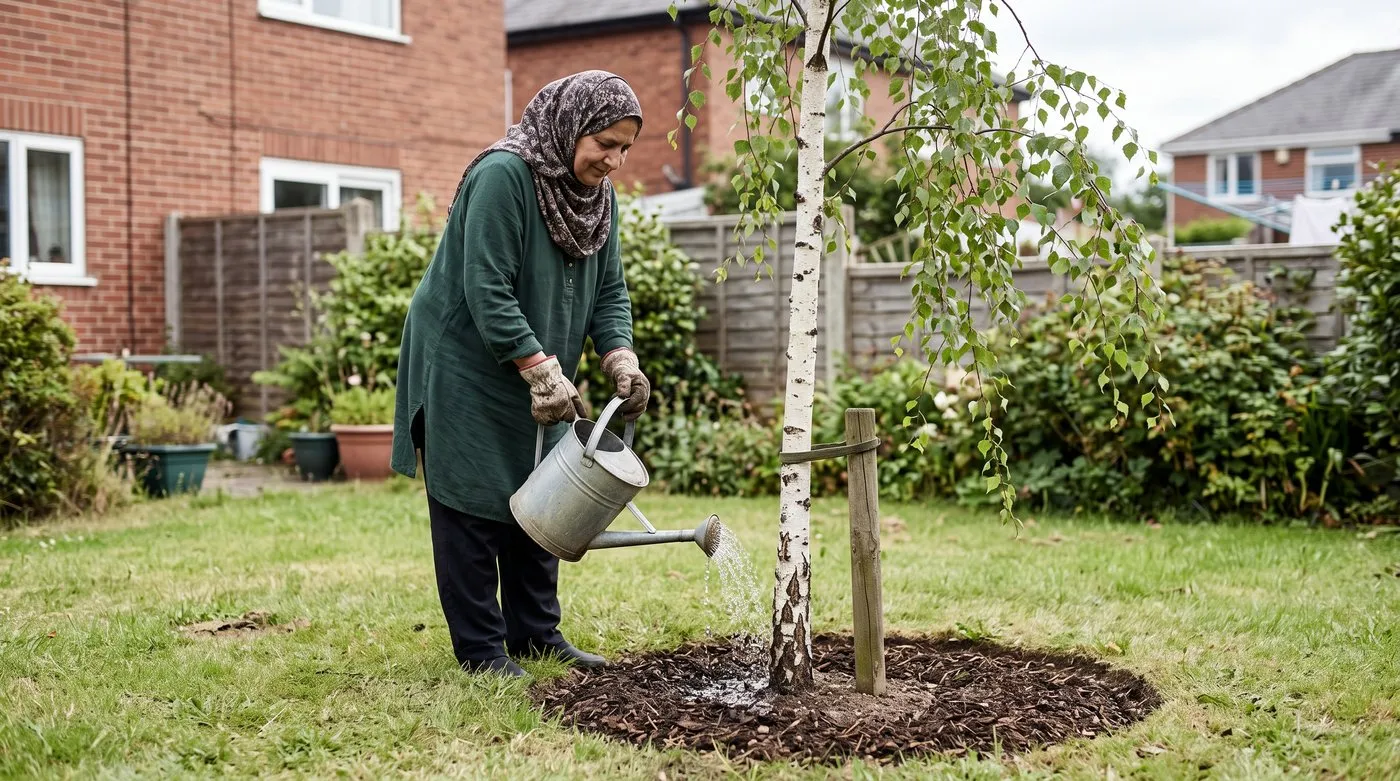
A weed-free mulched circle and a good soak in dry spells make all the difference in the first few summers.
- Water thoroughly every week or so in dry spells from spring to late summer, especially in the first two years.
- Keep the circle weed-free and top up the mulch each spring. Grass right up to the stem competes hard for water.
- Check guards and ties each winter. Loosen ties so they don’t cut into the bark.
- Remove guards once the trunk has thickened and filled them.
- Prune lightly, only to remove dead, damaged or crossing branches, in winter.
Avoid cutting hedges and trees between March and August where birds may be nesting. It’s an offence to damage or destroy an active nest.
Native tree care through the year
| Month | What to do |
|---|---|
| September to October | Order bare-root trees. Clear and mark planting spots |
| November to December | Main planting time. Fit guards and mulch |
| January to February | Keep planting when the ground isn’t frozen. Check ties and guards |
| March | Last bare-root planting. Top up mulch |
| April to August | Water young trees in dry spells. Keep the circle weed-free. Don’t cut where birds nest |
Common mistakes with native trees
- Choosing a tree that’s too big. An oak or birch in a small garden becomes a problem later. Check the final size.
- Wrong tree for the soil. Birch on wet clay or alder on dry sand will struggle.
- Planting too deep. Keep the base of the stem at soil level.
- Adding compost to the planting hole. Backfill with the soil you dug out.
- Planting into grass. Clear and mulch a circle around each tree.
- Forgetting summer watering. Young trees need help in dry spells for two or three years.
For more native plants to go with your tree, see the guide to UK native plants for gardens, or browse the plants section. Now you’ve chosen your tree, read the guide on how to plant bare-root trees to get it in the ground well this winter.
Frequently asked questions
What is the best native tree for a small UK garden?
Field maple, hawthorn and rowan are the best picks. They stay a manageable size, grow on most soils and give flowers, berries or autumn colour. Guelder rose is a good choice where space is very tight.
Why are native trees good for wildlife?
They feed many native insects, especially caterpillars. Those caterpillars are vital food for nesting birds such as blue tits. Native blossom, berries and seeds feed bees, birds and mammals too.
Can I plant a native tree in clay soil?
Yes, many native trees grow well on clay. Field maple, hawthorn, crab apple and oak all cope. On ground that stays wet, choose alder or guelder rose. Avoid birch and Scots pine on heavy clay.
When should I plant bare-root native trees?
Plant them between November and March. Choose a day when the ground isn’t frozen or waterlogged. If you can’t plant straight away, heel the trees into a trench of soil to keep the roots moist.
What is the difference between bare-root and container-grown trees?
Bare-root trees are dug up in winter and sold without a pot. They’re cheaper and come in a wider choice of natives. Pot-grown trees can be planted all year but cost more.
Do I need planning permission to plant a tree in my garden?
No, you don’t normally need permission to plant a tree. Felling or pruning a tree with a Tree Preservation Order, or in a Conservation Area, needs council consent, so check before you cut.
How do I protect a newly planted tree from deer and rabbits?
Fit a tree guard when you plant. A spiral guard about 60cm tall stops rabbits; deer need a taller guard of around 1.2m. Remove guards once the trunk has thickened, so they don’t strangle the stem.
Our team produces practical UK gardening guidance from source research, contributor records and established horticultural practice. Editorial standards are overseen by Matt W.


